The best food to eat in Germany is heartier, more regional, and a lot more fun than its sausage-and-beer reputation suggests. This is a country of 1,500 sausage types and 3,000 breads, of crackling pork knuckle and lye-blistered pretzels, of tangy marinated pot roast and the world’s most ridiculous ice-cream dish. Eat across the regions and Germany turns from a cliche into one of Europe’s great comfort cuisines.
My conversion happened at a Munich beer garden over a Schweinshaxe the size of a softball: glass-crisp crackling, meat that pulled apart with a fork, a soft pretzel, and a litre of cold wheat beer, all under chestnut trees for about fifteen euros. German food rewards the traveler who goes past the tourist bratwurst stand: a Swabian Maultaschen, a Berlin currywurst at 2 AM, a slice of Black Forest cake in its home region, each one local, specific, and worth seeking out.
This guide covers the sausages and meat mains, the dumplings and sides, the breads, the desserts, and the beer, region by region, with what to order and what it costs. Germany is one of nine countries in our guide to the best food in Europe.
Why German food is worth the trip
German food is worth a trip because it is deeply regional comfort cooking, built on excellent pork, bread, cabbage, and potatoes, and served in portions designed for people who work outdoors in winter. The cliche is sausage and beer, but the reality is a different cuisine every few hundred kilometers: Bavaria’s pork knuckle and white sausage, Swabia’s stuffed Maultaschen and Spaetzle, the Rhineland’s sweet-sour Sauerbraten, Berlin’s Turkish-German doner and currywurst, and a northern coast that eats herring and labskaus.
It is also a baking superpower. Germany has more than 3,000 registered bread types and a cake-and-coffee ritual (Kaffee und Kuchen) as serious as anything in France. Eat regionally, drink the local beer or Riesling, and the sausage-cliche dissolves fast.
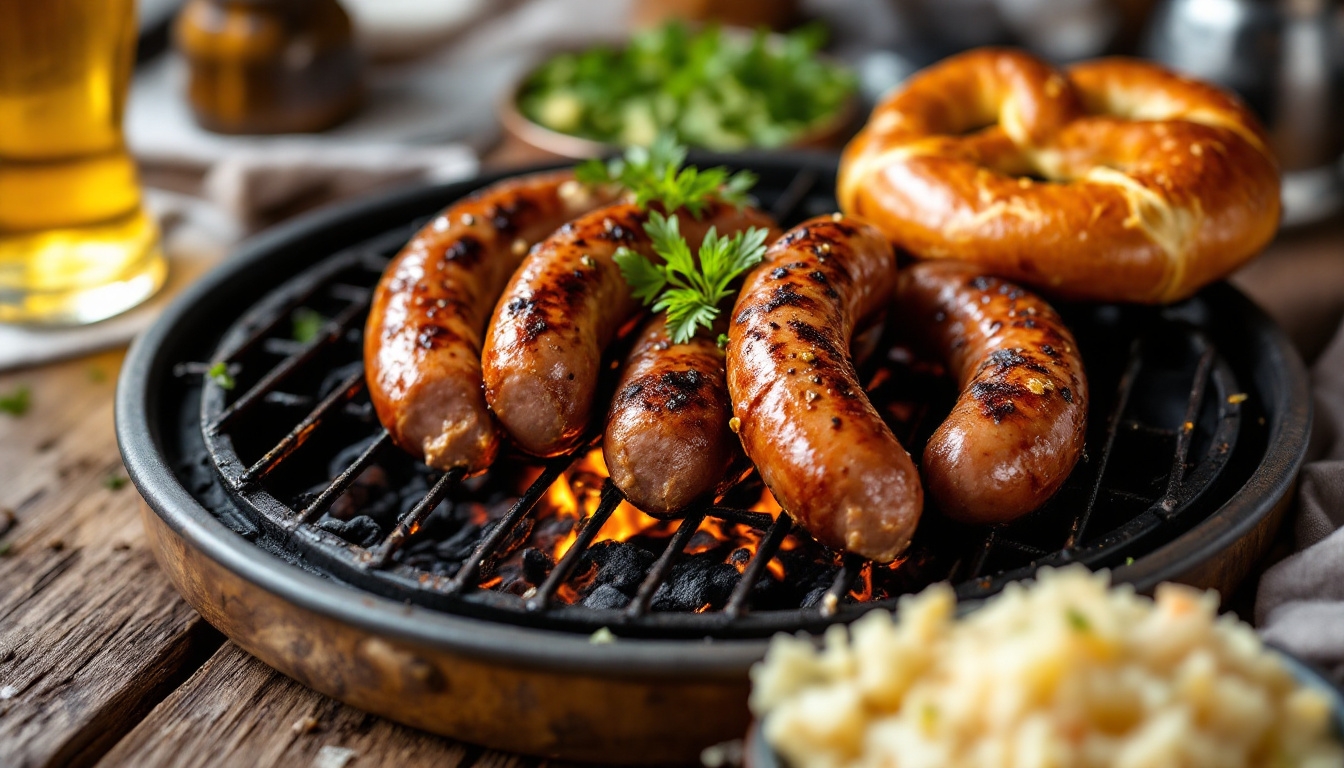
Sausages and meat mains
Meat, and above all pork, is the heart of German cooking, and the country claims over 1,500 sausage varieties alone. These are the dishes to build a trip around.
Bratwurst Bratwurst
The grilled pork sausage that defines German street eating, seasoned with marjoram, caraway, or nutmeg depending on the region and served in a crusty roll with sweet or hot mustard. The thin, finger-sized Nürnberger Rostbratwurst (sold in threes or sixes), the long Thüringer, and the Franconian versions each have their devotees and protected status.
€3 to 5 from a market or Imbiss stand. Order it “mit Senf” (with mustard) and eat it standing up.
Currywurst Currywurst
A steamed-then-fried pork sausage, sliced and doused in a curried ketchup sauce, dusted with curry powder, served with fries (Pommes) or a roll. Invented in post-war Berlin by Herta Heuwer in 1949, it is the country’s defining street snack, eaten 800 million times a year and honored with its own Berlin museum.
€4 to 7 from any Imbiss. Konnopke’s Imbiss under the Eberswalder U-Bahn tracks is the Berlin institution.
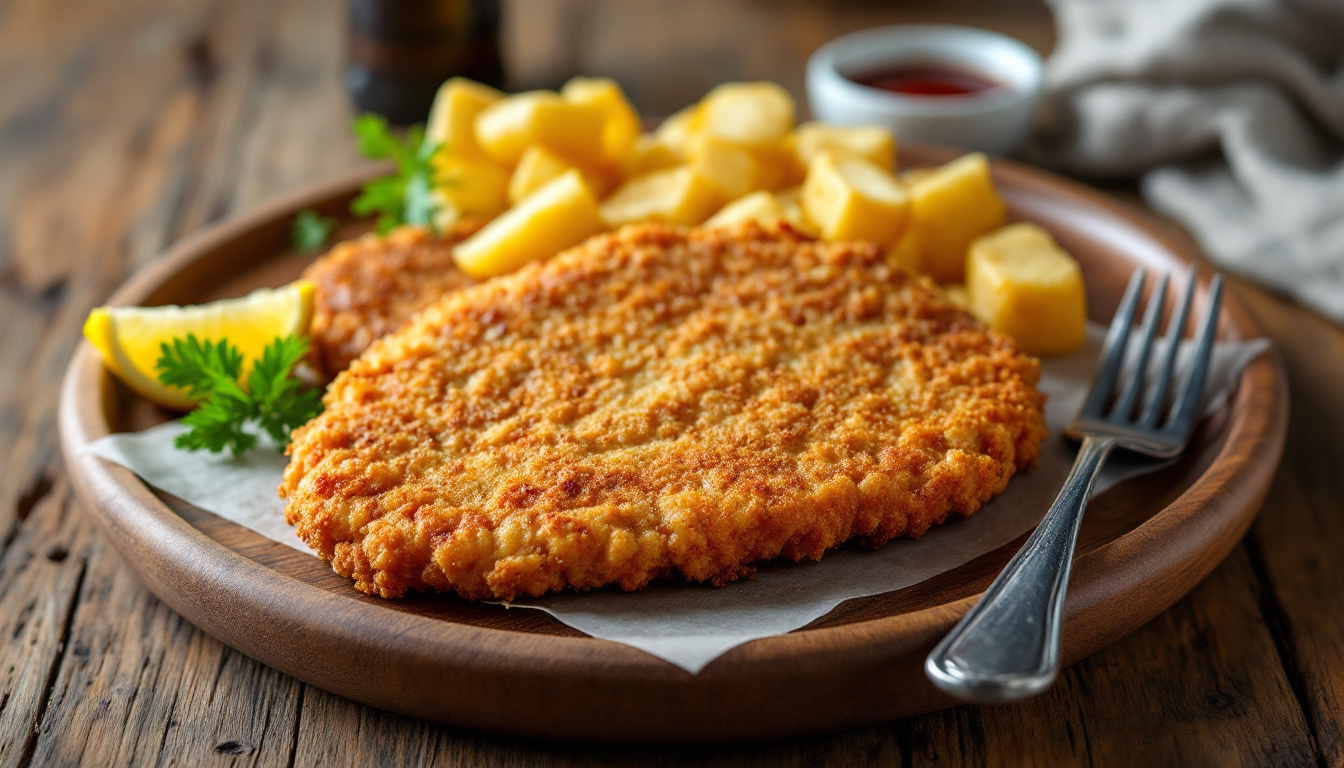
Schnitzel Schnitzel / Jagerschnitzel
A thin pork or veal cutlet pounded flat, breaded, and fried golden. The pure veal version is the Wiener Schnitzel (technically Austrian), while the German Schnitzel Wiener Art uses pork. Variations come sauced: Jagerschnitzel with mushroom gravy, Zigeuner-style with pepper sauce, Rahmschnitzel with cream.
€12 to 22, served with fries, Bratkartoffeln (fried potatoes), or potato salad and a lemon wedge.
Sauerbraten Sauerbraten
Often called Germany’s national dish: beef marinated for days in vinegar, wine, and spices, then slow-braised until tender, in a tangy-sweet gravy thickened with crushed gingerbread (Lebkuchen) and raisins in the Rhineland version. Served with red cabbage and potato dumplings.
€14 to 22. The long sour marinade is the whole point, balancing the rich gravy.
Schweinshaxe Schweinshaxe (pork knuckle)
A whole roasted pork knuckle, the skin rendered into crackling so crisp it shatters, the meat falling off the bone, served with potato dumplings and sauerkraut or red cabbage. It is Bavaria’s beer-hall and Oktoberfest centerpiece. The Berlin north has its boiled cousin, Eisbein, served with pea puree.
€14 to 20 and easily shareable. Best with a litre of wheat beer in a Munich beer garden.
- Weisswurst. Bavaria’s pale veal-and-pork breakfast sausage, gently boiled and eaten before noon, peeled from its skin and dipped in sweet mustard with a pretzel and wheat beer. A Munich ritual.
- Rouladen. Thin beef rolled around bacon, onion, mustard, and pickle, browned and braised in a rich gravy, the classic German Sunday roast, served with red cabbage and dumplings.
- Leberkase and Frikadelle. A sliceable baked meatloaf served hot in a roll (Leberkassemmel), and the German pan-fried meat patty (Frikadelle or Bulette in Berlin).
- Doner kebab. Not traditional but essential: the Berlin-Turkish doner, invented in its sandwich form in 1970s Berlin, is now Germany’s most-eaten fast food.
Dumplings, noodles and sides
The carbohydrate half of German cooking is a world of its own, especially in the south, where Swabia rivals Italy for noodle and dumpling devotion.
Kasespatzle Kasespatzle
Soft, irregular egg noodles (Spaetzle) layered with grated mountain cheese and topped with a heap of crispy fried onions, the southern German answer to mac and cheese. Spaetzle alone is the universal Swabian side, scraped fresh into boiling water.
€9 to 14 as a main. Rich, comforting, and one of Germany’s best vegetarian dishes.
Maultaschen Maultaschen
Large pasta pockets stuffed with minced meat, spinach, bread, and herbs, the Swabian cousin of ravioli. Nicknamed Herrgottsbscheisserle (“little God-cheaters”) because monks supposedly hid the meat inside the dough to eat it during Lent. Served in broth, or pan-fried with egg and onion.
€9 to 14. A proper Swabian comfort dish that travelers rarely know to order.
- Knodel and Klosse. Round dumplings, from Bavarian bread dumplings (Semmelknödel) to Thuringian raw-potato Klöße, the standard partner to any gravy-heavy roast.
- Kartoffelpuffer / Reibekuchen. Crispy fried grated-potato pancakes, eaten savory with applesauce or smoked salmon, a Christmas-market staple.
- Sauerkraut and Rotkohl. Fermented sour white cabbage, and sweet-sour braised red cabbage with apple and clove, the two essential German sides.
- Spargel. White asparagus, a springtime obsession (Spargelzeit, roughly April to June), served peeled and boiled with hollandaise, ham, and potatoes. Germans go genuinely wild for it.
- Kartoffelsalat. Potato salad, vinegar-and-broth-based in the south, mayonnaise-based in the north, the default partner to schnitzel and sausage.
Street food and snacks
- Brezel (pretzel). The lye-dipped, salt-crusted knot with a chewy shell and soft interior, eaten plain, with butter (Butterbrezel), or alongside Weisswurst. From €1.50.
- Flammkuchen. The thin, crackly Alsatian-German tart of creme fraiche, onion, and bacon, shared and torn by hand, especially in the southwest near the French border.
- Belegtes Brotchen. The open or filled bread roll, the everyday German lunch, topped with cold cuts, cheese, or fish.
- Christmas-market snacks. Gebrannte Mandeln (candied almonds), Schmalzkuchen (fried dough), grilled sausages, and gluhwein, the seasonal street-eating of every German Weihnachtsmarkt.
German bread culture
Germany’s bread (Brot) is a UNESCO-recognized craft and a genuine source of national pride, with over 3,000 registered types. Dense, dark rye and sourdough loaves dominate: Vollkornbrot (whole-grain), Pumpernickel (long-steamed dark rye), Roggenbrot (rye), and Bauernbrot (farmer’s loaf). Breakfast and supper (Abendbrot, the “evening bread” meal) are built around good bread with cold cuts, cheese, and butter. A German bakery (Backerei) on any corner outclasses most of what the rest of the world calls bread.
Cakes and desserts
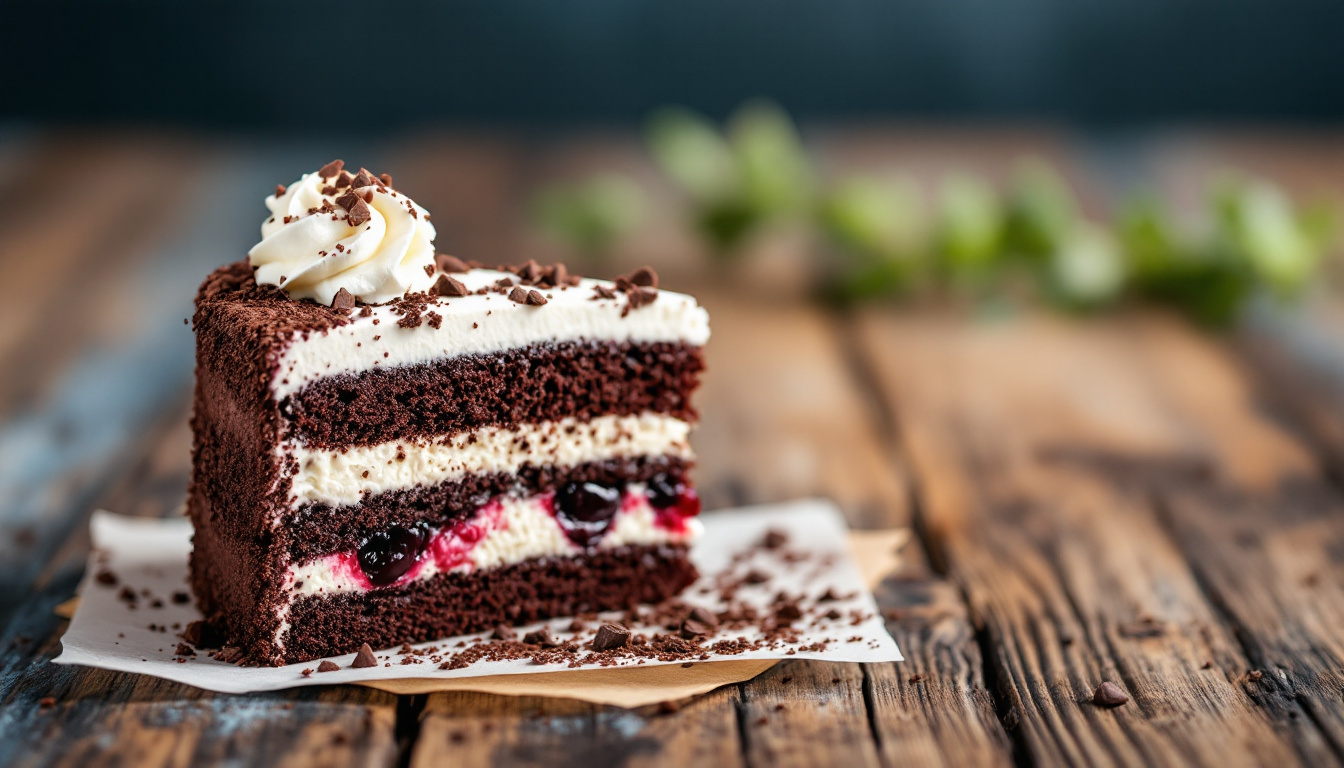
Schwarzwalder Kirschtorte Black Forest gateau
Layers of chocolate sponge soaked in Kirschwasser (cherry brandy), whipped cream, and sour cherries, topped with chocolate shavings. The real thing must legally contain kirsch, and it tastes nothing like the soggy imitations abroad. Best eaten in its home region during the Kaffee und Kuchen afternoon ritual.
€4 to 7 a slice at a Konditorei (pastry cafe). The afternoon coffee-and-cake break is a German institution.
- Apfelstrudel. Thin pastry wrapped around spiced apple, raisins, and breadcrumbs, served warm with cream or vanilla sauce, shared with Austria and Bavaria.
- Spaghettieis. Vanilla ice cream pushed through a ricer to look like spaghetti, topped with strawberry “sauce” and white-chocolate “parmesan.” A 1960s Italian-German invention and a national delight.
- Stollen and Lebkuchen. The dense, fruit-and-marzipan Christmas loaf (Dresden’s is the famous one), and the soft spiced gingerbread of Nuremberg.
- Berliner and Kasekuchen. The jam-filled doughnut (a Berliner, or Pfannkuchen in Berlin itself), and German quark cheesecake, lighter than the American kind.
Beer, wine and drinks
- Beer. Brewed under the 1516 Reinheitsgebot purity law: Bavarian Weissbier (wheat), Pils, Kolsch (Cologne’s pale ale, served in tiny 0.2L glasses), Altbier (Dusseldorf), and the dark, malty bocks. The beer garden and beer hall are social institutions, not just bars.
- Riesling and German wine. The Mosel and Rheingau produce some of the world’s great Rieslings, from bone-dry to lusciously sweet; the reds (Spatburgunder, German Pinot Noir) are rising fast.
- Gluhwein and Apfelwein. Spiced mulled wine at every Christmas market, and Frankfurt’s sharp apple wine (Ebbelwoi), served in ribbed Geripptes glasses.
- Schnaps and Jagermeister. Fruit brandies (Obstler, Kirschwasser) sipped after a heavy meal, and the herbal digestif that escaped Germany to conquer the world.
Best food cities and regions in Germany
Beer gardens, Schweinshaxe, Weisswurst breakfasts, pretzels, and Oktoberfest. The heartland of the German food cliche, done at the highest level. Day-trip to the Alps for hearty mountain fare.
Currywurst and the doner kebab capital, plus the most diverse, international, and inventive food scene in Germany. Konnopke’s for currywurst, Mustafa’s-style doner queues, and a strong vegan movement.
Kasespatzle, Maultaschen, Flammkuchen, and the real Black Forest cake, plus Baden’s Rieslings and the French-influenced cooking near the Rhine, a bridge to our France food guide through Alsace.
Cologne for Kolsch beer and Himmel und Erde, Dusseldorf for Altbier, the Rhineland for Sauerbraten, and the northern coast for herring (Rollmops, Matjes), labskaus, and Hamburg’s fish-market breakfasts.
Best food to eat in Germany: the dish guide with prices and ratings
| Dish | Type | Region | Price (€) | Must-try |
|---|---|---|---|---|
| Bratwurst | Sausage | Nationwide | €3–5 | ★★★★★ |
| Currywurst | Street food | Berlin | €4–7 | ★★★★★ |
| Schweinshaxe | Roast | Bavaria | €14–20 | ★★★★★ |
| Schnitzel | Main | Nationwide | €12–22 | ★★★★★ |
| Sauerbraten | Pot roast | Rhineland | €14–22 | ★★★★★ |
| Weisswurst | Sausage | Bavaria | €6–10 | ★★★★☆ |
| Rouladen | Main | Nationwide | €14–20 | ★★★★☆ |
| Kasespatzle | Noodles | Swabia | €9–14 | ★★★★★ |
| Maultaschen | Pasta | Swabia | €9–14 | ★★★★☆ |
| Doner kebab | Street food | Berlin | €5–8 | ★★★★★ |
| Brezel (pretzel) | Bread | Bavaria | €1.50–3 | ★★★★★ |
| Spargel | Vegetable | Nationwide (spring) | €14–24 | ★★★★☆ |
| Black Forest gateau | Dessert | Black Forest | €4–7 | ★★★★★ |
| Spaghettieis | Dessert | Nationwide | €4–6 | ★★★★☆ |
| Apfelstrudel | Dessert | South | €4–6 | ★★★★☆ |
How to order and eat in Germany
- Cash is still king. Many Imbiss stands, bakeries, and even restaurants are cash-only or card-shy. Carry euros, especially outside big cities.
- Eat Weisswurst before noon. Bavarian tradition says the white sausage must not “hear the midday bell.” Peel the skin, do not eat it, and dip in sweet mustard.
- Tipping is modest. Round up or add about 5 to 10 percent, and tell the server the total when you pay rather than leaving it on the table.
- Say “Mahlzeit.” The midday greeting between eaters, literally “mealtime,” is the friendly thing to say around lunch.
- Bread and pretzels are not always free. At a beer hall, the basket of pretzels on the table is charged per piece you take.
For dining customs across other countries, see our guide to food etiquette around the world.
How to eat well in Germany on any budget
Prices here are 2026, in euros. Germany’s Imbiss (snack-stand) culture keeps eating cheap and genuinely good, and a bakery, a currywurst stand and a beer-garden table cover most of a day for well under twenty euros.
Budget: under €20 a day
A bakery Brotchen and coffee for breakfast (€3), a currywurst or doner for lunch (€5 to 8), and a bratwurst from a market for dinner (€4). Germany’s Imbiss (snack stand) culture makes cheap, genuinely good eating easy.
Mid-range: €35 to 60 a day
A beer-garden Schweinshaxe or a schnitzel with potato salad and beer, a slice of cake with afternoon coffee, and a regional dinner. Comfortable eating across proper Gasthaus restaurants.
High-end: €80+ a day
Germany quietly holds more Michelin stars than almost any country in Europe. Three-star temples in Berlin, Munich, and the southwest reinterpret regional ingredients, and even a one-star Gasthaus delivers extraordinary value next to Paris.
Frequently asked questions about German food
What is the national dish of Germany?
Sauerbraten, the days-marinated tangy beef pot roast, is most often called the national dish. Bratwurst, schnitzel, and currywurst are the everyday icons, and each region claims its own: Schweinshaxe and Weisswurst in Bavaria, Maultaschen in Swabia, currywurst in Berlin.
How much does food cost in Germany per day?
A bakery breakfast is about 3 euro, a currywurst or doner 5 to 8, and a sit-down main 12 to 22. Budget travelers eat well on under 20 euro a day from Imbiss stands, mid-range on 35 to 60. Germany is mid-priced for Western Europe, cheaper than Scandinavia or Switzerland.
What is currywurst?
Currywurst is a steamed-then-fried pork sausage, sliced and covered in a curried ketchup sauce, dusted with curry powder, and served with fries or a roll. Invented in post-war Berlin in 1949, it is Germany’s defining street snack, eaten hundreds of millions of times a year and costing 4 to 7 euro.
Is German food just sausage and beer?
No. While sausages and beer are central, Germany has 3,000-plus breads, a deep cake-and-coffee culture, Swabian noodle dishes like Kasespatzle and Maultaschen, a spring white-asparagus obsession, herring and fish on the northern coast, and one of Europe’s densest Michelin-star scenes.
Is Germany good for vegetarians?
Increasingly yes, especially in Berlin, which has one of Europe’s strongest vegan scenes. Kasespatzle, Maultaschen (some meat-free), Kartoffelpuffer, pretzels, Flammkuchen, white asparagus, and German cheesecake are good options, though traditional Gasthaus menus remain meat-heavy. Watch for lard and meat broth.
When is white asparagus season in Germany?
Spargelzeit runs from roughly mid-April to June 24 (St John’s Day), when Germans eat enormous quantities of white asparagus, peeled and boiled with hollandaise, ham, and potatoes. Roadside Spargel stands and special asparagus menus appear everywhere during the season.
More food guides waiting for you
Browse our complete collection of European food guides.