Best Food in Osaka: Japan’s Kitchen and Street Food Capital
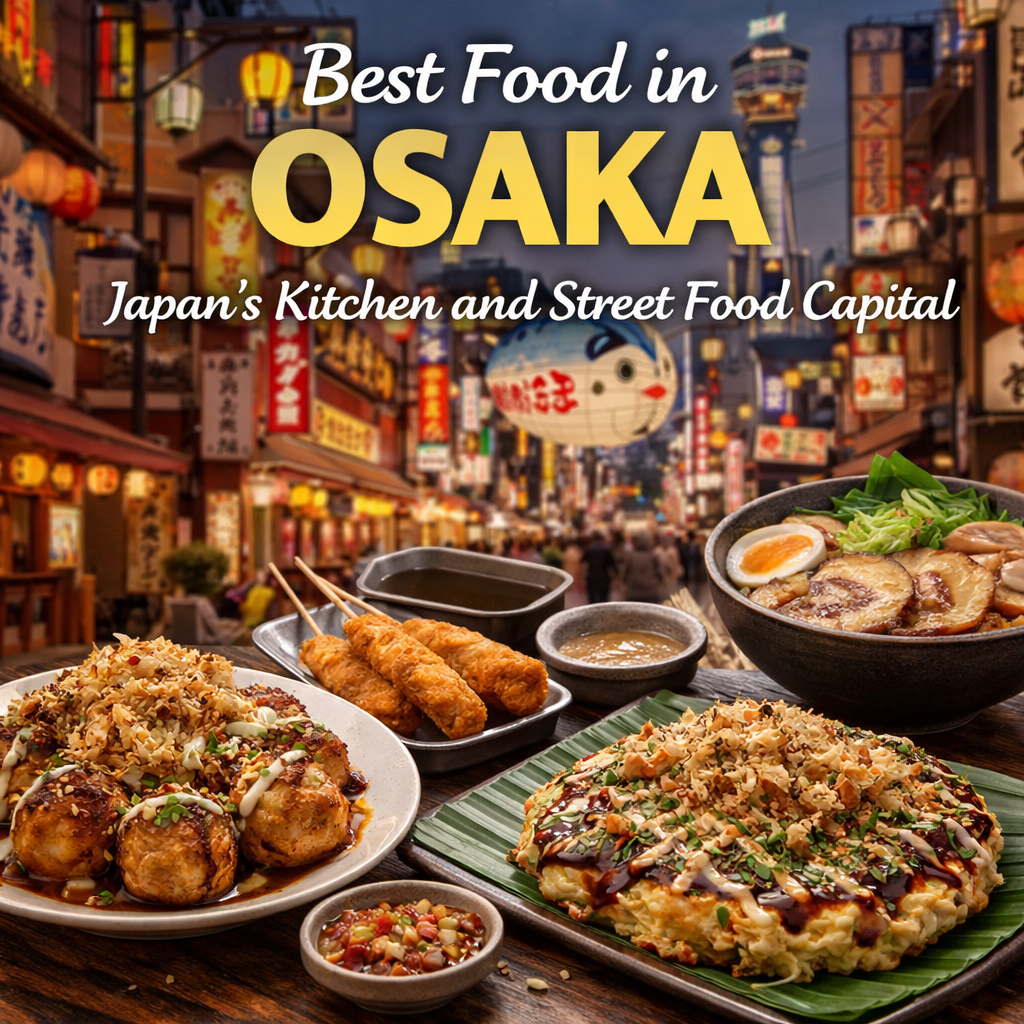
Osaka’s food philosophy is captured in a single word: kuidaore — eat until you drop. Where Tokyo refines, Osaka indulges. Where Tokyo whispers, Osaka shouts. This is the city that invented takoyaki on a street corner, perfected okonomiyaki on a griddle, and deep-fries everything that isn’t nailed down. It’s loud, greasy, glorious, and absolutely the most fun you’ll have eating anywhere in Japan.
In This Guide
Osaka has always been a merchant city. While Kyoto had the imperial court and Tokyo had the samurai, Osaka had the traders — pragmatic, loud, and obsessed with value for money. This commercial DNA shaped its food culture completely. Osaka food is generous, affordable, filling, and uninterested in elegance. A takoyaki vendor doesn’t care if his stall looks beautiful — he cares if the inside is molten and the outside is crispy. An okonomiyaki cook doesn’t plate artfully — she piles it high and drowns it in sauce. The food is the performance.
The result is a city where eating is the primary form of entertainment. Osaka people regularly spend more of their income on food than any other Japanese city. The restaurant density is staggering. And unlike Tokyo, where the best food often hides behind closed doors, Osaka’s best food is right on the street, steaming, sizzling, and shouting at you to come try it.
For the full Japan picture including Tokyo’s contrasting style, see our complete guide to the best food in Japan. For the Tokyo side of the rivalry, check our Tokyo food guide.
Dotonbori — Neon, Noise and the Heart of Osaka Street Food
Dotonbori is Osaka’s beating heart — a canal-side strip of neon signs, giant mechanical crabs, and more food stalls per meter than anywhere else in Japan. Is it touristy? Absolutely. Is it still incredible? Also absolutely. The spectacle is part of the meal. When a three-story crab waves its legs above your head while you eat takoyaki from a paper boat, you understand what kuidaore means.
The main Dotonbori strip runs along the canal between Dotonboribashi and Nipponbashi. The side streets (especially Hozenji Yokocho, a lantern-lit alley with a tiny moss-covered shrine) offer quieter, more intimate eating.
What to eat in Dotonbori
Takoyaki stands (everywhere) — Osaka’s most iconic street food: balls of wheat batter with octopus chunks, cooked in special half-sphere molds, served with sauce, mayo, bonito flakes, and aonori. ¥500–700 (~$3.30–4.70) for 6–8 pieces. Every stand has its own recipe. Creo-Ru, Wanaka, and Aizuya are the famous names, but honestly, follow the longest queue. Eat them immediately — takoyaki has a 3-minute window of perfection when the outside is crispy and the inside is liquid. Wait too long and the magic fades.
Okonomiyaki at Mizuno (1-4-15 Dotonbori) — One of Osaka’s most legendary okonomiyaki restaurants, open since 1945. The yama-imo (mountain yam) okonomiyaki is famously fluffy. Cooked on a griddle in front of you. ¥1,000–1,500 (~$6.70–10). Queue for dinner can be 45–60 min. Lunch is much calmer.
Kani Doraku (the giant crab restaurant) — The restaurant with the famous mechanical crab sign. Full crab course meals from ¥5,000–10,000 (~$33–67). It’s a tourist landmark, but the crab is legitimately good quality. Worth it once for the spectacle and the surprisingly decent food.
Hozenji Yokocho alley — Two blocks south of the main strip, this atmospheric lantern-lit alley has tiny restaurants serving kappo (Japanese multi-course cuisine), oden (hot pot), and izakaya food. More expensive than street stalls (¥3,000–8,000 per person) but infinitely more atmospheric. Start with a prayer at the moss-covered Hozenji Temple, then duck into whichever door looks inviting.
Dotonbori is best experienced as a snacking walk, not a sit-down dinner. Eat 6 takoyaki here, an okonomiyaki there, some kushikatsu around the corner, finish with a crepe. The portions are designed for grazing. Budget ¥2,000–3,000 total and you’ll eat a dozen different things.
Shinsekai — Kushikatsu Kingdom
Shinsekai (“New World”) was built in 1912 as Osaka’s version of Paris and Coney Island combined. That vision faded long ago, and what’s left is beautifully retro: faded neon, vintage game arcades, and an almost aggressive concentration of kushikatsu (deep-fried skewer) restaurants. Tsutenkaku Tower rises above it all like a downsized Eiffel Tower. It’s gritty, charming, and serves some of the best fried food in Japan.
What to eat in Shinsekai
Kushikatsu Daruma (various Shinsekai locations) — The most famous kushikatsu chain in Osaka, recognizable by its angry-chef mascot. Skewers of pork, shrimp, cheese, lotus root, quail egg, and more, battered in light panko and deep-fried. ¥100–200 per skewer. Order 10–15 skewers for a full meal. The cardinal rule: never double-dip in the communal sauce. Use the cabbage leaves to scoop extra sauce instead. This rule is serious — signs in 4 languages remind you.
Jan Jan Yokocho (Jan Jan Alley) — A narrow covered arcade south of Tsutenkaku with izakayas, kushikatsu joints, and old-man bars playing shogi (Japanese chess). The most “old Osaka” experience still available. Beer and skewers for ¥1,500–2,500.
Doteyaki (stewed beef tendon) — A Shinsekai specialty you won’t find in Tokyo: beef tendons slow-simmered in miso and mirin until gelatinous and deeply savory. Served as a side dish in most kushikatsu restaurants. ¥300–500. The texture is unusual — give it a chance, it’s addictive.
The communal sauce trough at kushikatsu restaurants is shared by all diners. You dip your skewer ONCE before biting. After that, use the cabbage leaves on the table to scoop sauce onto your food. Double-dipping is the one thing that will make a mild-mannered Osaka cook genuinely angry. Some shops have switched to individual sauce pots post-COVID, but the tradition persists at most classic joints.
Kuromon Market — Osaka’s Kitchen
Kuromon Ichiba (“Kuromon Market”) is a 600-meter covered market that’s been feeding Osaka since 1902. It’s known as “Osaka’s Kitchen” because this is where local chefs shop for seafood and produce. For visitors, it’s a walk-and-eat paradise: stall after stall of fresh sashimi, grilled seafood, tamagoyaki, seasonal fruit, and Japanese street snacks.
What to eat at Kuromon Market
Fresh sashimi stalls — The market’s specialty. Walk up, choose your fish (tuna, salmon, sea bream, uni, scallop), and eat it at a standing counter. Individual portions ¥500–1,500. A full sashimi spread can run ¥3,000–5,000 (~$20–33) but you’re getting fish that was swimming hours ago.
Grilled seafood on sticks — Scallops, king crab legs, giant shrimp, and eel, grilled with soy sauce or salt. ¥300–1,000 per skewer. The king crab legs (¥800–1,500) are a splurge but spectacular — sweet, tender, char-grilled.
Seasonal fruit — Japanese fruit is insanely good and insanely expensive. Kuromon stalls sell cut portions: perfect strawberries, musk melon, white peaches. ¥300–800 per portion. A full melon can cost ¥5,000+. The cut-fruit cups are the way to sample without mortgaging your trip.
Tamagoyaki (Japanese omelette) — Thick, sweet, freshly grilled on the spot. ¥200–400. The Kuromon version is juicier and sweeter than Tokyo’s Tsukiji version. Eat it hot.
Kuromon has gotten noticeably more expensive and touristic in recent years. Prices at the market can be 30–50% higher than at restaurants nearby. For a budget alternative with the same quality, eat sashimi at the restaurants on Sennichimae-dori (one block south) and save the market for a shorter snack walk. Come before 10 AM for the best selection and smallest crowds.
Shinsaibashi & Amerikamura — Shopping, Snacking and Gyoza
Shinsaibashi is Osaka’s main shopping arcade — a covered pedestrian street stretching 600 meters between Shinsaibashi and Namba stations. The food along and around the arcade is a mix of chain restaurants, independent gems, and snack shops. Amerikamura (“American Village”), the neighborhood just west, is Osaka’s youth culture hub with vintage shops, tiny cafes, and late-night eats.
What to eat in Shinsaibashi & Amerikamura
551 Horai (butaman — pork buns) — An Osaka institution since 1945. The steamed pork buns (butaman) are soft, juicy, and available at their flagship store on Shinsaibashi-suji. ¥200 per bun. Osakans grow up eating these. Buy two — one is never enough.
Gyoza Ohsho (various locations) — Osaka’s version of the gyoza chain — slightly different from the Tokyo version, with a crispier skin and juicier filling. ¥260 for 6 gyoza. Perfect cheap snack between shopping.
Rikuro Ojisan (Uncle Rikuro’s Cheesecake) — Osaka’s most famous dessert: a jiggly, soufflé-style cheesecake that bounces when you shake it. ¥965 per cake. Baked fresh every few minutes; a bell rings when a new batch emerges from the oven. The queue is always long, but it moves fast. Buy a whole cake and eat it warm on a bench.
Amerikamura late-night pizza and tacos — After midnight, Amerikamura’s tiny bars and food stands come alive with cheap eats aimed at the young, the broke, and the slightly drunk. Pizza slices, tacos, kebabs. ¥300–500. Not fine dining. Extremely fun.
Tenma & Nakazakicho — Local Drinking Alleys and Hipster Cafes
Tenma is Osaka’s best-kept food secret. This neighborhood north of Umeda has the highest izakaya density in the city — narrow alleys packed with tiny standing bars, yakitori joints, and oden pots. It’s where Osaka’s office workers drink after work, and tourists are still rare. Nakazakicho, a few blocks east, is Osaka’s hipster village — converted warehouses and old houses turned into indie cafes and specialty restaurants.
What to eat in Tenma & Nakazakicho
Tenjinbashisuji Shopping Street — Japan’s longest shopping arcade (2.6 km). Walk the full length and eat your way through: korokke (Japanese croquettes) for ¥100, fresh-baked melon pan, takoyaki variations, and local bakeries. The south end near Tenma Station is densest with food.
Tenma standing bars (tachinomi) — Tiny bars where you drink and eat standing up. Draft beer ¥300, sake ¥400, yakitori skewers ¥100–200. Most hold 5–10 people. The atmosphere is intense and convivial — you’ll end up in conversation with strangers (especially after the second beer). The alleys east of Tenjinbashisuji near Tenma Station are the epicenter.
Nakazakicho cafes — Quiet, creative neighborhood with specialty coffee shops, vegan cafes, and small restaurants in renovated machiya (old wooden townhouses). Good for a calm morning before the chaos of Dotonbori. Coffee ¥400–600.
Umeda & Kita — Department Store Food Halls
Umeda is Osaka’s business district, centered on the massive JR Osaka and Hankyu Umeda stations. The food here is corporate and curated — department store basements (depachika), themed restaurant floors, and underground malls with hundreds of eateries. It’s not the soul of Osaka food, but it’s reliable, varied, and good for rainy days.
What to eat in Umeda
Hankyu Department Store depachika — One of the best department store food halls in Japan. Ground floor: wagashi (Japanese sweets), chocolates, bakeries. Basement: bento, sashimi, pickles, prepared foods. ¥500–2,000 for a stunning lunch assembled from the counters. The discount time (30–50% off near closing around 20:00) applies here too.
Shin-Umeda Shokudogai (underground food alley) — A retro underground warren of tiny restaurants beneath the train tracks near Umeda Station. Ramen, udon, curry, yakiniku — all at honest prices (¥700–1,200). The ceiling is low, the atmosphere is thick, and it feels like stepping into 1960s Osaka.
Osaka Station City restaurant floors — The upper floors of the train station complex have curated restaurant zones. Ramen street, udon alley, and a floor of international options. Nothing life-changing, but convenient and consistently good. ¥800–1,500 per meal.
Top 10 Dishes to Eat in Osaka
Osaka’s food is about joy, not subtlety. These ten dishes are the reason the city calls itself Japan’s kitchen — and the reason you’ll want to come back.
| # | Dish | Where to Try | Price | Area | Rating |
|---|---|---|---|---|---|
| 1 | Takoyaki (octopus balls) | Dotonbori stands / Wanaka / Aizuya | ¥500–700 | Dotonbori / everywhere | ★★★★★ |
| 2 | Okonomiyaki | Mizuno / Fukutaro / any teppan grill | ¥700–1,500 | Dotonbori / Namba | ★★★★★ |
| 3 | Kushikatsu (deep-fried skewers) | Kushikatsu Daruma / Shinsekai stalls | ¥100–200/skewer | Shinsekai | ★★★★★ |
| 4 | Fresh sashimi | Kuromon Market stalls | ¥500–1,500 | Kuromon | ★★★★ |
| 5 | 551 Horai butaman (pork buns) | 551 Horai (Shinsaibashi-suji) | ¥200 | Shinsaibashi | ★★★★★ |
| 6 | Kitsune udon (fox udon) | Usami Tei Matsubaya / any udon shop | ¥600–900 | Namba / anywhere | ★★★★ |
| 7 | Doteyaki (miso beef tendon) | Shinsekai kushikatsu restaurants | ¥300–500 | Shinsekai | ★★★★ |
| 8 | Rikuro cheesecake | Rikuro Ojisan (Namba main shop) | ¥965/cake | Namba | ★★★★ |
| 9 | Negiyaki (green onion pancake) | Negiyaki Yamamoto (Umeda) | ¥800–1,000 | Umeda | ★★★ |
| 10 | Fugu (pufferfish) | Zuboraya / specialized fugu restaurants | ¥5,000–15,000 | Shinsekai / Dotonbori | ★★★★ |
A word about fugu: Osaka consumes roughly 60% of Japan’s pufferfish, making it the fugu capital of the country. The fish contains a lethal toxin in its organs, and only licensed chefs can prepare it. The risk is part of the mystique, but in practice, fugu deaths are virtually zero at licensed restaurants. The taste is delicate, subtle, and unlike any other fish — served as sashimi (tessa), hot pot (tecchiri), or deep-fried (fugu kara-age). Winter (November–March) is prime season. It’s not cheap, but it’s the kind of experience Osaka was built for.
Practical Tips for Eating in Osaka
Eat standing, eat walking
Osaka is Japan’s exception to the “don’t eat while walking” rule. In Dotonbori and Shinsekai, street food is designed to be eaten on the move. Takoyaki comes in a boat. Kushikatsu comes on a stick. Butaman comes in paper. Don’t sit down looking for a table — join the river of people eating as they walk.
The Osaka accent of food
Osaka-style dashi uses more kelp (kombu) and less bonito than Tokyo-style, giving dishes a rounder, sweeter flavor. Osaka soy sauce is lighter in color. Udon noodles are softer and thicker. If something tastes different from what you had in Tokyo, it’s regional variation, not a mistake.
Ticket machines and ordering
Like Tokyo, many Osaka restaurants use ticket vending machines (shokkenki). Insert coins, press a button, hand the ticket to the cook. Most have photos. When in doubt, the top-left button is usually the signature dish. At okonomiyaki restaurants, you’ll often cook it yourself on a teppan griddle at your table — the server will show you how. Don’t panic, it’s hard to mess up.
Osaka is already cheap, but the ultimate budget move is a Dotonbori snack crawl: 6 takoyaki (¥500) + 3 kushikatsu skewers (¥450) + 1 butaman (¥200) + a konbini drink (¥150) = a full dinner for ¥1,300 (~$8.70). You’ll eat better than most people paying ¥5,000 at a sit-down restaurant. For more cheap-eating destinations, see our cheapest cities for amazing food guide.
Day trips from Osaka
Osaka is the gateway to the Kansai region’s food. Kyoto (30 min by train) has refined kaiseki and matcha culture. Kobe (20 min) has the world’s most famous beef. Nara (45 min) has mochi and sake. All are easy day trips, and combining them with Osaka gives you the full spectrum of Japanese food — from street-stall chaos to temple-garden elegance.
Frequently Asked Questions About Food in Osaka