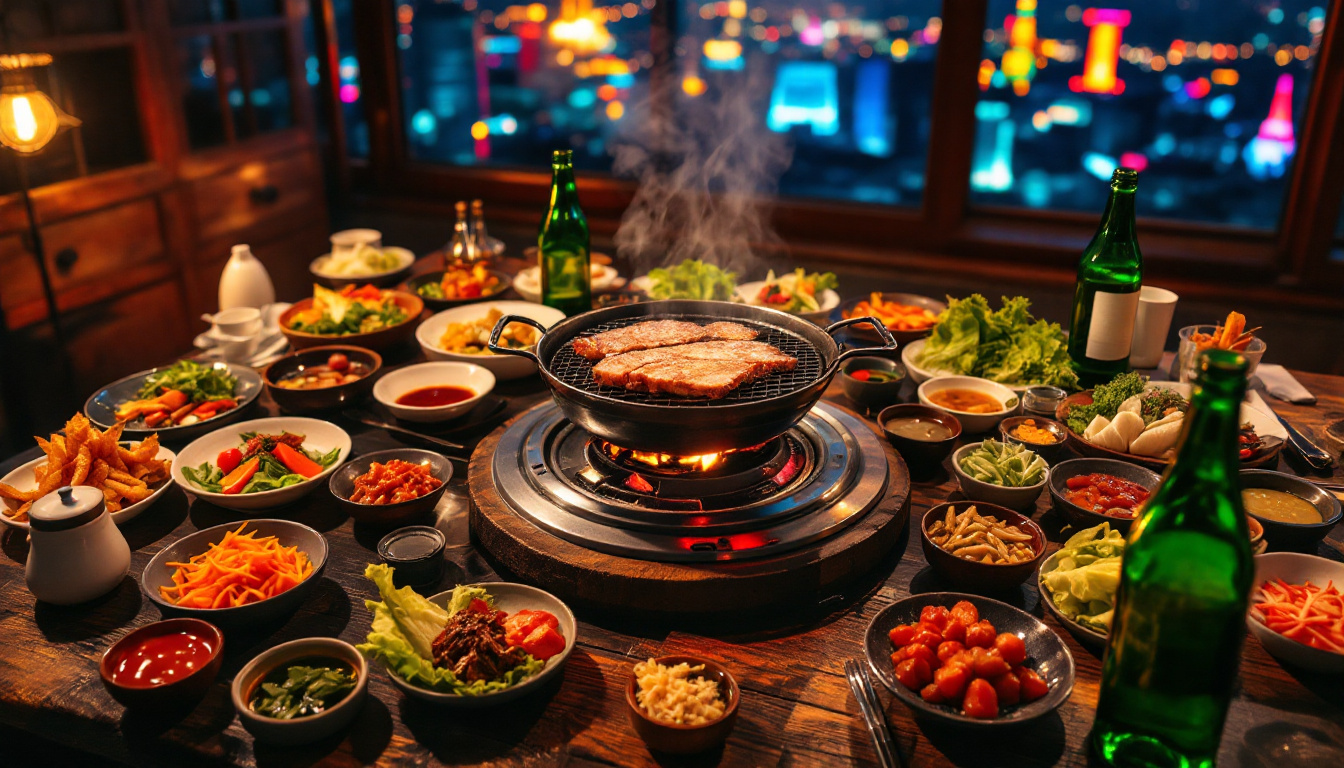
Seoul is a city that eats with ferocious intensity, where a Tuesday dinner means grilling wagyu-grade hanwoo beef at your table while a dozen free side dishes keep arriving, where 3 AM tteokbokki under a glowing orange tent is a perfectly normal life choice, and where the phrase “have you eaten?” is the standard way of saying hello. This is the complete guide to eating Seoul, neighborhood by neighborhood, ritual by ritual.
Korean food has a concept that has no real equivalent in English: jeong (정). It’s a deep sense of warmth, generosity, and communal bonding expressed through food. This is why Korean BBQ is grilled at the table (so everyone participates), why banchan (side dishes) are free and endlessly refillable (refusing a guest more food is unthinkable), and why a meal in Seoul almost always involves sharing everything with everyone. Once you understand jeong, Seoul stops feeling overwhelming and starts feeling like the warmest food city on Earth.
Seoul’s food infrastructure runs 24 hours. At 6 AM, market stalls serve steaming bowls of seolleongtang (ox bone soup) to office workers heading in early. At noon, queues form at ₩8,000 baekban lunch sets. At 7 PM, the BBQ restaurants ignite. At midnight, pojangmacha tents glow orange along the sidewalks. At 3 AM, you’re eating ramyeon at a convenience store because the night isn’t over yet. Seoul never stops eating and it expects you to keep up.
This guide covers 8 distinct food neighborhoods, the cultural rituals that frame every meal, the top 10 dishes you cannot leave without trying, and the practical details (drinking etiquette, banchan logic, delivery apps, Naver Maps) that make the difference between eating in Seoul and eating in any generic Asian city. For the country-level picture beyond Seoul, see our complete guide to the best food in South Korea.
Cultural foundations: how Seoul actually eats
Before the neighborhoods and the dishes, the rituals. Korean dining is a system. If you understand the system, every meal makes sense; if you don’t, the same meal feels confusing. Three concepts unlock everything.
Jeong: the warmth principle
Jeong (정) is the emotional glue of Korean food culture. It’s why the host orders for the whole table, why side dishes arrive without being requested, why someone you barely know will reach across the table to put a piece of pork belly on your lettuce wrap. Jeong is also why portions in Korean restaurants seem to assume you’re feeding three people, you usually are, in spirit. Restaurants that try to be polite by serving small individual portions feel cold to most Koreans. Generosity, even excess, is the baseline.
Practical takeaways: don’t refuse food being offered to you (it’s borderline rude). Don’t try to pay your share at the table (the host or eldest pays, often non-negotiable). Don’t be embarrassed to ask for more banchan, you’re not being greedy, you’re respecting the system.
Banchan: the free side-dish economy
Every sit-down Korean meal arrives with banchan, a spread of 3-12 small side dishes that appear without being ordered. They’re free. They’re refillable. They reset between guests. Common banchan you’ll meet again and again:
- Baechu kimchi, fermented napa cabbage with chili, garlic, ginger, fish sauce. The non-negotiable banchan, present at every meal.
- Kkakdugi, cubed radish kimchi, crunchier and slightly less spicy than cabbage kimchi.
- Oi-muchim, spicy cucumber salad with sesame oil and chili flakes.
- Kongnamul muchim, seasoned bean sprouts with sesame oil and salt.
- Sigeumchi namul, blanched spinach in sesame oil and soy.
- Myeolchi bokkeum, tiny dried anchovies stir-fried with peppers, soy, sugar, sesame.
- Gyeran-jjim, steamed egg custard, usually with green onions.
- Japchae, glass noodles with vegetables, sometimes served as banchan in tiny portions.
- Geotjeori, fresh kimchi (not fermented) made the same day, crunchy and sharp.
- Pickled garlic and pickled perilla leaves at BBQ tables.
The phrase to learn: banchan deo juseyo (반찬 더 주세요), more banchan please. The staff will refill whatever’s running low. The unwritten rule: don’t waste large amounts. Take what you’ll eat, get more if needed.
Hierarchy and the pour
Korean drinking and dining have hierarchical rules. The youngest pours soju for the eldest, never the reverse. You receive a drink with two hands when an elder pours for you. You turn slightly away when sipping in front of much-older guests. You never let a senior’s glass sit empty. If you’re a foreigner, you get a lot of grace, but making the effort earns enormous goodwill.
The everyday version: at any meal with locals, watch who picks up their chopsticks first. The eldest starts. The youngest pours drinks. You don’t pour your own. These small choreographies happen so smoothly Koreans don’t think about them, but observing them transforms how locals treat you.
Gwangjang Market, Seoul’s oldest and best food market

Gwangjang Market is ground zero for Seoul food. Opened in 1905, it’s the city’s oldest continuously operating market, and the food alley on the second floor is one of the greatest collections of Korean street food anywhere. This is where Netflix’s Street Food: Asia filmed its Seoul episode, and where most food-obsessed visitors have their defining Seoul meal.
The market has over 200 food stalls, but the famous ones cluster in the central food alley (enter from Gate 2 or Gate 7 on Jongno). Most stalls seat 6-10 people on narrow benches. You eat elbow-to-elbow with strangers. This is the experience.
What to eat at Gwangjang Market
Bindaetteok (mung bean pancakes), the market’s most iconic dish. Thick, crispy pancakes made from ground mung beans, kimchi, and pork, fried on massive griddles by ajumma (Korean grandmothers) who’ve been making them for decades. ₩4,000 (~$3) per pancake. Best eaten hot with soy-vinegar dipping sauce. Stall 041 (Sunhee’s) and Buchimgae Alley stalls are legendary.
Mayak gimbap (mini seaweed rolls), mayak means addictive, and it’s accurate. Tiny rice rolls with carrot, pickled radish, and sesame oil, dipped in wasabi-soy sauce. ₩3,000 (~$2.20) for a plate of 10. The Cho Yongsoo stall at the east entrance has the longest queue for good reason.
Yukhoe (Korean beef tartare), raw beef hand-chopped and seasoned with sesame oil, soy, garlic, topped with a raw egg yolk. ₩15,000-18,000 (~$11-13). Sounds adventurous but tastes silky and clean. The stalls near Gate 7 specialize in this. One of the best dishes in the entire market.
Kalguksu (knife-cut noodles), thick, chewy wheat noodles in anchovy or clam broth. ₩7,000 (~$5). Warming, filling, unpretentious. Perfect for lunch or a rainy day.
Myeongdong, street food central
Myeongdong is Seoul’s most famous shopping district, and its streets transform into a street food carnival every evening. The food here skews toward snacks rather than full meals, it’s designed for walking, eating, and people-watching. Is it touristy? Yes. Is the food still fun? Also yes.
What to eat in Myeongdong
Korean corn dogs (hotdog), not what you think. These are battered, deep-fried, and coated in everything from french fries to ramen noodles to sugar. Filled with mozzarella, sausage, or both. ₩3,000-5,000 (~$2.20-3.70). Absurd, photogenic, surprisingly good.
Tteokbokki, chewy rice cakes in fiery red gochujang sauce. The Myeongdong stalls serve it with fish cakes and boiled eggs. ₩4,000 (~$3). Every stall has its own sauce recipe, some sweeter, some dangerously spicy. Point at the bubbling pot that looks best.
Hotteok (sweet filled pancakes), dough stuffed with brown sugar, cinnamon, and chopped nuts, pressed flat on a griddle until caramelized. ₩1,500-2,000 (~$1.10-1.50). Best in winter when the sugar filling is lava-hot and the Seoul air is freezing. Some stalls add cheese or sweet potato for variations.
Egg bread (gyeran-ppang), a fluffy bread roll baked with a whole egg on top in a special mold. ₩2,000 (~$1.50). Simple, warm, perfect. A Seoul winter staple.
Jongno and Euljiro, old Seoul, late-night Seoul
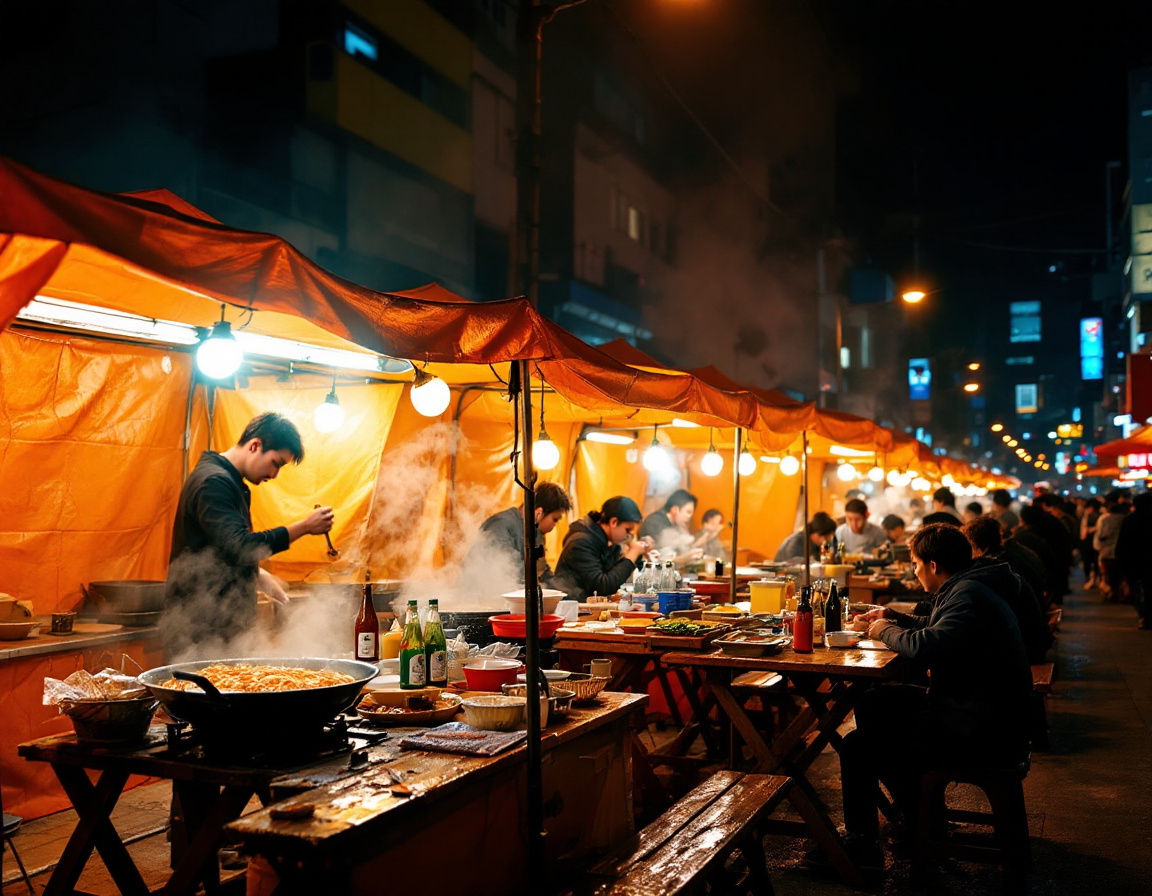
Jongno is Seoul’s historical center, the area around Gyeongbokgung Palace, Insadong, and the Cheonggyecheon stream. Euljiro, just south, has been reborn as Seoul’s hippest neighborhood: a grid of old printing shops and hardware stores now hiding speakeasy bars and retro-cool restaurants behind unmarked doors. Together, these two neighborhoods are where Seoul’s food identity is strongest.
What to eat in Jongno and Euljiro
Pojangmacha tents (Jongno 3-ga area), the stretch around Jongno 3-ga station is Seoul’s pojangmacha epicenter. After dark, orange and blue tents line the streets, serving tteokbokki, odeng (fish cake in hot broth), sundae (Korean blood sausage), and cheap soju. Budget ₩10,000-20,000 (~$7.50-15) per person for food and drinks. This is the single most quintessentially Seoul dining experience you can have.
Tosokchon Samgyetang, Korea’s most famous ginseng chicken soup restaurant, near Gyeongbokgung Palace. A whole young chicken stuffed with ginseng, jujubes, garlic, and glutinous rice, simmered until the meat falls off the bone. ₩17,000 (~$13). Queue is 30-60 min at peak, but moves fast. Go for lunch.
Euljiro retro restaurants, Euljiro 3-ga and 4-ga hide old-school Korean restaurants that haven’t changed since the 1970s. Galbi-jjim (braised short ribs), budae jjigae (army stew with kimchi, spam, ramen), and grilled pork belly. Menus in Korean only, prices honest. Ask for the retro-cool spots along the alley behind Euljiro 3-ga exit 4.
Insadong traditional tea houses, Insadong’s side alleys have atmospheric traditional Korean tea houses serving omija-cha (five-flavor berry tea), ssanghwa-tang (herbal tonic), and tteok (rice cakes). ₩8,000-12,000 (~$6-9) for tea and a sweet. A calm counterpoint to the sensory overload of the food markets.
Gangnam and Apgujeong, upscale Korean and hanwoo BBQ
Gangnam is Seoul’s wealthy southern district, the one from the song. The food here is polished and expensive, but the quality reflects the price. This is where Seoul’s best Korean BBQ lives, alongside high-end modern Korean restaurants and the city’s dessert culture.
What to eat in Gangnam and Apgujeong
Hanwoo BBQ (premium Korean beef), Gangnam has the highest concentration of premium BBQ restaurants in Seoul. Hanwoo is Korea’s equivalent of wagyu, intensely marbled, buttery, expensive. Budget ₩50,000-100,000+ (~$37-75+) per person for a proper hanwoo dinner. Maple Tree House (Gangnam branch) and Born & Bred are top picks. The meat is grilled tableside, often by the staff who know exactly when each cut is ready.
Garosugil cafes and brunch, the tree-lined Garosugil street in Sinsa-dong is Seoul’s brunch capital. Korean-style cafes with elaborate desserts: bingsu (shaved ice with red bean and mochi), soufflé pancakes, matcha lattes. ₩10,000-18,000 (~$7.50-13) for a drink and dessert. Instagrammable by design, genuinely delicious in execution.
Samwon Garden, operating since 1976, this is one of Seoul’s most iconic galbi (marinated short rib) restaurants. The garden setting is beautiful, the meat is excellent, and the banchan spread is generous. ₩40,000-60,000 per person. Worth it for a special-occasion Korean BBQ experience.
Itaewon and Yongsan, global flavors, halal options
Itaewon has always been Seoul’s most international neighborhood, originally shaped by the nearby US military base. Today it’s where you’ll find Seoul’s best non-Korean food: Mexican tacos, Middle Eastern shawarma, Indian curries, craft breweries, and the city’s largest halal food scene.
What to eat in Itaewon and Yongsan
Halal food street (near Itaewon mosque), the streets behind the Seoul Central Mosque have the city’s best halal restaurants: Turkish kebabs, Pakistani curries, Middle Eastern mezze. ₩10,000-15,000 (~$7.50-11) for a full meal. Essential for Muslim travelers, and genuinely excellent food for anyone.
Yongsan craft beer and fusion scene, the Yongsan area (especially around Haebangchon, locally HBC) has become Seoul’s craft beer hub. Small breweries pair Korean-fusion dishes with IPAs and stouts. Budget ₩15,000-25,000 for food and a couple of beers.
Vatos Urban Tacos, Korean-Mexican fusion that actually works: kimchi carnitas fries, galbi tacos, gochujang salsa. ₩15,000-25,000 (~$11-19). A fun break from pure Korean food without leaving Seoul’s flavor universe.
Hongdae and Mapo, student food, budget BBQ, late-night culture
Hongdae (Hongik University area) is Seoul’s university and indie culture district. The food here is cheap, creative, and designed for young people eating on student budgets. Nearby Mapo-gu is famous for one thing in particular: mapo galbi, some of the best-value BBQ in the city.
What to eat in Hongdae and Mapo
Budget BBQ restaurants (Mapo-gu), Mapo has dozens of BBQ joints offering samgyeopsal (pork belly) and galbi at prices that Gangnam can’t match. ₩12,000-18,000 (~$9-13) per person for all-you-can-eat pork belly with banchan and ssamjang. The restaurants along Mapo-daero near Gongdeok station are reliably excellent.
Hongdae late-night street food, after midnight, the streets around Hongdae station fill with pojangmacha, tteokbokki stalls, and toast stands (Korean egg toast, a grilled sandwich with egg, ham, cabbage, and ketchup-mayo for ₩2,500). This is where Seoul’s university students refuel between rounds of karaoke and soju.
Jjukkumi alley (Mapo), a cluster of restaurants specializing in jjukkumi bokkeum, spicy stir-fried baby octopus with gochujang, vegetables, and sometimes cheese. ₩12,000-15,000 per person. Fiery, messy, addictive. Order with rice to temper the heat.
Noryangjin Fish Market, choose your fish, watch it served
Noryangjin is Seoul’s answer to Tsukiji, a massive wholesale fish market where you can buy live seafood from the market floor, then carry it upstairs to a restaurant that will prepare it for you on the spot. It’s theatrical, it’s fresh, and it’s one of the most unique dining experiences in the city.
What to eat at Noryangjin
Live sashimi (hoe), walk the market floor, pick your fish (flounder, sea bream, abalone, octopus), negotiate a price, and take it upstairs. The restaurant charges a ₩5,000-10,000 preparation fee and serves your fish as sashimi with ssamjang, perilla leaves, and garlic. Total budget: ₩30,000-50,000 (~$22-37) per person for a full seafood spread.
Ganjang gejang (soy-marinated raw crab), some of the market-adjacent restaurants specialize in this dish, raw blue crab marinated in soy sauce until silky and intensely savory. Called “rice thief” (bap doduk) because you’ll eat three bowls of rice with it. ₩20,000-30,000 per serving.
Seongsu and Anguk, Seoul’s coffee capitals
Seoul has the world’s highest density of cafes per capita. Coffee culture isn’t a side dish here, it’s a parallel food system with its own neighborhoods, rituals and obsessions. Two neighborhoods anchor the scene: Seongsu-dong (Seoul’s Brooklyn, where old factories turned into specialty roasters and dessert cafes) and Anguk / Bukchon (where traditional hanok houses host minimal-aesthetic third-wave coffee shops).
What to drink and eat at Seoul cafes
Specialty single-origin coffee at Seongsu roasters like Center Coffee, Felt Coffee, and Fritz Coffee Company. ₩6,000-9,000 per pour-over. The quality rivals Tokyo and Portland; the cafe design alone justifies the trip.
Bingsu, Korean shaved ice topped with red bean (patbingsu), fresh strawberry, mango, or matcha, with condensed milk drizzle and rice cake mochi. Sulbing chain serves the standard at ₩9,000-15,000; high-end versions at hotel cafes hit ₩30,000+. The texture should be powder-soft, not crunchy ice.
Cafe-only desserts, Seoul invented the dessert-cafe genre. Soufflé pancakes (jiggly Japanese-style stacks), Korean croffles (croissant-waffle hybrids), brown sugar boba lattes, and increasingly elaborate seasonal creations. Garosugil, Yeonnam-dong, and Seongsu are the hotspots.
Anguk hanok cafes, traditional wood-and-paper Korean houses converted into minimal cafes. Sip a hojicha latte while sitting on the floor of a 100-year-old house. Onion (Anguk branch), Cafe Sukara, and Tongin Donggwa are the institutions.
Late-night Seoul: chimaek, ramyeon, and the convenience store ecosystem
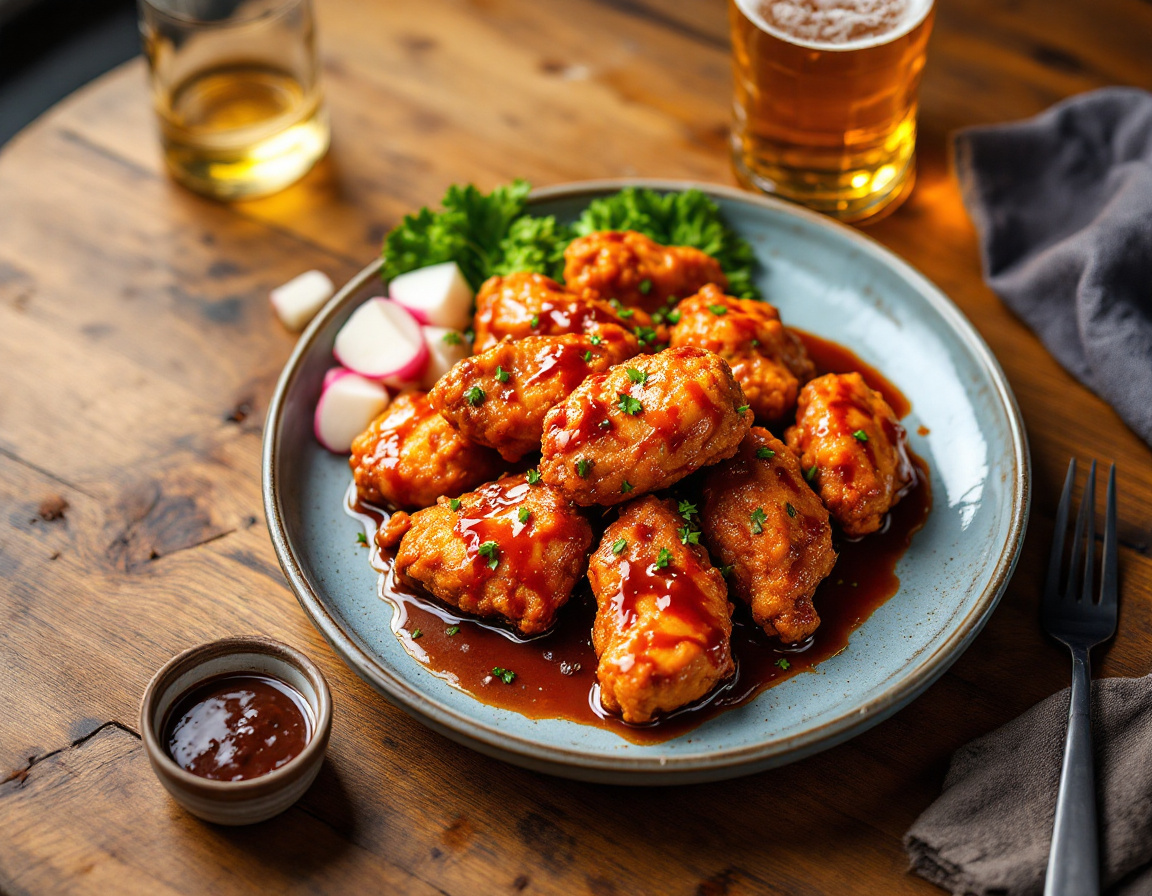
Seoul’s nighttime food scene is its own continent. The city doesn’t slow down at 10 PM, it switches modes. Office workers leave their cubicles, university students finish classes, and the late-night ecosystem activates.
Chimaek (fried chicken + beer)
Chi from chicken, maek from maekju (beer). The national late-night ritual. Korean fried chicken is double-fried for an impossibly crispy shell, then tossed in sauces ranging from soy-garlic to yangnyeom (sweet-spicy) to honey-mustard. Ordered with cold beer (or soju), eaten at midnight while watching baseball on TV, it’s the comfort meal of an entire country. ₩18,000-25,000 ($13-19) per person for a chicken plus beers.
The major chains are BBQ Chicken, Kyochon (the gold standard for soy-garlic), BHC, Pelicana, and Goobne. The independent shops in Mapo and Hongdae often outperform them. Crucially, you don’t need to leave your hotel, every chicken restaurant delivers via Baemin (Korea’s biggest delivery app) and the chicken arrives still crispy because the boxes are engineered for it.
Ramyeon at 3 AM
Instant ramyeon is Korea’s late-night soul food. Convenience stores (CU, GS25, 7-Eleven) have built-in ramyeon stations: you grab a cup, add hot water at the counter, wait 3 minutes, eat at the standing bar inside the store. ₩1,500-3,500 ($1-2.50). Shin Ramyun is the classic, but try Buldak Bokkeummyeon (Korean fire noodles) if you want to see what spice tolerance looks like. The convenience-store-at-3-AM scene is a Korean cultural archetype, especially in K-dramas.
The Korean convenience store ecosystem
Korean konbini are not convenience stores in the Western sense. They’re full-service late-night eating venues with hot food counters, instant-ramyeon stations, fresh kimbap, triangular onigiri (samgak gimbap), Korean egg sandwiches, hot dogs, dumplings, and Korean takeout meals (dosirak). A complete dinner at a GS25 or CU runs ₩4,000-7,000 ($3-5). They never close. They’re everywhere.
Seoul’s food calendar by season
Korean food culture is deeply seasonal. Menus rotate, festivals come and go, and locals associate specific dishes with specific months. Eating in season is when Seoul food peaks.
| Season | Months | Must-eat | Why |
|---|---|---|---|
| Spring | March-May | Naengi (shepherd’s purse) soup, fresh wild greens (sanchae), strawberries, cherry blossom hwajeon (flower pancake) | Foraging season, mountain greens reach Seoul markets |
| Summer | June-August | Naengmyeon (cold buckwheat noodles), patbingsu (red bean shaved ice), samgyetang on Boknal days, mul-naengmyeon | Cold soups and shaved ice peak. Samgyetang is paradoxically eaten in the hottest weeks (fighting heat with heat) |
| Autumn | September-November | Songpyeon (rice cakes), persimmons, jeon (pancakes) during Chuseok, soft tofu stew, hairy crab | Harvest season. Chuseok (Korean Thanksgiving) drives a national feast in late September |
| Winter | December-February | Hotteok, eobok-jjigae (fish cake stew), kkori-gomtang (oxtail soup), tteokguk (rice cake soup for Lunar New Year) | Hot stews dominate. Tteokguk on Lunar New Year adds a symbolic year to your age |
Kimjang season (late November-early December) deserves its own mention: this is when families across Korea collectively make kimchi for the winter. UNESCO recognizes kimjang as Intangible Cultural Heritage. You’ll see massive piles of napa cabbage outside markets and apartment buildings throughout Seoul. Some restaurants and cultural centers run kimjang workshops, an unforgettable hands-on experience if you can time your trip.
The essential dishes to eat in Seoul
Seoul’s food identity spans royal court cuisine to pojangmacha street stalls. These are the non-negotiables, skip any and you’ve left a gap in your Seoul food story.
Three Korean classics anchor any first trip. Bibimbap is the quintessential rice bowl: warm rice topped with sauteed vegetables, a raw or fried egg, and a spoon of gochujang, all stirred together at the table (the Jeonju version is the benchmark, and a sizzling stone-bowl dolsot bibimbap crisps the rice at the base). Bulgogi is the gateway Korean BBQ, thin ribeye marinated in soy, pear, garlic and sesame, grilled sweet and tender and wrapped in lettuce with ssamjang. Mandu, Korean dumplings stuffed with pork, kimchi or glass noodles, come steamed, pan-fried (gunmandu), or dropped into soup, and Gwangjang Market fries them fresh all day.
| # | Dish | Where to try | Price (₩ / USD) | Area |
|---|---|---|---|---|
| 1 | Korean BBQ (samgyeopsal / galbi) | Mapo BBQ joints / Maple Tree House | ₩12-80K / $9-60 | Mapo / Gangnam |
| 2 | Tteokbokki (spicy rice cakes) | Myeongdong stalls / pojangmacha | ₩3-5K / $2.20-3.70 | Myeongdong / everywhere |
| 3 | Kimchi jjigae (kimchi stew) | Any local restaurant / university area | ₩7-9K / $5-7 | Everywhere |
| 4 | Bindaetteok (mung bean pancake) | Gwangjang Market stalls | ₩4K / $3 | Gwangjang |
| 5 | Samgyetang (ginseng chicken soup) | Tosokchon | ₩17K / $13 | Jongno |
| 6 | Naengmyeon (cold buckwheat noodles) | Woo Lae Oak / Pildong Myeonok | ₩12-15K / $9-11 | Jung-gu |
| 7 | Jjajangmyeon (black bean noodles) | Any Chinese-Korean restaurant | ₩7-9K / $5-7 | Everywhere |
| 8 | Yukhoe (beef tartare) | Gwangjang Market (Gate 7 stalls) | ₩15-18K / $11-13 | Gwangjang |
| 9 | Hotteok (sweet filled pancakes) | Myeongdong / winter street vendors | ₩1.5-2K / $1.10-1.50 | Myeongdong |
| 10 | Chimaek (fried chicken + beer) | Any chimaek restaurant / delivery | ₩18-25K / $13-19 | Everywhere |
| 11 | Bibimbap (mixed rice bowl) | Any restaurant / Jeonju-style houses | ₩8-12K / $6-9 | Everywhere |
| 12 | Bulgogi (marinated grilled beef) | BBQ houses / Gangnam | ₩16-28K / $12-21 | Everywhere |
| 13 | Mandu (Korean dumplings) | Gwangjang Market / Myeongdong stalls | ₩4-8K / $3-6 | Gwangjang / Myeongdong |
Practical tips for eating in Seoul
Banchan is free, use it
Every sit-down Korean meal comes with banchan, a spread of 3-12 small side dishes (kimchi, pickled radish, bean sprouts, dried anchovies, egg roll, etc.). They’re free and refillable. Ask banchan deo juseyo (more banchan, please). Don’t feel shy, this is expected. A meal without banchan isn’t a Korean meal.
Ordering Korean BBQ
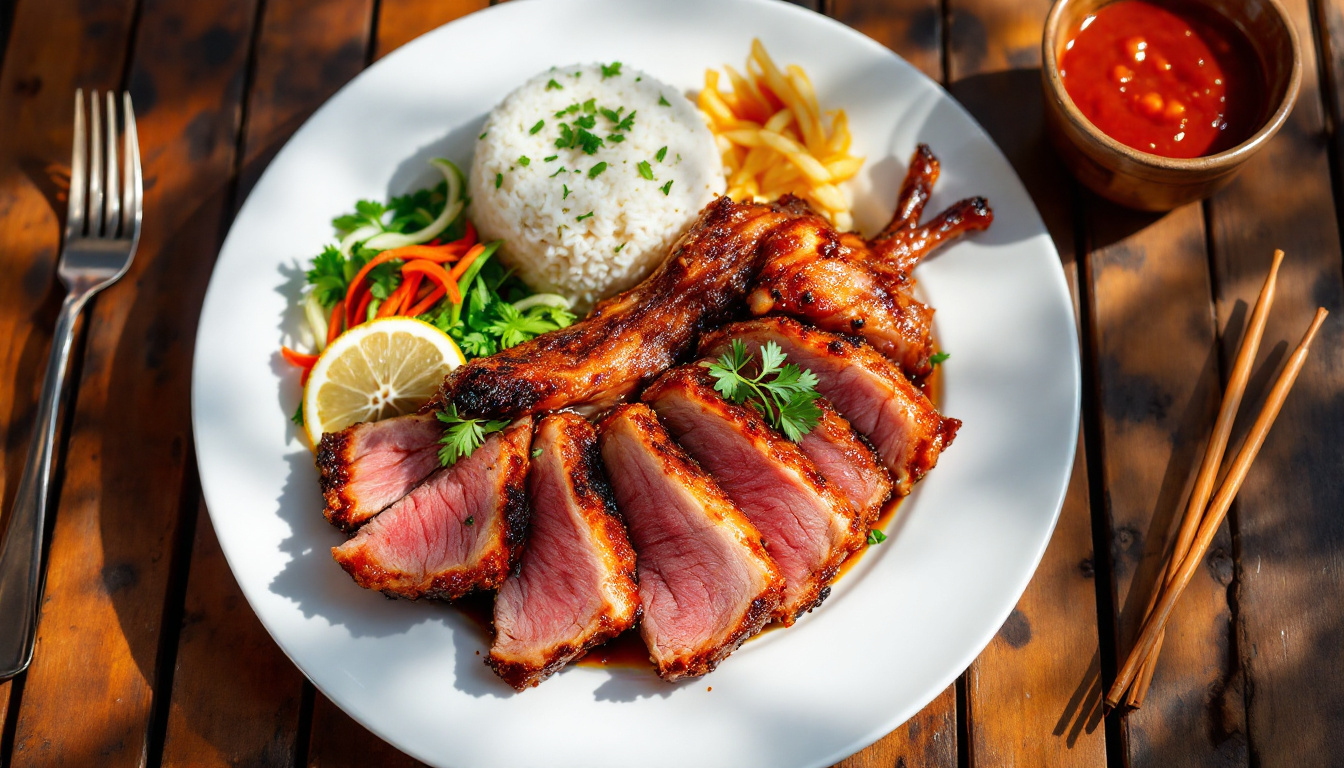
Korean BBQ restaurants usually require a minimum order of 2 servings (2 inbun) per meat type. Don’t order every cut at once, order 2-3 servings, eat, then order more. Start with samgyeopsal (pork belly) or chadolbaegi (thinly sliced brisket) for value, then upgrade to galbi (marinated ribs) or hanwoo if the budget allows. The staff will often handle the grilling, let them.
Naver Maps, not Google Maps
Google Maps is nearly useless in Seoul, restaurant information is outdated or wrong. Download Naver Map or KakaoMap. Both have restaurant listings, reviews, photos, and hours in Korean (use Google Translate camera for menus). Naver Map is the local standard and is far more accurate for food searches.
Delivery culture
Seoul has the world’s most advanced food delivery system. Virtually every restaurant delivers via Baemin (Baedal Minjok) or Coupang Eats apps. You can get Korean BBQ delivered to your hotel. The packaging is absurdly well-designed. If you’re too tired to go out, delivery is a legitimate Seoul food experience.
Tipping and etiquette
Do not tip in Seoul. It’s not expected and can cause confusion. Saying jal meogessseumnida (I will eat well) before a meal and jal meogeo-ssseumnida (I ate well) after is appreciated. Remove shoes when entering restaurants with floor seating (look for a shoe rack at the entrance). Don’t blow your nose at the table, excuse yourself to the restroom.
Frequently asked questions about food in Seoul
What is the signature dish of Seoul?
Seoul doesn’t have one, it has a roster. Korean BBQ is the most iconic experience, but locals eat kimchi jjigae, tteokbokki, and naengmyeon far more often. Most Seoulites would say kimchi jjigae is the everyday comfort food that defines home cooking.
What is the best area for street food in Seoul?
Myeongdong is the most famous with hundreds of stalls. For a more authentic experience, Gwangjang Market is unbeatable with legendary bindaetteok and kalguksu. Dongdaemun and Namdaemun markets are also excellent. For pojangmacha tent culture, head to Jongno 3-ga at night.
How much does food cost in Seoul?
Street food: ₩2,000-5,000 ($1.50-3.70). Full local meal: ₩8,000-15,000 ($6-11). Korean BBQ for two: ₩40,000-80,000 ($30-60). Premium hanwoo dinner: ₩100,000+ ($75). Convenience store meals: ₩3,000-5,000 ($2.20-3.70). Daily food budget: ₩30,000-60,000 ($22-45) eating well.
Is Seoul good for vegetarian travelers?
Challenging. Korean cuisine relies on meat, fish sauce, and anchovy broths, even vegetable dishes often contain animal products. Temple food (sachal eumsik) restaurants are the best option for plant-based meals. Itaewon and Gangnam have growing vegan cafe scenes. Always say gogi bbaego juseyo (without meat) and ask about anchovy broth.
What food market should I visit in Seoul?
Gwangjang Market is the top pick with legendary bindaetteok, mayak gimbap, and yukhoe. Namdaemun is bigger with excellent kalguksu. Tongin Market near Gyeongbokgung lets you build a custom lunchbox with tokens. Noryangjin Fish Market for the live seafood experience.
When is the best time to visit Seoul for food?
Autumn (September-November) is peak season, harvest abundance and Chuseok Korean Thanksgiving. Winter is prime for hot stews and street food like hotteok. Spring brings fresh greens and cherry blossom hwajeon. Summer means naengmyeon (cold noodles) and bingsu (shaved ice). Kimjang season (late Nov-early Dec) is the cultural high point.
What is a pojangmacha and should I eat at one?
A pojangmacha is a Korean street food tent, tarp-covered with plastic chairs, appearing after dark. They serve tteokbokki, odeng, sundae, and soju. They’re cheap, atmospheric, and quintessentially Seoul. Look for them around Jongno 3-ga, Euljiro, and near universities. A pojangmacha night with soju is one of the most authentic Seoul experiences possible.
How many days do I need in Seoul for the food?
Minimum 4 full days to cover Gwangjang, a Korean BBQ dinner, a chimaek night, a pojangmacha evening, and at least one premium experience (hanwoo or fine modern Korean). Five days lets you add Noryangjin and a cafe day in Seongsu. A week gives you space for repeat favorites and side trips. Two days is barely enough to scratch the surface.
What is jeong and why does it matter for eating in Seoul?
Jeong (정) is a uniquely Korean concept of warmth and communal bonding, often expressed through food. It’s why portions are generous, why banchan is endless, why your host orders for the table, why someone you barely know puts food on your plate. Understanding jeong shifts how Korean meals feel, you stop being a customer and start being a guest. Accept the food, share the table, don’t try to pay your share, and you’ve grasped the essential.
More Asian food guides waiting for you
City-by-city deep dives across East Asia and the wider continent.