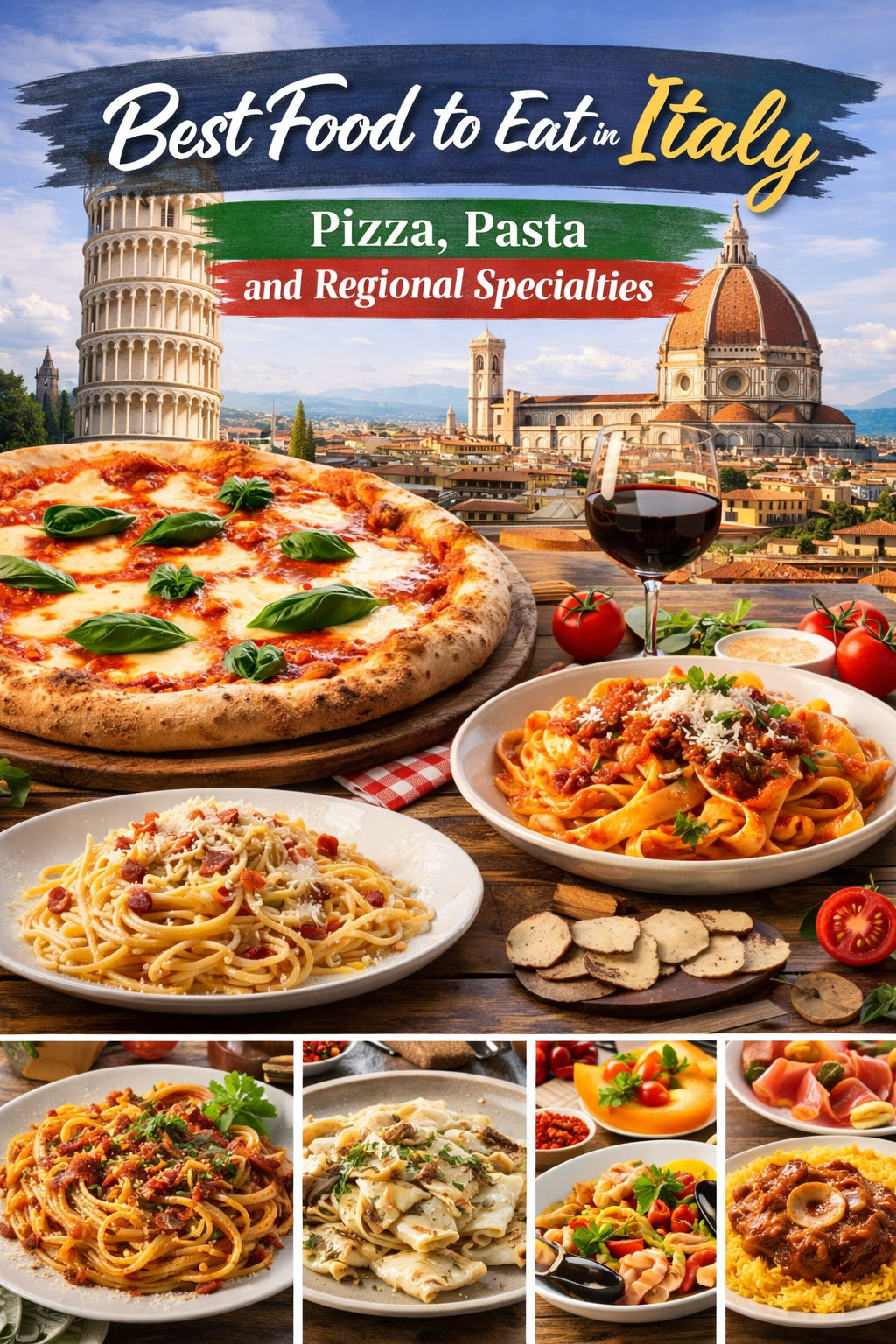
The best food to eat in Italy is cheap, regional, and fiercely local. Italy is the world’s most loved food country and the most misunderstood. Forget spaghetti bolognese (it does not exist here), chicken parmesan (never), and alfredo sauce (not a thing). Real Italian food is radically regional, obsessively seasonal, and built on one idea: the best possible ingredients with the least possible interference. Three things done perfectly beat thirty done adequately.
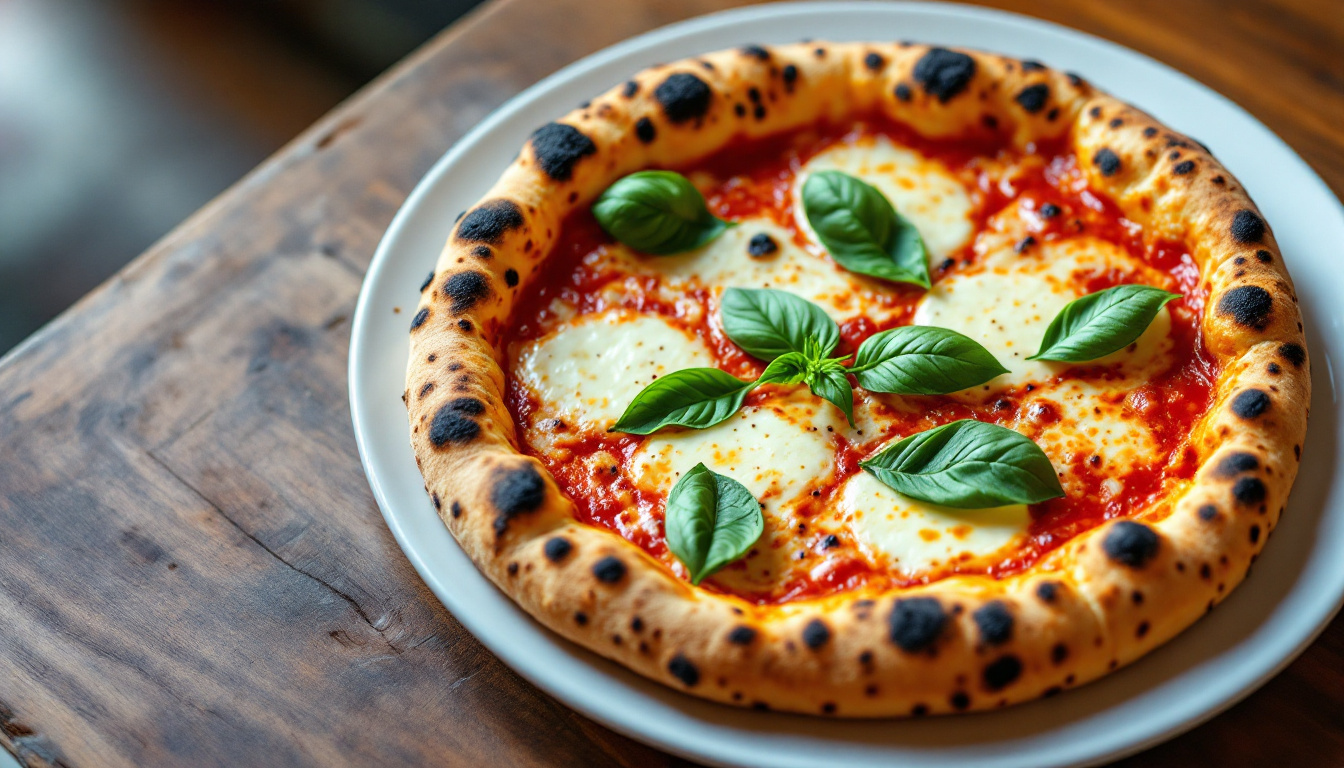
The pizza that rearranged my expectations cost four euros at a counter in Naples with two options on the menu, margherita or marinara, and a queue around the block. Charred, soft, faintly smoky, gone in five minutes. That is the secret to the best food to eat in Italy: it is twenty food countries pretending to be one, and the greatest version of almost everything is cheap, regional, and fiercely local. A Neapolitan pizzaiolo has nothing in common with a Bolognese pasta maker, and both are sure everyone else is doing it wrong.
This guide covers every major region, 20-plus must-try dishes, the best food cities, prices, and the unwritten rules that separate tourists who eat well from those who eat badly. Italy is one of nine countries in our guide to the best food in Europe.
Pizza in Naples: where it all began
Naples invented pizza, not “Italian pizza,” pizza. It was born here in the 18th century as food for the poor: flatbread, tomato, garlic, oil. In 1889 the pizzaiolo Raffaele Esposito made the margherita (tomato, mozzarella, basil, the colors of the flag) for Queen Margherita of Savoy. Everything since, from New York to Rome, descends from what happens in Naples. The deep dive on the city is in our Naples food guide.
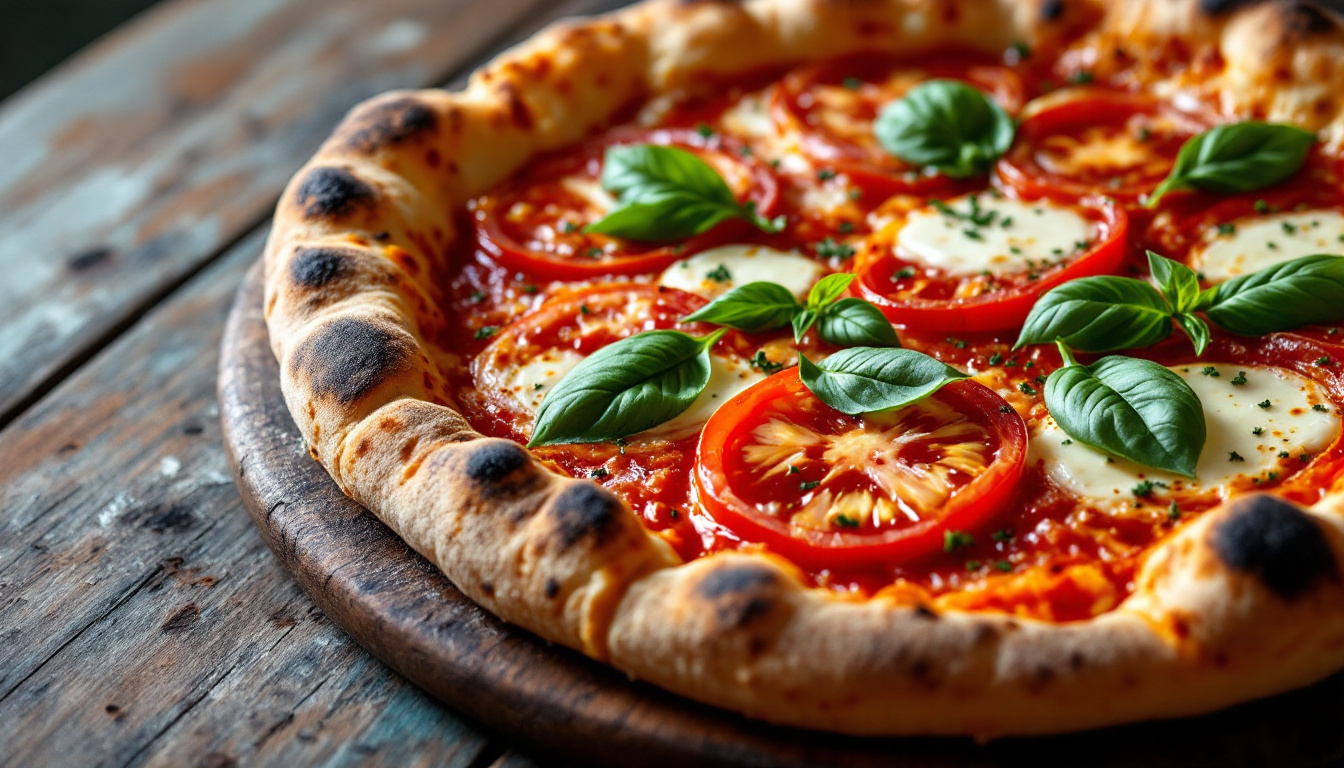
Neapolitan Pizza Pizza napoletana
The dough ferments 24 to 72 hours, is stretched by hand (never rolled, which kills the air), and bakes in a wood oven at 485°C for 60 to 90 seconds. The center is soft, slightly wet, and foldable; the puffy rim (cornicione) is charred in spots and tastes of smoke and yeast. The tomato is San Marzano from volcanic soil near Vesuvius, the cheese fior di latte or richer mozzarella di bufala.
L’Antica Pizzeria da Michele (since 1870) serves only margherita and marinara, with a queue around the block, for €4 to 5. Sorbillo and 50 Kalo are the modern benchmarks, and Di Matteo does pizza fritta, the deep-fried stuffed version.
Roman pizza is the other tradition: thinner, crispier, a crunchy base (scrocchiarella). Pizza al taglio, pizza by the cut, is Rome’s street version, baked in trays, cut with scissors, sold by weight. Bonci Pizzarium near the Vatican is the best, €2 to 5 for a generous slice.
Italian pasta: a region-by-region guide
Italy has over 400 named pasta shapes, and each exists because a specific regional sauce needs a specific shape to hold it. Rigatoni’s ridges grip ragu, orecchiette’s ears cup broccoli rabe, smooth spaghetti carries oil-based sauces. Matching the wrong pasta to the wrong sauce is, to an Italian, a minor crime.
- Rome. Carbonara, cacio e pepe, amatriciana, and gricia, the four sacred pastas (detailed below). €9 to 14.
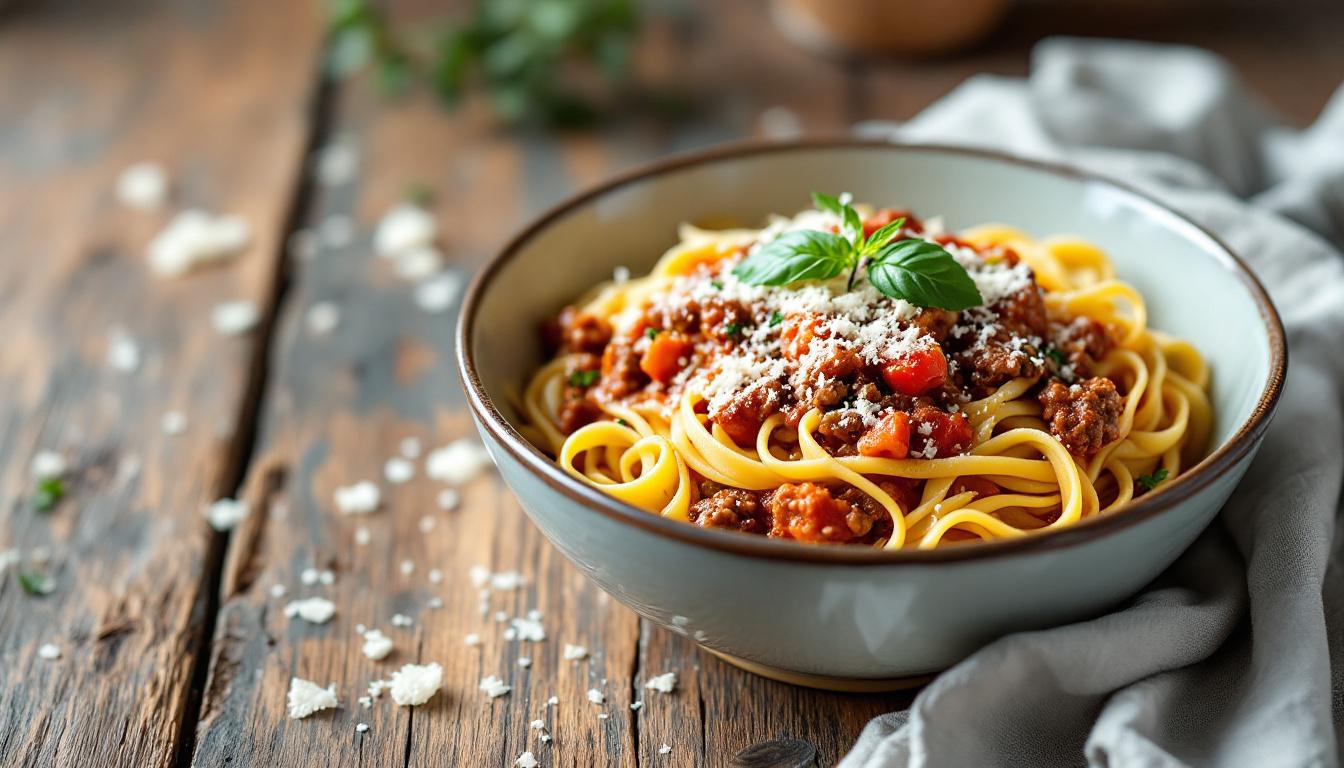
- Bologna (Emilia-Romagna). Tagliatelle al ragu (the real bolognese, never on spaghetti), tortellini in brodo, lasagna verde. €10 to 16.
- Genova (Liguria). Trofie al pesto genovese, short twisted pasta with hand-pounded basil pesto. €9 to 13.
- Puglia. Orecchiette con cime di rapa, ear-shaped pasta with broccoli rabe, garlic, anchovy, and chili. €8 to 12.
- Sicily. Pasta alla norma (fried eggplant, tomato, ricotta salata) and pasta con le sarde (sardines, wild fennel, pine nuts, raisins, saffron). €8 to 14.
- Napoli. Spaghetti alle vongole, with tiny clams, garlic, white wine, chili, and parsley. No cheese, ever. €10 to 16.
Roman cuisine: the four sacred pastas and beyond
Rome’s food is bold, simple, and unapologetic, built on guanciale (cured pork jowl), pecorino romano, and black pepper. Beyond the four pastas, Rome has a deep offal tradition (quinto quarto) from the working-class Testaccio district. The full picture is in our Rome food guide.
Carbonara Carbonara
The most famous and most abused Roman pasta. The real thing: rigatoni or spaghetti tossed with raw egg yolks, pecorino romano, crispy guanciale, and black pepper, the residual heat cooking the egg into a creamy custard coating. There is no cream, no garlic, no parsley. Roscioli, Da Enzo al 29, and Felice a Testaccio are the benchmarks.
€11 to 14 at a trattoria. If it arrives pale and saucy with cream, you are in a tourist trap.
Cacio e Pepe Cacio e pepe
The most technically difficult pasta with the fewest ingredients: tonnarelli, pecorino romano, and black pepper. The pecorino is emulsified with starchy pasta water into a creamy, clump-free sauce, a texture that takes years to master. Roma Sparita serves it theatrically in a crisp cheese bowl; Felice is the traditional bench mark.
€10 to 13. When it is right, three cheap ingredients become one of the great pastas on earth.
Amatriciana and Gricia Amatriciana / Gricia
Amatriciana is guanciale, San Marzano tomato, pecorino, and chili, slightly sweet, salty, and smoky, named after the town of Amatrice. Gricia is the lesser-known ancestor: guanciale and pecorino with no tomato, essentially a white amatriciana. Many historians think gricia is the root from which carbonara (add egg) and amatriciana (add tomato) both grew.
Both run €10 to 14 and round out Rome’s sacred quartet alongside carbonara and cacio e pepe.
- Suppli. Roman fried rice balls filled with tomato risotto and melting mozzarella that stretches like a phone cord when you break them open. €1.50 to 3.
- Carciofi alla giudia. Jewish-style artichokes from the Ghetto, deep-fried whole until every leaf crisps into a flower. Peak season is April.
- Saltimbocca and coda alla vaccinara. Veal with prosciutto and sage in butter and white wine, and braised oxtail in tomato, celery, and cocoa, Testaccio’s signature quinto quarto dish.
Bologna and Emilia-Romagna: Italy’s true food capital
Bologna is called La Grassa, the Fat One, and the region around it produces Italy’s most famous ingredients: Parmigiano-Reggiano, prosciutto di Parma, traditional balsamic of Modena, mortadella, and the egg-pasta tradition behind tagliatelle, tortellini, and lasagna. If Italy is the world’s best food country, Emilia-Romagna is its best food region.
Tagliatelle al Ragu The real “bolognese”
The dish the world knows wrongly as spaghetti bolognese. In Bologna, the slow-cooked meat ragu clings to fresh egg tagliatelle, whose width is officially registered at 8mm with the local Chamber of Commerce. It is never served on spaghetti, and there is no such thing as “spaghetti bolognese” in Italy.
€10 to 16. Pair it with a glass of Sangiovese and accept that everything you ate before was an imitation.
Tortellini in Brodo Tortellini in brodo
Tiny navel-shaped pasta filled with pork loin, prosciutto, mortadella, and Parmigiano, served floating in a clear golden capon broth. This is Bologna’s most cherished dish, and families hand-fold hundreds for Christmas. The filling-to-pasta ratio and the clarity of the broth are everything.
€12 to 16. Add mortadella (the silky original that became cheap “baloney” abroad) and lasagna verde to complete the Emilia-Romagna table.
- Parma. Parmigiano-Reggiano (watch 500kg wheels being made), prosciutto di Parma, and culatello, the rarest cured meat in Italy, aged in riverside cellars near the Po.
- Modena. Traditional balsamic aged 12 to 25+ years in wooden barrels (nothing like the supermarket version), and Osteria Francescana, Massimo Bottura’s 3-star, repeatedly voted the world’s best restaurant.
- Mortadella and tigelle. The original pistachio-studded cold cut sliced thick on warm bread, and small round flatbreads served with cured meats and squacquerone cheese.
Florence and Tuscany: the land of steak and simplicity
Tuscan cuisine is cucina povera, peasant cooking elevated to art: unsalted bread, exceptional olive oil, white beans, wild boar, and the world’s most famous steak. In summer, that stale bread becomes panzanella, the tomato-and-bread salad, and year-round it thickens ribollita, the twice-boiled bean and vegetable soup.
Bistecca alla Fiorentina Bistecca alla fiorentina
A thick-cut T-bone from Chianina cattle, one of the oldest breeds on earth, grilled over oak or chestnut wood and served rare. Anything past medium-rare is refused by serious restaurants. Seasoned with only salt, pepper, and olive oil. A proper fiorentina weighs 1.2 to 1.5kg and serves two.
Charged by weight, €45 to 70 per kilo, at places like Trattoria Mario in Florence. It is the greatest steak in Europe, full stop.
- Ribollita. A thick “reboiled” bread soup of cannellini beans, cavolo nero, stale bread, and olive oil, cooked until a spoon stands up in it.
- Pappa al pomodoro. Bread-and-tomato soup, even simpler: stale bread, fresh tomato, garlic, basil, olive oil.
- Pici and lampredotto. Thick hand-rolled Sienese pasta with wild boar ragu, and Florence’s famous tripe sandwich from market stalls with salsa verde, €4 to 5.
Milan and northern Italy: butter, rice and refinement
The north trades olive oil for butter and pasta for rice and polenta, with alpine refinement and French-Austrian influence. Milan’s food is elegant and rich; Piedmont, the Veneto, and Liguria each have their own identity.
Risotto alla Milanese Risotto alla milanese
Carnaroli or Arborio rice slowly stirred with saffron-infused broth, butter, and Parmigiano until creamy, golden, and luxurious. Traditionally served alongside osso buco, the cross-cut braised veal shank whose marrow is the prize, finished with gremolata of lemon zest, garlic, and parsley.
€14 to 20. Add cotoletta alla milanese, the buttery breaded veal cutlet Milanese insist Vienna copied.
- Piedmont. Alba white truffles (October to December), the most expensive food ingredient on earth, shaved over tajarin egg pasta; plus vitello tonnato and the great reds Barolo and Barbaresco.
- Liguria. Pesto alla genovese (the original) and focaccia di Recco, paper-thin dough stuffed with melting stracchino.
- Venice. Cicchetti (Venetian bar snacks at bacari), sarde in saor (sweet-sour sardines), and bigoli in salsa.
Sicily and southern Italy: sun, seafood and street food
The south is where Italian food is loudest, boldest, and most affordable. Sicily’s cuisine carries Arab, Greek, Norman, and Spanish influence, with saffron, raisins, pine nuts, couscous, and marzipan found nowhere else in Italy. Two eggplant icons define the south: pasta alla Norma (fried aubergine, tomato, and salted ricotta) and parmigiana di melanzane, the baked layers of eggplant, tomato, basil, and cheese that the whole Mediterranean now claims as its own.
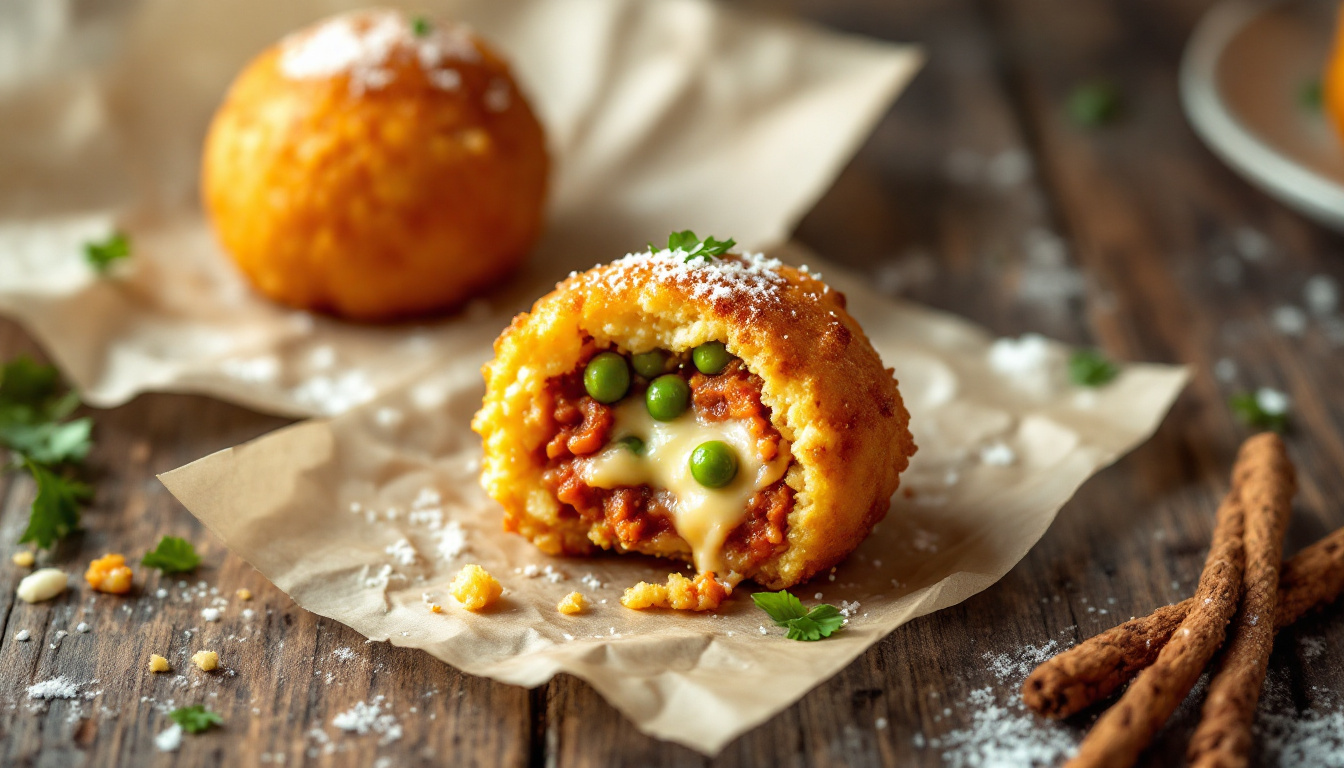
Arancini Arancini / arancine
Crispy fried rice balls stuffed with ragu, mozzarella, and peas (al ragu) or ham and cheese (al burro), the size of an orange, hence the name. Palermo and Catania argue over the spelling (arancina vs arancino) and the shape (round vs conical) with real heat. Eaten on the go, any time of day.
€2 to 4 from any friggitoria. The crunch giving way to molten center is one of street food’s great pleasures.
- Cannoli. Crisp fried pastry shells filled to order with sweet sheep’s-milk ricotta, candied fruit or chocolate chips at the ends. Never pre-filled, or the shell goes soggy. The Sicilian dessert.
- Pasta alla norma and caponata. Pasta with fried eggplant, tomato, and ricotta salata; and the sweet-sour eggplant relish that is Sicily in a bowl.
- Granita and brioche. Semi-frozen almond, coffee, or fruit ice eaten for breakfast with a soft brioche, the only correct way to start a Sicilian summer day.
- Puglia and the south. Orecchiette with broccoli rabe, burrata from Andria, and Naples’ fried street food, sfogliatella and pizza fritta.
Italian cheese, cured meats and street food
Italy’s cheese and salumi tradition is a pantheon in its own right, and much of the country’s best eating happens standing up, from a counter or a market stall.
- Parmigiano-Reggiano. The king, aged 24 to 36+ months, crystalline and savory, eaten in chunks, never pre-grated from a tub.
- Mozzarella di bufala and burrata. Fresh water-buffalo mozzarella from Campania, and its cream-filled cousin from Puglia, both eaten within a day of being made.
- Pecorino, gorgonzola, taleggio. Sharp sheep’s-milk pecorino, creamy or piccante gorgonzola, and pungent washed-rind taleggio.
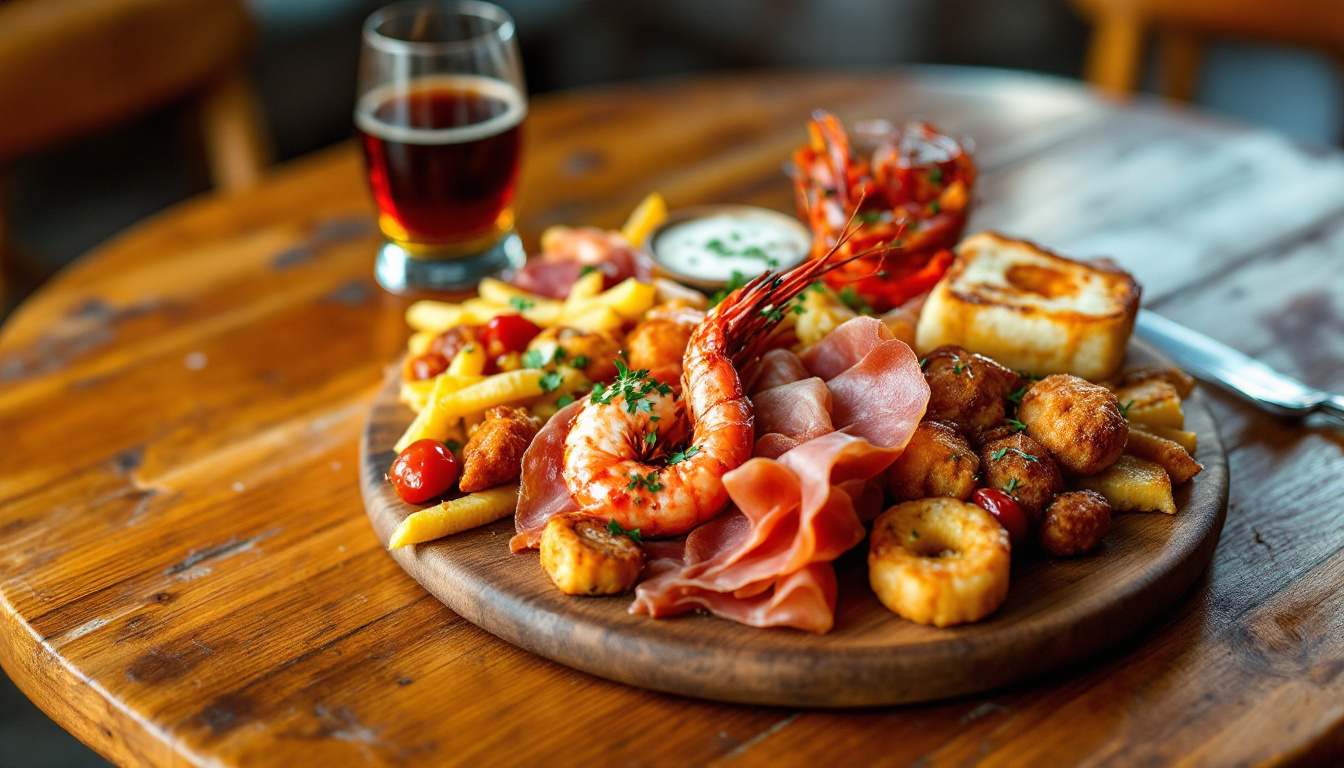
- Salumi. Prosciutto di Parma and San Daniele, mortadella, ‘nduja (spreadable spicy Calabrian sausage), bresaola, and culatello, the rarest of all.
- Street food. Pizza al taglio, suppli, lampredotto in Florence, panelle (chickpea fritters) in Palermo, and piadina flatbread wraps in Romagna.
- Gnocchi and bruschetta. Soft potato dumplings dressed with tomato, ragu, or gorgonzola (gnocchi alla sorrentina is the classic), and grilled bread rubbed with garlic, olive oil, and tomato, the simplest Italian starter.
Gelato, coffee and dolci: the sweet side of Italy
Gelato Gelato, not ice cream
Gelato has less fat and less air than ice cream, so it is denser and more intensely flavored, served slightly warmer and softer. Real gelato is dull and flat in color (pistachio is khaki, not neon green) and stored in covered steel tins, not heaped in fluffy mountains. Tubs piled high and bright are the tourist-trap tell.
€2.50 to 4 for two scoops. Seek out a gelateria artigianale and look for natural, muted colors.
- Coffee. Espresso at the bar standing up, never a cappuccino after 11 AM (it is a breakfast drink). A caffe costs about €1 to 1.50 at the counter. For the wider story see our best coffee around the world guide.
- Digestivo. Meals end with a digestif: limoncello on the Amalfi Coast and in the south, amaro or grappa in the north. It is sipped, not shot, and often offered free by the house after dinner.
- Dolci. Tiramisu (from the Veneto), panna cotta (Piedmont), sfogliatella and babà (Naples), cannoli and cassata (Sicily), and panettone at Christmas.
Italian wine: a quick essential guide
Italy makes more wine than any country on earth, and the house wine (vino della casa) at a good trattoria is almost always a safe, cheap bet, around €4 to 8 for a quarter-litre carafe. The headline regions:
- Tuscany. Sangiovese reds: Chianti Classico, Brunello di Montalcino, and the Super Tuscans. The partner for bistecca.
- Piedmont. Nebbiolo behind Barolo and Barbaresco, Italy’s most age-worthy reds.
- Veneto. Prosecco, Amarone, Soave, and Valpolicella.
- South. Sicily’s Nero d’Avola and Etna wines, Campania’s Aglianico and Falanghina.
Best food cities in Italy
La Grassa, the heart of egg pasta and salumi. Must-eat: tagliatelle al ragu, tortellini in brodo, mortadella from the Quadrilatero market, tigelle, and a day trip to Parma or Modena for Parmigiano and balsamic.
Rome for the four sacred pastas, suppli, and Jewish-Roman artichokes (full Rome guide). Naples for the original pizza, sfogliatella, and fried street food (full Naples guide). Two opposite poles of central-southern eating.
Florence for bistecca, lampredotto, and Tuscan cucina povera. Palermo for the most chaotic and delicious street-food markets in Europe (Ballaro, Vucciria): arancini, panelle, sfincione, and pane con la milza.
Milan for risotto alla milanese, cotoletta, and aperitivo culture; the Piedmont nearby for truffles and Barolo; Liguria for pesto and focaccia di Recco.
Best food to eat in Italy: the dish guide with prices
| Dish | Type | Region | Price (€) | Must-try |
|---|---|---|---|---|
| Pizza margherita | Pizza | Naples | €4–6 | ★★★★★ |
| Carbonara | Pasta | Rome | €11–14 | ★★★★★ |
| Cacio e pepe | Pasta | Rome | €10–13 | ★★★★★ |
| Amatriciana | Pasta | Rome / Amatrice | €10–14 | ★★★★☆ |
| Tagliatelle al ragu | Pasta | Bologna | €10–16 | ★★★★★ |
| Tortellini in brodo | Pasta | Bologna | €12–16 | ★★★★★ |
| Trofie al pesto | Pasta | Liguria | €9–13 | ★★★★☆ |
| Orecchiette cime di rapa | Pasta | Puglia | €8–12 | ★★★★☆ |
| Spaghetti alle vongole | Pasta | Naples | €10–16 | ★★★★★ |
| Bistecca alla fiorentina | Steak | Tuscany | €45–70/kg | ★★★★★ |
| Risotto alla milanese | Rice | Milan | €14–20 | ★★★★★ |
| Osso buco | Meat | Milan | €18–26 | ★★★★☆ |
| Arancini | Street food | Sicily | €2–4 | ★★★★★ |
| Pasta alla norma | Pasta | Sicily | €8–14 | ★★★★☆ |
| Cannoli | Dessert | Sicily | €2–4 | ★★★★★ |
| Lampredotto | Street food | Florence | €4–5 | ★★★★☆ |
| Gelato | Dessert | Nationwide | €2.50–4 | ★★★★★ |
The unwritten rules of eating in Italy
- No cappuccino after 11 AM. Milk-heavy coffee is a breakfast drink; after a meal Italians take an espresso. Ordering a cappuccino after dinner marks you instantly.
- No cheese on seafood pasta. Never ask for parmesan on spaghetti alle vongole or any fish dish; it is a genuine faux pas.
- Respect the courses. Antipasto, primo, secondo, dolce, caffe. Order what you like, but do not ask for a secondo as a main with no primo.
- Coperto is normal. A small per-person cover charge (coperto, €1.50 to 3) appears on the bill for bread and service. It is not a scam, and tipping beyond it is not expected.
- Eat where the menu is short and in Italian. Long multilingual photo menus by a monument are the warning sign; a handwritten daily menu is the green flag.
For dining customs across other countries, see our guide to food etiquette around the world.
How to eat well in Italy on any budget
Prices here are 2026, in euros, with rough dollar conversions at roughly €1 to $1.10. Italy rewards eating like a local: a standing espresso at the bar, a slice of pizza al taglio, or a single plate of the regional pasta costs a fraction of the sit-down tourist version a few steps away.
Budget: under €25 a day ($27.50)
Breakfast of a cornetto and espresso at the bar (€2.50). Lunch of pizza al taglio or a panino (€4 to 6). Dinner of a single primo at a trattoria or street food like suppli, lampredotto, or arancini (€8 to 12). Gelato (€3). Italy rewards eating like a local: cheap, regional, and standing up.
Mid-range: €40 to 70 a day ($44 to 77)
Bar breakfast, a proper sit-down lunch or dinner with a primo and secondo and house wine (€25 to 40), an aperitivo (spritz and snacks, €8 to 12), and gelato. This is the sweet spot for eating beautifully across the regions.
High-end: €100+ a day ($110+)
Italy’s fine dining runs deep. Osteria Francescana in Modena (Massimo Bottura, repeatedly the world’s number one), Le Calandre near Padua, and Uliassi on the Adriatic. Tasting menus run €150 to 350+. Even a one-star regional restaurant delivers extraordinary value next to Paris or Tokyo.
Frequently asked questions about Italian food
What is the national dish of Italy?
Italy has no single national dish because the cuisine is fiercely regional. Pizza margherita (Naples) and pasta are the most internationally associated, but each region has its own icon: ragu in Bologna, carbonara in Rome, bistecca in Florence, risotto in Milan, arancini in Sicily.
Does spaghetti bolognese exist in Italy?
No. The dish the world calls spaghetti bolognese does not exist in Italy. In Bologna, the meat ragu is served on fresh egg tagliatelle, never on spaghetti. Chicken parmesan and fettuccine alfredo are also foreign inventions you will not find on an authentic Italian menu.
How much does food cost in Italy per day?
Bar breakfast 2 to 4 euro, a pizza or single pasta 5 to 14 euro, a full trattoria dinner 25 to 40 per person. Budget travelers manage on 25 to 35 euro a day eating street food and single courses; fine dining runs 150 to 350 and up. The south is cheaper than the north.
What is the best food city in Italy?
Bologna is widely considered Italy’s food capital for its pasta and salumi. Naples is essential for pizza, Rome for the sacred pastas, Florence for steak, Palermo for street food, and Milan for risotto and aperitivo. Each is a different argument for the title.
Can you put parmesan on any pasta in Italy?
No. Never put cheese on seafood pasta like spaghetti alle vongole; it is a real faux pas. Some dishes call for pecorino rather than parmesan (carbonara, cacio e pepe). When in doubt, taste first and follow what the kitchen sends, rather than asking for cheese by reflex.
Is Italy good for vegetarian travelers?
Excellent. Pasta, pizza, vegetable contorni, cheeses, and many regional dishes (pasta alla norma, cacio e pepe, ribollita, caprese) are naturally vegetarian. Check that pasta sauces are meat-free, since guanciale and anchovy hide in some classics. Vegans should watch for cheese, egg pasta, and butter in the north.
Why no cappuccino after lunch?
Italians consider milky coffee a morning drink that sits heavily on a full stomach. After a meal they take a plain espresso to aid digestion. It is a cultural norm rather than a rule, but ordering a cappuccino after lunch or dinner instantly marks you as a tourist.
More food guides waiting for you
Browse our complete collection of European food guides.