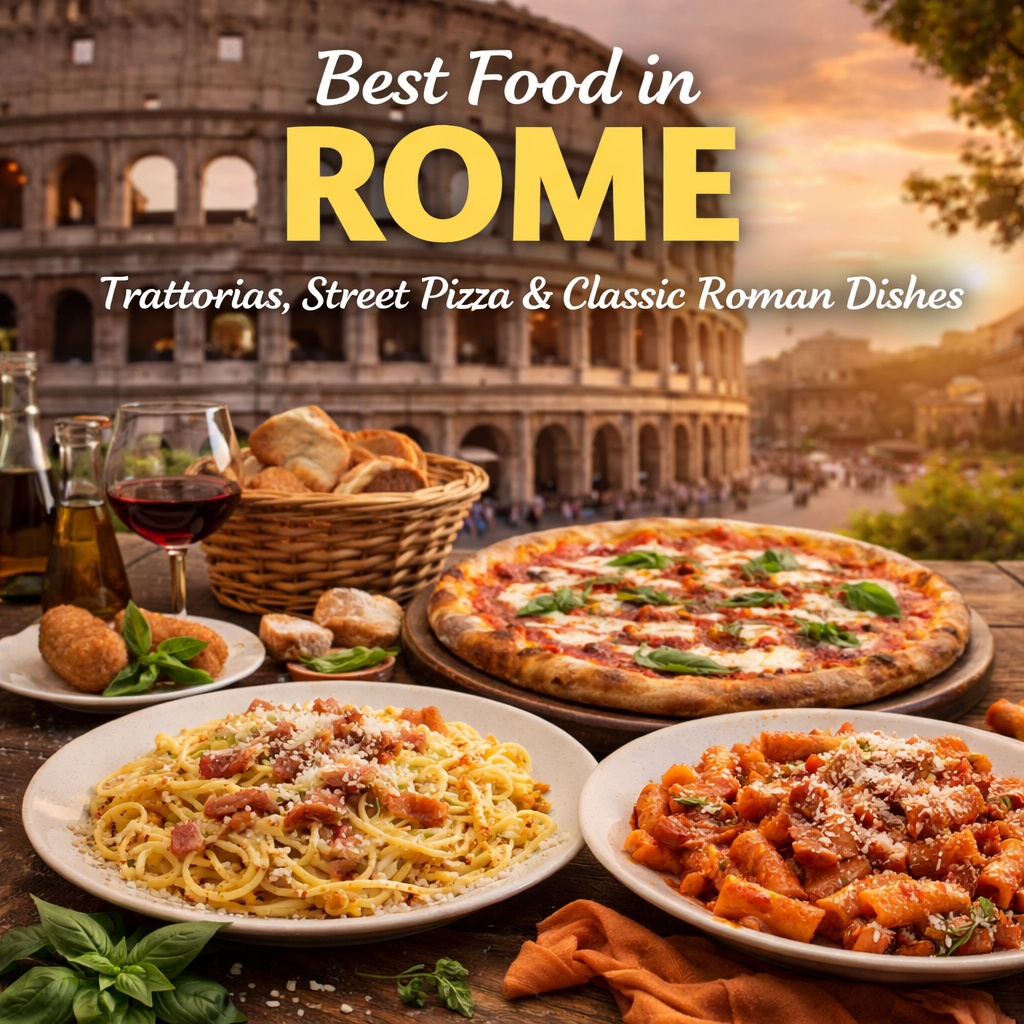
Best Food in Rome: Trattorias, Street Pizza and Classic Roman Dishes
Rome is a city that hasn’t changed its mind about food in 2,000 years — and doesn’t plan to. The same four pasta recipes that defined Roman trattorias a century ago still define them today. The best carbonara in the city tastes the way carbonara tasted in 1950. The supplì are still hand-rolled, the artichokes still fried whole in olive oil, and a Roman nonna will still correct you if you dare put cream in your cacio e pepe. This is where to eat, neighborhood by neighborhood.
In This Guide
Roman food is built on a philosophy so simple it’s almost aggressive: use the best ingredients, do as little as possible to them, and don’t get creative. Cacio e pepe is three ingredients — pasta, pecorino romano, black pepper. Carbonara is four — add guanciale and egg yolk. That’s it. No garlic, no onion, no cream, no improvisation. Romans treat their recipes the way other cities treat constitutional law: you can interpret, but you cannot amend.
This minimalism means everything depends on quality. The pecorino must be aged properly. The guanciale must be cut thick. The pasta must be rigatoni or tonnarelli, never spaghetti (for purists). The pepper must be freshly cracked. Get any element wrong and there’s nothing to hide behind. This is why the best Roman trattorias are so consistent — the recipes are so stripped down that execution is everything.
The result is one of the most satisfying food cities in Europe. You don’t need a guide, a reservation, or a strategy to eat well in Rome. You just need to avoid the tourist traps (easy once you know the signs) and trust the neighborhood trattorias that have been feeding locals for generations. For the broader Italian picture beyond the capital, see our complete guide to the best food in Italy. And if you’re debating Rome vs. Naples for the best pizza, our Naples food guide makes the southern case.
Trastevere — Cobblestone Trattorias and Roman Charm
Trastevere is Rome’s most beloved food neighborhood for visitors — a maze of narrow cobblestone streets south of the Tiber, lined with ivy-covered trattorias, wine bars, and gelaterie. It’s beautiful, atmospheric, and — honestly — increasingly touristy. But the good restaurants here are genuinely good, and the bad ones are easy to spot (see: Tips section).
The trick to Trastevere is going deeper. The main squares (Piazza di Santa Maria, Piazza Trilussa) are the most crowded and most overpriced. Walk two or three streets back and the quality-to-price ratio improves dramatically.
What to eat in Trastevere
Da Enzo al 29 (Via dei Vascellari 29) — Possibly the best traditional Roman trattoria in Trastevere. Tiny, perpetually full, cash-only. The cacio e pepe is textbook — creamy, peppery, no shortcuts. Tonnarelli all’amatriciana is superb. Fried artichokes in season. €12–16 per primo. No reservations — arrive at 12:15 or 19:15 to beat the queue.
Supplizio (Via dei Banchi Vecchi 143, near Trastevere) — Gourmet supplì (fried rice balls) elevated to an art form. The classic supplì al telefono (mozzarella-stuffed, named for the cheese strings that stretch like telephone wires) is €3. They also do seasonal specials: truffle, cacio e pepe, carbonara-filled. Takeaway or eat standing.
Dar Poeta (Vicolo del Bologna 45) — One of the best pizzerias in Trastevere. Not Neapolitan-style — this is Roman pizza: thinner, crispier, less doughy. The calzone with ricotta, mozzarella, and Nutella for dessert is famous. €8–14 per pizza. Reservations recommended for dinner.
Gelateria La Strega Nocciola — Artisanal gelato with seasonal flavors. Pistachio from Bronte, hazelnut from Piedmont, ricotta and fig. €2.50–4.50. Skip the gelato shops with mountains of neon-colored product — real gelato is stored in covered metal containers and isn’t piled high.
The best way to eat in Trastevere is to start with aperitivo (6–8 PM) at a wine bar with free snacks, then move to a trattoria for a late dinner (9 PM). This is how Romans do it. Try Enoteca Trastevere for natural wines and bruschetta before heading to Da Enzo for pasta.
Testaccio — Rome’s Real Food Neighborhood
If Trastevere is where tourists eat, Testaccio is where Rome eats. This working-class neighborhood in the south of the city was built around the old slaughterhouse (mattatoio), and its food tradition is rooted in quinto quarto (the “fifth quarter”) — the offal and cheaper cuts that slaughterhouse workers took home as part of their pay. From these humble ingredients, Roman cooks created some of the city’s greatest dishes.
Testaccio today is gentrifying but still holds its food soul. The Mercato Testaccio is the city’s best food market, and the trattorias here serve the most authentic Roman cooking you’ll find anywhere.
What to eat in Testaccio
Flavio al Velavevodetto (Via di Monte Testaccio 97) — Built into the side of Monte Testaccio (an ancient hill made of broken Roman pottery), this trattoria serves definitive Roman classics. The carbonara is rich and silky, the coda alla vaccinara (braised oxtail) is fall-apart tender. €12–18 per dish. Book ahead for dinner.
Mercato Testaccio (Via Beniamino Franklin) — Rome’s best covered food market. Ground-floor stalls sell produce, meat, cheese, and fish. The prepared-food counters inside the market are the real draw: Mordi e Vai for legendary bollito (boiled beef) sandwiches (€4–6), and several stalls serving supplì, trapizzino, and pasta dishes. Come at lunchtime.
Trapizzino (various locations, born in Testaccio) — A Roman invention: triangular pizza-pocket bread stuffed with slow-cooked fillings — oxtail, chicken cacciatore, eggplant parmigiana, tripe. €3.50–4.50 each. It’s street food that tastes like a trattoria main course. The Testaccio location on Via Giovanni Branca is the original.
Pizzeria Da Remo (Piazza di Santa Maria Liberatrice 44) — The quintessential Roman pizza experience. Paper-thin, crispy, served on metal trays. No frills, loud atmosphere, locals only. €7–10 per pizza. Cash only. Open evenings only (from 19:00). The fiori di zucca (zucchini flower with mozzarella and anchovy) pizza is a Roman classic.
Roman food exists because of poverty, not luxury. The wealthy ate the prime cuts; the workers got the organs, tails, cheeks, and feet. From these they created trippa alla romana (tripe in tomato sauce), coda alla vaccinara (oxtail stew), coratella (lamb offal with artichokes), and pajata (intestines with tomato sauce). Testaccio restaurants still serve all of these. You don’t have to love offal, but understanding quinto quarto helps you understand why Roman food tastes the way it does.
The Jewish Ghetto — Fried Artichokes, Deep History
Rome’s Jewish Ghetto, established in 1555 and abolished in 1870, is one of the oldest Jewish communities in Europe. Its food tradition — cucina giudaico-romanesca — is a unique fusion of Roman and Jewish cooking that produced dishes found nowhere else on Earth. The neighborhood today is small (a few blocks near the Tiber) but dense with restaurants and history.
What to eat in the Jewish Ghetto
Carciofi alla giudia (Jewish-style fried artichokes) — The signature dish of the neighborhood: a whole artichoke deep-fried until every leaf is golden and crispy. It looks like a flower made of chips. €6–8. Available only in season (roughly February–April). Nonna Betta and Ba’Ghetto are the most reliable restaurants for this dish. Out of season, some restaurants use frozen artichokes — always ask.
Carciofi alla romana (Roman-style braised artichokes) — The Ghetto’s other artichoke preparation: braised with garlic, mentuccia (wild mint), and olive oil until melting tender. Often served as an antipasto alongside the fried version for comparison. €5–7.
Filetti di baccalà (fried salt cod) — Light, crispy battered cod fillets, served hot from the fryer. The most famous spot is Filetti di Baccalà in Largo dei Librari, a no-frills hole-in-the-wall where the fillets come on paper with a squeeze of lemon. €5–7. Open evenings only.
Nonna Betta (Via del Portico d’Ottavia 16) — The best all-around restaurant in the Ghetto. Roman-Jewish dishes alongside classic Roman pasta. The concia di zucchine (fried and marinated zucchini) is perfect. €12–18 per main. Lunch is calmer than dinner.
Centro Storico — Navigating the Tourist Zone
The historic center around the Pantheon, Piazza Navona, and the Trevi Fountain is where most visitors spend their time — and where the worst tourist traps concentrate. But genuine gems exist here too. You just need to know where to look.
What to eat in the Centro Storico
Roscioli Salumeria con Cucina (Via dei Giubbonari 21) — Part deli, part restaurant, entirely outstanding. Their carbonara is legendary among Roman food writers. The cheese and salumi counter is a museum of Italian cured meats. €16–22 per primo. Book ahead — it’s small and famous.
Antico Forno Roscioli (Via dei Chiavari 34) — The bakery arm of the Roscioli empire. The pizza bianca (white pizza with olive oil and salt) is widely considered the best in Rome — pillowy, oily, addictive. €2–4 per piece. Also: pizza rossa (with tomato), focaccia, and bread. Come at morning for the freshest bakes.
Sant’Eustachio Il Caffè (Piazza di Sant’Eustachio 82) — Rome’s most iconic coffee bar, near the Pantheon. Their gran caffè is pre-sweetened and topped with a crema so thick it looks like meringue. €2.50 at the bar. Don’t ask for it without sugar — the sugar is the technique. Stand at the bar like a Roman, drink it in 30 seconds, and leave.
Giolitti (Via degli Uffici del Vicario 40) — Operating since 1900, this is Rome’s most historic gelateria. Touristy? Yes. Still excellent? Also yes. The pistachio and crema are benchmarks. €3–5. The location near the Pantheon is the original.
Avoid any restaurant that: has a person outside inviting you in, displays photos of food on the menu, has an identical menu in 6 languages, lists “fettuccine Alfredo” (not a Roman dish), or charges more than €2 for an espresso. One block away from these, you’ll find the real Rome.
Prati & the Vatican Area — Locals Near the Tourists
Prati is the residential neighborhood immediately north of the Vatican. While the streets directly adjacent to St. Peter’s are tourist-trap territory, Prati itself (especially around Via Cola di Rienzo and Via Ottaviano) has excellent everyday Roman restaurants at fair prices. This is where Vatican City employees and local families eat.
What to eat in Prati
Pizzarium Bonci (Via della Meloria 43) — Gabriele Bonci’s legendary pizza al taglio shop. Many consider this the best pizza in Rome — period. The toppings change daily and read like a fine-dining menu: mortadella with pistachio, burrata with anchovies, potato with rosemary. The dough is light, airy, and slightly fermented. €5–8 for a satisfying portion. Queue is always long. Worth every minute.
Sciascia Caffè 1919 (Via Fabio Massimo 80a) — A century-old coffee bar that serves espresso with a rim of dark chocolate on the cup. €1.50. A tiny detail that transforms the experience. This is the kind of place that makes Rome feel like Rome.
Non Solo Pizza (Via degli Scipioni 95) — Despite the name, the pizza here is superb. But also: excellent Roman pastas, fried starters, and salads. Good for a full meal near the Vatican. €10–15 per primo. Lunch is the sweet spot.
Monti — Wine Bars, Aperitivo and Neighborhood Cool
Monti is Rome’s oldest residential neighborhood, nestled between the Colosseum and Termini station. Once gritty and bohemian, it’s now Rome’s trendiest district — full of vintage shops, wine bars, and small restaurants with personality. The food here leans modern but respects tradition.
What to eat in Monti
Ai Tre Scalini (Via Panisperna 251) — A neighborhood wine bar that packs out every evening for aperitivo. Excellent natural wine list. The polpette (meatballs) are legendary — some of the best bar snacks in the city. €5–8 for drinks with snacks. The atmosphere on the outdoor terrace is pure Roman evening magic.
La Taverna dei Fori Imperiali (Via della Madonna dei Monti 9) — Traditional Roman trattoria with a few creative twists. Excellent amatriciana, good wine list. €13–18 per primo. The outdoor tables overlooking Via dei Fori Imperiali are some of the most romantic in Rome.
Aperitivo culture in Monti — Aperitivo (pre-dinner drinks with free snacks) is a Roman institution, and Monti does it best. Between 18:00 and 20:00, order a spritz (€7–9) at any bar on Via del Boschetto or Via Panisperna and you’ll get a plate of bruschetta, olives, chips, and sometimes pasta salad. Some bars do buffet-style aperitivo where one drink buys access to a full food spread. This is dinner for many young Romans.
Top 10 Dishes to Eat in Rome
Roman cuisine is the opposite of complicated. These ten dishes are built on simplicity, quality ingredients, and generations of repetition. You could eat in Rome for a week, have only these dishes, and miss nothing essential.
| # | Dish | Where to Try | Price | Area | Rating |
|---|---|---|---|---|---|
| 1 | Cacio e pepe | Da Enzo / Roscioli | €12–16 | Trastevere / Centro | ★★★★★ |
| 2 | Carbonara | Roscioli / Flavio al Velavevodetto | €13–18 | Centro / Testaccio | ★★★★★ |
| 3 | Pizza al taglio | Pizzarium Bonci / Antico Forno Roscioli | €2.50–8 | Prati / Centro | ★★★★★ |
| 4 | Supplì al telefono | Supplizio / Mercato Testaccio | €2–3 | Centro / Testaccio | ★★★★★ |
| 5 | Carciofi alla giudia | Nonna Betta / Ba’Ghetto | €6–8 | Jewish Ghetto | ★★★★★ |
| 6 | Amatriciana | Da Enzo / Flavio | €12–16 | Trastevere / Testaccio | ★★★★ |
| 7 | Trapizzino | Trapizzino (Via Giovanni Branca) | €3.50–4.50 | Testaccio | ★★★★ |
| 8 | Coda alla vaccinara (braised oxtail) | Flavio al Velavevodetto | €16–20 | Testaccio | ★★★★ |
| 9 | Gelato (pistachio / crema) | Fatamorgana / Giolitti / La Strega Nocciola | €2.50–5 | Various | ★★★★ |
| 10 | Filetti di baccalà | Filetti di Baccalà (Largo dei Librari) | €5–7 | Jewish Ghetto area | ★★★★ |
A word about carbonara rules: the correct Roman carbonara uses guanciale (cured pork cheek, not pancetta or bacon), pecorino romano (not parmigiano), egg yolks (not whole eggs), and absolutely no cream. The sauce should be silky and slightly runny, not thick or scrambled. If someone serves you carbonara with cream, you are not in a good restaurant. These are not snob rules — they’re quality indicators. A proper carbonara with four ingredients is more complex and flavorful than any cream-laden imitation.
Practical Tips for Eating in Rome
The coperto is not a scam
Roman restaurants charge a coperto (cover charge) of €1.50–3 per person. This covers bread and table service. It’s standard, legal, and listed on every menu. Don’t argue it. Tipping beyond the coperto is appreciated but not expected — rounding up or leaving €2–5 for good service is generous by Roman standards.
Eat at Roman times
Lunch: 12:30–14:30. Aperitivo: 18:00–20:00. Dinner: 20:00–23:00. Restaurants that are full at 18:30 are full of tourists. Romans eat dinner at 21:00. Adjust your schedule and you’ll eat better food surrounded by locals instead of tour groups.
Coffee rules
Cappuccino is a morning drink — ordering one after 11 AM or after a meal will mark you as a tourist. After lunch or dinner, drink an espresso (un caffè). Always drink at the bar (standing) — it’s cheaper (€1–1.50 vs. €3–5 at a table). The Italian coffee experience is fast: order, drink, pay, leave. It takes under 2 minutes.
Water and wine
Tap water in Rome is excellent (the city has been running on aqueducts for 2,000 years). The free public drinking fountains (nasoni) are everywhere — look for the small metal spouts. At restaurants, you’ll be asked “naturale o frizzante?” (still or sparkling) — this is bottled water, €2–3. House wine (vino della casa) is usually a Castelli Romani white or red and costs €4–8 per carafe. It’s reliably good.
Roman pizza al taglio shops are the ultimate budget meal. A filling lunch of 2–3 slices with a drink costs €6–8. Pair this with a €1 espresso and a €3 supplì and you’ve had an excellent Roman lunch for under €12. Also: many trattorias offer a pranzo fisso (fixed lunch menu) of primo + secondo + water for €12–15 on weekdays. Look for handwritten signs outside neighborhood restaurants.
Seasonal eating
Roman food is deeply seasonal. Artichokes: February–April. Puntarelle (chicory salad): winter. Figs with prosciutto: late summer. Porcini mushrooms: autumn. If something is listed as “di stagione” (in season), order it — this is when a dish is at its absolute best. Romans don’t eat artichokes in August, and neither should you.
Frequently Asked Questions About Food in Rome