Paris does not have street food the way Bangkok does, but it has something rarer: a city where the everyday baguette, the corner bistro, and the neighborhood boulangerie are all held to an almost absurd standard. The best food in Paris is often the cheapest, eaten standing at a counter or torn from a paper bag on a bench by the Seine. This is where and what to eat.
The best food in Paris is not hiding behind a tasting menu. It is the warm croissant at 8am, the steak frites at a zinc-topped bar, the wedge of runny cheese from a fromagerie, the falafel queue in the Marais. Eat like a Parisian, by neighborhood and by the clock, and the city feeds you better than almost anywhere in Europe.
Paris is the capital of our wider France food guide, and one of the great stops in our Europe food guide. Use this as the city-level deep dive.
What food to eat in Paris
Parisian eating runs on a handful of perfect, repeatable things. Master those and you’ll eat brilliantly for a week without ever opening a guidebook.
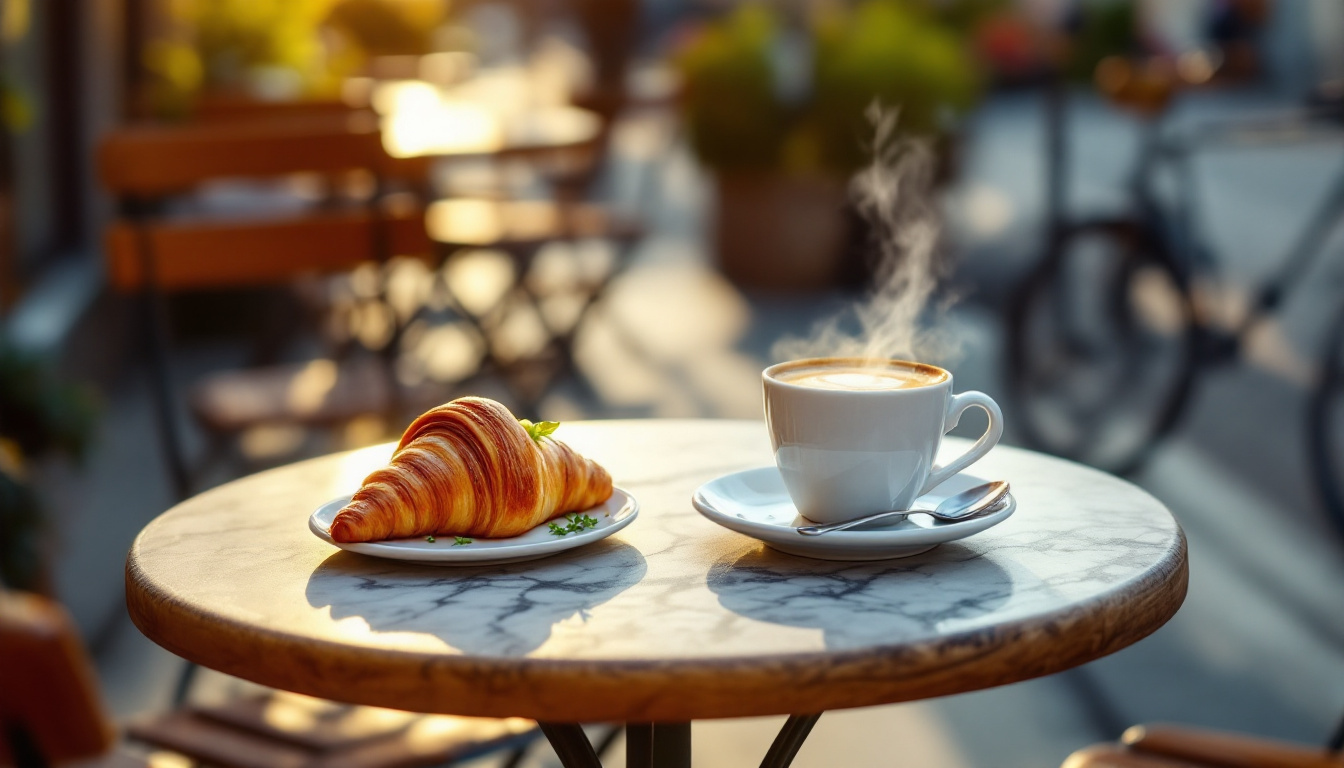
Croissant and pain au chocolat
The benchmark of any boulangerie. A good one is shatteringly crisp outside, soft and buttery within. Buy it before 9am, when the morning bake is freshest. Eat it on the spot.
Baguette, cheese and the jambon-beurre
A fresh baguette tradition costs barely more than a euro. Add a wedge of Comte, Brie de Meaux, or a ripe Camembert from a fromagerie and it becomes the best cheap lunch in the city. A few slices of saucisson and you’ve got a picnic. The single most popular lunch in France, though, is the jambon-beurre: a split baguette with good ham and a thick layer of butter, nothing else. Simple, perfect, sold in every boulangerie for a few euros.
Steak frites
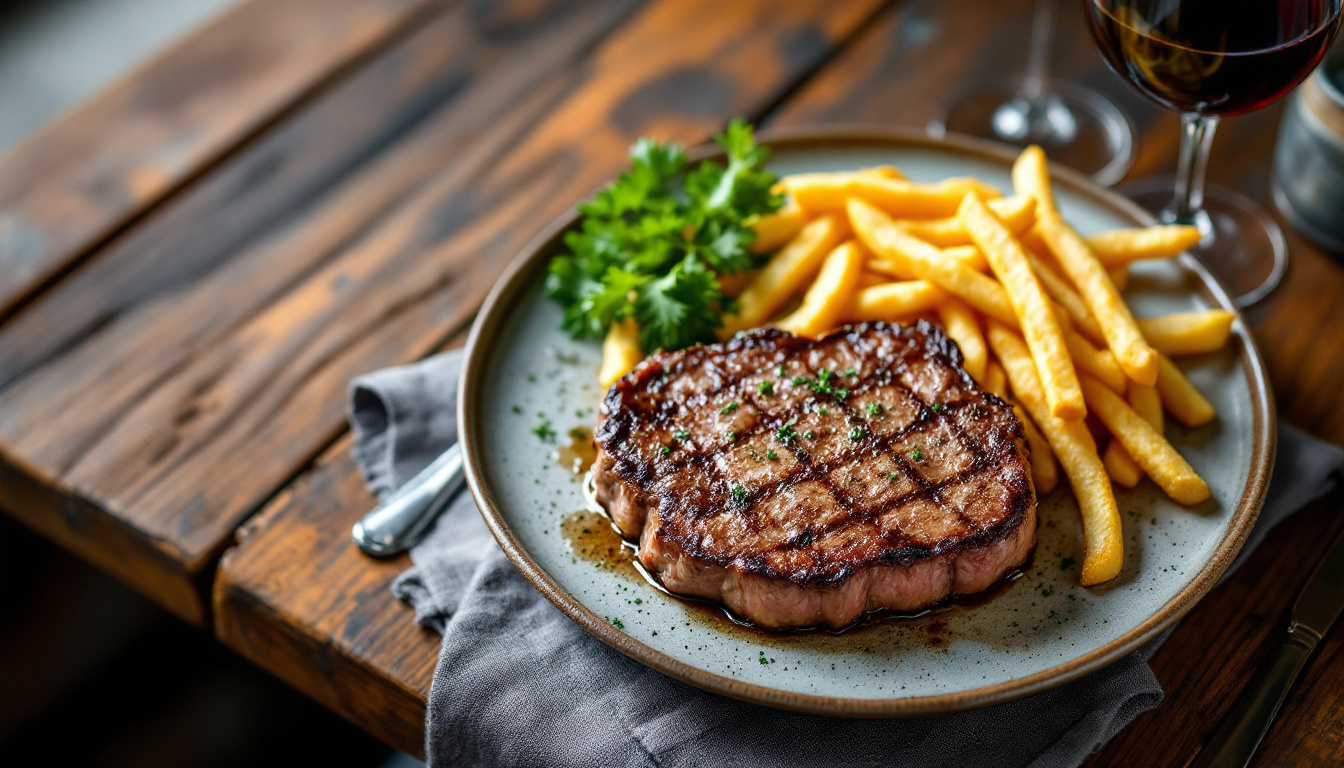
The defining bistro plate: a seared cut of beef, a heap of thin crisp fries, and a sauce, often a peppercorn or a herb butter. This is the dish to order when you sit down at a classic corner brasserie. Le Relais de l’Entrecote built a small empire on a single steak-frites-and-secret-sauce formula.
French bistro classics: boeuf bourguignon, coq au vin and confit
The slow-cooked heart of French cooking, and what most people picture as classic French food. Boeuf bourguignon is beef braised for hours in red wine with mushrooms, onions, and lardons. Coq au vin does the same with chicken. Confit de canard is duck leg cured and cooked in its own fat until the skin crisps and the meat falls off the bone. The cheapest and most underrated of all? Poulet roti, a quarter of rotisserie chicken with its dripping-soaked potatoes from a market stall. Look for them on the chalkboard plat du jour, or at an old-school bouillon like Chartier or Republique, where a full classic meal still costs very little.
French onion soup
Slow-cooked onions in beef broth under a lid of melted Gruyere and toasted bread. Once a market-workers’ dish, now a bistro comfort classic. Unbeatable in cold weather.
Escargots and foie gras
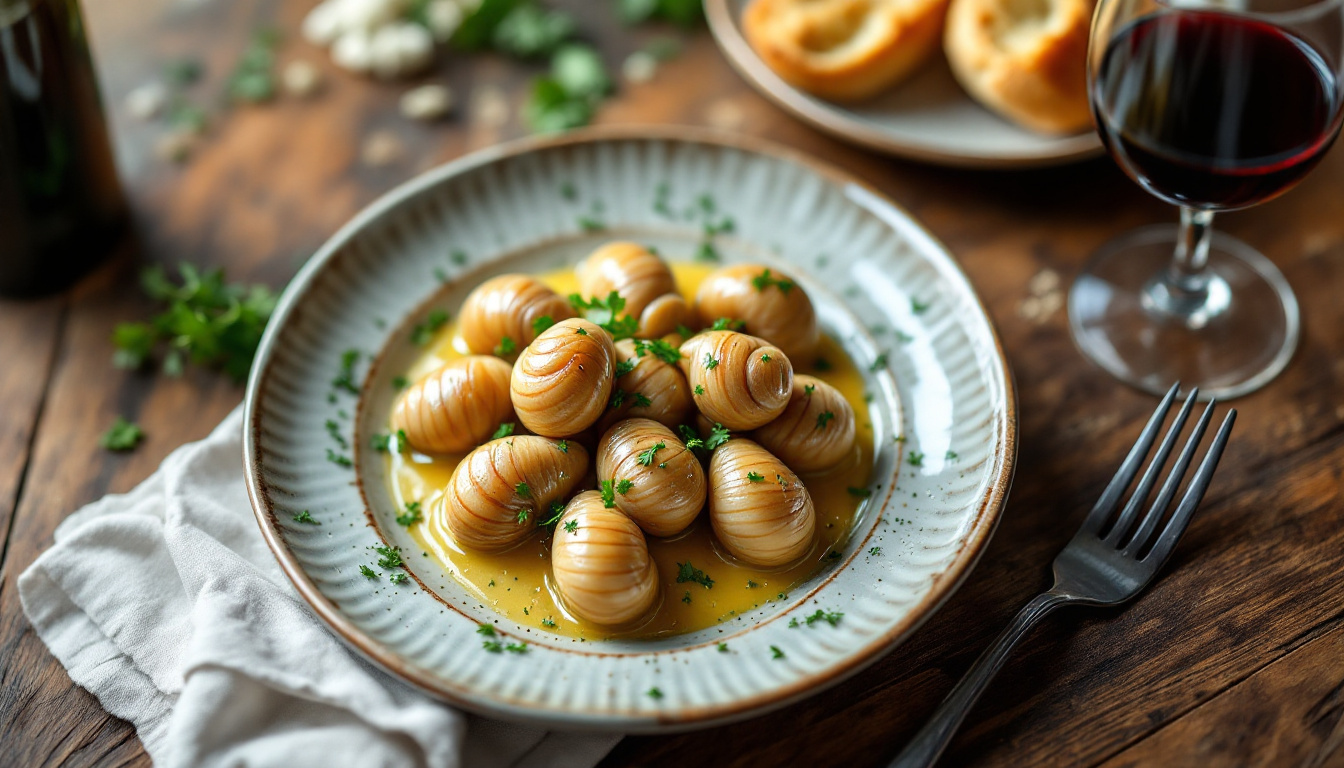
The two starters that say “proper French dinner”. Escargots de Bourgogne are snails baked in garlic-parsley butter, eaten with a tiny fork and plenty of bread to mop up what’s left. Foie gras, served as a chilled terrine with toasted brioche or lightly seared, is the rich special-occasion classic. And both are bistro and brasserie staples, not just fine dining.
Oeuf mayo
The humblest and most beloved of French bistro starters: a couple of hard-boiled eggs halved over a lettuce leaf and blanketed in a thick, mustard-forward mayonnaise. It sounds like nothing and it is fiercely defended, there is even a society (the ASOM) that grades the city’s best versions. Cheap, cold, and perfect with a basket of bread and a glass of white, it is the first thing many Parisians order at a zinc-topped bar.
Croque monsieur and quiche
The grilled ham and cheese elevated with bechamel, the everyday cafe lunch. Top it with a fried egg and it becomes a croque madame. In the same casual register, a slice of quiche Lorraine, the custardy bacon-and-egg tart, is a perfect boulangerie or cafe lunch eaten warm.
Oysters and seafood
Parisians take their oysters seriously, especially in the colder months. A brasserie plateau de fruits de mer, all ice and shellfish, is a celebration in itself.
Sole meuniere
The dish that famously made Julia Child fall for French cooking: a whole Dover sole dredged in flour, pan-fried in foaming butter, and finished with lemon and parsley, filleted at the table in the old brasseries. Nothing about it is complicated, which is the point, it lives or dies on the freshness of the fish and the nut-brown butter. Order it at a proper white-tablecloth brasserie and let the waiter do the boning.
Crepes and galettes
Sweet crepes with butter and sugar or chocolate from a street window, or savory buckwheat galettes filled with ham, egg, and cheese in a sit-down creperie.
Falafel in the Marais
The famous exception to the no-street-food rule. The queues on rue des Rosiers in the Marais, above all outside L’As du Fallafel, are for some of the best falafel pita outside the Middle East. For more of this kind of eating, see our street food cities guide.
Patisserie, macarons and classic desserts
The window of any good patisserie, tarts, eclairs, mille-feuille, the wheel-shaped praline Paris-Brest, and rows of pastel macarons, is a course in itself. Buy one of each and walk. At a bistro, finish instead with the classics: a crackly creme brulee, a warm tarte Tatin (caramelized upside-down apple tart) with cream, or a simple bowl of mousse au chocolat.
Best neighborhoods to eat in Paris
Where you eat in Paris matters as much as what. Each quarter has its own rhythm, its own strengths.
Le Marais. The best neighborhood for grazing: falafel, Jewish bakeries, wine bars, and tiny natural-wine bistros packed into medieval streets.
Saint-Germain-des-Pres. Historic cafes, classic brasseries, and serious patisserie. More polished and pricier, but the people-watching is unmatched.
Montmartre. Skip the tourist traps right by the basilica. Walk a few streets down for honest bistros and boulangeries where locals actually queue.
Canal Saint-Martin. The young, creative side of Paris eating: specialty coffee, natural wine, and modern bistronomy at gentler prices.
Latin Quarter. Student energy, cheap eats, creperies, and old-school bistros, though some streets lean touristy, so look for the busy local spots.
Belleville. Paris’s great multicultural food quarter, with some of the city’s best Chinese and Southeast Asian food and a thriving market.
How much food costs in Paris
Prices below are 2026 figures in euros; at roughly €1 to $1.10, a €12 plat du jour runs about $13. Paris has a reputation for being expensive, and dinner can be. But its bakeries and counters are some of the best-value eating in Europe. Rough prices below.
| Item | Typical price | Where |
|---|---|---|
| Croissant | ~€1.30 | Boulangerie |
| Baguette tradition | ~€1.20 | Boulangerie |
| Crepe (street) | ~€4 to €6 | Street window |
| Falafel pita | ~€8 | Le Marais |
| Croque monsieur | ~€9 to €11 | Cafe |
| French onion soup | ~€10 to €12 | Bistro |
| Steak frites | ~€18 to €24 | Bistro, brasserie |
| Dozen oysters | ~€20 to €30 | Brasserie |
A coffee or glass of wine usually costs less standing at the bar than seated at a table, and far less than on a famous terrace. The price often changes by where you stand.
Paris food tips that matter
A few habits separate a great Paris food trip from a frustrating one.
- Go to the boulangerie early. The best bread and pastries sell out, and the morning bake is the whole point. Aim for before 9am.
- Picnic like a local. A baguette, cheese, charcuterie, and fruit from a market is a glorious lunch by the Seine for a few euros.
- Stand at the bar to save money. Coffee and wine are cheaper au comptoir than at a table, a price difference set by law and printed on the menu.
- Lunch is the deal. Many bistros offer a formule, a fixed two or three course lunch, for a fraction of the dinner price. It is the smartest way to eat well.
- Mind the customs. Keep your hands on the table, greet the staff with a bonjour, and never rush the meal. Our food etiquette guide has the details.
Frequently asked questions
What food is Paris famous for?
Paris is famous for its boulangerie culture (croissants, pain au chocolat, the baguette), classic bistro dishes like steak frites and French onion soup, cheese and charcuterie, oysters and seafood, and world-class patisserie and macarons.
Is food expensive in Paris?
It can be, but it does not have to be. Boulangerie items, market picnics, crepes, and fixed-price lunch menus are excellent value, often a few euros. It is sit-down dinners, terraces, and seated drinks that drive Paris’s expensive reputation.
What is the best area to eat in Paris?
Le Marais is the best all-round neighborhood for grazing, with falafel, bakeries, and wine bars. Canal Saint-Martin is great for modern bistros and coffee, Saint-Germain for classic brasseries, and Belleville for the city’s best Asian food.
Where can I find cheap food in Paris?
Boulangeries for sandwiches and pastries, street crepe windows, the falafel stands of the Marais, and bistro lunch formules are the cheapest good meals. A market picnic of bread, cheese, and charcuterie is the best value of all.
What should I order at a Paris bistro?
Steak frites is the classic, alongside French onion soup, confit de canard, or the daily plat du jour. At lunch, the fixed-price formule offers the best value. Pair it with a glass of house wine, which is usually well chosen and inexpensive.
When do Parisians eat?
Breakfast is light and early, often just coffee and a pastry. Lunch runs roughly noon to 2pm, and dinner starts late by some standards, usually from 7:30pm or 8pm. Many kitchens close between services, so timing matters.
What are the most famous French dishes to try in Paris?
The classics worth seeking out are escargots, foie gras, boeuf bourguignon, coq au vin, duck confit (confit de canard), steak frites, and French onion soup, finished with creme brulee or tarte Tatin. You will find all of them at any good bistro or a bouillon.
What is a bouillon restaurant?
A bouillon is a traditional, no-frills Paris restaurant serving classic French dishes at very low prices, a format that dates to the 1800s and has had a big revival. Historic spots like Bouillon Chartier and Bouillon Republique serve escargots, boeuf bourguignon, and steak frites for a fraction of normal bistro prices, often with a queue out front.
More food guides waiting for you
Country and city deep dives across every continent we have eaten our way through.