I have ordered coffee at sunrise in a Hanoi alley, at a standing bar in Rome, and from a copper cezve in Istanbul, and the drink is never just caffeine. It is a window into how a country wakes up, slows down, and gathers. This is my guide to the best coffee around the world, what to order, and how to drink it like a local.
The best coffee around the world is rarely the most expensive or the most photographed. It’s the cup that fits its place: thick and sweet where the heat is brutal, tiny and bitter where life moves fast, slow and ceremonial where the point is to sit. Coffee crossed the planet from a single Ethiopian highland, and every culture that received it bent the drink to its own rhythm. Here are the coffee cultures worth planning a trip around.
This guide threads through our country deep dives across Asia and Europe. Where a destination has its own guide, I link straight to it so you can build the rest of the meal around the cup.
Where coffee comes from
Every cup traces back to the Ethiopian highlands, where coffee was first cultivated and where it is still drunk in a ceremony of roasting, grinding, and brewing that can take an hour. From there it spread to Yemen, then across the Ottoman world, then to Europe, and finally to the plantations of Latin America and Southeast Asia that now grow most of the world’s beans.
That history is why coffee tastes like geography. The Turkish cezve and the Italian espresso machine are cousins separated by a few centuries of trade. Knowing the lineage makes ordering abroad far less confusing, because most of the world’s coffees are variations on three ideas. Boiled, filtered, or pressured.

The best coffee around the world, country by country
Ethiopia: the birthplace and the ceremony
Every cup on earth descends from the Ethiopian highlands, and nowhere takes coffee more seriously. The buna (coffee) ceremony is the heart of it: green beans roasted over coals in front of you, ground by hand, and brewed in a clay pot called a jebena, then poured from height into small handleless cups. It’s served in three rounds, abol, tona, and baraka, each weaker than the last, and the whole ritual can run over an hour amid incense and conversation.
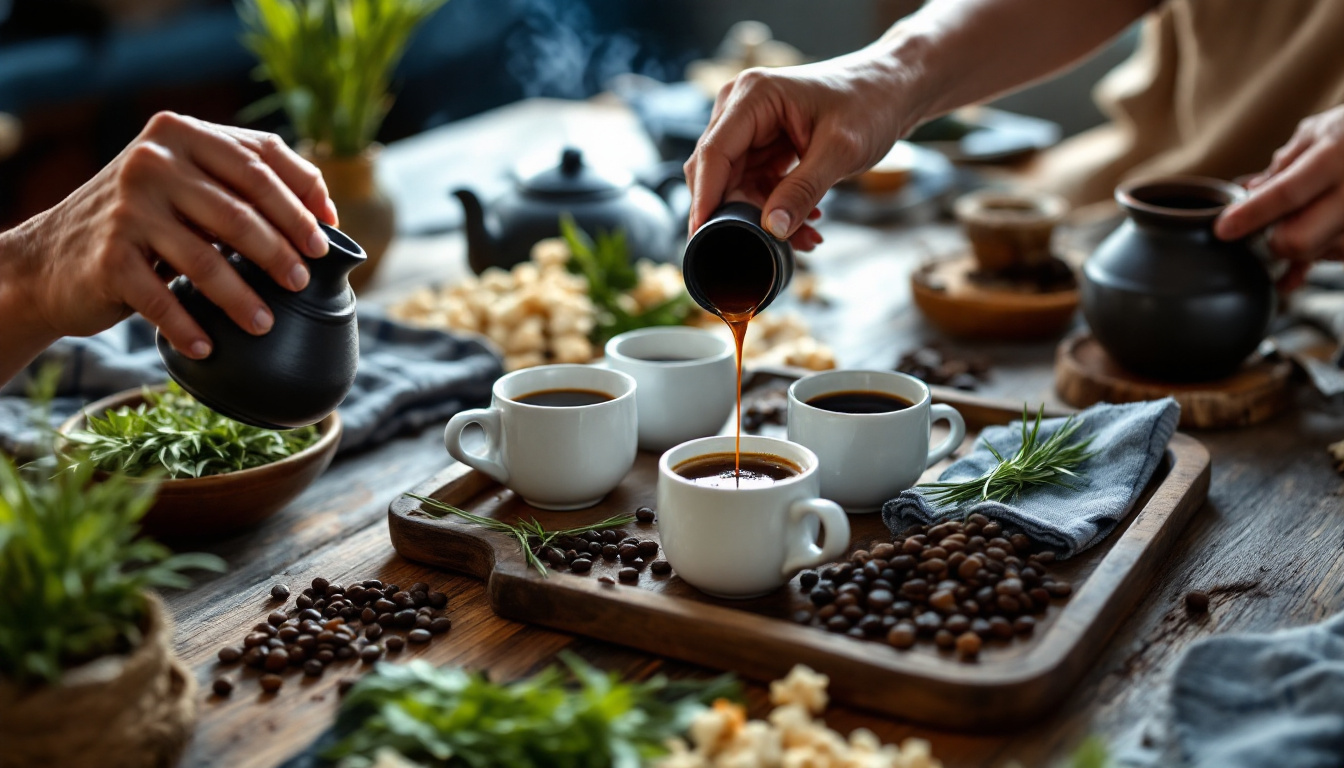
The coffee itself, often drunk with a pinch of salt or butter in some regions rather than milk, is bright and winey, the same beans the specialty world now fights over. It is also the soul of our Africa and Middle East food guide.
Italy: the home of espresso
Italy didn’t invent coffee, but it perfected the fast version, starting in Turin, where Angelo Moriondo patented the first espresso machine in 1884. Espresso is the national pulse: a shot pulled in seconds, drunk standing at the bar, paid for on the way out. A cappuccino is a breakfast drink, and ordering one after lunch quietly marks you as a tourist. Ask for a caffe and you get an espresso. Full stop.
The ritual is the point. You don’t linger over a paper cup; you down a perfect shot and rejoin the day. For the food that surrounds it, see our Italy food guide and the Rome food guide, where the morning espresso and cornetto is a sacred pairing.
Vietnam: the boldest cup in Asia
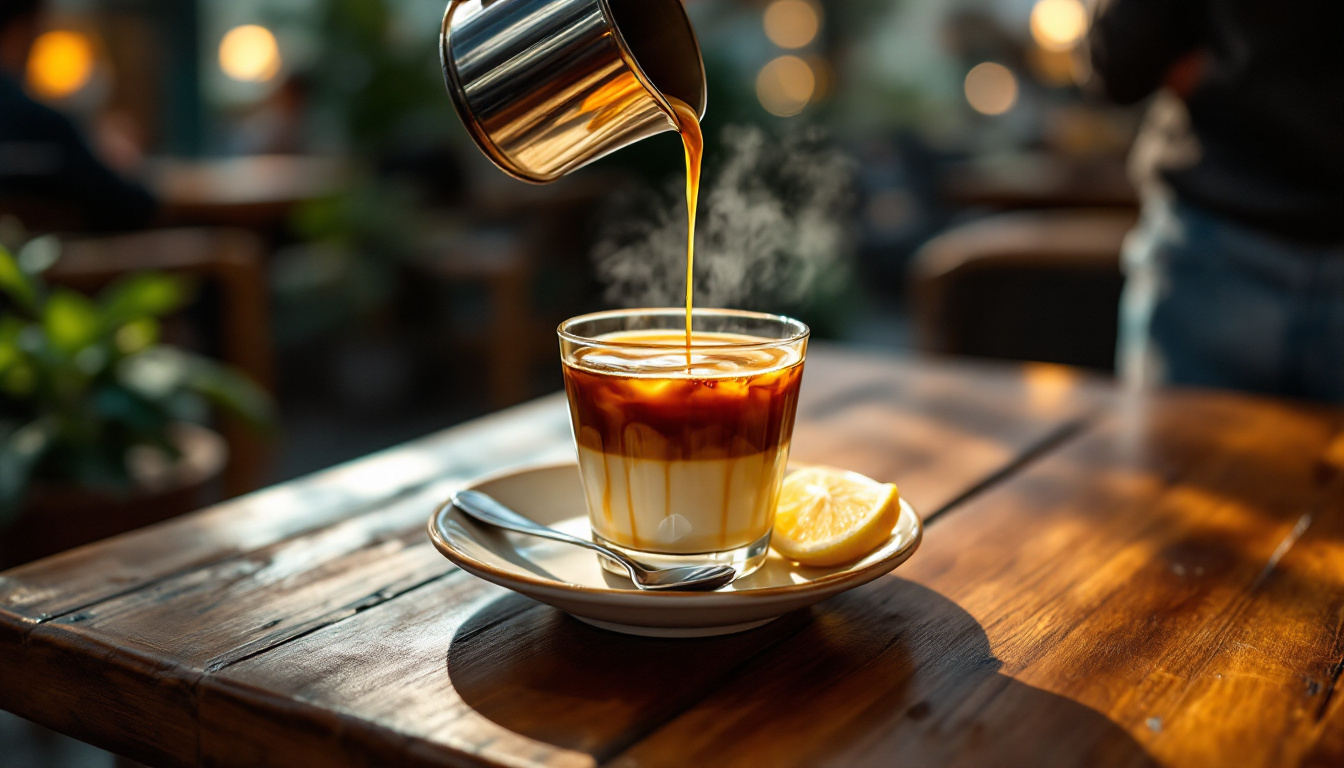
Vietnam is the world’s second-largest coffee producer, and it leans into bold, dark robusta. The classic is ca phe sua da: strong coffee dripped through a metal phin filter over a thick layer of sweetened condensed milk, then poured over ice. Sweet, intense, built for the heat.
Hanoi adds its own genius, ca phe trung, or egg coffee, where whipped egg yolk and condensed milk form a warm custard over the coffee. It was invented in 1946 by Nguyen Van Giang, a bartender at Hanoi’s Metropole hotel, when the war with the French made fresh milk scarce, and his family still serves it at Cafe Giang. There’s coconut coffee and salt coffee too. Plan it with our Vietnam food guide and the Hanoi food guide.
Turkey: coffee as heritage
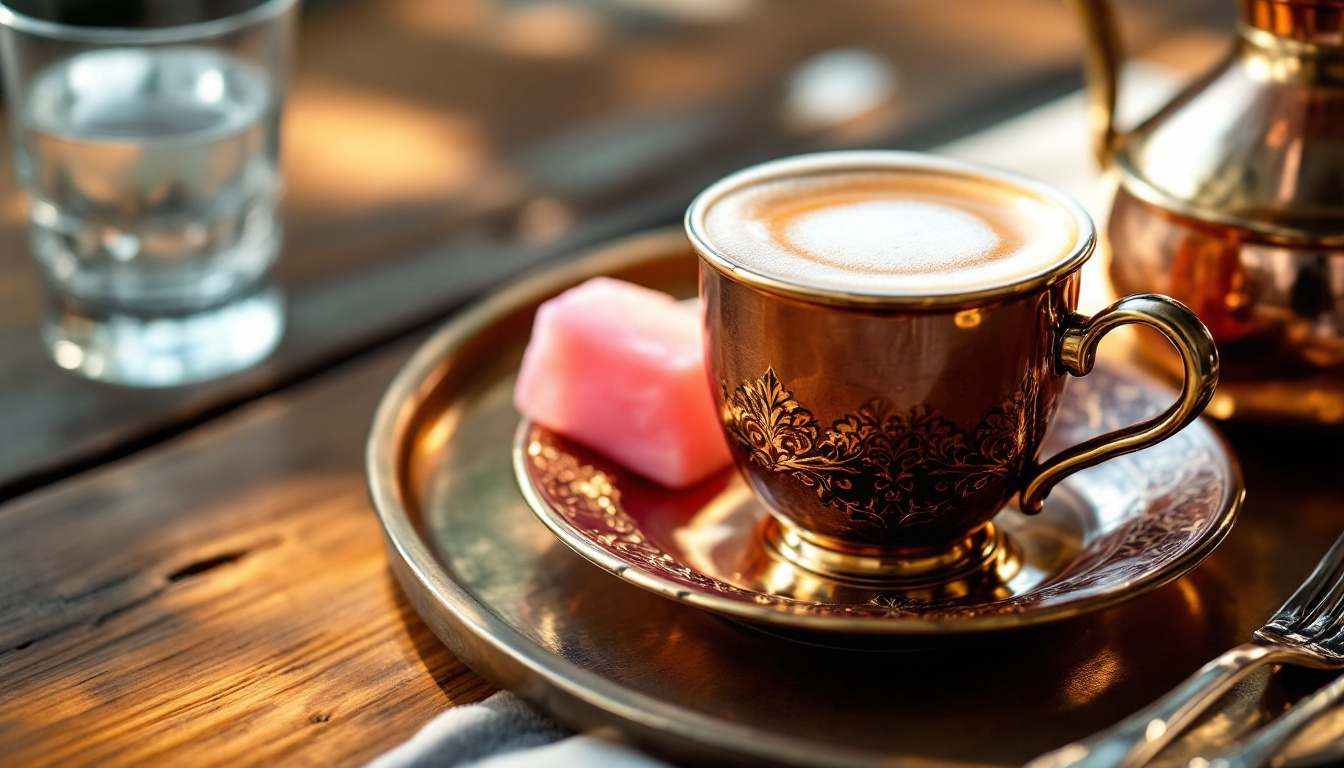
Turkish coffee is so culturally important that UNESCO lists it as intangible heritage. Finely ground beans are simmered in a copper cezve, then poured unfiltered into a tiny cup so the grounds settle at the bottom. You sip slowly, never to the dregs, and the leftover grounds are read for fortunes.
It comes with a glass of water and a piece of Turkish delight, and it’s meant to be drunk in company, never rushed. Our Turkey food guide covers the meze and kebabs that lead up to it.
Greece: the freddo nation
Greece runs on cold coffee. The frappe, instant coffee shaken with water, sugar, and ice, fueled the country for decades. It has been overtaken by the freddo espresso and freddo cappuccino, both served iced and often with a cold milk foam on top. Ordering one and nursing it for two hours at a kafeneio is a national pastime.
Traditional Greek coffee, brewed in a briki much like the Turkish method, is still served strong and unfiltered. See where it fits in our Greece food guide.
Indonesia: origin-country beans
Indonesia grows some of the most distinctive coffee on earth, from earthy Sumatran Mandheling to Java and Sulawesi beans. The everyday drink is kopi tubruk: coarse grounds boiled with sugar and served grounds and all, similar in spirit to Turkish coffee. You let it settle and drink around the sediment.
You will also see kopi luwak marketed heavily, the civet-processed coffee, but it is best skipped on welfare grounds and overpriced for what it is. Stick to the regional single origins. Our Indonesia food guide and Bali food guide have the context.
Brazil: the world’s coffee engine
Brazil produces roughly a third of the world’s coffee, and it drinks it constantly. The cafezinho, a small, strong, sweet black coffee, is offered everywhere as a gesture of welcome, in shops, offices, and homes. It’s rude to refuse and impossible to drink just one.
Brazilian coffee culture is about hospitality more than ceremony. Read about the wider table in our Brazil food guide.
Colombia: the coffee triangle
Colombia is the name most people say first when they think of great coffee, and the Eje Cafetero, the Coffee Triangle of Caldas, Risaralda, and Quindio, is a UNESCO-listed landscape of green hillside fincas you can tour and stay on. The everyday cup, a tinto, is a small, often weak black coffee carried around in thermoses and offered everywhere, while the best beans are increasingly roasted and brewed properly in Bogota and Medellin cafes. Base a trip on it from the little town of Salento.
Mexico: cafe de olla
Mexico’s signature brew is cafe de olla, coffee simmered in a clay pot with cinnamon and piloncillo, the unrefined cane sugar that gives it a deep molasses note. The clay pot is said to add its own earthiness, and the result is warming and spiced rather than bitter.
It pairs perfectly with pan dulce in the morning. Our Mexico food guide covers what else to order alongside it.
France: the cafe as an institution
France treats the cafe less as a place for great coffee and more as a stage for daily life. The coffee itself, a cafe (espresso) or cafe au lait at breakfast, is often ordinary, but the terrace, the people-watching, and the unhurried hours are the real product.
You pay for the seat and the scene as much as the cup, and it is worth every centime. See our France food guide for the pastries that belong beside it.
Portugal: small, strong, everywhere
Portugal drinks coffee in tiny, frequent doses. A bica in Lisbon (or cimbalino in Porto) is a short, strong espresso, and a galao is the long, milky glass for a slower moment. The natural pairing is a pastel de nata, the custard tart, still warm with a dusting of cinnamon.
It’s one of Europe’s great underrated coffee countries. Our Portugal food guide has the rest.
Austria: the Viennese coffee house
Vienna turned coffee into an institution so distinctive that UNESCO protects its coffee-house culture. The grand cafes are living rooms of the city, where you linger for hours over a single cup, a glass of water refilled beside it, a newspaper on a wooden rack, and a slice of Sachertorte. Order a melange (the Viennese cousin of the cappuccino), an einspanner (espresso under a cap of whipped cream), or a kleiner brauner, and never rush.
Sweden: fika as a way of life
In Sweden coffee is less a drink than a daily ritual called fika: a deliberate pause, usually twice a day, for a coffee and something sweet like a cardamom or cinnamon bun, taken with friends or colleagues. Swedes are among the world’s heaviest coffee drinkers, and fika is so embedded that workplaces build it into the day. It is the opposite of the to-go cup, and it pairs with a whole tradition of baking covered in our guide to the best food in Sweden.
Australia and New Zealand: the flat white and specialty coffee
The Antipodes punch far above their size in coffee. This is the home of the flat white, espresso under steamed milk with a thin layer of microfoam, and both countries claim it: Alan Preston put the name on the menu of his Moors Espresso Bar in Sydney in 1985, while New Zealanders point to Wellington. It is also the home of a fiercely high specialty-coffee standard that pushed out the big global chains. A neighborhood cafe in Melbourne or Wellington will out-pour most capitals, and the brunch-and-coffee culture is now copied worldwide. See our guide to the best food to eat in Australia for what to eat alongside it.
Japan: kissaten and canned coffee
Japan’s coffee culture runs on two opposite tracks. One is the kissaten, the dim, wood-panelled coffee house where the owner brews by hand, one cup at a time, usually as a slow pour-over, and serves it with a thick slice of buttered toast. The first, Kahiichakan, opened in Ueno, Tokyo, in 1888 and closed within about five years, but the style it borrowed from European cafes took root, and the surviving old kissaten are some of the calmest rooms in the country.
The other track is the vending machine. UCC released the world’s first canned coffee with milk in April 1969, and today hot and cold cans sit in machines on almost every street corner. Do both in one day: a slow hand-poured cup in a kissaten, and a can of hot, sweet coffee from a machine on a cold morning. For the food around it, see our Japan food guide and the Tokyo food guide.
India: South Indian filter coffee
India is a tea country, except in the south, where the morning runs on filter kaapi. The story goes that coffee reached India in 1670, when the Sufi pilgrim Baba Budan smuggled seven beans out of the Yemeni port of Mocha on his way home from Mecca and planted them in the Chandradrona hills of Chikmagalur in Karnataka. The range is now called Baba Budangiri, and the region is still coffee country.
The brew is a strong decoction dripped slowly through a two-tier steel filter, usually from a blend of arabica and robusta with a little chicory, then mixed with hot milk and sugar. It arrives in a steel tumbler set inside a wide bowl called a dabara, and you pour it back and forth between the two to cool and froth it. Any South Indian tiffin house will make it; pair it with a dosa from our India food guide.
Cuba: the cafecito
Cuban coffee is short, strong and very sweet, and the sugar goes in during brewing, not after. The first drops from the stovetop pot or espresso machine are whipped hard with sugar into a pale foam called espumita, then the rest of the coffee is stirred in, leaving a sweet crema on top. A single shot is a cafecito; a cortadito adds a splash of steamed milk; a colada is a larger pour meant to be split into thimble-sized cups and shared, a ritual Cuban exiles carried to the walk-up ventanitas of Miami. See our Havana food guide for what to eat with it.
Hong Kong: yuenyeung
Hong Kong’s answer to the coffee-or-tea question is both. Yuenyeung mixes coffee with Hong Kong-style milk tea, strong black tea pulled through a cloth filter and loaded with evaporated or condensed milk; the city’s Leisure and Cultural Services Department gives the ratio as three parts coffee to seven parts milk tea. It was born at dai pai dong street stalls and cha chaan teng, the no-frills tea cafes, and it is still ordered there hot or iced. The name means mandarin ducks, birds that appear in pairs, a nod to two drinks in one cup. Pair it with the rest of our Hong Kong food guide.
Finland: the world’s biggest coffee drinkers
Finland drinks more coffee per person than any other country, roughly 12 kg of beans a year each, most of it light-roasted filter coffee brewed by the pot at home and at every social occasion. The oddity to try is kaffeost, borrowed from Swedish Lapland: cubes of leipäjuusto, a squeaky baked bread cheese, dropped into hot coffee, traditionally in a wooden kuksa cup carved from birch burl, then spooned out soft and warm as you drink.
A few more coffee cultures worth a detour
Two more for the serious coffee traveler: the United States drove the third-wave specialty movement out of the Pacific Northwest, and across the Gulf, cardamom-spiced qahwa is poured with dates as a gesture of welcome.
How to order coffee around the world
The same word can mean very different drinks depending on where you stand. This table cuts through the confusion for the cultures above.
| Order this | Country | What you get | Served |
|---|---|---|---|
| Caffe | Italy | A single espresso shot | Hot, standing at the bar |
| Ca phe sua da | Vietnam | Phin coffee over condensed milk | Iced, sweet, strong |
| Ca phe trung | Vietnam (Hanoi) | Egg coffee with custard top | Hot, dessert-like |
| Turkish coffee | Turkey | Unfiltered cezve coffee, grounds settle | Hot, with water and delight |
| Freddo espresso | Greece | Iced espresso, often foam-topped | Cold, slow-sipped |
| Kopi tubruk | Indonesia | Boiled coffee, grounds in the cup | Hot, sweet, settled |
| Cafezinho | Brazil | Small, strong, sweet black coffee | Hot, offered as welcome |
| Cafe de olla | Mexico | Clay-pot coffee with cinnamon and piloncillo | Hot, spiced |
| Bica | Portugal | A short, strong espresso | Hot, with a nata |
| Hand-drip kohi | Japan | Pour-over brewed cup by cup in a kissaten | Hot, with thick toast |
| Filter kaapi | South India | Chicory-blend decoction with hot milk | Hot, frothed in a dabara |
| Cafecito | Cuba | Espresso whipped with sugar (espumita) | Hot, tiny, very sweet |
| Yuenyeung | Hong Kong | 3 parts coffee, 7 parts milk tea | Hot or iced |
| Kaffeost | Finland | Coffee poured over squeaky bread cheese | Hot, eat the cheese with a spoon |
Prices and names vary by city and neighborhood. When unsure, watch what the person ahead of you orders.
Coffee etiquette that matters
A few unwritten rules will keep you from looking like a lost tourist, and more importantly, will get you a better cup.
- No cappuccino after 11am in Italy. Milky coffee is a breakfast thing. After a meal, order an espresso.
- Drink Turkish and Greek coffee slowly. Let the grounds settle and never drink to the bottom of the cup.
- Accept the cafezinho in Brazil. Refusing the welcome coffee reads as cold. Take the small cup.
- Sit to drink in France and Greece. The price often includes the seat and the time, so use them.
- Skip kopi luwak in Indonesia. The novelty civet coffee is overpriced and raises animal-welfare concerns. Choose a single origin instead.
Frequently asked questions
Which country has the best coffee in the world?
It depends on what you value. Italy wins for ritual and espresso craft, Vietnam for bold, sweet intensity, and Ethiopia for origin and ceremony. For pure bean quality, origin countries like Ethiopia, Colombia, and Indonesia lead.
Where did coffee originate?
Coffee was first cultivated in the highlands of Ethiopia, then spread through Yemen and the Ottoman world before reaching Europe and the Americas. Ethiopia still has the world’s most traditional coffee culture, centered on the buna ceremony.
What is Vietnamese egg coffee?
Ca phe trung is a Hanoi specialty where whipped egg yolk and sweetened condensed milk are beaten into a thick, warm custard and floated over strong coffee. It tastes like a liquid tiramisu and is best drunk slowly with a spoon.
Why can’t you order a cappuccino after lunch in Italy?
Italians consider milky coffee a breakfast drink and believe a lot of milk sits heavily on a full stomach. It is not a rule you will be punished for breaking, but ordering an espresso after a meal is the local way.
Is Turkish coffee stronger than espresso?
By caffeine per ounce they are similar, but Turkish coffee feels stronger because it is unfiltered, leaving fine grounds and oils in the cup. It is also sipped slowly rather than downed in one, so the experience is more intense.
Is kopi luwak worth trying?
Most travelers should skip it. The civet-processed coffee is heavily marketed, expensive, and often produced in caged conditions that raise welfare concerns. Indonesia’s regional single origins are better and far cheaper.
What is the Ethiopian coffee ceremony?
It is the traditional way coffee is served in Ethiopia, its birthplace. Green beans are roasted over coals, ground by hand, and brewed in a clay pot called a jebena, then poured into small cups across three rounds, abol, tona, and baraka. The whole ritual, often with incense and conversation, can last over an hour and is a gesture of hospitality.
What is fika?
Fika is the Swedish coffee ritual: a deliberate break, usually twice a day, for coffee and something sweet like a cinnamon or cardamom bun, shared with others. It is less about the caffeine than the pause and the company, and it is built into daily and working life in Sweden.
More food guides waiting for you
Country and city deep dives across every continent we have eaten and caffeinated our way through.