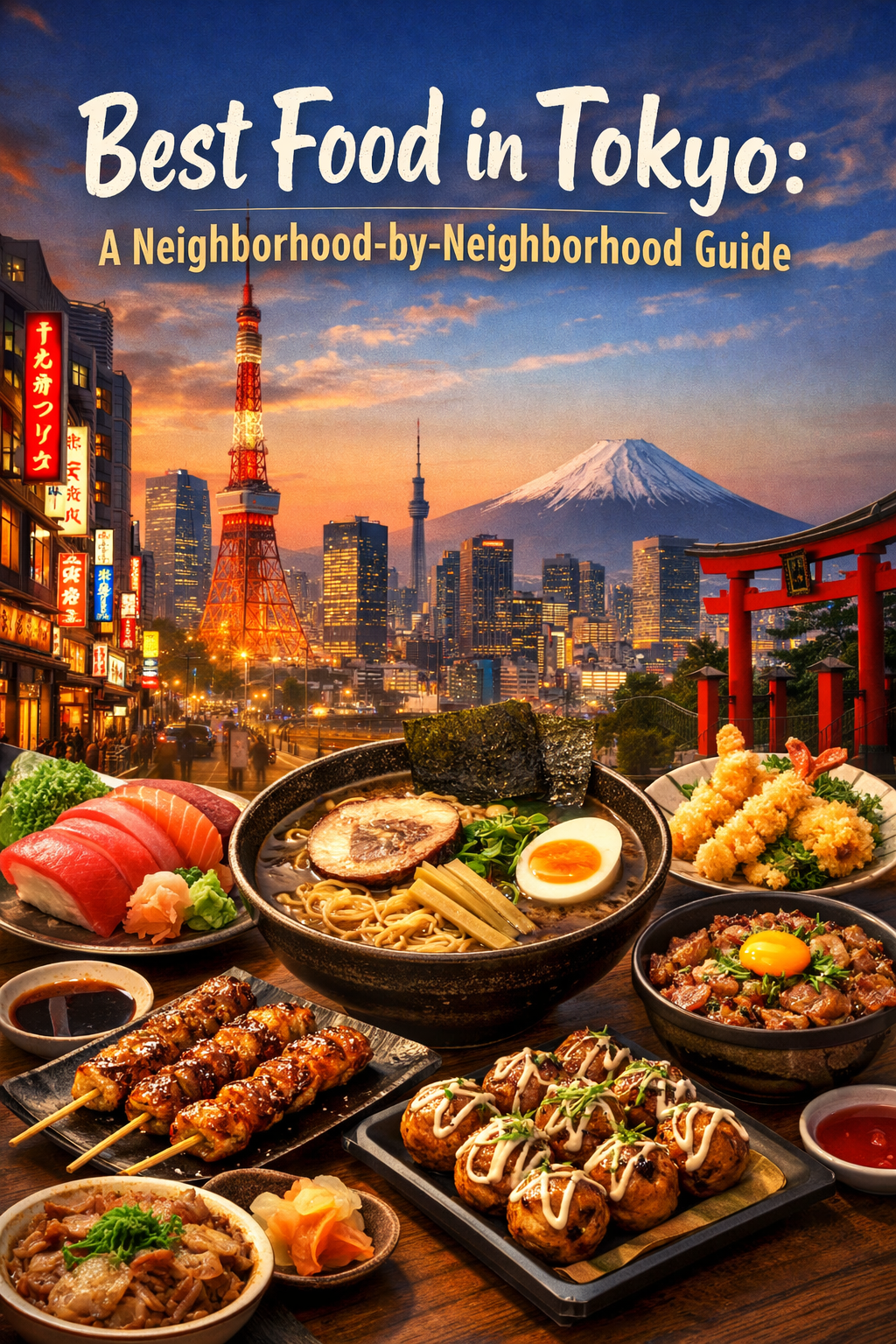
Best Food in Tokyo: A Neighborhood-by-Neighborhood Guide
Tokyo holds more Michelin stars than any city on the planet — but the real magic happens at a ramen counter in Shinjuku at 2 AM, at a standing sushi bar in Tsukiji at dawn, or at a tiny izakaya under the Yurakucho train tracks where the chef has been grilling yakitori for 40 years. This is where to eat in Tokyo, block by block.
Suggested alt: Busy Tokyo street at night with steam rising from food stalls and glowing red lanterns
In This Guide
Tokyo is, by almost any measure, the greatest food city in the world. It has around 160,000 restaurants — more than New York, Paris, and London combined. The range is staggering: from ¥300 onigiri at a convenience store that would embarrass most restaurants back home, to ¥50,000 omakase dinners where the chef has trained for 30 years to serve you 20 pieces of perfect nigiri.
But here is what makes Tokyo different from other food capitals: consistency. A random ramen shop in a random back alley in a random neighborhood will very likely be excellent. Japanese food culture doesn’t tolerate mediocrity. A chef who serves bad gyoza simply won’t survive. This means you can eat spectacularly well in Tokyo without a single reservation, guide, or plan — just follow the queues and the steam.
That said, every neighborhood in Tokyo has its own personality and specialty. Tsukiji is seafood. Shinjuku is ramen. Yurakucho is yakitori. Tsukishima is monjayaki. This guide breaks the city down block by block so you know exactly where to go, what to eat, and how much to budget. For a broader look at the country’s cuisine beyond the capital, see our complete guide to the best food in Japan.
Tsukiji & Toyosu — Where Tokyo Eats Seafood
Tsukiji Outer Market is the first stop for most food-loving visitors to Tokyo, and for good reason. Even though the wholesale tuna auctions moved to Toyosu Market in 2018, the outer market stayed put — and it remains one of the most exciting food streets in the world.
The market wakes up around 5:30 AM and peaks between 7 and 10 AM. Come early. By noon the best stalls are sold out, the queues are longer, and the energy fades.
Skip the main tourist sushi lines. Walk one block behind the market to find smaller sushi shops with the same suppliers, a fraction of the wait, and often better value. Ask your hotel concierge for current favorites — they rotate seasonally.
Toyosu Market is worth a visit if you want to see the tuna auction (viewings from 5:30 AM, registration required). The market’s restaurant floor has excellent sushi, but the atmosphere is more institutional than Tsukiji’s chaotic charm. If you only have time for one, go to Tsukiji.
Shinjuku — Ramen, Izakayas & Golden Gai
Shinjuku is where Tokyo comes alive after dark. The west side is corporate skyscrapers; the east side is a labyrinth of neon, narrow alleys, and some of the best late-night eating in Japan.
This is the neighborhood that defined Tokyo ramen culture. The train station alone (the world’s busiest) has at least a dozen ramen shops in its basement floors, and the streets around Kabukicho hold hundreds more.
Shibuya & Harajuku — Trends, Treats & Sweet Spots
Shibuya is Tokyo’s youth culture epicenter, and its food scene reflects that: trendy, photogenic, fast-moving. This is where new food trends launch — Japanese soufflé pancakes, matcha everything, elaborate crepes, and Instagram-ready parfaits.
But dig beneath the surface and you’ll find serious food too. The backstreets of Shibuya (especially the area called Nonbei Yokocho, Shibuya’s “drunkard’s alley”) have old-school izakayas that have survived decades of redevelopment.
Asakusa & Ueno — Old Tokyo Street Food
Asakusa is the oldest food neighborhood in Tokyo. This is where Edo-period snack culture survives: ningyo-yaki (cake-filled figurines), senbei (grilled rice crackers), melon pan (sweet bread), and tempura shops that have been frying since the 1800s.
Ginza — High-End Sushi & Tempura
Ginza is where Japanese fine dining reaches its peak — and its highest prices. This is the spiritual home of Edomae sushi (the Tokyo-style nigiri that conquered the world) and where many of Japan’s most decorated chefs work.
Ginza doesn’t have to be expensive. Many top restaurants offer lunch sets (teishoku) at a fraction of dinner prices. A ¥30,000 dinner restaurant might serve a ¥3,000 lunch. Always check if your dream restaurant has a lunch option.
Yurakucho & Shinbashi — Under-the-Tracks Yakitori
The area underneath the JR train tracks between Yurakucho and Shinbashi stations is one of Tokyo’s most atmospheric eating streets. Every few meters, a tiny yakitori or kushiyaki joint spills smoke and noise onto the pavement. This is where Tokyo’s salarymen have been decompressing after work since the 1950s.
Roppongi & Azabu — International & Late-Night Dining
Roppongi was once Tokyo’s nightclub district and still has a reputation for late-night excess. But the food scene has matured. Azabu-Juban, a quieter neighborhood nearby, is home to excellent international restaurants and some of Tokyo’s best hidden gems.
Tsukishima — Monjayaki Street
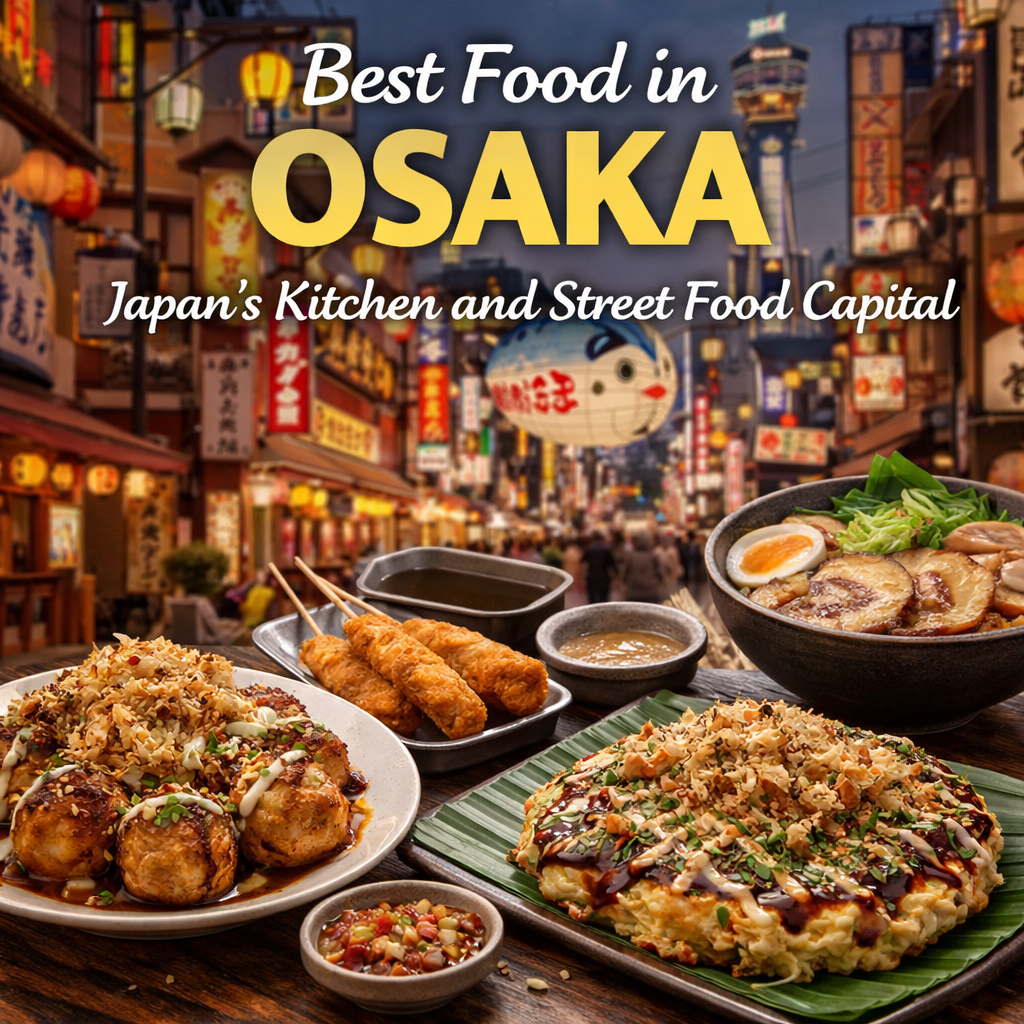
Tsukishima is a residential island in Tokyo Bay with one claim to culinary fame: monjayaki. It’s Tokyo’s answer to Osaka’s okonomiyaki — a runny, gooey, savory pancake cooked on a hot griddle at your table. Where okonomiyaki is a neat disc, monjayaki is a beautiful mess. If you’re planning to compare the two, don’t miss our Osaka food guide for the okonomiyaki side of the rivalry.
The staff will usually cook the first one for you. They spread the batter thin on the griddle, let it form a slight crust on the bottom, and you scrape small bites with a tiny spatula (hera). Don’t try to flip it like a pancake — it’s supposed to stay loose.
Top 10 Dishes to Eat in Tokyo
If your time in Tokyo is limited, these are the ten dishes that define the city’s food identity. Every one is available at multiple price points, from street-level cheap to fine-dining splurge.
| # | Dish | Where to Try | Price | Area | Rating |
|---|---|---|---|---|---|
| 1 | Edomae nigiri sushi | Tsukiji stalls / any sushi counter | ¥1,500–40,000+ | Tsukiji / Ginza | ★★★★★ |
| 2 | Tonkotsu / shoyu ramen | Fuunji, Ichiran, any Shinjuku shop | ¥900–1,400 | Shinjuku | ★★★★★ |
| 3 | Yakitori | Yurakucho under-the-tracks stalls | ¥100–300/skewer | Yurakucho | ★★★★★ |
| 4 | Tempura | Daikokuya / Tempura Kondo | ¥1,500–15,000 | Asakusa / Ginza | ★★★★ |
| 5 | Monjayaki | Monja Street, Tsukishima | ¥1,200–2,000 | Tsukishima | ★★★★ |
| 6 | Tonkatsu | Maisen (Omotesando), Butagumi | ¥1,500–3,000 | Shibuya / Azabu | ★★★★ |
| 7 | Gyukatsu | Gyukatsu Motomura | ¥1,500 | Shibuya | ★★★★ |
| 8 | Tamagoyaki | Tsukiji Yamazaki | ¥150 | Tsukiji | ★★★ |
| 9 | Unagi (grilled eel) | Obana, Kabuto | ¥3,000–6,000 | Asakusa area | ★★★★ |
| 10 | Konbini onigiri & bento | 7-Eleven, Lawson, FamilyMart | ¥120–600 | Everywhere | ★★★★★ |
Yes, convenience store food made the top 10. This is not a joke. Japanese konbini are in a category of their own. A ¥150 tuna mayo onigiri from 7-Eleven, eaten on a park bench at midnight, is one of the purest food experiences Tokyo offers. The egg sandwich (tamago sando) from Lawson has a cult following for a reason.
Practical Tips for Eating in Tokyo
Lunch sets are the cheat code
Almost every restaurant in Tokyo — even high-end ones — offers lunch sets (teishoku or ranchi setto) at dramatically lower prices than dinner. A restaurant that charges ¥20,000 for dinner might serve a ¥2,500 lunch with the same chef and same ingredients. Always check the lunch menu first.
Learn the ticket machines
Many ramen shops and casual restaurants use vending machines (shokkenki) at the entrance. Insert money, press the button for your dish, hand the ticket to the chef. No Japanese needed — most machines have pictures. Press the top-left button if unsure — it’s usually the house specialty.
Queue etiquette
Queuing is a national sport in Tokyo. Lines move fast because turnover is fast. Don’t be intimidated by a 20-person queue — it often means only 15–20 minutes. Don’t eat while waiting in line, don’t talk loudly, and don’t hold spots for friends who haven’t arrived.
When to eat
Lunch rush is 12:00–13:00; arrive at 11:30 to beat it. Dinner starts around 18:00. Many izakayas and ramen shops are open until midnight or later. Tsukiji is a morning market — go before 10 AM. Department store food halls often discount prepared foods 30–50% in the last hour before closing (usually 20:00–21:00).
Depachika discount time. Department store basement food halls mark down sushi, bento, and prepared dishes 30–50% in the final hour before closing. At Ginza Mitsukoshi, this means you can eat ¥3,000 sushi for ¥1,500 around 19:30–20:00. Look for yellow or red discount stickers. For more tips on eating cheaply, see our guide to the cheapest cities for amazing food.
Tipping & etiquette
Do not tip in Tokyo. Ever. It can cause confusion or even offense. Instead, show appreciation by saying “gochisousama deshita” (thank you for the meal) when leaving. Other rules: don’t stick chopsticks upright in rice (it resembles a funeral ritual), don’t pass food chopstick-to-chopstick, and slurping ramen is not just acceptable — it’s encouraged. For more dining customs, check our guide to food etiquette around the world.
Frequently Asked Questions About Food in Tokyo