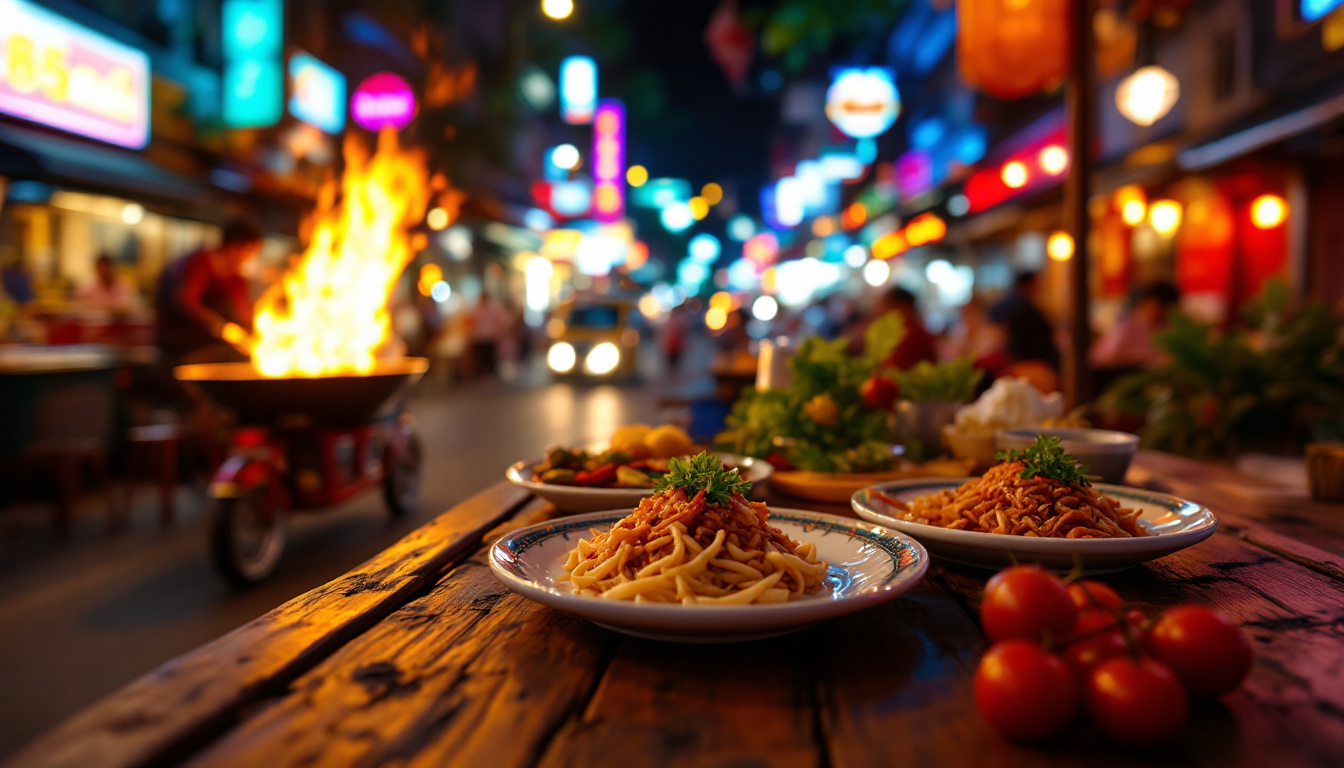
Bangkok is the street food capital of the world, a city where a Michelin star was awarded to a woman cooking from a sidewalk wok, where a 40-baht plate of pad thai can genuinely change your understanding of what food can be, and where every soi hides another incredible meal you didn’t know you needed. This is where to eat, neighborhood by neighborhood.
Bangkok has somewhere between 300,000 and 400,000 street food vendors. Nobody can count them precisely because new ones appear overnight and old ones vanish just as fast. What matters is this: you are never more than 50 meters from something delicious in this city. The street food infrastructure isn’t a sideshow or a tourist attraction here. It IS the food system. Most Bangkokians eat the majority of their meals on the street or from market stalls. Cooking at home is, for many, what you do when you can’t find an open stall, which almost never happens.
The food here hits differently because of one ingredient most cities can’t replicate: wok hei. That smoky, charred, almost alive flavor you get when a dish is cooked in a screaming-hot wok over a jet-flame burner on the street. Home kitchens and even restaurants with proper ventilation can’t reproduce what a Bangkok street wok does. It’s physics, not just technique, and it’s why pad thai tastes fundamentally different here than anywhere else.
This guide maps the city’s best food neighborhoods, tells you what to eat in each, and gives you real names, prices and tactics. For the country-level picture, see our complete guide to the best food in Thailand. If you’re heading north after Bangkok, our Chiang Mai food guide covers the completely different world of northern Thai cuisine.
Yaowarat (Chinatown), the king of street food
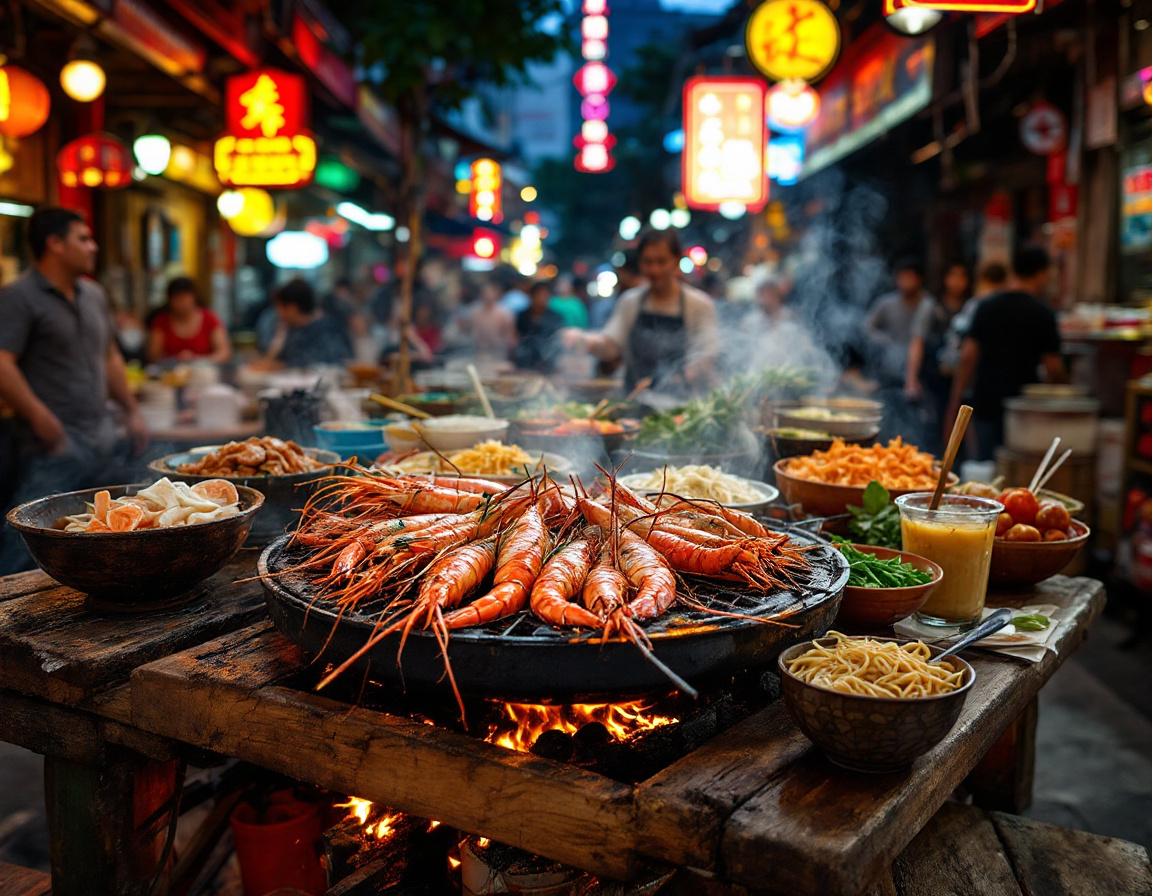
Yaowarat is where Bangkok’s street food reputation was built. This is the neighborhood that made international food media fall in love with Thai street food, the one that produced Jay Fai, the first Thai street cook to earn a Michelin star. The main Yaowarat Road and its branching soi (side streets) transform every evening into the most spectacular open-air food court on Earth.
Come after 6 PM. During the day, Yaowarat is a gold jewelry district. After sunset, the food takes over. Walk the full length of the road (about 1.5 km) before committing to a stall, the options multiply as you go deeper.
What to eat in Yaowarat
Jay Fai, the legendary Michelin-starred street cook. Famous for her crab omelette (฿1,000 / ~$29) and drunken noodles. She cooks wearing ski goggles over a roaring flame. Expect 2-4 hour waits or book ahead. Expensive by street food standards but unmissable.
Lek and Rut Seafood (T&K Seafood), giant open-air seafood restaurants on Yaowarat Road. Grilled prawns, stir-fried crab in yellow curry, tom yum goong. Budget ฿300-600 (~$8.50-17) per person for a feast. The green-signed and red-signed versions compete on the same street, both are excellent.
Nai Ek Roll Noodle, Michelin Bib Gourmand for its kuay jab (rolled rice noodle soup with pork offal in peppery broth). ฿60 (~$1.70). Small portions, so order two. The broth is the reason you came.
Mango sticky rice stands along Soi Texas, ripe mango, warm coconut-milk sticky rice, toasted mung beans. ฿80-120 (~$2.30-3.40). The perfect street dessert. Best from March to June when mangoes peak.
Rattanakosin and Banglamphu, old Bangkok eats
The old royal district around the Grand Palace and Wat Pho is where Bangkok’s culinary history runs deepest. This area birthed many of the city’s famous dishes, the original recipes came from the royal kitchens and filtered down to nearby market stalls over centuries. Banglamphu, just north, is the backpacker district centered on Khao San Road.
What to eat in Rattanakosin and Banglamphu
Thip Samai Pad Thai, widely considered the best pad thai in Bangkok. The signature version is wrapped in a thin egg crepe. ฿80-200 (~$2.30-5.70). Queue starts at 5 PM and grows fast. Get the “superb” version with extra prawns.
Khao San Road night food scene, yes, it’s touristy. But the wok-fried pad thai at the stalls here is freshly made, cheap (฿50-80), and surprisingly good. Also: spring rolls, mango sticky rice, fresh coconuts, and the infamous fried scorpions (novelty only, skip those). It’s chaos, it’s fun, it’s Khao San.
Pa Aew Tom Yum Goong (near Samsen Road), a hidden local shop serving tom yum goong that locals argue is the best in the city. Rich, spicy, loaded with river prawns. ฿120 (~$3.40). No English sign, look for the yellow shopfront with plastic tables.
Sukhumvit, night markets and international flavors
Sukhumvit Road stretches endlessly through Bangkok’s modern core. The area around BTS stations Nana, Asok, Phrom Phong, and Thong Lo is the expat and upscale dining hub. This is where you’ll find Bangkok’s best international food alongside increasingly sophisticated Thai restaurants.
What to eat on Sukhumvit
Soi 38 street food (what remains), once Bangkok’s most famous street food soi, partially cleared by development. Some stalls survive and new ones have relocated nearby. Pad see ew, satay, kuay teow, all ฿50-80. Ask your hotel which stalls are currently active.
Thong Lo, Soi 55, Bangkok’s trendiest food soi. High-end Thai restaurants like Supanniga and Bo.Lan alongside Japanese izakayas, wine bars, and craft breweries. Budget ฿500-2,000 (~$14-57) per person depending on ambition. A world away from street stalls, but the quality is exceptional.
Soi 23 area, Thai-Muslim food, past the neon, the side streets around Soi 23 have excellent Thai-Muslim food (roti, massaman curry) and quiet noodle shops. ฿50-100. Underrated and overlooked by most visitors.
Silom and Bang Rak, after-work street food
Silom is Bangkok’s financial district by day and a sprawling street food paradise by evening. The side streets (especially Soi Convent and Soi Sala Daeng) fill with office workers grabbing dinner on the way home. Bang Rak, the adjacent neighborhood toward the river, is one of the oldest food areas in the city.
What to eat in Silom and Bang Rak
Soi Convent lunch stalls, by midday this soi transforms into a wall of food. Green curry on rice (฿50), grilled pork skewers, som tum made to order. It’s fast, it’s cheap, it’s what Bangkok office workers actually eat. Peak time: 11:30-13:00.
Charoen Krung Road (Bang Rak section), Bangkok’s oldest road has incredible food diversity: Chinese-Thai noodles, Muslim roti stalls, century-old coffee shops. Walk the stretch between Saphan Taksin BTS and the old customs house. The Indian-influenced restaurants near Soi Charoen Krung 36 are excellent.
Somtum Der (Sala Daeng branch), Michelin Bib Gourmand Isaan restaurant. Their som tum is fierce and authentic, ask for your preferred spice level (pet mak = very hot). Larb, grilled pork neck, sticky rice. ฿200-400 (~$5.70-11.40) for a full Isaan feast.
Victory Monument and Ari, boat noodles and local hipster food
The area around Victory Monument BTS is famous for one thing: boat noodles (kuay teow reua). Nearby Ari is Bangkok’s chill, creative neighborhood, home to independent cafes, small Thai restaurants, and zero tourist crowds. Together, they represent how locals eat when they want something quick and good.
What to eat at Victory Monument and Ari
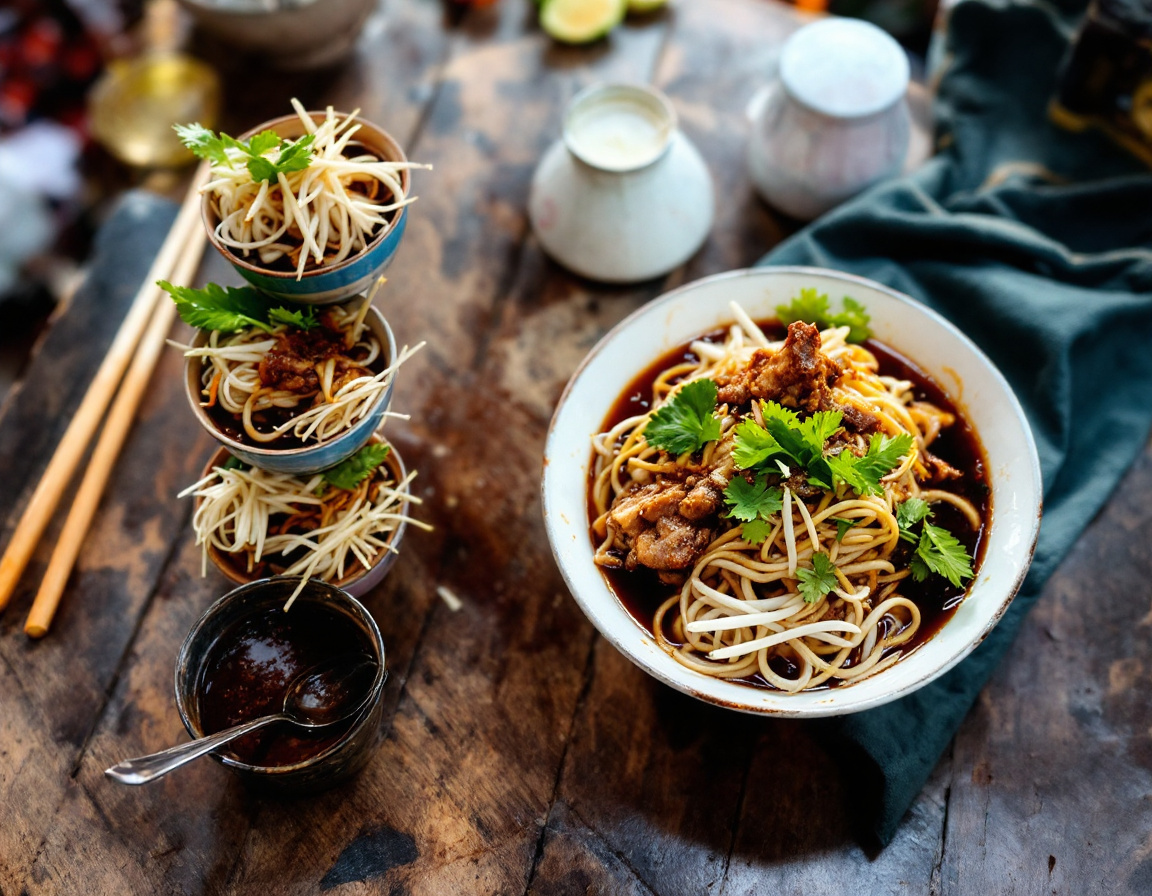
Boat Noodle Alley (Soi Rang Nam), dozens of boat noodle restaurants in one alley. Tiny bowls of rich, dark, pork-blood-spiked broth with noodles. ฿15-20 (~$0.40-0.57) per bowl. You’re meant to eat 5-10 bowls. Stack them up, it’s the tradition. Some shops count your bowls by the stack to bill you.
Ari neighborhood restaurants, walk Soi Ari and its branches for modern Thai cafes with proper cooking. Khao man gai (chicken rice), gaeng kiew wan (green curry), and Thai fusion. Budget ฿100-250 per dish. This is where Bangkok’s young creative class eats, trendy without trying too hard.
Thonburi, canal-side eating on the quiet side
Cross the Chao Phraya River and you enter Thonburi, the quieter, older side of Bangkok. This is where the city’s canal (klong) culture survives, and with it, floating markets and canal-side restaurants that feel a world away from the Sukhumvit strip.
What to eat in Thonburi
Khlong Lat Mayom Floating Market, the most authentic floating market near central Bangkok (weekends only). Locals shop here for real food, not just tourist souvenirs. Grilled river fish, boat noodles served from actual boats, coconut ice cream, khanom (Thai sweets). ฿30-100 per item. Take the BTS to Bang Wa, then a short taxi.
Baan Ice (Thonburi side), traditional Thai home-cooking restaurant set in an old wooden house by the river. Gaeng som (sour curry), hor mok (steamed fish curry in banana leaf), Thai-style omelette. ฿200-400 per person. Feels like eating at a Thai grandmother’s house.
Chatuchak and Ratchada, weekend markets
Chatuchak Weekend Market is the world’s largest outdoor market (15,000+ stalls), and while most visitors come for shopping, the food sections are excellent. Nearby, the Ratchada area’s night markets have become Bangkok’s trendiest food-after-dark destinations.
What to eat at Chatuchak and Ratchada
Chatuchak food stalls (Sections 2, 3, 23, 24), coconut ice cream in a coconut shell (฿40), Thai iced tea, grilled seafood, mango sticky rice, pad thai. The food sections cluster near Gate 2 and Gate 3. Arrive at 9 AM before the heat peaks, and eat your way through before midday.
Jodd Fairs (Ratchada), Bangkok’s hottest night market (the successor to the old Train Night Market). Open evenings. Hundreds of food stalls, everything from pad kra pao to Japanese-Thai fusion to rainbow desserts. ฿60-200 per dish. Go around 7 PM for peak energy.
Top 10 dishes to eat in Bangkok
Bangkok’s food identity is built on street food. These ten dishes are the foundation, the meals locals eat daily and the flavors that define the city. Every one is available for under ฿200 at a street stall.
| # | Dish | Where to try | Price (฿/USD) | Area |
|---|---|---|---|---|
| 1 | Pad thai | Thip Samai / any street wok | ฿50-200 / $1.40-5.70 | Banglamphu |
| 2 | Som tum (green papaya salad) | Somtum Der / any Isaan stall | ฿40-80 / $1.10-2.30 | Silom / everywhere |
| 3 | Tom yum goong | Pa Aew / any restaurant | ฿80-300 / $2.30-8.50 | Banglamphu |
| 4 | Kuay teow reua (boat noodles) | Soi Rang Nam boat noodle alley | ฿15-20/bowl / $0.40-0.57 | Victory Monument |
| 5 | Khao man gai (chicken rice) | Go-Ang Pratunam / street stalls | ฿40-60 / $1.10-1.70 | Pratunam |
| 6 | Pad kra pao (holy basil stir-fry) | Any street stall with fried egg | ฿50-80 / $1.40-2.30 | Everywhere |
| 7 | Moo ping (grilled pork skewers) | Morning market stalls | ฿10/skewer / $0.30 | Everywhere |
| 8 | Kuay jab (rolled noodle soup) | Nai Ek Roll Noodle | ฿60 / $1.70 | Yaowarat |
| 9 | Mango sticky rice | Yaowarat stands / any market | ฿80-120 / $2.30-3.40 | Yaowarat |
| 10 | Jay Fai’s crab omelette | Jay Fai (Mahachai Road) | ฿1,000 / $29 | Rattanakosin |
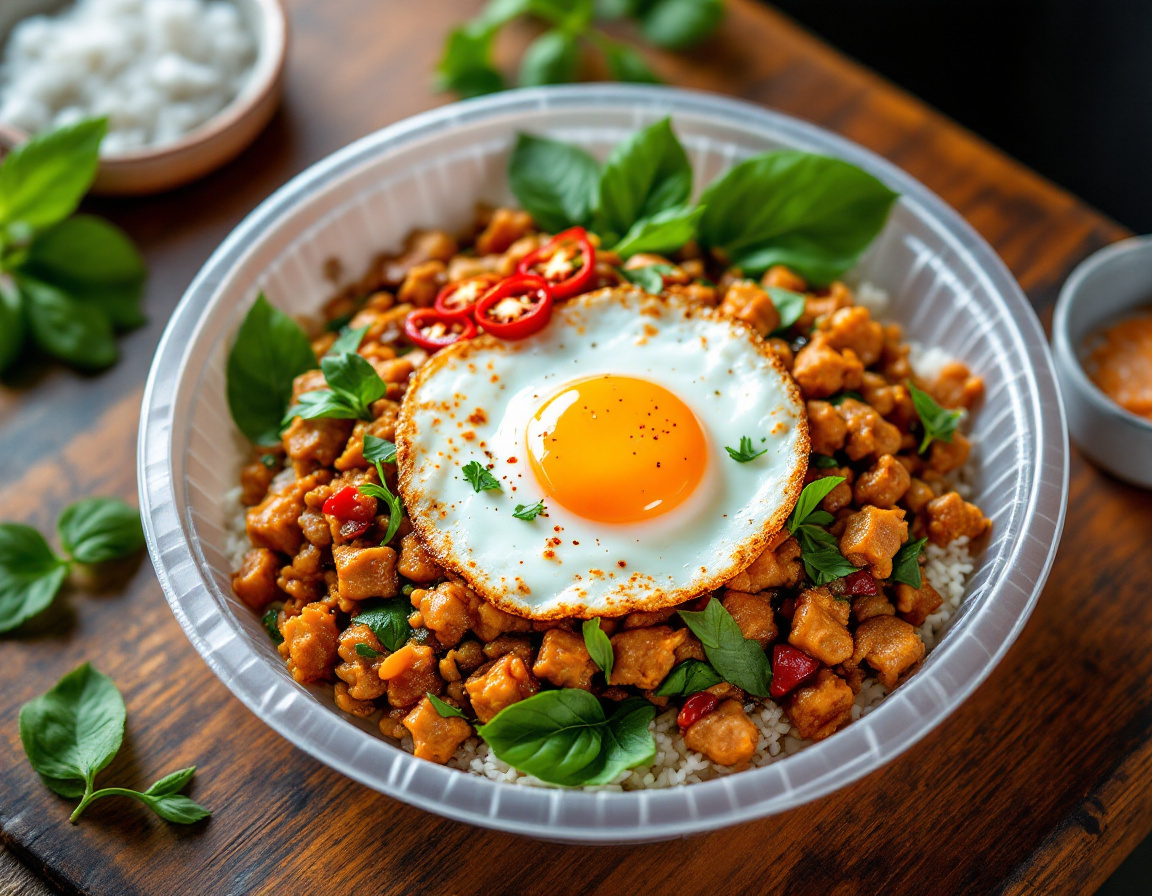
A note on pad kra pao: this might be the single most important dish in Bangkok. It’s the meal every Thai person eats when they don’t know what to eat, minced pork (or chicken, or shrimp) stir-fried with holy basil, garlic, and chilies, served on rice with a crispy fried egg on top. Say khai dao duay to add the egg. Say pet mak if you want it properly spicy. It costs ฿50 and it’s perfect. This is Bangkok in a dish.
Practical tips for eating in Bangkok
Follow the smoke, follow the queue
The best Bangkok street food finds itself. If a stall has a queue of Thai locals and visible wok flames, sit down. If it’s empty at peak hours, walk past. This heuristic is almost infallible. Tourist-facing stalls near temples tend to be mediocre; the stall three streets away where no English is spoken will be excellent.
Spice levels and how to order
Thai food in Bangkok is spicier than the Thai food you know from restaurants abroad. Mai pet means not spicy. Pet nit noi is a little spicy. Pet mak is very spicy. If you say nothing, you’ll get medium heat, which for most Western palates is already plenty. Don’t be embarrassed to order mild, the flavors shine at any level.
The ice situation
Factory-made ice (tubular, cylindrical, or crescent-shaped) is safe at virtually all Bangkok food stalls. Crushed or irregular ice from unknown sources is riskier, though still mostly fine. If you’re cautious, stick to bottles. But most seasoned travelers drink iced Thai tea from street stalls without issue.
Best times to eat
Morning stalls: 6-10 AM (jok, patongko, coffee). Lunch: 11-13:00. Dead zone: 14-16:00 (many stalls close). Evening street food: 17:00-23:00 (this is the main event). Late night: Yaowarat and Sukhumvit run until 2-3 AM.
Allergies and dietary needs
Peanuts are everywhere in Bangkok, pad thai, satay sauces, som tum. If you have a nut allergy, carry a Thai-language allergy card. Fish sauce and shrimp paste are in almost everything savory. Truly allergen-free eating requires restaurants with English-speaking staff. For plant-based options, look for the yellow jay signs.
Bangkok vs Chiang Mai: how to plan a Thai food trip
Most travelers do Bangkok then Chiang Mai, which is the right call but each city offers a fundamentally different food experience. Bangkok is street food, Chinese-Thai fusion, and the country’s heaviest concentration of Michelin restaurants. Chiang Mai is northern Thai (Lanna) cooking, khao soi, sai oua sausages, sticky rice everything, and a slower, gentler pace. Plan 4-5 days in Bangkok for eating, 3 days in Chiang Mai. Full breakdown in our Chiang Mai food guide.
Frequently asked questions about food in Bangkok
What is the most famous street food in Bangkok?
Pad thai is the most globally recognized, but locals consider it a tourist dish. The real everyday staples are som tum, khao man gai (chicken rice), kuay teow (noodle soup), moo ping (grilled pork skewers), and pad kra pao (holy basil stir-fry). All are available at any street stall for 40-80 baht ($1-2.30).
What is the best area for street food in Bangkok?
Yaowarat (Chinatown) is the undisputed king, especially after dark. Other top spots include Ratchawat Market (local, zero tourists), Bang Rak near Charoen Krung Road, and the Victory Monument area for boat noodles.
How much does street food cost in Bangkok?
Bangkok is among the world’s cheapest cities for food. Pad thai or khao pad: 40-80 baht ($1.10-2.30). Boat noodles: 15 baht ($0.40) per bowl. Moo ping: 10 baht ($0.30) per skewer. A full street meal with a drink rarely exceeds 100 baht ($2.80). Sit-down restaurants: 150-500 baht ($4.30-14).
Is Bangkok street food safe?
Yes, generally very safe. Choose stalls with high turnover, visible cooking, and Thai local crowds. Avoid pre-made food sitting in the sun. Factory ice (tubular or cylindrical) is safe. Millions of locals eat street food daily without issues.
What night market should I visit in Bangkok?
Jodd Fairs (Ratchada) is the most popular in 2026. Rod Fai Market Srinakarin is bigger and more local. Khao San Road’s night food scene is chaotic but fun. For pure food quality, skip markets and go straight to Yaowarat after sunset.
Is Bangkok good for vegetarian travelers?
Excellent, thanks to Buddhist culture. Look for the yellow jay symbol on signs, it indicates vegan food. Chinatown has many jay restaurants. Most stalls can make pad thai and curries vegetarian on request.
When is the best time to eat street food in Bangkok?
Morning stalls run 6-10 AM. The main event starts after 5 PM and peaks 7-10 PM when Yaowarat and night markets come alive. Late-night options run until 2-3 AM around Sukhumvit and Silom. Avoid midday, most stalls close between 1-4 PM due to heat.
How many days do I need in Bangkok for the food?
A minimum of 4 full days to cover the major neighborhoods (Yaowarat, Sukhumvit, Silom, Banglamphu) with proper meals in each. Five days lets you add Thonburi and a weekend at Chatuchak. A week gives you time to revisit favorites and slow down. Don’t try to do all of Bangkok food in two days, the heat alone makes that brutal.
More Asian food guides waiting for you
City-by-city deep dives across Southeast Asia and the wider continent.