What Food to Eat in Morocco? Tagines, Couscous and More Local Specialties
Planning a trip to Morocco, or do you simply want to understand this cuisine better before recreating it at home in Neoflam pans? Moroccan food is a fascinating blend of Berber, Arab, Andalusian, and French influences, seasoned with spices from the Sahara and fresh products from the Atlantic. It’s a cuisine of slow cooking, aromatic sauces, and dishes that taste best when shared with others around a big table.
In this guide, I’ll show you what food is truly worth trying in Morocco — from classic tagines and couscous, to less obvious street‑food snacks, sweets, and drinks. I’ll focus on practical aspects: where to look for specific dishes, how to recognize them on menus, what to watch out for if you have a sensitive stomach, and how to recreate Moroccan flavors at home using modern cookware such as Neoflam pots and pans.
This article is designed with SEO in mind — if you’re searching phrases like “what food to eat in Morocco”, “best Moroccan tagine”, or “traditional couscous dishes”, you’ll find clear answers, dish lists, comparisons, and practical checklists here. Thanks to this guide, you’ll know exactly what to order in Marrakesh, Fez, or Essaouira — and how to bring those flavors into your own kitchen.
🎯 Moroccan Food Basics – Flavours, Techniques and Eating Culture
Before we move on to a list of specific dishes, it’s worth understanding a few basics of Moroccan cuisine. This is not “fast” food — it’s definitely “slow”: long-braised meats, slowly caramelized onions, patiently steaming vegetables for couscous. Flavor is built in layers — from blooming spices in fat, to adding stock, to finishing with fresh herbs and citrus at the very end. In practice, that means a good tagine or couscous needs time, but rewards you with real depth of flavor.
The second pillar is balance between sweet and savory. Dried dates, apricots, raisins, caramelized onions, and honey often appear next to lamb, chicken, or beef. Then come the bold spices: cumin, coriander, ginger, paprika, turmeric, and the famous ras el hanout blend, which can contain a dozen — or even several dozen — ingredients. In Moroccan cooking, heat is usually moderate; the focus is more on aroma than on fiery spiciness.
Finally, Moroccan food is about the shared table. Large platters and clay pots land in the center, and guests eat from the same dish, often using khobz bread instead of cutlery. For home cooking, that means larger pots, pans, and serving dishes work brilliantly — and modern, lightweight but roomy cookware like Neoflam is very practical, because it lets you cook “family‑style” while keeping great temperature control and even heat distribution.
A sweet-salty balance, aromatic spices, moderate heat, and plenty of fresh cilantro and parsley.
Slow braising in heavy-bottomed cookware, steaming, baking in clay ovens, and charcoal grilling.
Shared dishes in the center of the table, bread used as “cutlery,” and mint tea as a must-have part of every meal.
🎯 Tagines – The Iconic Slow-Cooked Stews You Must Try
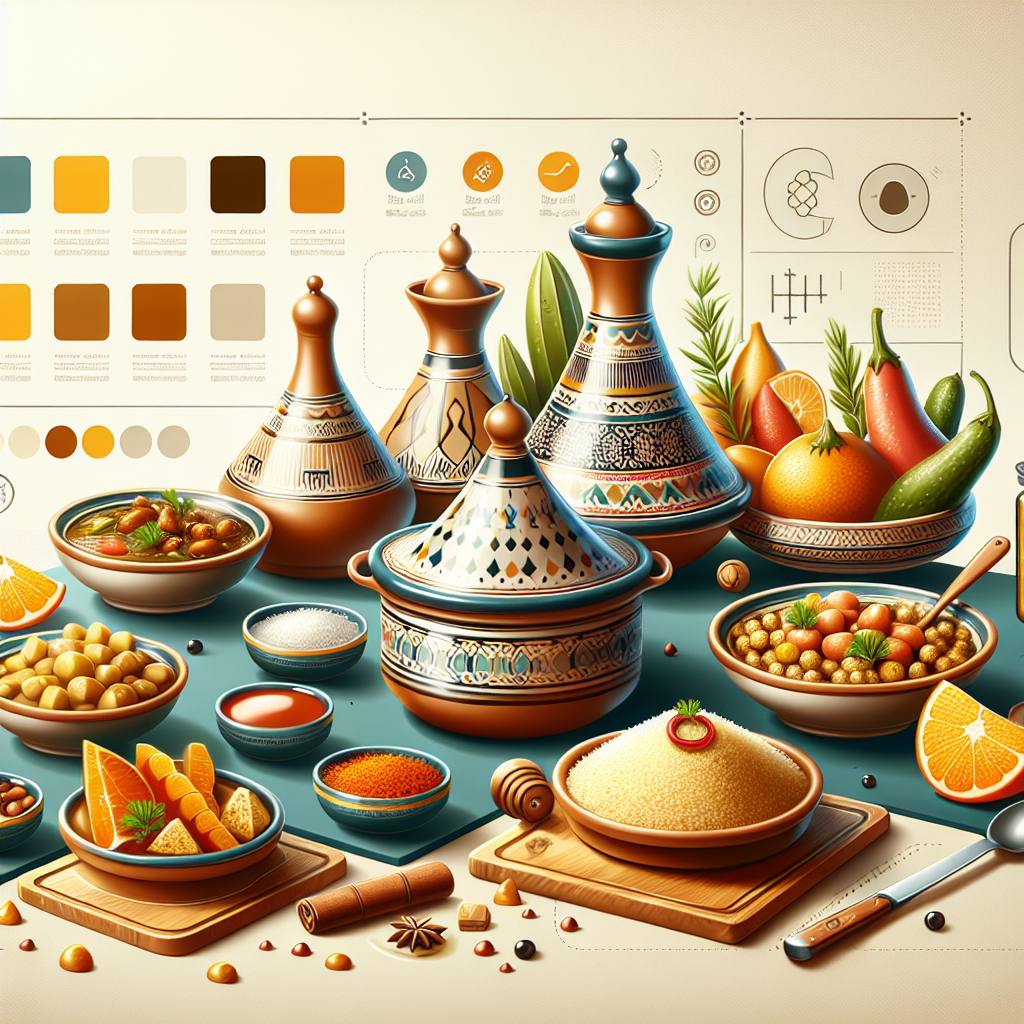
If you’re wondering what food to eat in Morocco first, the answer is simple: tagine. It’s both the name of the dish and the vessel — a distinctive clay pot with a wide base and a conical lid. In practice, tagine is a slow-braised stew in which meat, vegetables, dried fruit, and spices turn into a thick, aromatic sauce. Thanks to the lid’s shape, steam circulates inside the pot, and the dish stays juicy even if it simmers for over an hour.
In restaurants and on the streets of Marrakesh you’ll find dozens of tagine variations: chicken with lemon, lamb with prunes, vegetable, fish, and even meatballs in tomato sauce. It’s a dish that perfectly shows Moroccan cooking philosophy — a simple base ingredient, a few layers of spices and add-ins, lots of time, and patience. At home, you can get a similar effect using a heavy pan with a lid or a pot that holds moisture well.
Below you’ll find the most popular types of tagine worth ordering on-site or recreating at home. For each version, I list key ingredients, difficulty level, and tips for cooking with modern cookware.
Chicken Tagine with Preserved Lemons and Olives
Chicken tagine with preserved lemons and olives is probably the most classic dish you’ll see on menus. The base is chicken braised with onion, garlic, ginger, turmeric, cumin, and saffron (or a cheaper alternative). Salt and acidity come from olives and preserved lemons — intense, slightly bitter, and very aromatic. The sauce is thick and golden, perfect for scooping up with bread.
At home, it’s worth browning the chicken pieces first in a well-heated pan (a non-stick Neoflam surface makes this easier), and only then adding onions and spices. That way the meat keeps its structure and won’t completely fall apart during the braise. Add preserved lemons near the end so they don’t dominate the entire dish.
- Best sides: khobz bread, a tomato-and-onion salad, mint tea.
- Difficulty: medium — time-consuming, but technically simple.
- Perfect for: a family lunch, a dinner party, or meal prep for two days.
Lamb Tagine with Prunes, Almonds and Honey
Lamb tagine with prunes is the essence of Morocco’s sweet-and-savory pairing. Tender, long-braised lamb meets prunes, almonds, and often a touch of honey and cinnamon. The sauce is thick, dark, almost caramel-like. It’s a dish that often appears for special occasions, weddings, and family celebrations.
When making this at home, the key is truly slow simmering over low heat. In heavy-bottomed cookware you can keep a gentle “blip-blip” simmer, so the meat fibers relax gradually. Add prunes and honey in the second half of cooking to keep their texture and avoid burning the sugars. Finish with toasted almond flakes just before serving.
- A show-stopping dish for special occasions.
- Reheats beautifully — it often tastes even better the next day.
- Can be made in one pot, minimizing cleanup.
- Requires a long braising time (2–3 hours).
- Lamb isn’t always easy to find and can be expensive.
- The sweet-salty profile may not suit everyone.
Vegetable and Fish Tagines – Lighter but Full of Flavour
Don’t eat meat or want something lighter? In Morocco you’ll easily find vegetable tagine and fish tagine, especially in coastal cities like Essaouira or Agadir. Vegetable tagines often feature carrots, potatoes, zucchini, eggplant, tomatoes, and chickpeas, seasoned with cumin, paprika, turmeric, and lots of fresh herbs. Fish tagines use local fish — sea bream, seabass, or mackerel — marinated in chermoula (cilantro, garlic, paprika, lemon, olive oil).
At home, you can make a vegetable tagine in a wide pot or lidded pan by layering vegetables and making sure there’s always a bit of liquid at the bottom. Fish tagines benefit from gentle, even heat — here, good temperature control and a non-stick surface are key so the fish doesn’t fall apart. In both cases, finish with fresh cilantro, parsley, and a squeeze of lemon.
Pro tip: if you’re cooking tagine at home in modern cookware, don’t keep it fully covered the entire time. For the last 10–15 minutes, cook partially uncovered so the sauce naturally reduces and thickens without adding flour.
🎯 Couscous – Friday Tradition and Everyday Comfort Food
When we talk about what food to eat in Morocco, couscous comes right after tagine. In Morocco, couscous isn’t just an ingredient — it’s a whole ritual. Traditionally it’s prepared on Fridays after prayer and served in a large shared dish. The semolina grains are steamed over a vegetable-and-meat broth so they absorb aromas from the very start. Properly made couscous is fluffy, light, and still satisfying.
At home outside Morocco, we most often use instant couscous that’s simply covered with boiling water. While it won’t deliver the same result as traditional steaming, you can improve it a lot with a few simple tricks. It’s also useful to know the basic couscous versions you’ll encounter in Morocco: with seven vegetables, with caramelized onions and raisins, and versions with lamb or chicken.
In this section we’ll look not only at classic pairings, but also at how to use modern cookware to recreate a more authentic effect at home. Good news: most steps can be adapted to Neoflam pots and pans without needing a traditional couscoussier.
Traditional Couscous with Seven Vegetables
The most famous version is couscous with seven vegetables — the symbolic number seven can vary by region, but it usually includes carrots, zucchini, pumpkin, turnip, cabbage, chickpeas, and tomatoes. The vegetables simmer in an aromatic broth with turmeric, ginger, paprika, and saffron, often with pieces of meat (chicken or lamb). The finished broth and vegetables are piled on a mound of couscous, then topped with an extra ladle of sauce just before serving.
At home, you can make the broth in a large pot and “steam” couscous by placing a metal sieve over the pot and covering everything with a lid. If you use instant couscous, replace plain water with some of the broth plus a drizzle of olive oil or a knob of clarified butter. After it swells, fluff the grains with a fork to avoid clumps.
- Use a wide bowl to mix couscous with olive oil — the grains will stay fluffier.
- Add a pinch of turmeric to the broth to enhance the golden color.
- Don’t be shy with herbs — cilantro and parsley brighten the whole dish.
Couscous Tfaya – Caramelised Onions and Sweet Raisins
Couscous tfaya is a version that sweet-and-savory lovers will adore. On top of the couscous mound goes a heap of long-caramelized onions with raisins, cinnamon, and a touch of honey. Chickpeas and tender chicken or lamb are often added too. The result? A dish that smells like a cross between a stew and a dessert, but tastes balanced and savory.
The biggest challenge here is patience while caramelizing onions. Use a wide non-stick pan so the onions can cook evenly over moderate heat without burning. Add liquid (water or broth) in small portions, letting it evaporate each time — this technique builds deep flavor.
Comparing Tagine vs Couscous – When to Choose Which?
Many travelers wonder what to choose for their first meal: tagine or couscous? Both are iconic, but they play slightly different roles. Tagine is saucier and more concentrated, perfect for scooping up with bread. Couscous is lighter in texture, but can be just as filling, especially with meat and vegetables. The table below will help you decide which dish fits a given moment.
| Feature | Tagine | Couscous |
|---|---|---|
| Dish structure | Stew / braise in a thick sauce | Fluffy grains + vegetables/meat on top |
| Best companion | Khobz bread for dipping the sauce | Vegetable or meat broth, sometimes extra sauce |
| How filling? | Very filling; lots of sauce and meat | Filling, but lighter thanks to the grain texture |
| Best moment | Dinner, cooler evenings, long shared meals | Lunch, Friday meals, big family gatherings |
| Ease of making at home | Medium — requires longer braising | Medium — technically simple; texture is the key |
| Cookware | Wide pan / lidded pot | Large pot + bowl or sieve for steaming |
🎯 Beyond Tagine and Couscous – Street Food, Breads and Salads
Although tagine and couscous dominate “what food to eat in Morocco” lists, you’ll only truly understand the cuisine once you try local street food, breads, and small starters. In the medinas of Marrakesh or Fez you’ll find dozens of stalls selling grilled meats, pancakes, fried fish, soups, and salads. That’s where locals eat daily — and prices are often far lower than in tourist restaurants.
It’s also worth paying attention to bread and baked goods. In Morocco, bread is treated with great respect — it’s never thrown away, and leftovers are used in other dishes. Different regions have their own specialties: from round khobz loaves, to thin msemen, to stuffed batbout. Add to that numerous salads, often served as small starters before the main dish.
Below is a quick map of the most interesting snacks and sides to add to your “must eat in Morocco” list. These are the items that build a fuller picture of just how diverse Moroccan cuisine is.
Moroccan Breads You Should Not Skip
Bread in Morocco isn’t just a side — it’s the main tool for eating. The most common is khobz: a round, fairly flat loaf made from wheat or mixed flour, with a crisp crust and a soft interior, perfect for soaking up tagine sauce. Msemen is more like a layered pancake or flatbread, pan-fried with a little oil — in savory versions it’s served with eggs, cheese, or minced meat; in sweet versions, with honey.
Batbout are small, fluffy buns similar to pita bread — after baking they form a pocket you can stuff with meat, vegetables, or salads. Harcha is a denser semolina flatbread, often eaten for breakfast with butter and honey. Many of these can be recreated on a pan — and even heat distribution plus a non-stick surface are key, which is why a good-quality pan (e.g., Neoflam) will be your ally.
- Khobz: for dipping sauces, perfect with tagine.
- Msemen: street food for breakfast or dinner, sweet or savory.
- Batbout: great for sandwiches and stuffed snacks.
- Harcha: semolina breakfast flatbread, often sweet.
Street Food Classics – From Brochettes to Snail Soup
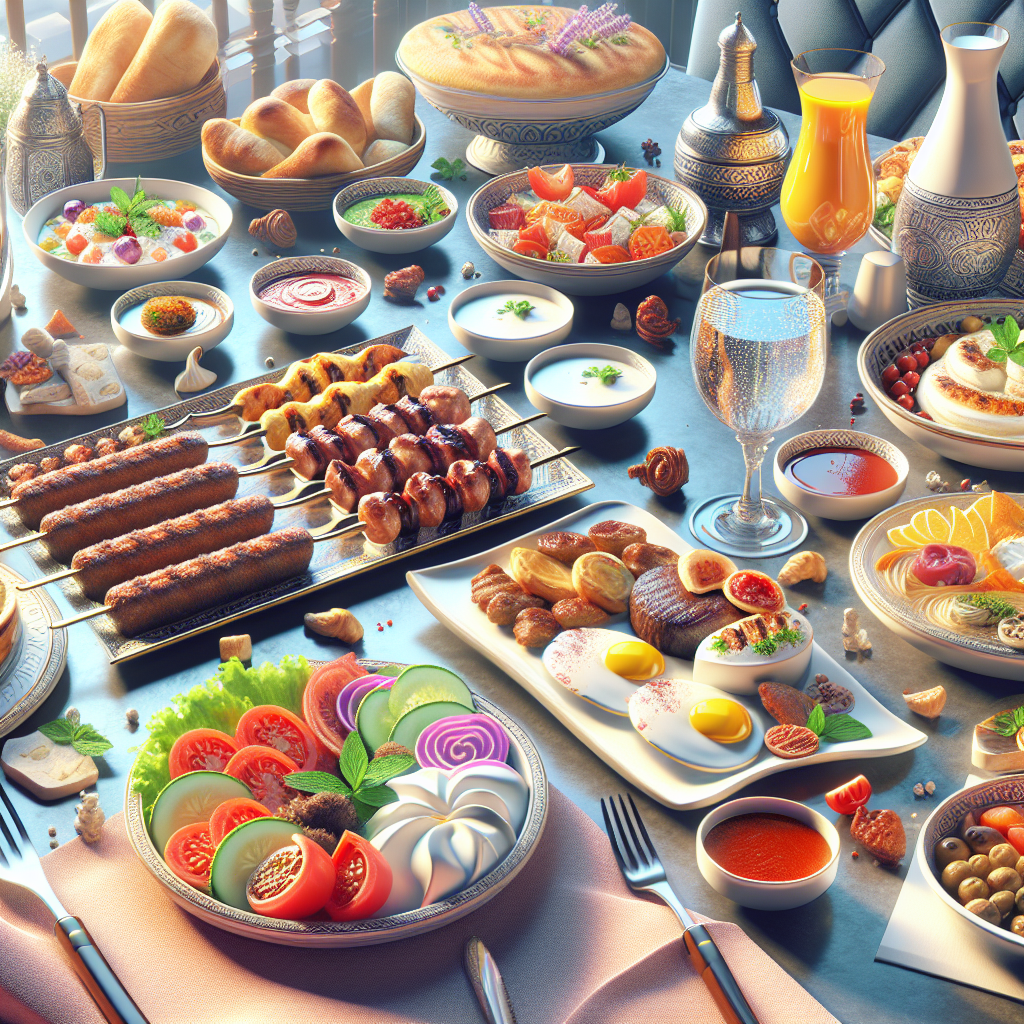
Moroccan street food is incredibly diverse. In Marrakesh’s Jemaa el-Fnaa you’ll find stalls with brochettes — beef, chicken, or liver skewers grilled over charcoal and served with bread and spicy harissa. Merguez — thin, spicy lamb sausages — are also popular. In some places you’ll see bessara, a thick soup made from peeled fava beans, served with olive oil, cumin, and bread.
One of the more exotic dishes is snail soup — a soup of small snails in an aromatic, herb-forward broth. Not everyone will dare, but it’s a great example of how local cuisine uses everything available. In port cities you’ll also find fried squid, sardines, and other seafood, often battered and deep-fried.
Cold and Warm Salads – Zaalouk, Taktouka and More
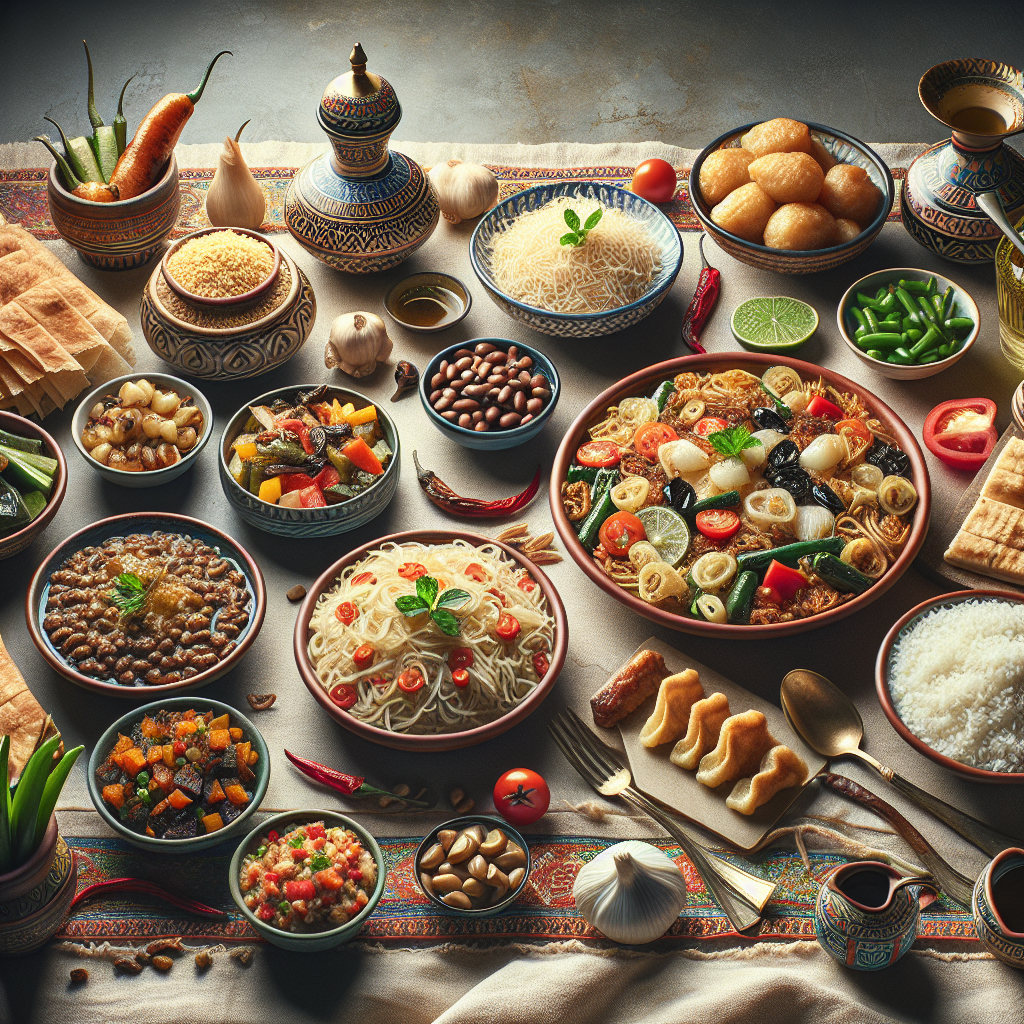
Before the main course, many Moroccan homes and restaurants serve a set of small bowls of salads. Zaalouk is a dip-like salad of roasted eggplant and tomatoes, seasoned with garlic, cumin, paprika, and olive oil — something between a salad and a spread, perfect with bread. Taktouka is similar, but leans more on peppers and tomatoes, with less eggplant.
Other popular sides include carrots with cumin and garlic, beets with vinegar and cilantro, a tomato-and-onion salad with olive oil and lemon, and more. Many of these dishes are cooked in a pan or pot, then served cold or at room temperature. It’s a great way to use leftover vegetables and add more fiber to the meal.
Tip for home cooking: make 2–3 different Moroccan salads over the weekend and keep them in the fridge. For a few days, you can add them to lunch or dinner and quickly create a “Moroccan table” without much effort.
🎯 Sweets, Pastries and Drinks – How Moroccans End Their Meals
Moroccan cuisine is famous not only for savory dishes, but also for a rich tradition of sweets and drinks. After a hearty meal, fresh fruit often appears — oranges, melon, watermelon — but small sweet pastries made with almonds, honey, and filo dough are just as common. And of course, everything is accompanied by mint tea, a symbol of Moroccan hospitality.
If you’re planning a trip and wondering what food to eat in Morocco for dessert, the list is long: local-style baklava, almond-filled crescents, ghriba cookies, and sweet pancakes and flatbreads. It’s also worth trying local juices — freshly squeezed orange juice is almost a must in Marrakesh.
In this section we’ll look at a few key categories: cookies and pastries, drinks, and how to finish a Moroccan meal at home even if you can’t get all local ingredients.
Mint Tea – The Real Star of Moroccan Hospitality
Mint tea — Morocco’s famous mint tea — is more than a drink; it’s a ritual. The base is green tea (often gunpowder), lots of fresh mint, and plenty of sugar. It’s served in glasses, often poured from a height to aerate the tea and create a light foam on top. In practice, it’s very sweet, but it perfectly balances the intense spices of the main meal.
At home, you can make a simplified version by brewing green tea with sprigs of mint and sweetening to taste. If you want to get closer to the real thing, the key is pouring the tea back and forth between the teapot and glasses two or three times — it helps balance flavor and temperature. Heatproof glasses and a small teapot or saucepan work well for serving.
Traditional Moroccan Sweets and Pastries
In Moroccan pastry shops, almonds, nuts, honey, and filo dough rule. Cornes de gazelle are popular — delicate crescent cookies filled with almond paste and scented with rose water. Ghriba are soft cookies, often made with almonds or semolina, with a slightly cracked surface. You’ll also find different versions of baklava, often lighter than in Turkey or Greece.
At home, many of these sweets can be simplified using store-bought filo dough and good-quality nuts. Even baking is important — thin filo layers burn easily, so use baking trays that distribute heat evenly and keep an eye on oven temperature. After baking, sweets are usually soaked in a syrup made from honey, sugar, lemon, and rose water or orange blossom water.
Fresh Juices and Other Drinks
Besides tea, fresh juices are very popular in Morocco — especially orange, pomegranate, and sugarcane juice. In Marrakesh you’ll find street stands squeezing juice from local fruit on the spot — a great way to refresh on a hot day. In some regions you can also try leben, a fermented milk drink that can help digestion after heavier meals.
If you’re cooking a Moroccan dinner at home, a simple way to nod to local tradition is to serve a jug of water with orange slices and mint sprigs, or a basic orange juice diluted with sparkling water. It’s a small detail that ties the meal together and mentally transports guests to Moroccan bazaars.
🎯 Practical Tips – Eating Safely in Morocco and Recreating Dishes at Home
Now that you know the list of dishes, it’s easier to answer “what food to eat in Morocco.” Now it’s time for practice: how to eat safely while traveling, and how to recreate Moroccan flavors in your own kitchen. The good news is that most dishes rely on simple ingredients and techniques you can easily bring home — the key is understanding how to control temperature and cooking time.
In Morocco, the biggest challenge for tourists can be water and hygiene in less-trafficked places. That doesn’t mean you need to avoid street food — rather, choose places with high customer turnover and watch how ingredients are stored. At home, the challenge is often not having traditional tools like a tagine pot or couscoussier. Fortunately, high-quality modern pots and pans can replace them without issue if you follow a few simple rules.
Below you’ll find a checklist and answers to the most common questions that come up when planning a culinary trip to Morocco or when trying Moroccan dishes at home for the first time.
Food Safety Checklist for Travellers
- Drink only bottled water and avoid ice in drinks if you’re not sure about the water source.
- Choose busy stalls and restaurants — fast turnover usually means lower risk.
- Eat meat that is well-cooked; avoid undercooked dishes.
- Eat fresh salads only in places you trust — when in doubt, pick cooked or grilled vegetables.
- With street food, watch how the vendor handles raw vs cooked ingredients — separate tools are a good sign.
Recreating Moroccan Flavours at Home with Modern Cookware
You don’t need a traditional clay tagine to make a great chicken tagine with preserved lemons at home. The key is the right cookware: a wide, deep pan or a heavy-bottomed pot with a well-fitting lid. This kind of gear — lightweight yet evenly heating — is easy to find in the Neoflam range. Thanks to a non-stick surface, you can safely sauté spices and meat without burning, then move into long, gentle braising.
The same goes for couscous — instead of a couscoussier, use a large pot for the broth and a metal sieve or steaming insert. Place it over the pot so steam can reach the grains, and cover everything with a lid. In many cases, a good pot or saucepan is also enough for sauces and broths, which are the base of most Moroccan dishes.
FAQ – The Most Common Questions About Food in Morocco
No — most traditional dishes are aromatic rather than hot. You can add heat yourself with harissa, which is often on the table as a condiment. If you don’t like spicy food, just ask for no extra harissa to be added to the dish.
Great choices include vegetable tagine, couscous with vegetables, many salads (zaalouk, taktouka, carrots with cumin), and dishes with chickpeas and lentils. In bigger cities, you’ll increasingly find restaurants with clearly labeled vegetarian options.
Yes — breakfasts often include msemen with honey, harcha, jams, honey, butter, and mint tea or coffee. If you prefer savory options, ask for eggs, cheese, or olives — many guesthouses are happy to adapt breakfasts.
🎯 Summary – Your Moroccan Food Game Plan
Morocco is a paradise for anyone who loves aromatic cuisine, slow cooking, and shared feasting. From your first chicken tagine with preserved lemons, through Friday couscous with seven vegetables, to evening brochettes from a street grill — every day of a trip can become its own culinary story. The key is openness to new flavor combinations and a bit of knowledge that helps you choose the best dishes on the menu.
At home, Moroccan cuisine is more accessible than it may seem. Most dishes rely on simple techniques — braising, steaming, grilling — that pair beautifully with modern pots and pans. Using quality cookware with a solid base and a non-stick surface, you can focus on building flavor instead of fighting a burnt bottom.
Your “what food to eat in Morocco” plan
- Try at least two tagines — the classic chicken with lemon and the sweet-savory lamb with prunes.
- Plan a Friday couscous with seven vegetables and compare it with couscous tfaya topped with caramelized onions.
- Don’t skip street food: brochettes, msemen, fried fish, and local soups.
- End each day with mint tea and a small portion of traditional sweets.
- After you return, recreate your favorite dish at home using a wide pan or a heavy-bottomed pot.
Want to bring Moroccan flavors into your kitchen? Focus on slow braising, good spices, and cookware that distributes heat evenly. That way every tagine or couscous you make will feel closer to what you ate in Marrakesh or Fez.