The best food in Chiang Mai is northern Thai (Lanna) cooking, and it tastes nothing like Bangkok. Start with khao soi, the coconut curry noodle soup the city is built on, then sai oua sausage, sticky rice eaten by hand, and the chili dips called nam prik.
My first bowl of khao soi in Chiang Mai came from a tin-roofed shop in the Old City that had already sold out of chicken by 1 PM, I got the last beef one, and I have chased that crispy-noodle-and-curry hit ever since. Chiang Mai eats differently from the rest of Thailand. The rice is sticky and eaten with your fingers, the curries skip coconut milk for pork fat and fermented soybeans, and a proper meal is a shared tray of grilled meats, dips, and raw vegetables. It is also the cheapest exceptional food city most travelers will ever visit: a great bowl of khao soi costs about ฿50 (~$1.40).
Chiang Mai is the capital of Thailand’s north, and its food is the country’s most distinct regional cuisine, shaped more by Myanmar, Laos, and the Shan States than by Bangkok. For the wider picture, see our complete guide to the best food in Thailand and our Bangkok food guide for the central-Thai contrast.
What food should you eat in Chiang Mai?
The food to eat in Chiang Mai is northern Thai (Lanna) cooking: khao soi above all, plus sai oua sausage, gaeng hang lay curry, nam prik chili dips, gai yang grilled chicken, and sticky rice at every meal. Lanna food uses less coconut milk and more herbs, dried spices, and fermented flavors than central Thai cooking, with clear Burmese and Shan influences. There is almost no pad thai culture here, and that is the point.
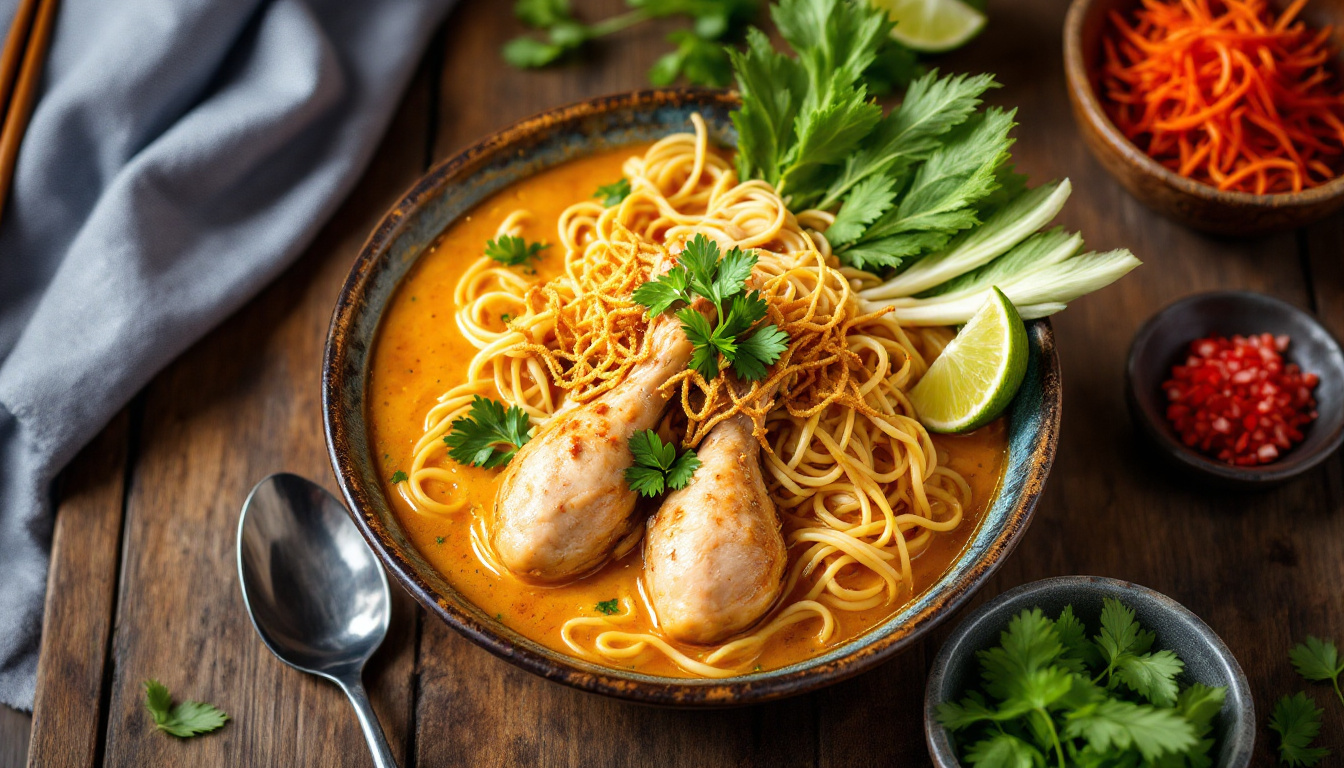
Khao soi
Khao soi is the dish Chiang Mai is built on: a coconut curry noodle soup with soft egg noodles, topped with crispy fried noodles, pickled mustard greens, shallots, and a squeeze of lime. The curry paste is northern Thai, influenced by Burmese and Shan cooking, and it is rich without being heavy. A bowl at a local shop costs ฿50 to 70 (~$1.40 to $2) as of 2026. Chicken (gai) is the classic order and beef (neua) is richer. One caveat that catches visitors out: khao soi shops are lunch places, and most close when the day’s pot runs out, usually by 2 PM.
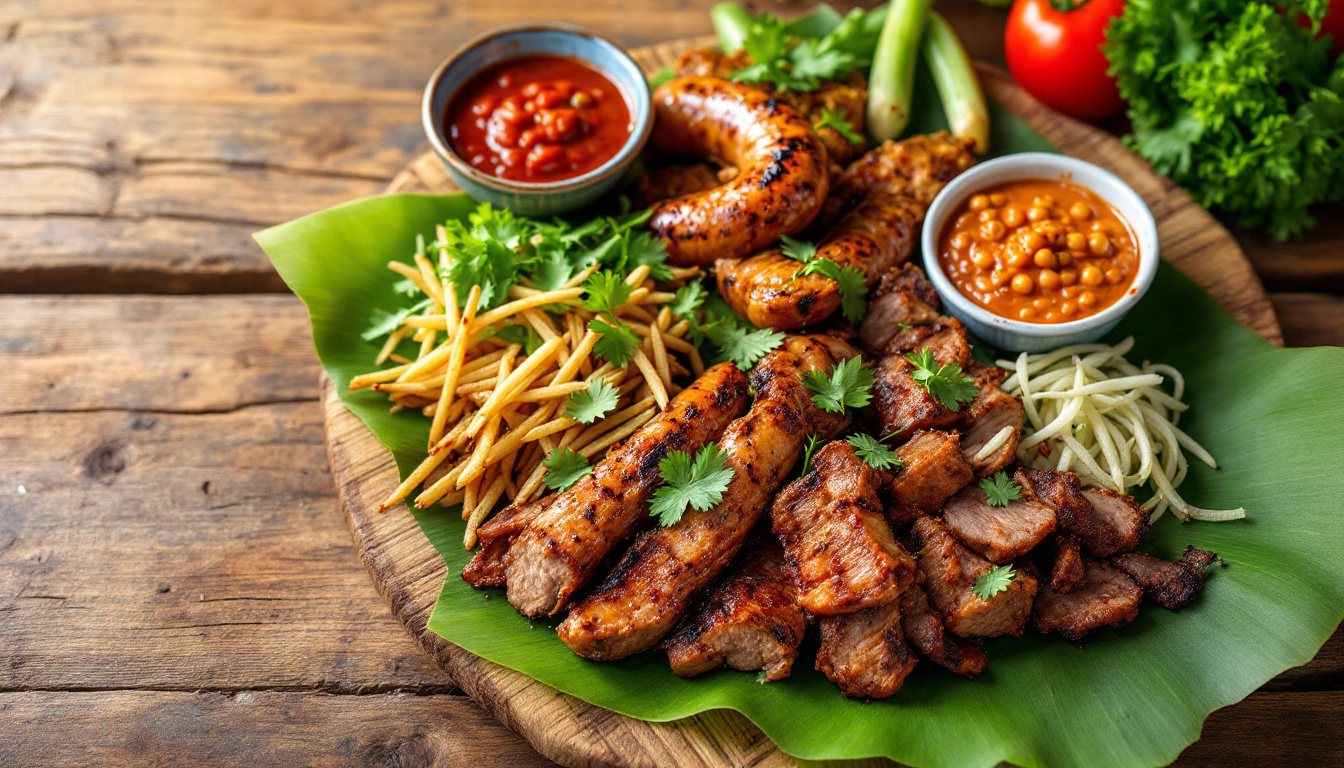
Sai oua (northern sausage)
Sai oua is the Chiang Mai sausage, a coarse grilled pork sausage packed with lemongrass, galangal, kaffir lime, and red chili. It is sold by the grilled link at markets and night stalls for ฿30 to 40 (~$0.85 to $1.15) and eaten with sticky rice. Bright, herbal, and a little smoky, it is the single most portable taste of the north and the easiest thing to buy and eat as you walk.
Gaeng hang lay (Burmese pork curry)
Gaeng hang lay is a slow-braised pork belly curry with ginger, tamarind, and turmeric, mild and sour-sweet rather than fiery. Its name and flavor come straight from Myanmar, and it is the clearest example of how Burmese cooking shaped Lanna food. Order it at a sit-down northern restaurant with sticky rice; expect ฿80 to 150 (~$2.30 to $4.30) a plate.
Nam prik (chili dips)
Nam prik are the chili dips at the center of a northern meal, eaten by dipping sticky rice and raw or steamed vegetables. The two to know are nam prik num, a roasted green chili dip that is smoky and medium-hot, and nam prik ong, a milder dip of minced pork and tomato. A meal in Chiang Mai is often built around a tray of nam prik, vegetables, and rice rather than a single main dish. This is the heat you control yourself, so start small.
Sticky rice (khao niao)
Sticky rice is not a side in Chiang Mai, it is the meal. Served warm in a woven bamboo basket, you pull off a ping-pong-sized ball, press it with the fingers of your right hand, and use it to scoop dips or wrap around grilled meat. It costs almost nothing (฿5 to 10 a basket) and replaces jasmine rice at nearly every northern table. If you eat the whole trip with a fork and spoon, you have missed how the north eats.
Gai yang and laab muang
Gai yang is charcoal-grilled chicken marinated in lemongrass, garlic, and white pepper, served with sticky rice and a spicy dipping sauce. Laab muang is the northern minced-meat salad, drier and earthier than the Isaan version, seasoned with a dried spice blend that includes makhwen (a local Sichuan-style pepper). Both are everyday Lanna dishes, eaten as readily at breakfast as at dinner, and both pair with a basket of sticky rice.
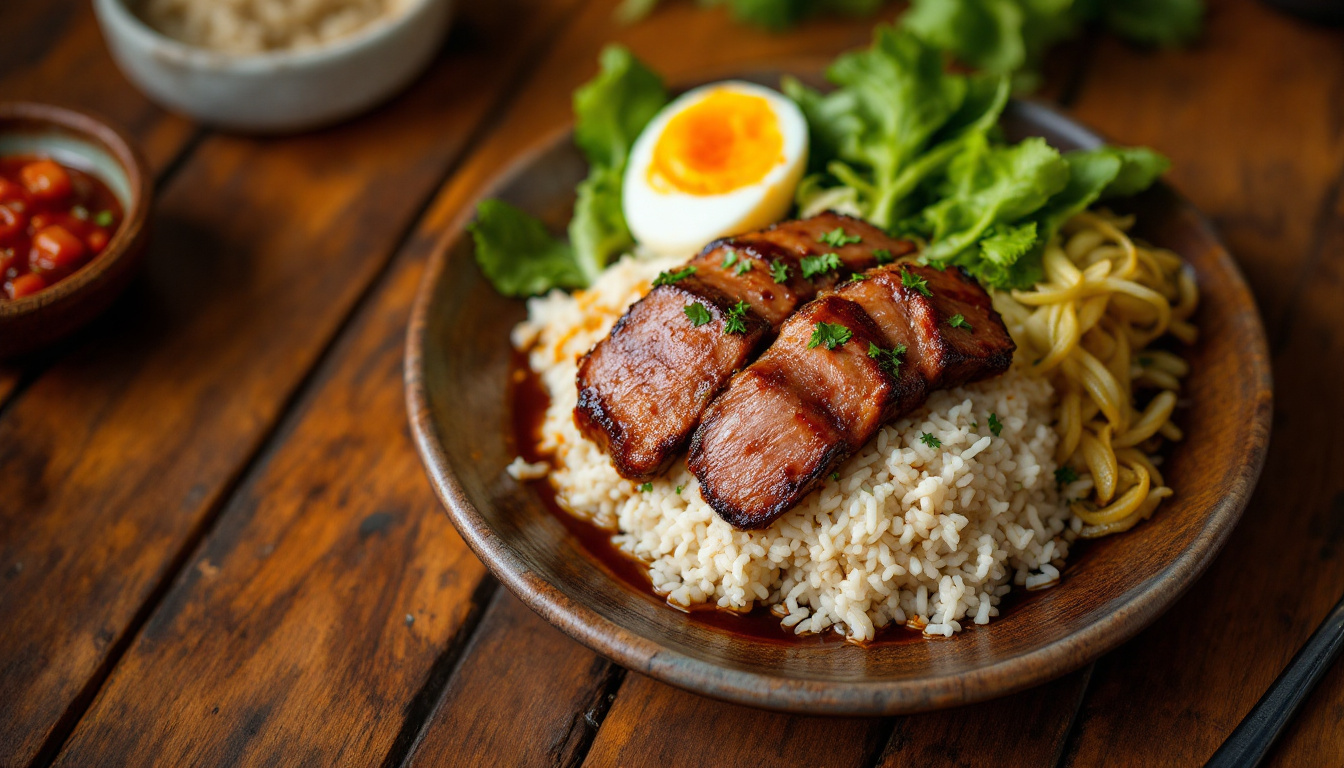
Khao kha moo (stewed pork leg)
The great Chiang Mai market lunch: pork leg braised for hours in soy, star anise and cinnamon until collapsing, sliced over rice with a halved boiled egg, pickled mustard greens and a sharp chili-garlic-vinegar sauce. The most famous version is sold by the “Cowboy Hat Lady” (Khao Kha Moo Chang Phueak) at the Chang Phueak Gate night market, a stall that earned a Michelin mention for a dish that costs about ฿50.
Tam kanun (young jackfruit curry)
A deeply local northern dish you’ll rarely see elsewhere: young green jackfruit simmered with tomato, herbs and the same makhwen-and-chili paste that defines Lanna cooking, sometimes with pork ribs. Earthy, slightly funky and eaten with sticky rice, it’s the kind of home-style plate that tells you you’ve left the tourist trail.
Where should you eat in Chiang Mai?
Eat traditional in the Old City, local at Warorot Market and Chiang Mai Gate, and modern on Nimmanhaemin Road. Each district has a distinct food personality, and the Old City inside the square moat holds the densest cluster of khao soi shops and Lanna kitchens. Here is where to go for what, with specific shops worth the trip.
The Old City: khao soi territory
The Old City, ringed by a moat built in 1296, has Chiang Mai’s best traditional food, and it is walkable. Khao Soi Khun Yai (Sri Poom Road, Soi 8) is regularly named the city’s best khao soi, with a house-ground curry paste and crispy noodles that stay crunch to the last bite; about ฿50 and closing by mid-afternoon. Khao Soi Mae Sai (Ratchapakhinai Road) is a slightly sweeter local rival with bigger portions. Huen Phen (Ratchamankha Road) is the most complete northern restaurant for gaeng hang lay, laab muang, and sai oua, ฿150 to 300 per person at dinner. SP Chicken (Sam Lan Road) does one thing, charcoal gai yang, possibly the best in the north.
Warorot Market and Chiang Mai Gate: the local scene
Warorot Market (Kad Luang) is the main covered market and where Chiang Mai cooks shop and eat. The food stalls around its edges sell kanom jeen nam ngiao, a northern specialty of rice noodles in a tomato-pork broth with blood cake, for ฿30 to 40 (~$0.85 to $1.15), plus sai oua by the link and nam prik you will not see in Bangkok. A short walk south, the Chiang Mai Gate morning market is the best breakfast in the city: tiny stalls serving jok (congee), khao soi, and noodle soup from before dawn until mid-morning for ฿25 to 40. Arrive between 7 and 9 AM.
Nimmanhaemin: cafes and modern Thai
Nimmanhaemin Road (locals say “Nimman”) is the trendy strip toward the university, packed with specialty coffee and modern restaurants. Ristr8to (Nimman Soi 3) is one of the best coffee shops in Southeast Asia, roasting single-origin Thai beans in-house. Tong Tem Toh (Nimman Soi 13) serves accessible northern Thai dishes with clear menus, a good first stop if the Old City stalls feel intimidating. One trade-off to know: Nimman runs 30 to 50% more expensive than the Old City for the same dish, so a ฿50 khao soi inside the moat is ฿80 here. You are paying for air conditioning and English menus, which is fine as long as you know it.
Which markets and night markets are best?
The Sunday Walking Street on Ratchadamnoen Road is Chiang Mai’s best weekly food market, Warorot is the best daily market, and the Chiang Mai Gate morning market is the best for breakfast. The Sunday market closes the Old City’s main street to traffic and stretches food stalls over a kilometer, making it one of the best night markets in Thailand. It ranks alongside the world’s great night markets and food halls.
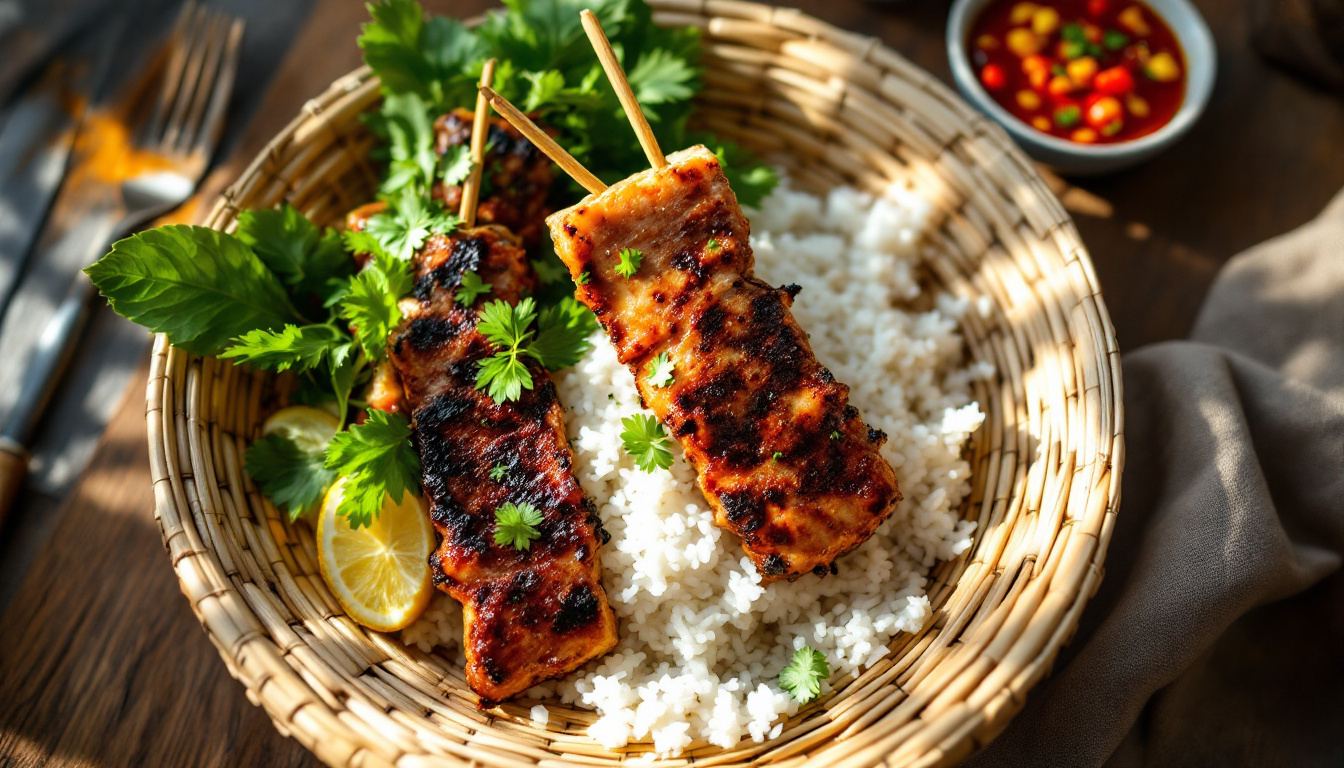
At the Sunday Walking Street, eat your way through the stalls: sai oua grilled fresh (฿30 to 40), moo ping pork skewers (฿10 each), khanom buang crispy Thai crepes (฿20 for three), and khao lam, sticky rice with coconut milk steamed inside a bamboo tube (฿20 to 30). The market is busiest from 7 to 9 PM, so arrive at 5 PM for shorter queues, or go to the calmer Saturday Night Market on Wualai Road instead, where the food is just as good with a fraction of the crowd.
Top 10 dishes to eat in Chiang Mai
Northern Thai food rewards patience. These ten dishes build slowly, layer by layer, rather than hitting you with the immediate fire of Bangkok street food. They are ranked roughly by how essential they are to understanding the city, with where to find each and a rough 2026 price.
| # | Dish | Where to try | Price | Area |
|---|---|---|---|---|
| 1 | Khao soi (curry noodle soup) | Khao Soi Khun Yai / Mae Sai | ฿50–70 | Old City |
| 2 | Sai oua (northern sausage) | Walking Street / Warorot | ฿30–40 | Markets |
| 3 | Gaeng hang lay (Burmese pork curry) | Huen Phen / Tong Tem Toh | ฿80–150 | Old City / Nimman |
| 4 | Nam prik num (roasted green chili dip) | Any northern restaurant | ฿40–60 | Old City |
| 5 | Gai yang (grilled chicken) | SP Chicken | ฿120–220 | Old City |
| 6 | Laab muang (northern minced salad) | Huen Phen / south of moat | ฿40–80 | Old City / south |
| 7 | Kanom jeen nam ngiao | Warorot Market stalls | ฿30–40 | Warorot |
| 8 | Sticky rice (khao niao) | Every stall, always | ฿5–10 | Everywhere |
| 9 | Khao lam (bamboo sticky rice) | Night markets, roadside | ฿20–30 | Markets |
| 10 | Moo ping (grilled pork skewers) | Walking Street / morning markets | ฿10 each | Everywhere |
How much does food cost in Chiang Mai?
Chiang Mai is one of the cheapest exceptional food cities in the world. A full day of eating well costs under ฿300 (~$8.60), and a single dish at a Western restaurant back home would buy four different northern meals here. These are rough US dollar conversions as of 2026 and shift with the exchange rate, so treat them as ranges.
| Item | Typical price | Where |
|---|---|---|
| Khao soi | ฿50–70 (~$1.40–2) | Local shop |
| Market noodle soup / kanom jeen | ฿30–60 (~$0.85–1.70) | Warorot, morning markets |
| Sai oua + sticky rice | ฿40 (~$1.15) | Market stall |
| Night market snack | ฿20–50 (~$0.57–1.40) | Walking Street |
| Northern Thai dinner | ฿150–300 (~$4.30–8.60) | Huen Phen, sit-down |
| Nimman coffee or brunch | ฿80–350 (~$2.30–10) | Nimmanhaemin cafes |
| Half-day cooking class | ฿900–1,500 (~$25–43) | Includes market tour |
Chiang Mai food tips that matter
A few habits make a Chiang Mai food trip far better.
- Chase khao soi before 2 PM. The best shops are lunch-only and close when the pot runs out. Plan your khao soi for late morning, not dinner.
- Eat sticky rice with your right hand. Pull a ball from the basket, press it, and scoop dips or wrap grilled meat. Skip the fork, and keep the basket lid on to hold the warmth.
- Eat traditional at the Old City, modern on Nimman. The same khao soi costs 30 to 50% more on Nimman. Pay it for air conditioning, not for better food.
- Do one cooking class. At ฿900 to 1,500 for a half day with a market tour, it teaches more about Lanna food than a week of eating out. Book it for your second or third day.
- Vegetarians, you are covered. Chiang Mai has a strong Buddhist veg tradition and dozens of vegan cafes on Nimman. Look for yellow “jay” flags. Our vegetarian and vegan guide has more, and our food etiquette guide covers the table manners.
Frequently asked questions
What are the most popular and famous foods in Chiang Mai?
The most popular and famous Chiang Mai foods are khao soi (coconut curry noodles), sai oua (northern herb sausage), gaeng hang lay (Burmese-style pork curry), nam prik chili dips and khao kha moo (stewed pork leg). These are traditional northern Thai (Lanna) dishes, distinct from central-Thai Bangkok food, and best eaten at the Old City shops and the Chiang Mai Gate and Warorot markets.
What is the signature dish of Chiang Mai?
Khao soi, a coconut curry noodle soup with soft egg noodles, crispy fried noodles on top, pickled mustard greens, shallots, and lime. The curry base uses a northern Thai paste influenced by Burmese and Shan cooking, and a bowl costs around ฿50 to 70 (~$1.40 to $2) at a local shop.
How is Chiang Mai food different from Bangkok food?
Northern Thai (Lanna) food uses less coconut milk and more herbs, dried spices, and fermented ingredients than central Thai cooking. Sticky rice replaces jasmine rice, chili dips (nam prik) are central, and Burmese and Shan influences show in dishes like khao soi and gaeng hang lay. The flavors are earthier and less sweet than Bangkok food.
How much does food cost in Chiang Mai?
It is one of the cheapest exceptional food cities in the world. Khao soi runs ฿50 to 70 (~$1.40 to $2), market noodle soup ฿30 to 60, a full northern dinner ฿150 to 300 (~$4.30 to $8.60), and night market snacks ฿20 to 50 each. You can eat very well for under ฿300 a day.
What is the best area for food in Chiang Mai?
The Old City inside the moat has the best khao soi and traditional northern restaurants. Warorot Market is the best daily market, the Chiang Mai Gate morning market is best for breakfast, Nimmanhaemin is the cafe district, and the Sunday Walking Street is the best weekly food market.
Is Chiang Mai good for vegetarian travelers?
Yes, it is one of the best food cities in Asia for vegetarians. There is a strong Buddhist vegetarian tradition, dozens of vegan cafes on Nimmanhaemin, and many naturally vegetable-based northern dishes. The annual Gin Je vegetarian festival in October brings special plant-based menus across the city. Look for yellow “jay” flags.
When is the best time to visit Chiang Mai for food?
The cool season from November to February is ideal, with comfortable temperatures and outdoor night markets at their best. October brings the vegetarian festival, March to May is peak mango and lychee season, and the rainy season from June to October means quieter markets and seasonal mushroom dishes.
More food guides waiting for you
Country and city deep dives across every continent we have eaten our way through.