South Korea is one of the few countries where you can eat extraordinarily well at any price point, from a 2,000 won street snack to a hanjeongsik feast that runs into the hundreds. Here is the practical guide to ordering, eating and enjoying Korean food like you’ve lived there for years.
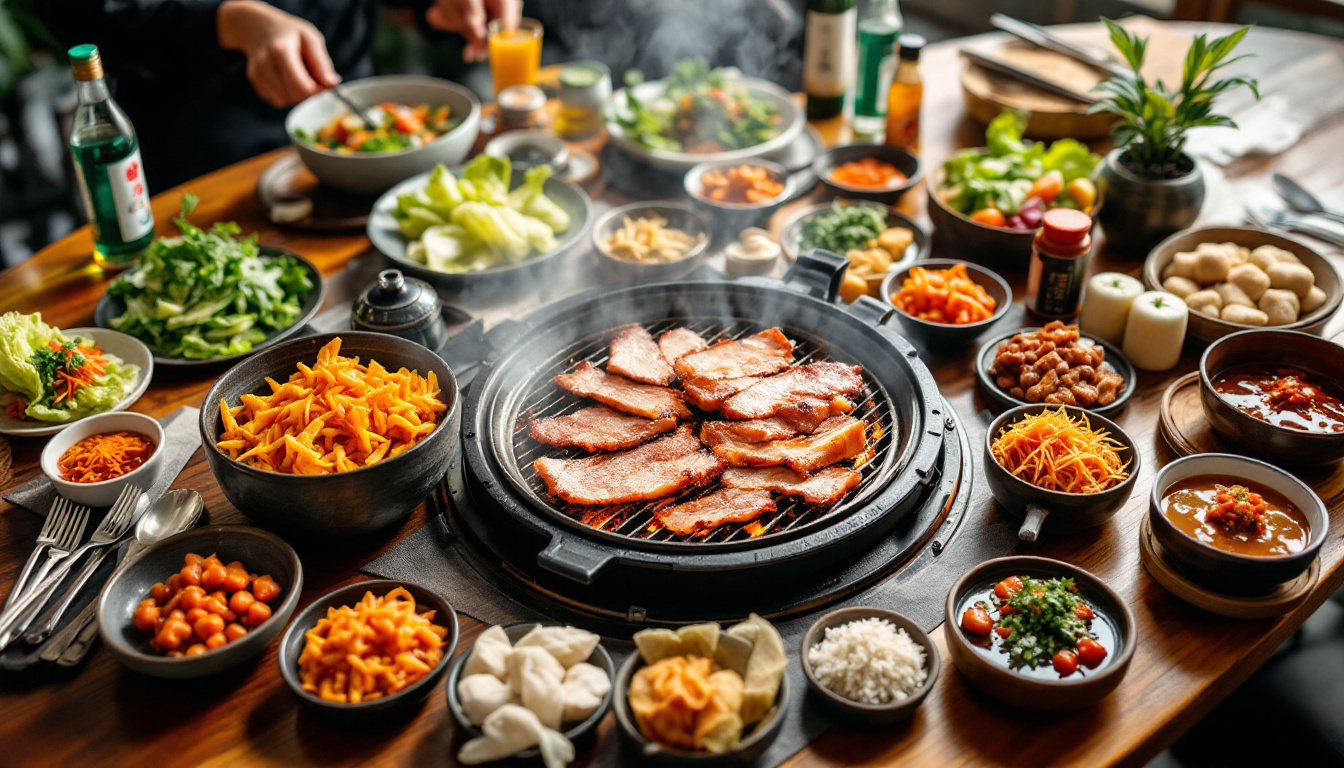
Korean cuisine is interactive in a way most cuisines aren’t. You grill your own meat at the table. You mix gochujang into a stone bowl until the rice turns red. You wrap bites in lettuce with garlic, sauce and pickled radish. You share a single bubbling pot of stew. The food is designed for participation, and once you get the rhythm of it, eating in Korea becomes its own kind of theatre.
This guide covers the essential dishes every visitor should try, structured by category (BBQ and grills, kimchi, street food, soups and stews, noodles and rice), with how to order, what to ask for, and where each dish hits its peak. Prices are 2026, when the won sat around ₩1,500 to the US dollar. Korea is part of our Best Food in Asia regional guide. For the city-level breakdown of Seoul’s BBQ houses, pojangmacha tents and Myeongdong night markets, see our Seoul food guide.
Why Korean food belongs on every traveler’s bucket list
The most searched questions around Korean food are not “best dishes” but “how spicy is Korean food” and “what to order at Korean BBQ”. The honest answers: spice levels vary wildly (kimchi jjigae is medium-hot, samgyetang is mild as broth gets, gochujang you control yourself), and at BBQ you want samgyeopsal first time and galbi second time. Beyond that, learn the basic structure: shared dishes, free banchan refills, gochujang on the table, soju and beer for the long evenings.
Korean food is also remarkably good for solo travelers. The kimbap chains and noodle shops near every subway station serve individual meals at ₩6,000-12,000 ($4-9 USD), no minimum portions, no awkward sharing decisions. The barrier to ordering is lower than it looks once you recognize the dish endings: -bap (rice), -guk (soup), -jjigae (stew), -gui (grilled), -jeon (pancake), -myeon (noodles).
Korean BBQ, bulgogi and bibimbap: the dishes to try first
If you only have a few meals in South Korea, start with Korean BBQ, bulgogi and bibimbap. These dishes showcase the heart of Korean dining culture: grilling, sharing, balance and layering flavors at the table. They also appear in almost every city and town, which makes them reliable choices when you’re overwhelmed by unfamiliar restaurant signs.
Samgyeopsal 삼겹살
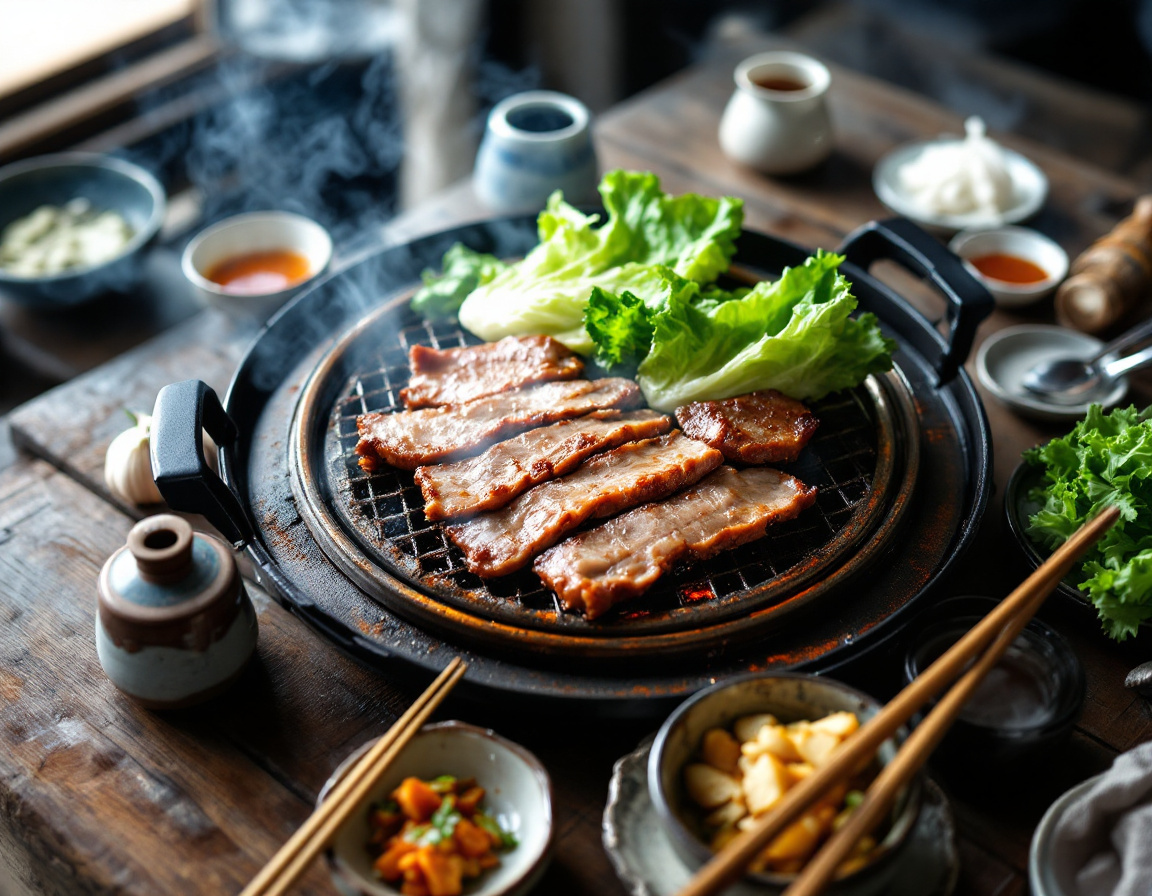
Samgyeopsal is thick slices of unmarinated pork belly grilled at your table, the default Korean BBQ order for first-timers. The server brings an array of banchan (free, refillable side dishes), lettuce, ssamjang (a fermented soybean-and-chili dip) and raw garlic. Most restaurants require a minimum of two portions, and one portion rarely fills a hungry adult. Grill the pork until browned but still juicy, cut it with the table scissors, then build a wrap: meat on a lettuce leaf, a dab of ssamjang, a slice of garlic, a bit of kimchi, folded and eaten in one bite. Alternate wraps with plain rice to keep the meal balanced.
Galbi 갈비
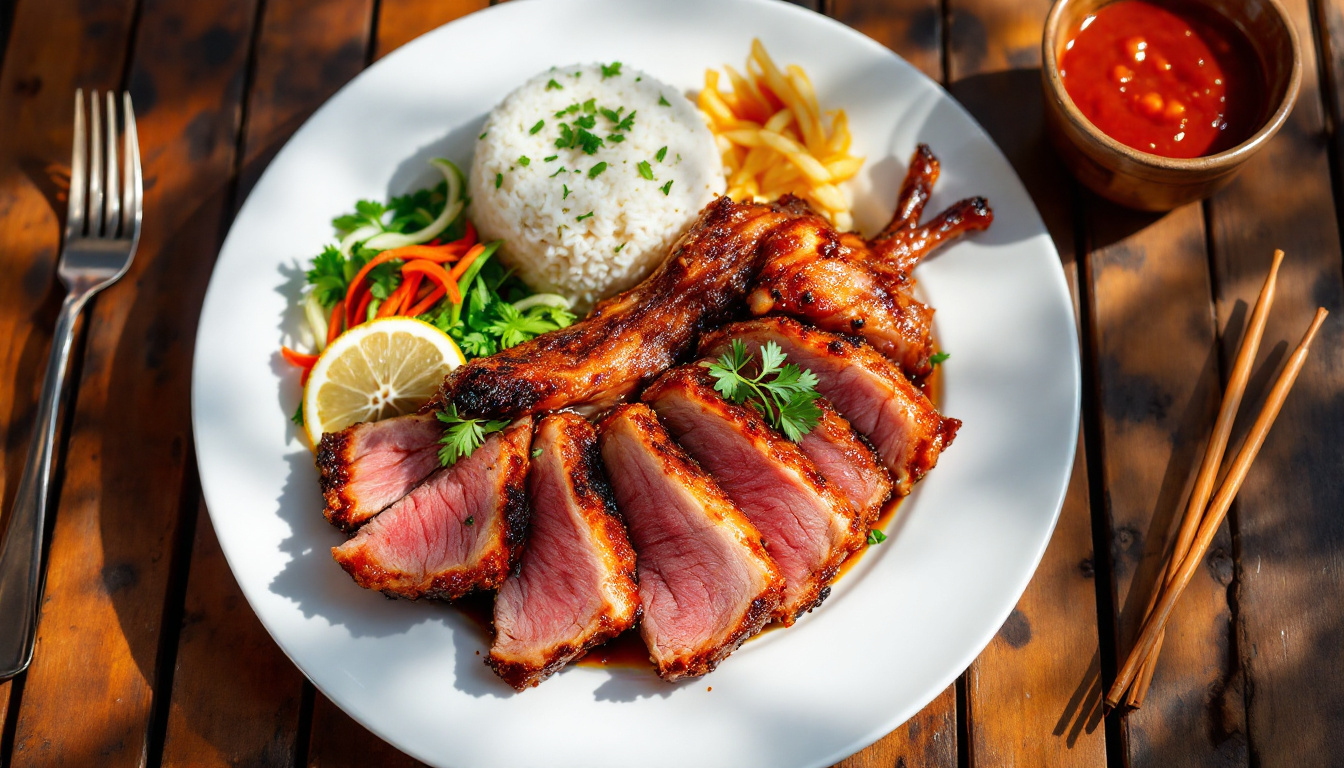
Galbi is marinated beef short ribs, the celebration cut of Korean BBQ and a step up from pork belly in both flavor and price. The marinade leans sweet and savory, with soy sauce, garlic, sugar, sesame oil and often grated pear, which tenderizes the meat and gives it a glossy char on the grill. Wang galbi (large-cut ribs still on the bone) is the showpiece version. Eat it the same way as samgyeopsal, wrapped in lettuce, but galbi is good enough to enjoy on its own straight off the grill.
Bulgogi 불고기
Bulgogi is thinly sliced beef marinated in soy sauce, sugar, sesame oil, garlic and pear, then grilled or pan-cooked until it caramelizes. It is the gentlest gateway to Korean flavor: sweet, savory and not spicy at all, which makes it the dish to order for children or anyone wary of gochujang. Unlike galbi, bulgogi is usually cooked on a domed pan that lets the marinade pool and reduce into a light sauce, often with onions, mushrooms and glass noodles added. You’ll also find pork bulgogi (daeji bulgogi), which is spicier and built on gochujang rather than soy.
Bibimbap: the perfect one-bowl introduction
Bibimbap 비빔밥
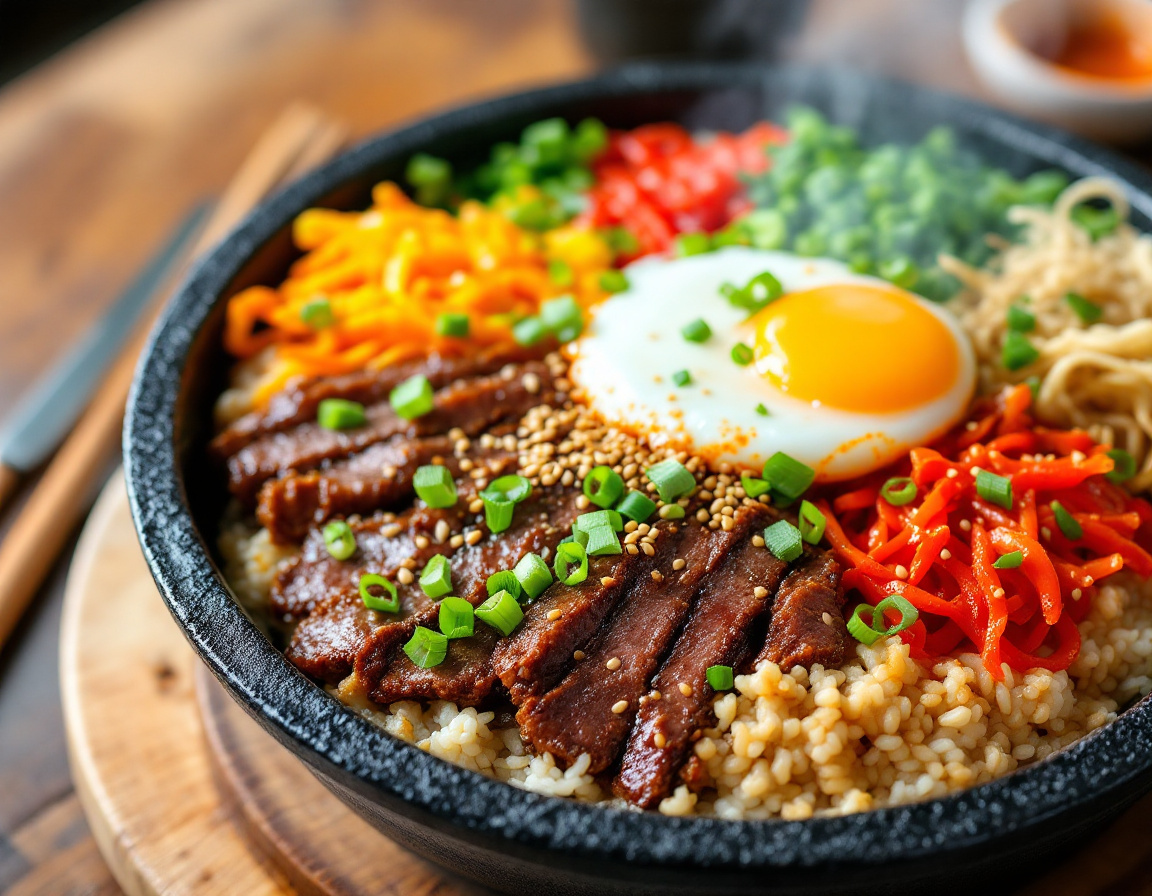
Bibimbap literally means “mixed rice” and is the most forgiving dish for travelers. A typical bowl includes white rice, sautéed vegetables (spinach, bean sprouts, mushrooms, carrots), kimchi, a fried or raw egg, sometimes minced beef, and a spoonful of gochujang on the side. The crucial step is to mix everything thoroughly before the first bite, so every spoonful balances sauce, textures and temperatures. Jeonju bibimbap is the gold standard, with more elaborate toppings and sesame oil for aroma. Dolsot bibimbap arrives in a sizzling stone pot that crisps the rice into a crunchy layer called nurungji, so let it sit a minute before mixing. Spice-sensitive? Add gochujang a little at a time. Vegetarians can ask for gogi bbaego juseyo (without meat) and check the kimchi isn’t made with fish sauce.
Kimchi: the dish behind every Korean meal
Kimchi is the one Korean food you’ll eat at literally every meal, so it deserves a spotlight rather than a side note. It is not a single recipe but a whole family of fermented vegetable dishes, anchored by salt, garlic, ginger, scallion, gochugaru (chili flakes) and usually salted seafood. Understanding kimchi unlocks half of Korean cooking, because it turns up inside stews, fried rice, dumplings and pancakes too.
Kimchi 김치
Kimchi is fermented vegetables, most famously napa cabbage (baechu kimchi), seasoned with chili, garlic and salted shrimp or fish sauce, then left to sour. There are over a hundred regional and seasonal versions: white kimchi (baek kimchi) with no chili, cubed radish kimchi (kkakdugi) served with soups, and water kimchi (dongchimi) used as a cold-noodle broth. Young, fresh kimchi is crunchy and bright; aged kimchi turns deeply sour and is prized for cooking. It arrives free and refillable as banchan, so try a few styles across different restaurants. For vegetarians, the catch is the fish sauce and salted shrimp in most recipes, ask for temple-style or vegan kimchi if that matters.
Must-try Korean street food: from tteokbokki to chimaek
No guide to Korean food is complete without a deep dive into street food. Night markets in Seoul, Busan and Daegu are where you’ll find the country’s most addictive snacks at surprisingly low prices. Street food is also a smart way to sample widely in one evening: instead of committing to a single restaurant meal, you can graze on rice cakes, skewers, dumplings and sweets as you walk.
Tteokbokki 떡볶이
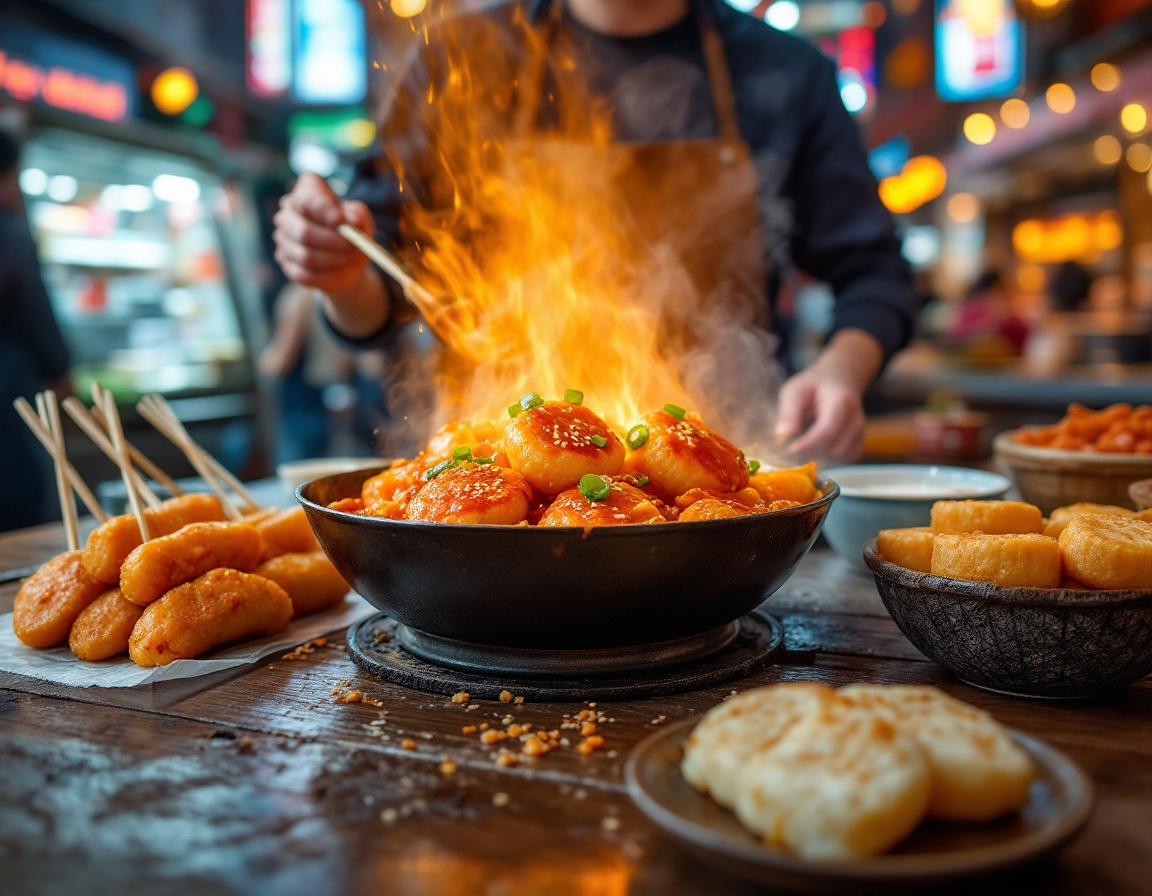
Tteokbokki is the queen of Korean street food: cylindrical rice cakes simmered in a thick, bright-red gochujang sauce, often with fish cakes, boiled eggs and green onions. The texture is chewy and bouncy, and the heat runs from gently warming to sweat-inducing depending on the stall. Seoul’s food streets now serve cream tteokbokki, cheese-topped versions and milder black-soy styles for those who can’t handle the burn. Order with simple English (“little spicy” or “very spicy”) and hand gestures, and pair it with a cup of odeng (fish cake soup), often free, whose clear hot broth cuts the richness.
Korean fried chicken 치킨 / 치맥
Korean fried chicken is double-fried for an impossibly thin, shatter-crisp crust that stays crunchy even under sauce. The two classics are huraideu (plain fried) and yangnyeom (glazed in a sweet-spicy gochujang sauce); order half-and-half (banban) to taste both. It is the centerpiece of chimaek, the chicken-and-beer (chicken + maekju) ritual that fuels Korean late nights, football matches and K-drama binges. You’ll find it at dedicated chains and neighborhood pubs everywhere, and delivery to your hotel is fast and cheap. Soy-garlic and honey versions are good entry points if you want flavor without the heat.
Hotteok, gimbap and the street food shortlist
Hotteok 호떡
Hotteok is a sweet, filled pancake that becomes a nightly obsession for many visitors. Yeast dough is stuffed with brown sugar, cinnamon and nuts, then pressed on a griddle until the outside is crisp and the inside turns molten. Be careful with the first bite, the syrup can be dangerously hot. Busan’s Nampo-dong adds a seed-stuffed version (ssiat hotteok) that’s worth seeking out.
Gimbap 김밥
Gimbap is often called “Korean sushi” but is its own thing: rice, vegetables, egg and sometimes ham or tuna rolled in seaweed and sliced into bite-size pieces. Street-style gimbap is portable, cheap and far less fish-focused than Japanese sushi (see our Japan food guide for the comparison). For a more indulgent version, look for mayak gimbap in markets, tiny highly-seasoned rolls nicknamed “drug gimbap” for how addictive they are. Other street snacks worth grabbing: tornado potatoes, skewered sausages, soondae (blood sausage with salt and chili), and bungeoppang (fish-shaped red-bean pastries, the cousin of Japanese taiyaki).
Warming Korean soups and stews: comfort in a bubbling pot
Korean cuisine is at its most soulful in its soups (guk) and stews (jjigae). These dishes are the backbone of everyday Korean eating, and one of the best values for visitors: a single bubbling pot served with rice and banchan can cost less than a coffee and pastry in many Western cities and keep you full for hours. Even in summer, Koreans happily eat steaming hot soups, believing that sweating helps regulate body temperature.
Kimchi jjigae 김치찌개
Kimchi jjigae is the quintessential Korean comfort stew, built around aged kimchi, pork or tuna, tofu and a rich, tangy broth. It’s robust, slightly sour and deeply warming, the dish Koreans cook at home when they want something familiar. It arrives at your table violently bubbling in a stone pot, which is part of the sensory thrill. Spice runs medium to high but softens after a few bites; pair each spoonful with plain rice to manage the heat and appreciate the broth.
Sundubu jjigae 순두부찌개
Sundubu jjigae uses soft, unpressed tofu in a deep-red chili broth, often studded with clams, vegetables and an egg cracked in at the table to cook in the heat. The tofu is silky enough to eat with a spoon, and the broth carries a clean seafood sweetness under the spice. If you’re concerned about heat, ask for “less spicy” or say an maewge hae juseyo. It’s one of the best-value full meals in the country and a reliable order at the chain restaurants in every neighborhood.
Samgyetang 삼계탕
Samgyetang is a whole young chicken stuffed with glutinous rice, jujubes, garlic and ginseng, simmered in a clear, restorative broth. Koreans eat it on the hottest days of summer as a way of “fighting heat with heat,” but visitors can enjoy it year-round. The flavor is mild, herbal and comforting, ideal if you’re jet-lagged or recovering from a travel cold. Season the broth lightly with the salt and pepper provided rather than all at once.
Seolleongtang 설렁탕
Seolleongtang is a milky-white soup made from beef bones simmered for many hours, served with thin slices of beef and noodles or rice. The broth is intentionally under-seasoned, so you customize each bowl with salt, pepper, chopped scallions and sometimes kimchi juice. This seasoning ritual is part of the appeal and lets you dial in the flavor exactly. For mornings after a long night, look for haejangguk (hangover soup), a rich, usually spicy broth with cabbage and beef that varies city to city.
Budae jjigae 부대찌개 (army stew)
The most fascinating dish in Korea’s repertoire: a bubbling, spicy red stew born of post-Korean War scarcity, when cooks combined American army-base surplus (Spam, hot dogs, baked beans) with gochujang, kimchi, tofu, ramen noodles and melting cheese. It sounds chaotic and tastes incredible, simmered communally at the table. Uijeongbu near Seoul is the spiritual home, with a whole street dedicated to it.
Noodles, dumplings and everyday eats you shouldn’t miss
Once you’ve ticked off BBQ, bibimbap and a few stews, explore the noodle, dumpling and rice dishes Koreans actually eat on busy weekdays. These meals are fast, satisfying and often overlooked by tourists chasing the headline dishes, yet japchae, naengmyeon, mandu and jjajangmyeon reveal an everyday side of Korean cooking that’s just as rewarding.
Japchae 잡채
Japchae is stir-fried glass noodles made from sweet potato starch, tossed with vegetables, egg and sometimes beef. The texture is pleasantly chewy and the seasoning balances soy sauce, sesame oil and a hint of sweetness. For travelers who want something flavorful but not spicy, japchae is a reliable choice that still feels distinctly Korean, and it doubles as a party and holiday dish in Korean homes.
Naengmyeon 냉면
Naengmyeon is all about cold refreshment: buckwheat or arrowroot noodles in an icy beef or dongchimi (radish-water kimchi) broth, topped with sliced cucumber, pear, egg and sometimes cold beef. You’ll get a bottle of vinegar and mustard on the side, so add a little and taste as you go. Mul naengmyeon comes in the chilled broth; bibim naengmyeon is mixed with a spicy sauce instead. It’s especially popular after Korean BBQ, where the cold tangy broth cuts through grilled fat.
Mandu 만두
Mandu are Korean dumplings filled with pork, tofu, glass noodles, kimchi and chives, and they come in every format: steamed (jjinmandu), pan-fried (gunmandu), boiled in soup (manduguk) or deep-fried at street stalls. Wangmandu are the oversized steamed buns sold from market steamers on cold days. Kimchi mandu, packed with chopped aged kimchi, are the most distinctly Korean version and a great low-spice introduction to kimchi flavor. They’re a perfect cheap, filling snack between bigger meals.
Jeon and pajeon 전 / 파전
Jeon are savory Korean pancakes, pan-fried in a thin egg-and-flour batter and shared across the table. Haemul pajeon is the crowd favorite, loaded with squid, shrimp and scallions, crisp at the edges and soft in the middle. Bindaetteok is a heartier mung-bean pancake, a Gwangjang Market signature ground fresh on stone mills. Koreans eat jeon with makgeolli (cloudy rice wine) on rainy days, a pairing so traditional it’s a national in-joke. Dip each bite in the soy-vinegar sauce on the side.
Jjajangmyeon 짜장면
Jjajangmyeon is a Chinese-Korean fusion dish that became a national comfort food: wheat noodles coated in a thick, glossy black-bean sauce with diced pork and vegetables, served with pickled radish. Rich, savory and not spicy at all, which makes it a hit with kids and spice-shy travelers. It traces back to Chinese immigrants in Incheon’s Chinatown a century ago, and is part of why Korean and Chinese cuisines share so much DNA. See our China food guide for the parent tradition. Korea even has Black Day (April 14), when single people eat it together.
For a quick everyday meal, the kimbap chains (Kim Bap Chunguk and similar) function as Korean diners, serving rolls plus kimchi fried rice, tuna-mayo rice bowls and tteokguk (rice cake soup, eaten at Lunar New Year), almost all under ₩10,000 with photo menus and English subtitles. Kimchi fried rice (kimchi bokkeumbap), leftover rice stir-fried with aged kimchi and topped with a fried egg, is the smoky, tangy dish many pubs and BBQ houses serve at the end of the meal to soak up the sauce and soju.
Three more dishes worth seeking out: dakgalbi, spicy stir-fried chicken with rice cakes, sweet potato and cabbage cooked on a hot plate at your table (Chuncheon is its home); jokbal, pig’s trotters braised in soy, ginger and spices until glossy and tender, sliced and eaten with salted shrimp sauce; and bossam, boiled pork belly wrapped in cabbage with garlic and ssamjang. Jokbal and bossam are the classic anju (drinking food) ordered with a bottle of soju.
Korean desserts and sweets: bingsu, hotteok and more
Korean sweets lean less sugary than Western desserts and big on texture. They’re a destination in themselves, especially in summer.
Patbingsu 팥빙수 / bingsu
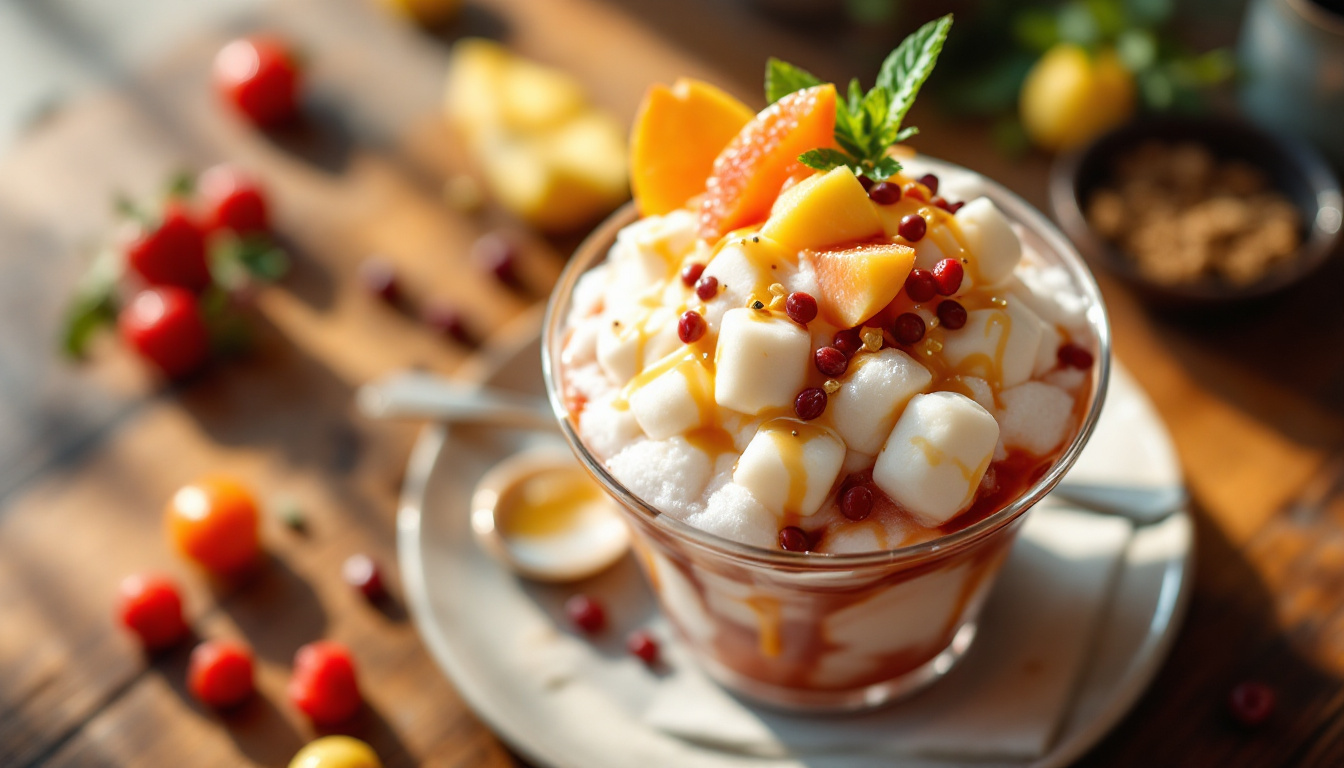
The king of Korean desserts: a mountain of fluffy shaved milk-ice topped with sweet red bean paste (pat), chewy mochi rice cakes, fruit and condensed milk. Modern cafés serve elaborate versions, mango bingsu, injeolmi (toasted soybean) bingsu, matcha, often big enough to share. In Seoul’s summer heat it’s less a dessert than a survival strategy.
Also worth a bite: hotteok, the cinnamon-and-nut-stuffed street pancake (a winter staple); yakgwa, chewy honey-and-sesame fried cookies now having a viral revival; and dalgona, the brittle sugar candy made globally famous by Squid Game.
Where to eat: Korea’s food cities
Seoul, Busan, Jeonju and Jeju are the four cities worth planning a trip around for food, and each is known for something you can’t get in the same form anywhere else. Seoul has the widest range, but the regional specialities are the real reason to leave the capital.
Seoul: everything, in one place
Seoul is where you’ll find the deepest variety, from 24-hour Korean BBQ to Michelin-starred hansik to two of the country’s great market food scenes. Gwangjang Market is the one for bindaetteok (mung-bean pancakes fried to order), mayak gimbap and live octopus; Myeongdong fills with street stalls after dark. If you only get to one city, this is the one that covers every category in this guide.
Busan: seafood and dwaeji gukbap
Busan is the seafood capital, anchored by Jagalchi, Korea’s largest fish market, where you choose your catch downstairs and eat it grilled or raw upstairs. The city’s signature bowl is dwaeji gukbap, a milky pork-bone rice soup that traces back to refugees during the Korean War, seasoned at the table with saeujeot (salted shrimp) and buchu (garlic chives). A bowl runs about ₩8,000-10,000 ($5-7).
Jeonju: the home of bibimbap
Jeonju is a UNESCO City of Gastronomy and the acknowledged home of bibimbap. The local version is built on rice cooked in beef-bone broth and topped with dozens of seasonal namul, often with a spoonful of raw beef (yukhoe). The old hanok village is packed with restaurants, and the city runs a Bibimbap Festival each autumn.
Jeju: black pork and island seafood
Jeju’s specialty is heuk dwaeji (black pork), from the island’s native breed, grilled fatty and dipped in salted pollack roe rather than the usual ssamjang. Pair it with fresh island seafood and a hallabong citrus for dessert.
How to order, eat and enjoy Korean food like a local
- Wait for the oldest person to start eating. Hierarchy matters in Korean dining. If you’re with locals, watch who picks up chopsticks first.
- Don’t stick chopsticks upright in rice. This resembles funeral offerings. Lay them across the bowl or on the chopstick rest.
- Slurping noodles is fine. Sharing food is the norm.
- Banchan is communal and refillable. Treat side dishes as shared flavor accents. Ask for refills with deo juseyo (more, please). Don’t waste large amounts.
- Pour for others first. Especially with soju and beer. Never pour your own drink before filling others’ glasses.
- No tipping. Service is included. Pay at the counter near the exit, not at the table.
- Two portions minimum at BBQ. Many BBQ houses require ordering meat for at least two people.
- Cash for street stalls. Restaurants accept cards everywhere, but small pojangmacha tents may be cash-only.
Korean dishes compared
| Dish | Type | Best for | Spice | Price (₩ / USD) |
|---|---|---|---|---|
| Samgyeopsal (BBQ pork belly) | Grill | Group dinners | Mild | ₩15-25K / $11-19 |
| Galbi (marinated beef ribs) | Grill | Special dinners | Mild-medium | ₩25-35K / $19-26 |
| Bulgogi (sweet marinated beef) | Grill/pan | Spice-shy eaters | None | ₩13-20K / $10-15 |
| Bibimbap (dolsot) | Rice bowl | Solo lunch | You control | ₩7-12K / $5-9 |
| Korean fried chicken | Fried / chimaek | Late nights | Mild-hot | ₩18-25K / $13-19 |
| Tteokbokki | Street snack | Afternoon walk | Hot | ₩4-8K / $3-6 |
| Kimchi jjigae | Stew | Comfort dinner | Medium-hot | ₩8-12K / $6-9 |
| Sundubu jjigae | Stew | Cold day | Medium-hot | ₩8-12K / $6-9 |
| Samgyetang | Soup | Travel-weary days | Mild | ₩14-22K / $10-16 |
| Seolleongtang | Soup | Slow lunch | Mild (you season) | ₩9-14K / $7-10 |
| Naengmyeon (cold noodles) | Noodles | Summer / post-BBQ | Mild | ₩9-14K / $7-10 |
| Japchae (glass noodles) | Noodles | Light meal | None | ₩8-14K / $6-10 |
| Mandu (dumplings) | Dumpling | Cheap snack | None | ₩5-9K / $4-7 |
| Jeon / pajeon (pancake) | Pancake | Rainy days | None | ₩8-15K / $6-11 |
| Jjajangmyeon | Noodles | Lazy lunch | None | ₩6-10K / $4-7 |
| Gimbap | Street / grab-and-go | Train / picnic | None | ₩3-6K / $2-4.50 |
| Hotteok | Sweet street | Cold evening | None | ₩2-3.5K / $1.50-2.60 |
FAQ: eating in South Korea
What is the most popular food in South Korea?
The most popular Korean foods with both locals and visitors are Korean BBQ (samgyeopsal and galbi), bibimbap, kimchi, tteokbokki and Korean fried chicken. Kimchi appears at virtually every meal, and Korean BBQ is the most popular way Koreans eat out socially. For street food, tteokbokki and gimbap top the list.
Is Korean food always very spicy?
No. While many famous dishes use chili paste (gochujang) or powder (gochugaru), there are plenty of mild options: bulgogi, samgyetang, seolleongtang, japchae, jjajangmyeon, mandu, most gimbap, and Korean BBQ before you add the sauce. Spice levels in most dishes can be adjusted on request.
What is the most famous Korean dish?
Kimchi is the single most iconic Korean food, eaten at virtually every meal and used across stews, fried rice and dumplings. For a sit-down dish, Korean BBQ (samgyeopsal and galbi) and bibimbap are the most internationally recognized. Tteokbokki is the most famous street food and Korean fried chicken the most famous late-night dish.
Can vegetarians eat well in South Korea?
It’s possible but requires planning. Temple cuisine restaurants (sachal eumsik) serve entirely plant-based meals. Bibimbap without meat, vegetable gimbap, japchae and some tofu stews are good options. The main challenge: fish sauce and anchovy stock are common in broths and kimchi. Always ask if this is a concern. Seoul and Busan have growing dedicated vegan restaurants.
How much should I budget per meal?
Street food: ₩5,000-10,000 ($4-7 USD) for a satisfying snack meal. Casual restaurant dishes like bibimbap or soups: ₩7,000-12,000 ($5-9 USD). Korean BBQ: ₩15,000-35,000 ($11-26 USD) per person depending on meat. Daily food budget for budget travelers: ₩30,000-50,000 ($22-37 USD). Mid-range with one BBQ dinner: ₩60,000-90,000 ($45-66 USD).
What is the best food city in South Korea?
Seoul has the widest variety, the best BBQ houses (Hannam-dong, Mapo, Gwanghwamun), and the most exciting street food scenes (Myeongdong, Gwangjang, Tongin). Busan is the seafood and noodle capital, with the country’s best raw fish (hoe) and milmyeon cold noodles. Jeonju is the bibimbap capital, with the most refined regional cooking. Jeju Island has unique seafood and black pork. See our Seoul food guide for the city-level breakdown.
Should I learn chopstick etiquette before going?
Basic skills help. Korean chopsticks are metal (unique among Asian countries) and slightly heavier than Japanese wooden ones. Key rules: don’t stick them upright in rice, don’t point or spear food, use serving chopsticks for shared dishes. Spoons (sutgarak) are also key in Korean dining, used for rice and soup, while chopsticks handle banchan and meat.
What’s the best Korean drink to pair with food?
Soju (clear distilled spirit, 16-20% ABV) with BBQ and pojangmacha snacks. Makgeolli (cloudy rice wine, lightly fizzy) with jeon (pancakes) on rainy days, this pairing is so traditional it’s a Korean meme. Beer (maekju) with fried chicken (the chimaek combination, Korea’s national late-night ritual). Boricha (cold barley tea) is the free non-alcoholic option at most restaurants.
What’s the difference between Korean and Japanese food?
Both use rice, soy sauce, fermented ingredients and umami-forward broths, but the personalities differ. Korean food is bolder, spicier, more fermented (kimchi everywhere), more social (shared meals, BBQ grills at the table). Japanese food is more restrained, more focused on single-ingredient perfection, more individually plated. See our Japan food guide for the direct comparison.
More Asian food guides waiting for you
Country-by-country deep dives, city food guides, and dish-specific stories from across the continent.