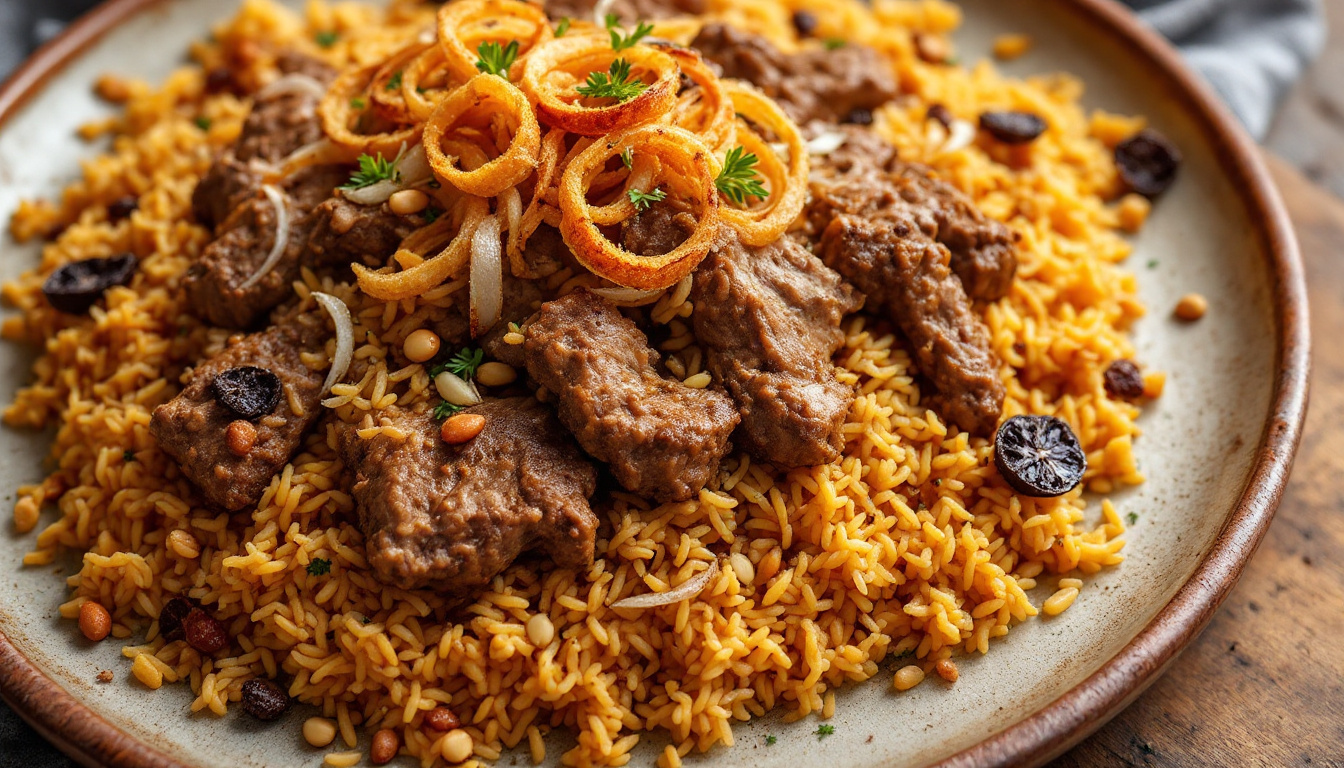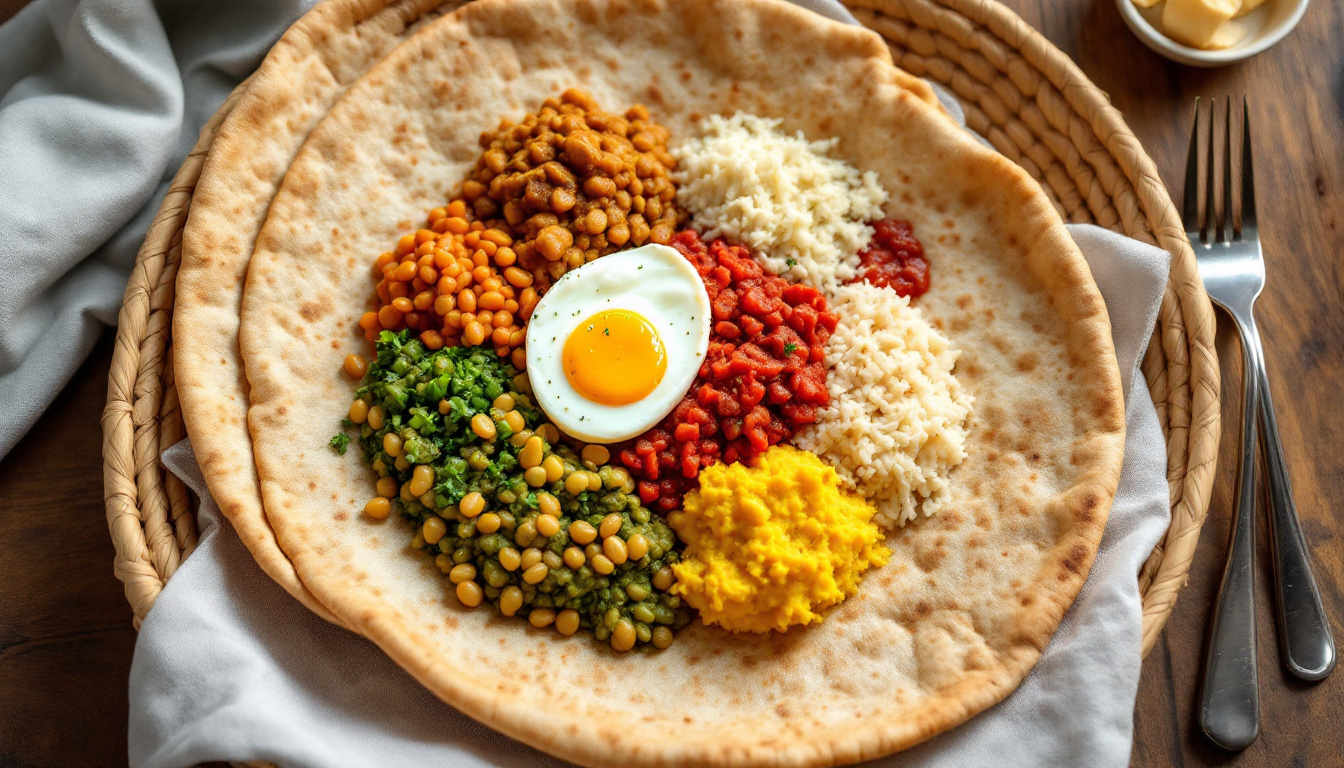
The best food to eat in Iran isn’t the kebab you’re picturing. It’s the stew sitting next to it. A dark green pot of herbs that took half a day to cook. A walnut sauce stained red with pomegranate. Saffron rice hiding a sheet of crackling crust underneath. Dried lime, saffron, herbs by the bunch, and a lot of patience, that’s what Persian food runs on. I came for grilled meat and left hooked on the things simmered quietly at the back of the kitchen.
Why Iranian food is worth the trip
Iranian food is built on slow stews, not fast grilling. That’s the thing that separates it from the neighbors. At the center sits the khoresh, a thick stew of meat and herbs and beans or fruit, left to simmer two or three hours till everything goes soft together. Saffron does a lot of the work here. So do dried lime (limoo amani), pomegranate molasses, and fistfuls of fresh herbs. Sour, deep, a little funky. Not smoky, not chili-hot.
Compared with Turkish or Arab cooking, there’s less open flame and far more pot. Where a Turkish table leans on grilled meat and mezze, an Iranian one is anchored by rice and a stew ladled over it. Rice itself is a craft here. Cooks par-boil it, steam it under a cloth-wrapped lid, and chase separate, fluffy grains with that prized crust at the bottom.
Then there’s the hospitality. You feel it before you taste a thing. Meals arrive in abundance, refusals get politely overruled through the ritual of taarof, and a guest gets fed well past the point of comfort. The food is the welcome.
The best food to eat in Iran, dish by dish
These are the fourteen dishes I’d build a trip around, from the kebabs everyone knows to the regional stews that quietly steal the show. Prices are rough 2026 restaurant ranges and shift fast with the exchange rate.
Kabab Koobideh کباب کوبیده
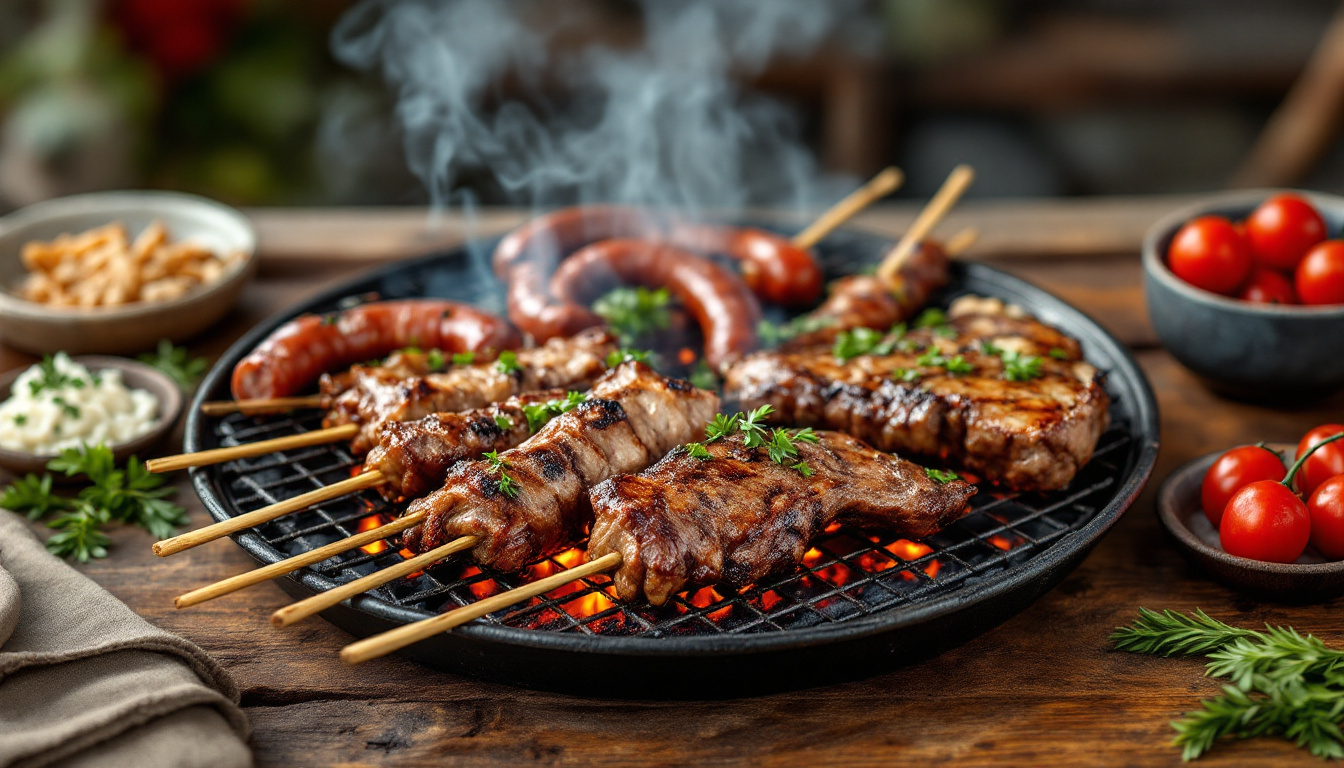
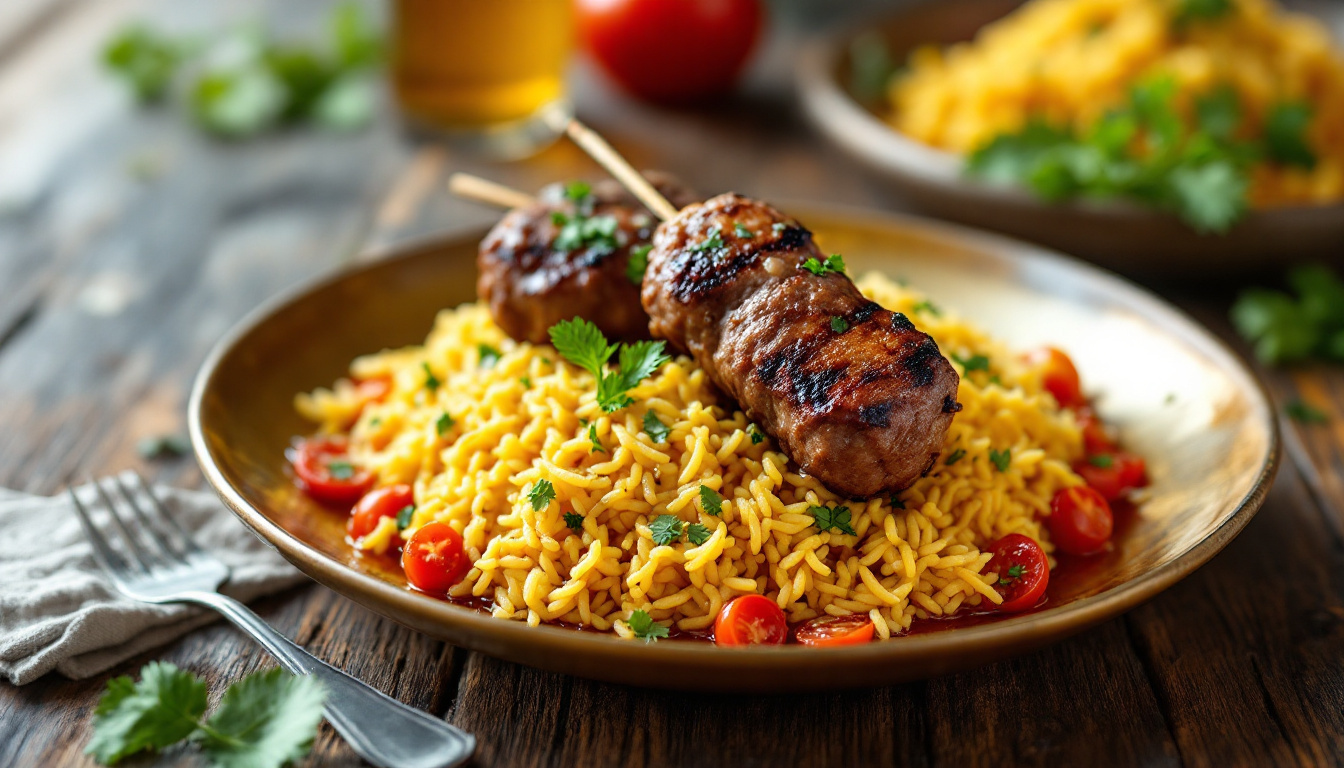
Kabab koobideh is the kebab to order first: minced lamb or beef mixed with grated onion, pressed onto a wide flat skewer and grilled over charcoal. Order it as chelo kabab and it lands on a tall mound of saffron-tipped rice, with a knob of butter, a grilled tomato, a dusting of sumac. Juicy, lightly charred. Never dry, that’s the rule. Friday-lunch default in millions of homes, and most kababis nail it.
Joojeh Kabab جوجهکباب
Joojeh kabab is saffron chicken, marinated in yogurt, lemon and onion, then grilled until the edges catch. The yogurt keeps it tender. Saffron lends the gold color and a faint floral note. Two versions show up: plain, or the brighter red one finished with tomato. Get it with rice, or wrapped in warm flatbread with raw onion and basil. This is the crowd-pleaser when the table can’t agree on a stew.
Kabab Barg کباب برگ
Kabab barg is the refined cousin of koobideh: thin fillets of lamb or beef, marinated in saffron, onion and a little lemon, then grilled whole rather than minced. The name means leaf, after how flat they pound it. Pricier, and it shows up at celebrations and the nicer places. Want both at once? Add a koobideh skewer and you’ve ordered soltani.
Ghormeh Sabzi قورمهسبزی
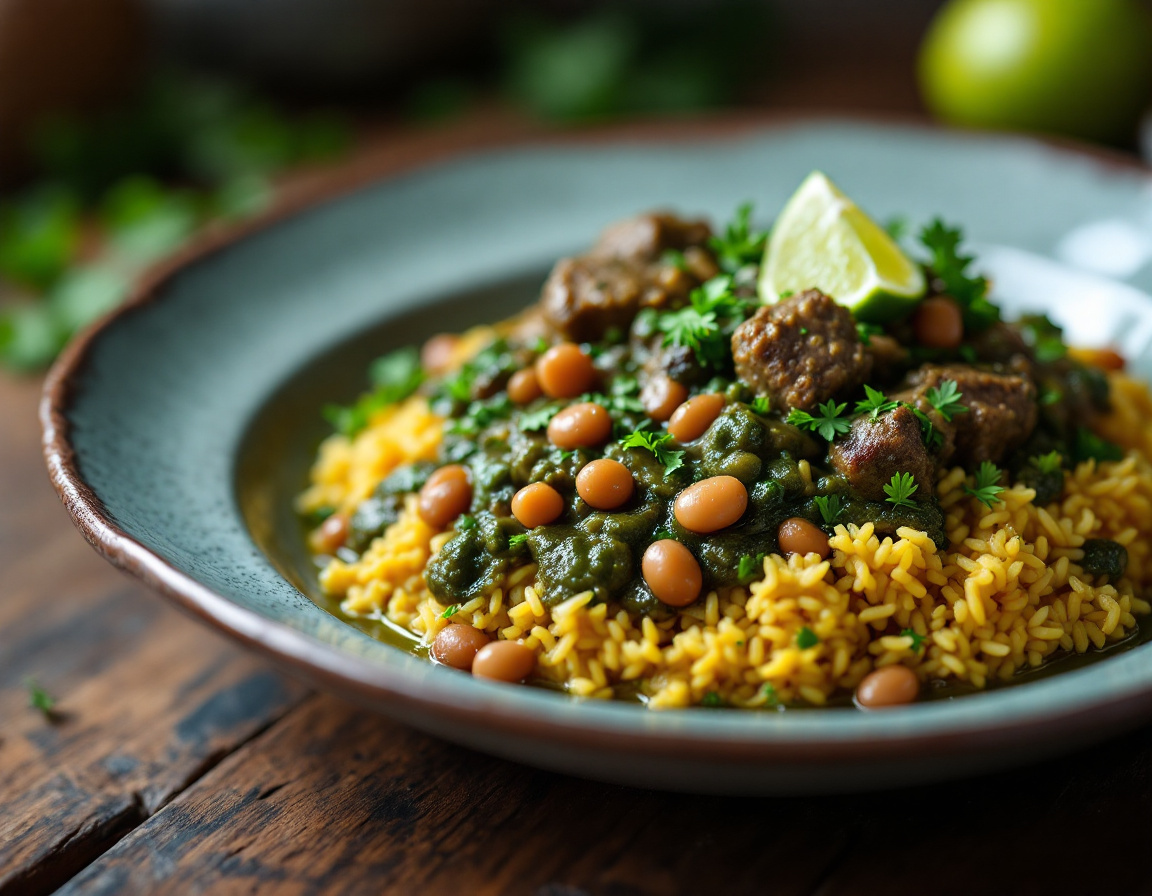
Ghormeh sabzi is the stew most Iranians will name as the national dish, and it’s the one to try if you try only one. A mountain of parsley, cilantro, chives and fenugreek gets fried down dark. Then in go lamb, red kidney beans and dried limes, simmered until the whole thing turns deep green and tangy. The fenugreek brings a bitter, savory edge. Grows on you fast. Always over rice, and somehow better the next day.
Fesenjan فسنجان
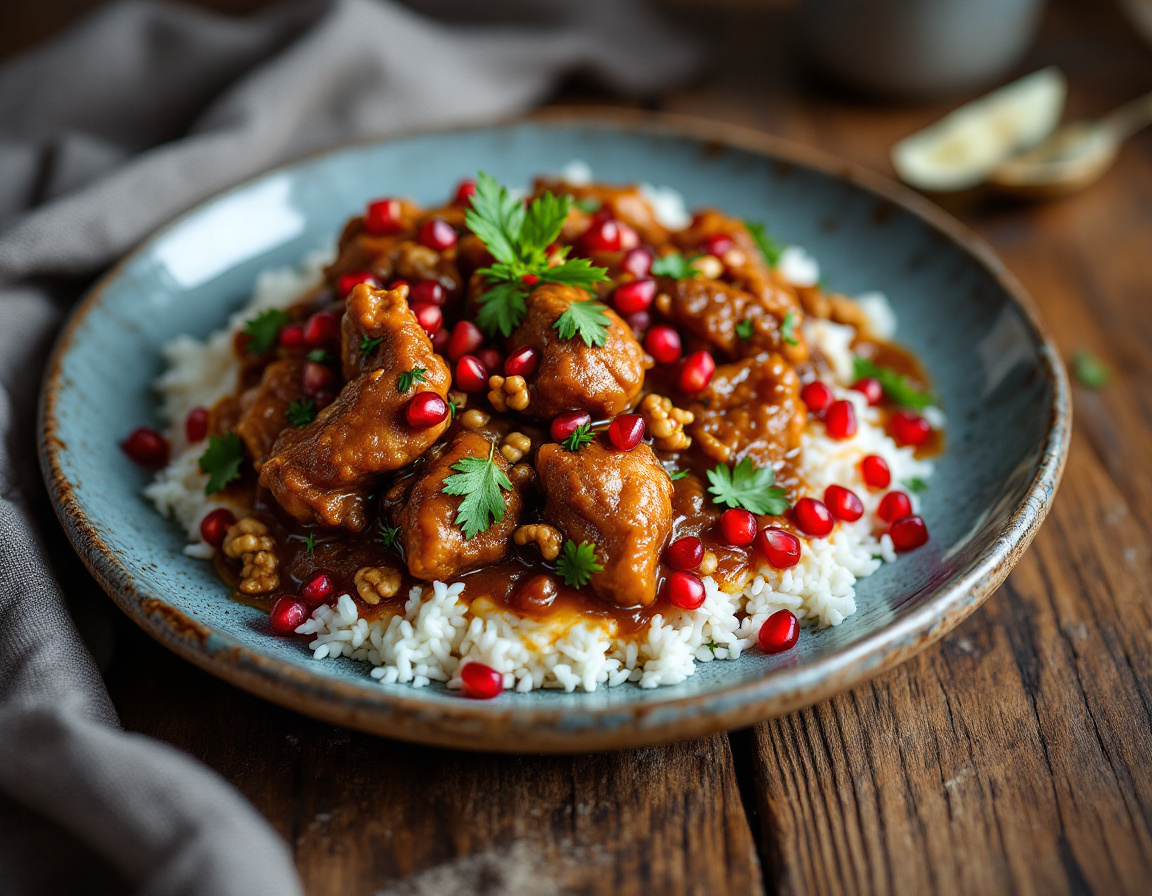
Fesenjan is the quiet showstopper: chicken, duck or meatballs in a thick sauce of ground walnuts and pomegranate molasses. Slow cooking turns the walnuts silky and dark. The pomegranate drags it back and forth between sweet and sour. Up in Gilan they skew tart; central Iran nudges it sweeter. Rich, strange, nothing like the food next door, which is why it sticks. Spoon it over plain rice. Go slow.
Gheymeh خورش قیمه
Gheymeh is the workhorse comfort stew, built on yellow split peas, diced meat, tomato and dried lime, then crowned with a tangle of thin fried potato sticks. Split peas go soft. The dried lime keeps it bright, the fried potato adds crunch against all that silk. You’ll run into it everywhere, including religious gatherings where they cook it in huge shared pots. Humble, sour-savory, deeply satisfying over rice.
Tahdig تهدیگ
Tahdig is the crispy golden crust at the bottom of the rice pot, and getting it perfect is treated as an art. It forms where rice meets butter or oil, frying slowly into a crackling sheet, sometimes layered with potato slices, flatbread or saffron. Cooks flip the pot to reveal it whole. Then the whole table fights over the best shards. If a host hands you theirs, take it as a real compliment.
Zereshk Polo ba Morgh زرشکپلو با مرغ
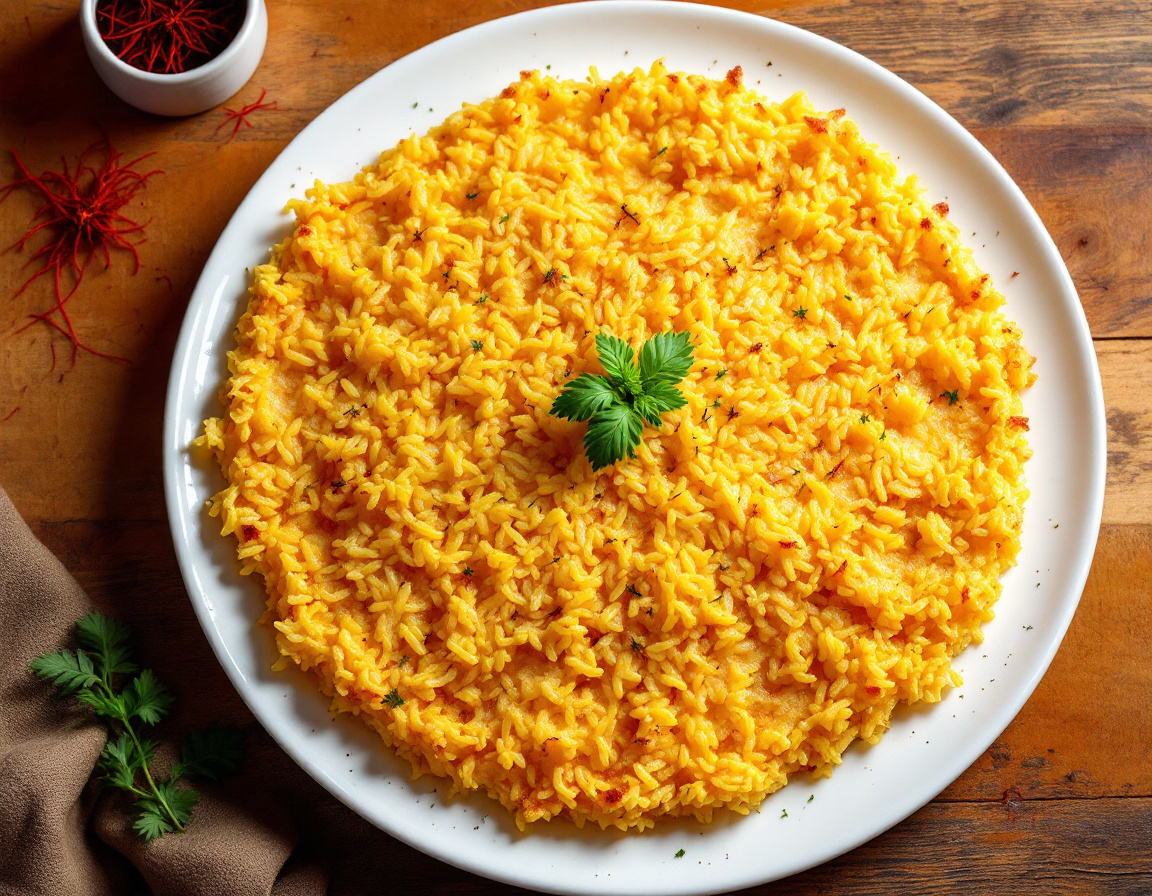
Zereshk polo ba morgh pairs saffron rice studded with tart barberries with chicken braised in saffron and tomato sauce. Those barberries, zereshk, come from around Khorasan in the east. Intensely sour, popping like little rubies against the gold rice. You’ll see it at weddings and big events, because it photographs well and feeds a crowd. Sweet rice, sour berries, savory chicken. That’s the whole point.
Baghali Polo باقالیپلو
Dill and fava bean rice, baghali polo usually comes with lamb shank so tender it slides off the bone. The fresh dill perfumes the whole pot. The favas add a buttery bite. It’s a homestyle classic that feels celebratory without trying hard. Its close cousin sabzi polo, an all-herb rice served with fried fish, is the centerpiece of the Nowruz new-year table every March. See baghali polo with the slow-cooked lamb (mahicheh)? Order that. Let the meat fall apart into the rice and you’ll get why Iranians treat plain-looking rice dishes as the main event.
Tahchin تهچین
Tahchin is what happens when tahdig becomes the whole dish: saffron rice bound with yogurt and egg, packed around chicken or lamb, then baked into a golden cake that’s crisp outside and soft within. Cut into wedges, it shows a deep amber crust and a soft saffron-stained center, often with a layer of barberries. One of the most satisfying ways to eat Persian rice. Order it when you want something between a stew plate and pure tahdig. You’ll find it at sit-down places, not quick kababis.
Dizi (Abgoosht) دیزی / آبگوشت
Half the fun of dizi is the ritual: a hands-on lamb and chickpea stew you finish building yourself at the table. It arrives in a stone pot with a pestle. You pour the thin broth off into a bowl, tear in flatbread to soak it, then mash the solids (lamb, chickpeas, potato, tomato) into a thick paste eaten with bread and raw onion. Filling, cheap, traditional, the lunch of laborers turned beloved comfort food. Order it at a proper sofreh-khaneh for the full experience.
Ash Reshteh آش رشته
Sold from street pots and cooked in huge batches for special occasions, ash reshteh is a thick green herb and noodle soup. It packs herbs, chickpeas, lentils and reshteh noodles, finished with fried mint, crispy onions and a swirl of kashk (a tangy fermented whey). Hearty enough to be a meal, and one of the easiest vegetarian-friendly things to find. Just ask for it without the kashk if you avoid dairy. Cold-weather comfort in a bowl.
Mirza Ghasemi میرزاقاسمی
Seek out mirza ghasemi in the north: smoky grilled eggplant cooked down with garlic, tomato and egg into a soft, savory spread. It comes from Gilan on the Caspian coast, where the cooking leans garlicky and herby and a little tart compared with the rest of the country. Scoop it with bread as a starter or a light meal. The char is what makes it. A good version tastes properly smoked, not just stewed.
Faloodeh and Bastani فالوده / بستنی سنتی
End on faloodeh: thin frozen rice-starch noodles in a rosewater and lime syrup, served icy and sharp. The Shiraz version (faloodeh shirazi) is the famous one, often eaten with a squeeze of sour cherry or lime. Next to it, order bastani sonnati, the saffron and rosewater ice cream flecked with pistachio and frozen chunks of clotted cream. Floral and refreshing, not heavy. The perfect hot-afternoon finish.
How food changes across Iran
Iranian food shifts noticeably by region, so what you eat depends on where you land. The country’s huge, and each area cooks with its own staples, from Caspian fish in the north to tamarind and chili in the south.
The northern coast runs on fish, garlic, sour notes and fresh herbs. Caspian kutum gets fried and served with rice. Smoked fish goes straight into the rice. And mirza ghasemi rules the eggplant table. Pomegranate and bitter-orange show up way more than elsewhere.
Tabriz and the Azerbaijani northwest use more lemon juice and butter than anywhere else in Iran. Richer, tangier. The city’s known for its giant meatballs (koofteh Tabrizi) and sweets like qottab, and the dolma and herb-stew habits echo the food just over the border in neighboring Armenia. Street kebab and pastries fill the bazaar.
The south is where Iran gets spicy. Khuzestan, Ahvaz and the Gulf ports cook with chili, tamarind and seafood. Nothing like the mild center. Ahvaz does spicy falafel and samosa sold along Lashkar Abad street, a reminder of how close this corner sits to the Arab world.
Central Iran is the saffron and sweets heartland, and Isfahan is famous for beryani, a rich minced-lamb dish served on bread. Desert Yazd, meanwhile, is a confectionery city built on baklava, qottab and pashmak (Persian cotton candy). Stock up on saffron and sugar here.
Where to eat: bazaars, kababis and sofreh-khaneh
The best food in Iran is split between three places: corner kababis, traditional sofreh-khaneh restaurants, and the food stalls inside the bazaars. Each does a different job, and a good trip uses all three.
Kababis are the everyday grills on nearly every street, fast and reliable for chelo kabab. Sofreh-khaneh are the atmospheric traditional houses, often set in restored historic buildings, where you go for dizi, stews and a slow meal on carpeted platforms. And the bazaars? The sprawling Tehran Grand Bazaar hides some of the best cheap eats, soup and dizi and fresh sweets between the stalls.
Tying it all together is bread, baked fresh and bought daily. Look for sangak (long, stone-baked, pebble-dimpled), barbari (thick and oval, the breakfast favorite), taftoon (thin and soft) and lavash (paper-thin, for wrapping). A warm sheet straight off the oven floor, eaten plain on the walk home? One of the simplest pleasures here. Iran sits inside the wider region’s bread-and-stew tradition you’ll also find across the Middle East and North Africa.
- Expect taarof: hosts and shopkeepers may refuse payment or insist you eat more out of politeness. Decline an offer two or three times, then accept graciously, and never take the first “no, please, it’s nothing” literally.
- Tear and eat bread with your hand, not a knife and fork.
- At traditional sit-on-the-floor restaurants, shoes come off before you step onto the carpeted platform.
- If a host presses extra food or the best tahdig on you, accepting is the polite move, not refusing.
What to drink in Iran
Iran is a dry country, so there’s no legal alcohol, and the drinks culture runs on yogurt, tea and herbal syrups instead. Doogh leads at the table: a salty, fizzy yogurt drink shaken with mint and sometimes dried herbs. It cuts through rich stews and kebab better than anything. The savory tang surprises first-timers, but it grows on you.
Tea, or chai, is the constant. It’s brewed strong, served in small glasses, drunk all day. Iranians take it with a sugar cube or a piece of crystallized rock sugar (nabat) held between the teeth rather than stirred in. In summer, look for sharbat (sweet fruit and flower syrups over ice) and khakshir, a cooling drink made from tiny seeds. For a country with no bar scene, the non-alcoholic game runs deep.
FAQ
Is Iranian food spicy?
Most Iranian food isn’t spicy. It runs sour, herby and fragrant rather than hot, with the flavor coming from dried lime, saffron, pomegranate and fresh herbs. The exception is the south, around Khuzestan and the Gulf, where chili and tamarind make dishes noticeably hotter than the mild center.
Is Iran good for vegetarians?
Iran works for vegetarians, but it takes some effort, since most main stews contain meat. Your reliable options: ash reshteh (herb noodle soup), mirza ghasemi (smoky eggplant), kashk-e bademjan (eggplant and whey), kuku sabzi (a baked herb frittata), salad shirazi, plus plenty of bread, cheese, herbs and rice. If you avoid dairy, ask for ash and eggplant dishes without the kashk.
Can you drink alcohol in Iran?
No. Alcohol is illegal in Iran and isn’t served anywhere publicly. Restaurants and shops sell only non-alcoholic drinks, including alcohol-free “beer” (maoshaer), so plan on doogh, tea, sharbat and fresh juices instead. And don’t try to buy alcohol from strangers.
What is Iran’s national dish?
Ghormeh sabzi, the herb, kidney bean and dried-lime stew, is the one most Iranians name as the national dish. The other strong contender is chelo kabab koobideh (minced lamb kebab over saffron rice), and it’s the most popular dish with foreign visitors.
How much does a meal cost in Iran?
A full plate of chelo kabab or a stew over rice runs roughly $3-7 in a mid-range restaurant as of 2026. Street food like ash reshteh sits closer to $2-4. Prices swing a lot with the exchange rate, and remember: it’s a cash-only trip for foreigners, since international cards don’t work.
Is street food in Iran safe to eat?
Street food in Iran is generally safe, especially at busy stalls with high turnover and hot, freshly cooked food like ash, dizi and grilled corn. Tap water is drinkable in most major cities, though plenty of travelers stick to bottled water early on while they adjust. The usual rule applies: eat where there’s a crowd.
More food guides waiting for you
Browse our complete collection of Middle East and African food guides.