The best sandwich in the world costs about a dollar, takes 30 seconds to assemble, and has been feeding Saigon on a budget since the 1950s. But the second-best costs $40 in coastal Maine and tastes like summer. And the third is drowned in beer sauce in a Porto backstreet and takes 20 minutes to eat properly. That range, from street cart to sit-down, from ₹15 to $45, is what makes sandwiches the most democratic food category on the planet. I’ve eaten my way through most of this list. Here’s what actually deserves the hype.
What makes a great sandwich?
Three things separate a great sandwich from a good one: the bread-to-filling ratio, portability without falling apart, and flavour complexity that holds up in every bite. Soak through your bread in four minutes and you’ve failed two of those at once. Need a fork to finish it? Technically, that’s something else.
For this ranking, I used those three criteria plus one more: cultural specificity. The ones that ranked highest are the ones you can’t replicate anywhere else. Tied to a place, a tradition, a moment in local food history. A choripan eaten in Buenos Aires at 2am after a long asado tastes nothing like the same ingredients thrown together in a food hall. Context is a real ingredient.
One note on definition: I’ve included open-faced smorrebrod (Denmark) and wraps like shawarma in pita, because both serve the same function, portable, one-handed, layered food built on a carb base. If that bothers you, make your own list. This one has 18 entries and no regrets.
The 18 best sandwiches in the world, ranked
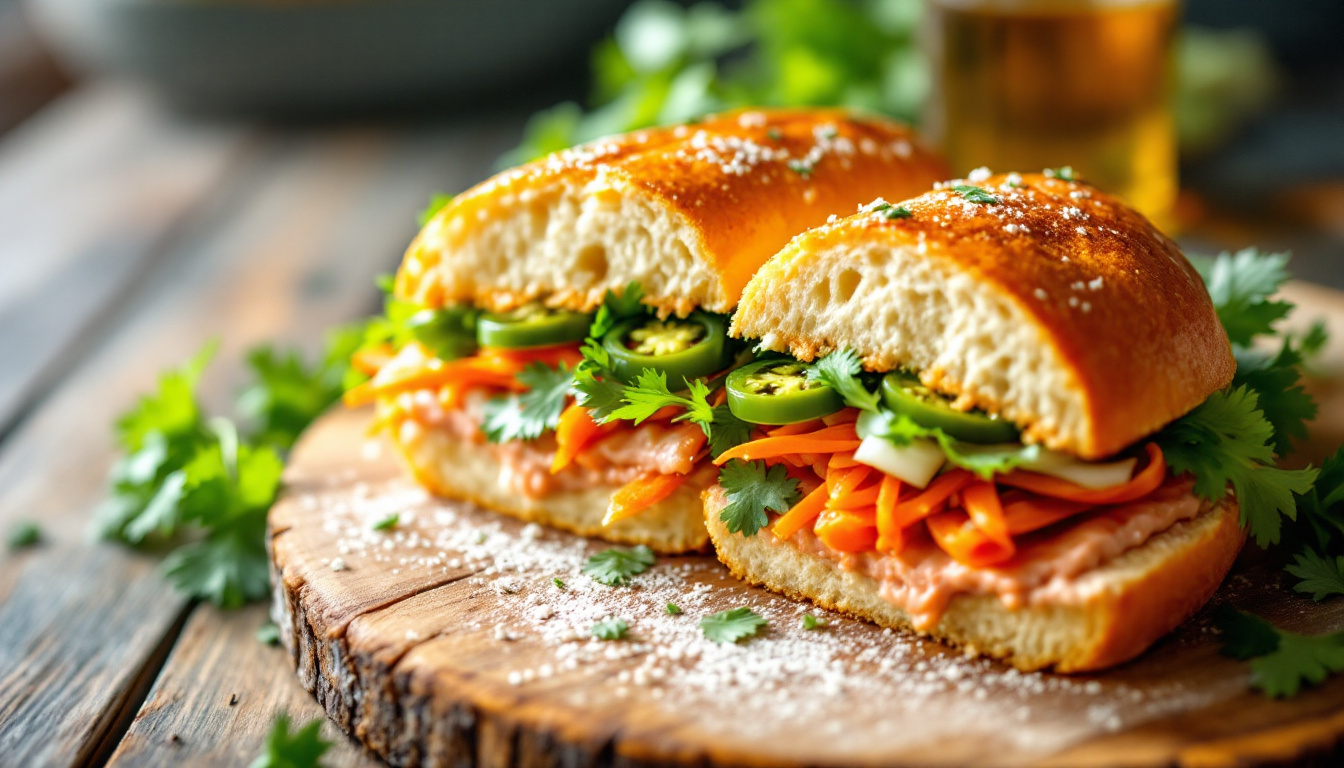
#1. Banh Mi Banh Mi
No sandwich on earth delivers more flavour per dollar than banh mi. The French left their baguette behind in colonial Vietnam. Vietnamese cooks then did what the French never managed: they improved it. What you get is a shorter, crispier loaf, thinner crust, airy crumb, layered with pate, cha lua (steamed pork roll), do chua (pickled daikon and carrot), fresh cilantro, sliced jalapeno, and cucumber. Every piece pulls its weight. The pate goes rich and savoury, the pickles cut through with acid, the herbs cool it all down, the chilli brings heat. Five flavour tracks, one hand.
In Ho Chi Minh City, head for the Ben Thanh market area or Hoi An’s central street stalls, where the good banh mi carts cluster thickest. Pay 20,000-40,000 VND (roughly $1-2 as of 2026). The best ones you eat standing up, wrapped in a square of paper, at 7am. Want to go deeper into Vietnamese street food? Our guide to Ho Chi Minh City food covers the full breakfast and lunch scene.
#2. Cubano Cuban Sandwich
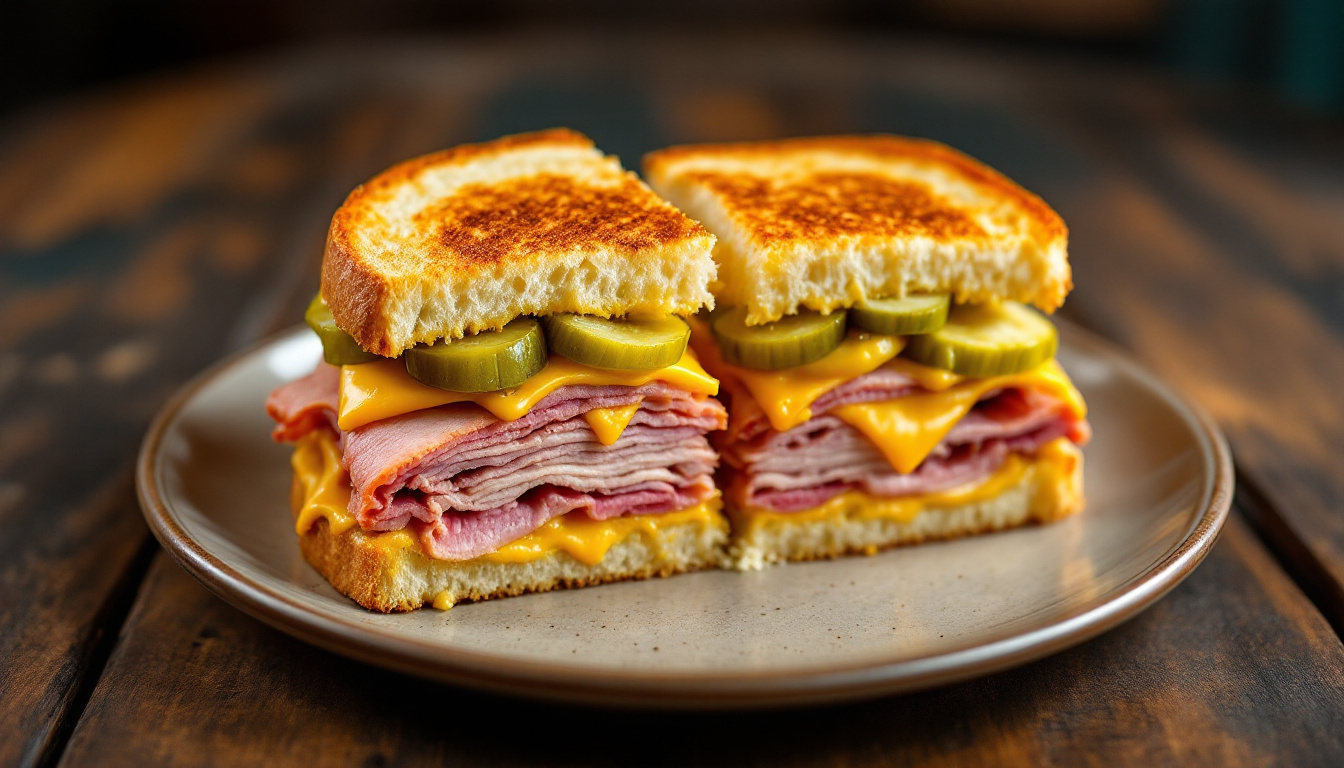
The Cubano is an argument compressed into bread. Tampa says it was born among Cuban cigar factory workers in the 1880s, and the Tampa version packs Genoa salami in alongside the roast pork, ham, Swiss cheese, pickles, and yellow mustard. Miami dropped the salami. Nobody’s settled the argument, and nobody will, which is half the charm. Both cities do agree on the basics. The bread is Cuban bread, a soft white loaf with a lard-enriched crust. The whole thing goes on a plancha, a flat press, and comes out golden and compressed, crisp outside, the cheese melted clean through.
At La Segunda Central Bakery in Tampa, going since 1915, the Cuban bread alone is worth the trip. In Miami, Versailles Restaurant on Calle Ocho does one that’s reliably excellent. Figure $10-14 as of 2026. For more on Havana’s food culture and where this sandwich came from, see our Havana food guide.
#3. Francesinha Francesinha
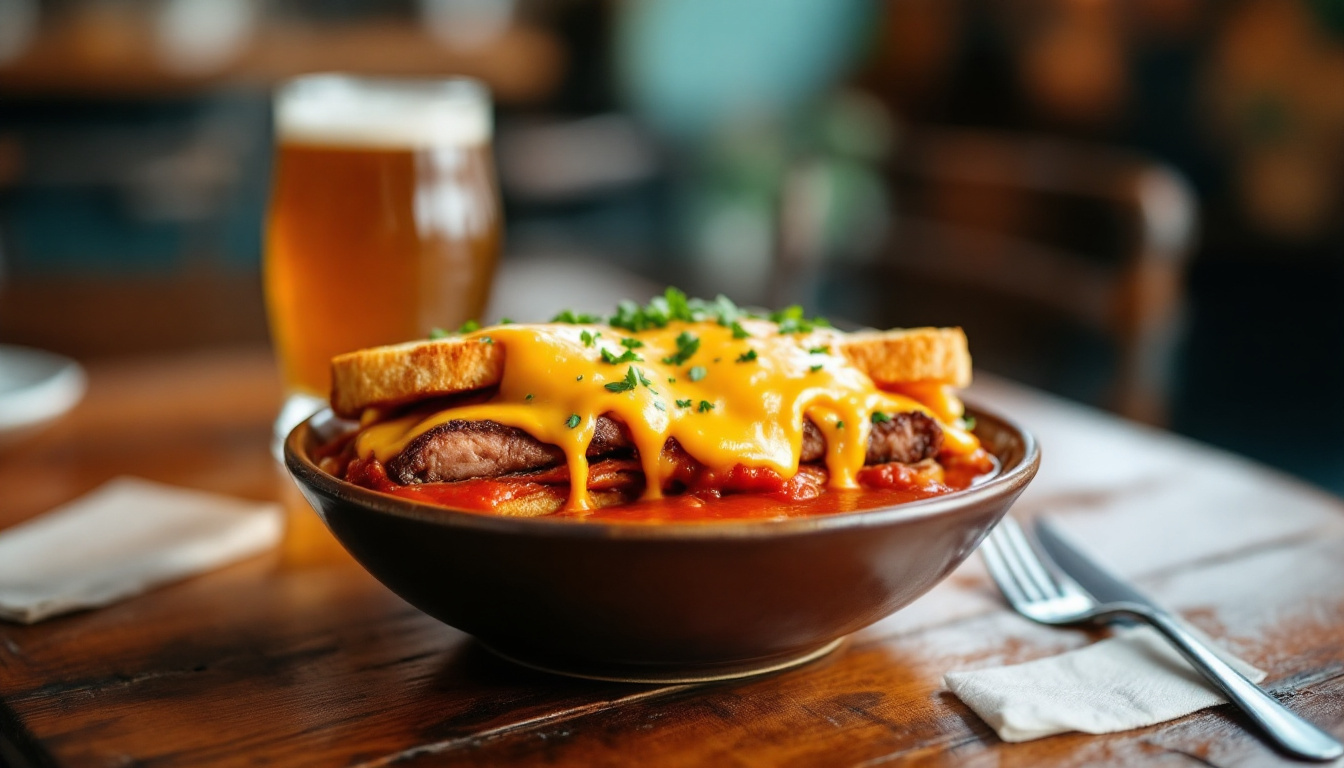
The Francesinha is not subtle. Daniel Silva built it in Porto in the 1960s, back from France and Belgium, taking the croque monsieur and deciding it needed to be much heavier. Here’s the result. Two thick slices of bread around layers of ham, linguica (smoked pork sausage), and steak, sealed under molten processed cheese, then drowned in a sauce of tomatoes, beer, whisky, and sometimes brandy. Fried egg on top. A mountain of chips on the side. It weighs about the same as a textbook.
The sauce is where they compete. Every Porto kitchen runs its own version, some spicier, some richer, and the city takes it seriously. Cafe Santiago has one of the most consistent in town; Bufete Fase in Campanha is the locals’ pick. Prices run €8-12 as of 2026. Planning a trip to Porto just for the food? Reasonable choice. Our Porto food guide covers everything else worth eating there.
#4. Choripan Choripan
Choripan is grilled chorizo split lengthways and placed in a crusty marraqueta roll, topped with chimichurri (parsley, garlic, olive oil, red wine vinegar, oregano, and chilli flakes). That is the whole recipe. It ranks this high because of what happens when you combine excellent-quality sausage with excellent-quality bread and the correct sauce, cooked over wood or charcoal with no shortcuts and no substitutions.
For the best choripan in Buenos Aires, try Feria de Mataderos, the weekend market in the western barrios, open Sundays till around 6pm. Or the Costanera Norte waterfront. Or any serious asado. ARS 800-1,500 as of 2026 (roughly $1-2), which makes it one of the cheapest high-quality sandwiches here. Our Buenos Aires food guide covers the full asado culture and where to eat it.
#5. Katsu Sando カツサンド
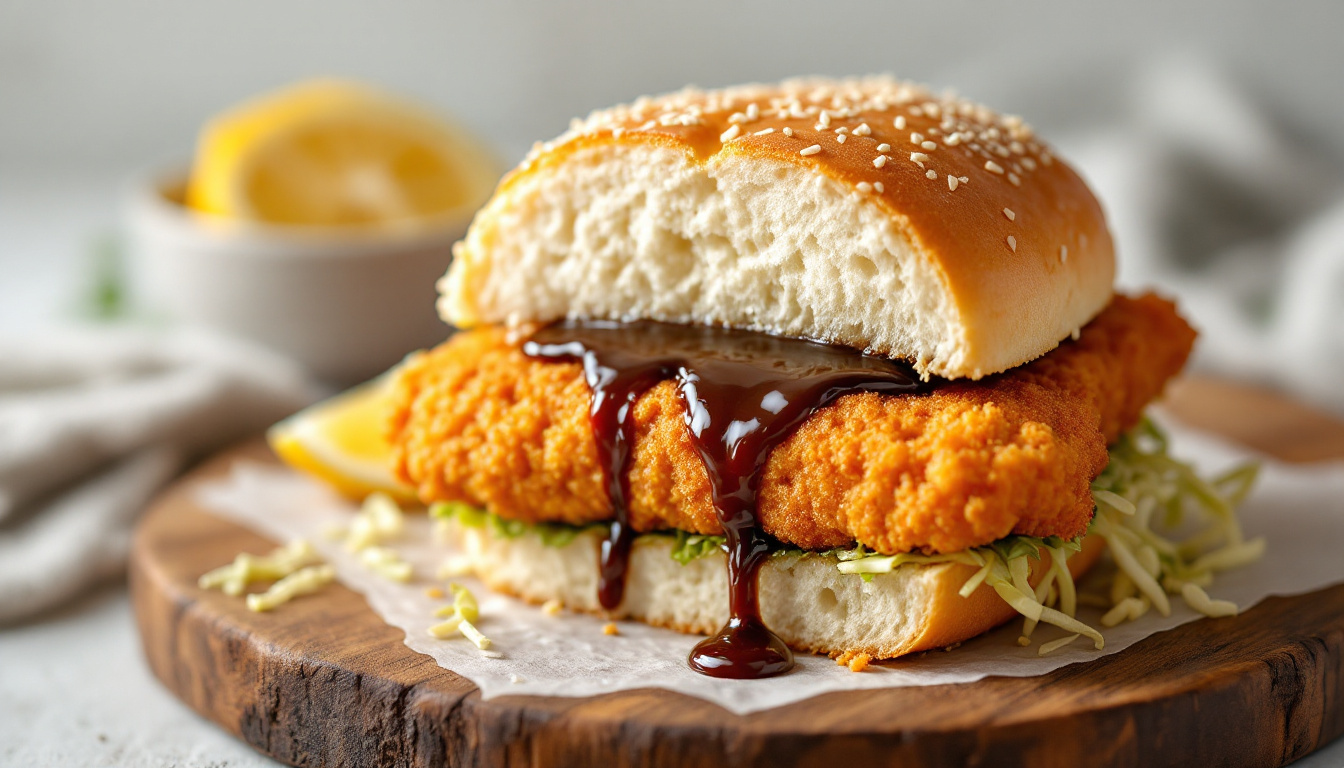
The katsu sando is Japan’s answer to the pork sandwich: a panko-breaded pork cutlet (tonkatsu), coated in tonkatsu sauce (a thick, slightly sweet brown sauce), sandwiched with finely shredded cabbage between two slices of shokupan, the pillowy Japanese milk bread that has become an obsession outside Japan in its own right. The contrast of textures is the whole point. Crispy panko, soft milky bread, crunchy raw cabbage. And no, you can’t swap the tonkatsu sauce for anything else and land the same result.
In Japan, the katsu sando lives at two ends of the price spectrum. Walk into any 7-Eleven or Lawson and you pay ¥500-800 for one that’s genuinely good. At Maisen in Aoyama, Tokyo, it’s Kagoshima black pig, the pressing immaculate, and you pay ¥2,000-2,500. Both are worth eating. The convenience store one, every day.
#6. Shawarma in Pita شاورما
Shawarma is marinated lamb or chicken cooked on a rotating vertical spit (12-24 hours of slow roasting), shaved to order, and wrapped in thin flatbread with tahini, toum (garlic cream sauce), pickled turnips turned pink by beetroot juice, tomato, and parsley. It started in the Ottoman Empire, spread across the Levant, and is now one of the most copied street foods on the planet. Copied is the key word. The best shawarma in Beirut barely resembles what gets sold outside the region.
Barbar Restaurant in Beirut, open 24 hours on Omar Daouk Street near Hamra, is the city’s most famous shawarma counter, and deservedly so. Figure $3-7 as of 2026. One thing to keep straight: shawarma isn’t doner kebab (see #16), even if they share the rotating spit. The Levantine version runs different spice blends, different bread, different sauces.
#7. Lobster Roll Lobster Roll
The lobster roll occupies a unique position on this list: it is the only sandwich that is truly seasonal. The first Maine lobster rolls turned up around 1929 at Perry’s restaurant in Connecticut, and the modern version grew into a New England institution over the decades that followed. Two styles, and people pick sides. Maine’s is cold: knuckle and claw meat, lightly coated in mayo, a touch of celery, in a split-top hot dog bun toasted in butter. Connecticut’s is hot, the same meat tossed in drawn butter and served warm. Both are excellent. Maine edges it for me, on texture.
Red’s Eats in Wiscasset, Maine, is the most famous lobster roll stand in the country, and it packs the buns so full the lobster spills over the bread by inches. Over in Portland, Luke’s Lobster is more consistent, with shorter lines. Prices run $25-45 as of 2026, riding that week’s lobster market. Go between June and August for the best value and freshest meat.
#8. Po’Boy Po’Boy
The po’boy was born in New Orleans in 1929 when brothers Clovis and Benjamin Martin, former streetcar workers, fed striking transit workers for free, calling them “poor boys.” The sandwich itself is a French bread loaf, and New Orleans French bread runs crispier on the crust and softer inside than a standard baguette, filled with fried shrimp, fried oysters, or roast beef in debris gravy (the cooking juices and shredded bits that fall off during braising). Order it “dressed” and you get lettuce, tomato, pickles, and mayo. Never skip dressed.
Domilise’s on Annunciation Street and Parasol’s in the Irish Channel are two of the most consistent po’boy shops around. The fried shrimp one at Domilise’s, dressed with pickles and Crystal hot sauce, is one of the better lunches in the American South. Figure $12-18 as of 2026.
#9. Gatsby Gatsby
The Gatsby is a 30cm French loaf split lengthways and filled with chips (thick-cut fries) plus a protein, most commonly calamari, chicken, polony (processed meat), or steak, then slathered with sauce and wrapped in paper. Rashaad Pandy invented it in 1976 at his Cape Town takeaway, Super Fisheries, when he had to feed a group of workers on a budget. He cut the loaf into four and handed one piece to each. That sharing format stuck.
The Gatsby isn’t meant to be eaten alone. At R60-120 as of 2026, it feeds two to four people easily. The calamari version, peri-peri sauce and vinegar, is the Cape Town classic. Curious how Cape Town’s food ties its Cape Malay and working-class roots together? Our Cape Town food guide goes deeper. The Gatsby ranks high for taste and for what it stands for: generous, communal, born out of necessity.
#10. Bocadillo de Calamares Bocadillo de Calamares
The bocadillo de calamares is one of the most satisfying simple sandwiches in the world: rings of squid, battered and fried in olive oil, piled into a crusty pan de barra (Spanish baguette), finished with a squeeze of lemon. That’s the entire sandwich, no sauce or salad or cheese. Its brilliance is the contrast: crunch of hot batter against chewy squid, held in bread that won’t go soggy.
This sandwich is a Madrid thing. You won’t find it done the same way in Barcelona or Valencia. Around Plaza Mayor and La Latina is where the bocadillo shops cluster. Bar El Brillante, near the Reina Sofia museum, is among the most consistent. Cerveceria Alemana on Plaza Santa Ana is another solid pick. Budget €3-5 and eat it standing at the bar. Tourist-area sit-down versions cost twice as much for the same thing.
#11. Cemita Cemita Poblana
The cemita is Puebla’s sandwich and belongs only to Puebla. The bun makes it. A sesame-topped roll, also called a cemita, which is where the sandwich gets its name, denser and a touch sweeter than the telera used in standard Mexican tortas. Inside: milanesa de pollo or res (breaded chicken or beef cutlet), avocado, Oaxacan quesillo (string cheese that softens against the warm meat), chipotle in adobo, and papalo, an herb that tastes somewhere between rue and arugula and that most visitors have never met. Papalo is what makes a cemita impossible to fake.
In Puebla, head to Mercado El Carmen or the streets around the centro historico for the best cemita stands. Prices run MXN 60-120 as of 2026 (roughly $3-6). And it’s not a torta. Puebla residents will let you know.
#12. Jambon-Beurre Jambon-Beurre
The jambon-beurre is proof that a great sandwich requires only three ingredients done perfectly: jambon de Paris (a mild, lightly cured cooked ham), unsalted butter, and a baguette tradition (the standard French baker’s baguette made to a national specification). According to GIRA food service data from 2022, French workers buy approximately 1.5 million jambon-beurre sandwiches every single day. That number holds up because the sandwich is genuinely good, not because the French are short on options.
The butter is the variable that matters. Unsalted, spread generously on both cut faces of the baguette, and bought from a boulangerie artisanale, not a supermarket. In Paris, Maison Landemaine bakes excellent baguettes across several arrondissements. Grab one and a slice of jambon at the counter, then build it yourself on a bench along the Canal Saint-Martin. Budget €3-6 depending where you are.
#13. Smorrebrod Smorrebrod
Smorrebrod (literally “butter and bread”) is the Danish open-faced sandwich: a slice of dense, dark rugbrod (sourdough rye bread) spread with butter, then topped with any combination of pickled herring, cold roast beef with remoulade, egg and shrimp with dill, leverpostej (liver pate) with pickled beets, or smoked salmon with cream cheese. Unlike most sandwiches here, smorrebrod has a strict eating order. Fish first, meat second, cheese last. Eat them out of order and it’s considered poor form.
Aamanns Copenhagen, founded by Adam Aamanns, brought smorrebrod back as a serious restaurant format without ditching its working-class roots. The rugbrod is dense and slightly sour, and it holds up under heavy toppings without going limp. Traditional Copenhagen lunch spots serve them at 80-150 DKK per piece as of 2026. Budget two or three pieces for a proper lunch. Start with the herring. Non-negotiable.
#14. Reuben Reuben Sandwich
The Reuben is corned beef, sauerkraut, Swiss cheese, and Thousand Island dressing on rye bread, pressed on a griddle until the cheese melts and the bread crisps. The origin’s disputed. Omaha, Nebraska claims Reuben Kulakofsky invented it in the 1920s; New York City counters that Reuben’s Restaurant served a version around the same time. Don’t confuse it with a pastrami sandwich: pastrami uses a different cured and smoked cut, a different preparation, and skips the sauerkraut entirely. They’re not interchangeable, and any New York deli regular will make that point clearly if you mix them up.
Katz’s Delicatessen on Houston Street in Manhattan has been going since 1888, and serves one of the most consistent Reubens in the city at $15-18 as of 2026. Out in Ann Arbor, Michigan, Zingerman’s Deli makes one that plenty of people rate above anything in New York.
#15. Pulled Pork BBQ Sandwich Pulled Pork Sandwich
A pulled pork BBQ sandwich from the American South is pork shoulder smoked for 10-16 hours at 225°F (107°C) over hickory or oak wood, pulled apart by hand, and piled into a plain white hamburger bun. The regional sauce divide is real. Eastern North Carolina goes thin vinegar-and-pepper, no tomato; Western NC and Lexington-style add tomato; Memphis does a dry rub with sauce on the side. Different sandwich each time. The Eastern NC one is the most austere, and to me the most honest, because the pork has to carry the whole thing alone.
Skylight Inn BBQ in Ayden, NC, and Sam Jones BBQ in Winterville are two of the best Eastern NC spots. Central BBQ in Memphis does the dry-rub version well. Budget $10-15. The coleslaw goes on top of the pork, inside the bun, not on the side. That’s not a suggestion.
#16. Doner Kebab Doner Kebab
The doner kebab in its current sandwich form was adapted for German street food in Berlin in 1972 by Kadir Nurman, a Turkish immigrant who started serving vertical-spit meat in a flatbread with salad at Zoo Station. The idea spread across Germany and then Europe: rotisserie veal, lamb, or chicken shaved thin, served in a toasted pide or flatbread with shredded cabbage, tomato, onion, pickled peppers, tzatziki, and garlic sauce. It’s different from Lebanese shawarma in the spice blend, the bread, the sauces. The cooking method, though, is similar.
Berlin takes its doner seriously, well past the generic versions you find elsewhere in Europe. Mustafa’s Gemuse Kebap in Kreuzberg pulls queues of 30-60 minutes, worth it at least once. Locals argue endlessly over which neighbourhood spot wins. Budget €5-8 as of 2026. It’s at its best late, eaten standing under U-Bahn lights after midnight.
#17. Croque Monsieur Croque Monsieur
The Croque Monsieur appeared on French cafe menus around 1910, with Cafe de Paris in Paris among the first establishments to serve it. The formula: jambon de Paris and Gruyere (or Emmental) between two slices of pain de mie (soft white sandwich bread), spread with bechamel, then baked or grilled until the cheese browns and the bechamel sets into a light crust on top. Add a fried egg and it’s a Croque Madame. The bechamel isn’t optional. It’s the thing that separates a croque monsieur from any other ham-and-cheese toastie.
Most French brasseries make a decent one; the difference is how thick they lay the bechamel and how hard they toast the outside. Cafe de Flore and Les Deux Magots in Saint-Germain do reliable versions at tourist prices (€12+). Any neighbourhood brasserie off the tourist drag gives you the same quality for €8-10. It sits at #17, not higher, because the bechamel means sitting down with a fork, and that costs it portability points.
#18. Vada Pav वडा पाव
Vada Pav is Mumbai’s street sandwich: a batata vada (spiced potato fritter coated in chickpea batter, deep-fried) stuffed into a small pav bun (a soft white roll introduced to Mumbai by Portuguese colonisers), with three chutneys applied separately: green chutney (coriander, chilli, garlic), sweet tamarind chutney, and dry garlic chutney (roasted garlic, dried coconut, red chilli). Those three chutneys are what lift vada pav above a plain potato sandwich. Each brings its own thing: heat, sweetness, smoke.
Ashok Vada Pav in Dadar, where Ashok Vaidya invented the sandwich in 1966, still runs near the original spot. Prices hold at ₹15-30 as of 2026, the most affordable sandwich on this list. Nearly every Mumbai railway station has a vada pav stall, and quality stays high because the crowd is mostly daily commuters who know exactly what good vada pav tastes like. Our Mumbai food guide covers the full street food landscape.
Honorable mentions
Eighteen spots are not enough. Eight sandwiches that came close and why they didn’t make the cut:
- Muffuletta (New Orleans) – A round Sicilian sesame roll loaded with Italian cold cuts and an olive salad. Outstanding sandwich, slightly less portable than the po’boy, which beat it to the list. Get one at Central Grocery on Decatur Street, around $18.
- Torta Ahogada (Guadalajara, Mexico) – A birote roll filled with carnitas or refried beans, then drowned in a spicy tomato-arbol chile sauce. “Drowned sandwich” is the literal translation and an accurate one. About MXN 60-80.
- Chip Butty (UK) – White bread, thick-cut chips, ketchup or brown sauce, salt. The most aggressively simple sandwich on this list. Embarrassingly good when made correctly. Around £3.
- Jibarito (Chicago / Puerto Rico) – Green plantain strips, flattened and fried, replace the bread, with steak, garlic mayo, cheese, and lettuce. Invented in Chicago in the 1990s, built on a Puerto Rican concept. Around $12.
- Medianoche (Cuba) – A Cubano’s sibling: the same fillings (roast pork, ham, Swiss, pickles, mustard) but on a sweeter, softer egg bread, served at midnight (hence the name). Around $9-13.
- Bauru (Sao Paulo, Brazil) – Roast beef, melted cheese, tomato, and pickles on a French roll with the crumb scooped out. Invented in 1934 at Bar Ponto Chic in Sao Paulo. About BRL 30-45.
- Bikini (Barcelona) – Thin-sliced jamon and melted cheese pressed between bread at cocktail-hour in Catalan bars. Sounds like nothing. Tastes like 6pm in Barcelona. Around €4-6.
- Philadelphia Cheesesteak (USA) – Thinly sliced ribeye griddled with onions on a long Amoroso roll, topped with Cheez Whiz, American, or provolone. Pat’s and Geno’s face off across South 9th Street; most locals send you to a neighbourhood spot instead. Around $13-16. It ranks among the world’s most cited sandwiches (TasteAtlas puts it near the top 20), but it is heavy, greasy, and needs two hands and a table, so it loses the portability points that carried the po’boy and banh mi onto the ranked list.
How to eat your way around the world’s sandwich cultures
The world’s best sandwiches each come with a local eating code. Ignore it and you’ll get the tourist version. Follow it and you’ll understand why each sandwich works the way it does.
France: The jambon-beurre and croque monsieur are lunch food, eaten between noon and 2pm. A boulangerie that sells a baguette sandwich after 3pm is either very busy or very popular. Ask for “un sandwich jambon-beurre” at the counter; don’t linger over the decision. Boulangeries have a rhythm and the people behind you know it.
Vietnam: Banh mi is breakfast food. The best carts are set up by 6:30am and often sold out by 9am. Street sellers with a glass case, a gas flame, and a line of regulars are the ones to find. Any banh mi shop with an English-only laminated menu exists for people who aren’t coming back tomorrow.
Argentina: Choripan appears at two specific moments: at asados (grilled before the main meat, eaten standing while the rest cooks) and at late-night fairs and stadiums after midnight. The sauce is applied to the cut surface of the bread, not the sausage. You apply it yourself. This is important.
USA: “Dressed” in New Orleans means you want lettuce, tomato, pickles, and mayo. Say it before you’re asked. In New York delis, the pastrami and corned beef sandwiches come with a pickle spear and rye bread as part of the experience, not separate sides you ordered. In North Carolina BBQ, the coleslaw goes inside the bun.
Japan: Katsu sando from a convenience store is eaten at room temperature, which is how it’s designed. Do not microwave it. The bread compresses against the filling when refrigerated and the texture is intentional. If you’re in a restaurant version, eat it within five minutes or the panko starts to lose its crunch.
FAQ
Is a hot dog a sandwich?
By the structural definition (filling between bread), yes. But the hot dog bun is attached at the base rather than consisting of two separate slices, which places it in a subcategory. For this list, hot dogs were excluded because they have their own canon (Chicago-style, New York-style, etc.) that deserves a separate ranking.
What is the cheapest sandwich on this list?
Vada Pav in Mumbai at ₹15-30 (roughly $0.20-0.40 as of 2026). Banh mi in Ho Chi Minh City runs 20,000-40,000 VND (around $1). The most expensive entry is the lobster roll at $25-45, which fluctuates with seasonal lobster market prices in Maine.
Which sandwiches on this list are vegetarian?
Vada Pav (#18) is fully vegetarian: the batata vada is a spiced potato fritter in chickpea batter with no meat. Smorrebrod (#13) has vegetarian topping options (egg, cheese, pickled vegetables). Jambon-Beurre (#12) can technically be ordered with butter and cheese only. The other 15 entries feature meat or seafood as a core component.
What makes banh mi better than other sandwiches with similar ingredients?
The bread is the main reason. Vietnamese banh mi baguettes are made with a mix of wheat and rice flour, which produces a thinner, crispier crust and a lighter crumb than a standard French baguette. That lightness lets the fillings dominate. Combined with the contrast between rich pate, acidic pickled vegetables, fresh herbs, and heat from jalapenos, you get five distinct flavour registers in a single bite for about a dollar. No other sandwich achieves that range at that price point.
Can I find good versions of these sandwiches outside their home countries?
Some travel better than others. Banh mi shops in Paris, London, Sydney, and most major cities now produce credible versions. Doner kebab is genuinely good across Germany and parts of Scandinavia. The lobster roll, pulled pork BBQ, and po’boy are harder to replicate because they depend on specific regional ingredients: Maine lobster, North Carolina pork traditions, New Orleans French bread. For those three, the original location is not optional.
More food guides waiting for you
Browse our complete collection of food travel guides from around the world.