Sugerowany rozmiar: 1200×630px
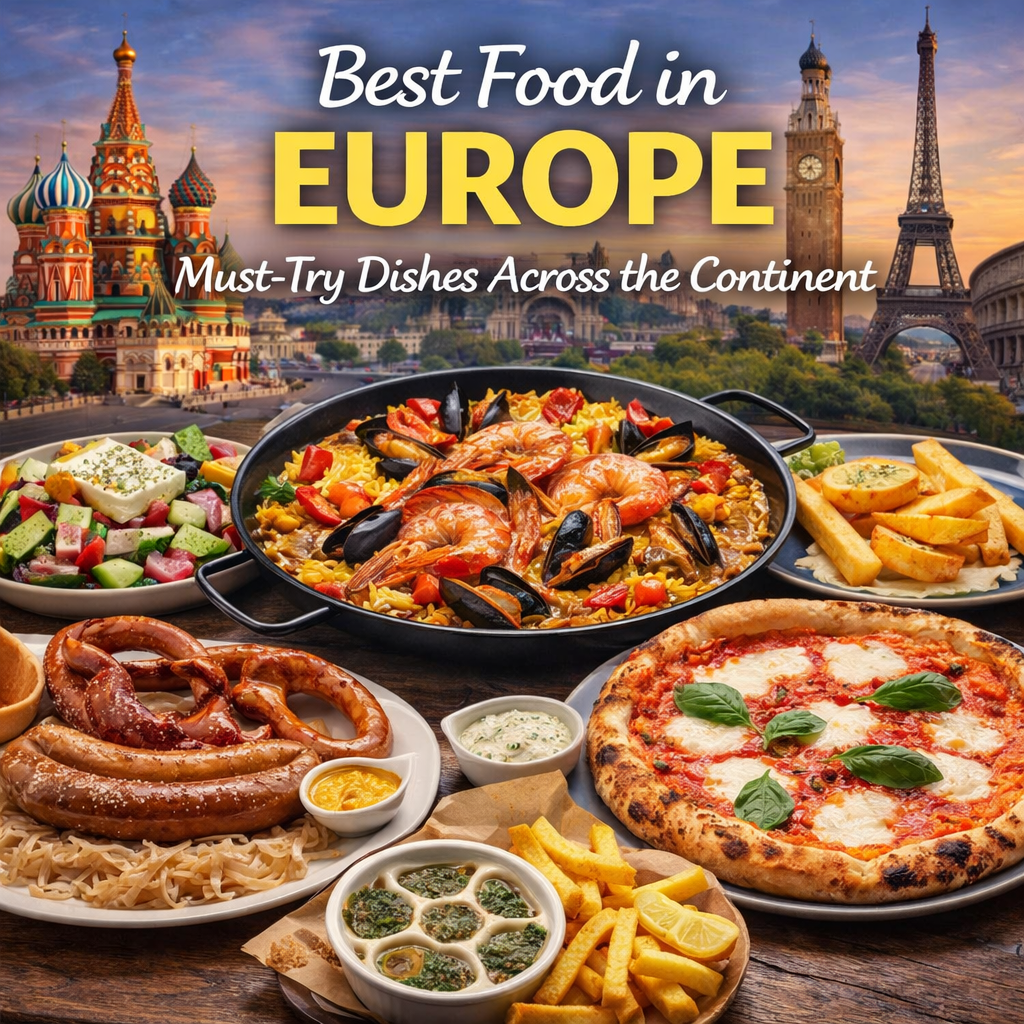
Best Food in Europe: Must-Try Dishes Across the Continent
Europe is where modern gastronomy was invented — from the olive-oil-drenched simplicity of the Mediterranean to the butter-and-cream precision of French cuisine to the hearty, soul-warming stews of the east. Nine countries, hundreds of regional traditions, and the world’s highest density of Michelin stars. This is your complete guide to eating across the continent.
European food is defined by terroir — the idea that the land, the climate, and the local tradition shape what you eat. A pasta in Bologna tastes different from the same recipe in Rome because the flour, the eggs, the water, and the 500 years of nonna’s intuition are all different. A wine in Bordeaux is not the same as a wine in Rioja, even from the same grape, because the soil tells a different story. This connection between place and plate is what makes European food travel so rewarding — you’re not just eating dishes, you’re eating geography. This guide covers nine of Europe’s best food destinations, from the Mediterranean giants to the overlooked treasures of Eastern Europe.
Best Food in Italy: Where Simplicity Is the Ultimate Sophistication
Italy is the world’s most loved food country — and for good reason. Italian cuisine is built on a radical philosophy: use the best possible ingredients, do as little to them as possible, and let the product speak. A perfect cacio e pepe in Rome has three ingredients (pasta, pecorino, black pepper). A Neapolitan margherita pizza has four (dough, San Marzano tomatoes, mozzarella di bufala, basil). The skill is in the restraint — and in the centuries of regional tradition behind every dish.
Must-try dishes in Italy
Pizza margherita in Naples — the original, the benchmark, and still the best pizza on Earth. A puffy, charred cornicione (crust), San Marzano tomato sauce, fior di latte or mozzarella di bufala, fresh basil, and a drizzle of olive oil. Cooked in a wood-fired oven at 485°C for 60–90 seconds. L’Antica Pizzeria da Michele (since 1870) and Sorbillo are the pilgrimage sites. €4–7 ($4.40–7.70 USD).
Ragù alla bolognese in Bologna — the real thing bears almost no resemblance to spaghetti bolognese. A slow-cooked meat sauce (beef, pork, soffritto, wine, milk, tomato) served over tagliatelle or used in lasagna. It cooks for 3–4 hours minimum. Bologna’s official recipe is registered with the Chamber of Commerce. €10–15 ($11–16.50 USD) at a proper trattoria.
Risotto alla milanese in Milan — saffron-infused Arborio rice slowly stirred with broth and butter until creamy, golden, and luxurious. Bistecca alla fiorentina in Florence — a massive T-bone steak from Chianina cattle, grilled over oak, served rare, and charged by weight (€45–70/kg). Cicchetti in Venice — Venetian tapas: small bites at wine bars (bacari) along the canals. Gelato everywhere — but the best is in Florence (Vivoli, La Sorbettiera) and Rome (Fatamorgana, Giolitti).
Never order cappuccino after 11 AM (it’s a breakfast drink). Never ask for parmesan on seafood pasta. Never order alfredo (it doesn’t exist in Italy). Never dip bread in olive oil before the meal (that’s American-Italian). These aren’t pretentious rules — they’re the framework that keeps Italian food honest. Follow them and Italians will respect you.
👉 Full guide: Best Food to Eat in Italy: Pizza, Pasta and Regional Specialties
Best Food in France: The Birthplace of Modern Gastronomy
France invented the restaurant, the Michelin star, and the idea that cooking is an art form. French cuisine is technique-driven — where Italian food succeeds through simplicity, French food succeeds through mastery. A proper croissant requires 3 days of laminating butter into dough. A classic stock simmers for 8 hours. A béarnaise sauce can break in the time it takes to look away. This precision is what makes French food the most technically accomplished cuisine on the planet.
Must-try dishes in France
Croissant — France’s greatest contribution to breakfast. Layers of butter laminated between yeasted dough, rolled, shaped, and baked until golden and shattering. A great croissant has 81 layers. Du Pain et des Idées and Cédric Grolet in Paris. €1.20–2.50 ($1.30–2.75 USD).
Coq au vin — chicken braised in red wine (traditionally Burgundy) with mushrooms, lardons, pearl onions, and herbs. Bouillabaisse — Marseille’s legendary fish stew: rockfish, saffron, fennel, and rouille (garlic-saffron mayo) served with croutons. Steak frites — the perfect bistro meal: pan-seared entrecôte with hand-cut frites and béarnaise sauce. Crème brûlée — vanilla custard with a caramelized sugar crust that you crack with a spoon. Cheese — France produces 400+ varieties. A cheese course before dessert is standard. Comté, Époisses, Roquefort, and Brie de Meaux are the essentials.
Lyon is France’s gastronomic capital — bouchons (traditional bistros) serve quenelles, andouillette, salade lyonnaise, and tarte praline. Paris is the pastry and fine dining capital. Bordeaux, Burgundy, and the Loire Valley are wine country at its finest. Provence is olive oil, ratatouille, and lavender. Alsace is choucroute (sauerkraut), tarte flambée, and wine that drinks like German Riesling.
👉 Full guide: Best Food to Eat in France: Croissants, Cheese and French Gastronomy
Best Food in Spain: Tapas, Jamón and the Avant-Garde
Spain is Europe’s most exciting food country right now — a place where 2,000-year-old olive oil traditions coexist with molecular gastronomy laboratories. The tapas culture means you eat in small bites across 3–5 bars in a single evening, each one specializing in a different thing. The quality of raw ingredients — jamón ibérico, Galician octopus, Basque seafood, Manchego cheese — is among the highest in the world.
Must-try dishes in Spain
Jamón ibérico de bellota — the world’s finest cured ham. Ibérico pigs fed on acorns (bellotas) in oak forests, their ham aged 36+ months. The fat melts at room temperature, coating your tongue with a nutty, sweet intensity unlike any other cured meat. €15–25 for a plate at a bar. A whole leg: €200–500+.
Paella valenciana in Valencia — the original: rice, rabbit, snails, green beans, saffron, and rosemary, cooked in a wide, shallow pan over wood fire. The prized part is the socarrat — the crispy caramelized rice at the bottom. Do not order paella in tourist areas of Barcelona — go to Valencia. €12–20 per person.
Pintxos in San Sebastián — the Basque Country’s answer to tapas: elaborate small bites on bread, skewered with a toothpick, lined up on bar counters. You eat standing, move to the next bar, repeat. San Sebastián has more Michelin stars per capita than anywhere on Earth. Gazpacho in Andalusia — chilled tomato soup at its peak in summer. Pulpo a la gallega in Galicia — octopus boiled tender, sliced, and served on a wooden board with olive oil, paprika, and coarse salt. Tortilla española — the thick potato-and-egg omelet that every Spanish bar serves and every Spanish family argues about (onion or no onion?).
👉 Full guide: Best Food to Eat in Spain: Tapas, Paella and Other Spanish Favorites
Best Food in Greece: Where the Mediterranean Diet Was Born
Greek food is the original Mediterranean diet — olive oil, fresh vegetables, grilled meat and fish, yogurt, honey, herbs, and the world’s best feta cheese. It’s the most ancient food tradition in Europe, largely unchanged for 3,000 years, and it’s one of the healthiest. But don’t mistake healthy for boring — Greek food is bold, generous, and built for sharing at long taverna tables overlooking the Aegean.
Must-try dishes in Greece
Moussaka — layers of eggplant, spiced ground lamb, and béchamel sauce, baked until golden. Greece’s most famous casserole. Souvlaki — grilled meat (pork, chicken, or lamb) on skewers, served in pita with tomato, onion, tzatziki, and fries. The Greek fast food that’s better than most sit-down meals elsewhere. €3–5 for a pita wrap. Horiatiki — the real Greek salad: chunky tomatoes, cucumber, onion, green pepper, olives, and a thick slab of feta, drowned in olive oil. No lettuce.
Fresh grilled fish on the islands — sea bream, sea bass, or octopus, grilled whole over charcoal, dressed with lemon and olive oil. Priced by the kilo (€40–65/kg for fish). Spanakopita — flaky phyllo pastry filled with spinach and feta. Gyros — meat carved from a vertical rotisserie, wrapped in pita. Baklava — layers of phyllo, nuts, and honey syrup. Greece’s sweet traditions connect directly to Lebanese and Turkish cuisine.
👉 Full guide: Best Food to Eat in Greece: Souvlaki, Moussaka and Mediterranean Flavors
Best Food in Portugal: Europe’s Most Underrated Food Destination
Portugal is the best-value food destination in Western Europe — and it’s increasingly recognized as one of the best food countries, period. The Portuguese relationship with seafood is unmatched (they eat more fish per capita than any other European country), the pastry tradition rivals France’s, and Lisbon’s food scene has exploded in the past decade with innovative chefs reinterpreting centuries-old recipes.
Must-try dishes in Portugal
Pastéis de nata — flaky puff pastry cups filled with custard, blistered under extreme heat until the top caramelizes. Sprinkled with cinnamon and powdered sugar. Pastéis de Belém in Lisbon (since 1837) makes the most famous version from a secret recipe. €1.10–1.50 each. They’re best warm, eaten within minutes of leaving the oven.
Bacalhau (salt cod) — the Portuguese have 365 recipes for bacalhau, one for every day of the year. The most famous: bacalhau à brás (shredded cod with fried potatoes and scrambled eggs), bacalhau com natas (cod in cream), and bacalhau à Gomes de Sá (layered with potatoes, onions, and olives). Grilled sardines — the star of Lisbon’s June festivals (Santo António). Francesinha in Porto — a towering sandwich of bread, ham, sausage, steak, and melted cheese, drenched in a tomato-beer sauce and served with fries. It’s Portugal’s answer to “what’s the most indulgent thing we can stack between two slices of bread?” €10–14.
Caldo verde — kale soup with potato and chouriço sausage. Arroz de marisco — Portuguese seafood rice, soupy and rich. Bifana — a marinated pork cutlet sandwich that’s Porto’s favorite street food. €2.50–4.
👉 Full guide: What Food to Eat in Portugal: Must-Try Portuguese Seafood and Pastries
Best Food in Poland: Hearty, Honest and Massively Underrated
Polish food is Central Europe’s best-kept food secret — hearty, generous, deeply comforting, and absurdly cheap. The cuisine is built on bread, potatoes, cabbage, pork, mushrooms, and sour cream — humble ingredients elevated by centuries of tradition into something that warms you from the inside during long Baltic winters. Poland is also the best-value food destination in the EU.
Must-try dishes in Poland
Pierogi — stuffed dumplings: the most famous fillings are ruskie (potato-and-cheese), meat (minced pork), sauerkraut-and-mushroom, and sweet versions with blueberries or strawberries. Boiled, then optionally pan-fried with butter and onions. A plate of 10–12: PLN 20–35 (€4.50–8 / $5–8.80 USD). Every Polish grandmother claims hers are the best, and they’re all correct.
Żurek — sour rye soup made from fermented rye flour, with sausage, potato, and a hard-boiled egg. Served in a bread bowl at restaurants (though purists prefer a regular bowl). The sourness is gentle and the soup is warming. Bigos — hunter’s stew: sauerkraut, fresh cabbage, multiple meats (sausage, pork, beef), mushrooms, prunes, simmered for hours (some families cook it for days, reheating improves it). Schabowy — a breaded pork cutlet (Poland’s answer to schnitzel) with potatoes and sauerkraut. The Polish lunch staple. Oscypek — smoked sheep cheese from the Tatra mountains, grilled and served with cranberry jam.
Warsaw has the most variety; Kraków has the most atmospheric. The German influence is visible in Silesia; the connection to Turkish cuisine shows in pierogi’s cousin, the manti dumpling.
👉 Full guide: Best Food to Eat in Poland: Pierogi, Żurek and Hearty Polish Cuisine
Best Food in Croatia: Where the Adriatic Meets the Balkans
Croatia is two food countries in one. The Dalmatian coast is Mediterranean — grilled fish, olive oil, prosciutto, and wine that could pass for Italian. The interior (Zagreb, Slavonia) is Central European — heavier, meatier, influenced by Hungary and Austria. Both are excellent, and both are significantly cheaper than their Western European equivalents.
Must-try dishes in Croatia
Black risotto (crni rižot) — Adriatic rice cooked with cuttlefish ink, creating a jet-black, briny, intensely seafood-flavored risotto. A Dalmatian Coast signature. Peka — meat or seafood slow-roasted under a bell-shaped lid (sač) covered in hot embers. The Dalmatian equivalent of a Dutch oven — octopus peka and veal peka are the classics. Requires 2+ hours, so order in advance. Ćevapi — small, grilled minced-meat sausages served in somun bread with raw onion, kajmak (creamy cheese), and ajvar (roasted pepper relish). The Balkan burger — Croatia’s most popular street food.
Pršut — Dalmatian dry-cured ham, aged in the Bora wind from the Adriatic. Lighter and less fatty than Italian prosciutto. Štrukli — Zagreb’s signature: pasta sheets filled with cottage cheese, baked or boiled. Grilled fresh fish — sea bream, sea bass, or John Dory grilled whole on the coast. The Adriatic seafood is exceptional and cheaper than Greece or Italy.
👉 Full guide: Best Food to Eat in Croatia: Coastal Seafood and Balkan Flavors
Best Food in Germany: Far More Than Sausage and Beer
German food suffers from the worst stereotypes in European cuisine — people think it’s all bratwurst and sauerkraut. In reality, Germany has enormous regional diversity: Bavarian pork knuckle and pretzels in the south, North Sea fish and smoked eel in the north, Rhineland sauerbraten in the west, and a Berlin street food scene that rivals London’s. Plus Germany’s bread culture is the best in the world — UNESCO recognized it in 2014 — with over 3,000 registered bread varieties.
Must-try dishes in Germany
Schweinshaxe — roasted pork knuckle with crackling skin, served with sauerkraut and potato dumplings. Bavaria’s most famous dish. Currywurst — sliced bratwurst doused in curried ketchup sauce, served with fries. Berlin’s most iconic street food (invented in 1949). Pretzel (Brezel) — the Bavarian soft pretzel: chewy, salty, and perfect with Weißbier. Sauerbraten — pot-roasted beef marinated in vinegar and spices for days. The Rhineland version uses raisins and gingerbread in the sauce. Käsespätzle — Swabian egg noodles baked with cheese and crispy fried onions. Germany’s mac and cheese, and arguably better.
👉 Full guide: What Food to Eat in Germany: Hearty German Meals and Snacks to Discover
Best Food in Sweden: New Nordic and Ancient Traditions
Sweden is the birthplace of the New Nordic movement — the philosophy that Scandinavian ingredients (berries, game, root vegetables, fish, foraged herbs) can produce world-class cuisine. Stockholm has become one of Europe’s most exciting food cities, with a density of innovative restaurants rivaling Copenhagen.
Must-try dishes in Sweden
Köttbullar — Swedish meatballs: small, tender, served with cream sauce, lingonberry jam, pickled cucumber, and mashed potatoes. Yes, IKEA made them famous, but the real thing in a Stockholm restaurant is a different experience entirely. Smörgåsbord — the original Swedish buffet: herring in multiple preparations, gravlax, meatballs, Jansson’s temptation (potato-anchovy gratin), cheeses, and bread. Toast Skagen — shrimp salad on toast, topped with bleak roe. Kanelbullar — cinnamon buns, Sweden’s national pastry and the centerpiece of fika (the Swedish coffee break tradition).
👉 Full guide: 28 Food You Have to Try in Sweden
European Food Destinations Compared: Prices, Highlights and Best For
| Country | Famous For | Signature Dish | Local Meal | Fine Dining | Vegetarian |
|---|---|---|---|---|---|
| 🇮🇹 Italy | Ingredient simplicity, regional depth | Pizza / Pasta | €8–15 | €60–200 | ⭐⭐⭐⭐ Excellent |
| 🇫🇷 France | Technique, pastry, wine | Croissant / Coq au Vin | €12–25 | €80–300+ | ⭐⭐ Challenging |
| 🇪🇸 Spain | Tapas, jamón, avant-garde | Jamón Ibérico / Paella | €8–18 | €60–250 | ⭐⭐⭐ Good |
| 🇬🇷 Greece | Mediterranean diet, seafood | Souvlaki / Moussaka | €7–15 | €40–120 | ⭐⭐⭐⭐ Very good |
| 🇵🇹 Portugal | Seafood, pastéis de nata, value | Bacalhau / Pastéis de Nata | €6–14 | €50–150 | ⭐⭐⭐ Moderate |
| 🇵🇱 Poland | Dumplings, stews, value | Pierogi / Żurek | €4–10 | €30–80 | ⭐⭐⭐ Moderate |
| 🇭🇷 Croatia | Adriatic seafood, Balkan grills | Black Risotto / Ćevapi | €7–16 | €40–120 | ⭐⭐ Limited |
| 🇩🇪 Germany | Bread, pork, beer, regional | Schweinshaxe / Currywurst | €8–16 | €50–200 | ⭐⭐⭐ Improving |
| 🇸🇪 Sweden | New Nordic, fika, seafood | Meatballs / Gravlax | €12–25 | €80–300 | ⭐⭐⭐ Good |
Essential Tips for Eating Across Europe
Eat where locals eat, not where tourists eat
This rule applies everywhere but especially in Europe’s tourist-heavy cities. In Rome, skip the restaurant on the Piazza Navona and walk two blocks into Trastevere. In Barcelona, leave La Rambla immediately. In Paris, avoid any restaurant with photos on the menu. The price drops by 40% and the quality doubles.
Lunch is the best-value meal in Southern Europe
Italy, Spain, Portugal, and France all have lunch traditions that offer far better value than dinner. In Italy, look for pranzo (lunch) menus. In Spain, the menú del día (daily set menu) offers 3 courses for €10–15. In France, the formule lunch menu at bistros is 30–50% cheaper than dinner. In Portugal, prato do dia (dish of the day) is €6–10 for a full plate.
Markets are your best friend
Every European food city has a central market that’s worth a visit both for eating and shopping: Mercado da Ribeira in Lisbon, La Boqueria in Barcelona, Mercato Centrale in Florence, Borough Market in London, Hala Mirowska in Warsaw. Arrive early (before 10 AM) for the best selection.
Seasonal eating is everything
European food culture is deeply seasonal. White asparagus in Germany (April–June), truffle season in Italy (October–December), wild mushrooms across Eastern Europe (September–November), citrus in Sicily (winter), and cherry season everywhere (June). Eating in season is both cheaper and better.
Want to learn how to eat like a local anywhere? Our complete guide covers tipping, etiquette, market navigation, and seasonal eating strategies: How to Eat Like a Local: The Ultimate Food Travel Guide.
For the world’s best food cities — several European cities feature in the top 20 — see our Best Food Cities in the World 2026 ranking.
Explore More Cuisines Around the World
Europe is just one chapter. Each continent has its own food story:
🍜 Best Food in Asia: A Traveler’s Guide — from Japanese sushi and Thai street food to Indian curries and Vietnamese pho. Nine countries, radically different flavors, and the cheapest great food on Earth.
🌮 Best Food in the Americas: From Tacos to Steaks — Mexican street food, Peruvian ceviche, Argentine asado, and the rise of Latin American gastronomy.
🫒 Best Food in the Middle East and Africa — Lebanese mezze, Moroccan tagines, Ethiopian injera, and flavors that connect directly to Greece, Spain, and the Mediterranean tradition.