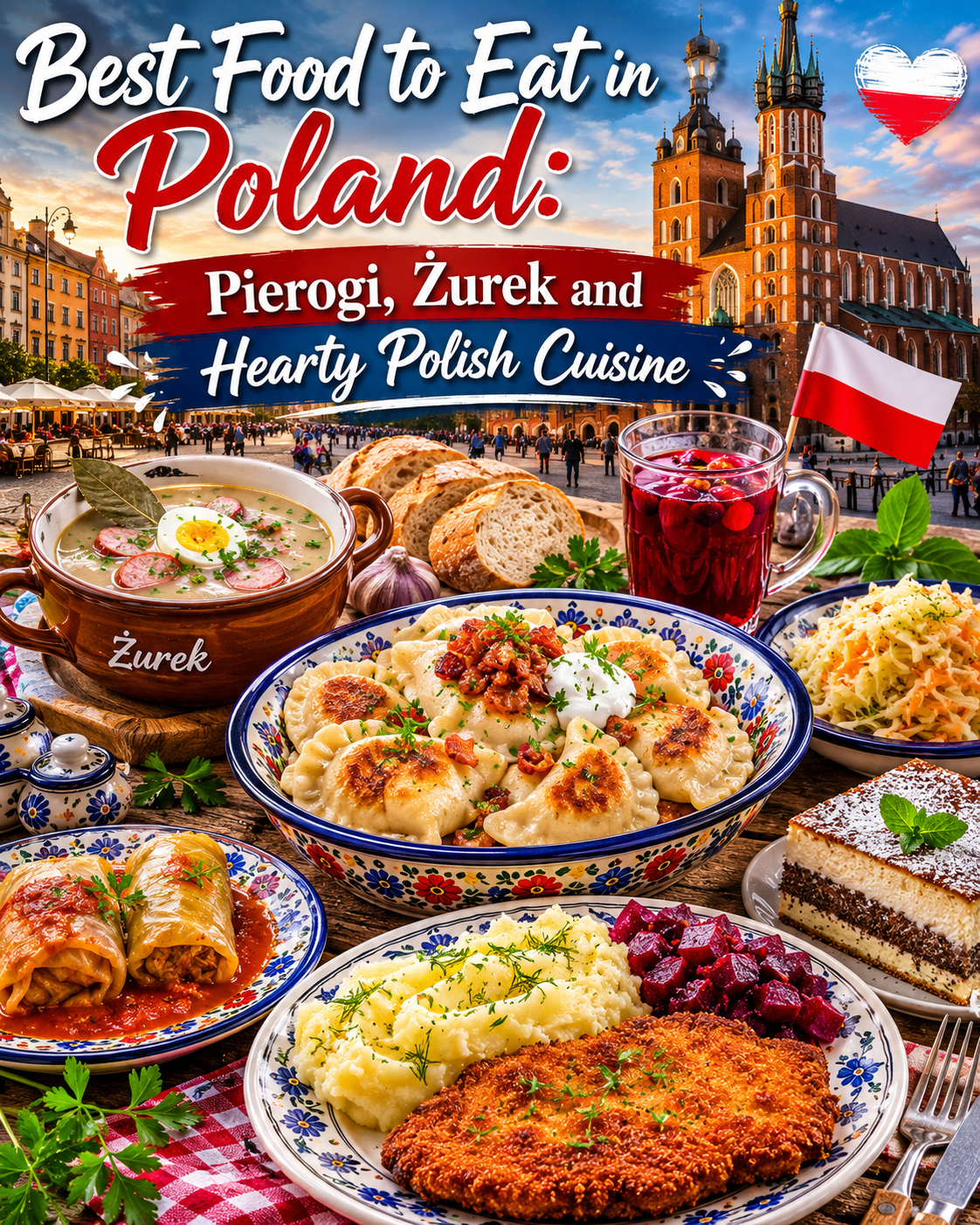
The best food to eat in Poland is Central Europe’s great bargain: a country where handmade pierogi cost less than a Paris coffee, milk bars serve home cooking for the price of a bus ticket, and the culinary tradition runs as deep as anywhere in Europe. If you think Polish food is just sausage and potatoes, you are about to be corrected.
My favorite Polish meal cost about five euros at a Warsaw milk bar: a bowl of sour rye zurek with sausage and egg, a plate of potato-and-cheese pierogi pan-fried in butter, and a glass of cloudy kompot, ordered from a handwritten wall menu by pointing. Polish cooking was forged by long winters and fermentation, and it is hearty, deeply savory, and consistently the best food value in the European Union.
This guide covers the essential dishes, the legendary milk bar culture, regional specialties, prices, and where to find the best of everything from Warsaw to the Tatra Mountains. Poland is one of nine countries in our guide to the best food in Europe.
Pierogi: the dish that defines Poland
Pierogi are to Poland what pasta is to Italy: the foundational dish, the universal comfort food, and the most famous and most popular Polish food both at home and abroad. They are the thing every grandmother makes better than any restaurant. A pierogi is a half-moon dumpling of thin unleavened dough, filled, sealed by pinching the edges, and boiled, then often pan-fried in butter with caramelized onions for a golden, slightly crispy crust.
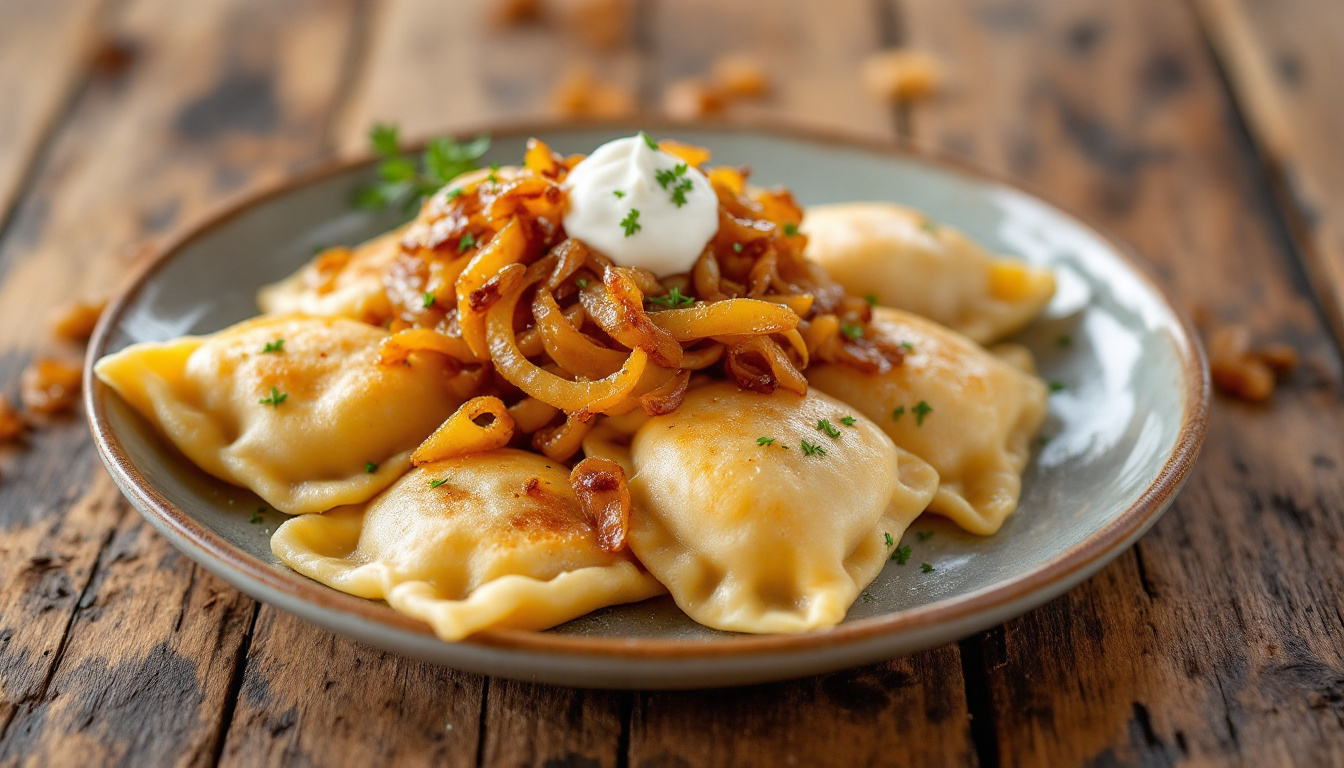
Pierogi Pierogi ruskie, z mięsem, z kapustą
The fillings define the variety. Pierogi ruskie (the most popular) hold mashed potato and tangy twarog cheese; pierogi z miesem are minced pork; pierogi z kapusta i grzybami (sauerkraut and dried forest mushroom) are the Christmas Eve classic; and sweet pierogi z jagodami (blueberry) appear in summer with sour cream and sugar.
A plate of 8 to 12 runs PLN 18 to 30. Skip the tourist places on Krakow‘s main square; the best are handmade daily at milk bars or pierogarnie like Zapiecek in Warsaw, with visible pinch marks and slightly uneven shapes.
Polish soups: the heart of every meal
Poles take soup seriously, and a traditional dinner always starts with one. Many Polish soups are fermented or soured, giving them a tangy depth unique to Central European cooking.
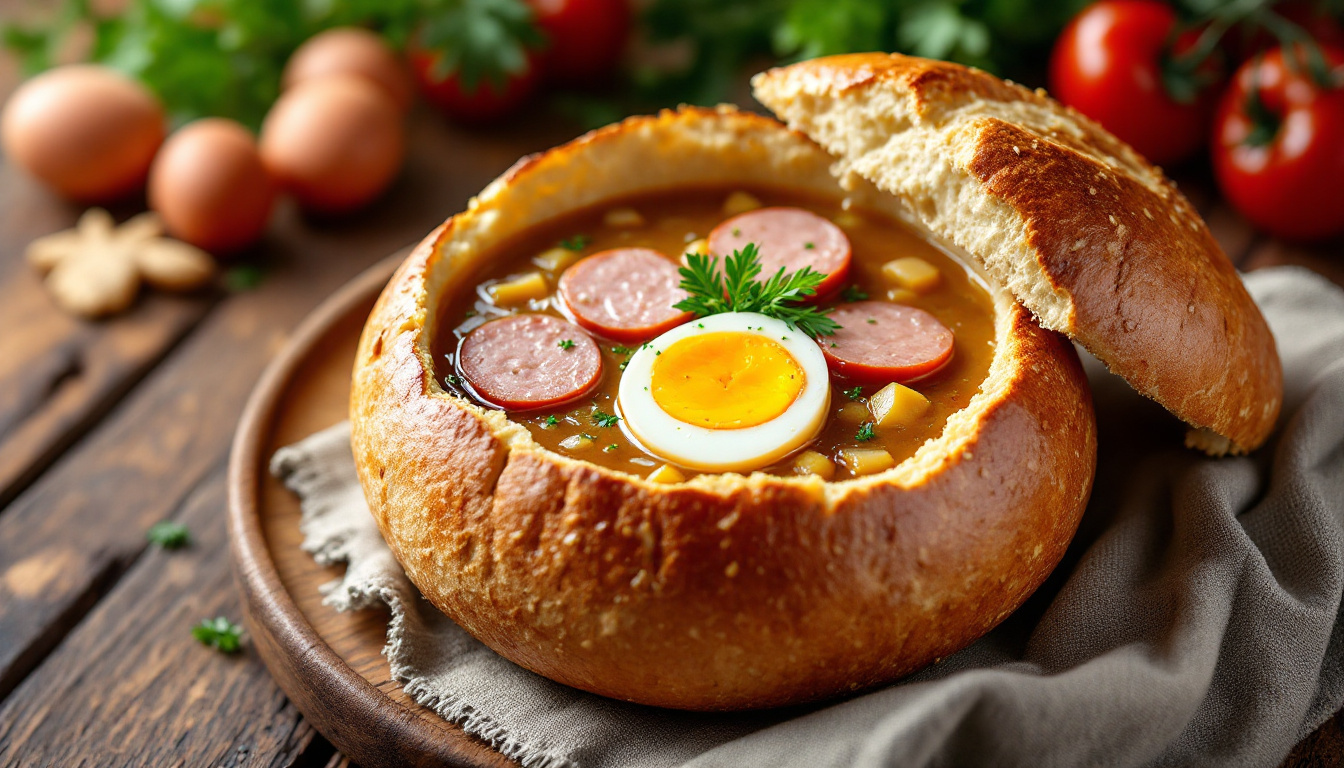
Zurek Zurek (sour rye soup)
A sour, creamy, tangy soup made from fermented rye flour (zur), with chunks of smoked kielbasa, potatoes, and a hard-boiled egg. The fermented base gives a sourness with no equivalent in Western cooking, like a thick savory sourdough broth. Often served in a hollowed bread bowl, especially at Easter.
PLN 18 to 28. The bread bowl is photogenic but goes soggy fast; ask for a regular bowl to taste it properly. It is the single most Polish thing you can eat.
- Barszcz czerwony. Clear, deep-crimson, slightly sour beetroot broth, served in a cup or with uszka (tiny mushroom dumplings); the Christmas Eve centerpiece. PLN 12-22.
- Rosol. Every Polish family’s Sunday opener: golden chicken broth simmered for hours with root vegetables, served with thin egg noodles. PLN 12-20.
- Flaki. Peppery beef tripe soup, deeply traditional and divisive, served at every milk bar.
- Krupnik and grochowka. Thick barley soup with smoked meat, and an army-style split-pea soup heavy enough to be a main.
- Kapusniak and chlodnik. A tangy cabbage-and-sauerkraut soup, and the bright-pink chilled beetroot-buttermilk summer soup with dill and egg.
Polish main dishes: schabowy, bigos and the hearty tradition
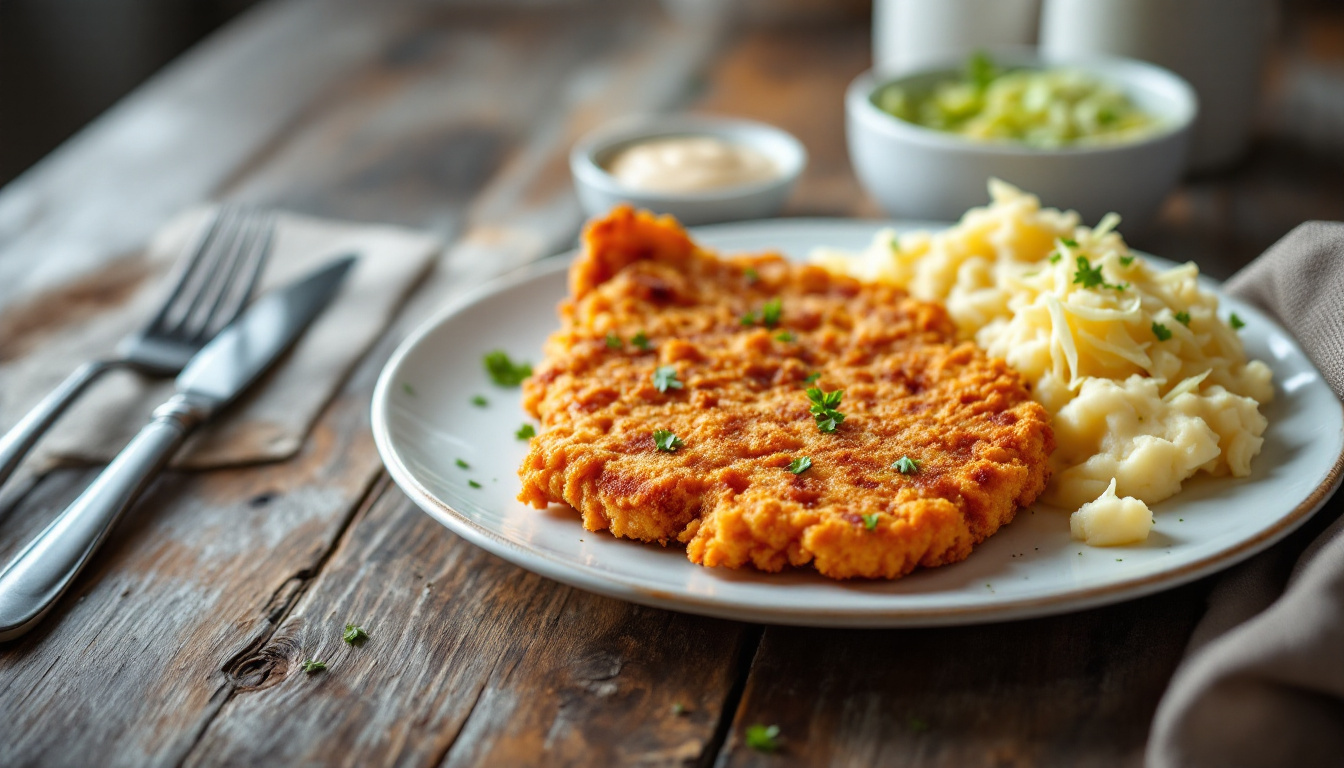
Kotlet Schabowy Kotlet schabowy
A pork cutlet pounded thin, breaded in flour, egg, and breadcrumbs, and fried in clarified butter or lard until golden and crunchy, served with potatoes and surowka (raw shredded-vegetable salad). It is the dish every Polish mother makes on rotation and the backbone of milk-bar menus.
PLN 22 to 35. A great schabowy has a thin, shattering crust and juicy pork inside; the difference is in the even pounding and frying in butter, not oil.
Bigos Bigos (hunter’s stew)
Sauerkraut and fresh cabbage slow-cooked with smoked kielbasa, pork, sometimes game, plus dried mushrooms, prunes, and juniper. Bigos improves with each reheating: many families cook a pot on Monday and eat it through Friday, each day better. Polish literature celebrates it, with a whole passage of Mickiewicz’s Pan Tadeusz devoted to it.
PLN 22 to 35, and at its best in winter.
Golabki Golabki (cabbage rolls)
Blanched cabbage leaves wrapped around minced pork and rice (or buckwheat groats), baked in a slightly sweet-tangy tomato sauce until the cabbage is tender. The name means “little pigeons,” and nobody agrees on why. A Sunday and holiday dish, sometimes enriched with mushrooms.
PLN 20 to 30 for two rolls. Comfort food at its most homely.
Golonka Golonka (pork knuckle)
A whole pork knuckle, often braised in beer or baked until the meat is falling-apart tender and the skin crisps, served with mustard, horseradish, and stewed sauerkraut or peas. It is the great Polish pub-and-beer-hall dish, enormous and meant to be wrestled with over a tankard.
PLN 30 to 50, easily enough for two. Order it where the locals drink, not on the tourist square.
- Tatar. Polish-style steak tartare: hand-chopped raw beef tenderloin with a raw egg yolk, diced pickle, onion, and capers, mixed to taste on dark rye, the classic vodka companion. PLN 30-50.
- Gulasz. Beef or pork braised with onion, paprika, and pepper, milder and more stew-like than the Hungarian version, served over buckwheat groats or potatoes.
- Kluski slaskie. Silesian potato dumplings with a dimple that catches gravy, the classic side with rolled meat (rolada) and red cabbage.
Polish street food: zapiekanka, oscypek and obwarzanek
Zapiekanka Zapiekanka
A halved baguette topped with sauteed mushrooms, melted cheese, and often ham, toasted until crisp, then drizzled with ketchup and garlic sauce. Invented in the 1970s and sold from windows (okienka) across the country. The famous spot is Plac Nowy in Krakow’s Kazimierz, a ring of tiny stalls selling dozens of versions late into the night.
PLN 12 to 25 depending on size. The classic mushroom-and-cheese original still beats the gourmet pulled-pork variants.
- Oscypek. Spindle-shaped smoked sheep’s-milk cheese from the Tatra Mountains, EU PDO-protected, grilled until soft and browned and served with cranberry jam. PLN 5-12. Smoky, salty, and sweet-tart all at once.
- Obwarzanek krakowski. The twisted, boiled-then-baked ring bread sold from blue carts all over Krakow for PLN 2.50-4, quite possibly the ancestor of the bagel. Best warm from the cart.
- Kielbasa z grilla. Grilled coarse pork sausage with mustard and sauerkraut at every market and roadside stall, PLN 8-15. Polish sausage runs to dozens of varieties: biala, krakowska, slaska, lisiecka.
Bar mleczny: Poland’s most valuable dining institution
The bar mleczny (milk bar) is Poland’s greatest contribution to affordable eating. Created in the communist era as subsidized worker canteens, they survive because the food is genuinely good, the prices astonishing, and the experience authentically Polish in a way no tourist restaurant can match.
The routine: enter, study the handwritten Polish-only wall menu, queue at the counter, order, pay, collect your tray, find a seat. A bowl of zurek, a plate of pierogi, a kompot, and a slice of cake runs PLN 20 to 30 total (about €4.50 to 7). The same meal at a tourist restaurant costs three times as much. The best in Warsaw: Bar Prasowy and Bar Bambino; in Krakow, Bar Pod Temida; in Gdansk, Bar Neptun. It is the single best budget food tip in all of Europe.
Regional specialties: Poland is more diverse than you think
Highland (goral) cooking: oscypek and other smoked sheep cheeses, kwasnica (a sharp sauerkraut soup), grilled meats, and hearty mountain fare. Zakopane is the base, with market stalls of cheese and cranberry.
Kluski slaskie (dimpled potato dumplings), rolada (rolled beef) with red cabbage, and a German-influenced Sunday-dinner tradition. The most distinctive regional cuisine in Poland.
The north brings Baltic herring and smoked fish; the east, near Lithuania and Belarus, brings pierogi ruskie, kartacze (potato dumplings stuffed with meat), and the chilled chlodnik summer soup. Poznan in the west claims the rogal swietomarcinski, a rich croissant filled with white poppy seed.
Polish sweets and desserts
- Paczki. Pillowy yeast doughnuts filled with rose-petal jam, plum, or custard, eaten by the million on Fat Thursday (Tlusty Czwartek). PLN 4-8.
- Sernik. Polish cheesecake made with twarog rather than cream cheese, denser and less sweet than the American kind.
- Szarlotka. Apple pie with a thick layer of spiced apple under a crumbly crust, served warm with cream or vanilla ice cream.
- Makowiec. A spiral poppy-seed roll, dense and sweet, central to Christmas and Easter tables.
- Kremowka. A custard-cream slice between sheets of puff pastry, famous as the “papal cream cake” after Pope John Paul II spoke of loving it in his home town of Wadowice.
Vodka, beer, mead and Polish coffee culture
- Vodka (wodka). Poland’s national spirit, drunk ice-cold in shots with food, not mixed. Clear (Belvedere, Wyborowa) and flavored: zubrowka (bison grass), and the honey-spiced and plum varieties.
- Mead (miod pitny). Fermented honey wine, one of the oldest Polish drinks, from dry to syrupy-sweet, a deep traditional pour.
- Beer (piwo). Poland is a serious beer country; Zywiec, Tyskie, and Okocim plus a booming craft scene. Grzane piwo (mulled beer) appears in winter.
- Kompot and coffee. Kompot is the cloudy homemade fruit drink served at milk bars; Polish cafe culture, especially in Krakow and Warsaw, is excellent and modern.
Best food cities in Poland
The food capital for visitors: Kazimierz for zapiekanka at Plac Nowy, obwarzanek from blue carts, milk bars, and the best pierogarnie. Day-trip the Tatras for oscypek.
The deepest milk-bar scene (Bar Prasowy, Bar Bambino), a serious modern-Polish restaurant movement, and the best range from PLN 20 canteens to fine dining.
Gdansk for Baltic herring and the historic Bar Neptun; Poznan for the St Martin’s croissant; Wroclaw for a lively student food and craft-beer scene.
Best food to eat in Poland: the dish guide with prices and ratings
| Dish | Type | Region | Price (PLN / EUR) | Must-try |
|---|---|---|---|---|
| Pierogi ruskie | Dumplings | Nationwide | PLN 18–30 / €4–7 | ★★★★★ |
| Zurek | Soup | Nationwide | PLN 18–28 / €4–6.40 | ★★★★★ |
| Bigos | Stew | Nationwide | PLN 22–35 / €5–8 | ★★★★★ |
| Kotlet schabowy | Main | Nationwide | PLN 22–35 / €5–8 | ★★★★★ |
| Golabki | Main | Nationwide | PLN 20–30 / €4.50–7 | ★★★★☆ |
| Golonka | Main | Nationwide | PLN 30–50 / €7–11 | ★★★★☆ |
| Barszcz czerwony | Soup | Nationwide | PLN 12–22 / €2.70–5 | ★★★★★ |
| Rosol | Soup | Nationwide | PLN 12–20 / €2.70–4.50 | ★★★★☆ |
| Tatar | Appetizer | Nationwide | PLN 30–50 / €7–11 | ★★★★☆ |
| Zapiekanka | Street food | Nationwide | PLN 12–25 / €2.70–5.70 | ★★★★★ |
| Oscypek | Cheese | Tatra Mts | PLN 5–12 / €1.10–2.70 | ★★★★★ |
| Obwarzanek | Street food | Krakow | PLN 2.50–4 / €0.60–0.90 | ★★★★☆ |
| Paczki | Dessert | Nationwide | PLN 4–8 / €0.90–1.80 | ★★★★★ |
| Sernik | Dessert | Nationwide | PLN 12–20 / €2.70–4.50 | ★★★★☆ |
| Kremowka | Dessert | Wadowice | PLN 10–18 / €2.30–4 | ★★★★☆ |
How to eat well in Poland on any budget
Prices here are 2026, in Polish złoty, with rough euro conversions at roughly 4.3 PLN to the euro (Poland uses the złoty, not the euro). Poland is the best food value in the European Union, and the milk bar is the reason why.
Budget: under PLN 60 a day (~€14)
Breakfast of an obwarzanek and coffee (PLN 8). A full milk-bar lunch of soup, pierogi, and kompot (PLN 20 to 30). A zapiekanka at night (PLN 15). Poland is the best food value in the EU, and the milk bars make eating well almost free.
Mid-range: PLN 80 to 150 a day (~€18 to 34)
A sit-down restaurant lunch of schabowy or bigos with surowka (PLN 25 to 40), a dinner with tatar and a craft beer, and dessert. Comfortable, generous eating across proper restaurants.
High-end: PLN 200+ a day (~€46+)
Poland’s modern-Polish fine dining is excellent and underpriced by Western standards. Atelier Amaro (the country’s first Michelin star) and the new wave in Warsaw and Krakow reinterpret zurek, bigos, and foraged ingredients. Tasting menus run a fraction of Paris prices.
Frequently asked questions about Polish food
What is the most popular and typical Polish food?
The most popular and typical Polish foods are pierogi (dumplings), żurek (sour rye soup), bigos (hunter’s stew), kotlet schabowy (breaded pork cutlet) and barszcz (beetroot soup). Pierogi are the single most famous Polish dish worldwide. For the best value, eat them at a milk bar (bar mleczny), where a full plate costs a few euros.
What is the national dish of Poland?
Pierogi are the dish most associated with Poland, with bigos (hunter’s stew) and kotlet schabowy close behind. Zurek, the sour rye soup, is the most uniquely Polish thing you can eat. Each is a strong claim to the national-dish title.
How much does food cost in Poland per day?
Poland is the best food value in the EU. A milk-bar meal runs PLN 20 to 30 (about 4.50 to 7 euro), a restaurant main PLN 22 to 40, and street food like zapiekanka PLN 12 to 25. Budget travelers eat very well on under 60 PLN a day.
What is a milk bar (bar mleczny)?
A bar mleczny is a Polish cafeteria, originally a communist-era subsidized canteen, that still serves cheap home-style cooking. You order from a handwritten Polish menu at a counter, pay, and collect your tray. A full meal costs PLN 20 to 30, and it is the single best budget food tip in Europe.
What is zurek and why is it special?
Zurek is a sour soup made from a fermented rye-flour starter, with smoked sausage, potato, and a hard-boiled egg. The fermentation gives it a tangy depth found in no Western European soup. It is often served in a hollowed bread bowl, especially at Easter, and is widely considered the most uniquely Polish dish.
Is Polish food good for vegetarians?
Better than its meaty reputation suggests. Pierogi ruskie (potato and cheese), pierogi with cabbage and mushroom, placki ziemniaczane (potato pancakes), many soups, and surowka salads are vegetarian. Watch for lard and meat stock in soups, and ask, since milk bars and modern restaurants increasingly mark vegetarian options.
What should I drink with Polish food?
Ice-cold vodka in shots is the classic pairing with tatar, herring, and rich mains, drunk neat with food rather than mixed. Poland is also a strong beer country, and traditional mead (miod pitny) is worth trying. At milk bars, the homemade fruit kompot is the everyday drink.
More food guides waiting for you
Browse our complete collection of European food guides.