Best Food to Eat in India: Regional Dishes Every Traveler Must Try
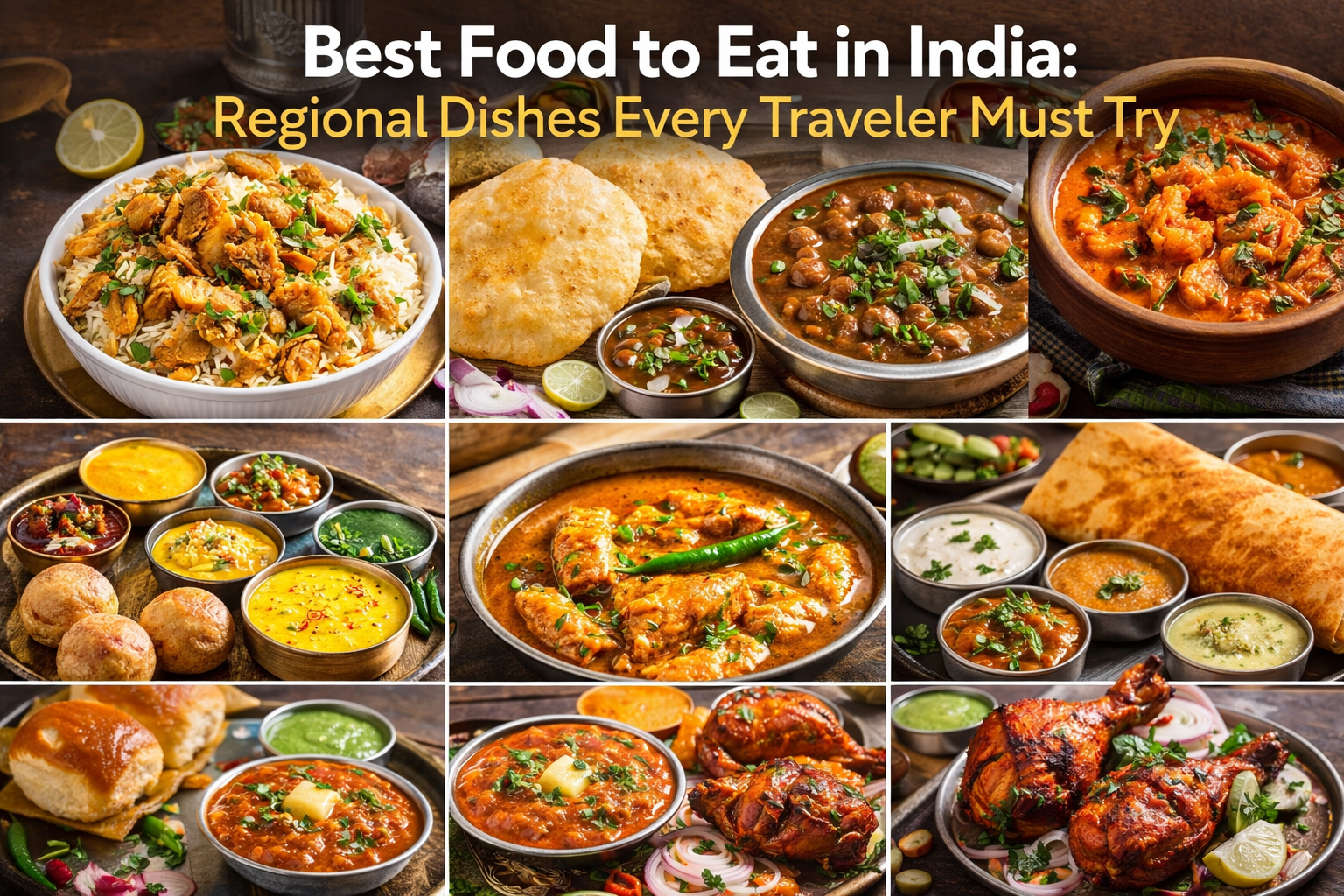
India doesn’t have one cuisine — it has thirty. Every state, every city, sometimes every neighborhood has its own food identity, built over centuries of trade, religion, climate, and culture. From the creamy butter chicken of Punjab to the fiery fish curries of Kerala to the chaat-stacked streets of Old Delhi, eating in India is the most overwhelming, rewarding, and transformative food experience a traveler can have.
Describing “Indian food” as a single thing is like describing “European food” as a single thing — it erases the staggering differences between a Kashmiri rogan josh (slow-braised lamb in a yogurt-saffron gravy), a Hyderabadi dum biryani (layers of spiced rice and meat sealed and slow-cooked), a Goan vindaloo (fiery pork in a vinegar-chili sauce with Portuguese roots), and a Tamil idli-sambar (steamed rice cakes with lentil soup). The common thread is spice — not just chili heat, but elaborate blends of 10, 15, 20 ground spices combined in proportions that took generations to develop. This guide covers the major regional cuisines, 20 must-try dishes, street food essentials, prices, the vegetarian paradise, and the spice survival skills you need.
India is part of our Best Food in Asia guide covering nine top food destinations across the continent.
North Indian Food: Mughlai, Punjabi and the Food Most Westerners Know
When most people outside India think “Indian food,” they’re thinking of North Indian cuisine — specifically Punjabi and Mughlai food. This is the land of tandoor ovens, creamy gravies enriched with butter, cream, and cashew paste, and slow-cooked meats that fall off the bone. The Mughal Empire (16th–19th century) left a culinary legacy that still dominates restaurant menus worldwide: biryani, kebabs, korma, and the entire genre of rich, aromatic meat dishes cooked in yogurt and spice.
Butter chicken (murgh makhani) — where it all started
Invented in Delhi in the 1950s at Moti Mahal restaurant in Daryaganj, butter chicken is India’s most famous dish — tandoori chicken simmered in a velvety tomato sauce enriched with butter, cream, and kasuri methi (dried fenugreek leaves). The original at Moti Mahal is still worth visiting, though the quality is debated. Locals now prefer places like Gulati in Pandara Road Market or Rajinder da Dhaba in Safdarjung. ₹250–500 ($3–6 USD) at local restaurants. The dish that launched a thousand British curry houses, but nothing abroad comes close to the Delhi original.
Tandoori chicken — the smoky icon
Whole chicken marinated in yogurt, red chili powder, ginger-garlic paste, and garam masala, then cooked in a clay tandoor oven at 480°C (900°F). The extreme heat creates a charred, smoky exterior while keeping the inside juicy. The red color comes from Kashmiri chili powder (mild, vibrant red, minimal heat). Served with mint chutney, raw onion rings, and lemon wedges. ₹200–400 ($2.40–4.80 USD) for a half chicken.
Dal makhani — the vegetarian showstopper
Black lentils (urad dal) and kidney beans (rajma) slow-cooked for 12–24 hours with tomatoes, butter, and cream until they reach a thick, velvety, almost meaty consistency. This is the dish that converts meat-eaters to vegetarian food. The best dal makhani in Delhi requires overnight cooking — the lentils break down into a silky puree that coats the back of a spoon. ₹150–300 ($1.80–3.60 USD). At ITC Maurya’s Bukhara restaurant in Delhi, their version (₹1,800 / $21.60 USD) has been served to every visiting head of state for decades.
Rogan josh — Kashmir’s slow-braised lamb
A Kashmiri masterpiece: lamb simmered in a yogurt-based gravy colored deep red by Kashmiri chili and ratanjot (alkanet root), flavored with fennel, cardamom, and dry ginger. Despite the vivid color, it’s not particularly spicy — the Kashmiri chili is all about color and mild warmth, not fire. It’s one of India’s most aromatic dishes, and the lamb (usually goat, which Indians call “mutton”) cooks until it almost melts. ₹300–600 ($3.60–7.20 USD).
Chole bhature — Delhi’s ultimate breakfast
Spiced chickpea curry (chole) served with deep-fried puffy bread (bhature) that puffs into a golden balloon. It’s heavy, rich, and completely irresistible. Eaten for breakfast or lunch across North India, but especially beloved in Delhi and Punjab. The chickpeas are slow-cooked with black tea bags (which darken the gravy) and a complex spice mix including amchur (dried mango powder). Sita Ram Diwan Chand in Paharganj, Delhi, has served the definitive version since 1955. ₹60–120 ($0.72–1.44 USD).
Dhabas are roadside eateries — the truck stops of India — and they serve some of the best North Indian food you’ll find anywhere. Plastic chairs, fluorescent lights, tandoor blazing in the corner, and enormous portions of dal, paneer, and roti for ₹100–200. The dhabas on the highways outside Delhi (especially on the road to Amritsar) are legendary. Don’t judge by appearances — the rougher it looks, the better the food usually is.
South Indian Food: Dosa, Coconut and a Completely Different Universe
South Indian food is as different from North Indian food as Japanese food is from French. Where the north is wheat-based, cream-heavy, and Mughal-influenced, the south is rice-based, coconut-driven, and ancient — its culinary traditions predate the Mughal Empire by centuries. The staples are fermented batters (for dosa and idli), lentils in every form, coconut milk and grated coconut, curry leaves, mustard seeds, and tamarind for sourness instead of tomatoes.
Masala dosa — the crispy crepe
A paper-thin crepe made from a fermented batter of rice and urad dal (black lentils), cooked on a flat griddle until golden and crackly, then filled with spiced potato (masala) and folded or rolled. Served with coconut chutney (creamy, mild), sambar (spicy lentil-vegetable soup), and usually a tomato-onion chutney. The fermentation is the key — the batter rests overnight, developing a slight tanginess that makes the dosa more complex than a simple pancake. Breakfast in Bangalore, Chennai, or Kerala means dosa. ₹60–150 ($0.72–1.80 USD). MTR (Mavalli Tiffin Rooms) in Bangalore, open since 1924, is the benchmark.
Idli and sambar — the steamed breakfast
Soft, fluffy, slightly sour steamed rice cakes (idli) served with sambar and chutney. They look humble — white, round, unassuming — but the texture of a properly made idli is extraordinary: pillow-soft, slightly spongy, and they absorb sambar like a flavor sponge. This is the daily breakfast of 200+ million South Indians. ₹30–80 ($0.36–0.96 USD) for a plate of 3–4 idli.
Hyderabadi dum biryani — the south’s rice masterpiece
Technically, Hyderabad bridges North and South — the Nizam rulers brought Mughlai techniques and married them with local Deccani flavors. Hyderabadi dum biryani layers basmati rice and spiced meat (usually goat) in a heavy-bottomed pot, seals the lid with dough, and slow-cooks over the lowest possible flame for hours. The rice absorbs the meat juices and the spices infuse upward as steam. The result is dramatically different from North Indian Lucknowi biryani — spicier, with a more pungent aroma from green chilies and mint. Paradise Restaurant and Bawarchi in Hyderabad are the institutions. ₹200–400 ($2.40–4.80 USD) for a generous plate.
Appam and stew — Kerala’s Sunday morning
A bowl-shaped, lace-edged rice pancake with a soft, spongy center and crispy rim, made from fermented rice batter with coconut milk. Served with vegetable or chicken stew — a mild, coconut-milk-based curry with potatoes, carrots, and whole spices. The stew is delicately flavored (no fiery heat), and the contrast between the crispy appam edges and the creamy stew is one of the most harmonious combinations in Indian cuisine. ₹80–150 ($0.96–1.80 USD).
The South Indian thali — the complete meal
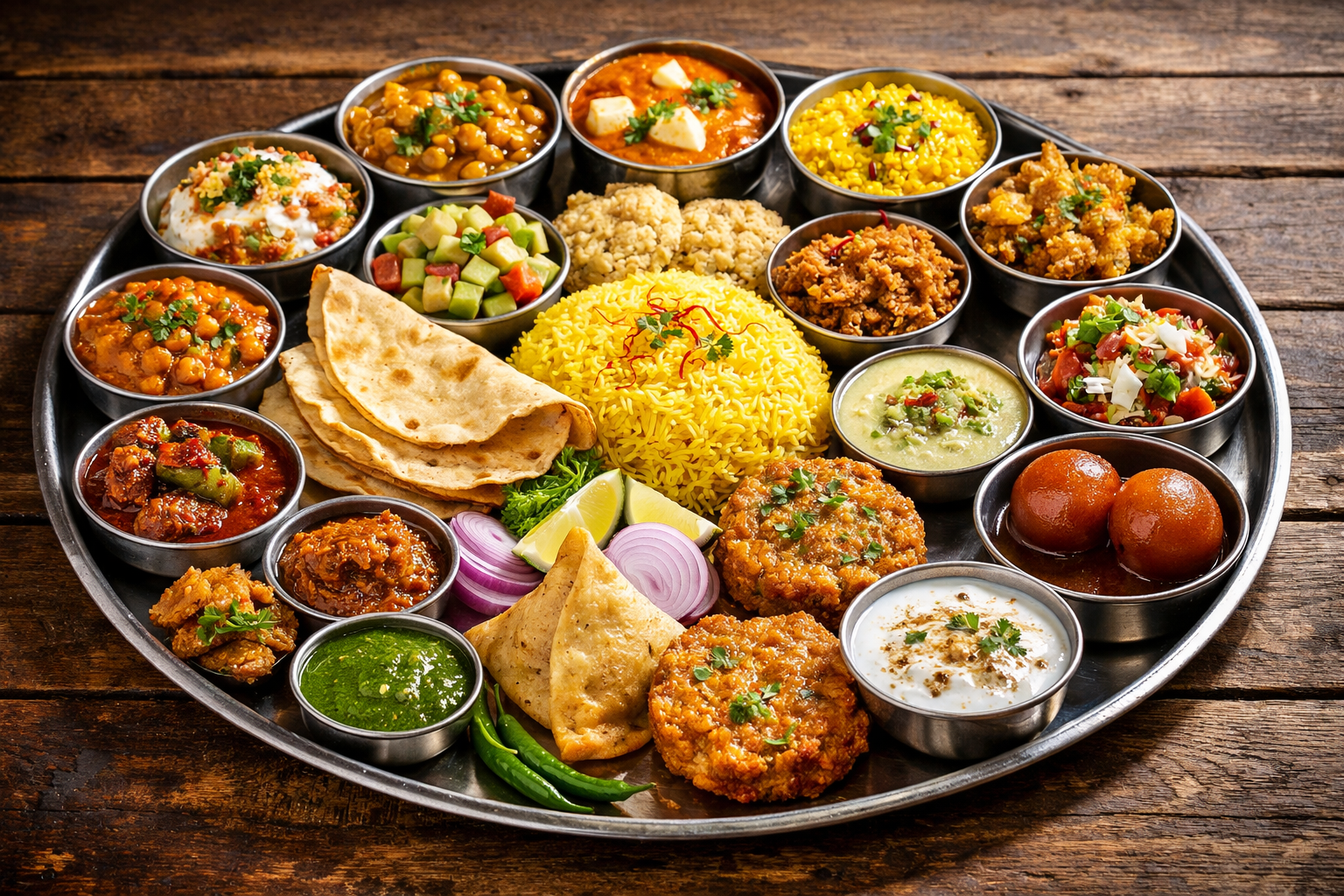
A stainless steel plate with a mound of rice surrounded by 8–15 small bowls (katoris) of sambar, rasam (thin, peppery tomato-tamarind soup), kootu (vegetable-lentil stew), poriyal (dry vegetable stir-fry), pickles, papadum, curd (yogurt), and a sweet. Many restaurants offer unlimited refills — servers circle with pots and ladle more onto your plate until you signal stop. The Saravana Bhavan chain serves an excellent South Indian thali for ₹120–250 ($1.44–3 USD). Unlimited refills at places like Adyar Ananda Bhavan or Murugan Idli Shop are a staggering amount of food for under $2.
In Tamil Nadu and Kerala, the ultimate thali experience is served on a banana leaf. The leaf is placed in front of you, and servers come around depositing rice, curries, pickles, and sweets directly onto it. Eat with your right hand. When finished, fold the banana leaf toward you (folding away from you means you didn’t enjoy the food). This is not a tourist gimmick — it’s daily life in South India.
Indian Street Food: The Greatest on Earth
Indian street food — known collectively as chaat in the north — is arguably the most varied, flavorful, and addictive street food culture anywhere. Every city has its own specialties, its own legendary stalls, and its own fierce loyalty to local preparations. Delhi’s Chandni Chowk, Mumbai’s Chowpatty Beach, Kolkata’s Park Street area, and Lucknow’s Chowk are all world-class street food destinations.
Pani puri (golgappa) — the one-bite explosion
A hollow, crispy, golf-ball-sized shell made from semolina dough, cracked open, filled with spiced chickpeas and potato, then dunked in a tangy, spicy, minty green water (pani). You eat the entire thing in one bite. The shell shatters, the cold spiced water rushes in, and for about three seconds, every flavor receptor in your mouth fires simultaneously. It’s available everywhere for ₹20–40 ($0.24–0.48 USD) for a plate of 6 pieces. The pani puri wallah makes them fresh in front of you — you eat one, he fills the next, repeat until you’re done. Called pani puri in Mumbai, golgappa in Delhi, and puchka in Kolkata — same concept, slightly different preparations.
Vada pav — Mumbai’s $0.25 burger
A spiced potato fritter (vada) — mashed potato mixed with green chili, garlic, mustard seeds, and turmeric, battered in chickpea flour, deep-fried — stuffed into a soft bread roll (pav) with garlic chutney and green chili chutney. It’s Mumbai’s signature street food, eaten by every social class, at every hour of the day. Ashok Vada Pav near Kirti College and Anand Stall outside Mithibai College are legendary. ₹15–30 ($0.18–0.36 USD). It’s the most satisfying thing you can eat for under $0.50 anywhere in the world.
Pav bhaji — Mumbai’s buttery mash
A thick, spiced vegetable mash (potatoes, peas, tomatoes, bell peppers, onions) cooked on a giant flat griddle with obscene amounts of butter, served with toasted, buttered bread rolls (pav). The bhaji is tangy, buttery, and deeply savory — topped with raw onion, a squeeze of lime, and fresh cilantro. It’s spectacularly messy and utterly addictive. Cannon Pav Bhaji at CST station and Sardar near Tardeo are the Mumbai benchmarks. ₹60–120 ($0.72–1.44 USD).
Chaat — Delhi’s sour-spicy-sweet-crunchy art form
Aloo tikki — crispy potato patties topped with chickpea curry, yogurt, tamarind chutney, green chutney, and sev (crispy noodles). Dahi bhalla — soft lentil fritters soaked in spiced yogurt with chutneys. Bhel puri — puffed rice, sev, chopped onions, tomatoes, and chutneys tossed together — Mumbai’s beach snack. Papdi chaat — crispy flour wafers topped with potatoes, chickpeas, yogurt, and chutneys. The defining feature of all chaat is the layering of textures and flavors: crunchy, soft, sour, sweet, spicy, cooling — all in a single bite. Natraj Dahi Bhalle Wala in Chandni Chowk has been making the best dahi bhalla in Delhi since the 1940s. ₹30–80 ($0.36–0.96 USD).
Lucknow’s kebabs — slow-cooked perfection
Galouti kebab — minced lamb ground with 160 spices until it’s paste-smooth, shaped into patties, and pan-fried until they literally melt on the tongue (galouti means “melt in the mouth”). Invented for a toothless Nawab of Lucknow. Seekh kebab — minced meat on skewers, grilled over charcoal. Kakori kebab — Lucknow’s finest, even smoother than galouti, hung-cooked over a low flame. Tunday Kababi in Lucknow’s Chowk has served legendary galouti kebabs since 1905. ₹80–200 ($0.96–2.40 USD).
Don’t eat everything on day one. Start with cooked, hot dishes (samosa, vada pav, dosa). Graduate to chaat on day 2–3. Save pani puri and raw-ingredient chaats for day 4+ once your stomach has adjusted. Drink only bottled water. Carry hand sanitizer. These aren’t fear tactics — they’re strategies that let you eat freely for the rest of the trip without issues.
The Biryani Question: Hyderabadi vs. Lucknowi vs. Kolkata
No food topic generates more passionate debate in India than biryani. Every city claims the best version. Friendships have been tested. Twitter wars have been waged. At its core, biryani is layers of basmati rice and spiced meat slow-cooked together — but the regional variations are so different they’re almost different dishes.
Hyderabadi dum biryani
Raw marinated meat layered with partially cooked rice, sealed in a heavy pot (handi) with dough, and cooked over the lowest flame for hours (dum pukht). Spicy, aromatic, with whole green chilies, mint, and saffron-soaked milk drizzled on top. The bottom layer develops a caramelized crust (called tahdig or khurchan). Paradise, Bawarchi, and Shah Ghouse in Hyderabad. ₹200–400 ($2.40–4.80 USD).
Lucknowi (Awadhi) biryani
The meat is pre-cooked in a rich, yogurt-heavy gravy, then layered with fully cooked rice and sealed for a final dum. The result is milder, more refined, and subtler than Hyderabadi — the meat is falling-apart tender and the rice grains are perfectly separate. Idris Biryani and Wahid Biryani in Lucknow. ₹150–300 ($1.80–3.60 USD).
Kolkata biryani
Brought by the exiled Nawab of Awadh in 1856, Kolkata biryani has a unique twist: a whole potato (aloo) in every serving, added because the Nawab’s reduced fortunes meant less meat. The potato absorbs the biryani spices and becomes the highlight. Lighter on spice, sweeter, and with a distinctive rose water aroma. Arsalan and Aminia in Kolkata. ₹150–250 ($1.80–3 USD).
Biryani layers raw/semi-cooked rice with raw/cooked meat and uses dum (sealed, slow-cooked). Pulao cooks rice and meat together in a single pot — it’s one-pot, less complex. Indians take this distinction seriously. Calling someone’s biryani a “pulao” is a genuine insult. If in doubt, just say biryani.
Indian Breads: From Naan to Dosa — A Complete Guide
Bread in India is not an afterthought — it’s the vehicle for everything. No curry is complete without something to scoop it up. The variety is staggering, and each type serves a different purpose.
Naan — leavened bread baked on the inner wall of a tandoor oven. Soft, slightly charred, with air pockets. Garlic naan and butter naan are the popular variants. ₹30–60. Roti/chapati — unleavened whole wheat flatbread, cooked on a flat griddle (tawa). The everyday bread of North India — lighter and healthier than naan. ₹10–20. Paratha — layered, flaky flatbread, often stuffed with potato (aloo paratha), cauliflower (gobi paratha), or paneer. Breakfast in Punjab and Delhi. ₹30–80 with butter and pickle.
Puri — small rounds of wheat dough deep-fried until they puff into golden balloons. Served with chole (chickpea curry) or aloo sabzi. Bhatura — the bigger, softer, more indulgent cousin of puri. Kulcha — a softer, thicker tandoor bread, often stuffed with onion or paneer. The Amritsari kulcha (stuffed with spiced potato) is legendary.
Dosa — the South Indian crepe (covered above). Uttapam — a thicker, softer South Indian pancake topped with onions, tomatoes, and chilies. Appam — the bowl-shaped Kerala rice pancake. Each region has its own bread tradition, and they’re all worth exploring.
India: The World’s Greatest Vegetarian Food Destination
Nowhere else on Earth comes close to India for vegetarian food. This isn’t a country where vegetarian means a sad salad or a plate of steamed vegetables. In India, vegetarian food is the cuisine — developed over thousands of years, driven by Hindu, Jain, and Buddhist dietary traditions, and comprising some of the most complex, satisfying, and flavorful dishes you’ll eat anywhere.
The essential vegetarian dishes
Paneer butter masala — cubes of fresh Indian cottage cheese in the same creamy tomato gravy as butter chicken. Rich, mild, and universally loved. Dal makhani — the slow-cooked black lentils described above. Aloo gobi — potato and cauliflower dry-roasted with turmeric, cumin, and green chilies — simple, homey, and deeply satisfying. Palak paneer — paneer cubes in a thick, creamy spinach sauce. Malai kofta — deep-fried paneer-and-potato balls in a rich cashew-cream gravy. Chana masala — chickpeas in a tangy, spiced tomato sauce.
Rajasthani dal baati churma — a Rajasthani specialty: hard wheat balls (baati) baked over camel-dung fire (yes, really), crushed, drenched in ghee, and served with five types of dal and a sweet crumble (churma). It’s rich enough to fuel a desert warrior. ₹150–300 ($1.80–3.60 USD).
Gujarat’s thali — the most elaborate vegetarian meal in India. A Gujarati thali can have 15–20 items: multiple dals, kadhi (yogurt curry), vegetable dishes, farsan (snacks), rotli (thin chapati), rice, pickles, chutneys, and sweets. It’s a complete nutritional symphony. Agashiye restaurant in Ahmedabad serves it on a rooftop with a view of the old city. ₹200–500 ($2.40–6 USD).
Restaurants labeled “Pure Veg” or “Jain Food” in India have completely meat-free kitchens — no cross-contamination, no hidden fish sauce, no chicken stock. Jain restaurants go even further, excluding onion and garlic. For strict vegetarians and vegans, India is the easiest country in the world to navigate. For more plant-based travel destinations, see our Vegetarian and Vegan Food Travel Guide.
Coastal India: Fish Curries of Goa, Kerala and Bengal
India’s 7,500 km coastline produces seafood traditions that rival any maritime cuisine in the world — but they’re far less known internationally than the butter chicken–naan complex of the north.
Kerala fish curry (meen curry)
Kingfish or seer fish simmered in a thin, fiery, tamarind-red curry made with kokum (a sour fruit), coconut milk, and an avalanche of Kashmiri chilies. Cooked in a clay pot (manchatti), which adds its own earthy flavor. Served with appam or plain rice. The curry improves overnight — day-two fish curry is a prized thing in Kerala homes. ₹150–300 ($1.80–3.60 USD) at restaurants. Kerala backwater houseboats serve fresh catch of the day as fish curry lunch — one of India’s great food experiences.
Goan fish curry rice (xitt kodi)
Goa’s soul food — any fresh fish (pomfret, mackerel, kingfish) simmered in a thin, sour, coconut-based curry with kokum, tamarind, and a paste of red Kashmiri chilies, turmeric, and grated coconut. Eaten with plain white rice. It’s the daily lunch of every Goan household, Catholic and Hindu alike. The Portuguese influence shows in other Goan dishes: vindaloo (pork in vinegar-chili sauce, nothing like the British curry house version), xacuti (a complex chicken or lamb curry with poppy seeds and roasted coconut), and bebinca (a layered coconut pudding dessert). ₹150–350 ($1.80–4.20 USD) at beach shacks.
Bengali fish — the other rice-and-fish tradition
Bengalis are obsessed with fish — especially ilish (hilsa), a bony, oily river fish considered the king of Bengali cuisine. Ilish cooked in mustard paste (shorshe ilish) is the state’s most celebrated dish — pungent, rich, and unlike any fish dish you’ve had before. Chingri malai curry (prawns in coconut cream and mustard) and macher jhol (everyday fish stew with turmeric and cumin) are other Bengali essentials. Kolkata is the city for this — 6 Ballygunge Place and Bhojohori Manna are excellent. ₹200–500 ($2.40–6 USD).
Indian Sweets and Desserts: The Sugar Rush of a Lifetime
India’s sweet tradition (mithai) is ancient, elaborate, and intensely sweet — this is not subtle European patisserie. Indian sweets are soaked in sugar syrup, enriched with ghee, flavored with cardamom and saffron, and often decorated with edible silver leaf (vark). Every celebration, every festival, every milestone is marked by sweets.
Gulab jamun — deep-fried balls of milk solids (khoya) soaked in rose-cardamom sugar syrup until they’re spongy and dripping. The king of Indian sweets. ₹20–50 per piece. Rasgulla — soft, spongy balls of fresh chenna (cottage cheese) in light sugar syrup. A Bengali specialty that Odisha also claims. Jalebi — batter piped in spirals into hot oil, deep-fried until crispy, then soaked in saffron-cardamom sugar syrup. Eaten hot for breakfast with rabri (thickened milk) in Old Delhi — Old Famous Jalebi Wala at Chandni Chowk has been making them since the 1880s. ₹40–80 ($0.48–0.96 USD).
Kulfi — dense Indian ice cream made by slowly reducing milk for hours, flavored with pistachio, saffron, mango, or malai (cream). Richer and denser than Western ice cream because it’s not churned. Ras malai — flattened chenna discs in sweet, thickened, cardamom-saffron milk. Mysore pak — a South Indian sweet made from chickpea flour, ghee, and sugar — meltingly soft. Sandesh — Bengali fresh cheese sweets in delicate shapes, lightly sweetened — the most refined of Indian sweets.
Chai, Lassi and Indian Drinks
Masala chai — India’s lifeblood. Black tea simmered with milk, sugar, and spices (cardamom, ginger, cinnamon, cloves). Served in tiny cups or clay kulhads (which add an earthy flavor) at chai stalls on every street corner. ₹10–20 ($0.12–0.24 USD). Chai in India is not the overpriced, over-spiced “chai latte” of Western coffee shops — it’s simpler, milkier, and better. The morning ritual of chai with biscuits is sacred.
Lassi — a yogurt-based drink, sweet (meethi lassi) or salted (namkeen lassi). Punjabi lassi is thick enough to stand a spoon in. Mango lassi uses Alphonso mango pulp. The legendary lassi shops of Varanasi serve it in clay cups the size of flower pots. ₹30–80 ($0.36–0.96 USD). Buttermilk (chaas) — thin, salted, spiced yogurt drink, served cold — the best thing in Indian heat.
Filter coffee — South India’s answer to chai. Strong, decocted coffee brewed in a traditional brass filter, mixed with boiled milk and sugar, poured back and forth between two steel tumblers from a height to create a froth. The most theatrical cup of coffee in the world. ₹20–40 ($0.24–0.48 USD). Indian Coffee House chain and Brahmin’s Coffee Bar in Bangalore are institutions. For more on Indian coffee’s place in global coffee culture, see our Best Coffee Around the World guide.
Nimbu pani — fresh lime water with sugar, salt, and sometimes cumin. Sugarcane juice (ganne ka ras) — pressed fresh at street stalls with ginger and lime. The most refreshing drink in Indian summer heat. ₹20–30 ($0.24–0.36 USD).
Best Food Cities in India
🏛️ Delhi — The everything capital
Every Indian regional cuisine represented, plus the world’s best Mughlai food and legendary street chaat. Old Delhi’s Chandni Chowk is one of the great food streets of the world.
🌊 Mumbai — Street food capital
India’s most fast-paced food city. Vada pav at every corner, pav bhaji on Juhu Beach, and some of the best restaurants in Asia.
🍚 Hyderabad — Biryani kingdom
The biryani capital of India, with a distinctive Deccani cuisine blending Mughlai and South Indian flavors.
🐟 Kolkata — Sweets and fish
India’s sweet capital and Bengali fish cuisine. A food city where every conversation eventually returns to what’s for dinner.
🌿 Bangalore & Chennai — South Indian heartland
Dosa, idli, filter coffee, and the most underrated food scene in India.
🕌 Lucknow — Kebab capital
The refined Nawabi cuisine of Awadh — slow-cooked, delicate, and meat-obsessed.
Complete Indian Dish Guide: Prices, Regions and Must-Try Rating
| Dish | Type | Region | Price (₹ / USD) | Veg? | Must-Try |
|---|---|---|---|---|---|
| Butter Chicken | Curry | Delhi / Punjab | ₹250–500 / $3–6 | No | ★★★★★ |
| Hyderabadi Biryani | Rice | Hyderabad | ₹200–400 / $2.40–4.80 | No | ★★★★★ |
| Masala Dosa | Crepe | South India | ₹60–150 / $0.72–1.80 | Yes | ★★★★★ |
| Pani Puri | Street food | Nationwide | ₹20–40 / $0.24–0.48 | Yes | ★★★★★ |
| Chole Bhature | Breakfast | Delhi / Punjab | ₹60–120 / $0.72–1.44 | Yes | ★★★★★ |
| Dal Makhani | Lentils | Punjab | ₹150–300 / $1.80–3.60 | Yes | ★★★★★ |
| Rogan Josh | Curry | Kashmir | ₹300–600 / $3.60–7.20 | No | ★★★★★ |
| Vada Pav | Street food | Mumbai | ₹15–30 / $0.18–0.36 | Yes | ★★★★★ |
| Tandoori Chicken | Tandoor | Punjab | ₹200–400 / $2.40–4.80 | No | ★★★★★ |
| Galouti Kebab | Kebab | Lucknow | ₹80–200 / $0.96–2.40 | No | ★★★★★ |
| Paneer Butter Masala | Curry | North India | ₹150–350 / $1.80–4.20 | Yes | ★★★★☆ |
| South Indian Thali | Complete meal | South India | ₹80–250 / $0.96–3 | Yes | ★★★★★ |
| Pav Bhaji | Street food | Mumbai | ₹60–120 / $0.72–1.44 | Yes | ★★★★☆ |
| Kerala Fish Curry | Seafood | Kerala | ₹150–300 / $1.80–3.60 | No | ★★★★★ |
| Idli Sambar | Breakfast | South India | ₹30–80 / $0.36–0.96 | Yes | ★★★★☆ |
| Kolkata Biryani | Rice | Kolkata | ₹150–250 / $1.80–3 | No | ★★★★☆ |
| Aloo Paratha | Bread | Punjab / Delhi | ₹30–80 / $0.36–0.96 | Yes | ★★★★☆ |
| Jalebi | Sweet | North India | ₹40–80 / $0.48–0.96 | Yes | ★★★★☆ |
| Gulab Jamun | Sweet | Nationwide | ₹20–50 / $0.24–0.60 | Yes | ★★★★☆ |
| Masala Chai | Drink | Nationwide | ₹10–20 / $0.12–0.24 | Yes | ★★★★★ |
Eating Etiquette in India
Eat with your right hand — the left hand is considered unclean. Tear bread with your right hand, mix rice and curry with your fingertips, and push food into your mouth with your thumb. It feels awkward for the first meal; by the third, it feels natural. Cutlery is available at most restaurants, but eating with your hands is the traditional way and many Indians believe food tastes better this way.
Sharing is the default — Indian meals (especially thali and family-style restaurant dinners) are designed to be shared. Ordering multiple dishes and eating from common plates is the norm. At home, the host will insist on serving you more food. Saying “no” once is considered polite reluctance — you’ll need to refuse 2–3 times firmly before they stop. This isn’t aggressive, it’s warmth.
Finish your plate — wasting food is frowned upon. Take small portions and go back for more rather than loading up and leaving leftovers.
Wash your hands before and after — restaurants always have a sink or a water jug and bowl for hand washing. It’s expected that you wash before eating.
Shoes off sometimes — at traditional restaurants (especially South Indian banana-leaf places), you may eat seated on the floor. Remove your shoes before entering the dining area.
For more dining customs worldwide, see our Food Etiquette Around the World guide.
How to Eat Well in India on Any Budget
Budget: under ₹400/day ($4.80 USD)
Breakfast: idli-sambar or aloo paratha at a street stall (₹30–60). Lunch: thali at a local restaurant — unlimited refills (₹80–150). Dinner: street chaat or rice and dal at a dhaba (₹60–100). Chai throughout the day (₹30 total). Snacks: samosa, vada pav (₹20–40). Total: ₹220–380. This isn’t deprivation eating — it’s how hundreds of millions of Indians eat every day, and the food is outstanding.
Mid-range: ₹800–2,000/day ($9.60–24 USD)
Breakfast: chole bhature or dosa at a sit-down restaurant (₹100–200). Lunch: biryani or butter chicken with naan at a mid-range restaurant (₹300–500). Dinner: izakaya-style sharing meal with multiple curries, breads, and drinks (₹300–800). Dessert: kulfi or gulab jamun (₹50–100). This budget gets you the best restaurants in most cities outside Mumbai and Delhi.
High-end: ₹3,000+/day ($36+ USD)
India’s fine dining is world-class and shockingly affordable by global standards. Indian Accent in Delhi (modern Indian, Asia’s 50 Best), Masala Library in Mumbai, Karavalli in Bangalore (coastal Indian). A tasting menu at Indian Accent: ₹5,000–8,000 ($60–96 USD) — comparable to a $200+ meal in New York. Even at the high end, India delivers extraordinary value.
Explore More Asian Cuisines
India is one of nine countries in our Best Food in Asia guide. Here’s how Indian food connects to its Asian neighbors:
🇹🇭 Best Food to Eat in Thailand — Thai massaman curry descended directly from Indian masala traditions via trade routes. Indian roti became Thai roti. The flavor connection is centuries deep.
🇲🇾 Best Food to Eat in Malaysia — Malaysia’s Indian population brought roti canai, banana leaf meals, and fish head curry. Malaysian-Indian food is its own brilliant fusion.
🇯🇵 Best Food to Eat in Japan — Japanese curry was adapted from Indian curry via the British Navy. Taste the evolution: same ancestor, completely different descendants.
🇻🇳 Best Food to Eat in Vietnam — Vietnamese curry (ca ri ga) traces back to Indian spice traders. The French-Indian-Vietnamese connection runs through Pondicherry.
For the best vegetarian destinations worldwide, including India’s top spot, see our Vegetarian and Vegan Food Travel Guide. For India’s coffee culture in global context, check Best Coffee Around the World.