The best food in Majorca is nowhere near the beach. Skip the resort strips of Magaluf and Arenal, drive twenty minutes inland into Es Pla, and you land in a different island: stone villages, almond groves, black pigs, and family restaurants built inside 300-year-old wine cellars. I came expecting paella and sangria. I left obsessed with a fried-vegetable dish called tombet and a coiled pastry I now order by the box.
Why Majorca’s food is worth leaving the beach for
Majorca’s real cooking lives inland, in the flat farming heart called Es Pla, not on the coast where the package hotels are. The island feeds itself the way it has for centuries: pork from the porc negre (the native black pig), almonds from groves that turn the countryside white with blossom every February, vegetables from small huertas, and bread at every meal.
Two things shape the flavor here. The first is the black pig, which gives the island its great cured products, above all sobrassada. The second is the celler, a traditional restaurant set inside an old wine cellar, where towns like Inca and Sineu still serve slow, heavy, brilliant country food under huge oak barrels. This is an island in Spain, so it shares the Spanish love of small plates and cured meat that you can read about in our full guide to the best food to eat in Spain, but the Balearic table has its own dialect, much of it closer to Catalonia than to Madrid.
The best food in Majorca, dish by dish
The best food in Majorca is mostly humble, vegetable-heavy and built on pork, bread and almonds. These are the ten dishes I would order first, with rough prices as of 2026 and where each one belongs.
Tombet tumbet
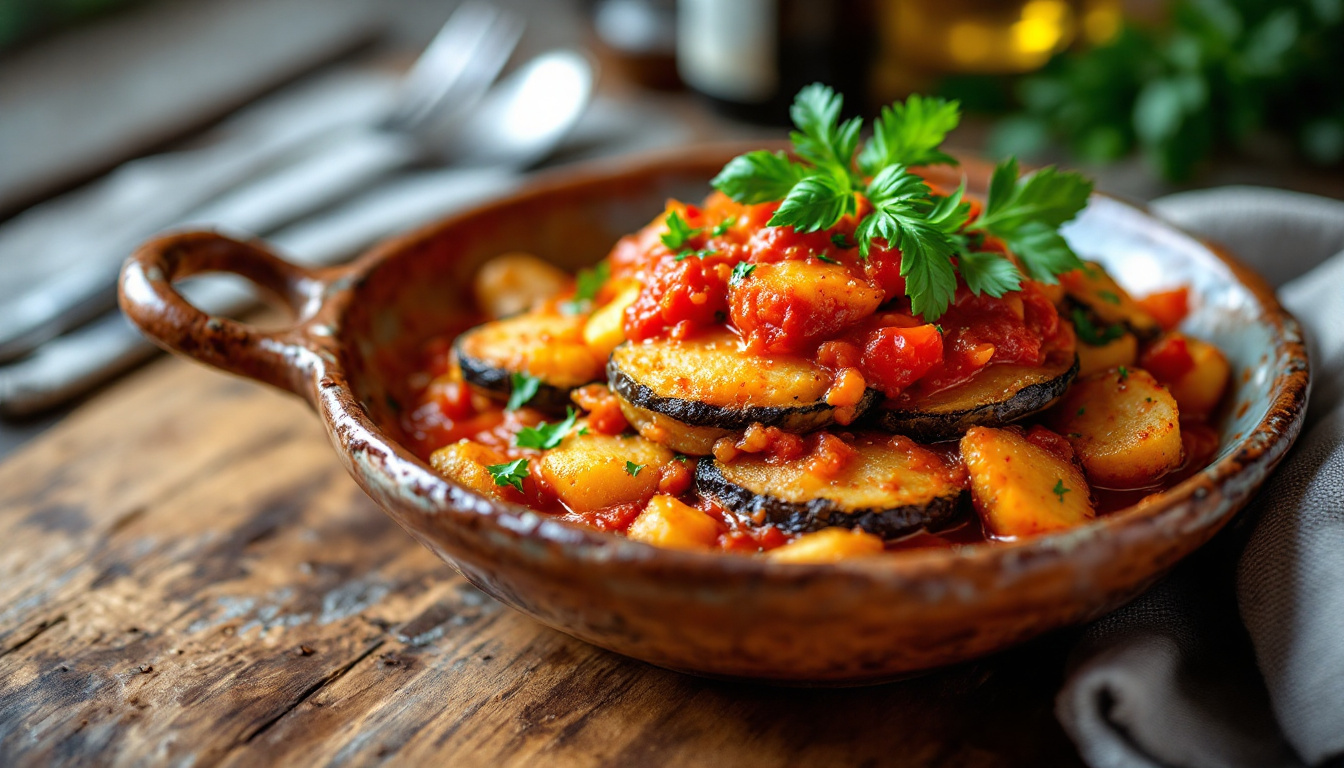
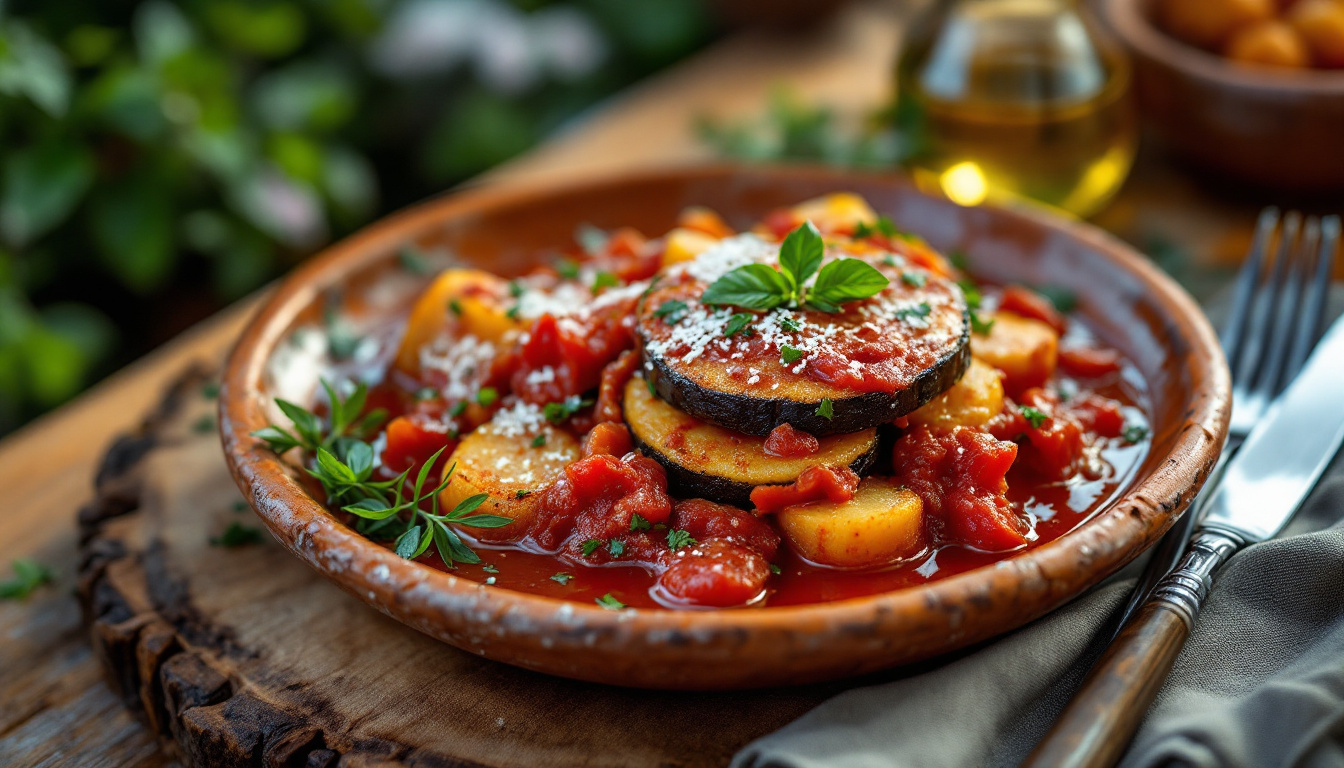
Tombet is Majorca’s signature vegetable dish and the one I’d put on the island’s flag. Slices of potato, aubergine and red pepper are fried separately, layered in a clay dish, then drowned in a simple tomato sauce and baked. That is it, and that is why it works: each vegetable keeps its own texture under the sweet, garlicky tomato. The classic version is fully vegetarian, though you’ll see it topped with fish or lamb in some kitchens. Order it as a main in summer when the peppers are at their best.
Ensaïmada ensaïmada de Mallorca
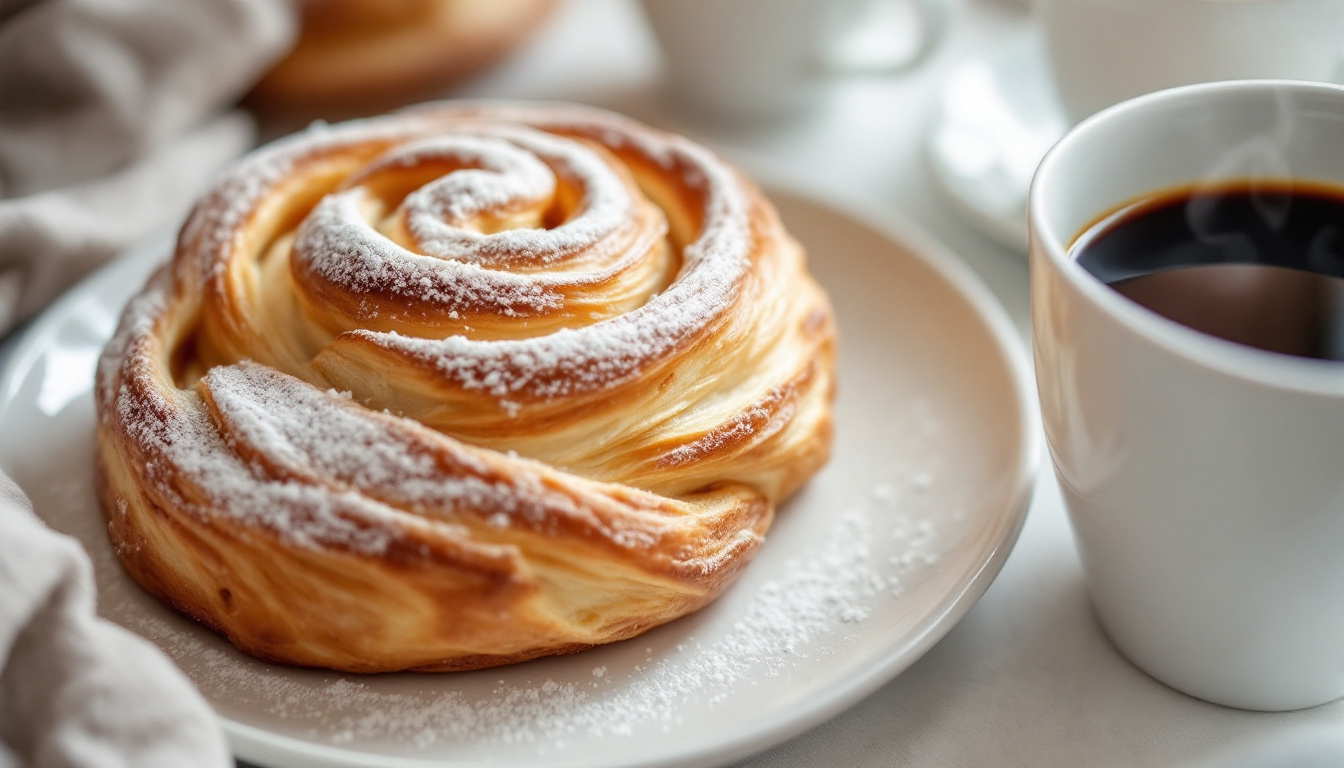
The ensaïmada is the pastry every local carries home in a giant hexagonal box. It is a coil of feather-light yeasted dough enriched with saïm (pork lard), proved slowly, then dusted with icing sugar. The plain one (llisa) is breakfast with a coffee; the larger ones come filled with cabell d’àngel (candied pumpkin) or cream for celebrations. It carries a protected IGP status, so the real thing is made on the island, not frozen. Eat it fresh and soft, never the shrink-wrapped airport version.
Sobrassada sobrassada de Mallorca
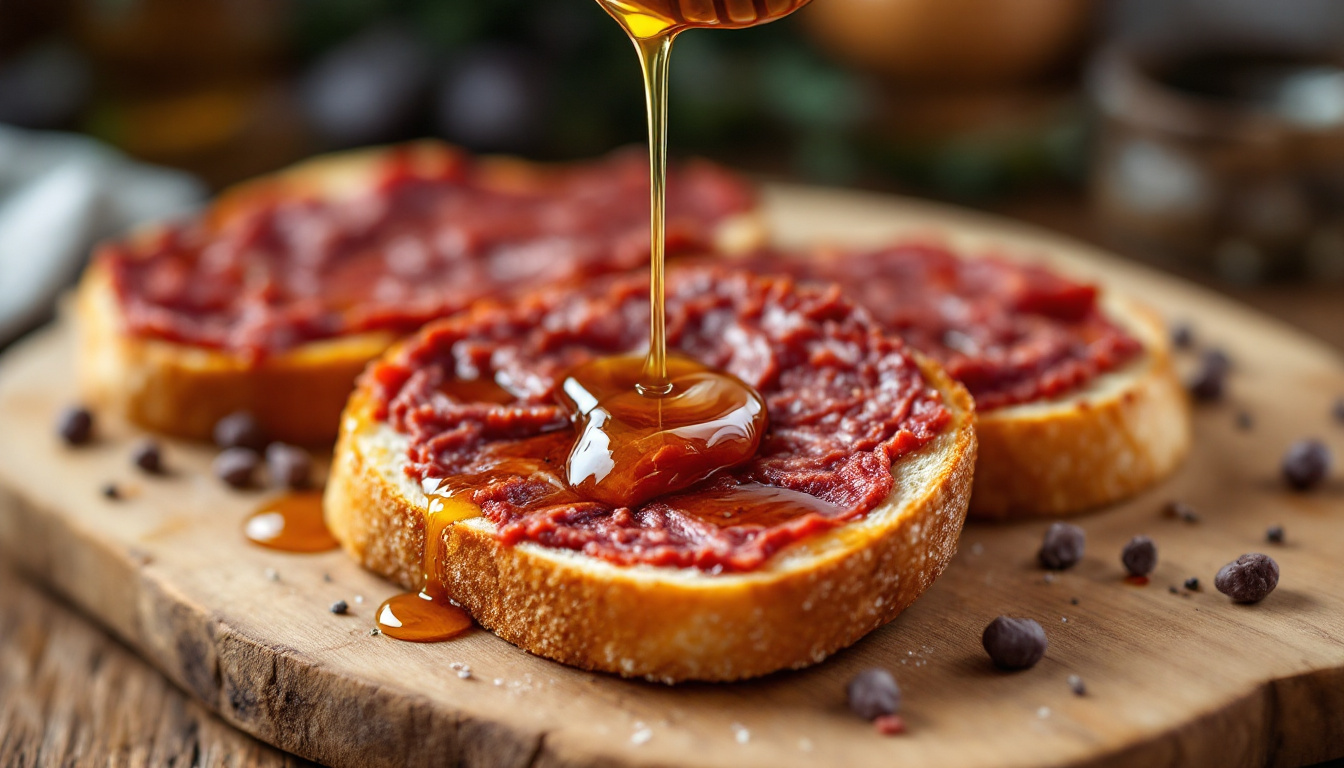
Sobrassada is a soft, spreadable cured sausage, deep red from paprika (pebre bord) and rich with the fat of the island’s pigs. The premium grade, sobrassada de Mallorca de porc negre, comes from the native black pig and carries its own IGP. Unlike a hard salami, you spread it: onto warm bread, often with a drizzle of honey that cuts the fat, or melted into rice and stews. It is the single most Majorcan thing in any pantry on the island.
Pa amb oli pa amb oli
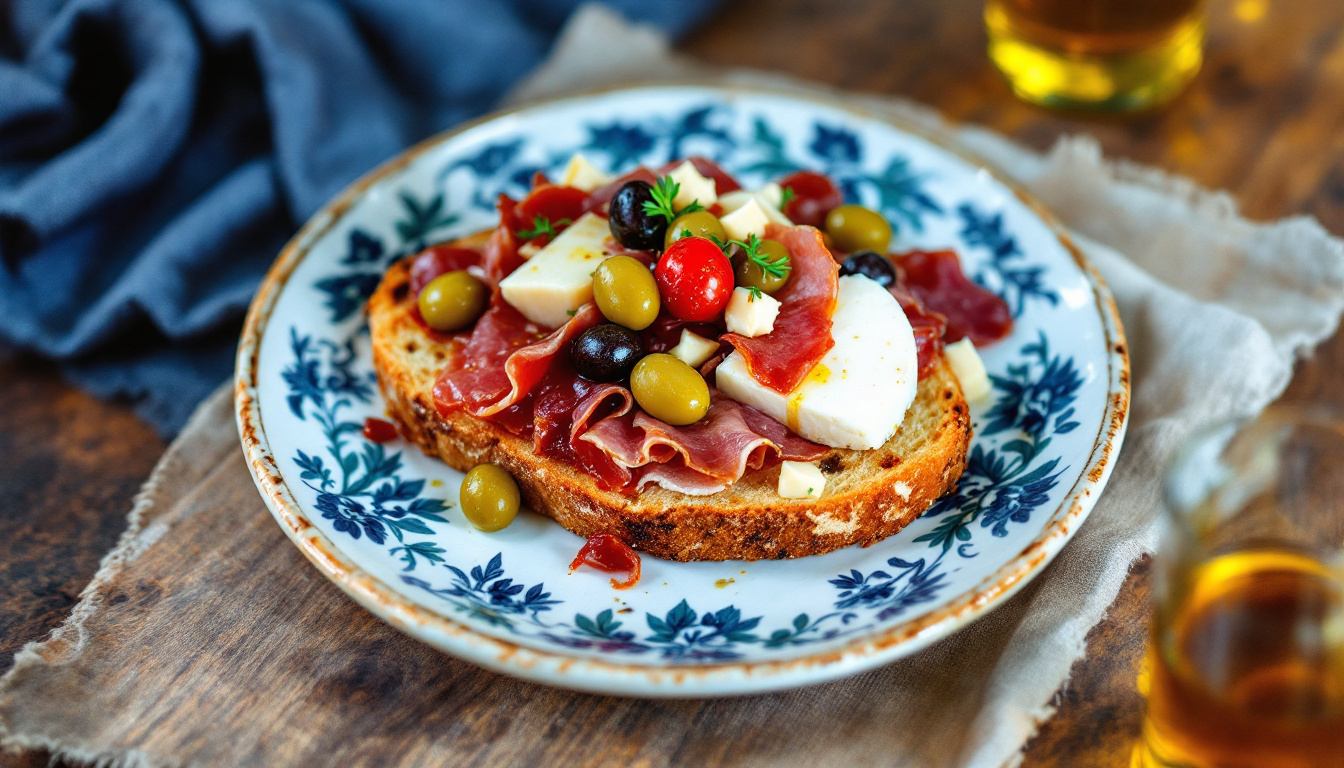
Pa amb oli is the Balearic foundation meal: dense country bread rubbed with ripe tomàtiga de ramellet, good olive oil and salt, then loaded with cheese, cured meats or olives. It is the everyday cousin of Barcelona’s pa amb tomàquet, but heartier and treated as a full plate rather than a starter. A pa amb oli bar will bring you the bread and toppings to build your own. Skip the meat and it is one of the easiest vegetarian meals on the island.
Frit mallorquí frit mallorquí
Frit mallorquí is the island’s nose-to-tail classic: lamb or pork offal fried hard with potatoes, red pepper, spring onion and fennel until everything crisps at the edges. It is gutsy, savory and traditionally tied to the matances pig slaughter and to Easter lamb. If offal is not your thing, look for frit de peix, the same idea built around fish and seafood. Either version is a marker that you’ve left the tourist menu behind.
Coca de trampó coca de trampó
Coca de trampó is Majorca’s answer to pizza, minus the cheese. A thin, oily flatbread base is topped with trampó, the island’s chopped salad of tomato, green pepper and onion, then baked until the edges go crisp. It is sold by the slab in every bakery through summer and eaten warm or at room temperature as a snack. The same trampó served raw with bread is one of the best things to order on a hot day.
Arròs brut arròs brut
Arròs brut, literally “dirty rice”, is the warming soupy rice that inland Majorca eats in the cold months. It is loose and brothy, not a dry paella, built on rabbit, pork or game, a spoonful of sobrassada, saffron and warm spices like cinnamon and clove that stain the rice its murky color. You’ll find the best versions in the cellers during autumn and winter, when the hunting season puts game on the menu. This is the dish that proves Majorcan rice cooking is its own tradition.
Sopes mallorquines sopes mallorquines
Confusingly, sopes mallorquines is not a soup you drink but one you eat with a fork. Wafer-thin slices of dense, twice-baked brown bread (pa moreno) soak up a stew of cabbage, seasonal greens, garlic and peppers until the whole thing turns soft and almost dry. It is poor-kitchen cooking at its best, invented to use up stale bread, and in spring it’s made with wild greens, artichokes and fresh peas (sopes de matances in the pig-slaughter season). The cellers often serve a meat-free version on vegetables alone. Order it as a starter before frit or roast pork.
Gató d’ametlla gató amb gelat d’ametlla
Gató d’ametlla is the almond cake that turns Majorca’s groves into dessert. It is a flourless sponge made almost entirely from ground almonds and eggs, light and damp, scented with lemon. The only correct way to serve it is with a scoop of gelat d’ametlla, the island’s pale almond ice cream, melting into the warm cake. After a heavy celler lunch it is the perfect closer, and a reminder that the almond is as central to this island as the pig.
Greixonera de brossat greixonera de brossat
If gató is the island’s celebration cake, greixonera de brossat is its homely everyday sweet: a baked custard-cheesecake made from brossat, the fresh Mallorcan curd cheese, bound with eggs, sugar, cinnamon and lemon and set in the earthenware dish (greixonera) it’s named after. It comes out somewhere between a flan and a light cheesecake, faintly tangy from the cheese. Many bakeries fold leftover ensaïmada into the mix, which tells you exactly how a Majorcan kitchen thinks about waste. A quiet, comforting close to a celler lunch when you’ve had your fill of almonds.
Where to eat in Majorca: markets, cellers and Santa Catalina
The best food in Majorca is found in three places: Palma’s markets, the inland cellers, and the village market days. In Palma, the covered Mercat de l’Olivar is the big one for produce and a stand-up seafood lunch, while the smaller Mercat de Santa Catalina sits in the city’s best eating-and-drinking neighborhood, packed with tapas bars and vermouth counters.
For the real country cooking, drive inland. The town of Inca is famous for its cellers, atmospheric restaurants set in former wine cellars where you eat frit, arròs brut, slow-cooked llom amb col (pork loin and sobrassada wrapped in cabbage leaves) and, on a Sunday or a fiesta, porcella, the island’s roast suckling pig, all served under the old barrels. Time your trip around a market day: Sineu’s Wednesday market is the most traditional on the island, and Santa Maria del Camí runs a busy Sunday morning market that’s ideal for grazing. Around Easter the bakeries fill with panades (lidded pork-and-pea pies) and cocarrois (half-moon pastries stuffed with greens and raisins), the island’s great seasonal snacks.
What to drink in Majorca
The drink to try in Majorca is hierbas, the island’s anise-and-herb liqueur poured as a digestif after lunch. It comes in three styles: dolces (sweet), seques (dry) and mescladas (a blend), and a small glass runs about €2-3. (~$2.3-3.5) Beyond that, Majorca makes serious wine: look for bottles from the Binissalem DO and Pla i Llevant DO, built on native grapes like Manto Negro and Prensal Blanc that you won’t find on the mainland. As an aperitif, locals reach for palo, a dark, bittersweet liqueur made from carob and gentian, usually topped with soda.
- Lunch runs roughly 1.30pm to 3.30pm and dinner rarely starts before 8.30pm; kitchens close in between.
- Menus are often in Mallorquí, the local Catalan dialect, so tombet appears as “tumbet” and bread-and-oil as “pa amb oli”.
- Pa amb oli is shared and built at the table; don’t expect it pre-assembled.
- Vegetarians do well here: tombet, coca de trampó, trampó salad and a meat-free pa amb oli are all easy to find.
FAQ
Is paella from Majorca?
No, paella is from Valencia on the Spanish mainland, not Majorca. The island’s own rice dish is arròs brut, a loose, soupy rice with meat or game, sobrassada and warm spices. If you want authentic Majorcan rice, order that instead of the tourist paella trays.
What food is Majorca most famous for?
Majorca is most famous for the ensaïmada, its spiral lard pastry, and for sobrassada, the soft spreadable cured sausage made from the native black pig. Both carry protected IGP status. The most beloved savory dish is tombet, the island’s layered fried-vegetable plate.
Is Majorca good for vegetarians?
Yes, Majorca is surprisingly good for vegetarians. Tombet, coca de trampó, the raw trampó salad and a cheese-and-vegetable pa amb oli are all naturally meat-free, and almonds and seasonal vegetables run through the whole cuisine. Just confirm tombet isn’t topped with meat or fish.
How much does food cost in Majorca?
A three-course menú del día at an inland celler costs around €12-15 (~$14-17) with wine as of 2026, and it’s the best value on the island. A pa amb oli runs €6-10, (~$7-12) a plain ensaïmada €1.50-3, (~$1.7-3.5) and a sit-down main like tombet or arròs brut €8-16. (~$9-18) Resort-strip prices are higher for worse food.
Where do locals eat in Majorca, away from the tourists?
Locals eat inland in Es Pla and in Palma’s Santa Catalina neighborhood, not in the resort strips. The cellers of Inca and Sineu serve the most traditional country food, and the village market days at Sineu (Wednesday) and Santa Maria del Camí (Sunday) are where you taste the island’s real produce.
What is a typical Mallorcan breakfast?
A typical Mallorcan breakfast is a plain ensaïmada with a café amb llet, bought fresh from the bakery on the way to work. In the country, heartier mornings mean pa amb oli with sobrassada or cheese, and a sobrassada-and-honey toast is a common weekend treat. It’s light and bread-led, not the full cooked breakfast of the resort strips.
More food guides waiting for you
Browse our complete collection of European food guides.