Cabbage rolls simmered for a day, skinless grilled mici off a smoky beer-garden grill, sour soups soured with bors, and fried papanasi crowned with cherry jam: a region-by-region guide to the hearty, underrated comfort food of Romania.
The best food to eat in Romania is the most underrated comfort cooking in Eastern Europe, hearty, sour, and built for sharing. This is a country that wraps minced pork in cabbage leaves for every Christmas, grills fistfuls of garlicky mici by the beer garden, and starts almost every meal with a sour soup. Romanian food layers Balkan, Slavic, Ottoman, and (in Transylvania) Saxon and Hungarian influences into something generous and distinct, and it is washed down with a homemade plum brandy so strong it counts as a handshake.
The photos below are my own, taken on the ground in Romania.
Why Romanian food is Eastern Europe’s underrated comfort table
Romanian food is the underrated comfort table of Eastern Europe because it blends several culinary worlds into one hearty, seasonal cuisine that almost no one outside the country talks about. Centuries at a crossroads left their mark: Balkan and Slavic stews and stuffed vegetables, Ottoman sweets and meatballs, and, in Transylvania, the goulash and stuffed cabbage of Hungarian and Saxon settlers. It is one of Europe’s great food regions, even if it flies under the radar.
The constants are pork, cabbage, cornmeal (mamaliga), cheese, pickles, and a national love of sour soup, soured with bors (fermented wheat bran). The food is rich and filling rather than spicy, deeply tied to the seasons and to holidays: huge pots of sarmale at Christmas, lamb at Easter, the autumn canning of zacusca. It is the kind of Central European comfort cooking it shares with Poland, with a Balkan edge from its southern neighbors. This guide runs through the dishes that define Romania, then the regions behind them.
The best food to eat in Romania, dish by dish
These are the 13 dishes I tell every visitor to seek out, the most popular and typical food to eat in Romania, with a rough 2026 price and what makes each matter. Prices are in Romanian lei (RON), with the dollar figure at roughly RON 4.6 to USD 1.
Sarmale
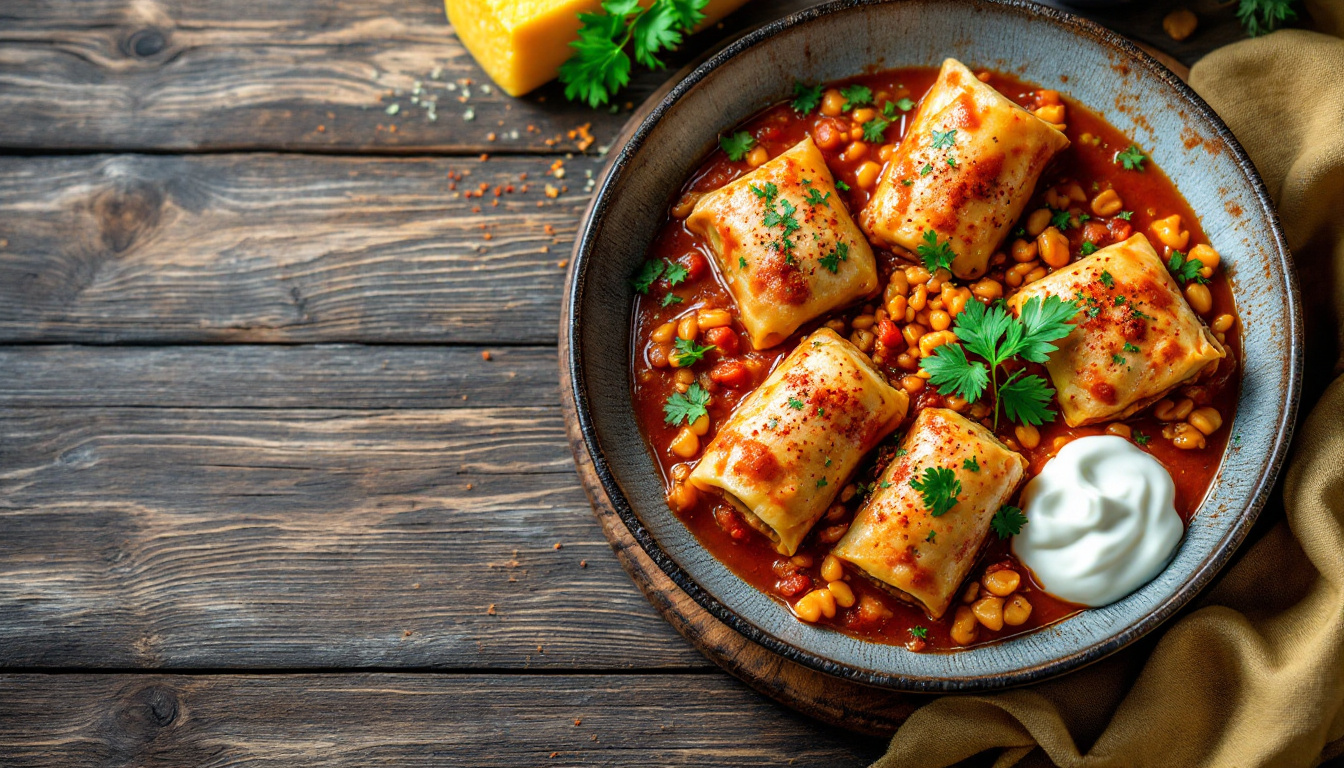
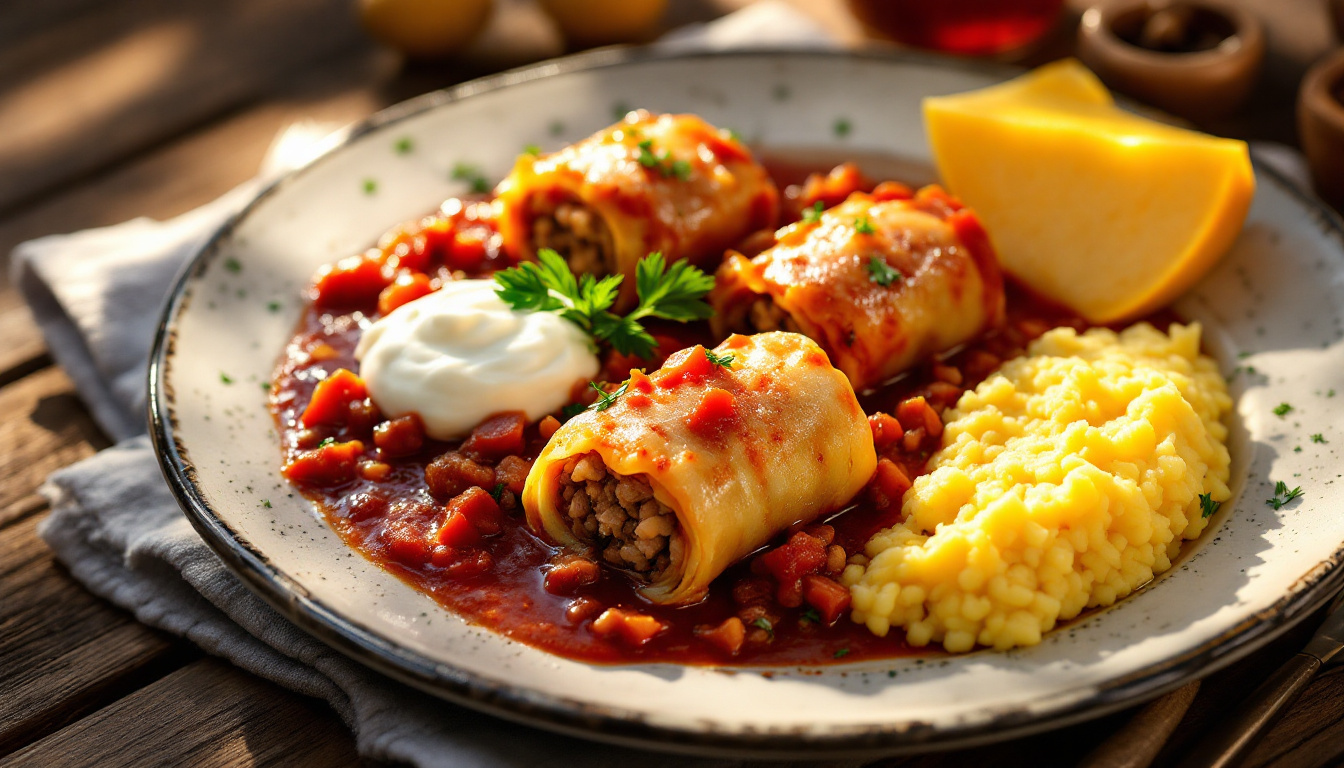
Sarmale are the national dish of Romania, parcels of minced pork and rice wrapped in pickled cabbage or vine leaves and slow-simmered for hours, traditionally with smoked pork and a layer of bacon. Families make huge pots a day ahead for Christmas and Easter so the flavors deepen overnight, and they are always served with a dollop of sour cream and a side of mamaliga. Sour, savory, and deeply comforting, sarmale are the dish every Romanian grandmother has an opinion about.
Mamaliga
Mamaliga is the Romanian cornmeal polenta, cooked thick and served alongside almost everything, from stews to sarmale to grilled meat. Humble but endlessly versatile, it is the country’s everyday starch, once the food of the peasantry and now beloved by all. The richest version is bulz, where the polenta is mixed with sheep cheese, formed into balls, and grilled or baked until the cheese oozes, often topped with sour cream and a fried egg. With cheese and cream, mamaliga becomes a meal in itself.
Mici mititei
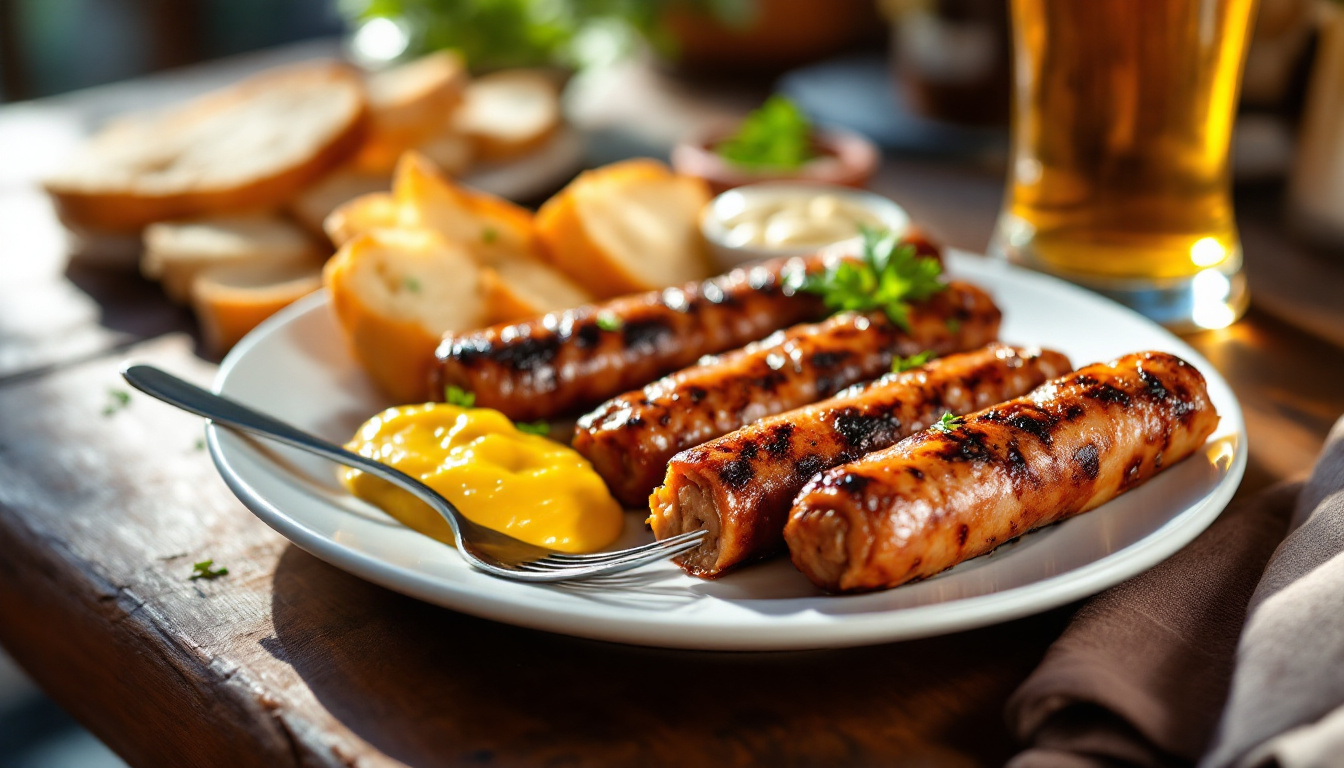
Mici (or mititei, “little ones”) are skinless grilled rolls of minced beef, lamb, and pork, heavily seasoned with garlic, pepper, and a hint of baking soda that gives them their springy bounce, grilled over charcoal until charred. They are the king of Romanian outdoor eating, sold by the piece at grills, festivals, and beer gardens, eaten with mustard, fresh bread, and a cold beer. The other essential condiment is mujdei, a fierce raw-garlic sauce loosened with oil or stock that Romanians spoon over mici, grilled meat, and ciorba alike. Order them in fives and tens. Smoky, garlicky, and addictive, mici are the most fun food in the country.
Ciorba
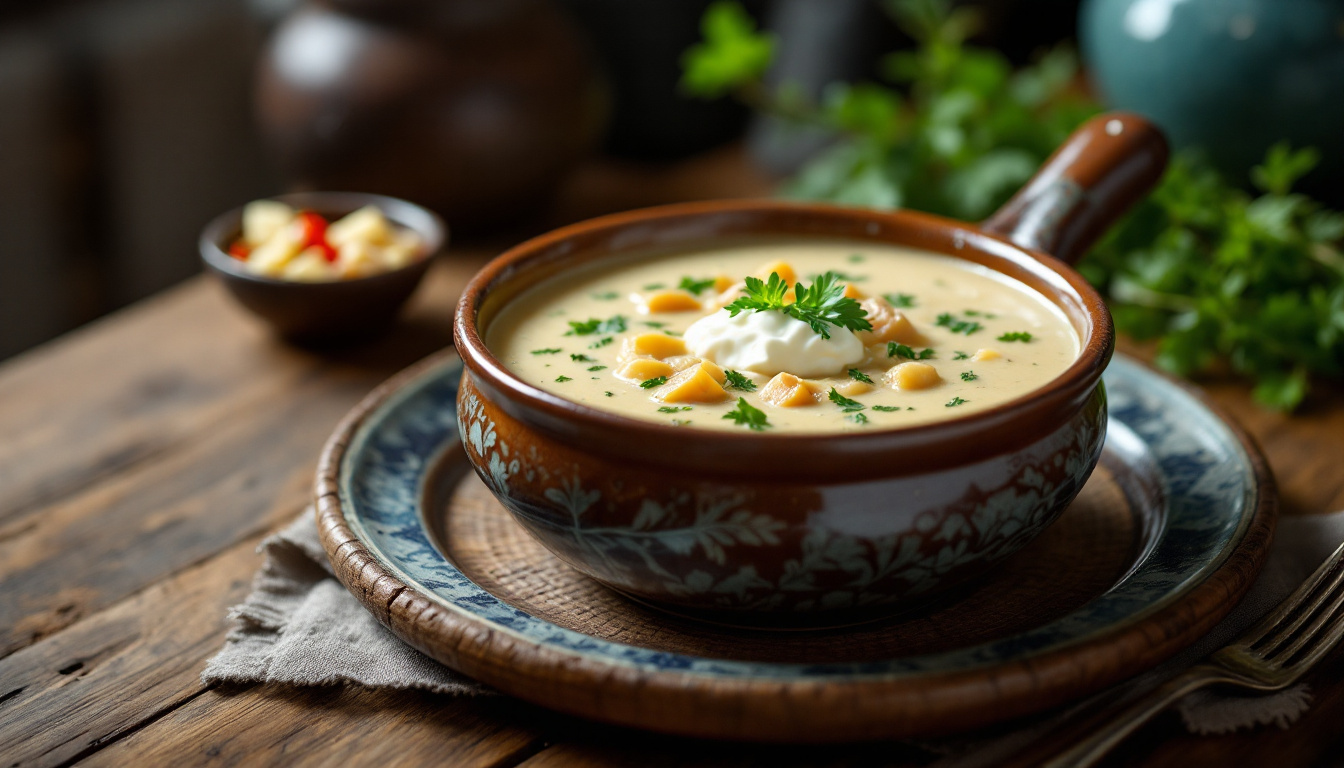
Ciorba is the family of sour soups that opens most Romanian meals, soured with bors (fermented wheat bran) or lemon and beloved with real passion. The icons are ciorba de burta (a creamy, garlicky tripe soup), ciorba de perisoare (meatball soup), and the Bukovina classic ciorba radauteana (a creamy chicken version). There is also ciorba de fasole served in a bread bowl. Tangy, warming, and restorative, ciorba is the soul of the Romanian table and a famous hangover cure.
Tochitura
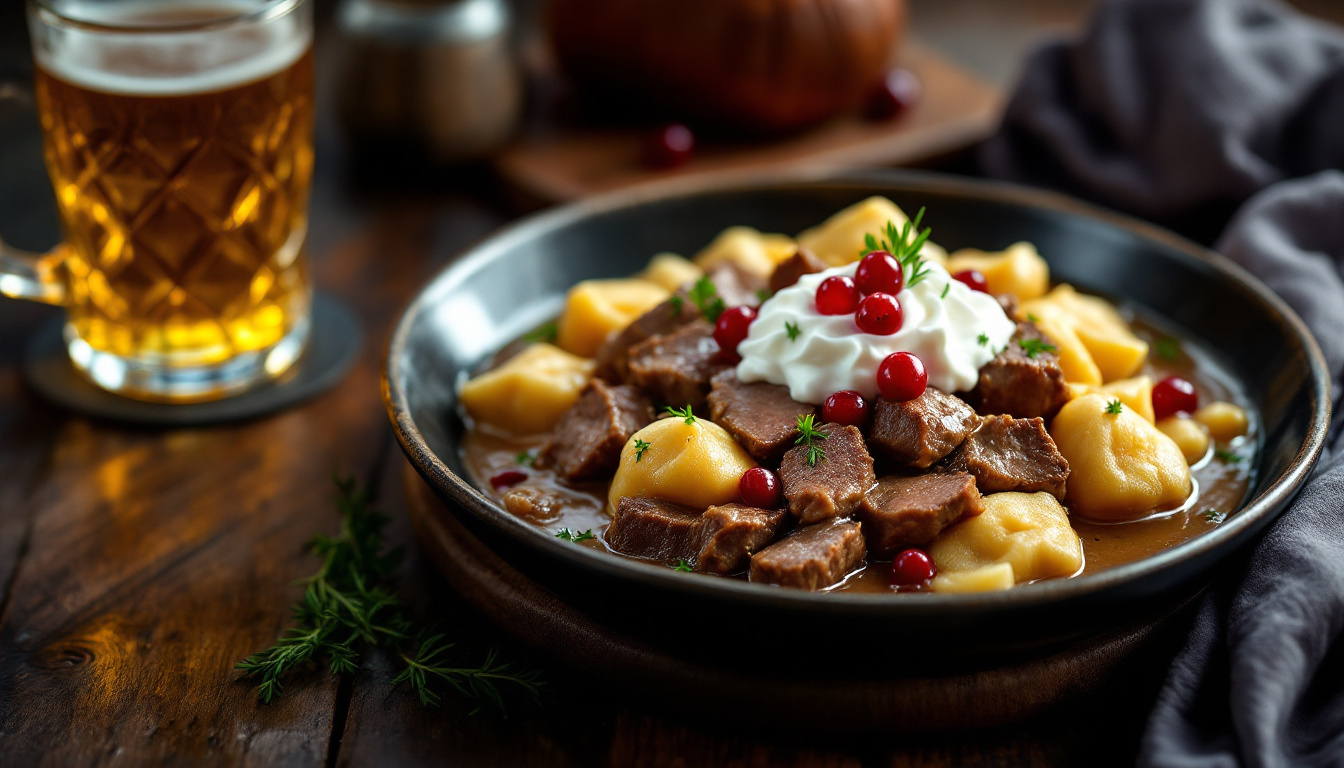
Tochitura is a robust pork stew, cubes of meat (and often sausage and offal) fried with garlic, tomato, and a splash of wine, served with mamaliga, a fried egg, and grated cheese on top. It is a celebration dish, rich, bold, and unapologetically filling, with regional variations across Moldavia and Wallachia. The combination of the savory stew, the soft polenta, the runny egg, and the salty cheese is Romanian comfort food at its most satisfying. Order it when you are very hungry.
Zacusca
Zacusca is a thick, smoky vegetable spread of roasted eggplant, peppers, onions, and tomato, cooked down and jarred each autumn in a ritual of home canning that fills Romanian pantries for winter. Spread on bread, it is the taste of a Romanian home and a great vegan option. Every family has its own recipe, sometimes with beans or mushrooms. It captures the seasonal, preserve-everything ethos of the cuisine, where the abundance of autumn is saved for the cold months ahead.
Salata de vinete
Salata de vinete is Romania’s smoky eggplant dip, and despite the name it is not a salad at all. Whole aubergines are charred over a flame or coals until the skin blisters, then the soft flesh is chopped by hand (never blended, purists insist) and whipped with sunflower oil, a little chopped onion, and salt into a pale, creamy, smoke-scented spread. It goes on fresh bread with slices of tomato, and it is the taste of a Romanian summer table. Unlike the jarred, tomato-and-pepper zacusca, this one is light, raw-onion sharp, and eaten fresh.
Salata de boeuf
Salata de boeuf is the rich, mayonnaise-bound salad of finely diced boiled vegetables, pickles, and beef (or chicken) that appears on every Romanian holiday table, decorated elaborately on top. A legacy of French and Russian influence on the region’s festive cooking, it is creamy, tangy, and made in huge bowls for Christmas and New Year. Like many Romanian holiday dishes, it is a labor of love, with the vegetables hand-diced small. It is the centerpiece of the celebratory cold table.
Ardei umpluti and varza a la Cluj
Ardei umpluti are bell peppers stuffed with the same pork-and-rice filling as sarmale, simmered in a light tomato sauce and served with sour cream, a summer cousin of the cabbage rolls. From Transylvania comes varza a la Cluj, a baked layered casserole of cabbage, the same minced filling, and rice, like a deconstructed sarmale. Both are hearty home-cooking staples that show how central cabbage, peppers, and minced pork are to the Romanian table, with regional twists on the same beloved flavors.
Covrigi and street snacks
Covrigi are Romania’s hot pretzels, sold from kiosks on every city corner, twisted, sprinkled with salt, sesame, or poppy seeds, and best eaten warm from the oven. They are the cheap, ubiquitous street snack that fuels the country. Around them sit other street and bakery staples: gogosi (doughnuts), placinta (flaky filled pastry, sweet or savory with cheese), and merdenele. A warm covrig for a leu or two is the quintessential Romanian grab-and-go, the snack everyone eats between meals.
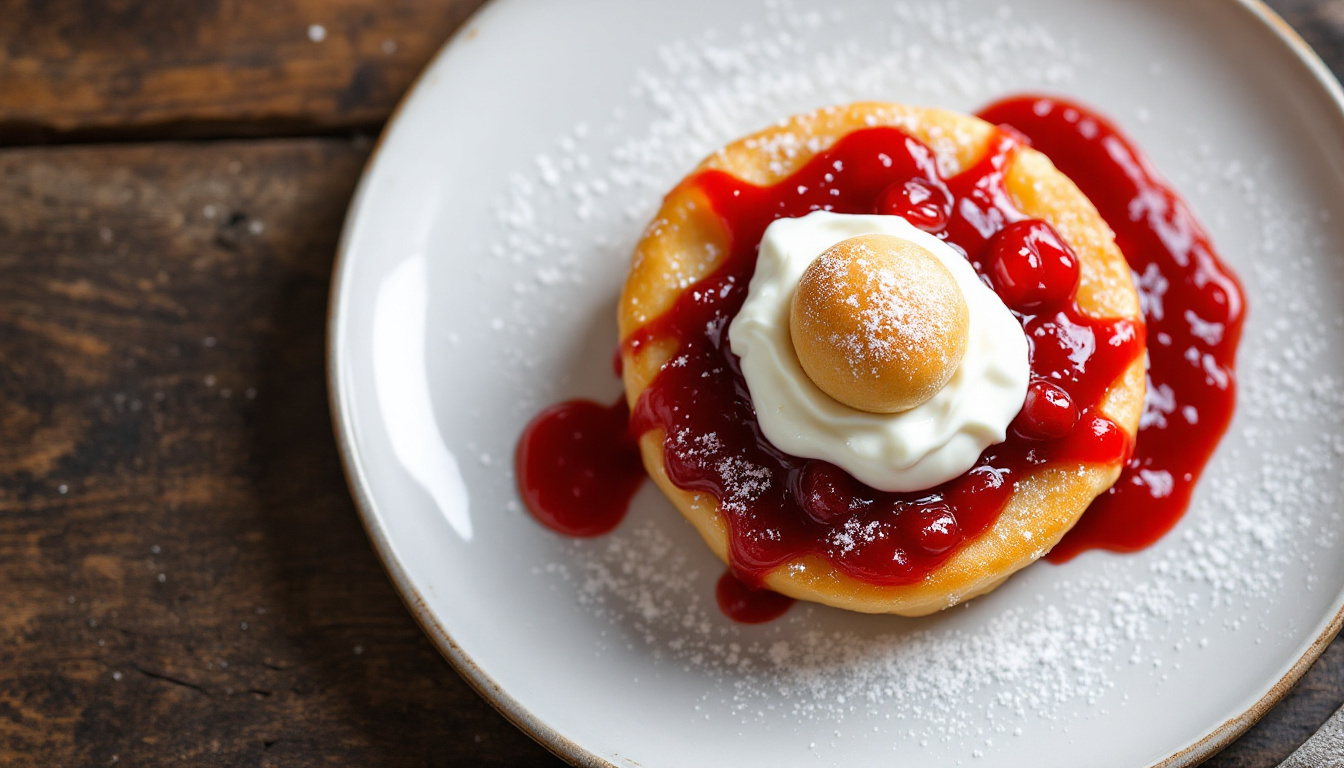
Papanasi
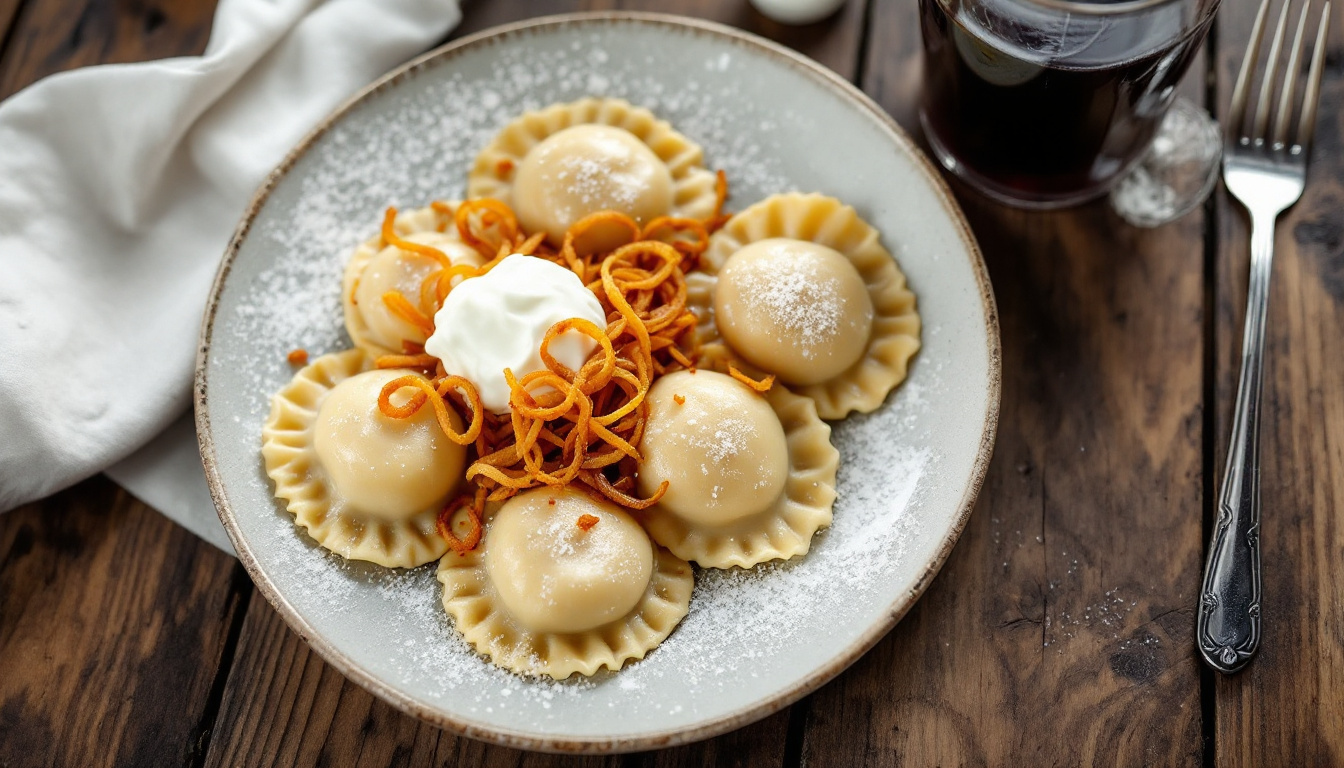
Papanasi are Romania’s beloved dessert, fried doughnuts made from soft cottage cheese (branza de vaci), topped with a little doughnut ball, a generous dollop of sour cream, and a drizzle of fruit jam, usually sour cherry or blueberry. The contrast of the warm, crisp-edged cheese doughnut, the cool cream, and the tart jam is irresistible. Served hot and big enough to share (though you will not want to), they are the perfect end to a Romanian meal and the dessert every visitor remembers.
Cozonac
Cozonac is the sweet, enriched festive bread baked for Christmas and Easter, swirled with a filling of ground walnuts, cocoa, and sometimes Turkish delight or poppy seeds. The dough is kneaded for ages to get the signature soft, stringy crumb, and the smell of it baking is the smell of a Romanian holiday. Sliced and eaten with coffee, it is a labor-intensive ritual cake that families take great pride in. A good homemade cozonac is one of the treasures of Romanian baking.
Branza, telemea and slanina
Romania has a strong shepherding tradition, and its cheeses and cured pork are everyday staples. Branza and the salty, feta-like telemea are made from sheep’s milk in mountain dairies, eaten with bread, in mamaliga, or in pies. Cas and the smoked, aged cascaval add range. Alongside the cheese comes slanina, cured pork fat or bacon, eaten thinly sliced with onion and bread, a rustic mountain snack often chased with tuica. Together they are the taste of the Romanian countryside.
Danube Delta and Dobruja fish
In Dobruja, the region between the Danube and the Black Sea, fish is the star, prepared in countless ways drawing on a Turkish-influenced heritage. The classics are a rich fish ciorba, saramura de crap (carp grilled and served in a spicy brine), fried small fish, and smoked sturgeon or carp roe (icre). The Danube Delta is one of Europe’s great wetlands, and eating fresh-caught carp, catfish, or pike soup at a riverside spot there is a completely different side of Romanian food.
How food changes across Romania, region by region
Romanian food shifts clearly across the country’s historic regions, each shaped by different neighbors and landscapes. Knowing them tells you what to order where. Here is the map.
Transylvania, long home to Hungarian and Saxon communities, has the most distinct regional cooking, richer and more Central European. Here you find varza a la Cluj (layered cabbage), goulash-like stews, smoked meats, and hearty soups, plus a strong baking tradition from the Saxon towns like Sibiu and Brasov. The food leans heartier and more paprika-tinged than the rest of the country, a clear legacy of its multicultural history.
Moldavia, in the northeast, is celebrated for its sour meat soups and its sarmale, and for specialties like ciorba radauteana (the creamy chicken soup from Radauti) and poale-n brau (sweet cheese pies). The cooking here is rustic and deeply traditional, tied to village life and the seasons. Many Romanians consider Moldavian sarmale and soups the benchmark, and the region takes its home cooking seriously.
Wallachia, the southern plains around the capital Bucharest, is the home of the urban classics: mici off the grill, ciorba de burta (tripe soup), and the lively restaurant and beer-hall scene. Bucharest is the best place to eat across all of Romania’s regions in one city, from historic beer halls to modern Romanian restaurants and the huge Obor market. This is the country’s most cosmopolitan eating.
Dobruja, between the Danube and the Black Sea, is fish and Turkish-influenced country, the most different of Romania’s food regions. Fish ciorba, saramura, grilled carp, and roe creams dominate, and the Tatar and Turkish heritage shows in dishes and pastries like placinta dobrogeana. The Danube Delta nearby offers some of the freshest freshwater fish in Europe, eaten simply at riverside spots.
Where to eat: beer halls, mici grills and markets
The best food in Romania is found at traditional beer halls, mici grills, and markets, plus the family table. Each has its role, and knowing where to go is the key. Here is the lineup.
- Historic beer halls and traditional restaurants, like Bucharest’s spectacular Caru’ cu Bere, for sarmale, mici, ciorba, and papanasi in a grand setting.
- Mici grills and beer gardens, the casual spots and festival stalls where mici are grilled by the dozen and eaten with mustard and beer.
- Markets (piete), like Bucharest’s huge Obor market, for cheese, zacusca, cured meats, pickles, and produce, often with food stalls.
- Village homes and guesthouses, in regions like Maramures and Bucovina, for the most authentic home cooking and homemade tuica.
- Riverside spots in the Danube Delta, for the freshest fish ciorba and grilled carp.
What to drink in Romania
The national drink of Romania is tuica, a strong plum brandy that doubles as a greeting. Often homemade in the countryside and offered the moment you arrive, tuica (and the stronger, often double-distilled palinca of Transylvania and Maramures) is the heart of Romanian hospitality, drunk as a fiery aperitif. Romania is also a serious wine country, one of Europe’s largest producers, with native grapes like Feteasca Neagra and Feteasca Alba and historic regions like Cotnari, Murfatlar, and Dealu Mare. Beyond them, local beers (Ursus, Ciuc, Timisoreana), the sour-cherry liqueur visinata, and the lightly fermented socata and grape must round out the table.
- Hospitality is generous; expect to be offered tuica and urged to eat more, and “pofta buna” (bon appetit) before meals.
- Tip around 10 percent in restaurants; it is appreciated and increasingly expected in cities.
- Sour cream (smantana) accompanies many dishes, from ciorba to sarmale to papanasi.
- Vegetarians can eat zacusca, mamaliga with cheese, bean dishes, stuffed peppers, and the meatless “de post” (fasting) versions of sarmale common in Orthodox tradition.
- Holidays drive the cuisine: sarmale and cozonac at Christmas, lamb and drob at Easter.
Frequently asked questions
What is the national dish of Romania?
Sarmale, cabbage rolls stuffed with minced pork and rice and slow-simmered, are widely considered the national dish of Romania. They are central to every Christmas and Easter, made in large pots a day ahead so the flavors deepen, and served with mamaliga (cornmeal polenta) and sour cream. Mici, the grilled minced rolls, are the other strong contender.
What is the most popular Romanian food?
The most popular and most famous Romanian food is sarmale, the cabbage rolls of minced pork and rice slow-cooked for holidays, widely seen as the national dish. Just as beloved day to day are mici (garlicky grilled minced rolls with mujdei and mustard), mamaliga (cornmeal polenta), and the sour ciorba soups that open most meals. For dessert, the typical choice is papanasi, fried cheese doughnuts with sour cream and cherry jam, all washed down with homemade tuica plum brandy.
Is Romanian food spicy?
No, Romanian food is hearty and savory rather than spicy. The dominant flavors are sour (from bors or lemon in the ciorba soups), garlicky, and rich with pork, cheese, and sour cream. Garlic and pepper feature, but chili heat is rare. A jar of hot pepper paste or pickled chilies may be offered on the side, but the cuisine itself is mild and comforting.
What is mamaliga?
Mamaliga is Romanian cornmeal polenta, cooked thick and served with almost everything, from stews and sarmale to grilled meat. Once peasant food, it is now a beloved national staple. The richest form is bulz, where the polenta is mixed with sheep cheese, shaped into balls, and grilled or baked until the cheese melts, often topped with sour cream and a fried egg.
Which city has the best food in Romania?
Bucharest, the capital, has the widest food scene, from historic beer halls like Caru’ cu Bere serving classics to modern Romanian restaurants and the vast Obor market. Cluj-Napoca and Brasov in Transylvania are also excellent, with their own Saxon and Hungarian-influenced specialties. For rural home cooking and tuica, head to Maramures or Bucovina.
Where can vegetarians eat in Romania?
Vegetarians can eat well thanks to the Orthodox fasting (de post) tradition, which produces many naturally vegan dishes. Look for zacusca (vegetable spread), mamaliga with cheese, bean soup and stew (fasole), stuffed peppers and cabbage made without meat, vinete (eggplant salad), and fasting sarmale. Larger cities have dedicated vegetarian spots, and markets overflow with produce, cheese, and preserves.
What should I drink in Romania?
Drink tuica, the strong homemade plum brandy that is the heart of Romanian hospitality, or the even stronger palinca of Transylvania. Romania is also a major wine producer, with native grapes like Feteasca Neagra and historic regions such as Cotnari and Murfatlar. Local beers (Ursus, Ciuc), the sour-cherry liqueur visinata, and lightly fermented socata round out the options.
More food guides waiting for you
Browse our complete collection of European food guides.