New Orleans is the most delicious city in America, and the only one with a cuisine entirely its own. While most US food traces back somewhere else, the Creole and Cajun cooking of Louisiana was born here, out of French, Spanish, West African, Caribbean and Native ingredients simmered together in the Mississippi heat. I have started a day with powdered-sugar beignets and chicory coffee and ended it elbow-deep in a crawfish boil, and nothing in between disappointed. The best food in New Orleans is gumbo, po’boys and slow-cooked soul, eaten in a city that treats every meal like a celebration.
Why New Orleans food is unique
New Orleans has the most distinctive food in the United States because its cuisine was created locally, not imported. Two traditions overlap here: Creole, the city cooking that blended French and Spanish technique with African, Caribbean and local ingredients, often richer and tomato-touched; and Cajun, the rustic country cooking of the Acadian French who settled the bayous, built on the holy trinity of onion, celery and bell pepper and a dark roux. Together they make something found nowhere else.
The result is a city obsessed with eating, where a humble sandwich shop and a white-tablecloth Creole grande dame are both taken seriously. It’s the one truly original regional cuisine in our USA food guide, and it rewards eating widely. Come hungry, and pace yourself for a city that snacks all day.
The dishes you have to eat in New Orleans
Gumbo gumbo
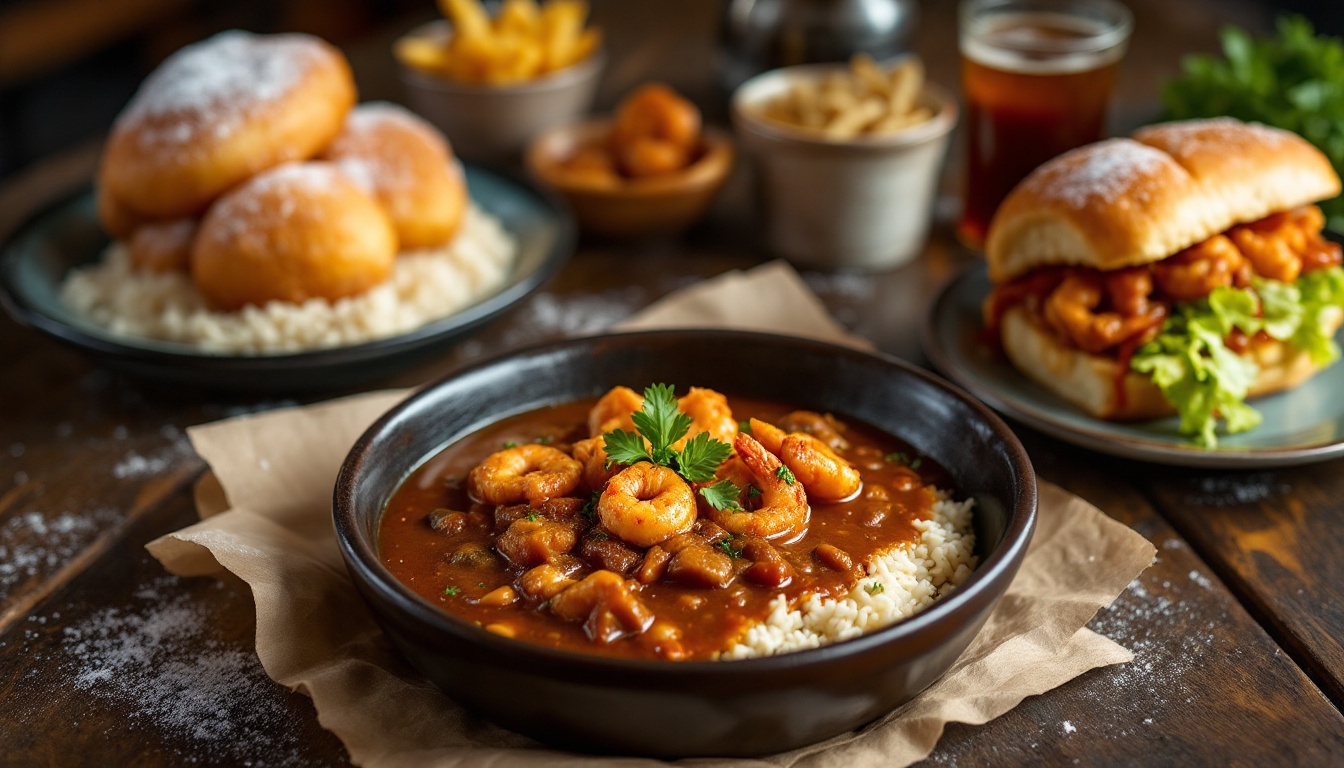
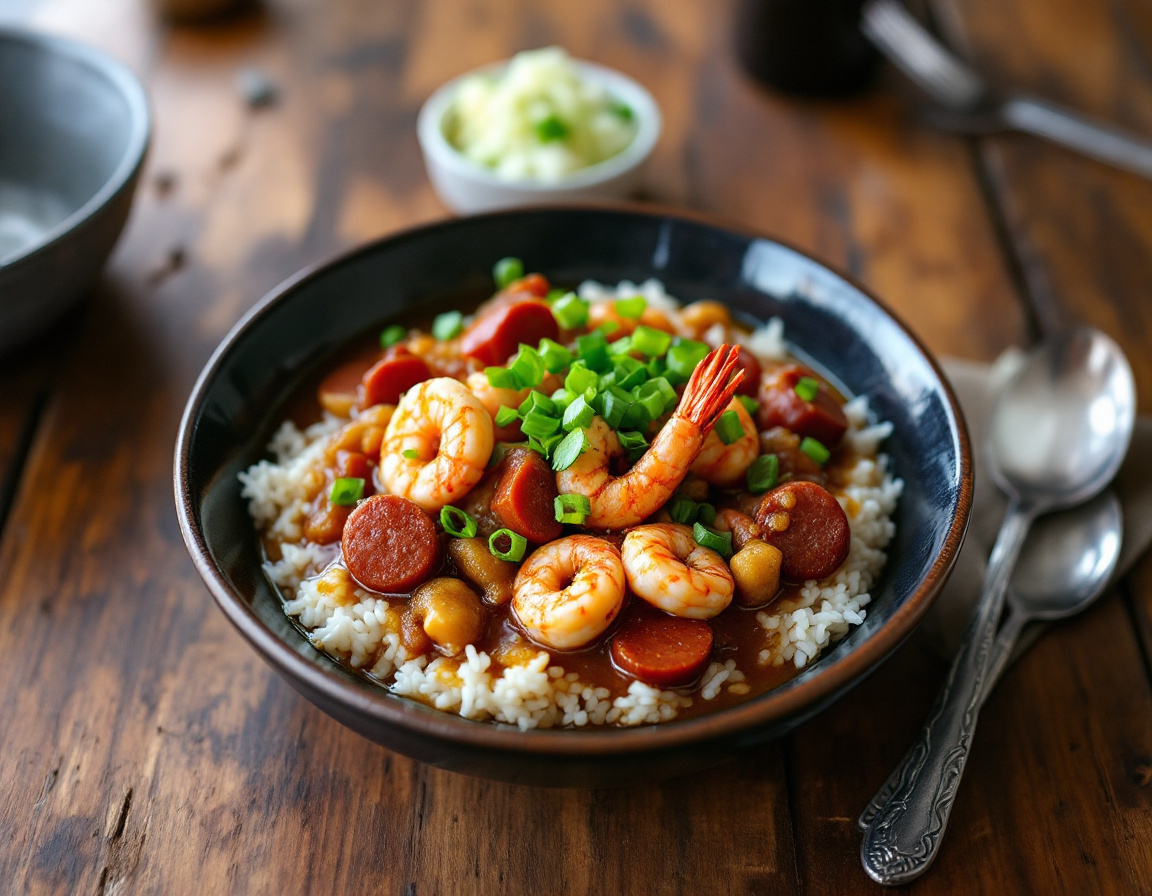
Gumbo is the soul of Louisiana cooking, a deep, dark stew served over rice that tells the whole story of the city in one bowl. It starts with a roux cooked patiently to the color of chocolate, then builds with the holy trinity, stock and either seafood, or chicken and andouille sausage. It’s thickened with okra or file powder, both African and Native legacies. Every cook and grandmother has a version they will defend to the death. Order a bowl your first day and you understand New Orleans.
Po’boy po-boy
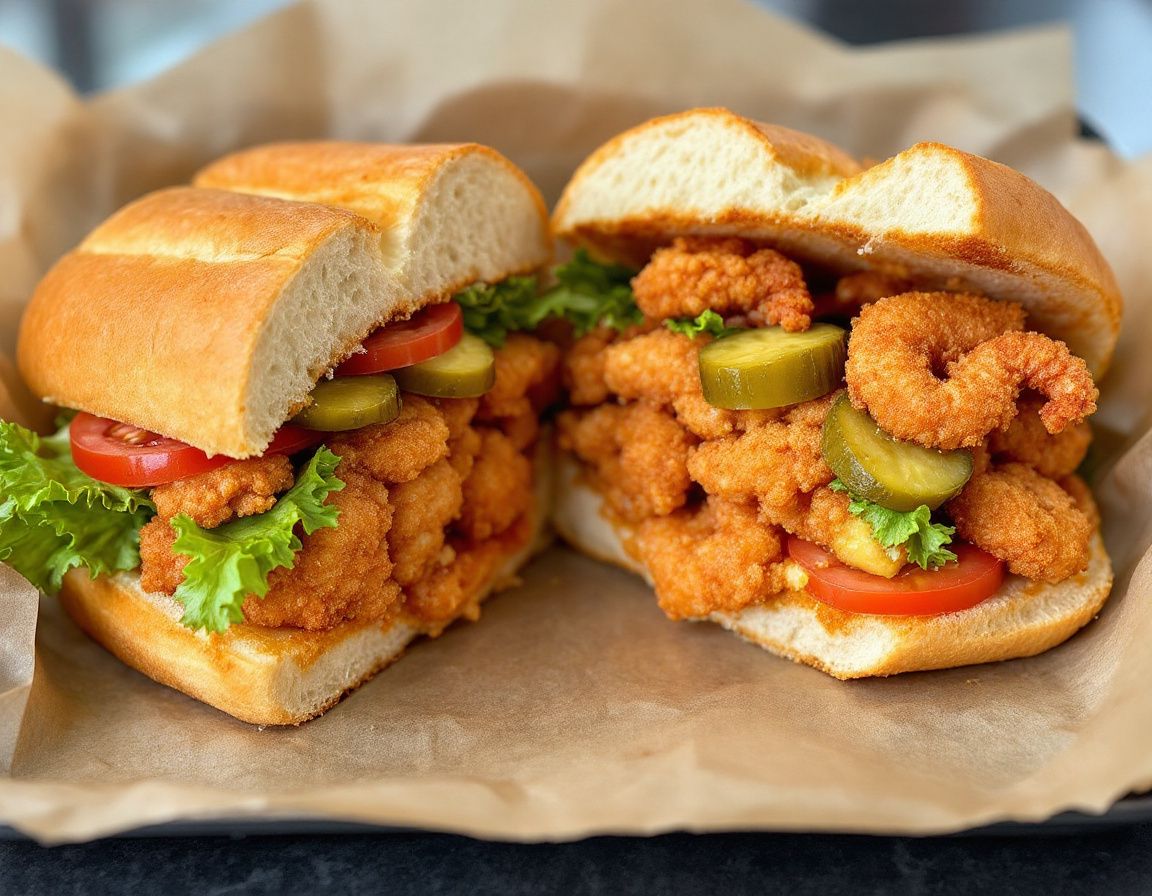
The po’boy is the great New Orleans sandwich, built on a length of crisp-crusted, fluffy local French bread. The classics are fried shrimp or oysters, and slow-roast beef with rich debris gravy, but it comes a hundred ways. Order it “dressed” and it arrives with lettuce, tomato, pickle and mayo. The bread, light and shattering, is half the magic, and you’ll wear some of it. It got its name feeding striking “poor boys” in the 1920s, and it still feeds the whole city at lunch.
Beignets beignets
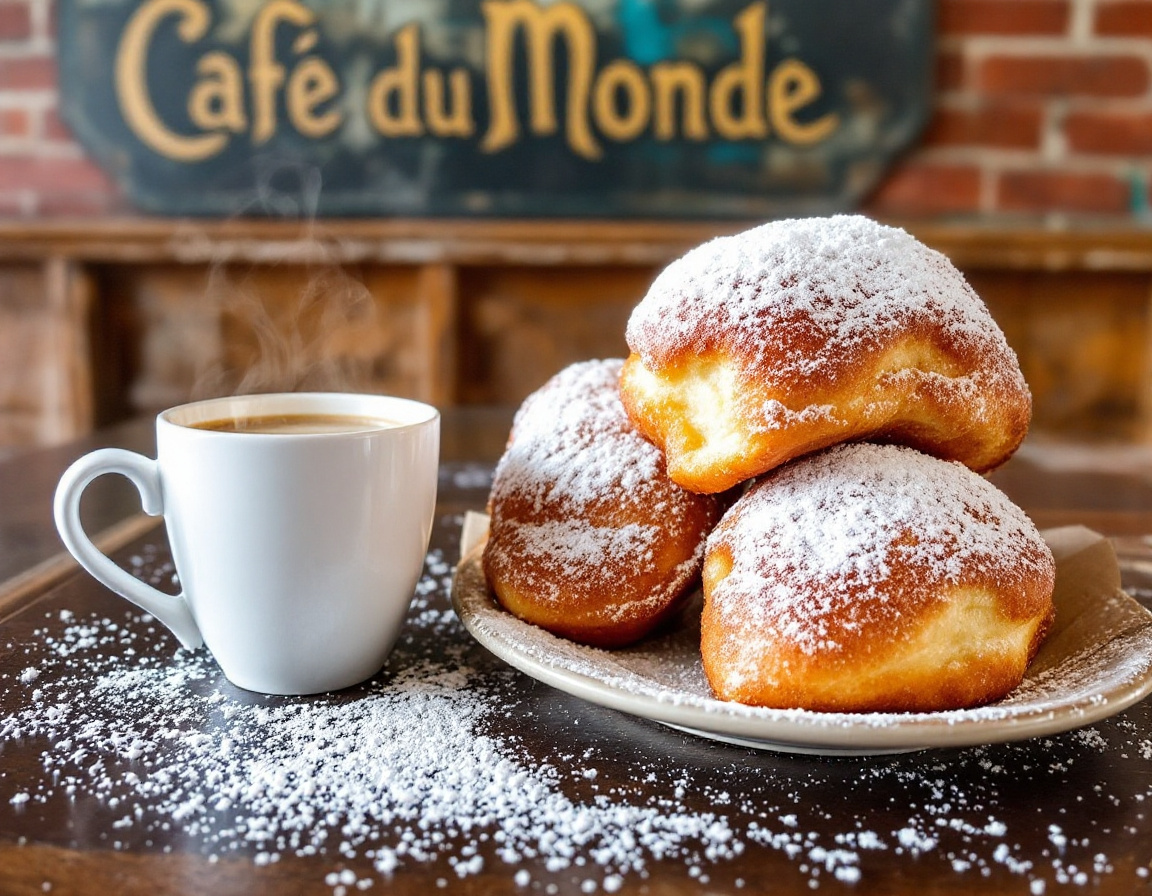
Beignets are the city’s beloved fried dough, square pillows of choux-like pastry deep-fried and buried under a mountain of powdered sugar. They are eaten hot with a cup of cafe au lait cut with chicory, and the classic spot is Cafe du Monde by the French Market, open around the clock. The move is to not wear black, because the sugar gets everywhere. Sweet, airy and a little messy, they are the perfect New Orleans breakfast or 2am snack.
Crawfish crawfish boil, etouffee
Crawfish are the taste of a New Orleans spring, and the seasonal boil is a social event as much as a meal. The little freshwater crustaceans are boiled by the sackful with cayenne, lemon, garlic, corn and potatoes, then dumped onto a newspaper-covered table to eat with your hands. You pinch the tail, suck the head, and keep going. Out of season, crawfish turn up in etouffee, smothered in a buttery, roux-based sauce over rice. Either way, get messy and order another round.
Jambalaya jambalaya
Jambalaya is Louisiana’s great rice dish, a one-pot wonder that cousins the paella of Spain. Rice is cooked together with the holy trinity, stock, andouille sausage, chicken and often shrimp, soaking up all the flavor and spice as it goes. The Creole version is reddened with tomato; the Cajun version is browner and smokier with no tomato at all. Hearty, spiced and satisfying, it’s the dish that feeds a crowd, a Louisiana cookout staple.
Red Beans and Rice
Red beans and rice is New Orleans on a Monday, a habit that started when Monday was wash day and a pot of beans could simmer unattended with the ham bone left from Sunday. Red kidney beans are stewed slow with the holy trinity (onion, celery, bell pepper), smoked sausage or pickled pork, and a heap of spice, then ladled over white rice. It is cheap, filling, and genuinely beloved, not a tourist dish. Nearly every restaurant and corner spot still runs it as the Monday special, and old kitchens like Willie Mae’s do a version worth the trip.
Crawfish Etouffee
Etouffee means “smothered”, and crawfish etouffee is crawfish tails cooked down into a thick, buttery, roux-based gravy with the holy trinity and a jolt of cayenne, served over rice. It is richer and less soupy than gumbo, and the crawfish version peaks in spring during boil season, though shrimp etouffee runs year-round. Order it at an old-line Creole room like Galatoire’s or a neighbourhood joint and let the roux do the talking.
Oysters
New Orleans eats Gulf oysters three ways worth knowing. Raw on the half shell, cold and briny at a marble bar like Casamento’s or Acme. Oysters Rockefeller, baked under a green sauce of herbs and butter, invented at Antoine’s in 1889 and never officially decoded since. And char-grilled, popularized at Drago’s, blasted over open flame with garlic butter and Parmesan until the edges crisp. Order a mix and mop the shells with the bread that comes alongside.
Muffuletta muffuletta
The muffuletta is the city’s great Italian-American contribution, a hefty round sandwich invented by Sicilian immigrants at Central Grocery in the French Quarter. A wide sesame loaf is layered with mortadella, salami, ham and provolone, and the key, a chunky, tangy olive salad of olives, giardiniera and oil that soaks into the bread. It is sold in quarters and halves because a whole one feeds several people. The olive salad is what makes the whole thing sing. Buy one and split it.
Where to eat: the Quarter and beyond
The French Quarter is the obvious starting point, and some institutions there are worth the crowds: Cafe du Monde for beignets, Central Grocery for the original muffuletta, and the grand old Creole restaurants for turtle soup and gumbo. But the Quarter also hides the city’s worst tourist traps, so be choosy. Some of the best eating is just outside it, in the neighborhood po’boy shops and corner restaurants where locals actually go.
Head to neighborhoods like the Treme, the Bywater, Uptown and Mid-City for the real thing, from old-school Creole soul food to crawfish joints and modern spots. A Monday tradition is red beans and rice, cooked slow with the weekend ham bone, served all over town. As always, walk a few blocks from the main tourist street, the same rule we set out for any city in our guide to eating like a local.
Tips and what to know
A few local habits help you eat New Orleans the way it is meant to be eaten.
- Order po’boys “dressed”. That means with lettuce, tomato, pickle and mayo; say it and you sound like a local.
- Mind the crawfish season. Boils run roughly late winter into spring; out of season, go for etouffee instead.
- Tip as in the US. Standard American tipping of around 18 to 20 percent applies in sit-down restaurants.
- Pace yourself. Portions are huge and the day is long; share dishes and keep room for the next snack.
New Orleans is a meat-and-seafood city, though red beans and rice, fried okra and the vegetable sides give vegetarians a footing. After Louisiana, the immigrant food capital of New York City shows a completely different side of American eating.
FAQ
What food is New Orleans famous for?
New Orleans is famous for Creole and Cajun cooking: gumbo, jambalaya, po’boy sandwiches, beignets, crawfish, red beans and rice, and the muffuletta. It is the most distinctive food city in the United States, with a cuisine born locally from French, Spanish, West African, Caribbean and Native influences.
What is the difference between Creole and Cajun food?
Creole is the city cooking of New Orleans, blending French and Spanish technique with African and Caribbean ingredients, often richer and using tomato. Cajun is the rustic country cooking of the Acadian French in the Louisiana bayous, built on a dark roux and the holy trinity of onion, celery and bell pepper, and usually without tomato. Many dishes exist in both styles.
Where can I get the best beignets in New Orleans?
The classic place for beignets is Cafe du Monde by the French Market in the French Quarter, open around the clock and serving them hot with chicory cafe au lait. There are excellent alternatives like Cafe Beignet, but Cafe du Monde is the institution. Do not wear dark clothing, as the powdered sugar gets everywhere.
When is crawfish season in New Orleans?
Crawfish season in Louisiana runs roughly from late winter through spring, with the best months usually around March to May. During this time, crawfish boils are everywhere. Outside the season you can still enjoy crawfish in dishes like etouffee, where the tails are served in a buttery sauce over rice.
What does ordering a po’boy “dressed” mean?
Ordering a po’boy “dressed” means having it served with lettuce, tomato, pickles and mayonnaise. It is the standard New Orleans way to order the sandwich, so if you want those toppings, just ask for it dressed. The fillings, like fried shrimp, oysters or roast beef with debris gravy, are chosen separately.
More food guides waiting for you
City and country deep dives across the Americas and every continent we have eaten our way through.