Ceviche on the coast, cuy in the Andes, and smoked pork in the Amazon: a region-by-region guide to what to order in Peru, where to find it, and how much it costs.
The best food to eat in Peru is the most exciting eating I have done anywhere in the Americas, and it’s not close. Three landscapes, the Pacific coast, the Andes, and the Amazon, feed one kitchen. And that kitchen has spent 500 years absorbing Spanish, African, Chinese, and Japanese cooking without losing its Inca backbone. The result is a country where a two-dollar market ceviche and the reigning best restaurant on Earth sit in the same city.
Why Peru is South America’s top food destination
Peru is the best food country in South America because three ecosystems and five cultures cook on the same stove. Lima’s Maido was named the World’s Best Restaurant in 2025 by the World’s 50 Best Restaurants list, the first time a Latin American kitchen took the top spot, and it serves Nikkei food, the Japanese-Peruvian style born when Japanese immigrants met Pacific fish. That’s not an outlier. It’s the clearest sign of how deep this food culture runs.
The backbone is indigenous: potatoes (Peru grows over 3,000 varieties), corn, quinoa, and chili peppers the Andes domesticated thousands of years ago. Spanish colonists added pork, beef, citrus, and frying. Enslaved Africans created anticuchos from the cuts nobody else wanted. Chinese laborers in the 1800s opened the chifa kitchens that gave Peru lomo saltado. Japanese immigrants brought the knife work that became Nikkei. Ceviche, the dish that ties it together, was recognized by UNESCO as Intangible Cultural Heritage in 2023.
For a traveler, that means variety you can’t exhaust in one trip. Coastal Lima eats cold seafood and Chinese-influenced stir-fries. Cusco and Arequipa in the mountains eat hearty, starchy plates built for altitude. The Amazon around Iquitos eats river fish, plantain, and fruit you’ve never heard of. This guide moves through all three.
The best food to eat in Peru, dish by dish
These are the essential dishes I tell every first-timer to order in Peru, with the local name, a rough 2026 price, and where each one belongs. Prices are in Peruvian soles (S/), the dollar figure at roughly S/3.7 to USD 1.
Ceviche cebiche
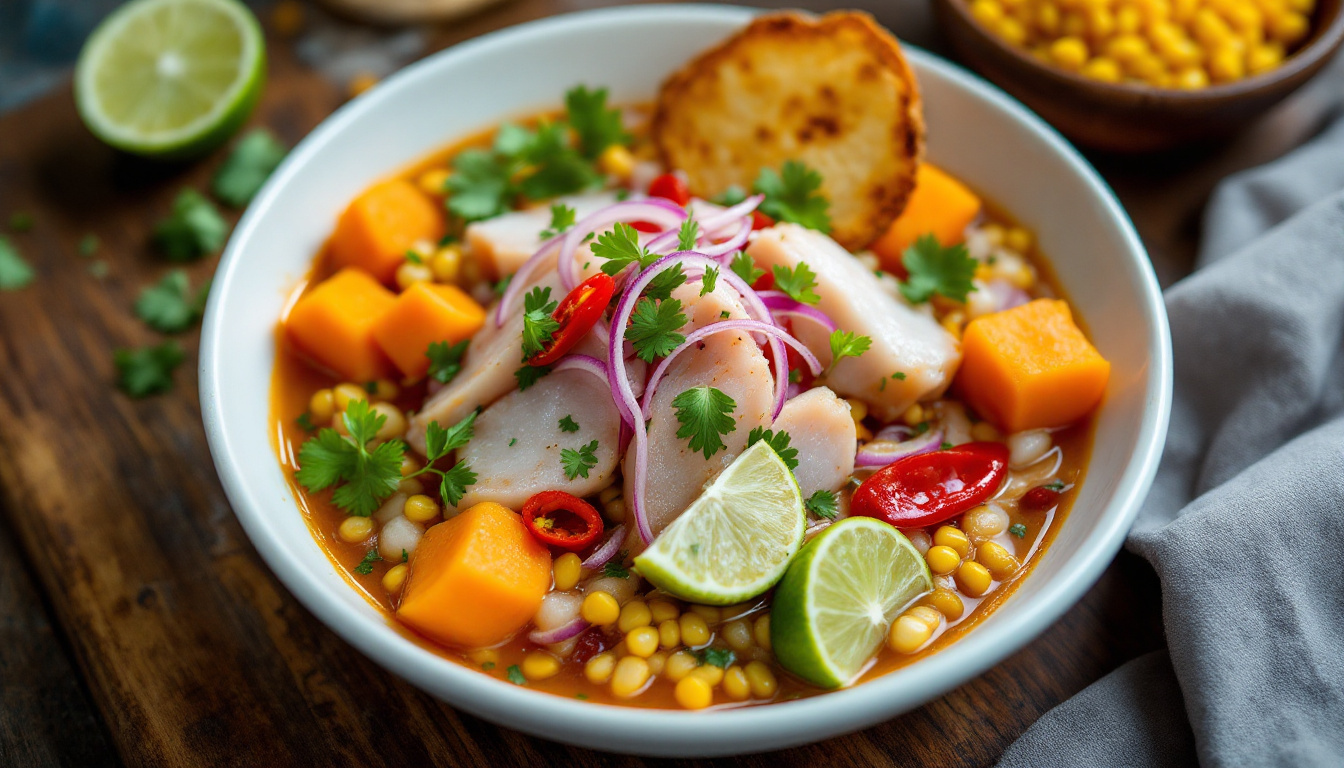
Ceviche is fresh raw fish cured in lime juice with ají limo chili, sliced red onion, salt, and cilantro, and it’s the plate every other Peruvian dish answers to. The lime “cooks” the fish in minutes, and the spicy citrus runoff left in the bowl, called leche de tigre, is served as a shot on the side. A good ceviche comes with boiled sweet potato (camote), large-kernel choclo corn, and toasted cancha to balance the acid.
Order it before 2 or 3 in the afternoon. A serious cevichería buys fish that morning and stops serving when it runs out. An evening ceviche is usually yesterday’s fish.
Papa a la huancaína papa a la huancaína
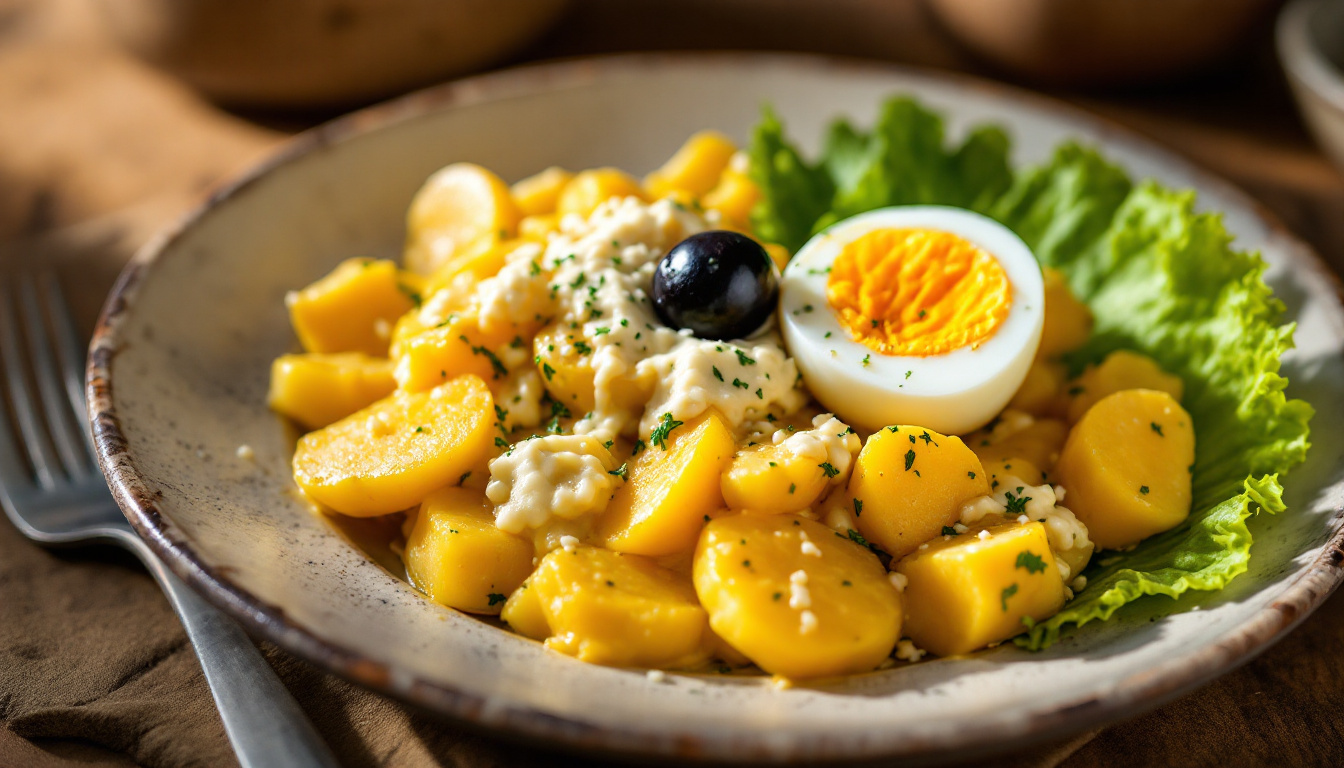
The starter you’ll see on every menu in Peru: cold boiled yellow potatoes blanketed in huancaína sauce, a silky blend of ají amarillo chili, fresh cheese, evaporated milk and crackers, finished with a black olive and a slice of boiled egg. Mild, creamy, faintly spicy, and it shows off Peru’s obsession with potatoes (the country grows over 3,000 varieties). A close cousin worth ordering is papa rellena, a mashed-potato shell stuffed with spiced beef, egg and olives, then fried, sold everywhere as street food.
Lomo saltado
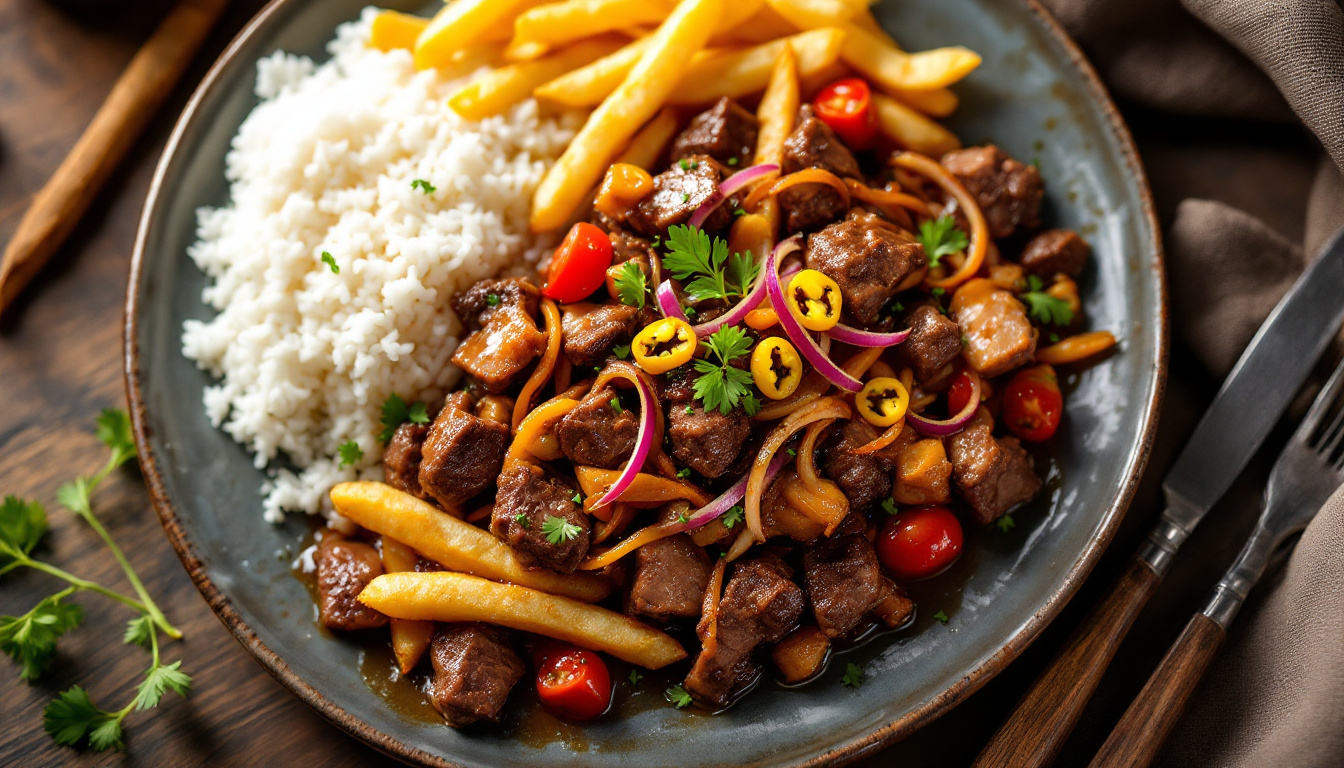
Lomo saltado is strips of beef stir-fried hot and fast with red onion, tomato, and ají amarillo, splashed with soy sauce and vinegar, and it’s the dish that proves Peru is a fusion country. It came out of chifa, the Chinese cooking that arrived with Cantonese laborers in the 19th century. The wok, the high heat, and the soy are Chinese; the chili and the plate are Peruvian. It arrives with both french fries and white rice, a double-carb move nobody apologizes for.
Ají de gallina
Ají de gallina is shredded chicken in a thick, golden sauce of ají amarillo, bread, milk, and walnuts, served over rice with a boiled potato and a black olive. Despite the chili in the name, it’s comfort food, not a hot dish: ají amarillo brings fruity warmth and color more than burn. This is the plate Peruvian grandmothers make on Sundays, and the one I miss most when I leave.
Anticuchos anticuchos de corazón
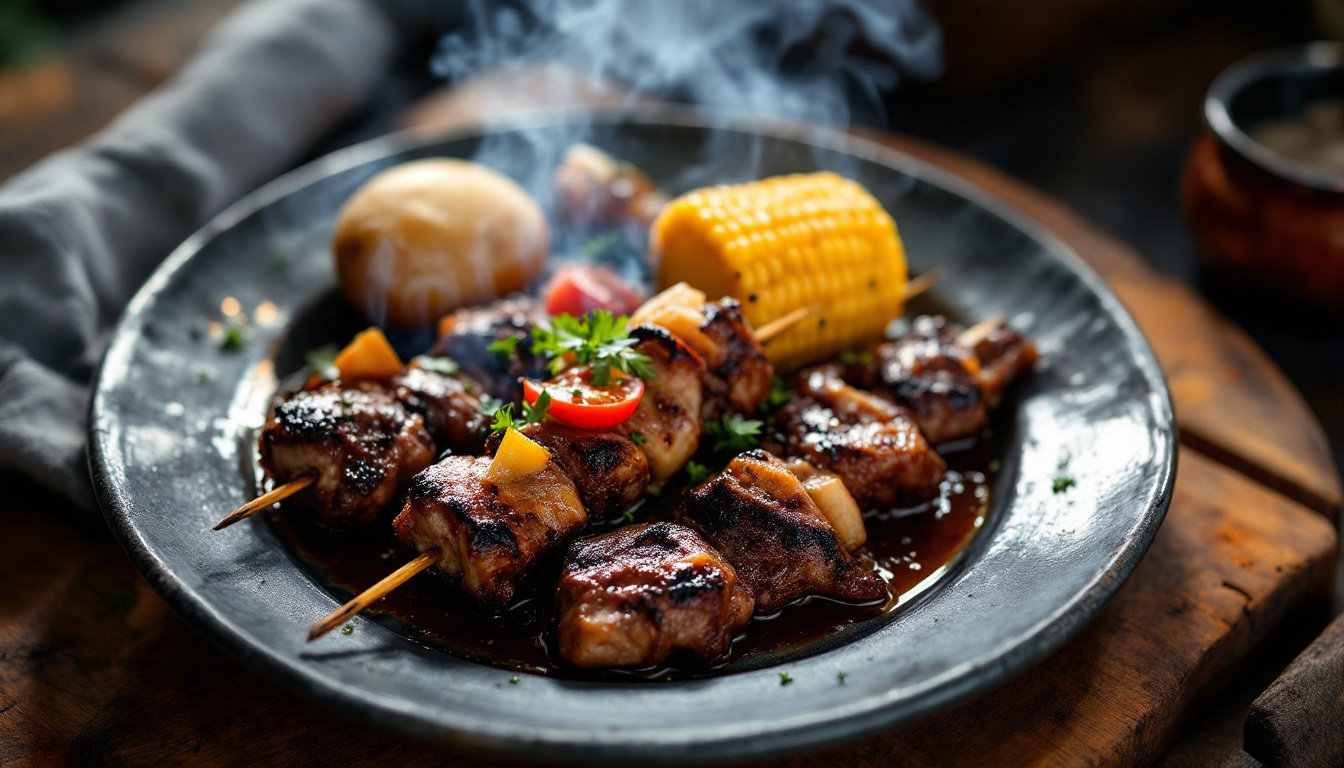
Anticuchos are skewers of beef heart marinated in ají panca, garlic, and cumin, then grilled over charcoal until the edges char, and they’re the best thing you’ll eat off a Peruvian street. The cut sounds intimidating and tastes like a clean, lean steak. Find an anticuchera, the woman working a smoking grill on a corner after dark, and order them with a boiled potato and a chunk of choclo. The smell finds you before the stall does.
Causa limeña causa
Causa is a cold layered cake of yellow potato mashed with lime and ají amarillo, packed around a filling of chicken, tuna, or shrimp salad. Served chilled, it’s bright, tangy, and proof that the humble potato is the real star of Peruvian cooking. It travels well as picnic food and shows up at every family gathering, often built in a tall round mold and sliced like a torte. Its usual table companion is papa a la huancaína, boiled potato draped in a creamy ají amarillo and cheese sauce, the other great Peruvian potato starter.
Rocoto relleno
Rocoto relleno is a rocoto pepper stuffed with spiced minced beef, peanuts, and cheese, then baked, and it’s Arequipa’s signature plate. The rocoto looks like a harmless red bell pepper and carries real heat, so this is the one dish on the list that will actually test you. You’ll find it in the picanterías of southern Peru next to a gratin of potato called pastel de papa. Arequipa takes its food as seriously as Lima does, and argues it does it better.
Cuy cuy chactado / cuy al horno
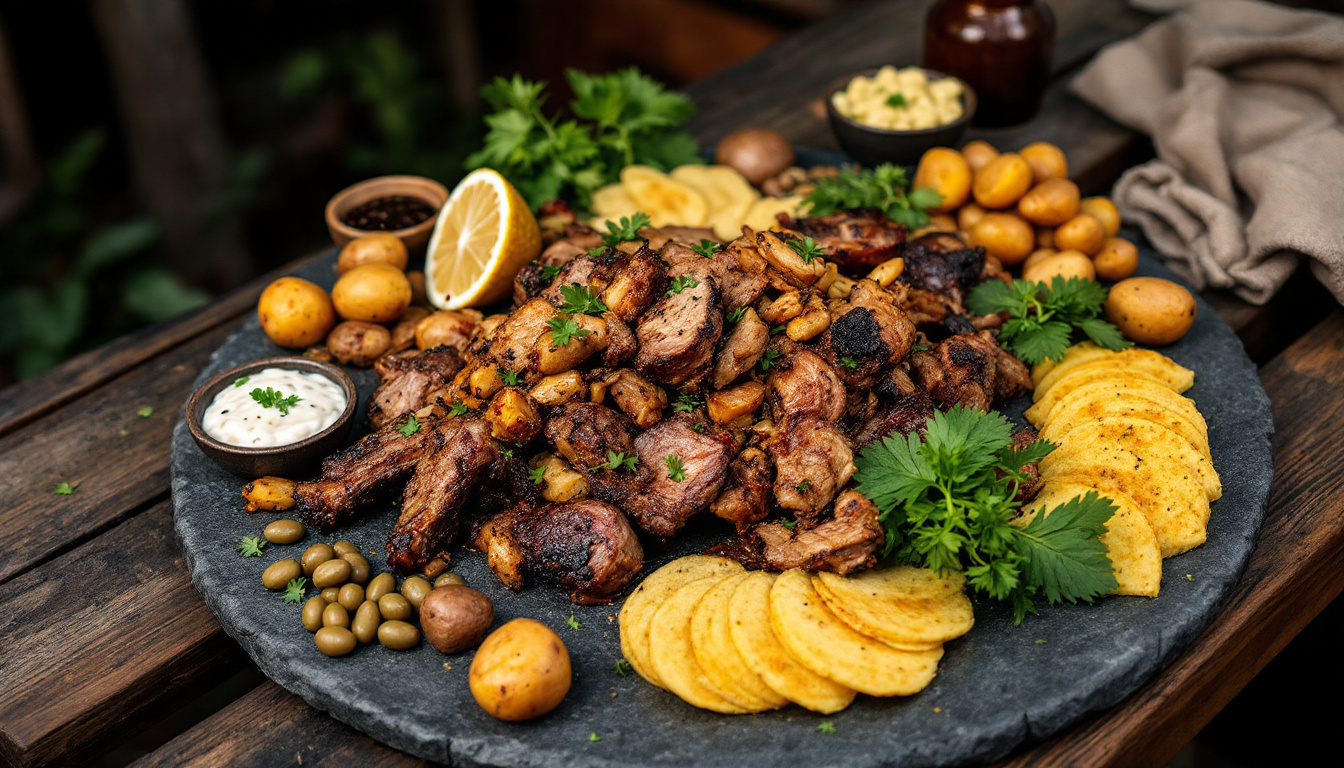
Cuy is roasted or pan-fried guinea pig, and it has been an Andean protein since long before the Spanish arrived. A celebration dish, served whole, with crisp skin and a flavor between rabbit and dark chicken. You’ll find it around Cusco and the Sacred Valley, often at Sunday lunch and town festivals. There isn’t much meat for the price and a lot of bone, so order it for the experience and the history, not to fill up.
Pachamanca
Pachamanca is a feast of marinated meats, potatoes, fava beans, and corn cakes cooked underground on fire-heated stones, a technique that predates the Inca empire. The name means “earth pot” in Quechua. The buried oven steams everything at once and leaves a smoky, mineral flavor no kitchen range can copy. It’s communal, slow, and tied to celebration, so you’ll usually find it on weekends or at country restaurants outside the highland cities rather than on a weekday menu.
Chupe de camarones
Chupe de camarones is a rich river-shrimp chowder built on potato, choclo, milk, eggs, and ají, and it’s the great soup of southern Peru. The shrimp come from the rivers around Arequipa, and the broth is thick enough to be a full meal. Order it on a cold highland afternoon. A good one balances the sweetness of the shrimp against the heat of the chili without drowning either.
Tacacho con cecina
Tacacho con cecina is mashed roasted green plantain shaped into balls and served with cecina, the salted smoked pork of the Peruvian Amazon. This is the breakfast and lunch of the jungle, eaten around Iquitos, Tarapoto, and Pucallpa. The plantain is dense and savory, the pork intense and smoky, and together they’re exactly the kind of regional food most visitors miss because they never leave the coast and the mountains.
Juane
Juane is rice seasoned with turmeric and jungle herbs, packed with chicken, egg, and olives, then wrapped in a bijao leaf and boiled into a fragrant green bundle. It’s the dish of the San Juan festival every June 24, when the Amazon regions cook it by the thousand. Unwrapping the leaf at the table releases a burst of steam and herb that’s half the pleasure. Think of it as the jungle’s answer to a tamale.
Pollo a la brasa
Pollo a la brasa is charcoal-rotisserie chicken marinated in soy, beer, and spices, served with fries, salad, and a row of dipping sauces, and it’s the dish Peruvians actually eat most. Every neighborhood has its pollería, and Sunday dinner for millions of families is a whole bird shared at a plastic-tableclothed table. The green ají sauce on the side, mild and creamy, is the thing people fight over. Cheap, reliable, and better than it has any right to be.
Tiradito and Nikkei tiradito
Tiradito is ceviche met by a Japanese knife: thin sashimi-style slices of raw fish laid in a line, dressed with a leche de tigre sauce and ají, no onion. It’s the gateway to Nikkei, the Japanese-Peruvian cooking that produced Maido, the World’s Best Restaurant of 2025. Eat it at a tasting-menu temple or at a small counter. Either way it shows what happens when Pacific fish meets Japanese precision and Peruvian chili. Lima is where this style lives.
Save room for something sweet. Peru finishes a meal with picarones, ring-shaped doughnuts of squash and sweet potato fried to order and drizzled with spiced chancaca syrup; suspiro a la limeña, a soft caramel-and-meringue dessert from the capital; and mazamorra morada, a purple-corn pudding that shares its base with chicha morada. Peruvian cacao is world-class too, so good local chocolate is worth carrying home.
How food changes across Peru: coast, Andes, and Amazon
Peruvian food splits cleanly into three regional kitchens, and knowing which one you’re in tells you what to order. The coast eats seafood and fusion. The Andes eat starch and meat built for altitude. The Amazon eats river fish and tropical fruit. Most trips touch the first two; the third is the reward for going further.
The coast is where ceviche, tiradito, lomo saltado, and ají de gallina come from, and it’s the most fusion-driven kitchen in the country. Cold Pacific currents deliver world-class fish and shellfish, and Lima layers Chinese chifa and Japanese Nikkei on top of criollo home cooking. If you only have the coast, you still eat extremely well. For the full city breakdown, see our complete Lima food guide.
The Andes around Cusco and Arequipa eat hearty, warming food designed for life above 3,000 meters: potatoes in dozens of forms, freeze-dried chuño, choclo corn, alpaca meat, cuy, pachamanca, rocoto relleno, and thick soups. Quinoa and other native grains belong here too. The cooking is less about citrus and seafood, more about slow roasts, stews, and the deep larder of Andean tubers.
The Amazon around Iquitos and Tarapoto eats river fish like paiche and doncella, plantain in every form, smoked cecina pork, juane, and fruit most travelers have never tasted: aguaje, camu camu, and cocona. It’s the least-visited and most surprising of Peru’s three kitchens. Getting there usually means a flight, but the food is unlike anything on the coast or in the mountains.
Where to eat: markets, cevicherías, and picanterías
The best food in Peru is found in markets, cevicherías, and picanterías, not in tourist-strip restaurants with photo menus. Each type of place has a job, and matching the dish to the venue is how locals eat. Here’s where to point yourself in each setting.
- Mercados (markets), the cheapest great meal in the country. The food stalls inside Lima’s Mercado de Surquillo and Mercado Central, or Cusco’s Mercado de San Pedro, serve fresh ceviche, juices, and menús for a few soles. Eat where the line is local.
- Cevicherías, lunch-only seafood specialists. The good ones are busy at noon and closed by late afternoon. Anywhere serving ceviche at dinner is a warning sign, not a perk.
- Picanterías, the traditional family restaurants of Arequipa and the south, where rocoto relleno, chupe, and chicha are made the old way. This is regional cooking at its most honest.
- Huariques, the hole-in-the-wall spots locals guard, often unmarked and serving one thing brilliantly. Ask a Peruvian where they actually eat and a huarique is usually the answer.
- Pollerías and chifas, the everyday neighborhood joints for pollo a la brasa and Chinese-Peruvian plates, busiest on Sunday nights.
What to drink in Peru
The national drink of Peru is the pisco sour, and you should order one before your first meal. Peru pairs its food with a short list of distinctive drinks, some alcoholic, some not. A few of them are as old as the cooking itself.
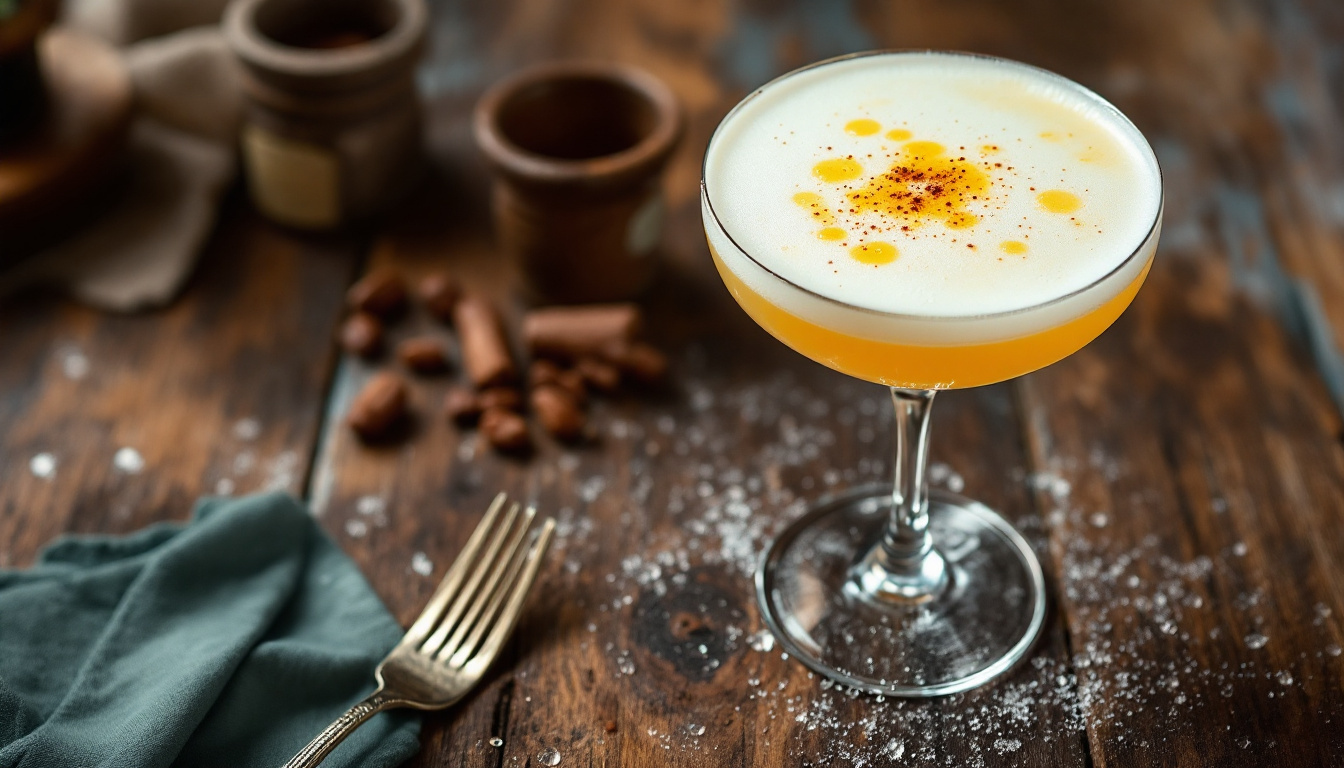
- Pisco sour (S/18-30 in bars), pisco grape brandy shaken with lime, sugar, egg white, and a few drops of Angostura bitters. Frothy, sharp, and the drink Peru and Chile both claim.
- Chicha morada, a sweet, deep-purple soft drink boiled from purple corn with pineapple, cinnamon, and clove. Non-alcoholic and served everywhere, including with lunch menús.
- Chicha de jora, the fermented corn beer of the Andes, sold in villages under a red flag or balloon on a pole. Mildly alcoholic, ancient, and an acquired taste.
- Inca Kola, the bright-yellow, bubblegum-sweet national soda that outsells Coca-Cola in Peru. You have to try it once.
- Masato, a fermented yuca drink from the Amazon, traditionally made by communities in the jungle and offered as a gesture of welcome.
- Lunch is the largest meal, eaten slowly between noon and 3. Dinner is lighter and later.
- Tipping around 10 percent is normal in sit-down restaurants and appreciated, though not always automatic.
- Cuy and anticuchos are eaten with your hands; nobody expects a knife and fork.
- Vegetarians eat well in the Andes: solterito (a fava-bean and cheese salad), causa without the meat filling, quinoa soups, choclo con queso, and stuffed potatoes are all common.
- The leche de tigre served with ceviche is meant to be drunk, not left in the bowl. Locals swear it cures hangovers.
Frequently asked questions
What is the most popular and famous food in Peru?
The most popular and most famous Peruvian foods are ceviche (the national dish), lomo saltado, ají de gallina, anticuchos and pollo a la brasa, with papa a la huancaína the typical starter. Peru’s food splits across three regions, coast, Andes and Amazon, and includes the Chinese-influenced chifa and Japanese-influenced Nikkei traditions found nowhere else in the same form.
What is Peru’s national dish?
Ceviche is Peru’s national dish, raw fish cured in lime juice with chili, onion, and cilantro. It is so central to the culture that UNESCO recognized Peruvian ceviche as Intangible Cultural Heritage in 2023. The country even celebrates a national ceviche day every June 28.
Is Peruvian food spicy?
Peruvian food is flavorful more than fiery. The main chilies, ají amarillo and ají panca, bring fruity warmth and color rather than strong heat, and dishes like ají de gallina are mild. The exception is the rocoto pepper, used in Arequipa’s rocoto relleno, which carries real heat. Table sauces let you add as much or as little as you like.
Is ceviche and street food safe to eat in Peru?
Ceviche and street food are safe when you follow timing and crowds. Eat ceviche at lunch from a busy cevichería that turns over its fish, choose street stalls with long local lines and high turnover, and drink bottled or filtered water rather than tap. Anticuchos grilled to order over charcoal are one of the safest street snacks because the heat is intense and the food is cooked in front of you.
What should vegetarians eat in Peru?
Vegetarians do well in the Andes, where the larder is built on potatoes, corn, and grains. Look for solterito (a fava-bean and cheese salad from Arequipa), causa filled with avocado instead of meat, quinoa soups, choclo con queso (corn with fresh cheese), and stuffed peppers. Ask whether soups use a meat stock, since many do by default.
How much does food cost in Peru?
Peru is cheap to eat in if you eat like a local. A set-lunch menú del día runs S/12-18 (around $3-5), a market ceviche S/15-25, and a quarter pollo a la brasa S/18-25. A mid-range dinner with a pisco sour lands near S/60-100 per person, while the famous tasting-menu restaurants in Lima run well into the hundreds of dollars. As of 2026, a dollar buys roughly 3.7 soles.
What is the best city for food in Peru?
Lima is the best food city in Peru and one of the best in all of South America, home to cevicherías, chifas, Nikkei counters, and the World’s Best Restaurant of 2025, Maido. Arequipa is the strongest contender for traditional regional cooking, and Cusco is best for Andean specialties like cuy and alpaca. Our full Lima food guide breaks the capital down neighborhood by neighborhood.
What is the difference between chifa and Nikkei food?
Chifa is Chinese-Peruvian cooking and Nikkei is Japanese-Peruvian cooking, both born from immigration to Peru. Chifa came with Cantonese laborers in the 1800s and gave Peru the wok, soy sauce, and dishes like lomo saltado and arroz chaufa (Peruvian fried rice). Nikkei came later with Japanese immigrants and brought raw-fish technique, producing tiradito and the food at Maido. Chifa is everyday and cheap; Nikkei runs from casual counters to fine dining.
More food guides waiting for you
Browse our complete collection of food guides across the Americas.