Taiwan is the most underrated food country in Asia. Three food cultures, the densest restaurant grid in the region, and night markets that are not tourist theater but the everyday way Taipei eats dinner. This is a place where a NT$220 bowl of beef noodles outranks half the Michelin counters two blocks away.
Last spring I sat on a plastic stool on Raohe Street at 9 PM, paying NT$70 for a Fuzhou black pepper bun pulled out of a charcoal oven, and decided Taipei is the most underrated food capital on the planet. Taiwan eats at a different rhythm than Japan or China, less regimented than Tokyo, less regionally fractured than Beijing, with its own Hokkien-aboriginal-Japanese braid that hits hard the moment you walk into your first night market.
This guide covers the ten dishes that define Taiwanese cooking, where to eat them, what they cost, and how the food shifts as you move from Taipei down through Taichung to Tainan. For the wider continent picture, see our guide to the best food in Asia.
Prices throughout are 2026, in New Taiwan Dollars (NT$), where about NT$32 equals US$1. That makes a NT$70 night-market snack roughly $2, a NT$220 bowl of beef noodles about $7, and a full night-market dinner well under $15. Taiwan is one of the great food values in developed Asia.
Why Taiwan food is worth the trip
Taiwan eats well because three food cultures collided on one island and never stopped arguing. Aboriginal Austronesian cooking came first, traceable today in mountain villages where wild boar and millet wine still define dinner. Hokkien Han migrants from Fujian Province arrived from the 1600s, bringing braising techniques, soy sauce vocabulary, and the small-bowl noodle culture that dominates Tainan. Then Japan ruled Taiwan from 1895 to 1945 and left a quiet half-influence: oden stalls in Keelung, sashimi mornings in Taipei fish markets, a refined plating instinct in northern restaurants that you also find in our Japan food guide.
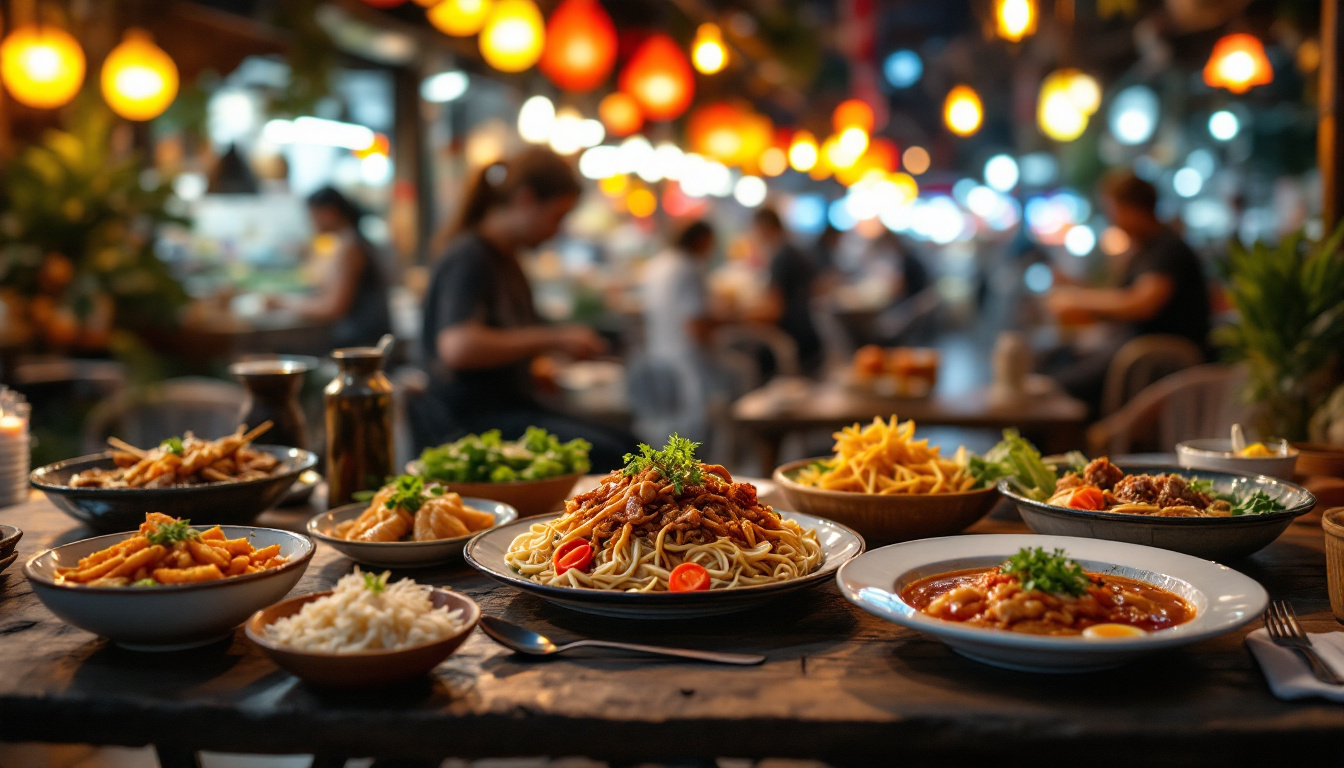
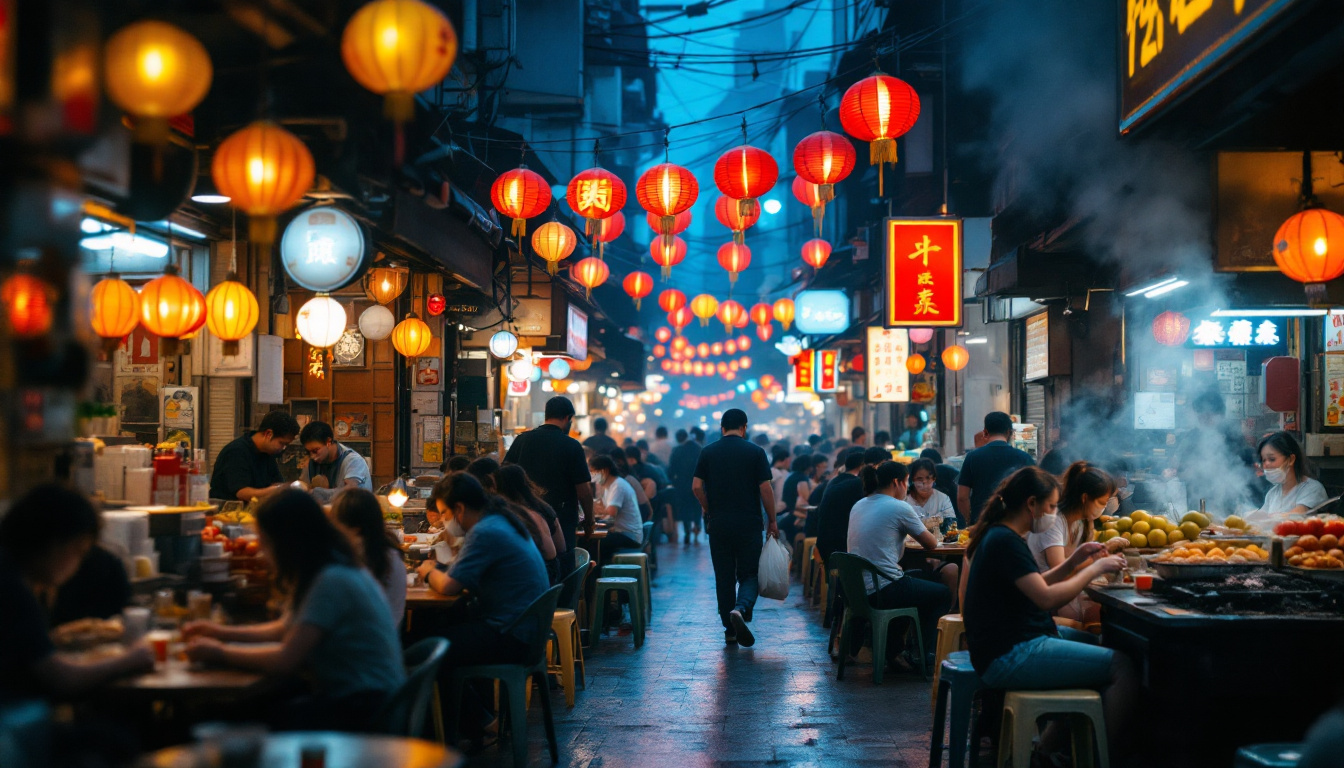
The density is the other half of the story. Taipei runs roughly one hundred thousand food businesses for 2.7 million people, which works out to a stall, counter, or restaurant every few steps in any direction. Night markets are not tourist theater here. They open six nights a week because that is when locals eat dinner, and a NT$50 plate of stinky tofu next to a NT$1,200 omakase counter is the everyday reality.
10 dishes you have to try in Taiwan
This is the section that does the heavy lifting. Ten dishes that show what Taiwan actually tastes like, with where to eat each one, what it costs, and what makes it different from the version you might have tried abroad.
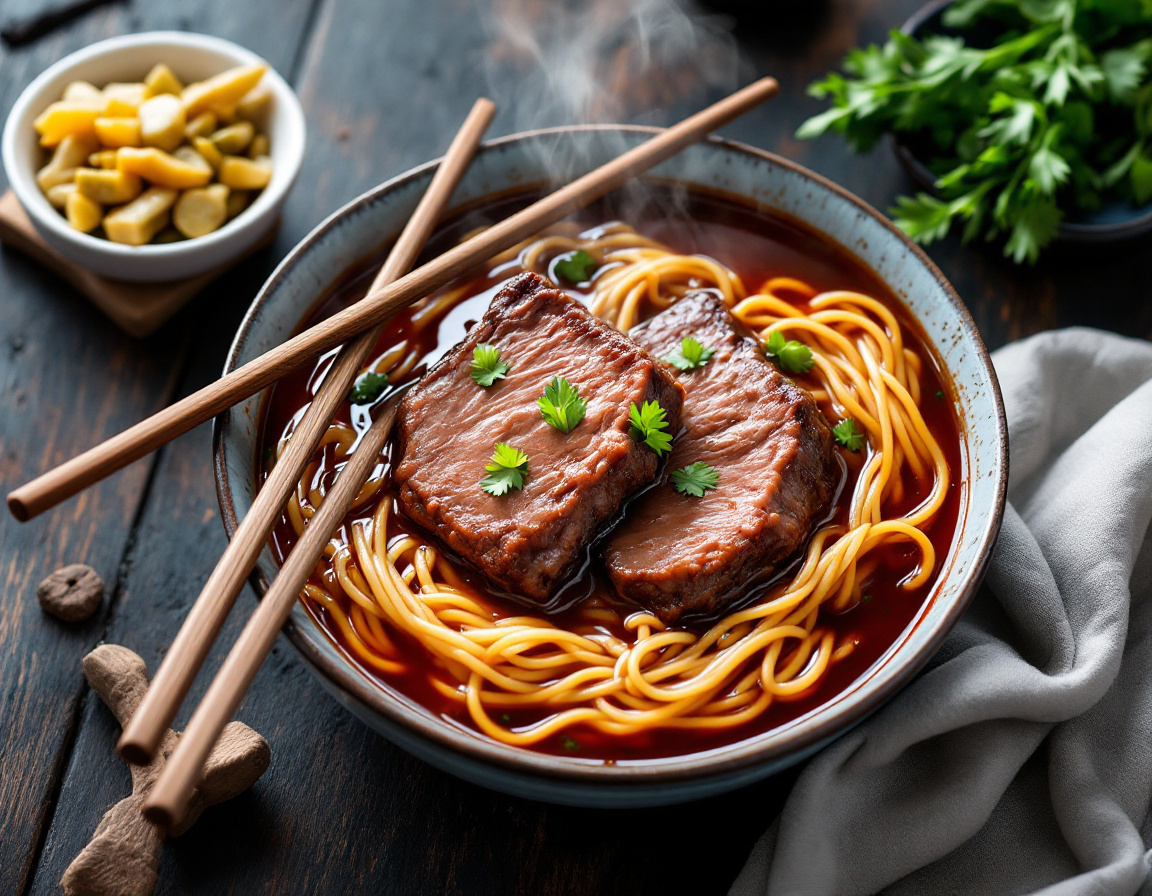
Beef Noodle Soup Niu Rou Mian / 牛肉麵
Taiwan’s national dish was invented by KMT veterans after 1949, mainland soldiers who could not find their hometown noodles and improvised with what Taipei had: hand-pulled wheat noodles, slow-braised beef shank, and a soy-and-star-anise broth deep enough to coat a spoon. The red-braised style (hong shao) is what you order first. The clear-broth version (qing dun) is the quieter alternative locals split over.
Lin Dong Fang on Bade Road keeps its kitchen open until 4 AM and serves what is widely argued to be the city’s best bowl. NT$220 gets you a bowl with three cuts of beef and a side of pickled mustard greens you stir in halfway through. Taipei has run a Beef Noodle Festival every November since 2005 if you want to taste twenty versions in one afternoon. For the broader context of Chinese-mainland noodle traditions that shaped this dish, see our food guide to China.
Xiaolongbao Xiaolongbao / 小籠包
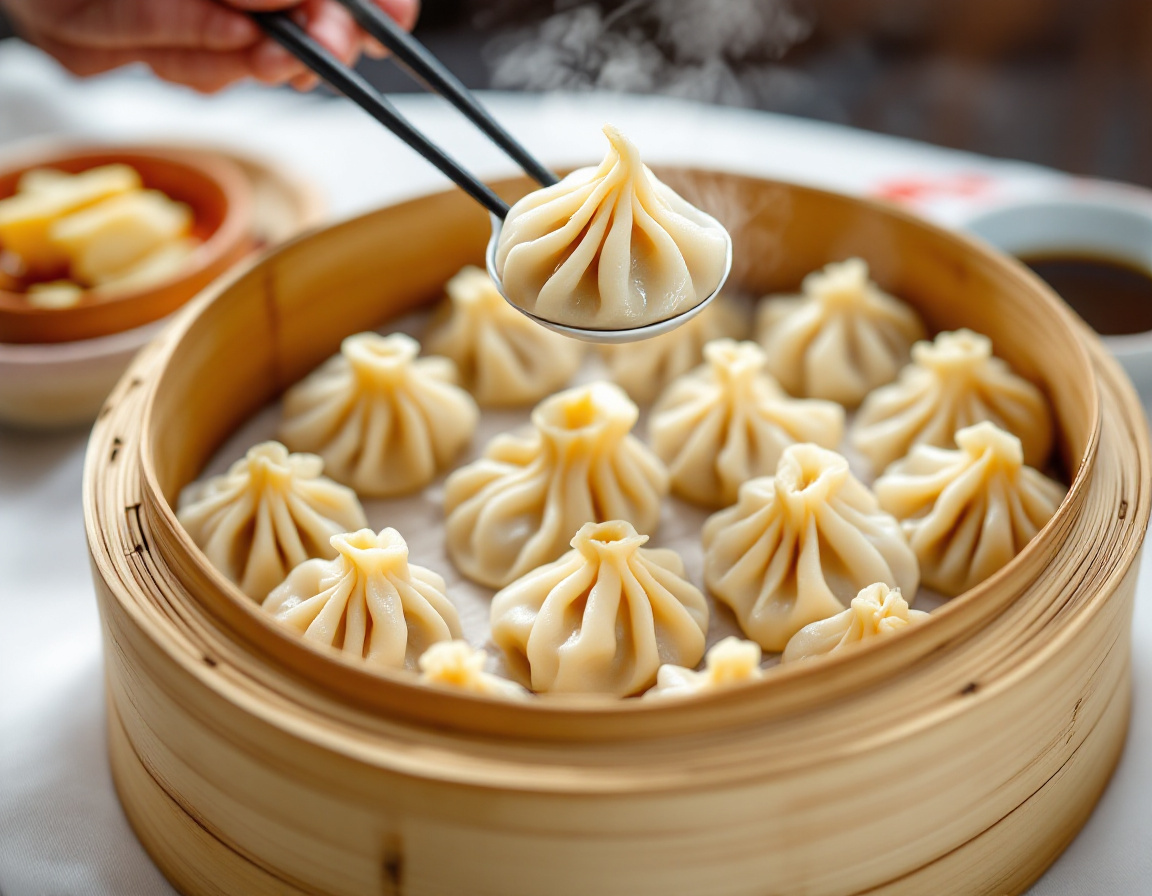
Soup dumplings get the most arguments and the answer is yes, Din Tai Fung is worth it. The Yongkang Street original opened in 1972 as an oil shop, pivoted to xiaolongbao in the 1980s, and earned a Michelin star in 2010 that it has kept. The house standard is eighteen folds per dumpling, weighed and counted, with broth that stays liquid through the steamer.
Eat them the way locals do. Lift one onto a spoon, bite a small hole in the side to let the steam escape, drink the broth, then eat the rest with ginger and black vinegar at a three-to-one ratio. NT$220 gets you a steamer of ten pork dumplings, NT$300 the crab roe version. The Xinyi branch has the shortest wait if Yongkang is two hours deep. For the broader dim sum culture that influences these dumplings, see our guide to food in Hong Kong.
Lu Rou Fan Lu Rou Fan / 滷肉飯
If beef noodle is the national dish, lu rou fan is the national working meal. Pork belly diced small, braised slow in soy sauce, rice wine, sugar, and five-spice until the fat collapses and the sauce thickens, then ladled over a small bowl of white rice. Northern Taiwan dices the pork finer, southern Taiwan keeps the chunks bigger and the sauce more generous.
Jin Feng (金峰) on Roosevelt Road Sec 1 is the Taipei reference point, with lines thirty minutes deep at lunch and a small bowl that runs NT$30. The large bowl at NT$80 plus a pickled cucumber side at NT$15 is a complete meal for under three US dollars. Every Taiwanese mom has a personal recipe and an opinion about Jin Feng. Both can be right.
Gua Bao Gua Bao / 割包
The Taiwanese pork-belly bun got famous in New York when David Chang put it on the Momofuku Ssam menu in 2004, but Taiwan owns the original. The word gua is Hokkien for “to cut,” bao is bun, and the dish is a folded steamed bun stuffed with thick-cut braised pork belly, pickled mustard greens, crushed peanut powder, and a heavy hand of cilantro. The textures land in a specific order, soft bun, salty fat, sour pickle, sweet peanut, herb.
Lan Jia Gua Bao at Gongguan Night Market is where most locals send you, NT$60 for the standard pork belly version, NT$80 for the lean cut if you want less fat. They have been making it the same way since 1956 and the wait at lunch is part of the experience.
Oyster Omelet O-a-tsian / 蚵仔煎
Singapore and Penang make their own versions, but Taiwan’s oyster omelet has a texture nobody copies: small Taiwanese oysters, egg, and a sweet potato starch slurry that turns chewy-translucent on the griddle. The signature topping is a sweet chili tomato sauce, slightly thick, slightly sweet, slightly funky, that does not appear in any other oyster omelet tradition in Asia.
Shilin Night Market sells the highest volume but the better versions are at Tainan Hua Yuan Night Market or in the smaller stalls near Raohe’s eastern entrance. NT$60 to NT$80 for a single portion, and you order one per person. The oysters are small for a reason, the dish lives or dies on the egg-starch ratio, not the seafood.
Stinky Tofu Chou Doufu / 臭豆腐
Yes, it smells. Tofu cubes fermented in a brine of herbs, soy milk, and dried fish for one to two weeks come out with the kind of aroma you smell from two blocks away. The taste, once you commit, is far cleaner than the smell: salty, almost cheese-funky, the way a strong blue cheese works against your expectations.
Two formats matter. Fried stinky tofu at night markets comes with pickled cabbage and chili sauce, NT$60 to NT$70 per plate. Braised stinky tofu in Sichuan-style spicy broth, served at sit-down restaurants, is the heavier version and runs NT$80 to NT$90. Shenkeng, a small district southeast of Taipei, built its tourist economy around stinky tofu. Shen Ji Shi Fu there is the version locals drive out for.
Three Cup Chicken San Bei Ji / 三杯雞
The name is literal. One cup soy sauce, one cup rice wine, one cup sesame oil, reduced over high heat with bone-in chicken pieces, ginger slices, garlic cloves, and a final handful of Taiwanese basil (jiucengta, 九層塔, “nine-layer pagoda”) that hits the wok at the last second. The basil is not interchangeable with Italian or Thai varieties. It has a sharper, anise-forward note that defines the dish.
Order it at a re chao (熱炒) restaurant, the noisy Taiwanese version of a Spanish tapas bar: loud, beer-heavy, designed for groups of four to six, with a menu of NT$200 to NT$400 sharing plates. Chao Yan Tai Cai in Datong District is one of the better Taipei addresses. The chicken arrives in a small clay pot, still sizzling, and you ladle it over rice the second it slows down.
Danzai Noodles Dan Tsu Mi / 擔仔麵
This is the dish you take a train to Tainan for. A fisherman named Hong Yu-tou invented it in 1895 to feed himself during typhoon-season off months when he could not fish. The name dan-tsu means “carry on a pole,” referring to how Hong sold it from a portable load: a small bowl, thin wheat noodles, a spoonful of intensely flavored pork sauce, a shrimp broth poured over, a single boiled shrimp on top, garlic, cilantro.
Du Hsiao Yueh (度小月) is Hong’s original house, still run by descendants, with the founding location near Tainan’s Shennong Street. The portion is deliberately small at NT$50 to NT$70, designed so you order two or three dishes alongside. Tainan locals will tell you the franchised Taipei branches are decent. The original is still better.
Bubble Tea Zhen Zhu Nai Cha / 珍珠奶茶
Two shops fight over the invention. Chun Shui Tang (春水堂) in Taichung claims 1986, when a product development manager dropped tapioca pearls from a Hakka dessert into iced tea on a whim. Hanlin Tea Room (翰林茶館) in Tainan claims 1988, with a slightly different version. Both shops still exist. Both lawsuits ended without a clear winner. Most Taiwanese give Chun Shui Tang the older claim and Hanlin the credit for popularizing it.
The original is black tea, milk, tapioca pearls, sugar. Taiwan now sells more than a thousand variants, cheese foam on top, brown sugar swirled syrup, fresh fruit blended in. NT$50 to NT$90 for a large cup in any Taipei or Taichung shop. Chun Shui Tang’s flagship in Taichung still serves the original recipe and is worth the high-speed rail trip if you only have time for one bubble tea pilgrimage.
Pineapple Cake Fengli Su / 鳳梨酥
Taiwan’s signature souvenir food has one fraud you need to know about. Cheap pineapple cakes use winter melon (冬瓜, dong gua) as the bulk filler with a small percentage of pineapple for flavor, which is why a box of twenty can cost NT$300. Premium pineapple cake uses 100% pineapple, sometimes from a single farm, and the price triples to NT$50 per piece. The difference shows up in the chew, real pineapple gives slight fibrous resistance, dong gua melts into uniform paste.
Sunny Hills (微熱山丘) at the Taipei flagship is the easiest premium reference, NT$50 per cake, single-farm pineapple from Bagua Mountain. Chia Te Bakery (佳德糕餅) on Nanjing East Road sits at the middle tier with the longest local lines and NT$35 per cake. The 1970s government push for pineapple exports during the “no banana, only pineapple” trade boom is why the dessert became Taiwan’s edible postcard.
Beyond the top 10: dishes worth trying if you have time
Ten dishes is the floor, not the ceiling. Taiwan has the kind of food density where a second visit will give you another twenty must-tries. These are the next six to put on your list, with the shortest possible context for each.
- Pepper bun (Hu Jiao Bing, 胡椒餅). Fuzhou-origin, NT$60 to 70, charcoal-baked against the wall of a clay oven. The Raohe stall and its Ximending sister branch are the references.
- Coffin bread (Guan Cai Ban, 棺材板). Tainan’s brilliant invention. Thick-cut white bread, hollowed out, deep-fried, then filled with creamy chicken or seafood chowder and capped with the bread “lid.” NT$80 to 120 at Tainan night markets.
- Oyster vermicelli (O-a mi-sua, 蚵仔麵線). Tamsui specialty. Thin wheat noodles in a thick brown broth with small oysters and sometimes pork intestine, sharp with vinegar and chili. NT$50 to 80.
- Iron eggs (Tie Dan, 鐵蛋). Tamsui’s edible souvenir. Quail or chicken eggs simmered for days in soy sauce, five-spice, and tea until the whites turn rubbery-dense and the yolks taste concentrated. NT$120 per bag of ten.
- Taiwanese fried chicken cutlet (Ji Pai, 雞排). The night market staple, the size of your face. White meat pounded thin, dredged in sweet potato starch, double-fried, hit with white pepper and chili powder. Hot Star Large Fried Chicken at Shilin set the template. NT$70 to 90.
- Ba-wan (Meat Sphere, 肉圓). Changhua origin. A translucent dumpling skin made from sweet potato and rice flour, stuffed with pork and bamboo shoots, steamed then briefly fried, served with a sweet rice glaze. NT$40 to 60 per piece.
How food changes across Taiwan
Taiwan is small enough to cross in a day on the high-speed rail, but the cooking shifts every two hundred kilometers. Four regional kitchens to know.
Refined plating, smaller portions, more Japanese inheritance. Keelung’s Miaokou Night Market specializes in seafood that arrives on the docks the same morning. Taipei runs the densest restaurant grid on the island and the largest concentration of Michelin-listed lao zi hao institutions. Oden stalls (called guandongzhu here) and standing sashimi bars are vestiges of the 1895 to 1945 Japanese era.
Bubble tea was born here in 1986. Sun cake (太陽餅, tai yang bing), a flaky pastry filled with maltose, is Taichung’s signature souvenir. Lukang, a historic port town an hour south, preserves Hokkien food traditions that have faded elsewhere, including oyster vermicelli soup and ox tongue cookies that look nothing like the meat.
Tainan is widely considered Taiwan’s true food capital. The cooking is sweeter, the broths fuller, the small-bowl culture stronger. Danzai noodles, milkfish belly soup at breakfast, eel noodles in dark soy sauce, beef soup made from cattle slaughtered hours before service. Kaohsiung’s Liuhe Night Market is the southern equivalent of Raohe, with better seafood and lower prices.
Aboriginal Austronesian cooking still defines the east coast menu. Wild boar with mountain peppercorns, betel nut as a casual snack, millet wine served at celebrations, fern shoots in soup. Hualien’s night market is smaller but it is the easiest way to taste aboriginal cuisine without going inland to a tribal village.
Night markets, lao zi hao institutions, and re chao
Night markets are the Taipei dinner default, six nights a week, opening from around 5 PM and busy until midnight. Four matter more than the rest. For how Taipei stacks up against other Asian night market cities, see our ranking of the world’s best night markets and food halls.
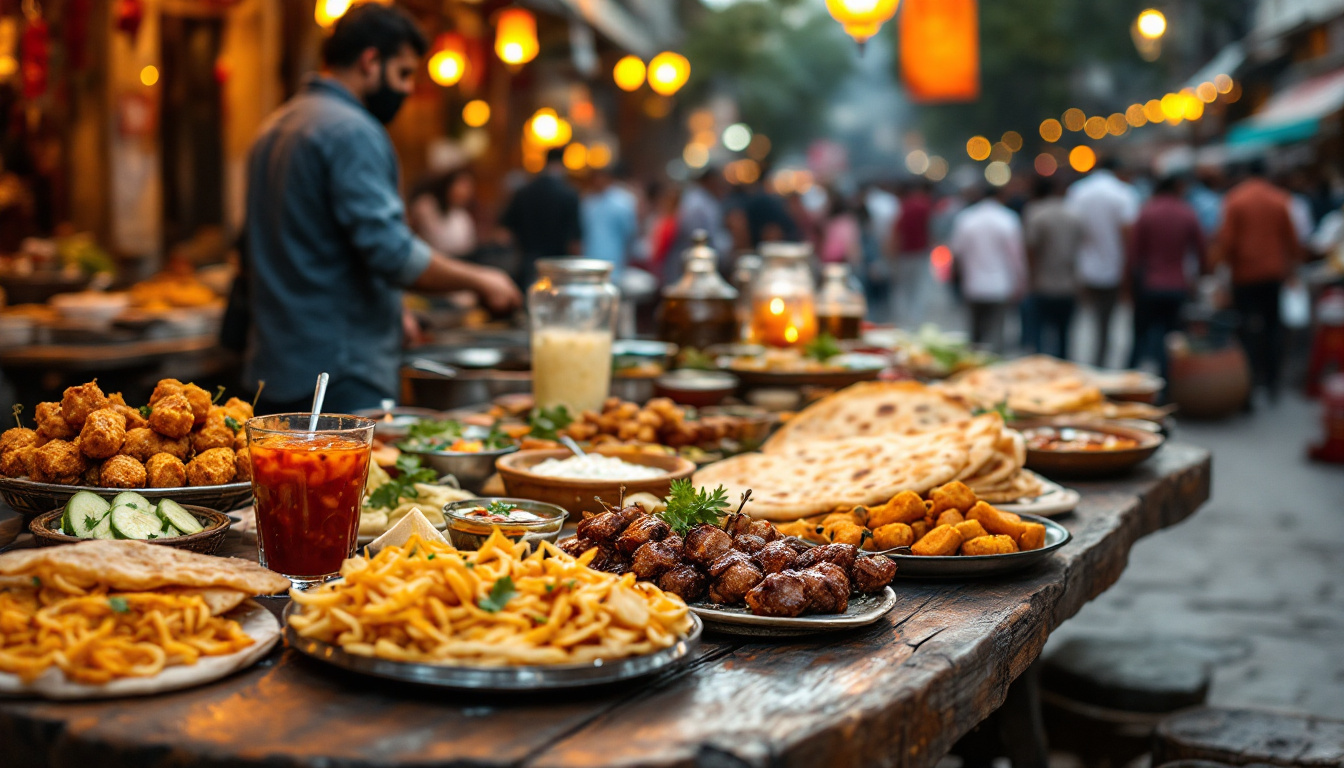
Raohe Night Market (Songshan District). The insider pick. One block long, dense, manageable in ninety minutes. The Fuzhou black pepper bun stand at the western entrance has a queue every evening and earns it, NT$70 for a charcoal-baked bun with peppered pork and scallions. The buns are slapped against the inside wall of a clay tandoor-style oven and baked in two minutes flat, which is why locals queue for them and why they show up in roughly half of every Taiwan travel reel. The eastern half is stronger on sit-down stalls (oyster omelet, beef noodle, Taiwanese sausage).
Shilin Night Market (Shilin District). The largest, the most tourist-packed, and roughly 30% more expensive across the board. You go to Shilin for scale and atmosphere, not for the best version of anything. The basement food court is where locals still eat, the upper street stalls are mostly tourist-priced.
Tonghua / Linjiang Night Market (Da’an District). The local-only pick. Smaller, slower, with night-market basics at the lowest prices in central Taipei. Best for a calm meal after the chaos of Raohe.
Ningxia Night Market (Datong District). The smallest of the four big ones, the strongest for aiyu jelly stalls and taro ball desserts. End your evening here for the sweet course.
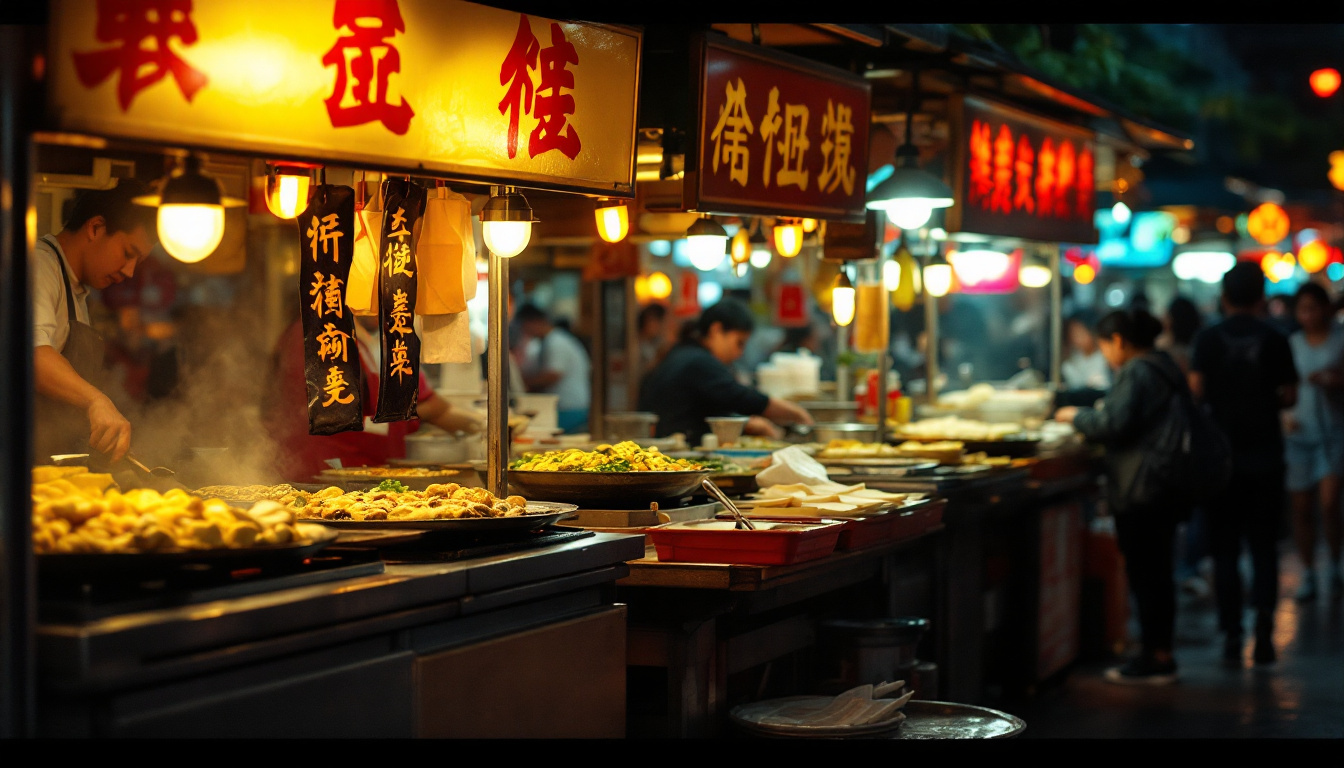
Outside the markets, lao zi hao (老字號, “old name”) institutions are how locals signal a restaurant has earned the city’s trust. Long Du Bing Guo on Yongkang Street has been making mango shaved ice since 1916, NT$220 for a portion that feeds two. Yong Kang Beef Noodle a few doors down dates to 1963. Their fifty-plus years of consistency are the kind of trust signal no review site can generate.
Re chao (熱炒) restaurants are the third category. Noisy, beer-heavy, group-oriented, with sharing-plate menus at NT$200 to NT$400 per dish. Order three to five dishes for a table of four, drink Taiwan Beer or kaoliang, and accept that the lights are bright and the conversation is loud. That is the format. Taipei sits firmly in the global street-food top tier, alongside the cities in our best food cities ranking.
Food day trips from Taipei
Two half-day trips out of Taipei pay off for what you eat at the end. Both are easy on the MRT or with a quick bus connection.
Tamsui (New Taipei City). Forty minutes on the red MRT line and you are at the western end of Taiwan’s old port town, with a riverside boardwalk that fills up at sunset. Eat ah-gei (fried tofu skin stuffed with bean noodles in a sweet chili sauce) at the Original Ah-Gei stall that has been working the same corner since 1965. Buy iron eggs to take home, NT$120 a bag. Order Tamsui-style fish balls, lighter and bouncier than the southern Taiwanese version, at any of the boardwalk stalls.
Jiufen Old Street. An hour and a half from Taipei by train plus bus, the hillside town that inspired the bathhouse scenes in Hayao Miyazaki’s Spirited Away. Walk Old Street after 4 PM as the lanterns light up. Eat peanut ice cream rolls at Ah Zhu (shaved peanut brittle and cilantro wrapped around taro and vanilla ice cream in a thin pancake), taro balls at Grandma Lai’s (the original house, not the Taipei franchise), and Hakka glutinous rice cake at Ah Lan. Budget NT$300 to 500 per person for a full Jiufen eating walk.
Eating etiquette and tourist traps
- Never stand chopsticks upright in rice. That mimics incense at funerals and reads as bad luck or rude.
- Tipping is not expected. Restaurants often add a 10% service charge automatically, which is the cap. Night markets and street stalls take no tip at all.
- Address stall owners as lao ban (老闆, “boss”), regardless of age. It is the universal polite term and works on the first try.
- The Taiwanese “yes please” gesture for offered food is a small head nod plus the hand briefly raised. Loud thank-yous read as performative.
- At re chao restaurants, the youngest person at the table usually pours tea or beer for everyone else first. Watch and copy.
Taiwan for vegetarians and vegans
Taiwan is the easiest country in East Asia to travel as a vegetarian. Roughly 13% of the population practices some form of Buddhist vegetarianism (素食, su shi), and dedicated vegetarian restaurants exist in every neighborhood. The signage to look for is the character 素 (“plain”) on the door or menu, which signals strict Buddhist vegetarian cooking with no meat, fish, eggs or dairy in some cases, and no garlic, onion, leek, chive, or shallot (the five “pungent” alliums Buddhist tradition excludes).
Hua Shan Lin (花山樓) in central Taipei does Buddhist vegetarian dim sum that vegetarian visitors usually rank in their top three meals of the trip. Loving Hut (愛家素食) is the local vegan chain with branches across the island, NT$80 to NT$150 for a full meal.
Night market vegetarian options run wider than most expect. Fried stinky tofu is plant-based by default. Oyster omelet without the oyster is sold as “egg omelet” (蛋煎). Pineapple cake, scallion pancake, aiyu jelly, taro balls, and most bubble tea variants are vegetarian. Read 素 on the menu, ask “you su shi ma?” (有素食嗎, “do you have vegetarian?”) to confirm, and trust the answer.
FAQ
Is Taiwan street food safe to eat?
Yes, Taiwan has one of the safest street food cultures in Asia. Public health enforcement at night markets is rigorous and most stalls have been running for decades. Stomach trouble for visitors is rare and usually comes from unfamiliar spice levels rather than contamination.
Do I need to speak Mandarin to eat in Taiwan?
No. Taipei tourist areas have English menus or pictures, especially near Yongkang Street, Taipei 101, and major night markets. Outside Taipei, point at what other people are eating, show a photo from Google Translate’s camera mode, or use “this one” (這個, zhe ge) plus a finger point. Stall owners are patient.
What is the best month to visit Taiwan for food?
October and November. The heat eases, mango season still has stragglers, persimmon and pomelo seasons begin, and most food festivals (Mid-Autumn, Beef Noodle Festival in early November) cluster in this window. Avoid July to early September for typhoons and Taipei’s high humidity.
Is Taiwan more expensive than Thailand for food?
Yes, by roughly 30 to 50%. A night market dinner that runs THB 150 in Bangkok will cost NT$220 to NT$300 (about USD 7 to 10) in Taipei. Taiwan is still cheap by European or American standards but it is not the rock-bottom street food bargain Southeast Asia offers.
Cash or card at night markets?
Cash. Always. Most night market stalls do not take cards, mobile pay (LinePay, JKO Pay) works at maybe a third of them, and ATMs cluster around the entrances. Carry NT$1,000 to NT$2,000 in small bills for a serious eating night.
Should I do a day trip from Taipei for food?
Yes, two trips are worth half a day each. Tamsui (40 minutes by MRT) for ah-gei, iron eggs, and Tamsui-style fish balls along the waterfront. Jiufen (1.5 hours by train plus bus) for peanut ice cream rolls, taro balls, and the Japanese-era teahouses Hayao Miyazaki used as Spirited Away references. Both run NT$200 to NT$400 in food per person.
More food guides waiting for you
Browse our complete collection of Asian food guides.