A Binondo food crawl through the world’s oldest Chinatown, sizzling sisig with a cold beer, skewers off a smoky street grill, and a tower of halo-halo to cool down: a neighborhood guide to eating in Manila.
The best food in Manila is finally getting the recognition it deserves, with the city named one of the world’s top food destinations for 2026. This is a place built on four centuries of Malay, Chinese, Spanish, and American influence, and you taste all of it on one street: hand-pulled noodles in Binondo, a sizzling plate of sisig in a beer house, charcoal skewers of every animal part on a Quiapo corner, and a shaved-ice halo-halo piled with ube and leche flan. Filipino food is bold, sour, fatty, and sweet. Manila is where it all collides.
Why Manila is a rising food capital
Manila is a rising food capital because Filipino cooking is finally being recognized, and the capital is where every strand of it meets. The wider story is in our complete Philippines food guide. But Manila concentrates it: the centuries-old Chinese kitchens of Binondo, the Spanish-influenced classics, the American-era fast food, and a street-food culture that runs from dawn taho to midnight skewers.
The food organizes by district. Binondo, the world’s oldest Chinatown, is the essential food crawl. Quiapo and old Manila are raw, everyday street food. Makati, especially Poblacion, holds the modern Filipino restaurants and bars, plus the famous weekend markets. This guide moves through each, and sits alongside our wider guide to the best food in Asia.
Binondo: the world’s oldest Chinatown
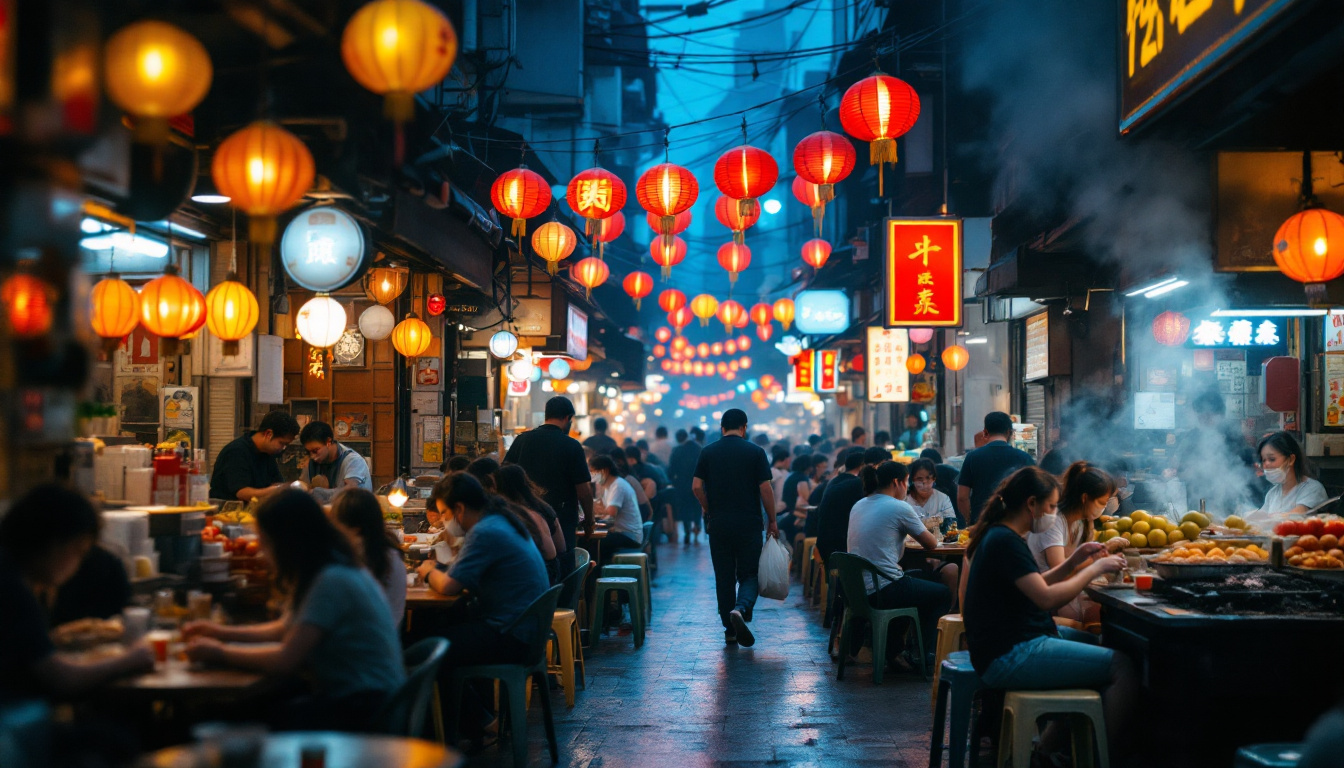
Binondo is the best food experience in Manila, the world’s oldest Chinatown and a dense maze of tea houses, noodle shops, and bakeries. A Binondo food crawl is the classic Manila day out, hopping between Chinese-Filipino institutions, eating small at each. Go hungry. Graze across several stops.
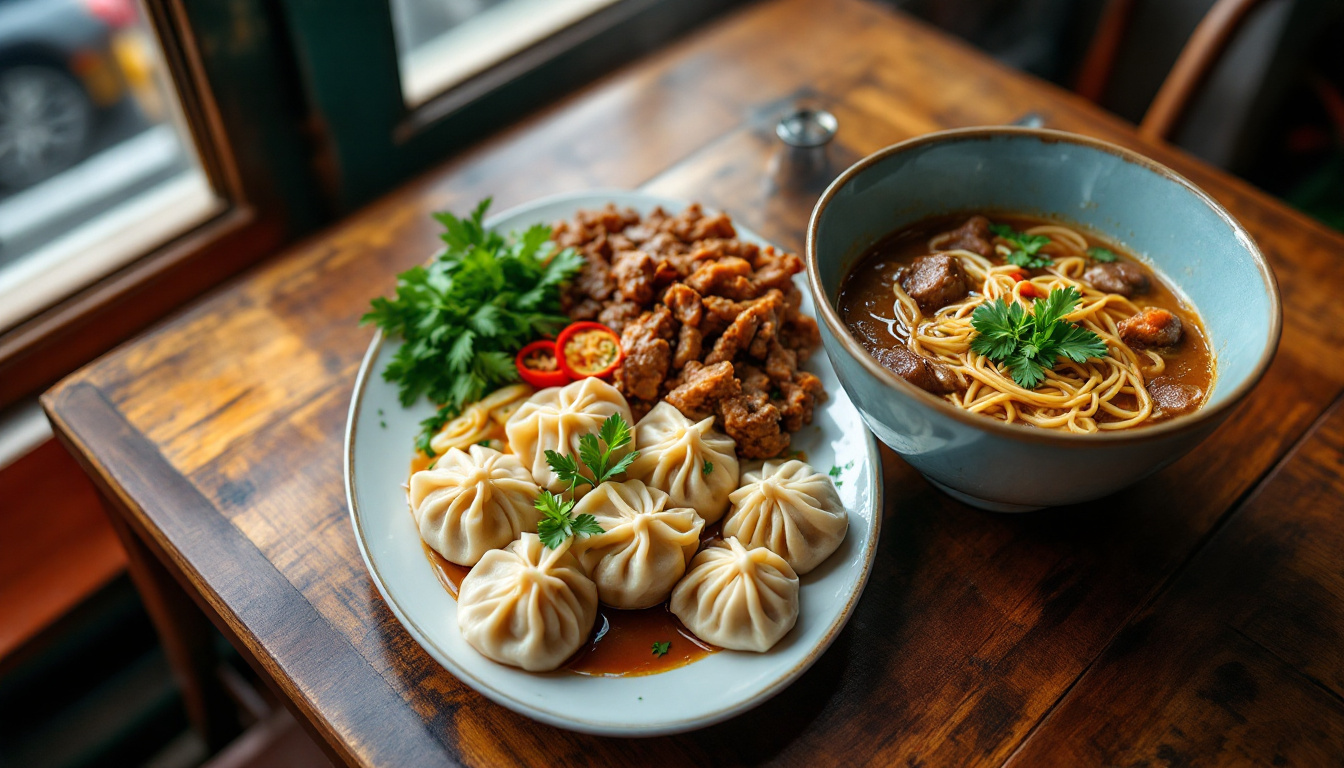
- Hand-pulled noodles, at spots like Lan Zhou La Mien, where the noodles are stretched to order for a bowl of beef la mian.
- Siopao and dumplings, fluffy steamed pork buns and dumplings at old favorites like Wai Ying and Quik Snack.
- Cantonese classics, at decades-old tea houses like Sincerity (famous for fried chicken) and Ying Ying.
- Lumpia and kiampong, fresh spring rolls and a Chinese-Filipino fried rice, the everyday Binondo plates.
- Hopia and tikoy, the flaky bean-filled pastries and sticky rice cakes to take home from Eng Bee Tin.
Street food: skewers, balut and Quiapo
Manila’s street food is some of the most fearless in Asia, eaten off charcoal grills and from steaming carts. Quiapo and the streets of old Manila are the heartland, where everything edible ends up on a stick or in a cup. This is where the city eats cheapest, and most adventurously.
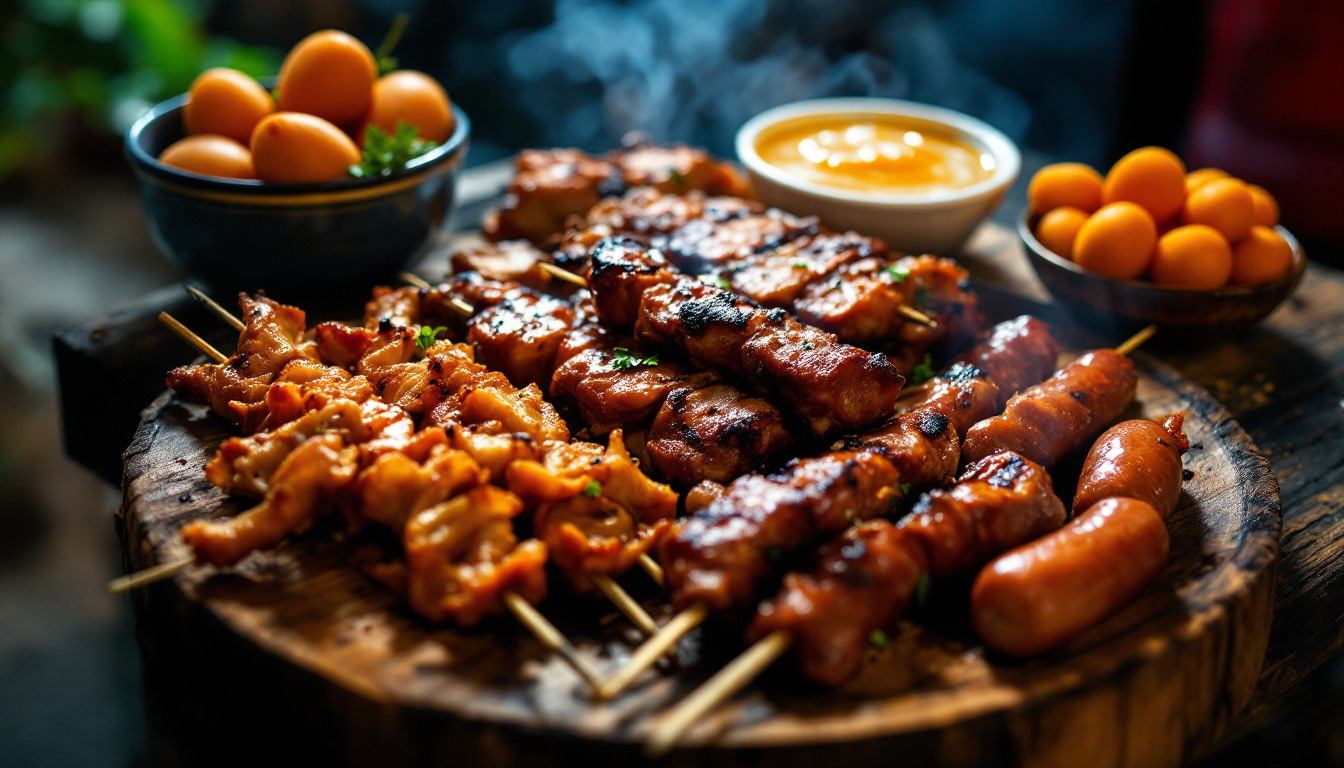
Street skewers isaw, betamax, BBQ
Street skewers are the heart of Manila grazing, grilled over charcoal and dunked in spiced vinegar. Isaw is grilled chicken or pork intestine, chewy and smoky; betamax is cubes of set chicken blood; and pork barbecue is sweet, sticky, and the crowd favorite. Add kwek-kwek (quail eggs in orange batter) and fish balls fished from a vat of bubbling oil. You pay a few pesos per stick and build a meal of them. Eat where the grill is busy and the vinegar gets shared.
The boldest bite is balut, a fertilized duck egg eaten warm from the shell with salt and vinegar, sold by vendors after dark. It’s the Manila dare every visitor hears about, and it’s genuinely good if you can get past the idea. Morning brings the gentler taho, warm silken tofu with brown-sugar syrup and chewy sago, ladled into a cup by a roaming vendor calling “tahooo.” Banana cue (caramelized fried banana on a stick) rounds out the sweet street lineup.
Makati, Poblacion and the weekend markets
Makati is where Manila does modern Filipino food and weekend market grazing. Poblacion, once a red-light district, is now the city’s hippest eating and drinking quarter, while the Saturday and Sunday markets are food-crawl gold. This is the polished counterpoint to Binondo and the streets.
- Poblacion, for modern Filipino restaurants, craft cocktail bars, and late-night sisig, the city’s nightlife-and-food hub.
- Salcedo Saturday Market, in Makati, for a huge spread of Filipino home cooking, kakanin (rice cakes), and regional dishes.
- Legazpi Sunday Market, the other Makati weekend market, strong on prepared food and international stalls.
- Maginhawa Street, over in Quezon City, a long strip of budget eateries and food parks popular with students.
- Modern Filipino dining, the new wave of restaurants reinventing adobo, kare-kare, and kinilaw for a new generation.
The dishes you have to try
The dish that defines a Manila night out is sisig, but the most popular and typical food in Manila runs the whole Filipino canon, from the national braise adobo to sour sinigang soup and crackling crispy pata. Here are the essentials, the rough price, and what makes each worth ordering. Prices are in Philippine pesos (PHP), roughly 58 to the US dollar in 2026.
Sisig
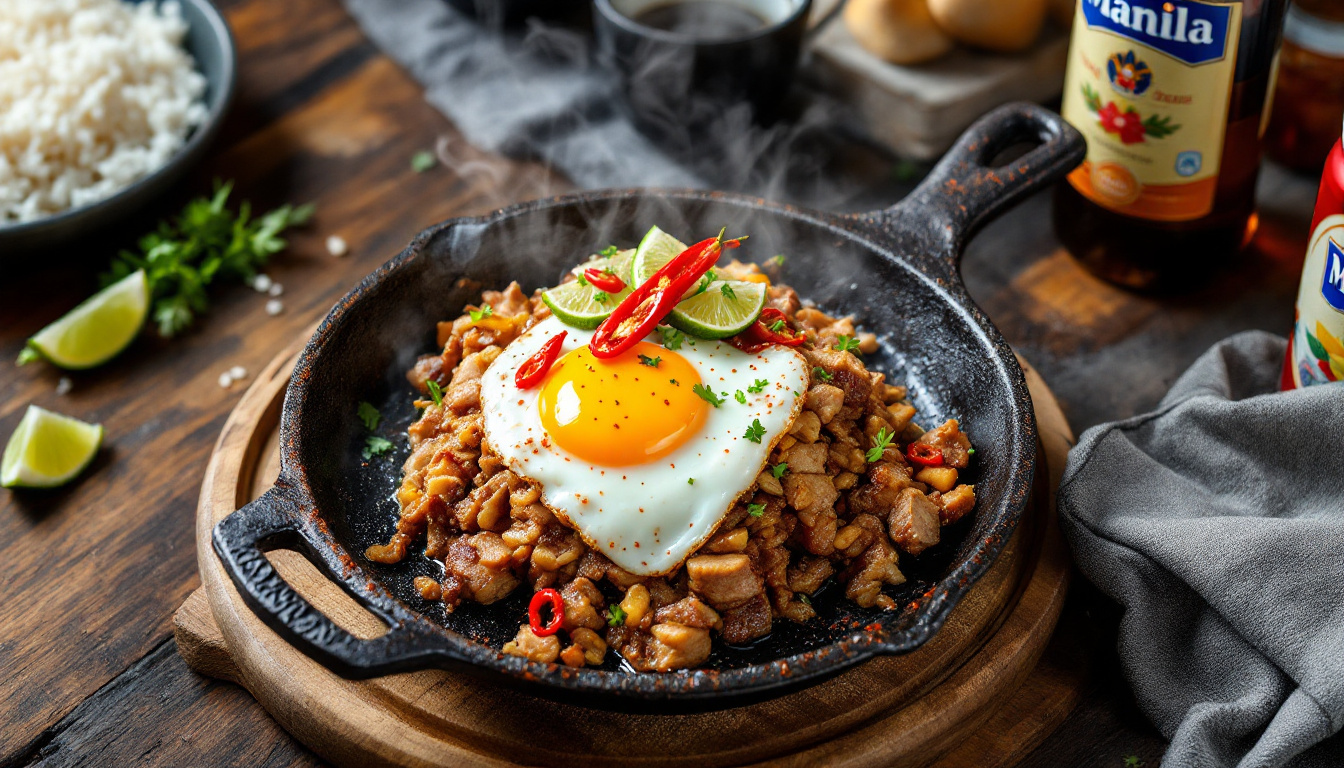
Sisig is chopped pork (face and ear), seasoned with calamansi, chili, and onion and served screaming hot on a sizzling plate, often crowned with an egg, and it’s Manila’s great drinking food. The contrast of crispy and chewy bits with the sour-citrus hit is addictive, and it arrives still spitting from the griddle. It came from Pampanga but is now everywhere in the capital, from carts to gastropubs. Order it with a cold San Miguel and a bowl of rice. Modern versions use tuna, bangus, or tofu.
Adobo
Adobo is meat (usually chicken or pork) braised slowly in soy sauce, vinegar, garlic, peppercorns, and bay leaf, and it’s the closest thing the Philippines has to a national dish. The vinegar both flavors and preserves, giving a savory, tangy, slightly sweet braise that every family makes differently. Served over rice, it’s the comfort food of the country. Manila restaurants range from grandma-style versions to modern reinventions, and it’s the dish to start understanding Filipino food.
Sinigang
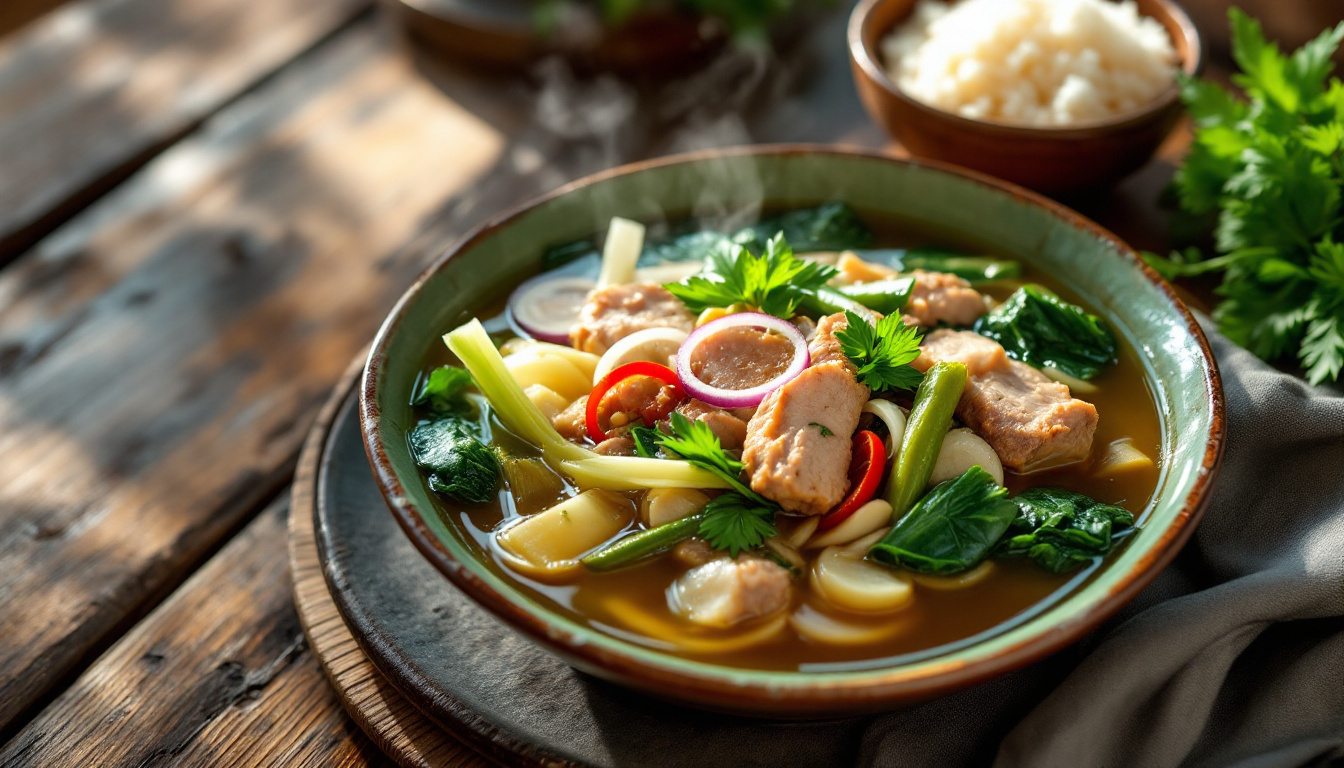
Sinigang is the sour soup at the heart of Filipino home cooking, pork, shrimp, or fish simmered in a tamarind-soured broth with kangkong (water spinach), radish, okra, and long beans, and it’s the dish many Filipinos name as their favorite over even adobo. The sourness comes from sampalok (tamarind), though guava, calamansi, or green mango versions exist, and it’s the ultimate rainy-day comfort food. Order sinigang na baboy (pork) with a mountain of rice; the broth alone is worth the trip. This is the soup that defines the Filipino love of sour.
Crispy pata and lechon
Crispy pata is a whole pork knuckle and leg boiled until tender then deep-fried until the skin blisters into glassy crackling, served with a soy-vinegar-chili dip, and it’s Manila’s great sharing centerpiece. Its festive cousin is lechon, the whole spit-roasted pig stuffed with lemongrass and garlic that anchors every Filipino celebration, with La Loma in Manila famous for its lechon row. Both are about that shattering, fatty skin. Order crispy pata for the table with rice and a cold San Miguel, and pull the meat apart by hand.
Chicken inasal
Chicken inasal is Bacolod’s gift to the capital: chicken marinated in calamansi, lemongrass, ginger and garlic, basted with annatto oil until it glows amber, then grilled over coals so the edges char. It arrives with garlic rice, a small cup of the orange basting oil to spoon over everything, and sinamak, the spiced palm vinegar, for dipping. Dedicated inasal joints and big chains serve it across Manila, and locals eat it with their hands. It is smokier and sharper than ordinary barbecue chicken, and the extra rice is not optional.
For breakfast, Manila runs on silog: a one-plate meal of garlic fried rice (sinangag) and a fried egg paired with a cured or fried meat, named as a portmanteau. Tapsilog (with sweet-savory beef tapa) is the classic, joined by tocilog (sweet tocino pork), longsilog (longganisa sausage), and bangsilog (milkfish). Add a warm pandesal roll and instant coffee, and you have the everyday Filipino morning, served at carinderias and 24-hour tapsihan joints all over the city.
| Dish | What it is | Price (2026) | Where |
|---|---|---|---|
| Sisig | Sizzling chopped pork with calamansi and chili | PHP 150-280 | Beer houses, Poblacion |
| Adobo | Meat braised in soy, vinegar, and garlic | PHP 150-250 | Carinderias and restaurants |
| Sinigang | Sour tamarind soup with pork, shrimp, or fish | PHP 180-350 | Carinderias and restaurants |
| Crispy pata | Deep-fried pork knuckle with crackling skin | PHP 600-1,200 | Filipino restaurants, sharing |
| Chicken inasal | Annatto-basted grilled chicken with garlic rice and sinamak | PHP 150-300 | Inasal joints, citywide |
| Tapsilog | Beef tapa, garlic rice, and fried egg (silog breakfast) | PHP 90-180 | Tapsihan, carinderias |
| Binondo noodles and siopao | Hand-pulled la mian, steamed pork buns | PHP 60-220 | Binondo (Lan Zhou, Wai Ying) |
| Street skewers | Isaw, betamax, pork BBQ, kwek-kwek | PHP 10-30 each | Quiapo, street corners |
| Halo-halo | Shaved ice with ube, leche flan, beans, jelly | PHP 80-180 | Citywide, Chowking and stalls |
| Lechon | Whole spit-roasted pig with crisp skin | by weight | Special occasions, restaurants |
| Kare-kare | Oxtail and vegetables in peanut sauce with bagoong | PHP 250-400 | Filipino restaurants |
| Balut | Warm fertilized duck egg with salt and vinegar | PHP 20-35 | Street vendors, after dark |
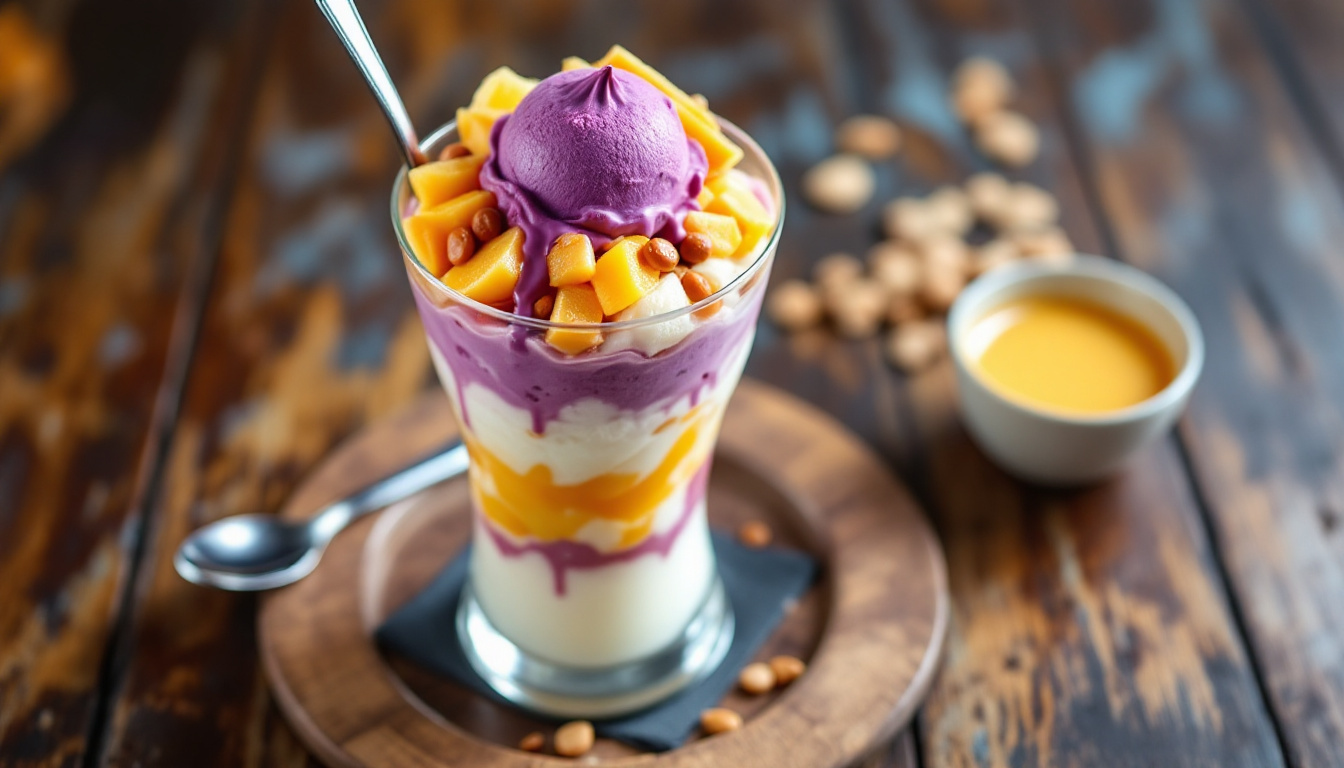
Save room for halo-halo, the riotous shaved-ice dessert that is Manila’s answer to the tropical heat: crushed ice over sweet beans, fruit, jellies, and sago, crowned with leche flan, a scoop of purple ube ice cream, and crunchy pinipig. You stir it all together (halo-halo means “mix-mix”) into a cold, sweet, textural mess. It’s everywhere from humble stalls to chains, and it’s the perfect end to a hot day of eating.
What to drink and how to eat well
The drink to pair with Manila food is an ice-cold San Miguel beer, especially next to a plate of sisig. The Pale Pilsen is the national lager and the default for any night out. Beyond it, calamansi juice (the local citrus, served hot or cold) is the everyday refresher, fresh buko (young coconut) juice cools the heat, and Filipino coffee culture runs from old-school kapeng barako to a booming third-wave scene. For something stronger and local, lambanog is a potent coconut spirit. And no account of Manila eating is complete without Jollibee, the homegrown fast-food giant whose Chickenjoy and sweet Jolly Spaghetti are a genuine cultural institution worth trying once.
- Rice is the base of almost every meal; expect it with everything, including breakfast.
- Filipinos eat with a spoon and fork (the spoon does the cutting); a knife is rarely used.
- Tipping around 10 percent is appreciated, though a service charge is often already added.
- Vegetarians have it harder, since pork and fish run deep, but look for lumpiang sariwa, ginataang gulay (vegetables in coconut), pancit, tofu sisig, and market vegetable dishes.
- Street skewers are eaten communally with shared vinegar dips; pay per stick at the end.
Frequently asked questions
What food is Manila known for?
Manila is known for its Binondo Chinatown food crawl (siopao, dumplings, hand-pulled noodles, hopia), sizzling sisig, adventurous street skewers like isaw and balut, and halo-halo for dessert. As the Philippine capital, it brings together Filipino, Chinese, and Spanish-influenced cooking, and it was named one of the world’s top food destinations for 2026.
What is the most popular food in Manila?
The most popular and most famous food in Manila is sisig, the sizzling chopped-pork plate that is the city’s favorite drinking food. Close behind are adobo (the national braise), sour sinigang soup, crispy pata and lechon, and the Binondo Chinatown classics like siopao and hand-pulled noodles. For street food, isaw skewers, kwek-kwek, and balut are the icons, and halo-halo is the typical dessert. Together these are the dishes every first-time visitor should try.
What should I eat on a Binondo food crawl?
On a Binondo food crawl, eat hand-pulled noodles (Lan Zhou La Mien), siopao and dumplings (Wai Ying, Quik Snack), Cantonese classics and fried chicken at old tea houses like Sincerity and Ying Ying, fresh lumpia and kiampong, and hopia and tikoy from Eng Bee Tin. Go in the morning, eat small at each stop, and share dishes so you can try many places.
What is sisig?
Sisig is a Filipino dish of chopped pork (traditionally from the face and ears) seasoned with calamansi, chili, and onion and served sizzling hot on a metal plate, often topped with an egg. Originally from Pampanga, it is now Manila’s favorite drinking food, eaten with rice and cold beer. Modern versions use tuna, milkfish (bangus), or tofu.
Is street food in Manila safe to eat?
Manila street food is safe when you choose busy stalls with high turnover and freshly grilled skewers. Stick to hot, cooked-to-order food, drink bottled water, and use the spiced-vinegar dips that locals do. Balut is safe and best eaten warm from a busy vendor. The fearless variety, from isaw to kwek-kwek, is part of the experience, so follow the crowds.
How much does food cost in Manila?
Manila is very affordable. Street skewers cost PHP 10-30 each, a halo-halo PHP 80-180, a plate of sisig PHP 150-280, and a Binondo noodle bowl PHP 120-220. A meal at a casual carinderia runs under PHP 200, while modern Poblacion restaurants cost more. As of 2026, a dollar is roughly 58 pesos, making the city one of Asia’s best-value food stops.
Can vegetarians eat well in Manila?
Vegetarians have a harder time in meat-and-seafood-heavy Manila but can manage. Look for lumpiang sariwa (fresh vegetable spring roll), ginataang gulay (vegetables in coconut milk), pancit (check the stock), tofu sisig, and the vegetable dishes at the Salcedo and Legazpi weekend markets. Binondo also has vegetable noodle and tofu options. Larger modern restaurants increasingly cater to plant-based diners.
More food guides waiting for you
Browse our complete collection of Asian food guides.