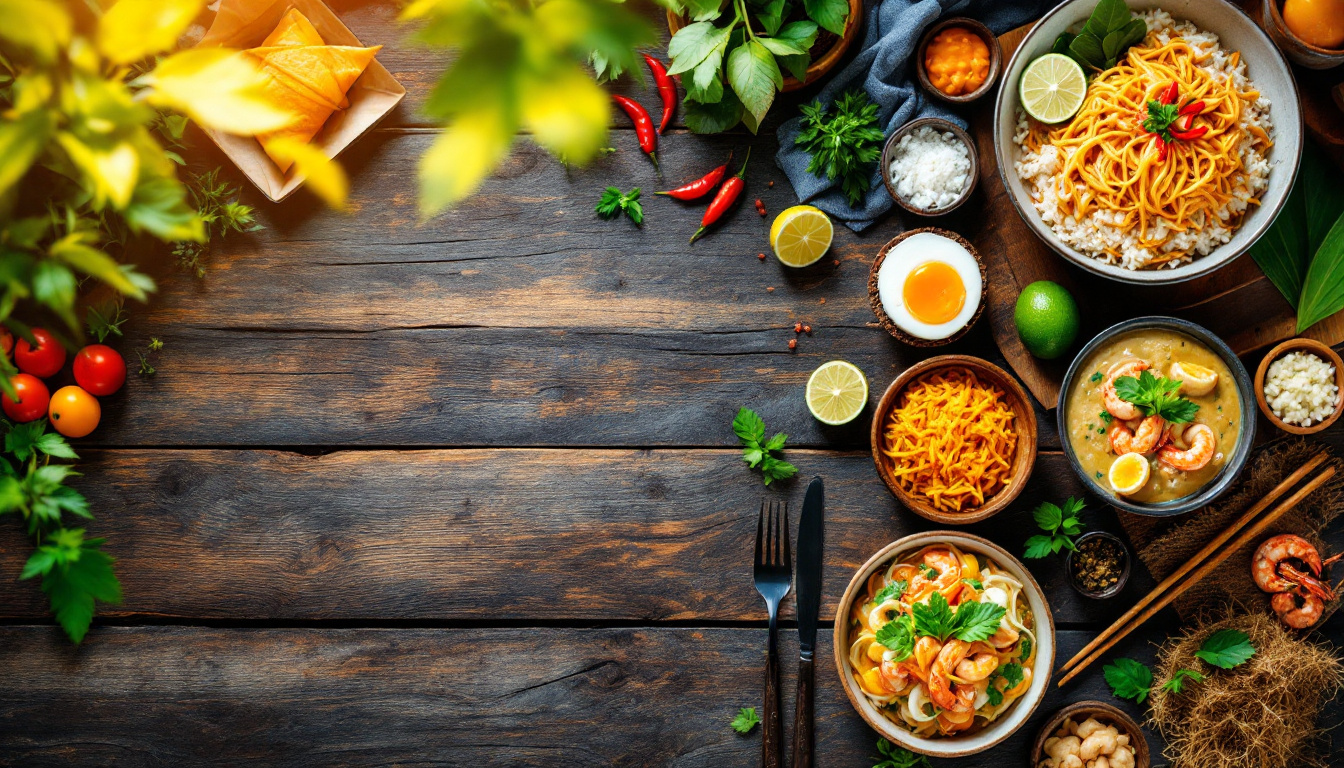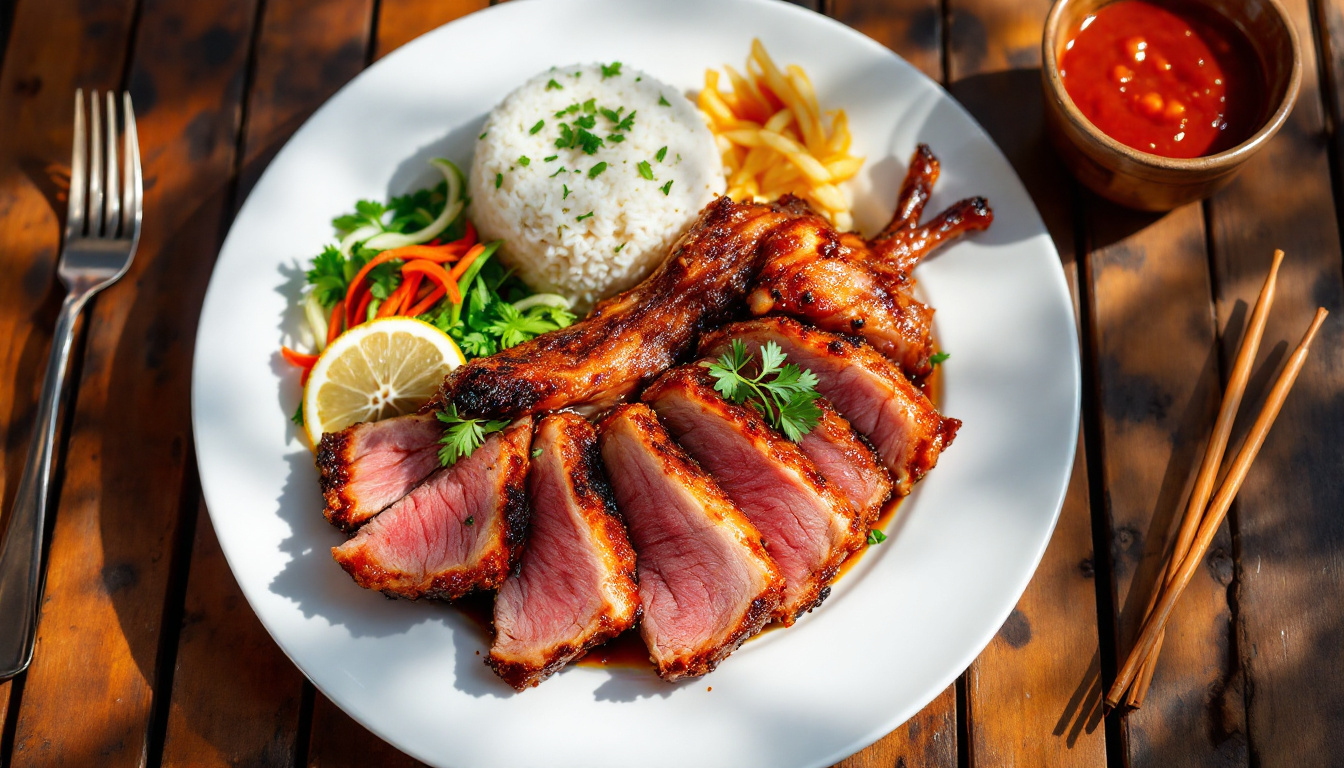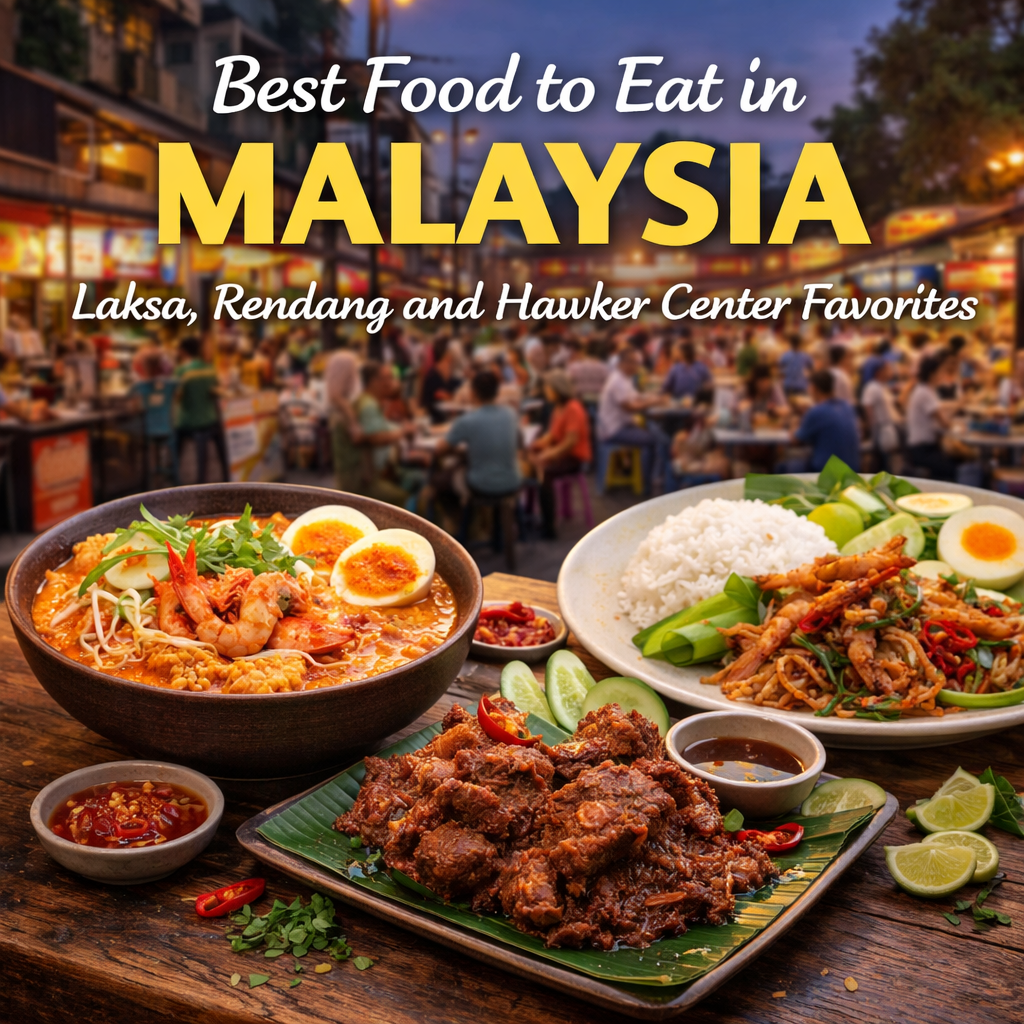
The best food in Malaysia is hawker food: nasi lemak, char kway teow, the two laksas, roti canai, satay and rendang, eaten at a covered hawker centre where Malay, Chinese and Indian stalls stand side by side. A full plate runs about RM 7 to 14, roughly $1.70 to $3.40 in 2026, which makes this the best-value great eating in Asia.
One peninsula, three cooking traditions, two hundred years of borrowing from each other. That is the whole story of Malaysian food, and the beauty of it is that you taste all three at one plastic table. Malay coconut and sambal, the Chinese wok, Indian roti and curry, plus the Peranakan fusion the three of them produced. Know which laksa you are ordering and you are halfway to eating like a local.
This guide covers the Malay, Chinese, Indian and Nyonya dishes worth your appetite, the two laksas that confuse everyone, the hawker centre, and the desserts and drinks, with what to order and what it costs. Malaysia is one of nine countries in our guide to the best food in Asia.
Why Malaysian food is worth the trip
Malaysian food is worth a trip because three cuisines live on one peninsula and cook next to each other every day. Malay cooking brings coconut milk, sambal, lemongrass and slow rendang. Chinese cooking, mostly Hokkien, Cantonese and Hainanese, brings the wok, the noodles and pork. From the Tamil kitchens come roti, curries and the all-night mamak stall. Then there is Peranakan, or Nyonya, the centuries-old marriage of Chinese ingredients and Malay spices that grew up in Melaka and Penang and exists nowhere else.
The other reason is value. A hawker centre puts dozens of one-dish specialists under a single roof, so you can eat across all of it in one sitting and still spend under $10. Penang is the food capital, and the country’s most decorated hawkers work there, but every state has something of its own worth chasing. Prices in this guide are 2026, when the ringgit sat around RM 4.1 to the US dollar.
Malay food: coconut, sambal and the heart of Malaysian cuisine
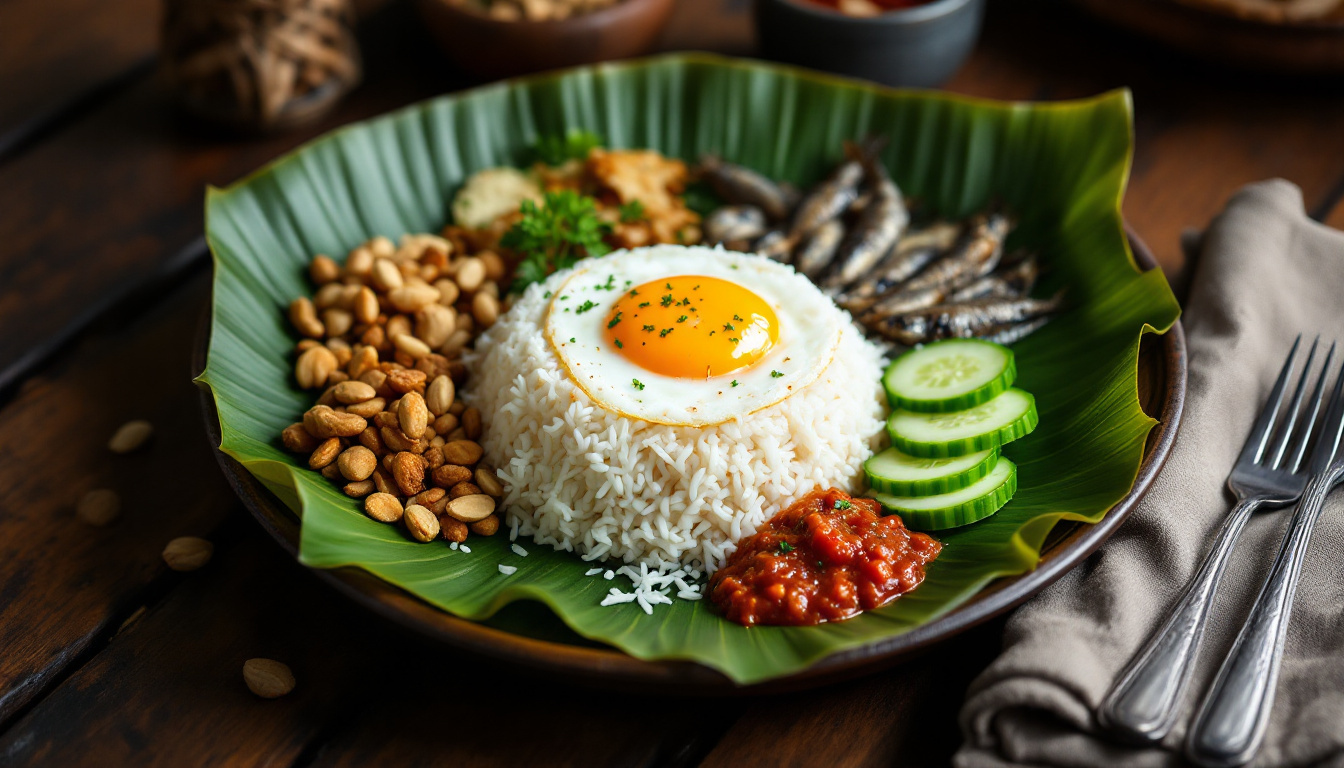
Nasi Lemak Nasi lemak
The national dish, and the breakfast the country runs on. Rice steamed in coconut milk and pandan, a spoonful of sweet-hot sambal, fried anchovies (ikan bilis) for crunch, roasted peanuts, cucumber and a boiled or fried egg, often folded into a banana leaf. The cheap wrapped version costs small change and disappears into a bag; the full plate adds fried chicken (ayam goreng) or rendang and becomes a proper meal.
RM 5 to 12, about $1.20 to $3. The sambal is the whole dish, so a good nasi lemak lives or dies on it. Sold from dawn at stalls and around the clock at kiosks.
Rendang Rendang daging
Beef, sometimes chicken, cooked for hours in coconut milk with a pounded paste of lemongrass, galangal, garlic, turmeric, ginger, shallots and chili, until the liquid cooks off and the meat turns dark, dry and dense with flavor. This is the test people get wrong abroad: real rendang is not a wet curry. It is closer to caramelized, the sauce clinging to the meat rather than pooling around it. A celebration dish, brought out for Hari Raya and weddings.
RM 10 to 20 as a main, or a spoonful piled onto nasi lemak. Malaysia shares it with neighboring Indonesia, and both argue about who does it better.
Satay Sate
Skewers of marinated chicken, beef or lamb grilled over charcoal, served with thick peanut sauce, cucumber, raw onion and pressed rice cakes (ketupat). The char and the smoke are the point, and the peanut sauce carries more depth than the watered-down version you meet abroad. Order ten or twenty for the table and keep going; nobody stops at four.
Roughly RM 0.80 to 1.50 a stick, so 20 cents to 35 cents each. The town of Kajang, just south of Kuala Lumpur, built its name on satay and still draws people out for it.
- Nasi goreng. Malay fried rice with sambal, soy, egg and often anchovies or seafood. The everyday quick meal.
- Otak-otak. Spiced fish paste wrapped in banana leaf and grilled over coals, fragrant and a little bouncy, easy to eat three of.
- Ayam percik and ikan bakar. Grilled chicken basted in spiced coconut, and whole fish rubbed with sambal and grilled in banana leaf. Both are stars of the east-coast night markets in Kelantan and Terengganu.
Chinese-Malaysian food and wok hei
Char Kway Teow Char koay teow
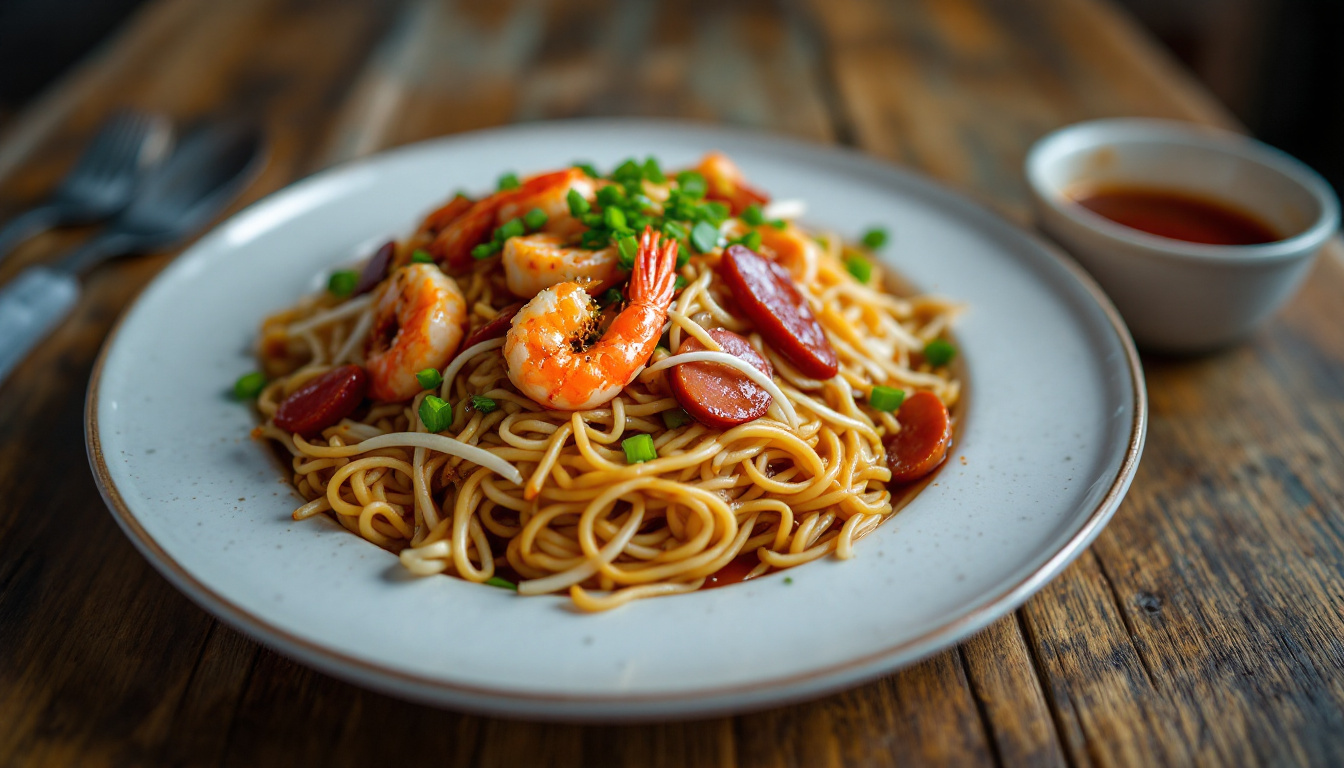
Flat rice noodles thrown into a screaming-hot wok with prawns, blood cockles, Chinese sausage, bean sprouts, chives and egg, in a dark sweet-savory soy mix. The prize is wok hei, the smoky “breath of the wok” that only a fierce flame and a fast hand produce. The best stalls still cook over charcoal, one plate at a time, which is why the good ones move slowly and the queue is part of the deal.
RM 7 to 14. In Penang the names locals and taxi drivers throw around are the charcoal Siam Road pushcart, Lorong Selamat, and Ah Leng on Jalan Dato Keramat. Pick the stall with one sweating cook and a roaring flame, not the one with a long menu.
Oyster Omelette Oh chien / o-chien
Small oysters fried into an egg batter loosened with tapioca or rice-flour starch, so the edges crisp up while the middle stays soft and slightly gooey, finished with garlic, chili sauce and coriander. A Hokkien night-market dish, ordered late and shared. Penang cooks lean crispier, Kuala Lumpur wetter, and both camps insist theirs is correct.
RM 8 to 16. Look for it at night markets and the Chinese corners of a hawker centre, cooked to order on a flat iron griddle.
Bak Kut Teh Bak kut teh
“Pork-rib tea,” a peppery, herbal broth of ribs simmered for hours with garlic, star anise, cinnamon and Chinese herbs, served with rice, dough fritters (you tiao) for dunking, and a dish of soy and cut chili. A Hokkien dish born in the port town of Klang, eaten first thing in the morning by dock workers and still a weekend ritual. A dry claypot version exists too, stickier and darker.
RM 12 to 25. Klang is the home of it, and the old shops near the railway station take it seriously.
Hainanese Chicken Rice Nasi ayam
Poached or roasted chicken with rice cooked in the stock and rendered fat until it is fragrant on its own, plus a chili-garlic sauce, dark soy and a bowl of clear soup. Simple to describe, hard to nail: the rice and the chili sauce separate a great plate from a forgettable one. Melaka serves its version with the rice rolled into little balls.
RM 6 to 12. A dish Malaysia and Singapore both claim, and both do well.
- Hokkien mee. Two dishes share the name. In KL it is thick yellow noodles braised dark in black soy with pork and prawn; in Penang it is a prawn-broth noodle soup (Hokkien prawn mee). Order carefully depending on the city.
- Wonton mee. Springy egg noodles tossed in dark sauce with char siu and wontons, served dry with the soup on the side.
- Popiah. Fresh, un-fried spring rolls of soft wheat skin around stewed turnip, egg, peanuts and sweet sauce. A Hokkien-Nyonya snack that Penang does especially well.
- Chee cheong fun and yong tau foo. Silky steamed rice-noodle rolls in sweet sauce, and a pick-your-own bar of tofu and vegetables stuffed with fish paste, dropped into broth or dry with sauce.
Indian-Malaysian food and the mamak culture
Roti Canai Roti canai
Dough flipped, stretched and slapped paper-thin, then folded and griddled in ghee until it is flaky outside and soft inside, served with dhal and a curry or two for dipping. Watching a good vendor spin it into the air is half the reason to order it. It anchors a whole family of breads: roti telur with egg, roti tisu built into a crisp paper cone, roti bom coiled and sweet.
RM 1.50 to 4, so well under a dollar for the plain one. Eaten with the hands at a mamak, the Indian-Muslim stall, at any hour you can name.
Nasi Kandar Nasi kandar
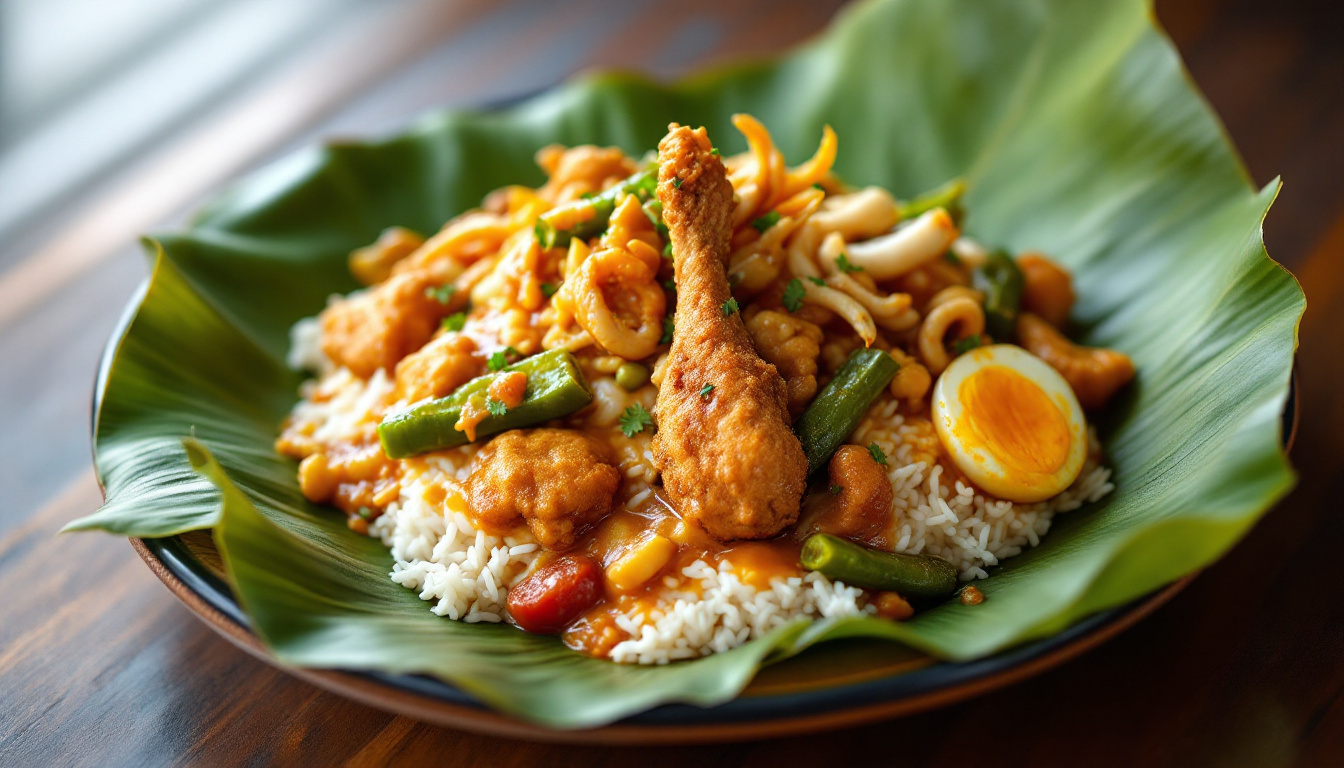
A Penang Tamil-Muslim institution: steamed rice topped with the curries and proteins you point at (fried chicken, fish roe, squid, beef, okra), then flooded with a mix of several curry gravies so the flavors run into each other. That flooding is the whole idea; “banjir” means flooded, and it is what you ask for. You point, the server builds the plate, and the bill is a small act of faith.
RM 8 to 18 depending on what you point at, and it climbs fast once seafood is involved. Line Clear, in the alley beside 161 and 177 Penang Road near Chulia Street, has served it 24 hours a day since 1930 and is easy to walk straight past. That is the one to find.
- Murtabak. Roti dough stuffed with spiced minced meat, egg and onion, griddled and cut into squares, served with curry and a pile of pickled onion.
- Banana leaf rice. South Indian rice on a banana leaf with vegetable curries, rasam, pickle, papadum and a meat or fish curry, eaten with the right hand. Ask for a top-up of rice and curry and it is often free.
- Mee goreng mamak. Indian-Muslim fried yellow noodles, sweet and spicy and a little sour, with potato, tofu and egg.
- Teh tarik. “Pulled tea,” black tea and condensed milk poured between two cups from a height until it froths. The national drink, made at every mamak, and worth watching a good puller make.
Laksa: Malaysia’s two great noodle soups
“Laksa” means two completely different soups depending on where you order it, and confusing them is the most common mistake travelers make. In Penang it is the sour fish one. Almost everywhere else it is the creamy coconut one. Ask which a stall makes before you sit down.
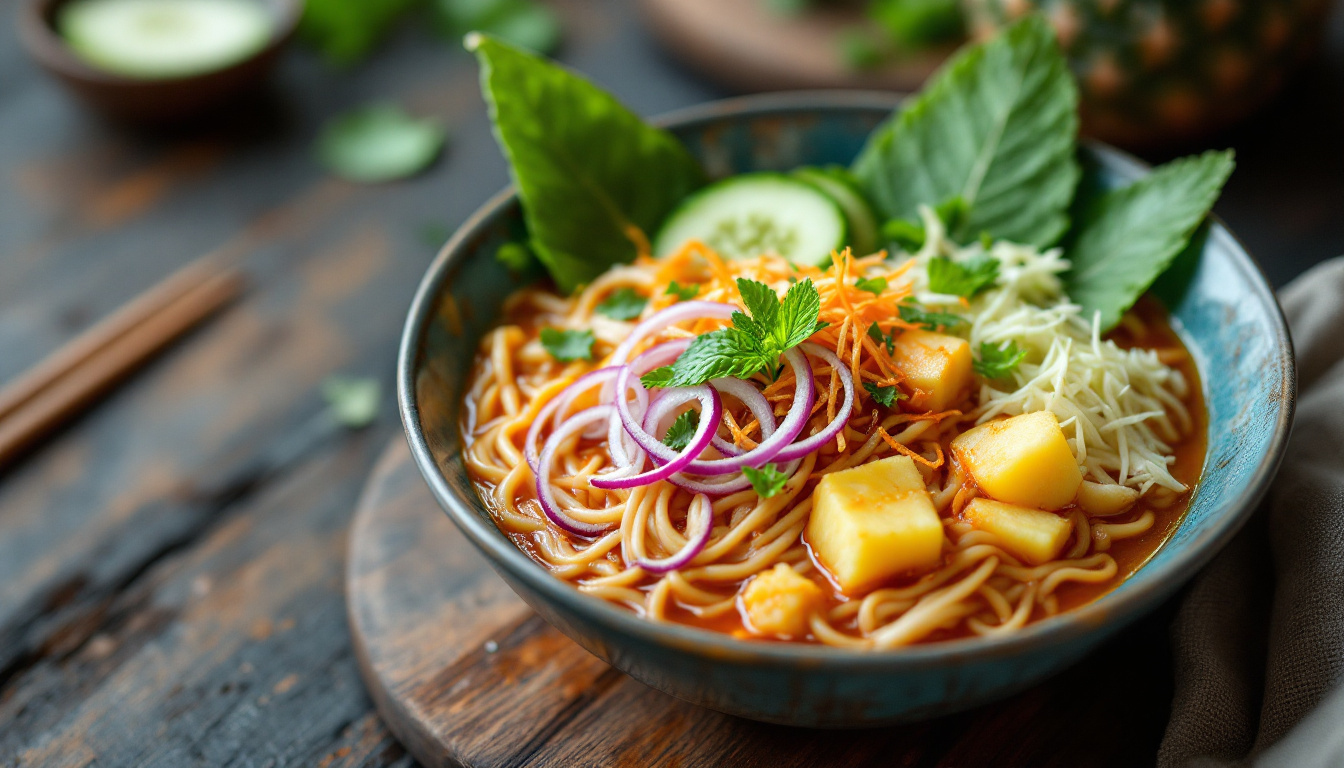
Asam Laksa Penang asam laksa
The sour one. A tart, spicy broth built on flaked mackerel, tamarind (asam) and lemongrass, poured over thick rice noodles and finished with mint, shredded cucumber, pineapple, raw onion and a spoonful of pungent shrimp paste (hae ko). Bright, sour and funky, and nothing like the creamy laksa most travelers are bracing for. The shrimp paste is not optional; stir it in.
RM 6 to 12. For a reliable, central bowl, Joo Hooi Cafe at 475 Jalan Penang does it daily from late morning. The pilgrimage version is the decades-old stall at Air Itam market, below Kek Lok Si, but it keeps short weekend-only hours, so check before you trek out.
Curry Laksa Curry mee / laksa lemak
The creamy one. Noodles in a rich coconut-curry broth with prawns, chicken, tofu puffs, cockles and bean sprouts, topped with a dollop of sambal you stir to taste. This is the laksa most of the world pictures, close cousin to the Singapore version, and a different dish entirely from Penang’s sour bowl despite the shared name. In KL it often goes by curry mee.
RM 7 to 14. Since ordering “laksa” gets you different things in different cities, say curry laksa or asam laksa and skip the guessing.
Peranakan (Nyonya) cuisine: the beautiful fusion
Peranakan, or Nyonya, is the food of the Straits Chinese, descendants of Chinese traders who settled in Melaka and Penang and married local Malay women. The cooking joins Chinese ingredients and technique to Malay spice, herbs and coconut, and it is labor-heavy home food, which is why you rarely meet it outside Melaka, Penang and a handful of specialist kitchens. When you do, order broadly.
- Nyonya laksa (laksa lemak). The Peranakan coconut-curry laksa, the refined ancestor of the curry laksa above.
- Ayam pongteh. Chicken braised in fermented soybean paste (taucu) and palm sugar, sweet and savory and deeply comforting, the dish Nyonya families cook on repeat.
- Assam fish and itik tim. A tamarind-sour fish stew, and a soup of duck and salted vegetables. Classic Nyonya home cooking.
- Nyonya kuih. The jewel-colored bite-sized cakes, scented with pandan and coconut, that are the signature of Peranakan baking. Buy a mixed box and work through it.
How a Malaysian hawker centre works
Beyond the headline plates, the hawker centre is where you graze. Rojak, a tangy salad of fruit and fritters tossed in thick prawn-paste and tamarind dressing with crushed peanuts. Hokkien mee, wonton mee, popiah, that oyster omelette. Malaysian hawker food is some of the cheapest world-class eating anywhere, and Gurney Drive in Penang, with its long line of stalls by the water, is a good place to prove it to yourself.
Borneo runs on its own playbook. Sarawak laksa, a fragrant sambal-and-coconut noodle soup that Anthony Bourdain called “breakfast of the gods,” plus kolo mee and the Kadazan-Dusun dishes of Sabah, including hinava, a lime-cured raw fish salad. It is a different, less-touristed Malaysian food world, and worth the flight if you have the days.
Desserts and drinks
- Cendol. Shaved ice over green pandan jelly, red beans, coconut milk and dark gula melaka palm sugar, the great Malaysian cooler. RM 3 to 6, about $0.75 to $1.50. The stall outside Joo Hooi on Keng Kwee Street in Penang has drawn a queue for decades.
- Apom manis. A small, thin rice-flour and coconut-milk pancake, crisp and lacy at the edges, soft in the middle, sold sweet from cast-iron pans at Penang markets. A few sen each, and hard to stop at one.
- Ais kacang (ABC). A mountain of shaved ice over beans, jelly and sweet corn, drowned in syrups and evaporated milk. The maximalist cousin of cendol.
- Kaya toast. Toast spread with kaya (coconut-egg jam) and a slab of cold butter, served with soft-boiled eggs and kopi. The kopitiam breakfast, RM 5 to 9 for the set.
- Durian. The king of fruit, custardy and pungent and genuinely divisive, at its best around June and again in December. Musang King is the cultivar people pay up for. Try it once, decide for yourself.
Best food cities in Malaysia
The food capital, and one of Asia’s great hawker cities. Char kway teow, asam laksa, char koay kak, Hokkien prawn mee, nasi kandar and cendol, all at street level and mostly within a walkable heritage core. Eat around Gurney Drive, Chulia Street and the New Lane night market. Our full Penang food guide maps the stalls street by street.
Every Malaysian cuisine in one city, all-night mamak culture, the dark KL-style Hokkien mee, and Jalan Alor’s night-market sprawl after dark. The mall food courts are where a lot of visitors take their first bite, and they are fine, but the street is where it gets good. Our Kuala Lumpur food guide maps the stalls and streets.
Ipoh for bean-sprout chicken, silky kai see hor fun and the white coffee that started there. Melaka for the deepest Nyonya cooking, chicken rice balls, and the Jonker Street night market on weekends.
Kuching for Sarawak laksa and kolo mee; Kota Kinabalu in Sabah for cheap fresh seafood and Kadazan-Dusun dishes like hinava. A different, quieter side of Malaysian food.
Best food to eat in Malaysia: the dish guide with prices
| Dish | Type | Origin | Price (2026) | Must-try |
|---|---|---|---|---|
| Nasi lemak | Rice | Malay | RM 5–12 ($1.20–3) | ★★★★★ |
| Char kway teow | Noodles | Chinese (Penang) | RM 7–14 ($1.70–3.40) | ★★★★★ |
| Asam laksa | Noodle soup | Penang | RM 6–12 ($1.50–3) | ★★★★★ |
| Curry laksa | Noodle soup | Chinese-Malay | RM 7–14 ($1.70–3.40) | ★★★★★ |
| Roti canai | Flatbread | Indian | RM 1.50–4 ($0.35–1) | ★★★★★ |
| Rendang | Meat | Malay | RM 10–20 ($2.50–5) | ★★★★★ |
| Satay | Grill | Malay (Kajang) | RM 0.80–1.50/stick | ★★★★★ |
| Nasi kandar | Rice/curry | Indian (Penang) | RM 8–18 ($2–4.40) | ★★★★★ |
| Oyster omelette | Egg/seafood | Chinese (Penang) | RM 8–16 ($2–4) | ★★★★☆ |
| Hainanese chicken rice | Rice | Chinese | RM 6–12 ($1.50–3) | ★★★★☆ |
| Bak kut teh | Soup | Chinese (Klang) | RM 12–25 ($3–6) | ★★★★☆ |
| Hokkien mee | Noodles | Chinese | RM 7–14 ($1.70–3.40) | ★★★★☆ |
| Murtabak | Flatbread | Indian | RM 6–14 ($1.50–3.40) | ★★★★☆ |
| Nyonya laksa / ayam pongteh | Peranakan | Nyonya | RM 10–20 ($2.50–5) | ★★★★☆ |
| Cendol | Dessert | Malay | RM 3–6 ($0.75–1.50) | ★★★★★ |
| Kaya toast | Breakfast | Chinese | RM 5–9 ($1.20–2.20) | ★★★★☆ |
How to eat in Malaysia
- Join the busy stall. The longest local queue marks the best version, and a cook who makes one dish all day beats a stall with a laminated menu of forty.
- Eat with your right hand. Malay and Indian food is traditionally eaten with the right hand, though cutlery and chopsticks are everywhere if you want them.
- Say which laksa you mean. It is the sour asam laksa in Penang and the creamy curry laksa most other places, so name it when you order.
- Watch the pork line. Malay and mamak stalls are halal and pork-free; Chinese stalls serve pork. Mixed hawker centres keep the two apart, but it is worth knowing which stall you are at.
- Skip the tip. Hawker and kopitiam prices are fixed, so just pay what is asked.
For dining customs further afield, see our guide to food etiquette around the world.
How to eat well in Malaysia on any budget
Budget: the hawker centre
Nasi lemak or roti canai for breakfast at RM 2 to 6, a plate of char kway teow or laksa for lunch at RM 7 to 14, satay and a teh tarik at night. You can eat brilliantly all day for under RM 40, which is about $10. Malaysia is one of the best-value great-food countries on earth, and the hawker centre is why.
Mid-range: kopitiam and specialist restaurants
A banana-leaf feast, a proper bak kut teh breakfast, a Nyonya restaurant in Melaka, air-conditioning and a table you sit down at. Still cheap by most standards, with a wider spread of regional dishes than any single hawker centre carries.
High-end: modern Malaysian and KL fine dining
Kuala Lumpur’s modern-Malaysian and Nyonya restaurants rework hawker classics and Peranakan home cooking, and a growing handful turn up on Asia’s 50 Best lists. Even the top tables read as a bargain next to a Western capital.
Frequently asked questions about Malaysian food
What is the most popular and famous food in Malaysia?
The most famous Malaysian foods are nasi lemak, the national dish, along with char kway teow, both laksas, roti canai, satay and rendang. Day to day, the most popular way to eat is at a hawker centre, grazing across Malay, Chinese and Indian stalls. For snacks and drinks, teh tarik, rojak and cendol top the list.
What is the national dish of Malaysia?
Nasi lemak, coconut-milk rice with sambal, fried anchovies, peanuts, cucumber and egg, is Malaysia’s national dish, eaten most often for breakfast. Char kway teow, the two laksas, roti canai, satay and rendang round out the essentials.
What is the difference between asam laksa and curry laksa?
They are different dishes that share a name. Asam laksa, the Penang style, is a sour, spicy fish-and-tamarind broth with mint, pineapple and shrimp paste. Curry laksa is a rich, creamy coconut-curry noodle soup with prawns and tofu. Ask which one a stall makes before ordering, or just name the one you want.
Where should I eat in Penang?
Penang is the food capital, so start in George Town. For nasi kandar, Line Clear in the alley off Penang Road runs 24 hours and has since 1930. For asam laksa and cendol, Joo Hooi Cafe on Jalan Penang covers both. For char kway teow, locals point to the Siam Road pushcart, Lorong Selamat and Ah Leng. Gurney Drive is the big waterfront hawker spread.
How much does food cost in Malaysia per day?
Malaysia is excellent value in 2026. A hawker plate runs RM 7 to 14 (about $1.70 to $3.40), roti canai RM 1.50 to 4, and a sit-down meal RM 20 to 40. Budget travelers eat very well on under RM 40, roughly $10, a day at hawker centres and kopitiams.
What is a hawker centre?
A hawker centre is a covered court of independent stalls, each specializing in one or two dishes. You take any table, order from different stalls, pay each vendor as the food arrives, and get drinks from a separate drinks stall. It is the heart of Malaysian eating and the cheapest way to taste across all three cuisines in one sitting.
What is Peranakan or Nyonya food?
Peranakan, or Nyonya, cuisine is the fusion food of the Straits Chinese, who blended Chinese ingredients and technique with Malay spices, herbs and coconut. Found mainly in Melaka and Penang, it includes dishes like ayam pongteh, assam fish and laksa lemak, plus the colorful nyonya kuih sweets.
Is Malaysia good for vegetarians?
Yes, with a little care. Indian-Malaysian and banana-leaf restaurants do excellent vegetarian thalis and curries, Chinese stalls have tofu and vegetable dishes, and many hawker centres keep a vegetarian, often Buddhist, stall. Watch for shrimp paste (belacan) and anchovies hiding in Malay sambal and broths.
More food guides waiting for you
Browse our complete collection of Asian food guides.