I went to Prague the first time for the beer and left obsessed with the dumplings. The best food to eat in the Czech Republic is the most underrated comfort cooking in Central Europe, stuck in the shadow of its German and Austrian neighbors when it should be eaten on its own terms: a plate of sliced beef in silky cream sauce, three soft bread dumplings to mop it up, and a half-litre of the best lager on earth poured straight from the tank. This is hearty, brown, gravy-soaked food built for cold weather and long afternoons in the pub, and it is wonderful.
Why Czech food is worth the trip
Czech food is built around two things the country does better than almost anyone: beer and dumplings. Czechs drink more beer per head than any nation on earth, and have for decades, so the food evolved as the perfect partner to a half-litre glass. That means salty, rich, satisfying plates designed to keep you in your seat for another round.
The backbone of the cuisine is knedlík a omáčka, dumpling and sauce. Soft bread or potato dumplings exist for one reason: to soak up the gravy that comes with nearly every main course. Once you understand that the dumpling is the sponge and the sauce is the point, the whole menu makes sense.
It also splits in two. Bohemia in the west, around Prague and Plzeň, is beer country, heavy on pork, dumplings and lager. Moravia in the east, around Brno, is wine country, with a softer, slightly lighter table and its own festival culture. Czech cooking sits next to German cooking and Polish food on the map, but it has a creamy, gravy-forward identity all its own.
The best food to eat in the Czech Republic, dish by dish
These are the dishes I order again every time I am back, the most popular and typical food to eat in the Czech Republic, from beer-hall staples to street snacks you eat standing up. Prices are rough 2026 pub figures in Czech crowns (CZK), where about 21 CZK makes one US dollar, so a 200 CZK main runs a little under $10.
Svíčková na smetaně svíčková
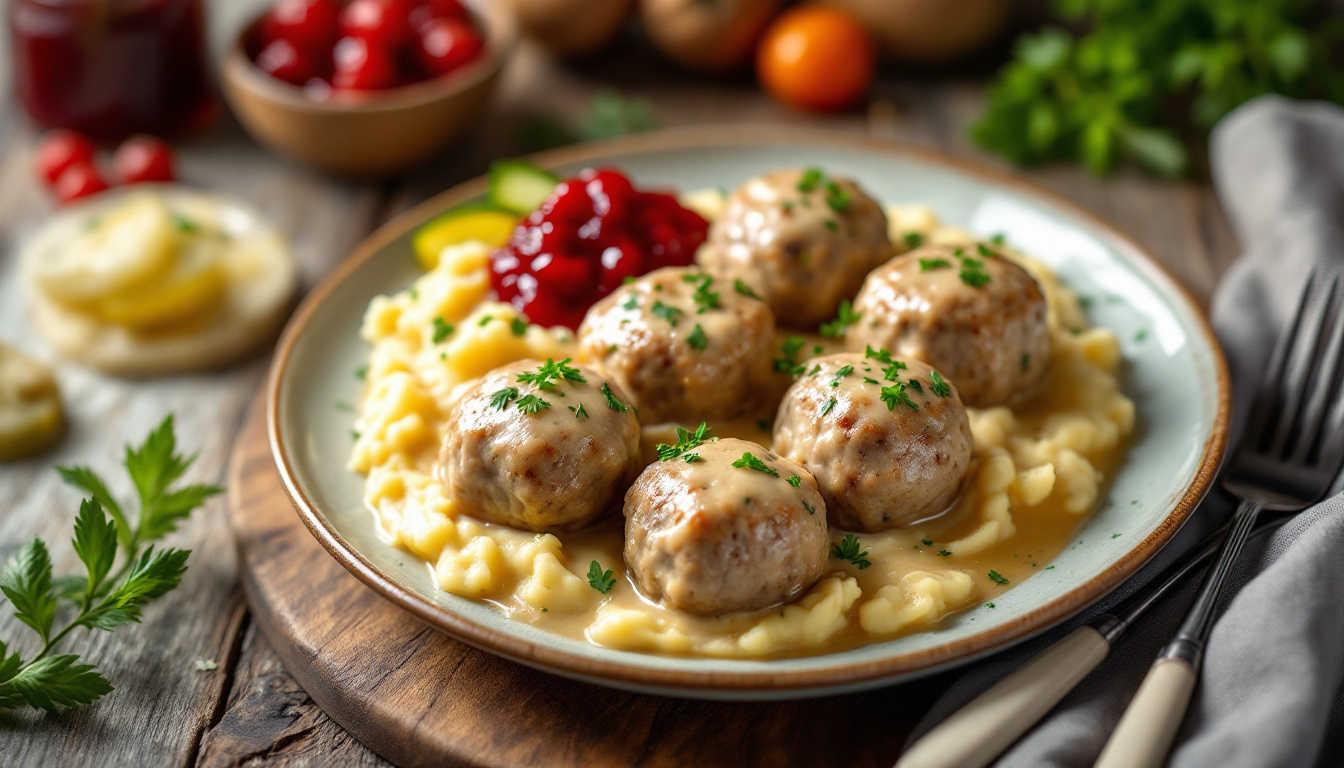
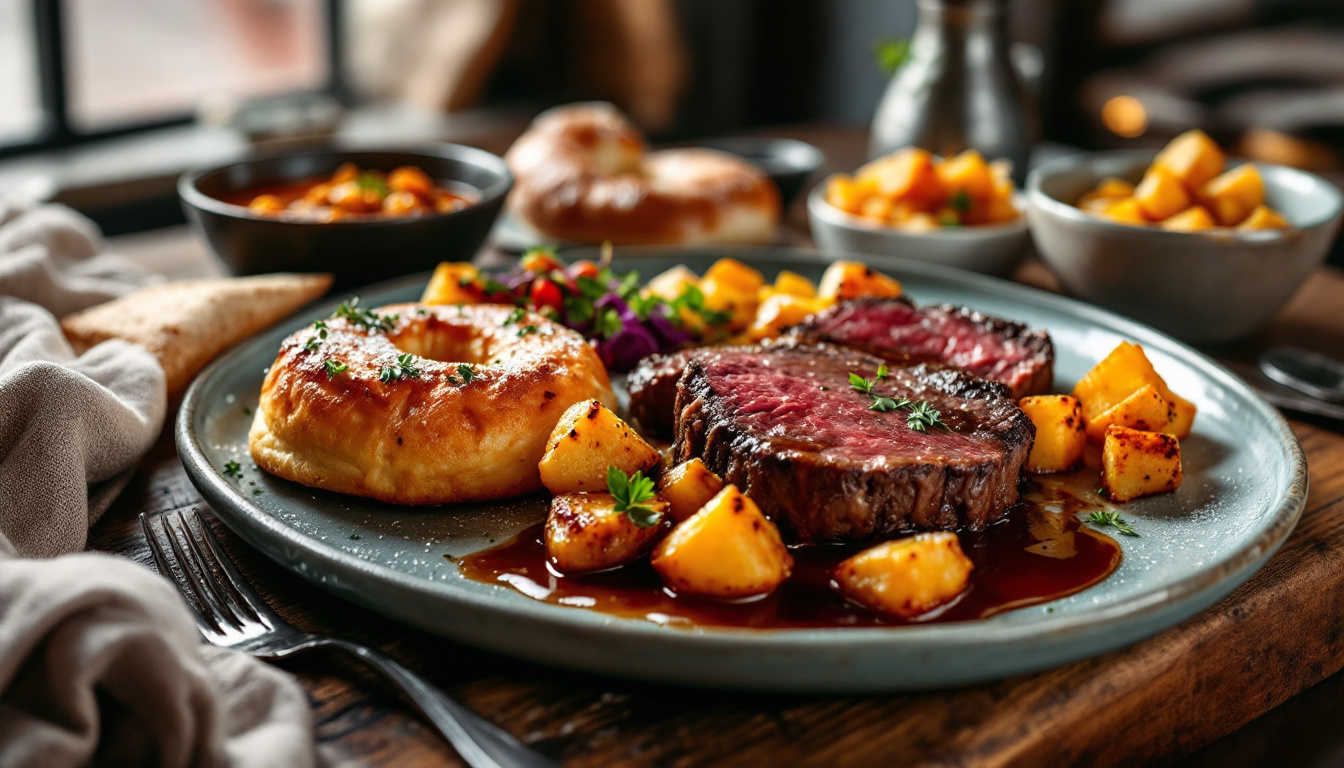
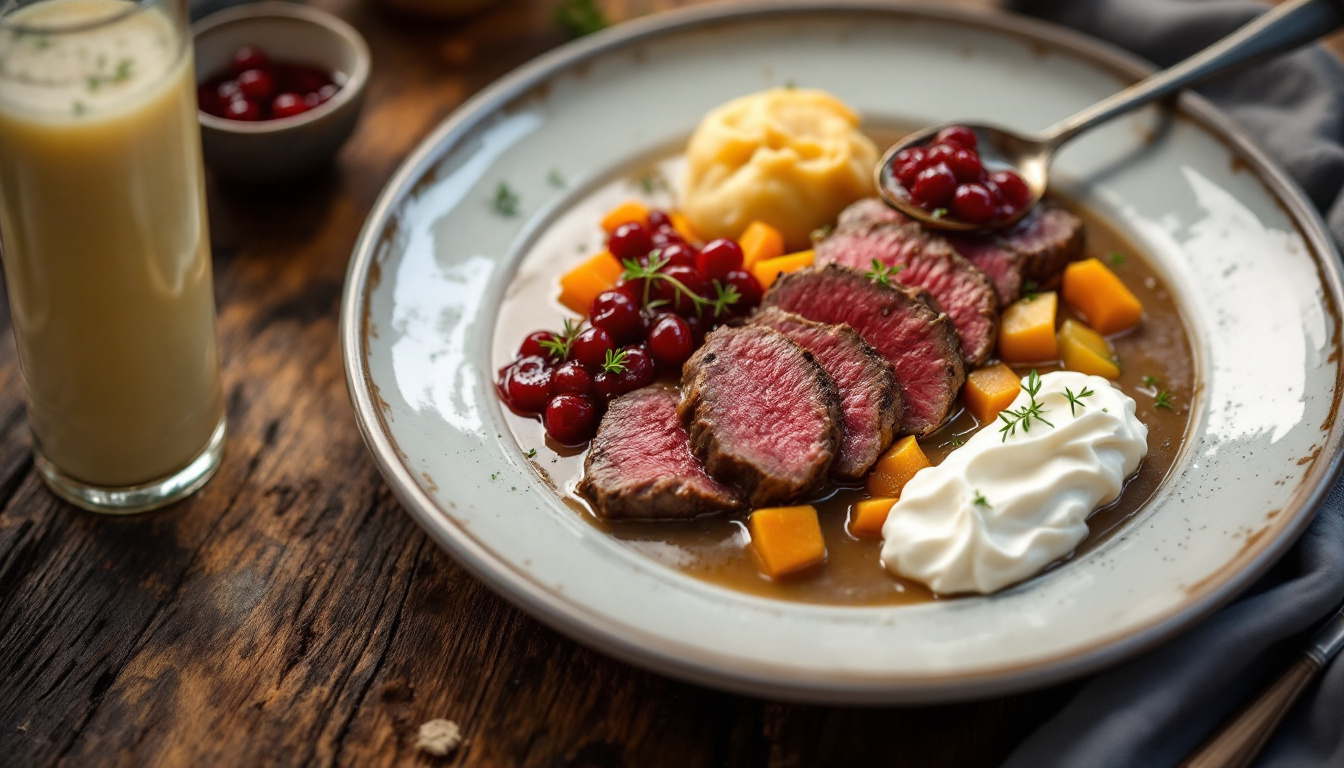
Svíčková is the dish to order first and the one Czechs argue about most. Marinated beef sirloin is roasted and sliced, then drowned in a smooth, faintly sweet sauce made from puréed root vegetables and cream. It comes with houskové knedlíky (bread dumplings), a spoon of cranberry compote, and a swirl of whipped cream on top, which sounds strange and tastes perfect. Every Czech grandmother claims the best version, and they are all right.
Vepřo knedlo zelo vepřo-knedlo-zelo
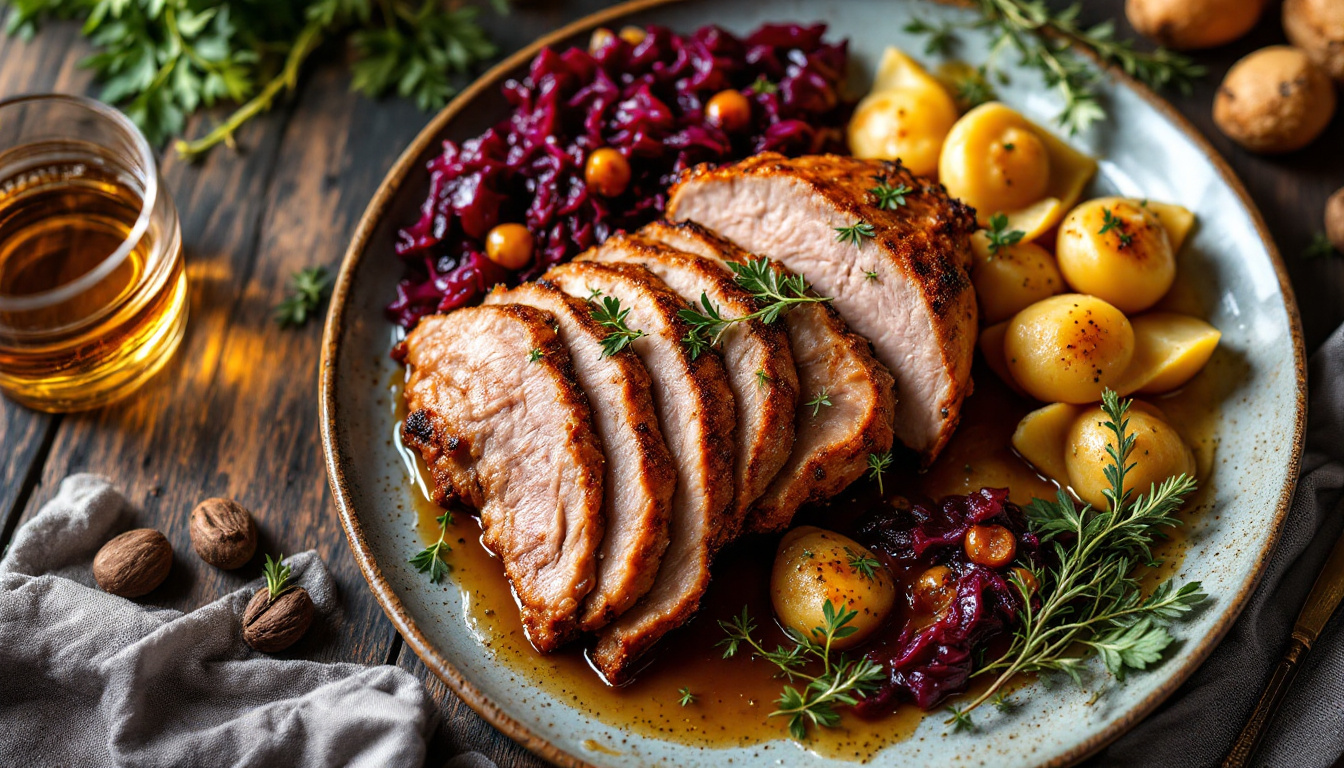
If svíčková is the Sunday dish, roast pork with dumplings and sauerkraut is the everyday one. Slow-roasted pork comes with both bread and potato dumplings and a pile of soft, slightly sour braised cabbage cut with caraway. This is the plate locals grew up on and the truest taste of a Bohemian kitchen. Order it in a proper hospoda, not a tourist spot, and you eat like a local for under ten dollars.
Pečená kachna roast duck
Roast duck is the Czech celebration plate, a quarter or half bird slow-roasted until the skin crackles and the meat falls off the bone, served with two kinds of dumpling and a mound of braised red cabbage (červené zelí) cut with a little sugar and vinegar. It is richer and more festive than the everyday pork, the thing families roast for a Sunday or order on a trip out of the city. The combination of crisp duck, soft dumpling, and sweet-sour cabbage is one of the great plates of Central Europe. Pair it with a dark Czech lager.
Guláš hovězí guláš
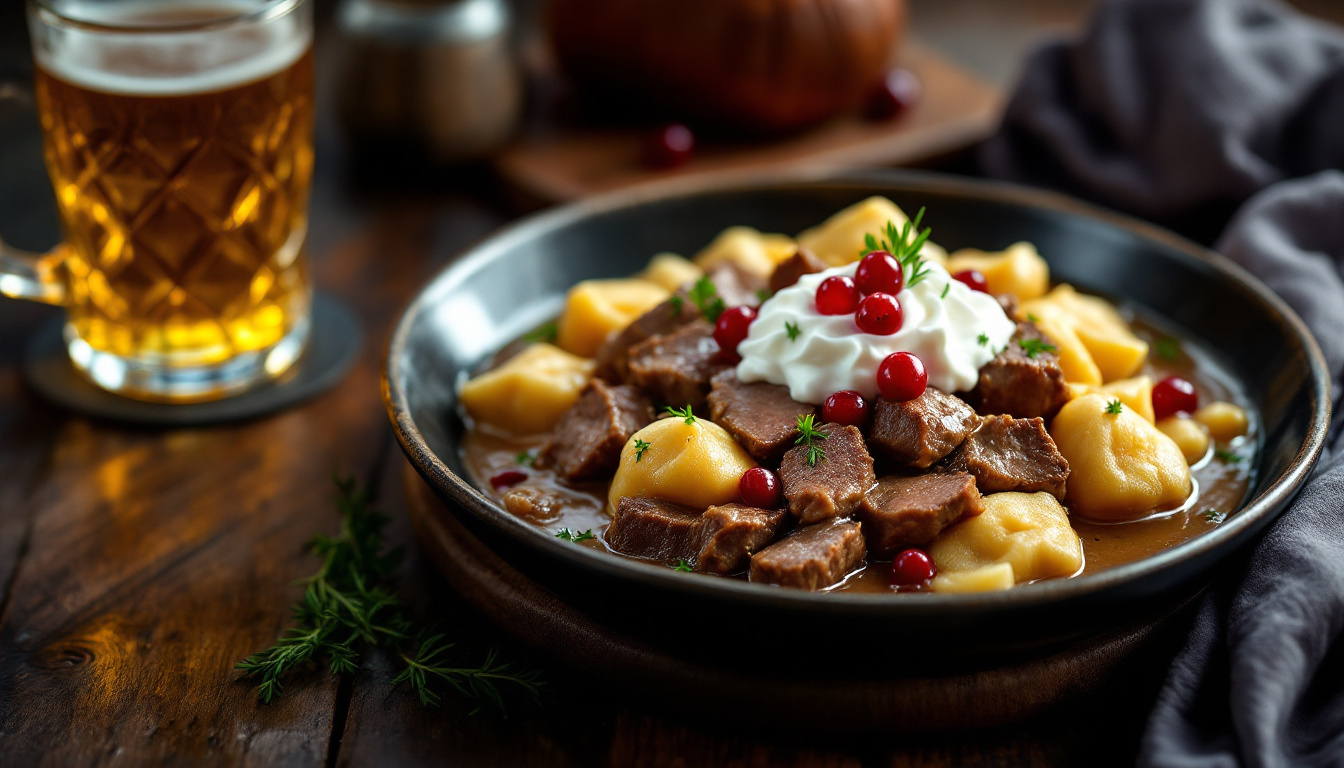
Czech goulash is not Hungarian goulash, and locals will tell you so. It is thicker, darker, and closer to a beef stew than a soup, built on onions and a modest hand with the paprika. You eat it with bread dumplings to soak the sauce, or ladled into a hollowed-out bread loaf as the famous “guláš v chlebu.” Beer goulash, simmered with dark lager, is the version worth seeking out in a brewery pub.
Vepřové koleno pečené vepřové koleno
The Czech pub trophy dish: a whole pork knuckle marinated in dark beer, slow-roasted until the meat pulls off the bone and the skin crackles, then carried out on a wooden board with mustard, grated horseradish, and pickled peppers. It is huge, meant for sharing between two with several beers, and you carve it yourself. Order it at a proper beer hall like a brewery restaurant, not a sit-down bistro, and go in hungry.
Kapr a bramborový salát smažený kapr
Fried carp with potato salad is the Czech Christmas Eve dinner, and in December live carp are sold from blue tubs on the street corner. The fish is filleted, breaded, and fried, and the bramborový salát beside it (potatoes, carrots, peas, pickles, and mayonnaise) is a national institution debated family by family. You can eat breaded carp or its cousin fried in pubs year-round, but the full ritual belongs to December 24th.
Knedlíky houskové a bramborové knedlíky
Dumplings deserve their own entry because they define the whole cuisine. The two everyday types are houskové (light, sliced bread dumplings) and bramborové (denser potato dumplings), both steamed and cut into rounds to mop up sauce. They are not an afterthought side, they are the engine of the meal. Get used to them quickly, because nearly every classic main arrives with a few slices fanned across the plate.
Smažený sýr smažák
Fried cheese is the Czech vegetarian saviour and the country’s greatest late-night food. A thick slab of Edam or Hermelín is breaded and deep-fried until molten, served with boiled potatoes or fries and a dollop of tartar sauce. Order it in a pub for a meal, or grab a smažák in a roll from a street window after the bars close. It is gloriously unhealthy and exactly what you want at midnight. Its meaty sibling on every Czech menu is smažený řízek, the Czech schnitzel, a thin breaded-and-fried pork or chicken cutlet served with potato salad, especially at Christmas.
Párek v rohlíku párek v rohlíku
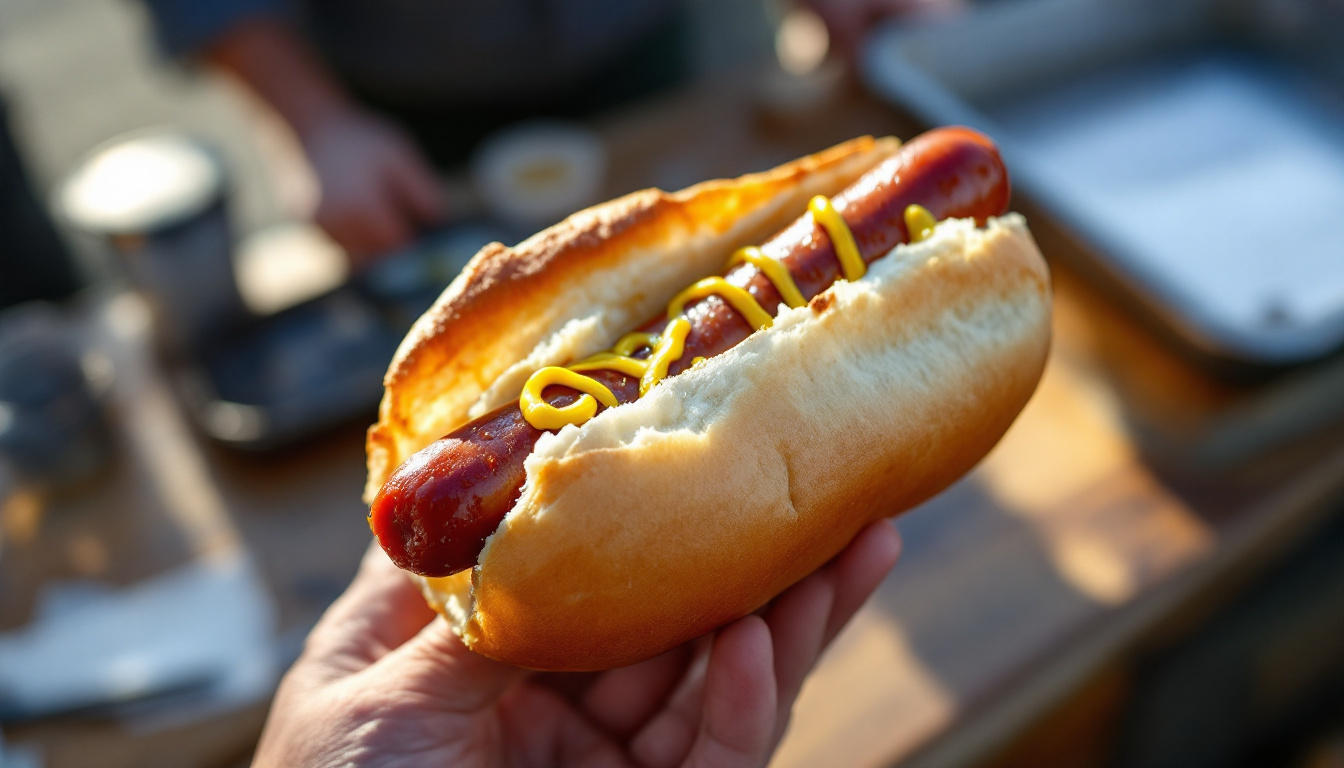
The Czech hot dog is smarter than the American one. Instead of splitting the roll, a metal spike punches a hole down the middle of a crusty rohlík, the cavity is squirted with mustard or ketchup, and the hot sausage is pushed inside so nothing drips. You eat it one-handed on the street for the price of a coffee, and it stays neat to the last bite. It is the standard cheap snack on Wenceslas Square and at any train station, and it is genuinely good.
Bramboráky bramboráky
Bramboráky are crisp, garlicky potato pancakes seasoned hard with marjoram, fried until the edges shatter. You find them in pubs as a side or snack and at markets and festivals cooked fresh on a flat griddle. The good ones are thin and lacy rather than thick and stodgy. Eat them hot, with a beer, while they still crackle.
Tatarák s topinkami tatarák
Beef tartare is a beloved beer-hall ritual, not a fancy restaurant dish here. You get a mound of seasoned raw beef and a plate of topinky, fried bread you rub hard with a raw garlic clove before piling the meat on top. Half the fun is assembling each piece yourself between sips. It is a pub favourite worth ordering once you trust the kitchen, ideally somewhere busy with good turnover.
Utopenci and nakládaný hermelín pivní pochoutky
These two are what Czechs eat to make the beer last. Utopenci, literally “drowned men,” are fat sausages pickled in vinegar with onion until sharp and tangy. Nakládaný hermelín is a whole soft camembert-style cheese marinated in oil, garlic and paprika until it goes rich and pungent. Both come with dark bread, both are designed to keep you drinking, and both are better than they sound.
Kulajda and česnečka Czech soups
Kulajda is the soup that converts people: a creamy, faintly sour broth thick with potatoes, wild mushrooms and a lot of fresh dill, usually finished with a poached egg floating on top. The sourness comes from a splash of vinegar or soured cream, which keeps it from feeling heavy. Its rougher, beloved cousin is česnečka, a punchy garlic soup with potato, marjoram, and croutons (often with grated cheese), famous across the country as a hangover cure and a winter warmer. Order kulajda in autumn mushroom season and česnečka the morning after a night on the lager.
Ovocné knedlíky ovocné knedlíky
Sweet fruit dumplings prove that the Czech obsession with dumplings has no limits. Whole plums, apricots or strawberries are wrapped in soft dough, boiled, then showered with melted butter, sugar and either curd cheese (tvaroh) or ground poppy seeds. They are served as a full main course, not a dessert, which feels radical until you try it and understand completely.
Medovník and koláče sladké pečivo
For something sweet that is actually Czech, skip the tourist stalls and look for medovník, a tall, soft honey layer cake that is the country’s best dessert. Koláče are round pastries with sweet fillings of poppy seed, curd or plum jam, sold in bakeries everywhere. These are what locals actually eat with afternoon coffee, and they cost a fraction of the chimney cakes hawked in Old Town.
Bohemia vs Moravia: how the food changes
The country divides cleanly into two food cultures, and knowing which one you are in changes what you should order. Bohemia, the western half built around Prague and Plzeň, is the beer heartland, where pork, dumplings and lager rule and the pubs are the social centre of every town.
Moravia is wine country, not beer country, and the table shifts with it. Meals lean a touch lighter and sweeter, wine cellars (vinné sklepy) replace beer halls as the place to gather, and autumn brings burčák, a cloudy, half-fermented young wine sold for a few weeks only. If you want the other half of Czech food culture, spend a couple of days in Moravia and drink what the locals pour.
Where to eat: pubs, beer halls and markets
The best Czech food is in the hospoda, the neighborhood pub, not in restaurants with menus in five languages. A hospoda or pivnice (beer hall) serves the full range of classics at honest prices, and the ones worth finding pour tankové pivo, unpasteurized tank beer that tastes noticeably fresher. Prague institutions like U Fleků and U Zlatého tygra are famous for good reason, and the Lokál pubs are a reliable modern bet for traditional plates.
For lighter eating, hit the markets and delis. The Saturday farmers market on Náplavka, the riverside embankment, is the best food gathering in Prague, and Havelské tržiště in the Old Town sells fruit and snacks. For a quick bite, step into any lahůdky, a Czech deli, and point at the chlebíčky, open-faced sandwiches loaded with ham, egg and potato salad that locals eat for lunch. A short train ride away, our Kraków food guide makes an easy add-on for a Central European food trip.
What to drink: beer, Becherovka and Moravian wine
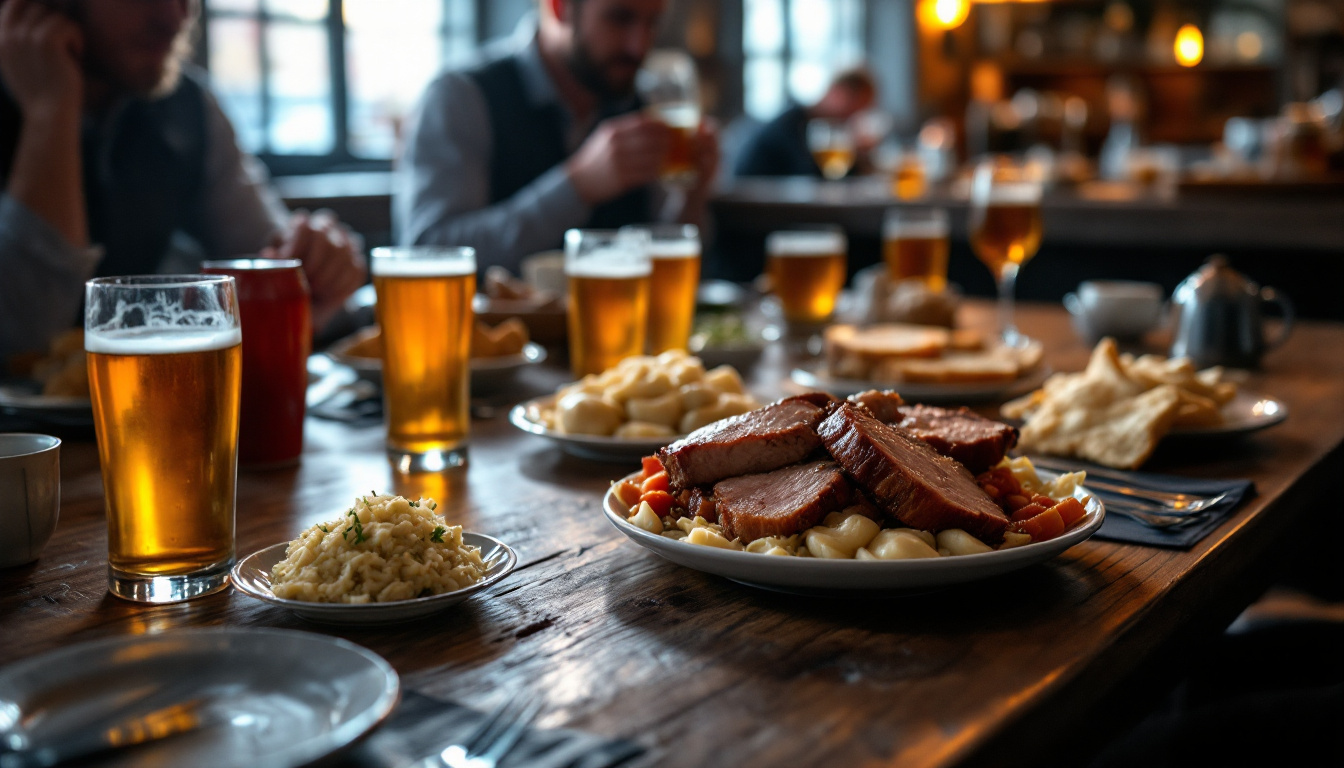
Beer is the answer to almost every question here, and it is some of the best on the planet. The pilsner style was invented in Plzeň in 1842, and Pilsner Urquell still pours golden and bitter from its home brewery. Budweiser Budvar comes from České Budějovice, and small regional breweries are everywhere. Order a half-litre (velké) or a small one (malé), and seek out tank beer when you can.
Beyond beer, two drinks are worth a taste. Becherovka is a herbal, cinnamon-tinged liqueur from the spa town of Karlovy Vary, drunk as a digestif. Moravian wines, especially crisp whites, are excellent and rarely leave the country, so this is your chance to try them. Kofola, the Czech cola born under communism, is the non-alcoholic local pick, and slivovice, fierce plum brandy, is the homemade shot a Czech host will press on you whether you want it or not. For more European drinking and eating, our Europe food guide sets the wider scene.
- Toast with “Na zdraví” (to your health), clink glasses, and make eye contact as you do. Breaking eye contact is considered bad luck.
- Never cross arms with someone else when clinking, and let your glass touch the table briefly before the first sip in some circles.
- Tipping is modest: round up or add about 10 percent, and tell the server the total amount as you hand over the money rather than leaving coins on the table.
- Pubs are communal. Sharing a large table with strangers is normal, so ask “je tu volno?” (is this free?) before sitting.
FAQ
What is the national dish of the Czech Republic?
Svíčková na smetaně, marinated beef sirloin in a creamy root-vegetable sauce served with bread dumplings, cranberry and whipped cream, is the dish most Czechs name first. Roast pork with dumplings and sauerkraut (vepřo knedlo zelo) is the other great national plate.
What is the most popular Czech food?
The most popular and typical Czech foods are svíčková (beef in creamy sauce with dumplings), vepřo-knedlo-zelo (roast pork, dumplings and sauerkraut), goulash, and roast duck with red cabbage. Soups like garlic česnečka and creamy kulajda are the classic starters, fried cheese (smažený sýr) and řízek the everyday favorites, and ovocné knedlíky and medovník the sweets. Almost everything is built to go with the country’s famous tank-poured Pilsner.
Is Czech food good for vegetarians?
Traditional Czech cooking is meat-heavy, but there are reliable vegetarian options. Smažený sýr (fried cheese), bramboráky (potato pancakes), kulajda soup, and ovocné knedlíky (sweet fruit dumplings) are all classic and meat-free. Cities also have a growing modern vegetarian scene.
How is Czech goulash different from Hungarian goulash?
Czech goulash is thicker and darker, closer to a beef stew than a soup, with onions doing more work than paprika. It is served with bread dumplings or inside a hollowed bread loaf, while Hungarian gulyás is more of a brothy, paprika-forward soup.
Is trdelník a traditional Czech food?
No. The chimney cake sold across Prague’s Old Town is a modern tourist product with roots elsewhere in the region, and locals do not consider it a Czech specialty. For a genuine sweet, choose medovník (honey cake) or a koláč from a bakery.
What should I drink in the Czech Republic?
Beer, above all. The pilsner style was invented in Plzeň in 1842, and tank beer (tankové pivo) in a good pub is fresher than bottled. Beyond lager, try Becherovka herbal liqueur, Moravian white wine, and Kofola, the local cola.
How much does a meal cost in the Czech Republic?
In a traditional pub, a main dish runs about 150 to 260 CZK (roughly 6 to 10 US dollars as of 2026) and a half-litre of beer 45 to 60 CZK. Street snacks like párek v rohlíku cost 40 to 60 CZK. Tourist-center restaurants charge far more for less.
More food guides waiting for you
Browse our complete collection of European food guides.