Kuala Lumpur is three food cultures arguing at the same table, and the argument has been going on for 200 years. Malay, Chinese, and Indian cooking traditions collide here with a force that produces something none of them could create alone. The mamak stall flipping roti canai at 2 AM sits next to the Chinese kopitiam pouring pulled coffee at dawn, which sits next to the Malay warung wrapping nasi lemak in banana leaves. Everyone eats at everyone else’s places. KL runs on this delicious chaos.
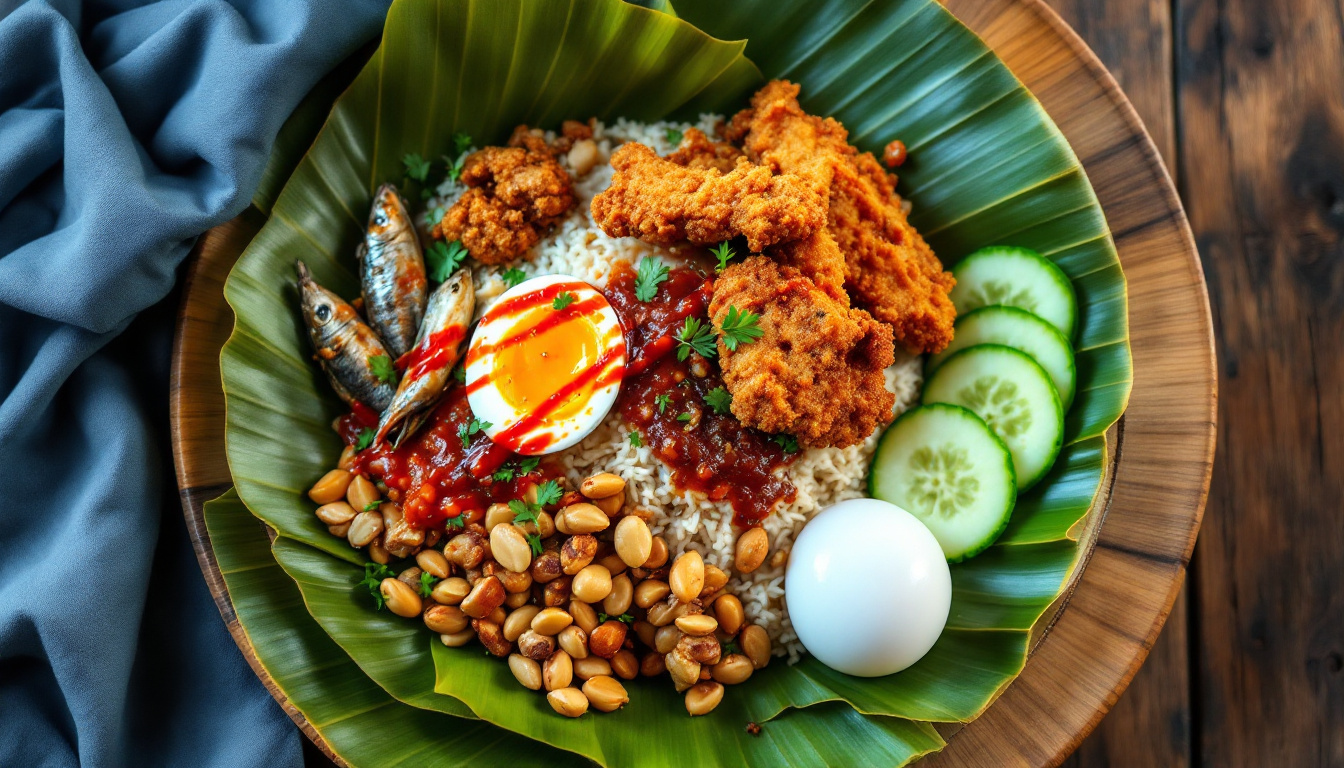
My favorite KL meal cost about three ringgit: a banana-leaf packet of nasi lemak eaten standing at a Kampung Baru stall at 7 AM, followed an hour later by roti canai and teh tarik at a mamak round the corner. Kuala Lumpur might be the most underrated food city in Asia, because it does not have one cuisine, it has three colliding at once. Malay, Chinese and Indian cooking have shared the same streets here for over a century, and the result is the mamak stall: an open-air, all-night institution where you can eat roti canai, char kway teow and tandoori chicken at the same table for the price of a coffee. KL doesn’t pick a side. It eats everything, around the clock.
In This Guide
KL’s food culture works because of a concept Malaysians call muhibbah, racial harmony expressed through daily life. In practical terms, it means a Malay taxi driver eats char kway teow at a Chinese hawker stall for lunch, drinks teh tarik at an Indian-Muslim mamak for supper, and picks up nasi lemak from a Malay woman’s roadside stall for breakfast. Nobody thinks this is unusual. It’s Tuesday. This cross-pollination has been happening for generations, and the food keeps getting better because of it.
The result is a city with one of the deepest and cheapest food cultures in the world. A RM 2 ($0.45) banana-leaf nasi lemak from a morning stall is a complete, balanced, genuinely delicious meal. A RM 1.50 roti canai at a mamak is one of the most satisfying things you can eat at any hour. KL proves that the best food on Earth doesn’t need a restaurant, a chef’s name, or a price tag. It just needs a cook who’s been perfecting one dish for 30 years and a plastic stool to sit on while you eat it.
For the full Malaysian food picture beyond the capital, see our complete guide to the best food in Malaysia. For the eternal KL vs. Singapore comparison, read our Singapore food guide and judge for yourself.
Jalan Alor, KL’s Most Famous Food Street
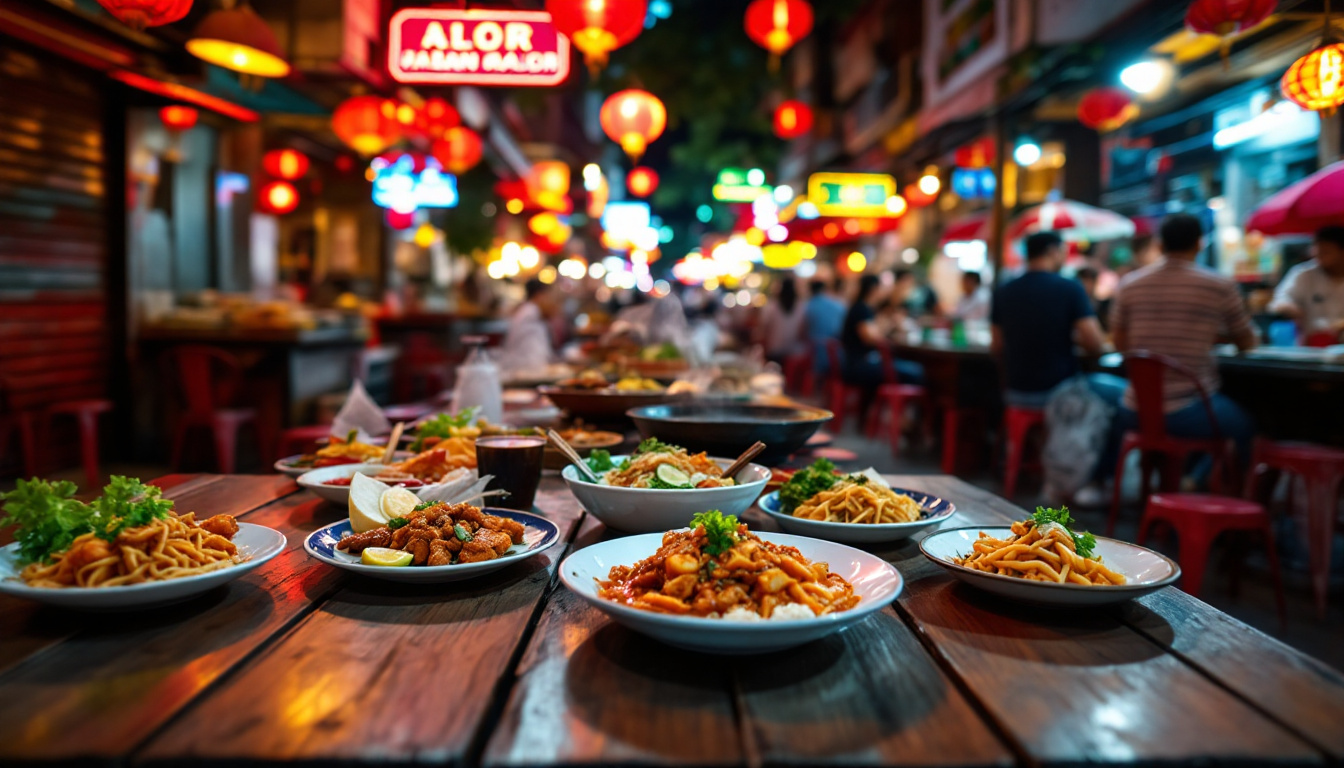
Jalan Alor is a single street in the Bukit Bintang district that transforms every evening into KL’s most spectacular open-air food court. Dozens of restaurants spill plastic tables across the road, wok stations blast flames into the night air, and the smell of grilled satay and stir-fried noodles carries for blocks. Yes, it’s on every tourist list. Yes, it’s still genuinely excellent. The food here is Chinese-Malaysian, cooked by families who’ve been running these stalls for decades.
What to eat on Jalan Alor
Wong Ah Wah (1–9 Jalan Alor), The most famous restaurant on the street. Grilled chicken wings are the signature, marinated, charcoal-grilled, brushed with a sweet-spicy glaze. RM 2.50 per wing. Order 10. Also excellent: fried mantis prawns, kangkung belacan (stir-fried water spinach with shrimp paste), and claypot tofu. RM 30–60 for two people eating well.
Durian, In season (roughly June–August and again late in the year) the durian stalls at the top of Jalan Alor are an event in themselves. Musang King is the prized variety, custardy and intense; vendors crack it open to order and sell by weight. Love-it-or-loathe-it, but trying it on the street here is a rite of passage. Pair it with cold coconut water, never alcohol.
Grilled stingray stalls, Sambal stingray is a KL street food classic: a slab of stingray grilled in banana leaf, topped with a thick layer of fiery sambal belacan. RM 15–25 per portion. The stalls near the south end of Jalan Alor do it best. Squeeze lime over the top, eat it with rice, and prepare for serious chili heat.
Char kway teow (various stalls), Flat rice noodles stir-fried with cockles, Chinese sausage, bean sprouts, chili, and egg in a screaming-hot wok. The KL version uses lard for that deep, smoky wok hei flavor. RM 8–12. Every stall has a slightly different recipe. The one with the longest queue is usually the right call.
Fresh fruit juice stalls, Mango, watermelon, passionfruit, coconut, sugarcane, blended fresh, ice-cold. RM 5–8. The perfect cooldown between spicy dishes. KL’s tropical fruit is extraordinary, and the street stalls charge a fraction of restaurant prices.
Petaling Street & Chinatown, Day Markets and Heritage Kopitiam
Petaling Street is KL’s Chinatown, a covered street market during the day and a more relaxed food zone than Jalan Alor. The surrounding blocks hold some of KL’s oldest kopitiams (traditional coffee shops), temples, and market stalls. The food here leans Chinese-Malaysian with Hokkien and Cantonese roots.
What to eat in Chinatown
Madras Lane hawker stalls, A narrow alley off Petaling Street packed with heritage food stalls. Curry laksa (RM 7–9), yong tau foo (stuffed tofu and vegetables in broth, RM 8–12), and chee cheong fun (steamed rice rolls with sweet sauce, RM 4). The stalls here have been operating since the 1960s. Go before noon, most close by 2 PM.
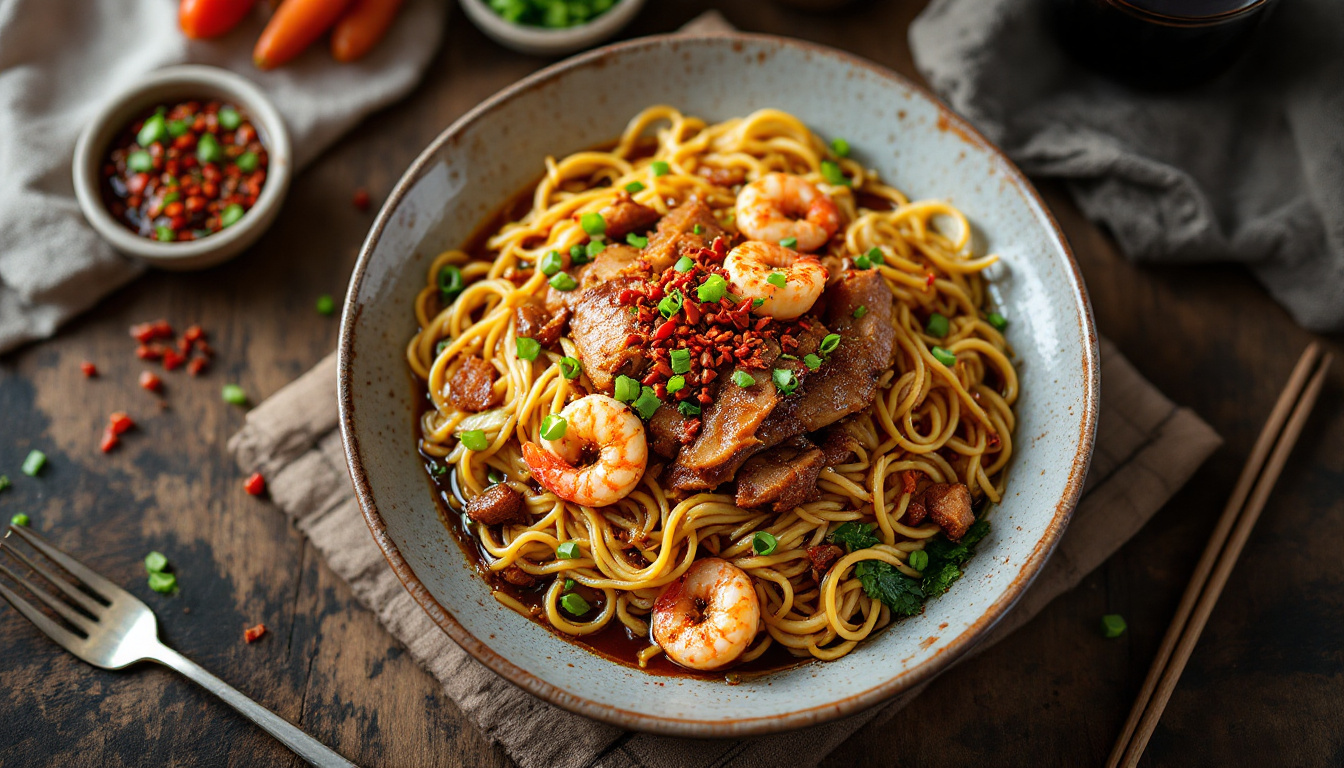
Kim Lian Kee (49 Jalan Petaling), Claims to have invented Hokkien mee in KL. Thick yellow noodles braised in dark soy with pork, prawns, and crispy lard. RM 10–15. The noodles are dense, dark, and nothing like the Singaporean version. Love it or hate it, it’s a KL original.
Wan tan mee and Hainanese chicken rice, Two more Chinatown essentials. Wan tan mee is springy egg noodles tossed in dark soy with char siu and wontons (dry or in soup, RM 7–10), best at the old shophouse stalls around Petaling Street. Hainanese chicken rice, poached chicken with rice cooked in the stock, chili-ginger sauce on the side, is a daily lunch staple across KL (RM 8–12); a good plate is one of the city’s great cheap meals.
Chocha Foodstore (156 Jalan Petaling), Modern Malaysian restaurant in a restored 1950s shophouse. Creative takes on Malaysian classics using local, seasonal ingredients. Tasting menus RM 120–180 per person. The kind of place where traditional recipes meet contemporary technique without losing their soul. Good for a splurge meal in Chinatown.
Kopi at any kopitiam, KL’s kopitiam (coffee shop) culture runs deep. Kopi is thick, strong coffee roasted with butter and sugar, served with condensed milk. RM 2–3. It’s richer and more caramelized than Vietnamese or Singaporean coffee. Pair it with kaya toast (coconut jam on charcoal-grilled bread). Every kopitiam does this, sit at the marble-top tables and drink it the way KL has for a century.
Kampung Baru, The Malay Heart of KL
Kampung Baru is a Malay village in the center of a modern city. Wooden houses, narrow lanes, mosques, and some of the best Malay food in KL sit in the shadow of the Petronas Twin Towers, literally a 10-minute walk away. This is where nasi lemak reaches its purest form, where satay is grilled fresh over coconut-shell charcoal, and where Malay home cooking is served from front-room warungs. The neighborhood has resisted redevelopment for decades. Eat here while it lasts.
What to eat in Kampung Baru
Nasi lemak stalls (Jalan Raja Muda Musa), The morning nasi lemak stalls along this street are among the best in KL. Coconut rice, sambal tumis (cooked chili paste, sweeter and deeper than raw sambal), fried egg, anchovies, peanuts, cucumber. RM 2–3 for the basic packet; RM 8–15 with fried chicken (ayam goreng) or rendang. Arrive between 7–9 AM for the fullest selection.
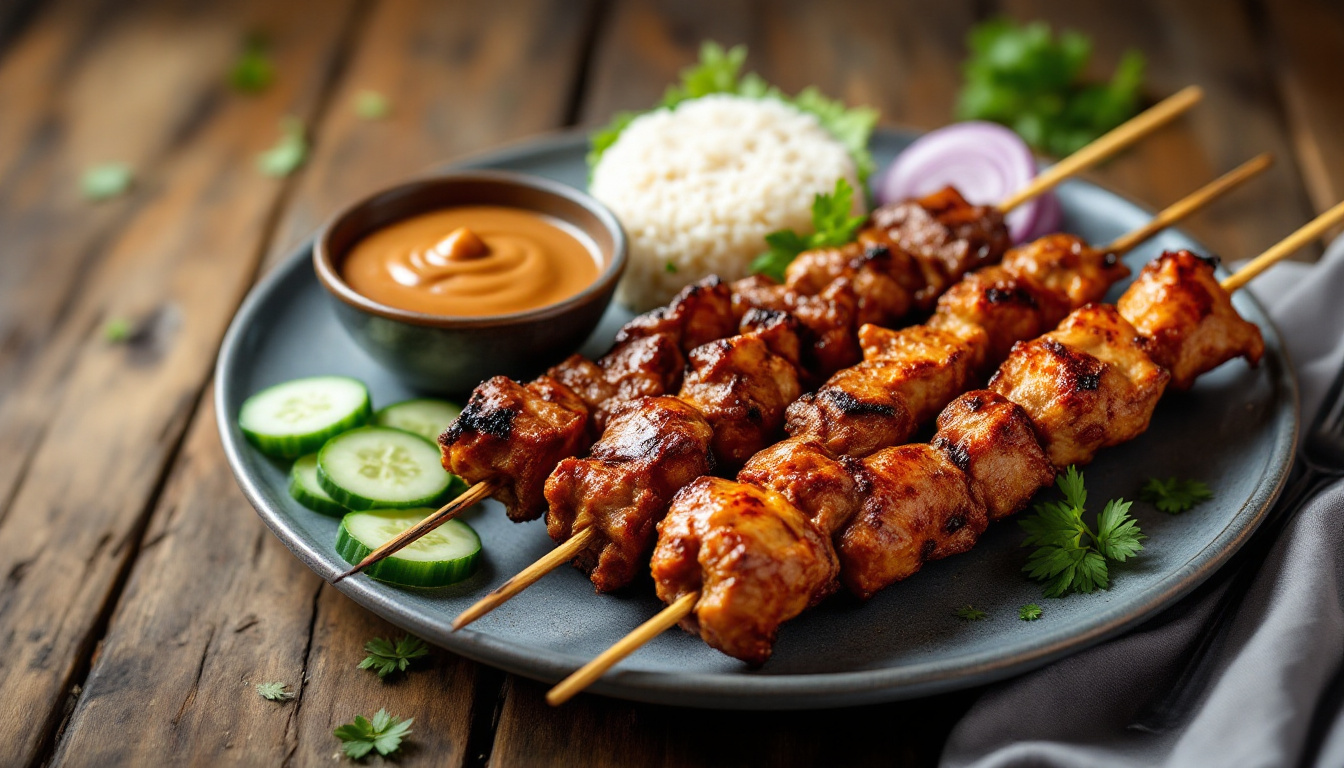
Satay Kajang-style stalls, Kampung Baru has several satay specialists grilling chicken and beef skewers over charcoal every evening. The KL/Kajang style uses a thicker, sweeter peanut sauce than the Singaporean version, and the meat is more heavily marinated. RM 0.80–1 per stick. Order 20 sticks, a plate of nasi impit (pressed rice), and a bowl of peanut sauce. RM 20–25 for a generous satay dinner.
Nasi kerabu and nasi dagang, East coast Malay dishes that show up at specialist stalls in Kampung Baru. Nasi kerabu is blue rice (colored with butterfly pea flower) with herbs, kerisik (toasted coconut), and fried fish. Nasi dagang is coconut-milk rice with fish curry. RM 6–10 each. These are harder to find in KL outside Kampung Baru and specialist stalls.
Ramadan bazaar (seasonal), During Ramadan, Kampung Baru hosts one of KL’s largest and most diverse food bazaars. Hundreds of stalls selling dishes that appear only during this month: bubur lambuk (special porridge), murtabak, ayam percik (flame-grilled chicken with coconut sauce), and dozens of kuih (Malay sweets). RM 2–10 per item. If your trip coincides with Ramadan, this is unmissable.
Brickfields (Little India), Banana Leaf Meals and Teh Tarik
Brickfields, near KL Sentral station, is KL’s Little India, a compact neighborhood of Indian restaurants, spice shops, and sari stores. The food here is predominantly South Indian and Sri Lankan, with some of the best banana leaf meals and dosa in the country.
What to eat in Brickfields
Banana leaf rice restaurants (Jalan Tun Sambanthan), A banana leaf is your plate. Rice in the center, surrounded by vegetables, pickles, papadum, and rasam (pepper soup). Servers walk around with buckets of curry and rice, wave them over for refills (unlimited). Add chicken, mutton, or fish curry for extra. RM 10–15 per person with meat. Vishalatchi Food and Catering and Sri Nirwana Maju are local favorites.
Dosa at Saravana Bhavan or local stalls, Paper-thin fermented rice-and-lentil crepes served with coconut chutney and sambar. Plain dosa RM 3–4. Masala dosa (stuffed with spiced potato) RM 5–7. Breakfast or lunch, dosa is one of the most satisfying vegetarian meals in KL.
Teh tarik at any mamak, Brickfields and the surrounding streets have excellent mamak stalls. Teh tarik (pulled tea) is brewed strong, mixed with condensed milk, then poured back and forth between two cups from a height, creating a frothy, creamy head. RM 1.80. The theatre of the pour is half the experience. Pair it with roti canai and dhal.
Bangsar, Mamak Kings and Modern Malaysian
Bangsar is KL’s upscale residential and nightlife neighborhood, south of the city center. The food scene splits between mamak stalls (some of the best in the city), modern Malaysian restaurants, and a growing international dining scene along Jalan Telawi.
What to eat in Bangsar
Devi’s Corner (Jalan Telawi 4, Bangsar), One of KL’s most beloved mamak stalls. Open-air, 24 hours, packed at all hours. Roti canai (RM 1.50), mee goreng mamak (RM 7), nasi kandar (rice with your choice of curries, RM 8–15), tandoori chicken (RM 12). This is where Bangsar’s residents eat at midnight after a night out. The roti canai is flaky, buttery, and arrives in under 2 minutes.
Nasi kandar (various mamak stalls), A Penang-born dish that KL has adopted as its own: steamed rice flooded with multiple curry gravies and topped with your choice of fried chicken, squid, fish, eggs, and okra. The gravies mix on the plate, creating a flavor complexity that individual curries can’t achieve. RM 8–15 depending on toppings. The secret is asking for “banjir” (flood), extra gravy poured over the rice.
Bangsar Village area restaurants, The streets around Bangsar Village mall have KL’s best concentration of modern Malaysian restaurants: Alexis (brunch and French-Malaysian), Baba Low’s (Nyonya/Peranakan food), and Plan b (modern cafe). RM 30–80 per person. A different energy from hawker eating, but the quality reflects the price.
Chow Kit, The Rawest Food Experience in KL
Chow Kit is KL’s grittiest neighborhood, a lively wet market, chaotic streets, and a reputation that keeps most tourists away. Their loss. The Chow Kit Market is the largest wet market in KL, and the food stalls surrounding it serve some of the cheapest, most authentic Malay food in the city. The area is gentrifying slowly (The Chow Kit Hotel brought boutique tourism to the neighborhood), but the market and its food remain completely local.
What to eat in Chow Kit
Chow Kit Market (Jalan TAR area), The wet market itself sells produce, meat, and fish. The surrounding streets have stalls serving nasi campur (Malay mixed rice, RM 5–8), sup tulang merah (red bone marrow soup, a KL specialty where marrow bones are cooked in a thick, sweet-spicy red sauce and you suck the marrow out with a straw, RM 10–15), and kuih Melayu (traditional Malay sweets, RM 0.50–1 each).
Sup tulang merah (red bone marrow soup), This deserves its own paragraph. Lamb or beef marrow bones in a thick red sauce made from tomato, chili, and spices. You pick up the bone and suck the melted marrow through a straw or straight from the bone. It’s messy, dramatic, and tastes like nothing else in KL. The stalls near the intersection of Jalan TAR and Jalan Dang Wangi are the specialists. RM 10–15. Late-night dish, usually after 8 PM.
Kuih (Malay sweets), The market stalls sell dozens of varieties of kuih, small, colorful Malay cakes and sweets made from rice flour, coconut milk, pandan, and palm sugar. Kuih lapis (layered cake), ondeh-ondeh (pandan balls filled with palm sugar), seri muka (pandan custard on sticky rice). RM 0.50–1.50 each. Buy 10 different kinds and taste your way through.
Top 12 Dishes to Eat in Kuala Lumpur
KL’s food is three cuisines deep and 200 years layered. These twelve dishes cover the full spectrum. Eat all ten and you’ll understand why Malaysians consider their country the best food nation in Southeast Asia.
| # | Dish | Where to Try | Price | Area | Rating |
|---|---|---|---|---|---|
| 1 | Nasi lemak | Kampung Baru stalls / Village Park | RM 2–15 | Kampung Baru / Damansara | ★★★★★ |
| 2 | Roti canai | Devi’s Corner / any mamak, any hour | RM 1.50–2 | Bangsar / everywhere | ★★★★★ |
| 3 | Char kway teow | Jalan Alor stalls / Siam Road copies | RM 8–12 | Bukit Bintang | ★★★★★ |
| 4 | Satay (chicken & beef) | Kampung Baru stalls / Satay Kajang | RM 0.80–1/stick | Kampung Baru | ★★★★★ |
| 5 | Nasi kandar | Devi’s Corner / Line Clear (Penang-style in KL) | RM 8–15 | Bangsar / various | ★★★★ |
| 6 | Banana leaf rice | Vishalatchi / Sri Nirwana Maju | RM 10–15 | Brickfields / Bangsar | ★★★★★ |
| 7 | Teh tarik (pulled tea) | Any mamak stall, 24 hours | RM 1.80–2.50 | Everywhere | ★★★★ |
| 8 | Curry laksa | Madras Lane stalls (Chinatown) | RM 7–9 | Chinatown | ★★★★ |
| 9 | Sup tulang merah (red bone marrow) | Chow Kit area stalls | RM 10–15 | Chow Kit | ★★★★ |
| 10 | Hokkien mee (dark braised noodles) | Kim Lian Kee (Chinatown) | RM 10–15 | Chinatown | ★★★★ |
| 11 | Ramly burger | Roadside burger carts / pasar malam | RM 4–8 | Night stalls / everywhere | ★★★★ |
| 12 | Ikan bakar (grilled fish) | Bellamy / Bangsar / night-market stalls | RM 15–35 | Bangsar / Kampung Baru | ★★★★ |
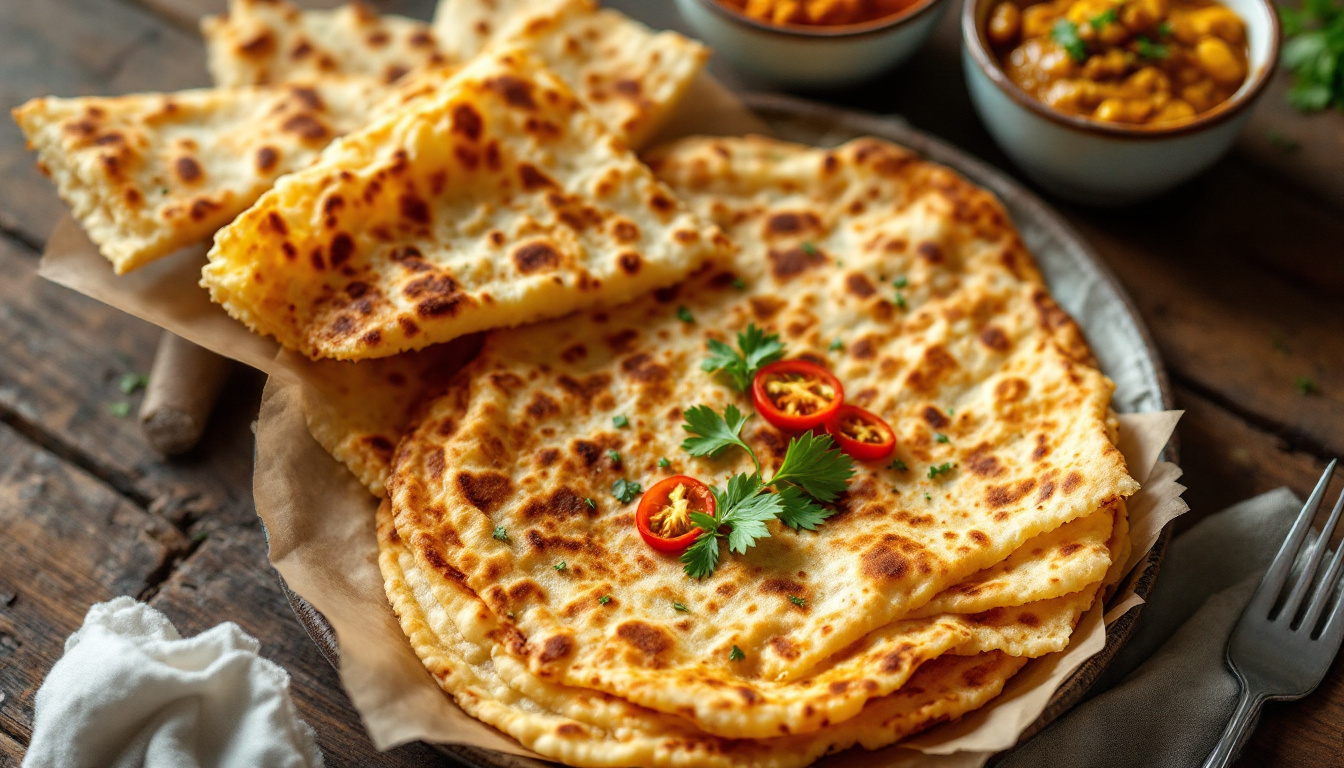
A word about roti canai: this is the single most important food in KL daily life. A circle of dough, stretched paper-thin by hand (the mamak cook flips it in the air like a pizza), folded into layers, and griddle-fried until the outside is crispy and the inside is soft and flaky. Served with dhal (lentil curry) and fish or chicken curry for dipping. RM 1.50. That’s $0.33 for one of the most technically skilled, most satisfying foods you’ll eat anywhere. It’s available 24 hours at every mamak stall in the city. Roti canai is why KL is one of the greatest food cities on Earth, and it costs less than a third of a dollar.
Practical Tips for Eating in Kuala Lumpur
Halal is the default
Malaysia is a Muslim-majority country, and most restaurants in KL are halal. Chinese hawker stalls and kopitiams are the main exception, they may serve pork and are not halal-certified. Look for the “JAKIM halal” logo (blue and white) at restaurants if this matters to you. Mamak stalls are always halal. Indian restaurants in Brickfields vary, many are Hindu vegetarian, not halal.
The Grab app is essential
Grab (Southeast Asia’s Uber) is the easiest way to get between food neighborhoods in KL. Traffic is bad, parking is worse, and the public transport doesn’t reach every food street. A Grab ride from Chinatown to Bangsar costs RM 8–12 (~$1.75–2.65). GrabFood delivery also works well if you’re too full to move but still want to try one more thing.
Rain plan
KL gets afternoon thunderstorms almost daily (3–5 PM, especially April–November). Outdoor hawker stalls close or get miserable during heavy rain. Plan open-air eating (Jalan Alor, Kampung Baru) for evenings after the rain passes. Covered hawker centers and mamak stalls are rain-proof alternatives.
When to eat what
Nasi lemak: morning (6–10 AM), the best stalls sell out early. Roti canai: any time, literally 24 hours. Char kway teow: dinner (Jalan Alor opens 5 PM). Satay: evening (Kampung Baru stalls fire up around 6 PM). Banana leaf rice: lunch (11:30 AM–2:30 PM). Mamak peak: 10 PM–2 AM. Sup tulang merah: late night (after 8 PM).
Tipping
Tipping is not expected in KL. Most restaurants add a 10% service charge to the bill. At hawker stalls and mamak restaurants, no tip is needed, just pay the stated price. Rounding up by a ringgit or two is a kind gesture but not obligatory.
Frequently Asked Questions About Food in Kuala Lumpur
More Asian food guides waiting for you
Country and city deep dives across Malaysia and the wider continent.