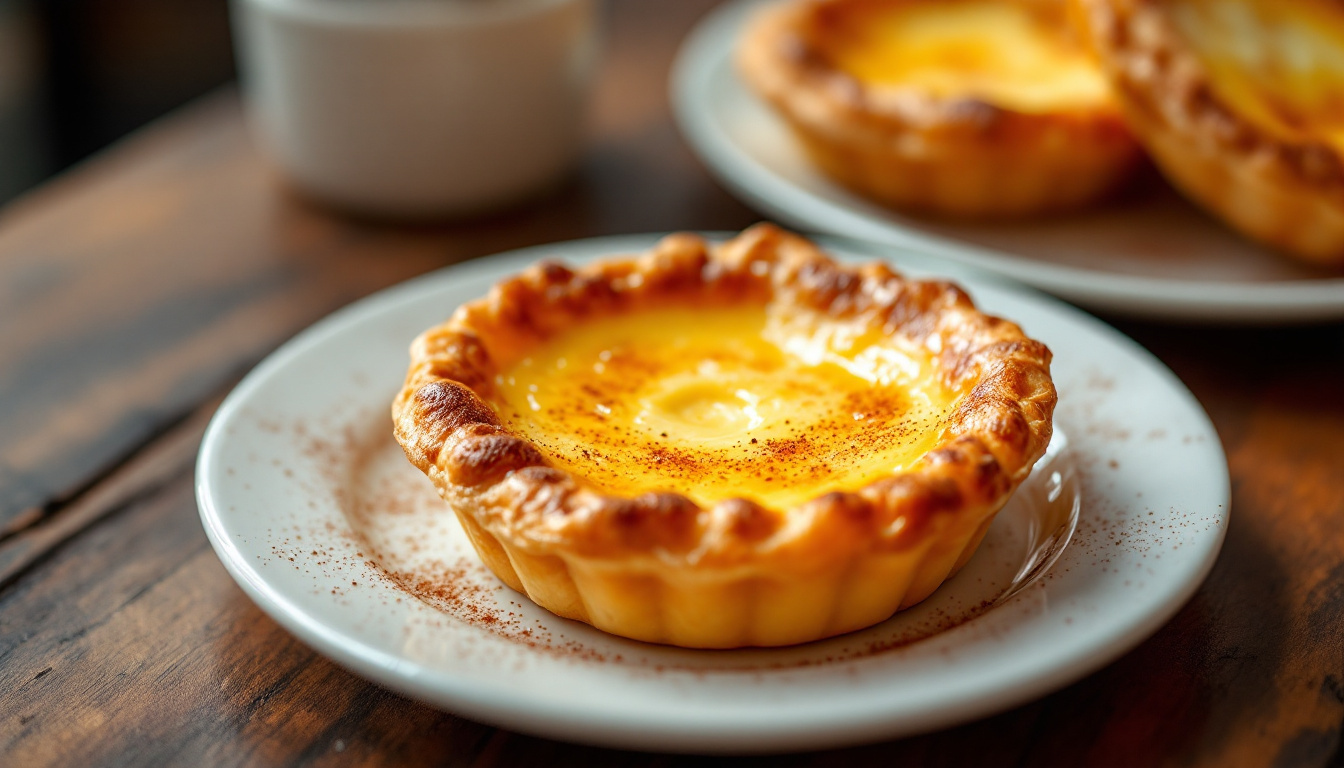
A warm custard tart dusted with cinnamon, a garlicky pork bifana eaten on the church steps, salt cod a hundred ways, and sardines charred over coals in the summer streets: a neighborhood guide to eating in Lisbon.
The best food in Lisbon is salt cod, sardines, custard tarts, and a glass of cheap wine at a tiled counter, eaten with no fuss and a lot of pleasure. Portugal’s capital runs on the sea (above all on bacalhau, the salt cod the country claims to cook 365 ways), on the pastel de nata invented by monks in Belem, and on the tasca, the humble neighborhood restaurant where a hearty lunch with wine costs less than a cocktail elsewhere. It’s one of Europe’s best-value and most soulful food cities, and it’s having a real moment.
Why Lisbon is one of Europe’s great food cities
Lisbon is one of Europe’s great food cities because it pairs an Atlantic seafood culture with cheap, soulful cooking and the world’s best custard tart. The wider story is in our complete Portugal food guide, but Lisbon concentrates it: the bacalhau and grilled fish, the pastel de nata born in Belem, the tasca lunch culture, and a new wave of markets and chefs. It is one of Europe’s great food regions, and one of its best value.
The constants are the sea, salt cod, pork, olive oil, and bread, eaten simply and generously. Lunch is the main event, when the tascas fill for the prato do dia (dish of the day) with a jug of house wine. The food is rarely fancy. Lisbon does humble brilliantly, and the smartest move is to eat and drink at the counter, where everything costs half as much. This guide runs through the dishes that define the city, then where to eat them.
The best food in Lisbon, dish by dish
These are the 13 things I tell every visitor to eat, with a rough 2026 price and what makes each matter. Prices are in euros. And remember, it’s cheaper standing at the counter.
Pastel de nata
The pastel de nata is the custard tart that defines Lisbon, a shell of shatteringly flaky pastry filled with rich egg custard and baked until the top blisters and caramelizes, dusted with cinnamon. Monks at the Jeronimos Monastery in Belem invented it, and the original is Pasteis de Belem (secret recipe since 1837), while many locals swear by Manteigaria in Chiado, served warm with a glass front so you can watch them made. Eat it hot, at the counter, with a bica (espresso). One is never enough.

Bifana
The bifana is Lisbon’s best street food, thin slices of pork marinated in garlic and white wine, stewed until tender, and stuffed into a crusty bread roll. Simple and intensely savory, it’s the everyday sandwich of the city, dressed with mustard or piri-piri to taste. As Bifanas do Afonso, a no-frills window near the Cathedral, is the cult favorite, where you order at the counter and eat on the stone steps. Cheap, fast, perfect. It’s the snack that wins everyone over.
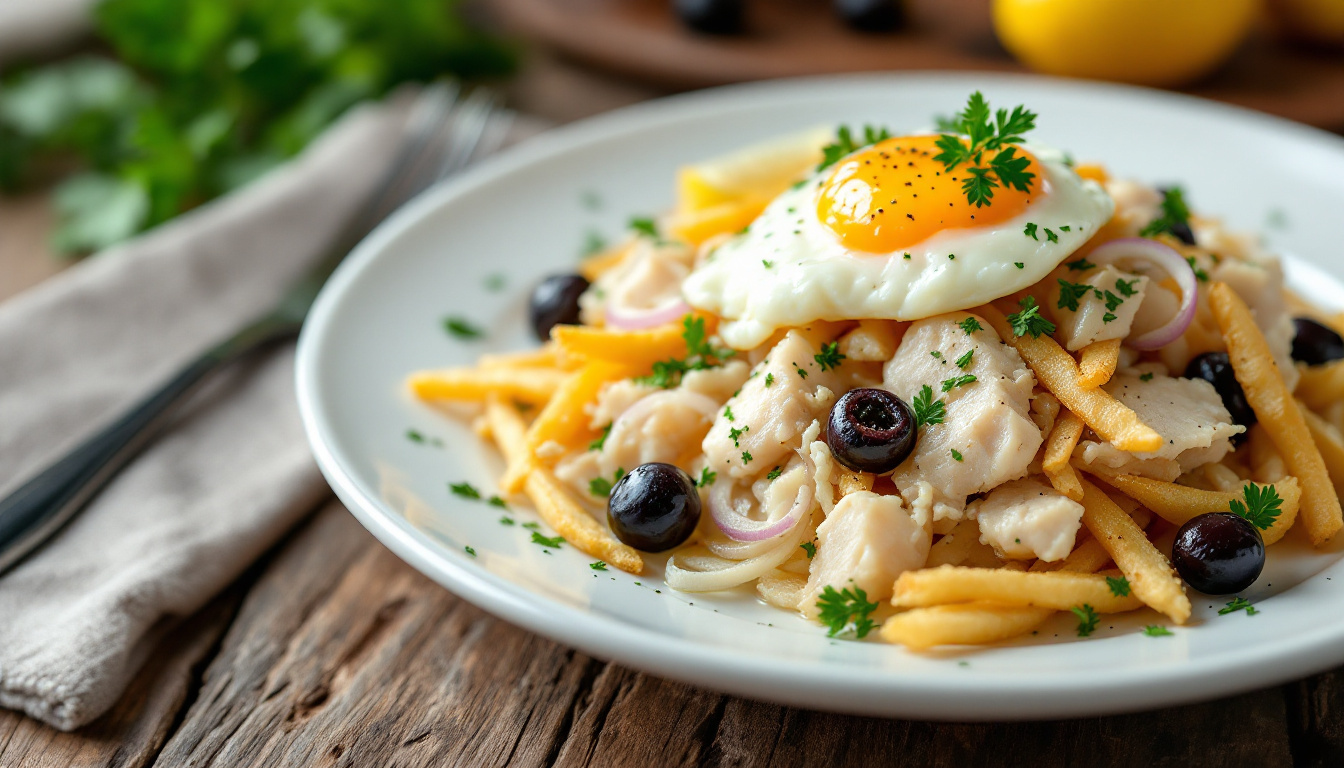
Bacalhau
Bacalhau, dried and salted cod, is the obsession at the heart of Portuguese cooking, and Lisbon claims a way to cook it for every day of the year. The Lisbon classic is bacalhau a bras, shredded cod tangled with thin fried potatoes, scrambled egg, onion, and olives. Other essentials include bolinhos (or pasteis) de bacalhau (fried cod fritters) and bacalhau com natas (baked with cream). Ze da Mouraria does a famous version. Order it at a tasca; it is the soul food of the city.
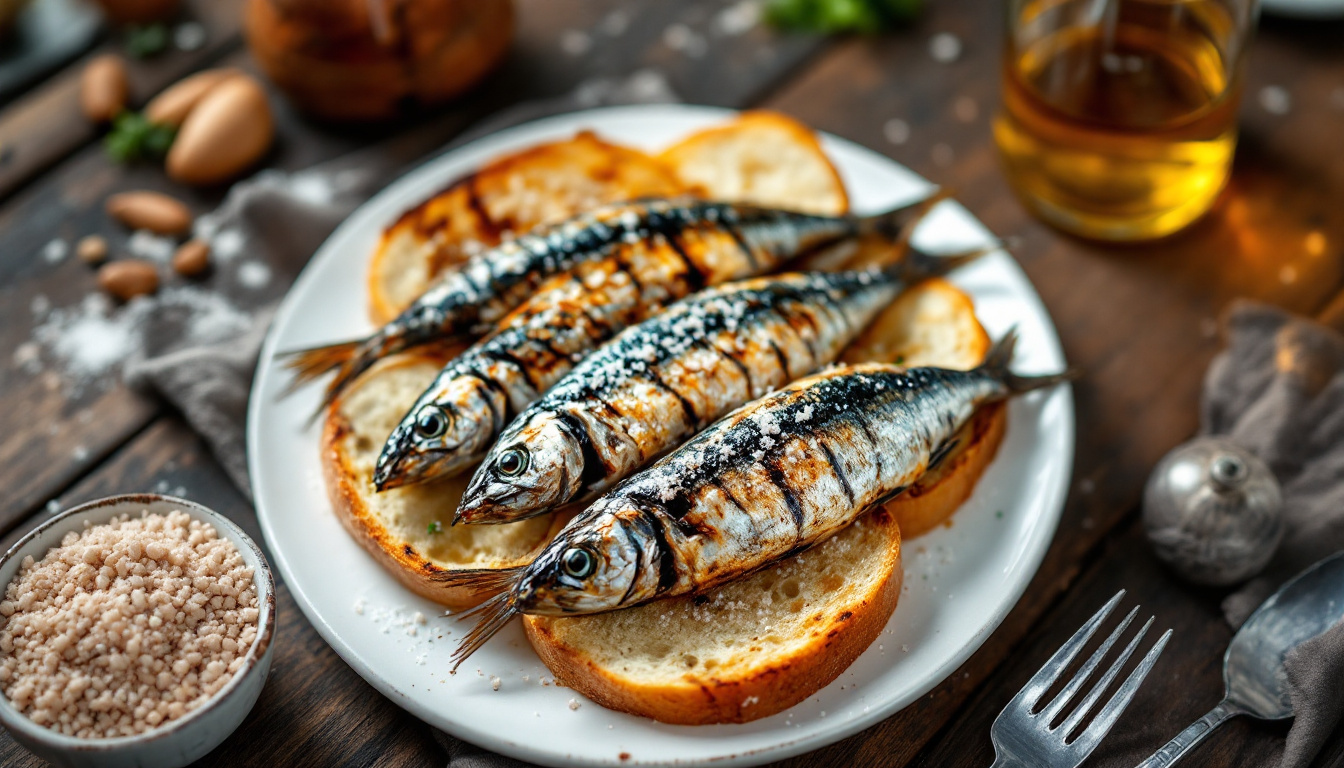
Sardinhas assadas
Sardinhas assadas are whole sardines coated in coarse salt and grilled over hot coals until the skin chars and crisps, served on rustic bread and eaten with your hands. They’re the taste of a Lisbon summer, peaking from June to September and exploding across the city during the Santo Antonio festival in June, when the streets of Alfama fill with smoke and grills. Messy, intensely savory, best with a cold beer and the bread soaking up the juices. Pure Lisbon.
Cervejaria seafood
The cervejaria (literally “beer hall”) is Lisbon’s temple of shellfish, where you eat garlicky clams (ameijoas a bulhao pato), tiger prawns, crab, and percebes (goose barnacles) with cold beer and bread. The most famous is Cervejaria Ramiro, an institution where the seafood is weighed and cracked at the table and the meal often ends with a steak sandwich (prego no pao). It’s a splurge by Lisbon standards, but a feast, and the freshest Atlantic shellfish you’ll eat. Go hungry and book ahead.
Caldo verde
Caldo verde is Portugal’s beloved national soup, a simple potato puree studded with finely shredded couve (collard greens) and a slice or two of smoky chourico, finished with good olive oil. Comforting, green, and humble, it is on every tasca menu and at every celebration, often served before the main or as a light supper with broa (corn bread). The version without the sausage is a great vegetarian option. Its heartier counterpart on the winter tasca menu is cozido a portuguesa, a generous boiled feast of beef, pork, sausages (chourico, morcela) and vegetables served on one big platter. Caldo verde is the gentle, everyday side of Lisbon eating; cozido is the Sunday blowout.
Prego
The prego is the bifana’s beefy cousin, a thin garlic-rubbed steak in a crusty roll, often eaten as the traditional end to a seafood meal (prego no pao). Simple, juicy, dressed with mustard, it’s a Lisbon staple at tascas, beer halls, and sandwich counters. Some versions come topped with an egg or cheese. Alongside the bifana, it’s the city’s great cheap sandwich, and the classic way to round off a big shellfish feast at a cervejaria.
Frango piri-piri
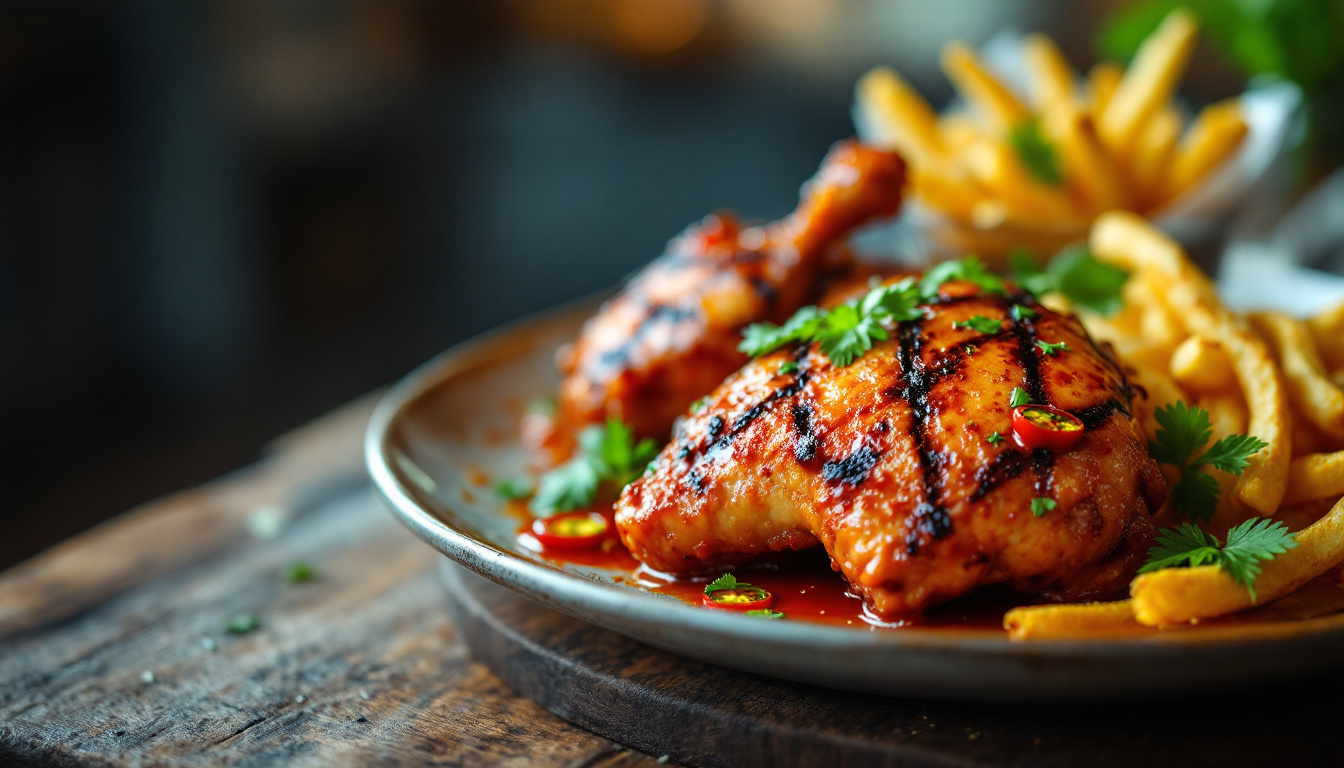
Frango piri-piri is Portugal’s great grilled chicken, butterflied and charred over coals at a churrasqueira, then basted with piri-piri, the fiery little chili the Portuguese brought back from their old African colonies. The skin blisters while the meat stays juicy, and it arrives with fries, rice, and salad, eaten with your hands and more piri-piri sauce on the side. This is everyday Sunday-lunch and takeaway food rather than fine dining, and a proper Lisbon churrasqueira does it far better than the global chains the dish later inspired. Cheap, smoky, and quietly one of the best things you can eat in the city.
Polvo and grilled fish
Beyond cod, Lisbon grills the Atlantic catch simply and superbly. Polvo a lagareiro (octopus roasted with garlic, olive oil, and smashed potatoes) is a favorite, alongside grilled dourada (sea bream), robalo (sea bass), and salada de polvo (octopus salad). The fish gets dressed with little more than olive oil, salt, and lemon, letting the freshness speak. A whole grilled fish at a tasca, priced by weight, with boiled potatoes and greens: that’s a classic Lisbon lunch.
Arroz and cataplana de marisco
Arroz de marisco is Portugal’s soupy seafood rice, a rich, brothy pot of rice loaded with prawns, clams, and crab, while the cataplana (cooked and served in a hinged copper clam-shaped pan) steams shellfish, fish, and sometimes pork together. Both are generous dishes to share, brimming with the flavor of the sea and tomato. The arroz de marisco in particular is a Lisbon comfort classic, somewhere between a risotto and a stew, and a great choice for a long, shared lunch.
Petiscos and conservas
Petiscos are the Portuguese answer to tapas, small plates shared over drinks: peixinhos da horta (battered green beans), pataniscas (cod fritters), pica-pau (sauced beef bites), grilled chourico, and cheese. Alongside them sits Lisbon’s famous tinned fish (conservas), beautifully packaged sardines, mackerel, and tuna eaten straight from the can with bread, sold at specialist shops like the historic Conserveira de Lisboa. Grazing on petiscos and conservas with a glass of wine? One of the city’s great low-key pleasures.
Queijo and enchidos
Portugal has superb cheese and cured meats, and a board of them is a classic Lisbon start. Queijo da Serra, a soft, runny sheep’s cheese from the Serra da Estrela mountains, is the prize, scooped with a spoon at its ripest. Alongside come the enchidos (cured sausages and meats): presunto (cured ham), chourico, the smoky morcela, and alheira, the bread-and-poultry sausage created by Portugal’s persecuted Jews to mimic pork, now a beloved dish in its own right, grilled with a fried egg. Eaten with bread, olives, and a glass of wine before a meal, the cheese and charcuterie board shows the quality of Portugal’s mountain larder.
Ginjinha and Lisbon sweets
Ginjinha (or ginja) is Lisbon’s sour-cherry liqueur, sweet and warming, downed in a single shot from tiny hole-in-the-wall bars in the Baixa, sometimes served in an edible chocolate cup. Beyond the pastel de nata, the city’s sweet tradition runs to convent pastries heavy with egg yolk and sugar: bolo de arroz (rice muffin), travesseiros, queijadas, and the almondy doces conventuais. A ginjinha at a standing bar and a pastry from a pastelaria is the perfect Lisbon afternoon ritual.
Where to eat: Belem, Alfama and the tascas
The best food in Lisbon is spread across its hilly neighborhoods, from custard-tart Belem to the tascas of the old town. Knowing where to go is half the pleasure. So here’s the map.
Belem, the riverside district of monuments, is the birthplace of the pastel de nata, and a stop at Pasteis de Belem (the 1837 original, with its tiled rooms and secret recipe) is a pilgrimage. Beyond the famous tarts, the area has good seafood, and it’s an easy tram ride from the center. Come early to beat the queue. Eat your natas warm, and pair them with a bica at the counter.
Alfama and Mouraria, the oldest, most atmospheric quarters, are tasca and fado country. The narrow lanes hide tiny family restaurants serving bacalhau, grilled fish, and the prato do dia, and in June they fill with smoke and grilled sardines for the Santo Antonio festival. Ze da Mouraria is a famous lunch spot for cod. This is where to eat traditional Lisbon over a long, cheap lunch with house wine and, often, live fado.
The Time Out Market (Mercado da Ribeira) in Cais do Sodre is the modern grazing hub, where around 40 stalls (many run by Lisbon’s top chefs and restaurants) let you sample everything from pasteis de nata and sardines to steak and seafood in one buzzy hall. The surrounding Cais do Sodre, once seedy, is now a nightlife and dining hotspot. Yes, it’s touristy, but a genuinely good one-stop taste of the city’s range.
Chiado and the Baixa, the elegant downtown, hold the famous Manteigaria nata counter, historic cafes, the ginjinha bars, and a mix of classic and modern restaurants. Tiny seasonal spots like Taberna da Rua das Flores (no menu, the chef tells you what is good) and the cervejaria Ramiro toward Intendente show the city’s range, from no-frills counters to destination seafood. The hills reward wandering between counters and tascas.
What to drink in Lisbon
Lisbon drinks Portuguese wine, coffee, and ginjinha, all cheap and excellent. The everyday wine is vinho verde, the young, slightly fizzy white from the north, perfect with seafood, alongside reds from the Douro and Alentejo and, of course, port from Porto for after dinner. Coffee is a ritual: order a bica (the Lisbon espresso) standing at the counter. Ginjinha, the sour-cherry liqueur, is the classic shot from a hole-in-the-wall bar, and the local beers Super Bock and Sagres are the everyday lagers. A glass of house wine with a tasca lunch? Almost nothing.
- The counter is cheaper than the table; stand for coffee, pastries, and bifanas like a local.
- The couvert (bread, olives, cheese) is not free; only what you eat is charged, and you can decline it.
- Lunch is the main meal and the best value, with the prato do dia at tascas.
- Tipping is modest, around 5 to 10 percent or rounding up; it is appreciated, not obligatory.
- Vegetarians can eat caldo verde (no sausage), peixinhos da horta, cheese, bread, and pastries, though the city is seafood- and pork-heavy.
Frequently asked questions
What food is Lisbon known for?
Lisbon is known for the pastel de nata (custard tart), bacalhau (salt cod, cooked countless ways, especially a bras), the bifana (garlicky pork sandwich), grilled sardines in summer, and Atlantic seafood like clams and prawns at a cervejaria. Its food is seafood-driven, cheap, and best eaten at tascas (traditional restaurants) and counters, washed down with vinho verde or ginjinha.
Where is the best pastel de nata in Lisbon?
The famous original is Pasteis de Belem, which has used a secret recipe since 1837 and draws long queues. Many locals, though, prefer Manteigaria in Chiado, where the tarts are served warm and you can watch them being made. Both are excellent. Eat them warm, dusted with cinnamon, standing at the counter with an espresso.
What is a bifana?
A bifana is Lisbon’s classic pork sandwich: thin slices of pork marinated in garlic and white wine, stewed until tender, and stuffed into a crusty bread roll, dressed with mustard or piri-piri. Cheap, savory, and quick, it is the city’s best street food. As Bifanas do Afonso, a no-frills window near the Cathedral, is the cult favorite.
How much does food cost in Lisbon?
Lisbon is one of Western Europe’s best-value food cities. A pastel de nata is around EUR 1.30-2, a bifana EUR 3-5, and a full tasca lunch with wine EUR 8-12. A seafood feast at a cervejaria like Ramiro runs EUR 25-45 per person. Eating and drinking at the counter costs roughly half the table price, so stand like a local to save.
When can you eat grilled sardines in Lisbon?
Grilled sardines (sardinhas assadas) are seasonal, at their best and fattiest from June through September. They peak during the Santo Antonio festival in June, when the streets of Alfama and Mouraria fill with charcoal grills and smoke. Outside the summer season, sardines are often frozen, so save them for a warm-weather visit.
Can vegetarians eat well in Lisbon?
Lisbon is seafood- and pork-heavy, so vegetarians need a little care, but it is manageable. Caldo verde (ask for it without chourico), peixinhos da horta (battered green beans), cheese and bread, grilled vegetables, and the pastries and pastel de nata all work, and the city has a growing number of vegetarian and vegan restaurants, especially around Chiado and Principe Real.
More food guides waiting for you
Browse our complete collection of European food guides.