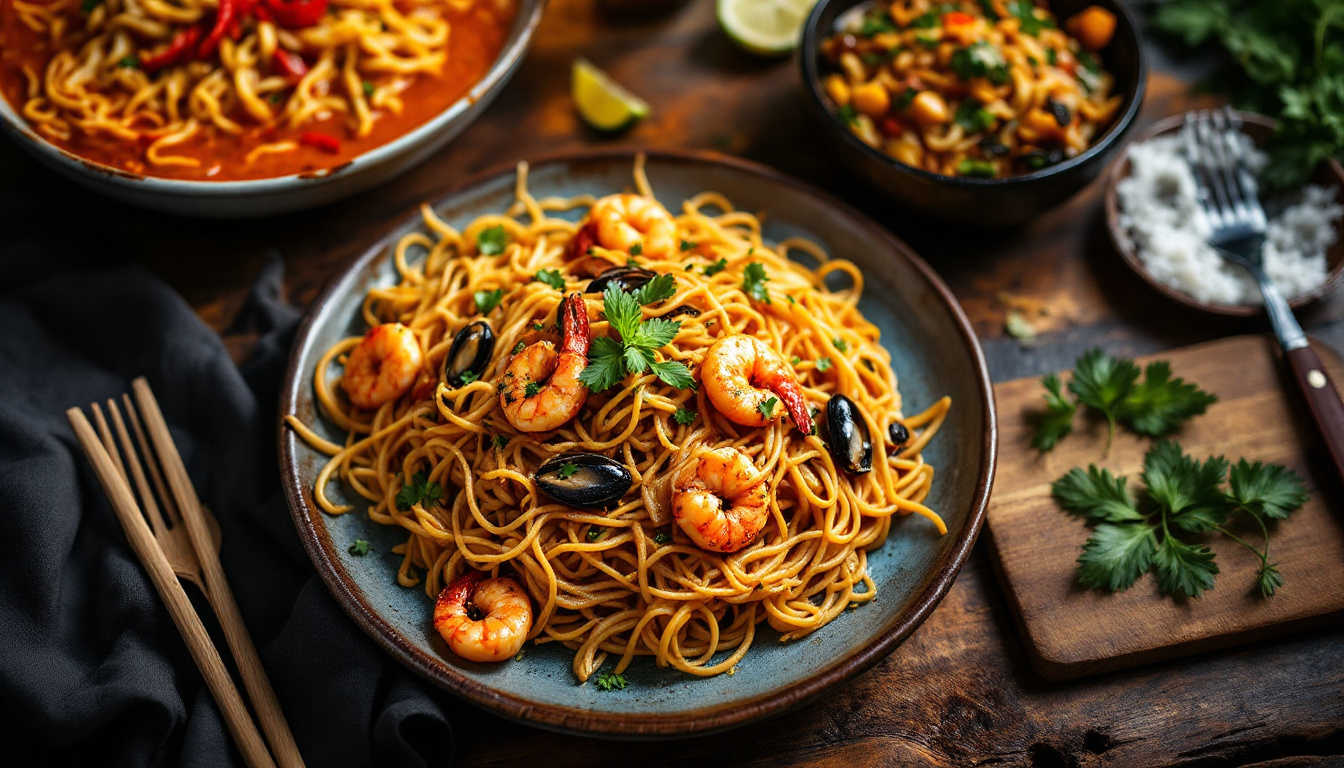
Ask anyone in Malaysia where to eat and they will say Penang, usually with a little envy. This small island off the northwest coast is widely called the best street food destination in Asia, and after a few days hopping between George Town hawker stalls I stopped arguing. Penang is where Malay, Chinese, Indian and Peranakan cooking collided over two centuries and produced a hawker scene of frightening depth, where each stall makes one dish and has made it for decades. The best food in Penang is cheap, smoky, and eaten on a plastic stool, one perfect plate at a time.
Why Penang is a street food legend
Penang is considered the best street food city in Asia because of its history as a trading port, where Malay, Chinese, Indian and Peranakan communities cooked side by side for two hundred years. That collision produced dishes you find nowhere else, like assam laksa and Penang Hokkien mee, plus the deepest hawker culture in Malaysia. George Town, the capital, is a UNESCO World Heritage site as much for its food as its shophouses.
The magic is the single-dish hawker, a cook who makes one thing all day, every day, for thirty or forty years. It is the same specialization that powers the rest of Malaysia, covered in our Malaysia food guide, taken to an extreme on one small island. Come hungry and order one plate at a time so you can keep going. Prices here are 2026, in Malaysian ringgit (about RM 4.1 to the US dollar), so a great hawker plate runs roughly two or three dollars.
The dishes you have to eat in Penang
Char Kway Teow 炒粿條
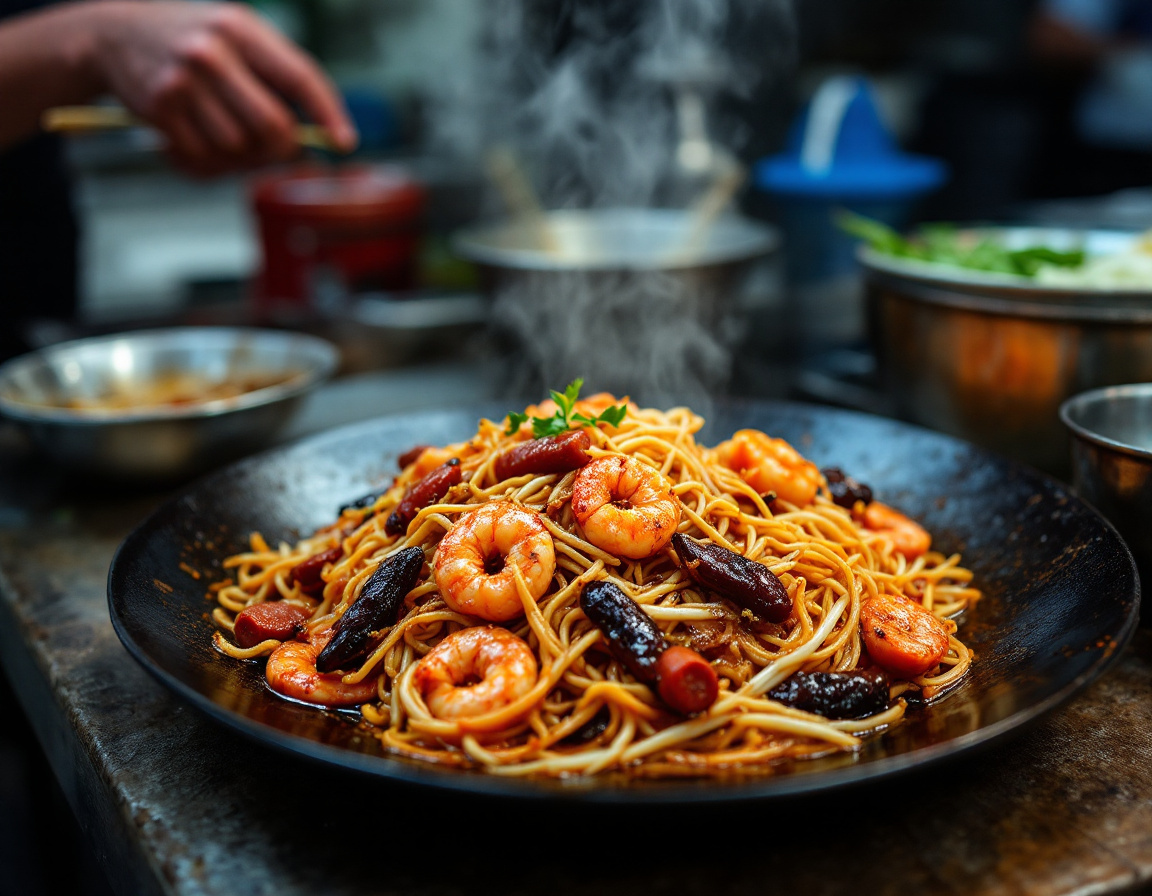
Char kway teow is Penang’s most famous plate, flat rice noodles fried over a ferocious flame until they take on wok hei, the smoky char that defines great Cantonese wok cooking. The classic version has prawns, blood cockles, Chinese sausage, egg, bean sprouts and chives, fried fast in pork fat and a touch of chili. The best stalls cook a single portion at a time, which is why you queue. Order it with extra cockles if you are brave.
Assam Laksa 亞參叻沙
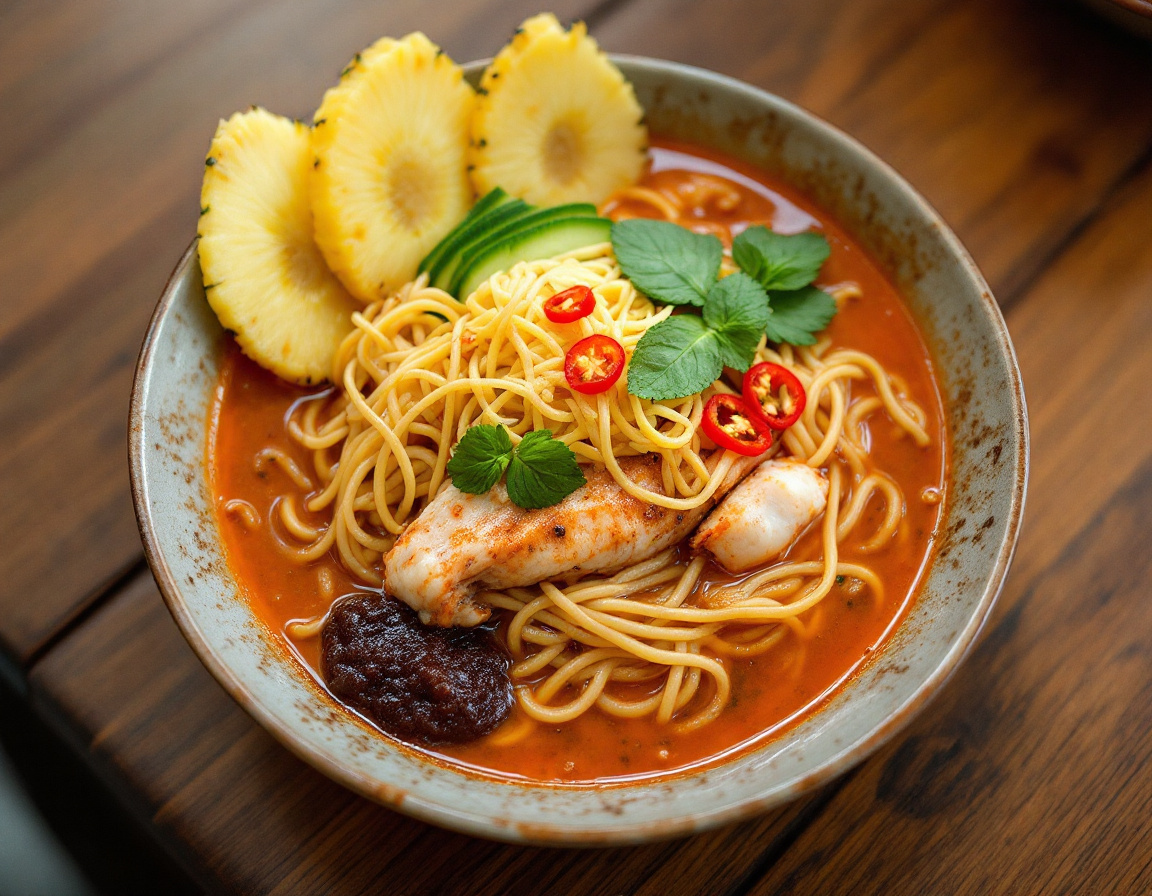
Assam laksa is the Penang dish that splits visitors, and the one I cannot stop eating. This is not coconut laksa; it is a sour, tangy fish broth made with mackerel, tamarind and torch ginger, poured over thick rice noodles and topped with pineapple, mint, cucumber and a spoon of dark prawn paste. It is bracing, funky and refreshing all at once. The legendary stall by the Air Itam market near Kek Lok Si temple is a pilgrimage.
Penang Hokkien Mee 福建蝦麵
Penang Hokkien mee is a different beast from the dish of the same name in Kuala Lumpur, and locals will correct you. Here it means a deep orange-red prawn noodle soup, the stock simmered for hours from prawn shells and pork bones, served with yellow noodles, prawns, pork, egg and a dollop of fiery sambal. It is rich, spicy and intensely savory. Stir in the chili to taste and you understand why Penangites get homesick for it.
Nasi Kandar
Nasi kandar is Penang’s great Indian-Muslim contribution, a plate of rice flooded with a mix of curries. You point at what you want, fried chicken, squid, okra, beef, and the server ladles several curry gravies over the rice in a move called banjir, or flooding. The blend of sauces is the whole point, and no two plates are the same. The famous shops near Chulia Street run around the clock and are an institution for late-night eating.
Cendol 煎蕊
Cendol is the dessert that cools you down in the Penang heat, and the island’s version is iconic. Shaved ice is piled over green rice-flour jelly worms, sweet red beans and a pour of coconut milk and dark gula melaka palm sugar. It is sweet, creamy and faintly smoky from the palm sugar, eaten with a spoon as you melt in the queue. The cart in the alley off Penang Road draws a line all afternoon for a reason.
Rojak 羅惹
Penang rojak is a fruit-and-vegetable salad like no other, tossed in a thick, black, pungent dressing of fermented shrimp paste, tamarind, sugar and chili. Chunks of pineapple, jicama, cucumber, unripe mango and fried dough are coated in the sauce and showered with crushed peanuts. Sweet, sour, savory, spicy and funky in one bite, it is a Penang flavor bomb. It sounds strange and wins almost everyone over.
Curry Mee 咖喱麵
Curry mee is Penang’s coconut-curry noodle soup, and it is the counterpoint to the sour assam laksa. A mild, rich coconut curry broth is poured over a mix of yellow noodles and rice vermicelli, then loaded with tofu puffs, prawns, cuttlefish, bean sprouts and, classically, cubes of cooked pig’s blood. A dollop of dark chili sambal stirred in lifts the whole bowl. It is a beloved morning dish, often gone by lunchtime at the best stalls.
Oh Chien 蚝煎
Oh chien is the Penang oyster omelette, and the island makes one of the best in Asia. Plump small oysters are fried into a batter of egg and rice and sweet-potato starch that turns crisp at the edges and gooey in the middle, finished with a sharp chili-and-vinegar dipping sauce. The contrast of crunchy lace, soft centre and briny oyster is the appeal. Order it at a night stall and eat it straight off the hot plate.
Koay Teow Th’ng 粿條湯
Koay teow th’ng is the quiet cousin of char kway teow: the same flat rice noodles, but served in a clear, clean broth simmered from chicken and pork bones instead of seared in a wok. It comes with fish balls, slices of chicken or duck, minced pork and spring onion, with a saucer of chili and garlic on the side. After a run of heavy, oily, chili-laced plates, this is the bowl Penangites reach for to reset.
Lor Bak 滷肉
Lor bak is a Penang Hokkien favourite: strips of pork marinated in five-spice powder, rolled in a sheet of beancurd skin and deep-fried until shatteringly crisp, then chopped into bite-size pieces. It arrives as a mixed platter with prawn fritters, fried tofu, century egg and cucumber, served with two dips, a thick dark starchy gravy (the lor) and a bright chili sauce. It is finger food built for a group.
Popiah 薄餅
Popiah is the fresh spring roll, and Penang’s is among the best in Malaysia. A thin, soft wheat skin is spread with sweet dark sauce and chili, then wrapped around stewed jicama (sengkuang), egg, lettuce, bean sprouts, crushed peanuts and crisp fried shallots. The result is cool, sweet and savory without a drop of frying oil. Watching the auntie roll one to order, tight and fast, is half the pleasure.
Lok Lok
Lok lok is Penang’s do-it-yourself night snack: a truck or stall pulls up with a rack of skewers, prawns, quail eggs, fish balls, cockles, tofu and vegetables, and you blanch your own in a shared pot of boiling stock, then dip in satay, sweet-chili or shrimp-paste sauces. You are charged by the colour of the sticks stacked up at the end. It is cheap, social and quintessentially late-night Penang.
Where to eat: George Town and beyond
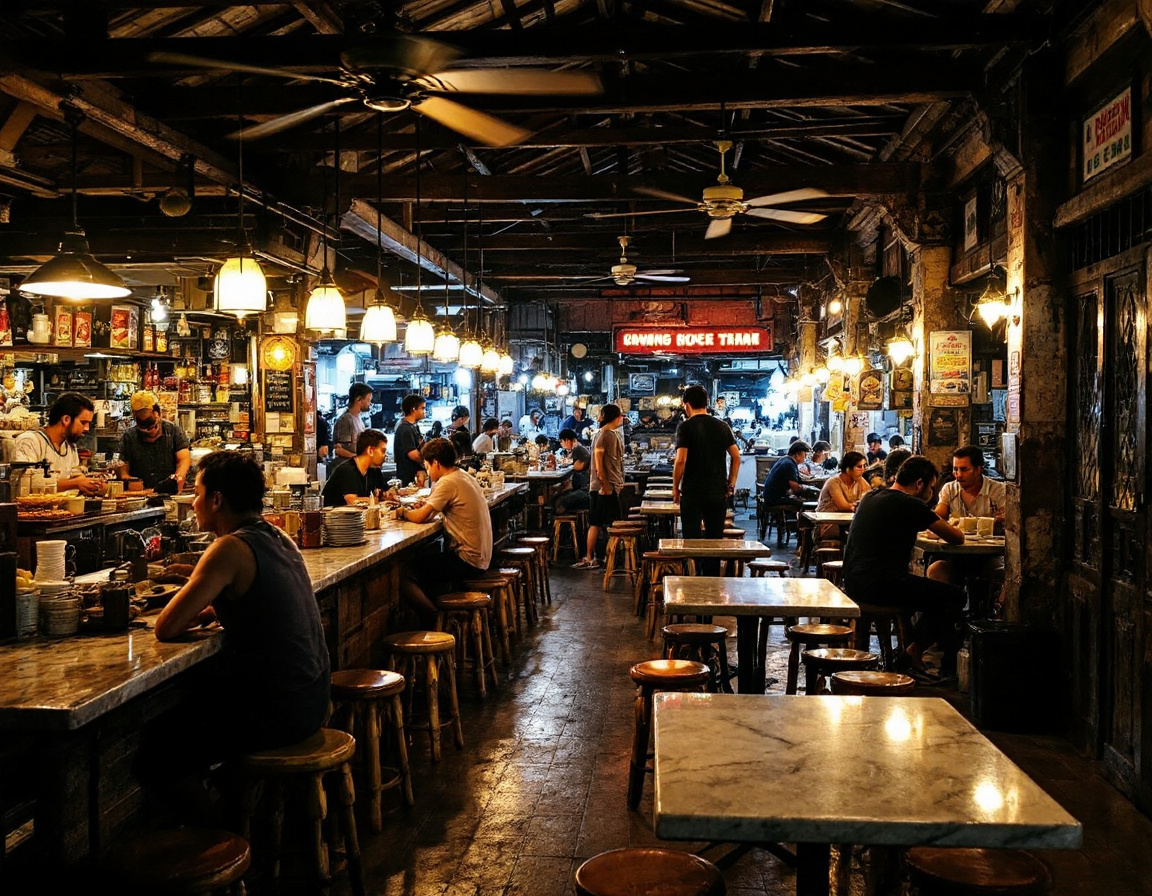
The best eating in Penang is in George Town, where hawker stalls and coffee shops, called kopitiam, cluster on every corner. Build your days around the famous hawker streets: Chulia Street for night-time char kway teow and nasi kandar, New Lane (Lorong Baru) for an evening street-food market, and the kopitiam on Kimberley Street and Lebuh Carnarvon for classics. Many star hawkers set up inside a single coffee shop, so one stop can mean five dishes.
Two trips outside the center are worth it. Air Itam, below the Kek Lok Si temple, is home to the most famous assam laksa stall. Gurney Drive has a big hawker food court by the sea, easier for first-timers though more touristy than the old town. Wherever you go, the rule is the same as in Kuala Lumpur: follow the longest local queue.
Tips and how to hawker
A few habits make hawker eating in Penang easy once you know them.
- Carry small cash. Hawker stalls are cash only, and you want small notes for the cheap plates.
- Order one dish at a time. Graze across stalls instead of one big meal; that is how you taste Penang.
- Check the hawker’s hours. Many famous stalls are morning-only or night-only, and some close one day a week, so plan around the legends.
- Mind the chili. Sambal and cut chilies are served on the side; add them gradually.
Penang is good for vegetarians too, with strong Indian and Chinese Buddhist options, though many hawker classics use shrimp paste or pork, so ask first. For another great hawker city nearby, the Singapore hawker scene is the natural next read.
FAQ
What food is Penang famous for?
Penang is famous for its hawker street food, especially char kway teow, assam laksa, Penang Hokkien mee (prawn noodle soup), nasi kandar, rojak and cendol. George Town is often called the best street food city in Asia, with single-dish hawkers who have cooked one specialty for decades.
Where is the best street food in George Town?
In George Town, head to Chulia Street for night-time char kway teow and 24-hour nasi kandar, New Lane (Lorong Baru) for an evening hawker market, and the kopitiam coffee shops on Kimberley and Carnarvon streets. For assam laksa, the famous stall at Air Itam near Kek Lok Si is worth the trip.
What is the difference between Penang and KL Hokkien mee?
Penang Hokkien mee is a spicy orange-red prawn noodle soup, while in Kuala Lumpur the same name refers to thick noodles fried in a dark soy sauce. They are completely different dishes, and Penang locals are firm that theirs is the original prawn-stock version.
How much does it cost to eat in Penang?
Penang is very cheap. Most hawker dishes cost between RM 6 and 12, a few US dollars, and a dessert like cendol is a dollar or two. You can graze across a whole evening of hawker stalls for well under ten dollars, which is part of why it is such a beloved food destination.
Is Penang street food safe to eat?
Yes, Penang hawker food is generally very safe. The best stalls have huge turnover and cook each plate to order, so the food is fresh. Eat where the locals queue, choose dishes cooked in front of you, and drink bottled or boiled drinks, and you will be fine.
More food guides waiting for you
City and country deep dives across Asia and every continent we have eaten our way through.