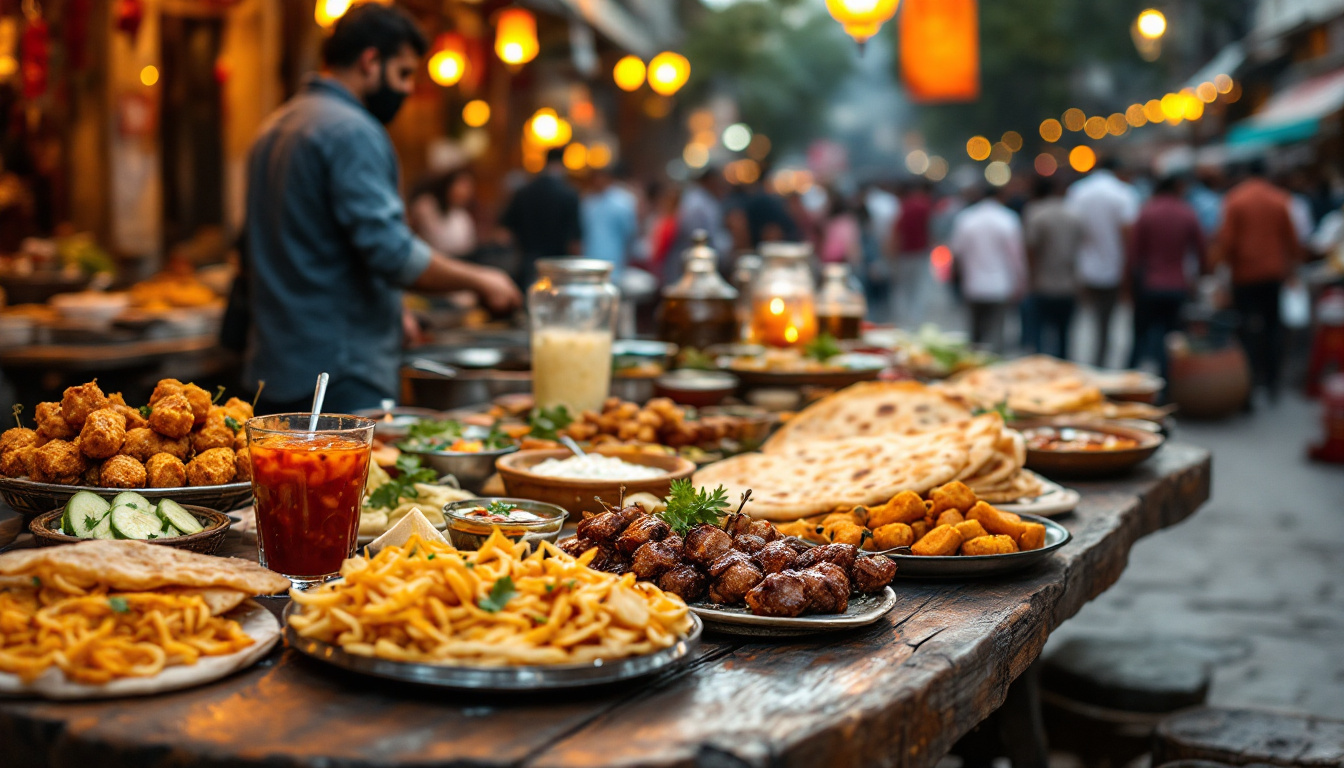
Old Delhi at dusk is the most intense eating on the planet, and I mean that as the highest compliment. The lanes around Jama Masjid fill with smoke from seekh kebabs, the clatter of paratha pans in Paranthe Wali Gali, and the hiss of jalebi hitting hot syrup. Delhi is two food cities stacked together: the centuries-deep Mughlai cooking of the old city, and the chaat-and-curry capital of the north. The best food in Delhi is street food first, eaten standing in a crowd, and it rewards a strong stomach and a sense of adventure more than a big budget.
Why Delhi is a great food city
Delhi is one of the world’s great food cities because it sits at the crossroads of empires and migrations, and ate its way through all of them. Centuries of Mughal rule left a deep tradition of slow-cooked meat, kebabs and rich gravies in the old city, while Partition brought Punjabi cooking that gave Delhi its butter chicken, chole bhature and tandoor culture. On top of that sits the north Indian street snack universe of chaat.
The result is a city where the best meals are cheap and eaten on the street, from a five-rupee golgappa to a plate of kebabs by the mosque. It’s the loudest, richest entry point into the food of the whole country, which our India food guide covers region by region. Come hungry and graze widely.
The dishes you have to eat in Delhi
Prices are 2026 figures in rupees; at roughly ₹86 to the US dollar, most street dishes cost well under a dollar.
Chaat चाट
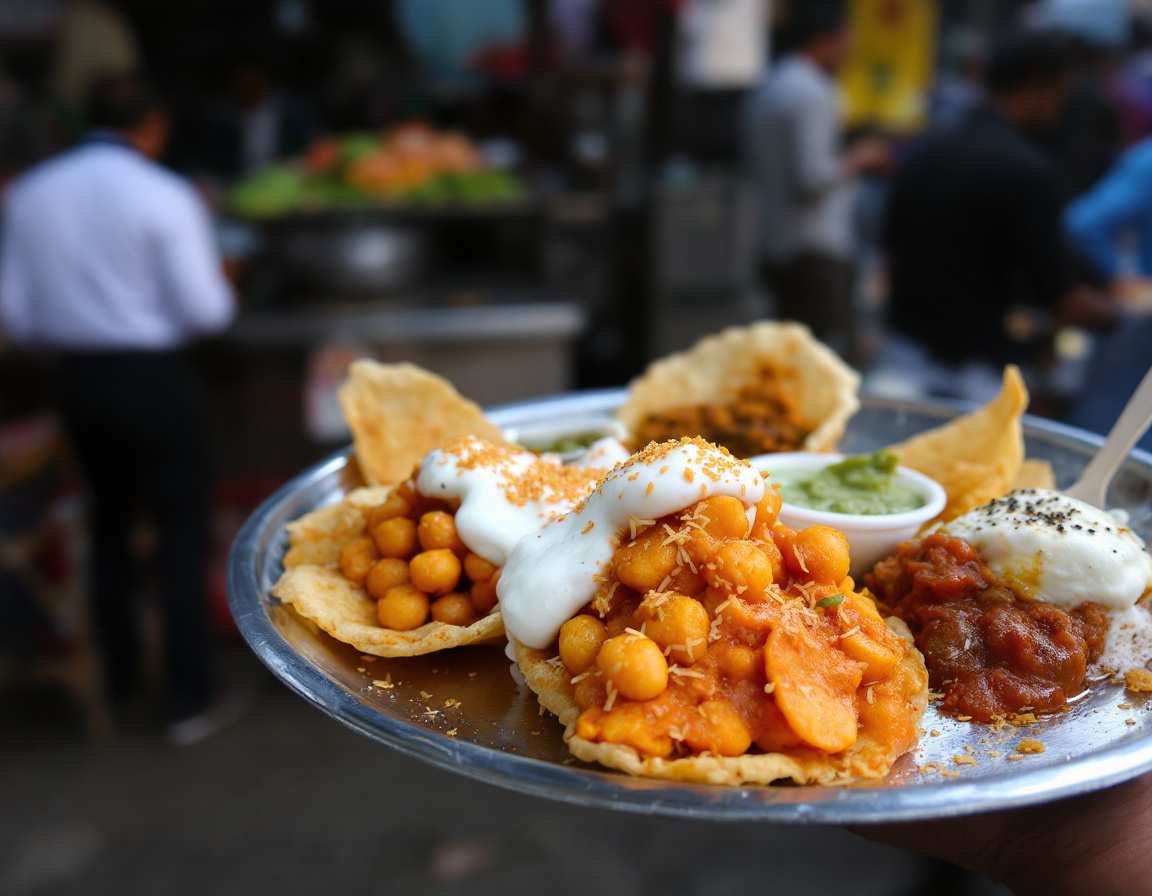
Chaat is the beating heart of Delhi street food, a whole family of savory snacks built on the contrast of crisp, soft, tangy and spicy. Golgappa, the hollow crisp shells filled with spiced tamarind water that explode in your mouth, are the gateway. Then come aloo tikki, fried potato patties with chutneys, dahi bhalla in cool yogurt, and papri chaat. Each stall has its own chutney recipe. Eat it where the crowd is thickest and the turnover fastest.
Old Delhi Kebabs
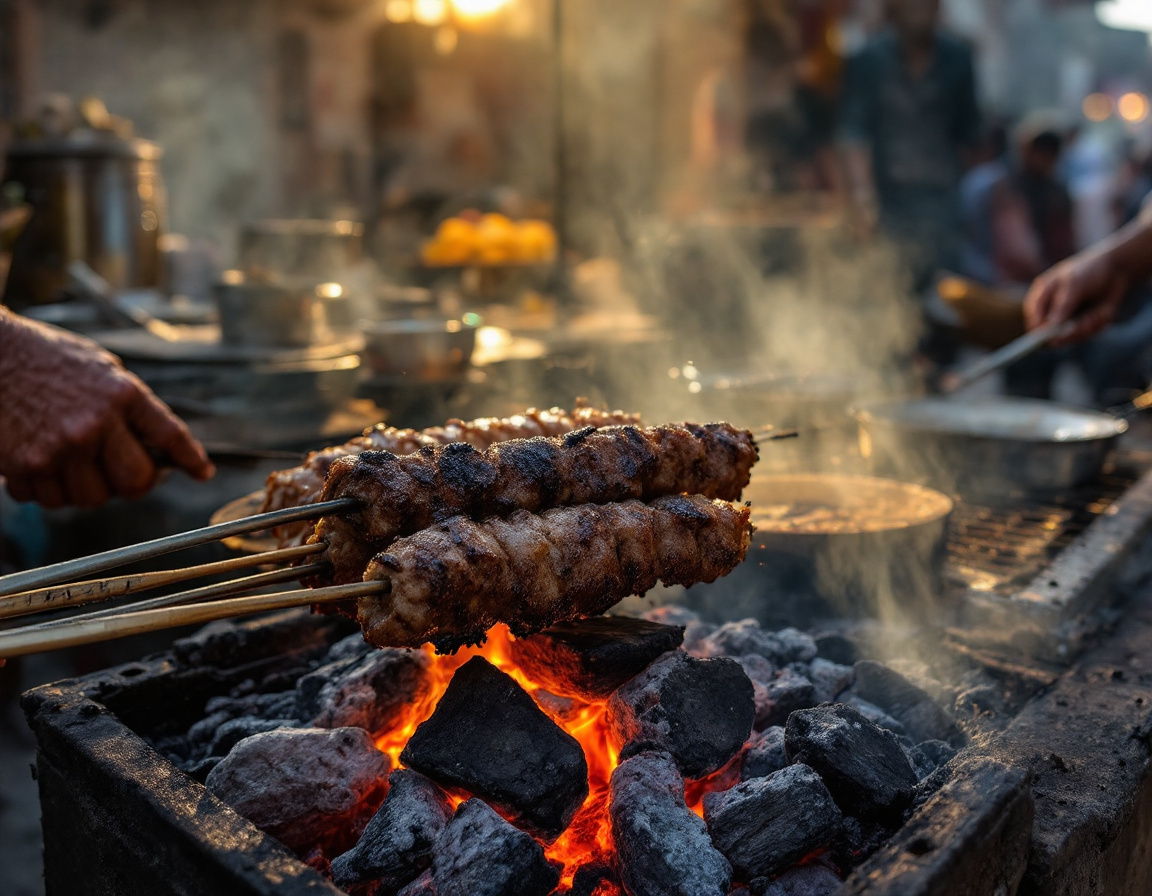
The kebabs of Old Delhi are the city’s Mughlai inheritance, and the lanes around Jama Masjid are where to eat them. Smoky seekh kebabs of minced mutton come off the skewer charred and juicy, while the famous galouti and shami kebabs are spiced minced meat so tender they dissolve on the tongue, a legacy of Lucknow that Delhi adopted. Eat them hot with rumali roti and raw onion. The institution Karim’s near the mosque has fed this craving since 1913.
Chole Bhature छोले भटूरे
Chole bhature is Delhi’s great Punjabi breakfast, a heavy, glorious plate you eat and then need a nap. Spiced chickpeas in a thick onion-tomato gravy come with bhatura, a balloon of deep-fried leavened bread the size of your head, plus pickle and raw onion. It’s rich, filling and addictive, the classic weekend brunch of the city. The old Punjabi places in Connaught Place and Kamla Nagar are the ones to find.
Butter Chicken मक्खन चिकन
Butter chicken was invented in Delhi, at Moti Mahal in the old city, when leftover tandoori chicken was simmered in a tomato, butter and cream gravy. The result conquered the world. The real thing is less sweet, smokier than the export version, with charred tandoori chicken in a silky orange sauce mopped up with naan or laccha paratha. Pair it with dal makhani, the buttery black-lentil dish from the same kitchen. This is Delhi’s gift to global menus.
Paratha पराठा
The paratha is the dish that gave a whole Old Delhi lane its name, Paranthe Wali Gali, the alley of paratha makers. Here the stuffed flatbreads are deep-fried rather than griddled, puffing up golden and crisp, filled with everything from potato and cauliflower to paneer, peas and even cashew or banana. They arrive with pickles, chutneys and a small vegetable curry. The shops have been frying them in the same narrow lane for over a century.
Jalebi and Sweets जलेबी
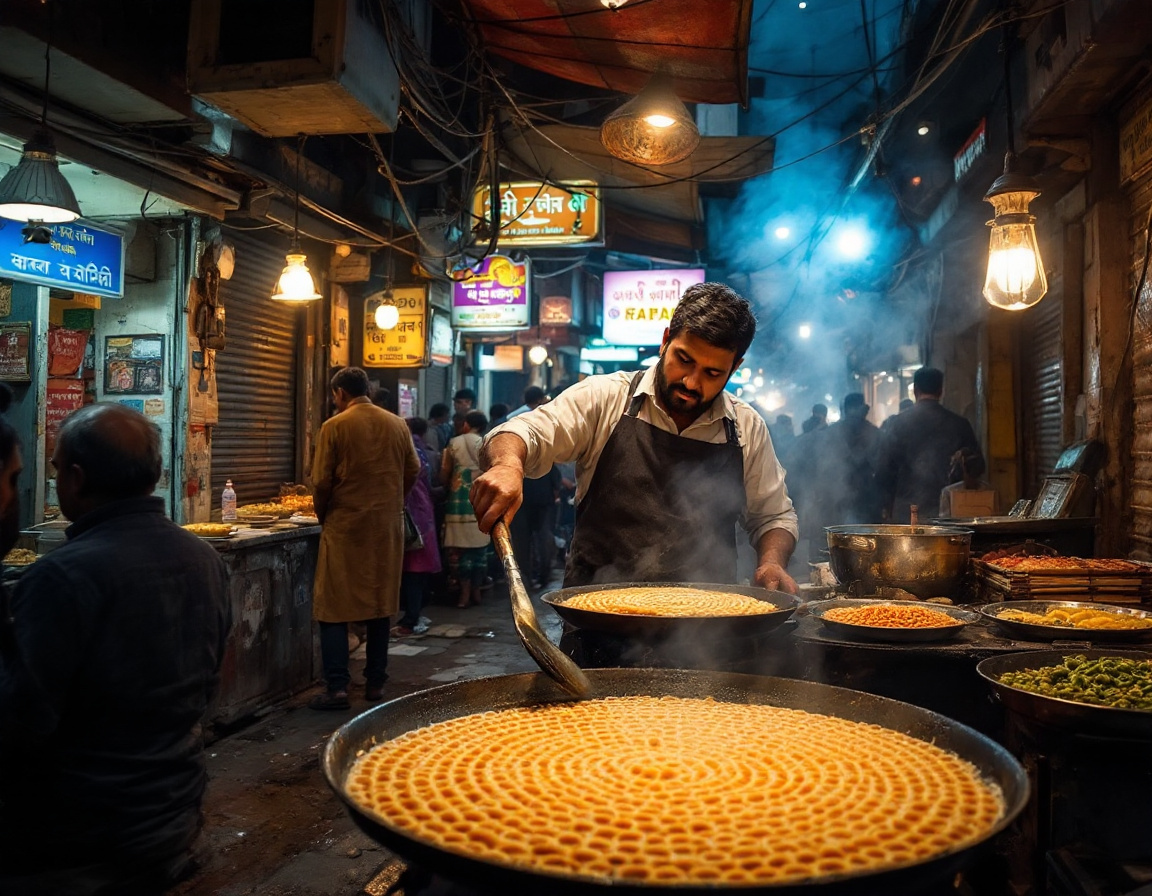
No Delhi food crawl ends without something sweet, and jalebi is the icon. Coils of batter are deep-fried to a crackle, then soaked in saffron syrup so they stay crisp outside and juicy inside, best eaten hot, often with thick rabri cream. In winter, look for the legendary daulat ki chaat, a foam of sweetened milk whipped up in the cold morning air. It vanishes by noon. The old halwais of Chandni Chowk are the keepers of all of it.
Momos
Momos are Delhi’s adopted street-food obsession, Tibetan and Nepali dumplings that colonized every market corner and metro exit in the city. They come steamed or fried, stuffed with chicken, mutton or vegetables and paneer, served with a fiery red chutney that is half the point. The local mutation to seek out is the tandoori momo, charred in a clay oven and tossed in spiced masala. Cheap, hot, and eaten by the plate of ten, they are the after-college and late-night snack of a whole generation.
Kulfi
Kulfi is India’s original ice cream, and Delhi does it richest: milk slow-cooked for hours until dense and caramelized, then frozen hard on a stick and flavored with cardamom, pistachio or mango. The Old Delhi move is kulfi falooda, a slab of kulfi over vermicelli noodles and rose syrup. Kuremal Mohan Lal in Chandni Chowk is famous for its stuffed-fruit kulfi, freezing the cream inside a whole mango. It is the perfect cold antidote to a day of chilies and ghee.
Where to eat: Old Delhi and beyond
The single best food experience in Delhi is a walking crawl through Old Delhi, the walled Mughal city around Chandni Chowk and Jama Masjid. Start with parathas in Paranthe Wali Gali, work toward the mosque for kebabs and Karim’s, snack on chaat and dahi bhalla along the way, and finish with jalebi and rabri at an old sweet shop. If you start early, an Old Delhi breakfast of nihari, a slow-cooked overnight meat stew, or bedmi poori with spiced potato is the local way to begin. It is chaotic, crowded and unforgettable, and a guided food walk is a great way to do it the first time.
Beyond the old city, the eating spreads out. Connaught Place has classic Punjabi restaurants and old coffee houses. The bazaars and markets like Lajpat Nagar and Sarojini are full of street snacks, and the southern neighborhoods have the city’s modern cafe and fine-dining scene. Wherever you go, follow the same rule that works across the country and read our tips on eating like a local.
Tips and eating safely
Delhi rewards adventurous eating, but a little care keeps you well, especially if your stomach is not used to the local water.
- Drink bottled or filtered water. Avoid tap water and ice of unknown origin; this matters more than the food itself.
- Go hot and fresh. Choose dishes cooked to order over the heat; be cautious with raw chutneys and cut fruit early in your trip.
- Eat with your right hand. For street food and thalis eaten by hand, use the right hand, as across India.
- Carry small cash. Street stalls are cash only, and small notes make the cheap snacks easy.
Delhi is also one of the best cities in the world for vegetarians, with vast meat-free menus everywhere; just check for paneer, ghee and dairy if you are vegan. For the full street-food playbook, including how to eat boldly without getting sick, see our guide to food safety for travelers.
FAQ
What food is Delhi famous for?
Delhi is famous for its street food and Mughlai cooking: chaat like golgappa and aloo tikki, Old Delhi kebabs, chole bhature, the deep-fried parathas of Paranthe Wali Gali, and butter chicken, which was invented in the city. It is one of the great street-food capitals of the world.
Where is the best street food in Delhi?
The best street food in Delhi is in Old Delhi, around Chandni Chowk and Jama Masjid. Paranthe Wali Gali for parathas, the lanes by the mosque for kebabs and Karim’s, and old sweet shops for jalebi. Connaught Place and markets like Lajpat Nagar are also excellent for chaat.
Was butter chicken invented in Delhi?
Yes, butter chicken was invented in Delhi at Moti Mahal restaurant in the old city, when leftover tandoori chicken was simmered in a tomato, butter and cream gravy. The same kitchen is also credited with dal makhani, the rich black-lentil dish often served alongside it.
Is Delhi street food safe to eat?
Delhi street food can be very safe if you choose carefully. Eat at busy stalls with high turnover, pick hot, freshly cooked items, and drink only bottled or filtered water while avoiding ice and tap water. Build up gradually, and be cautious with raw chutneys and cut fruit at first.
Is Delhi good for vegetarians?
Delhi is one of the best cities in the world for vegetarians. A huge share of the food, including most chaat, chole bhature, parathas and countless curries, is naturally meat-free. Vegans should check for paneer, ghee and cream, which appear in many dishes, but options are still abundant.
More food guides waiting for you
City and country deep dives across Asia and every continent we have eaten our way through.