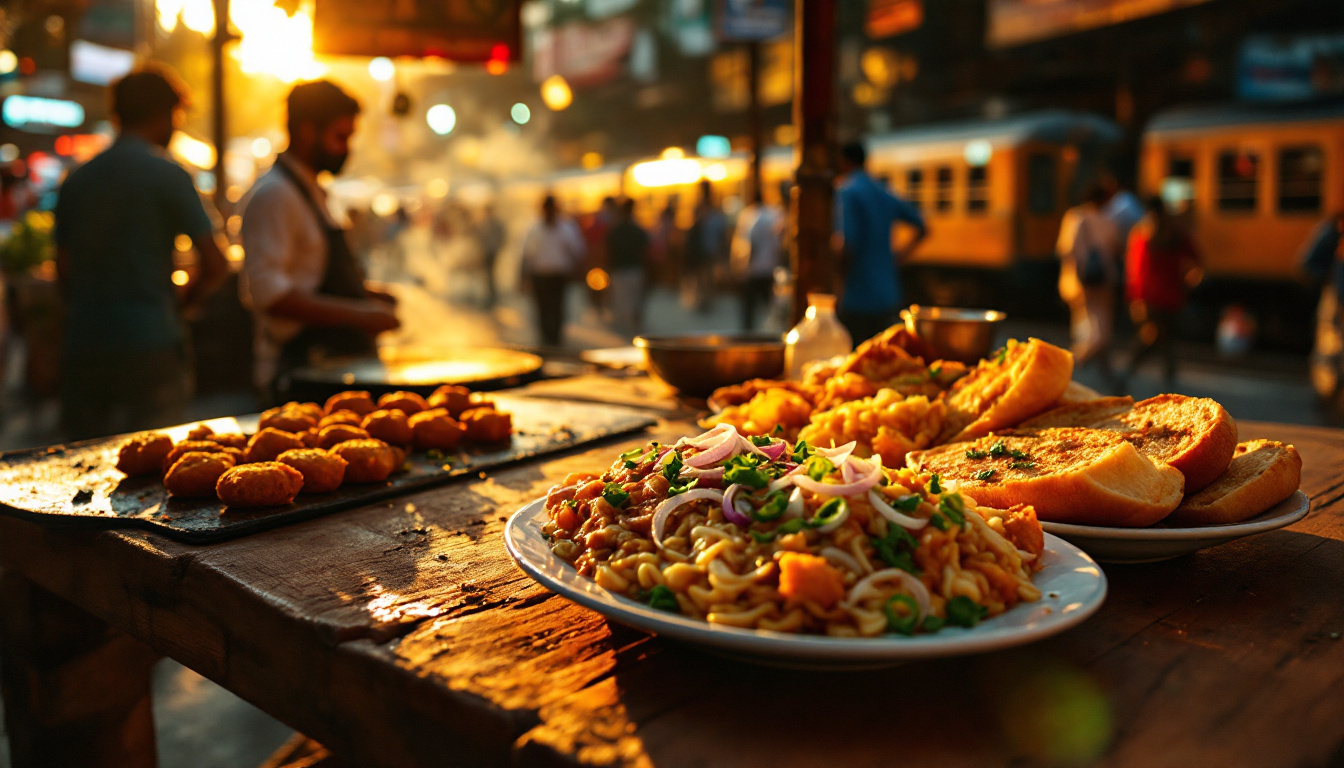
Mumbai runs on street food the way it runs on its local trains: constantly, democratically, and at speed. This is a city where a billionaire and a dabbawala both stop at the same cart for a vada pav, the spiced potato fritter in a bun that fuels the whole island. I have eaten standing on Chowpatty beach at sunset, in a hundred-year-old Irani cafe over bun maska and chai, and elbow to elbow on Mohammad Ali Road during Ramadan. The best food in Mumbai is fast, cheap and inventive, the snack capital of India crammed onto a peninsula.
Why Mumbai is a street food capital
Mumbai is India’s street food capital because it is a city of migrants in a permanent hurry, and that bred a culture of brilliant fast food eaten on the move. Workers from across India and a deep Parsi, Gujarati, Maharashtrian and Muslim mix all left their mark, so the streets serve everything from a two-rupee chaat to Mughlai kebabs. The defining dish, vada pav, was invented here as cheap fuel for mill workers.
What sets Mumbai apart is the snack: small, fast, intensely flavored plates designed to be eaten standing up between trains. It’s a different rhythm from the slow Mughlai feasts of the north, and a brilliant entry point to the food of the country, which our India food guide maps in full. Pair it with a trip to Delhi and you have the two halves of Indian street eating.
The dishes you have to eat in Mumbai
Vada Pav वडा पाव
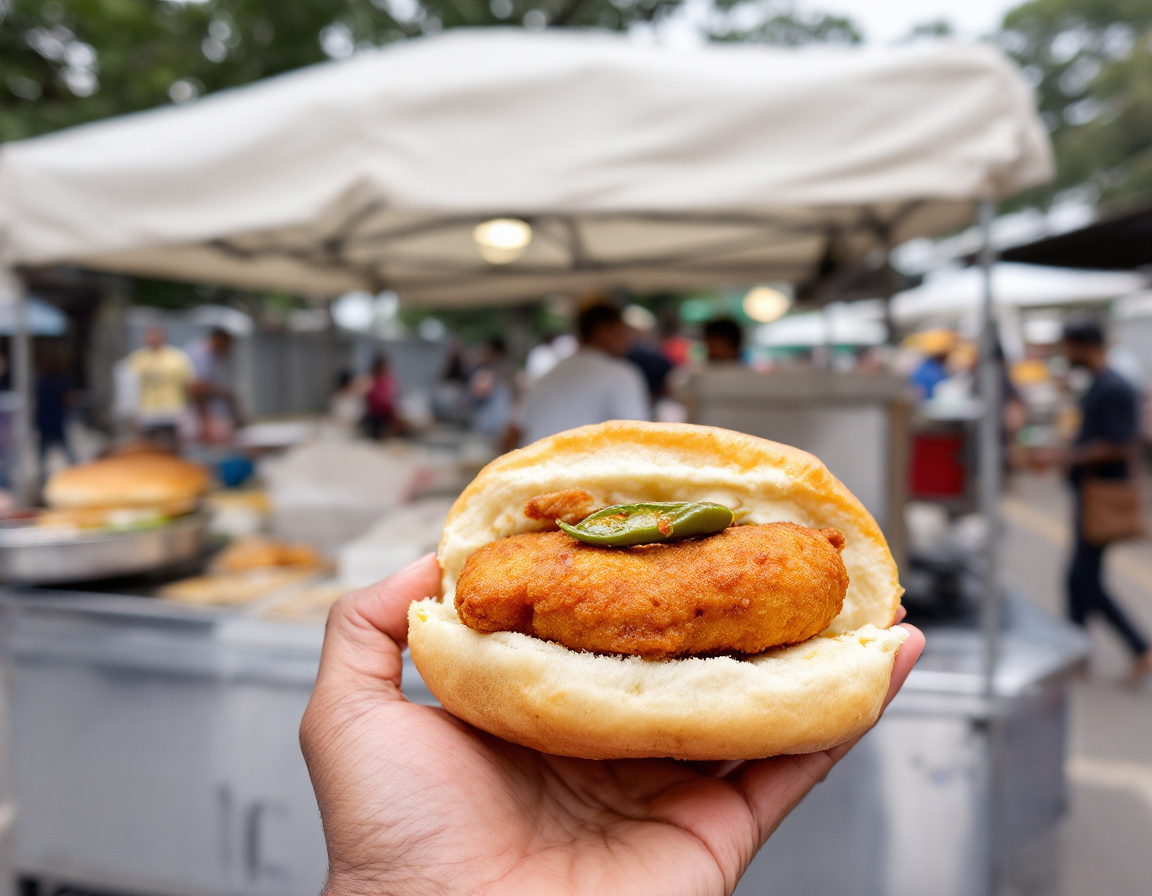
Vada pav is Mumbai in a single bite, and the city eats millions of them a day. A spiced mashed-potato dumpling is dipped in gram-flour batter, deep-fried, then jammed into a soft pav bun with dry garlic chutney, sweet tamarind and a fried green chili on the side. It’s the original Indian burger, invented near the railway stations as cheap, filling fuel for workers. Eat it hot from a busy cart with extra chutney. Nothing captures Mumbai faster.
Pav Bhaji पाव भाजी
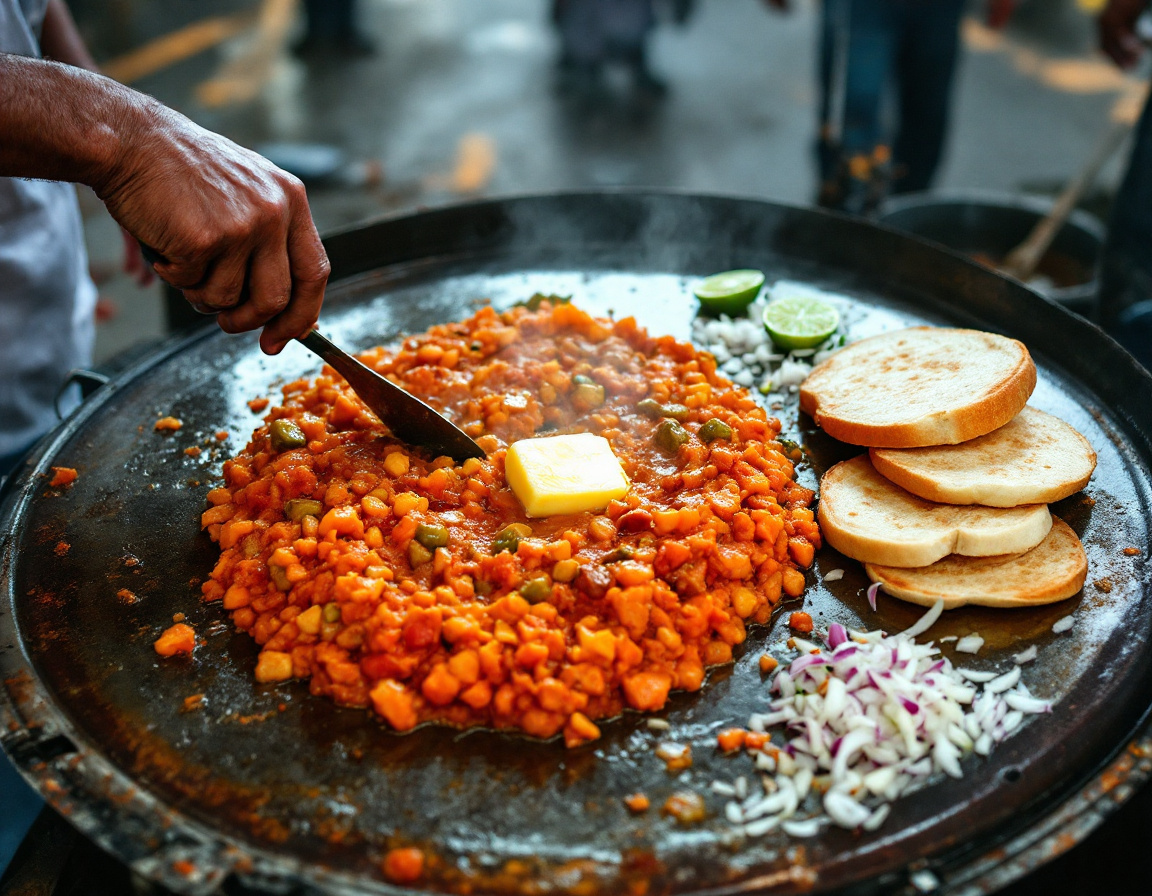
Pav bhaji is the great Mumbai griddle dish, a mash of mixed vegetables cooked down with tomato, butter and a special spice blend until rich and red. It’s served with a glossy knob of butter on top and soft pav buns toasted in yet more butter, plus raw onion and a squeeze of lime. Watching the cook smash and fold it on a huge flat tawa is half the pleasure. Born as a quick meal for textile workers, it is now a citywide obsession.
Bhel Puri and Chaat भेळ पुरी
Bhel puri is the quintessential Mumbai beach snack, a cool, crunchy tangle of puffed rice, sev, chopped onion, tomato, potato and chutneys tossed together to order. Its cousins, sev puri, pani puri and ragda pattice (potato patties under a white-pea curry), round out the chaat family, with pani puri being crisp shells filled with spiced water that burst in your mouth. Girgaon Chowpatty at sunset is the classic place to eat it, plate in hand, feet in the sand. Each chaatwala guards a personal chutney recipe.
Pani Puri पानी पूरी
Pani puri is the chaat Mumbai cannot live without: crisp hollow semolina shells that the vendor cracks open, stuffs with spiced potato, chickpeas or sprouts and a dab of tamarind chutney, then fills with cold, tangy mint-and-tamarind water (the pani) and hands to you one at a time. You eat each in a single bite before it collapses, and the vendor keeps the rhythm going until you tap out. Girgaon Chowpatty is the classic spot, but every neighbourhood has a stall with a queue. Ask for the pani teekha (spicy) or meetha (sweet) depending on how you like it.
Misal Pav मिसळ पाव
Misal pav is the fiery Maharashtrian breakfast that locals swear by, and a real test of your spice tolerance. A curry of sprouted moth beans is topped with crunchy farsan, raw onion, coriander and a slick of spicy red tarri oil, served with pav to soak it up. It’s hot, sour, crunchy and deeply savory, the kind of dish that wakes you up properly. Order the tarri on the side if you are unsure how much heat you can take.
Bombay Sandwich मुंबई सँडविच
The Bombay sandwich is the city’s beloved grilled snack, a vegetarian stack that has no business being this good. White bread is layered with boiled potato, cucumber, tomato, onion and beetroot, a swipe of green mint-coriander chutney and butter, then pressed and grilled until crisp, often buried under cheese and sev as a masala toast. It’s the everyday lunch of office workers and the perfect light bite between heavier plates. Get it from a busy cart and add extra chutney.
Mohammad Ali Road Kebabs
Mumbai’s Muslim quarter around Mohammad Ali Road is the city’s carnivore heaven, and it peaks during Ramadan. After sunset the lanes fill with seekh kebabs and tikka off the coals, baida roti stuffed with spiced egg and mince, nalli nihari, and rich mutton curries, finished with malpua and firni for dessert. The smoke, the crowds, the energy: extraordinary. Even outside Ramadan the old kebab houses here serve some of the best Mughlai food in the city.
Bombil Fry and Prawn Koliwada
Beyond the vegetarian chaat, Mumbai is a fishing city, and its Koli and Malvani kitchens fry the coast onto your plate. Bombil fry (Bombay duck, a soft local fish coated in semolina and shallow-fried until the edges crackle) is the one to start with, squeezed with lime and eaten with green chutney. Prawn koliwada, invented by the Koli fishing community, is prawns in a red, garlicky, deep-fried batter, crisp and fiery. Head to Gomantak in Dadar for Malvani seafood, or the stalls around Crawford Market for pomfret fry and crab curry. This is the Mumbai the street-snack lists forget.
Irani Cafe Bun Maska Parsi cafes
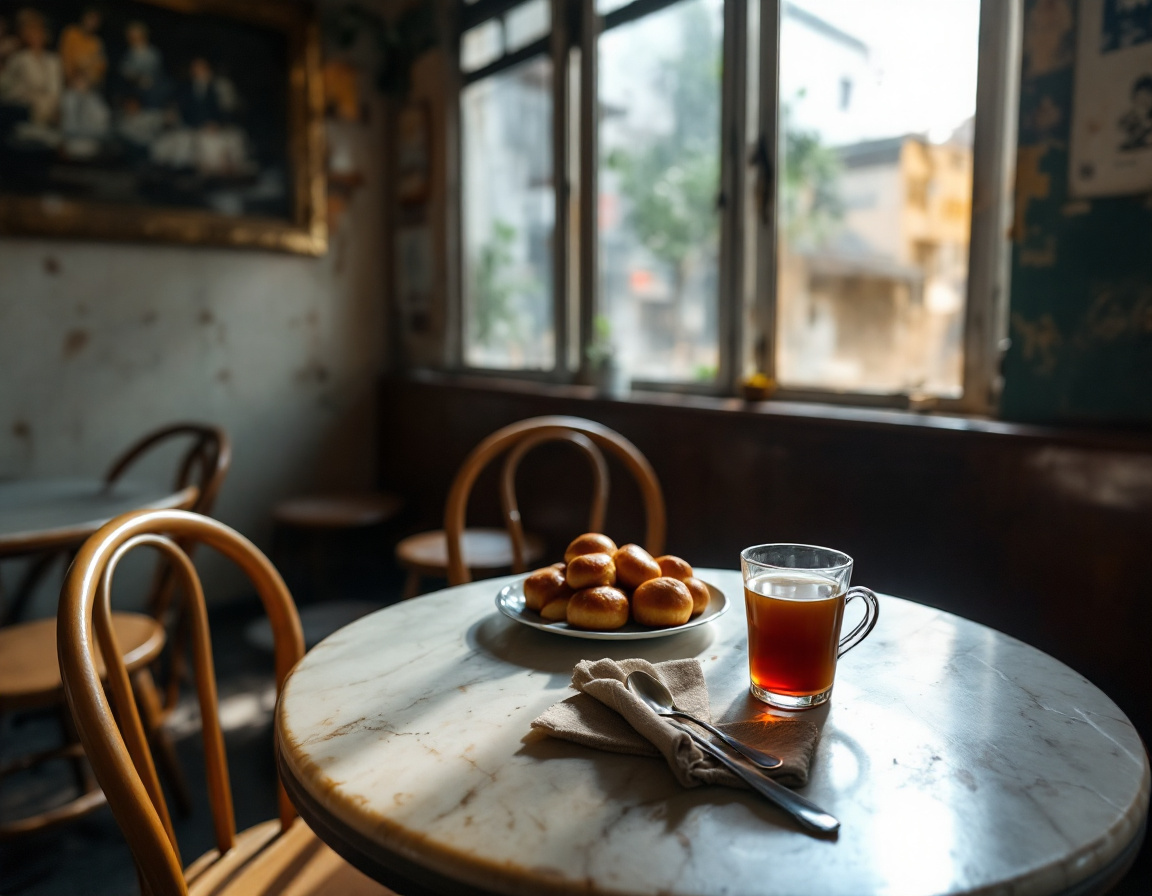
The Irani cafes are Mumbai’s most atmospheric meal, century-old Parsi-run rooms with marble tables, bentwood chairs and a slowly fading charm. The classic order is bun maska, a soft sweet bun split and slathered with butter, dunked in strong Irani chai. Stay for kheema pav, spiced minced meat with bread, or the famous berry pulao at Britannia. These cafes are slowly disappearing, so eat at one while you can.
Where to eat: from Chowpatty to the cafes
Mumbai’s food is spread across the city, but a few areas reward a dedicated visit. Girgaon Chowpatty beach is the classic spot for evening chaat, bhel puri and kulfi with your feet in the sand. The lanes of Mohammad Ali Road and Bhendi Bazaar are the place for kebabs and Mughlai food, especially after dark. For the full snack tour, just follow the carts near any busy railway station.
Do not miss the old Irani cafes scattered through Fort, Kala Ghoda and Dhobi Talao, like Kyani and Britannia, for a slice of disappearing Mumbai. The southern Fort district also hides Parsi and seafood institutions, while the Koliwada areas serve the city’s fierce, masala-fried seafood. Wherever you go, the rule is the same as everywhere: follow the local crowd, a habit our guide to eating like a local turns into a system.
Tips and eating safely
Mumbai street food is some of the best in the world, and a little care keeps you well enough to keep eating it.
- Drink bottled or filtered water. Avoid tap water and unknown ice; this matters more than the food itself.
- Go where it is busy. High turnover means fresh food; pick the cart with the longest local queue.
- Hot and fried first. Start with vada pav, pav bhaji and kebabs; ease into pani puri and fresh chutneys.
- Carry small cash. Street stalls are cash only, and small notes make the cheap snacks simple.
Mumbai is excellent for vegetarians, with much of its street food, including vada pav, pav bhaji and most chaat, naturally meat-free; vegans should watch for the generous butter and dairy. For the full approach to eating boldly without getting sick, see our guide to food safety for travelers.
FAQ
What food is Mumbai famous for?
Mumbai is famous for its street food, above all vada pav, the spiced potato fritter in a bun that is the city’s signature snack. Other icons include pav bhaji, bhel puri and other chaat, misal pav, the kebabs of Mohammad Ali Road, and the bun maska and chai of its old Irani cafes.
What is vada pav?
Vada pav is Mumbai’s iconic street snack, a deep-fried spiced potato dumpling (vada) served in a soft bun (pav) with dry garlic chutney, sweet and spicy chutneys, and a fried green chili. Invented near the city’s railway stations as cheap fuel for workers, it is often called the Indian burger.
Where is the best street food in Mumbai?
For Mumbai street food, head to Girgaon Chowpatty beach for evening chaat and bhel puri, Mohammad Ali Road for kebabs and Mughlai food (especially during Ramadan), and the old Irani cafes in Fort and Kala Ghoda for bun maska and chai. The carts near busy railway stations are great for vada pav.
Is Mumbai street food safe to eat?
Mumbai street food can be very safe if you choose well. Eat at busy stalls with high turnover, pick hot, freshly cooked items, and drink only bottled or filtered water while avoiding ice and tap water. Start with fried items like vada pav and ease into water-based chaat as your stomach adjusts.
Is Mumbai good for vegetarians?
Mumbai is excellent for vegetarians. Most of its famous street food, including vada pav, pav bhaji, bhel puri and other chaat, and misal pav, is naturally vegetarian. Vegans should be aware that pav bhaji and many snacks use a lot of butter and dairy, but plant-based options are still plentiful.
More food guides waiting for you
City and country deep dives across Asia and every continent we have eaten our way through.