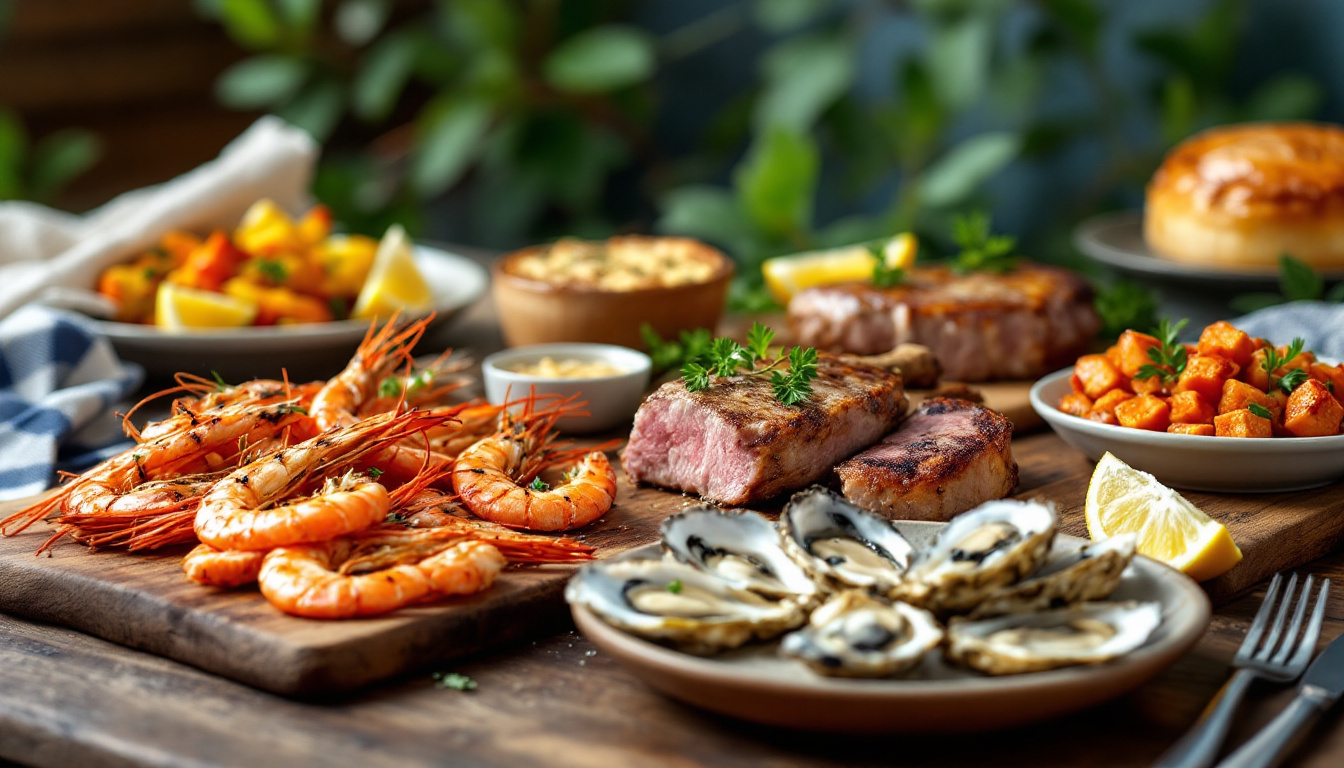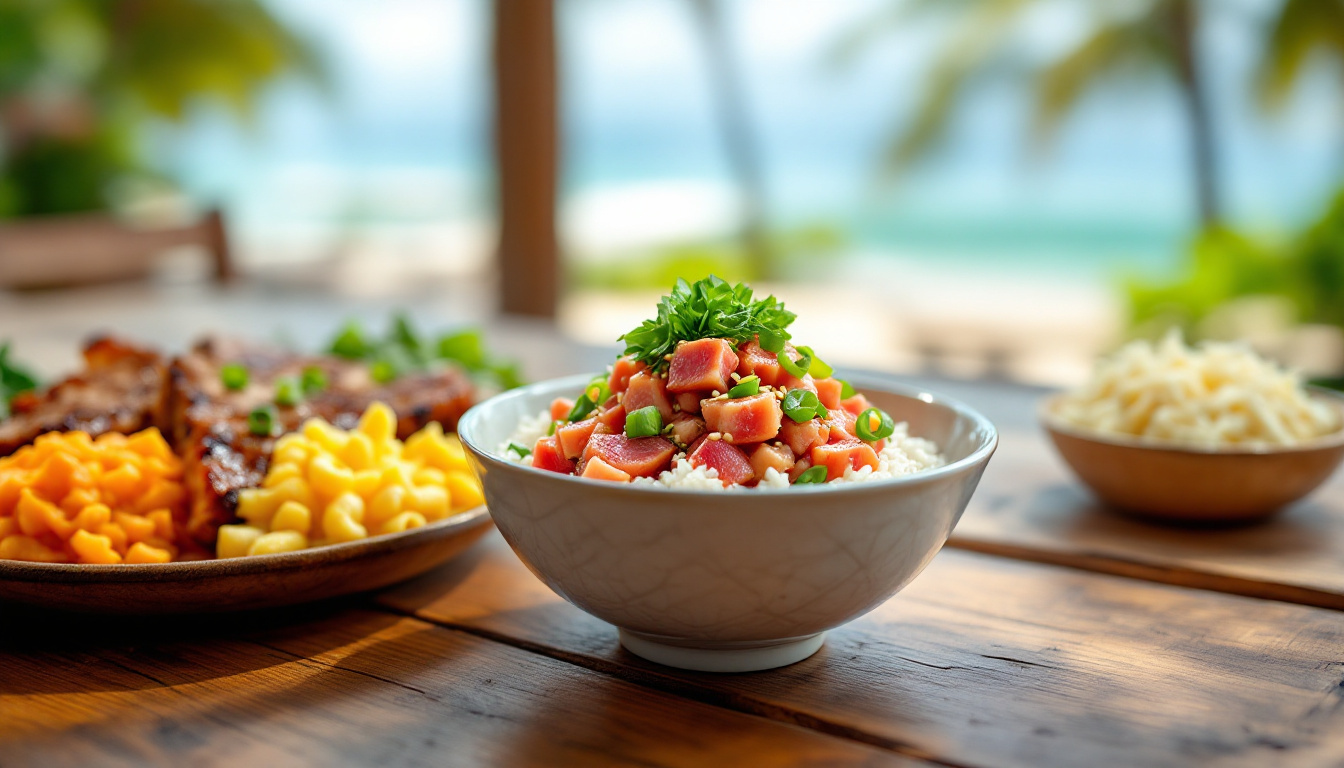
My best meal in Hawaii was not at a luau. It was a styrofoam plate lunch eaten on the tailgate of a truck, two scoops of rice and a scoop of macaroni salad next to garlicky kalua pig, and I have been chasing that plate ever since. Hawaiian food is the most interesting regional cooking in the United States because it is not really American at all. It is a plantation-era mash-up of Native Hawaiian, Japanese, Chinese, Filipino, Portuguese and Korean cooking, and the best food in Hawaii lives where all of those overlap.
Why Hawaii’s food is its own thing
Hawaii’s food makes sense only when you split it into two traditions. Native Hawaiian food is the oldest layer: kalua pig, poi, laulau and fresh fish, rooted in the land and the luau. On top sits “local food,” the everyday cooking born on the sugar and pineapple plantations, where workers from Japan, China, the Philippines, Portugal and Korea shared lunch and slowly merged their cuisines.
That plantation history is why a single plate here can carry teriyaki, kimchi, Portuguese sausage and rice without anyone blinking. Japanese influence runs especially deep, from Japanese cooking that gave the islands their love of rice, Spam musubi and saimin. The result is closer to its Pacific neighbors than to the food of the mainland USA, even though Hawaii is a US state.
So eat in both registers. Go to a luau or a Hawaiian food joint for the ancient dishes, and hit the plate-lunch counters, lunch wagons and supermarket poke cases for the daily local food. That mix, more than any single dish, is the real flavour of the islands.
The best food in Hawaii, dish by dish
These are the plates that define the islands, the most popular and typical food to eat in Hawaii, from raw fish to fried dough. Prices are rough 2026 figures in US dollars, and remember that almost everything is cheaper at a local counter than at a resort.
Poke poke (POH-keh)
Real Hawaiian poke is a world away from the mainland poke bowl, and once you taste it you understand the difference. It is simply cubed raw ahi tuna dressed with shoyu, sesame oil, green onion and limu (seaweed), sold by the pound from a deli case, often at a supermarket like Foodland. No giant bowl of rice buried under twenty toppings, just clean, fresh fish. Say it POH-keh, never poke-y, and buy it where the locals line up.
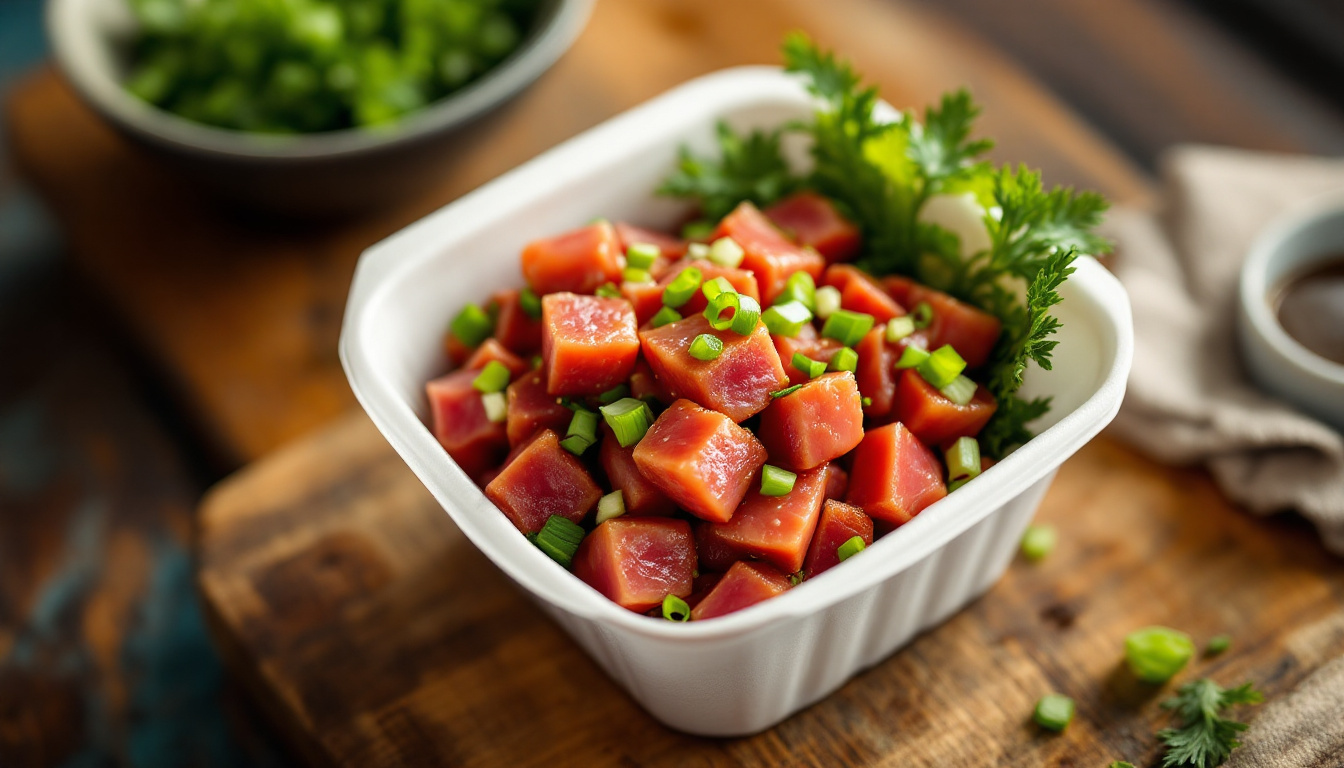
Plate lunch plate lunch
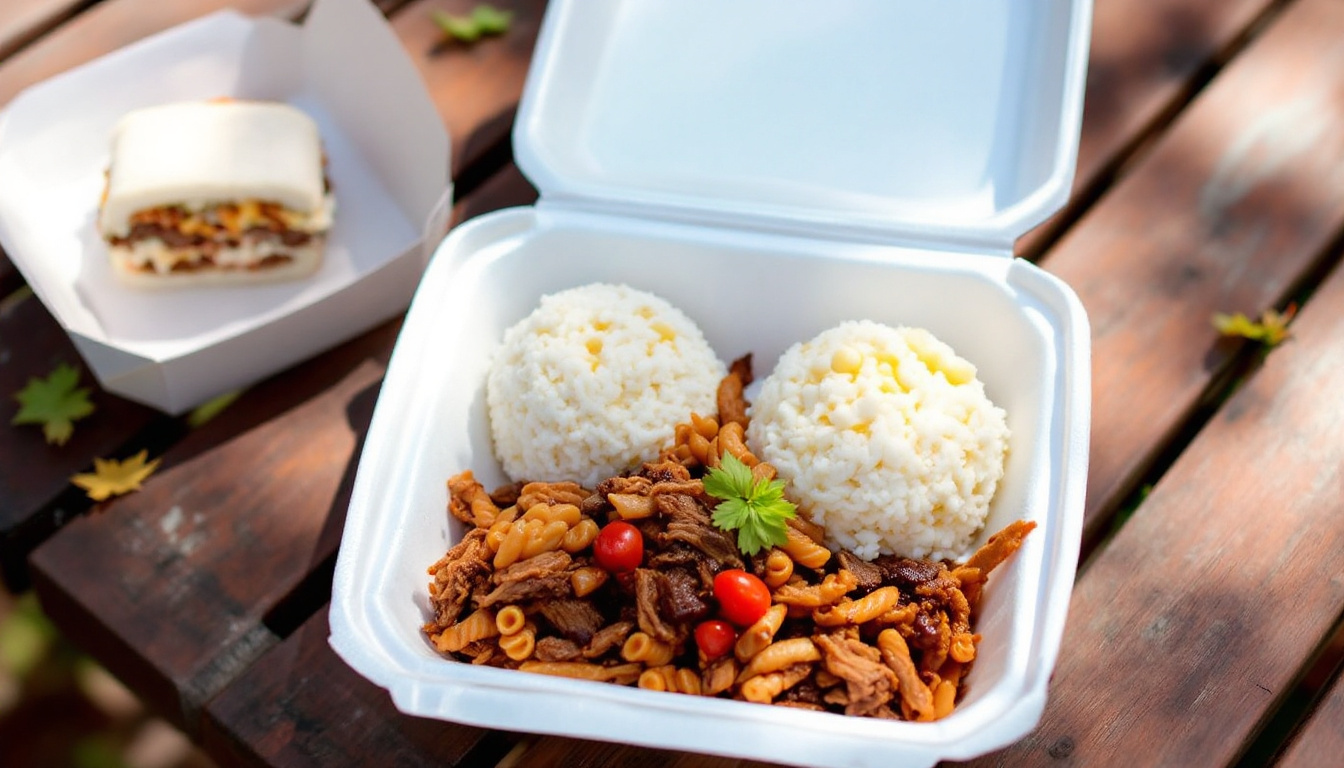
The plate lunch is the single most important meal in Hawaii, and its formula never changes: two scoops of white rice, one scoop of macaroni salad, and a protein. That protein might be chicken katsu, teriyaki beef, shoyu chicken (braised in soy and ginger), kalua pig or a mountain of all of them on a “mixed plate.” It comes from plantation lunch wagons feeding hungry workers, and it is still the cheapest, most satisfying way to eat across the islands.
Loco moco loco moco
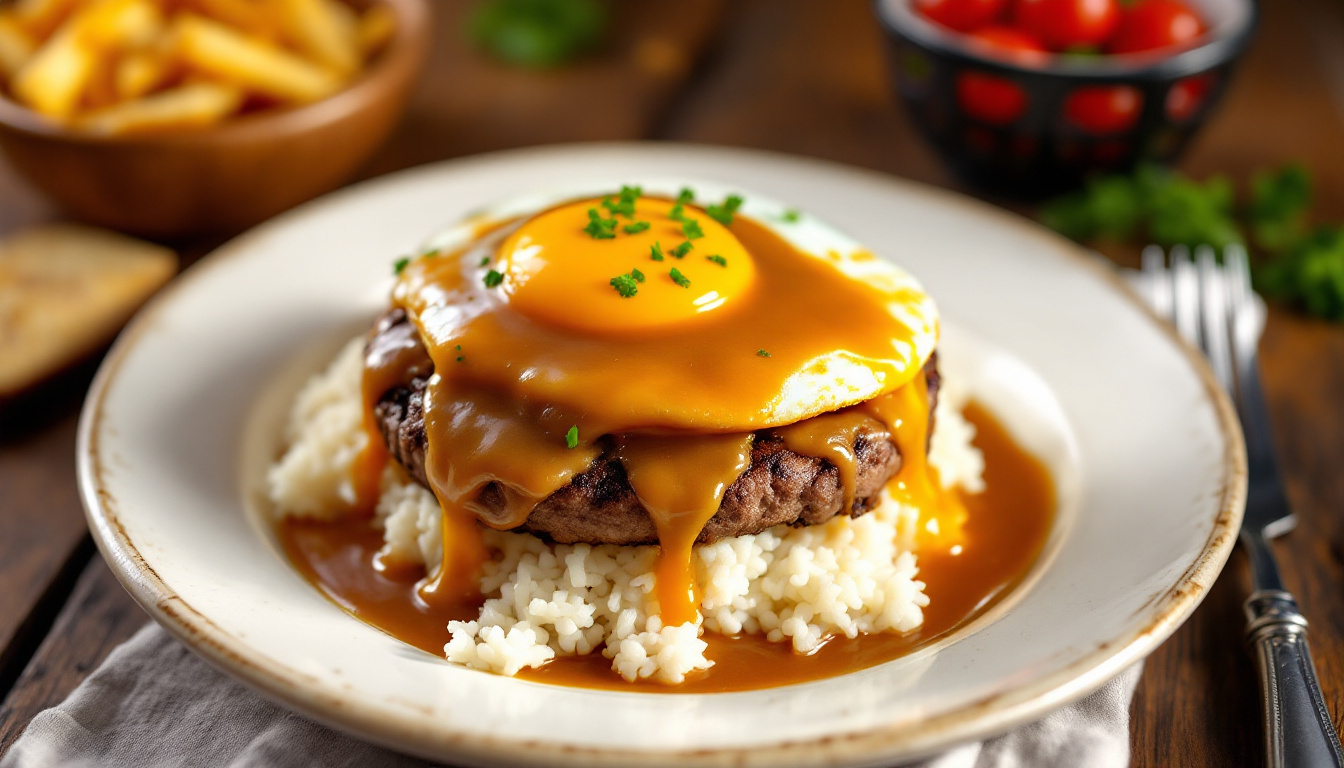
Loco moco is Hawaii’s great hangover cure and all-day comfort plate. White rice is topped with a hamburger patty, a fried egg and a flood of brown gravy, and that is the whole glorious idea. It was reportedly invented in Hilo on the Big Island for hungry teenagers, and it has been fuelling the islands ever since. Order it for breakfast and you will not need lunch.
Kalua pig kalua puaa
Kalua pig is the smoky heart of Native Hawaiian cooking and the centrepiece of any real luau. A whole pig is cooked for hours in an imu, an underground oven of hot rocks and banana leaves, until the meat falls apart into salty, smoky shreds. You will most often eat it as the protein on a plate lunch or scooped alongside cabbage. The flavour is pure and simple, and it tastes like the islands.
Laulau, poi and lomi salmon the Hawaiian plate
Laulau, poi and lomi salmon are the old-school Native Hawaiian plate, best tried at a dedicated Hawaiian food spot. Laulau is pork or fish bundled in taro (luau) leaves and steamed for hours until meltingly soft. Poi is pounded taro root, a smooth purple paste that tastes mild and faintly sour and serves as the traditional starch. Lomi lomi salmon is the cool, refreshing side of the luau plate: salted salmon hand-massaged (lomi means to massage) with tomato, sweet onion and green onion, almost a Hawaiian salsa. Poi divides visitors, but the full plate is part of understanding the place.
Spam musubi Spam musubi
Spam musubi is the snack that explains Hawaii better than any guidebook. A slab of grilled, glazed Spam sits on a block of rice, wrapped together with a band of nori like a chunky piece of sushi. Hawaii eats more Spam per person than anywhere else in the United States, a habit that dates to the war years, and there is zero irony about it here. Grab one from any convenience store or supermarket and eat it warm.
Saimin saimin
Saimin is Hawaii’s own noodle soup, and it exists nowhere else. Soft wheat noodles sit in a light dashi-style broth topped with green onion, fishcake, char siu and sometimes Spam, a Japanese, Chinese and Filipino mash-up that could only come from the plantations. It is humble diner food, found everywhere from old-school local restaurants to, famously, the menu at the islands’ fast-food chains. Order it on a rainy day.
Garlic shrimp North Shore shrimp
Garlic shrimp from a North Shore lunch truck is an essential Oahu pilgrimage. Around Kahuku, a cluster of shrimp trucks, the most famous being Giovanni’s, serve a plate of shrimp drowning in garlic butter with, of course, two scoops of rice. You eat it at a picnic table with garlic on your hands and the beach nearby. Make the drive to the North Shore for this and a shave ice.
Malasada malasada
The malasada is the islands’ favourite fried treat, brought by Portuguese plantation workers and never let go. It is a hole-less doughnut, deep-fried and rolled in sugar, ideally eaten hot enough to burn your fingers. Leonard’s Bakery in Honolulu is the legendary spot, with a pink truck that roams the island. Get the original sugar one first, then a custard-filled one for the road.
Manapua and huli huli chicken manapua, huli huli
Two more plantation classics round out the everyday eating. Manapua is the Hawaiian take on Chinese char siu bao, a fluffy steamed bun stuffed with sweet roast pork, sold at corner stores and bakeries. Huli huli chicken is whole chicken grilled over coals and turned (“huli” means turn) with a sweet teriyaki-style glaze, classically sold at roadside fundraisers where the smoke pulls you in from a mile away.
Shave ice shave ice (not shaved)
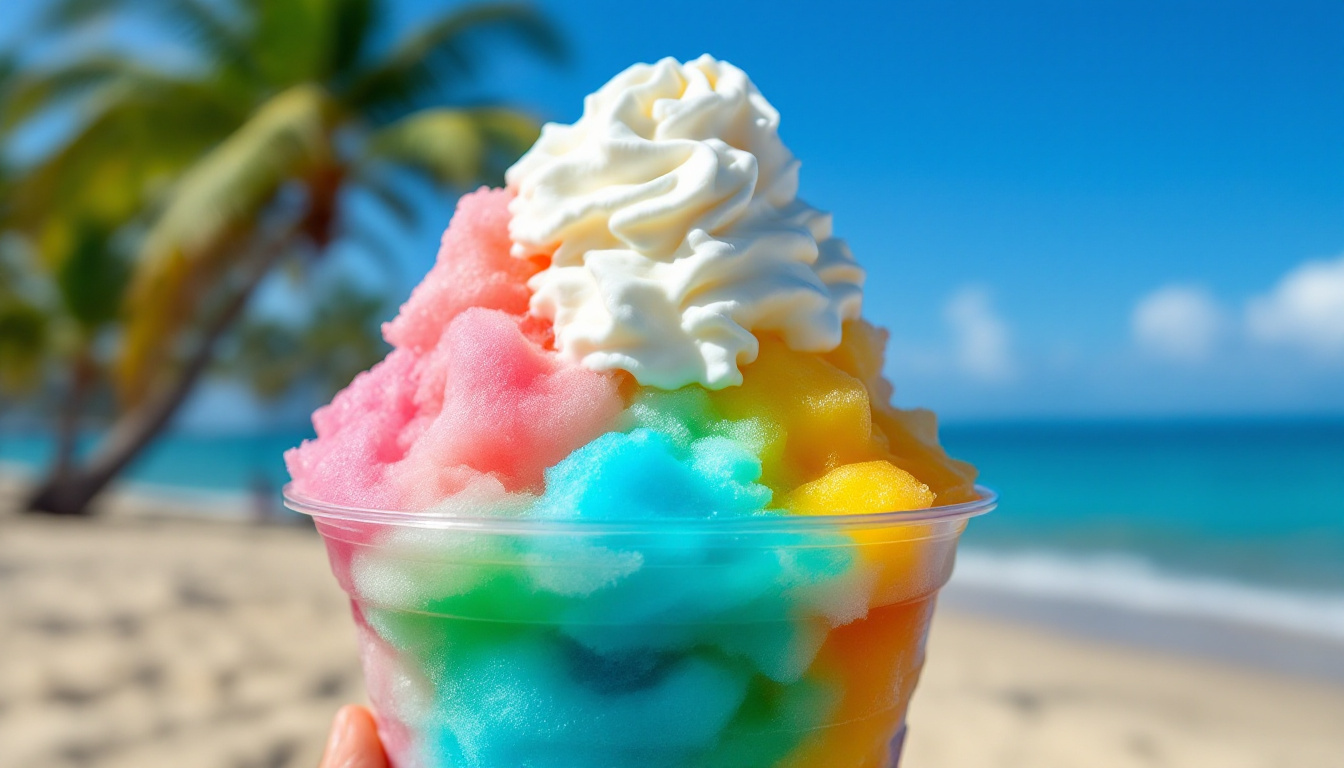
Shave ice is the perfect island dessert, and yes, it is “shave ice,” never “shaved.” Finely shaved ice, soft as snow, is soaked in fruit syrups like lilikoi, guava and li hing mui. The upgrades make it: a scoop of ice cream and sweet azuki beans hidden at the bottom, and a “snow cap” of condensed milk poured over the top. Get one after the beach, and do not confuse it with a coarse mainland snow cone.
Haupia and island fruit haupia
Finish with haupia, a firm coconut pudding cut into squares that turns up at every luau and on many plate-lunch counters. Around it, eat the fruit: sun-ripe pineapple and papaya, tart lilikoi (passionfruit) spooned straight from the shell, and guava in everything from juice to jam. The fruit here is grown in volcanic soil and tropical sun, and it tastes like it.
How the food differs across the islands
Each island has its own food personality, so where you stay shapes what you eat. Oahu, the most populous, is the food capital: Honolulu’s plate-lunch institutions, Leonard’s malasadas, and the North Shore shrimp trucks around Kahuku are all here.
Maui is the place for relaxed local foods, fruit stands and farm-to-table cooking, especially around the towns near Lahaina. The Big Island (Hawaii Island) is where loco moco was born and, more importantly, where Kona coffee grows on volcanic slopes. Kauai is the quiet one, with old-school local spots and some of the best fruit and fish in the chain. Wherever you land, the plate lunch follows.
Where to eat: plate-lunch spots, trucks and markets
The best food in Hawaii is at counters and trucks, not white tablecloths. Hit a classic plate-lunch diner like Rainbow Drive-In or a Hawaiian food institution like Helena’s Hawaiian Food in Honolulu, then drive to the North Shore for a shrimp truck plate. These everyday spots are where locals actually eat, and they are cheap.
For variety, go to the markets and counters. The Saturday farmers market at KCC in Honolulu is the big one for local produce and food stalls, supermarket poke cases (Foodland is the classic) beat most restaurants, and Leonard’s Bakery handles the malasadas. Hawaii is part of the wider Pacific food world, so it pairs naturally with our Australia food guide if you are crossing the ocean.
What to drink: Kona coffee, POG and more
Kona coffee is the drink to seek out, one of the world’s prized beans, grown only on the Big Island’s Kona slopes and worth the premium when it is the real, single-origin thing. Pair it with our guide to the best coffee around the world to see where it ranks. Watch for cheap “Kona blends,” which contain only a small percentage of actual Kona.
Beyond coffee, the local drink is POG, the passionfruit-orange-guava juice you will see everywhere and quickly crave. For beer, Kona Brewing’s Longboard and Big Wave are the island lagers, and the tiki classic, the mai tai, was popularised in this part of the world and is the sunset drink of choice. For something non-alcoholic and local, a cold POG or a fresh lilikoi juice does the job.
- Pronounce it POH-keh, and learn that “grindz” means food and “ono” means delicious.
- If you visit a local home, take your slippers (flip-flops) off at the door, and never show up empty-handed.
- Treat Native Hawaiian food and the luau with respect. This is living culture, not a theme.
- Hawaii is the US, so standard tipping of 18 to 20 percent applies at sit-down restaurants.
FAQ
What is the difference between Hawaiian poke and a mainland poke bowl?
In Hawaii, poke is simply cubed raw fish, usually ahi tuna, seasoned with shoyu, sesame oil and seaweed, and sold by the pound. The mainland “poke bowl,” a large bowl of rice loaded with many toppings and sauces, is a separate, Americanized creation.
What is the most popular food in Hawaii?
The most popular and most famous food in Hawaii is the plate lunch (two scoops rice, macaroni salad and a protein like kalua pig or chicken katsu) and real poke, the seasoned raw ahi tuna sold by the pound. Other typical favorites are loco moco, Spam musubi, kalua pig, and the Native Hawaiian luau plate of laulau, poi and lomi salmon. For snacks and sweets, locals love malasadas, North Shore garlic shrimp, and shave ice.
What is a Hawaiian plate lunch?
A plate lunch is the classic local meal: two scoops of white rice, one scoop of macaroni salad, and a protein such as chicken katsu, teriyaki beef or kalua pig. It comes from plantation-era lunch wagons and is the cheapest, most filling way to eat in Hawaii.
Why do Hawaiians love Spam so much?
Hawaii eats more Spam per person than any other US state, a habit that took hold during the war years when fresh meat was scarce. It is now a genuine local favourite, eaten without irony, most famously as Spam musubi, a slice of grilled Spam on rice wrapped in nori.
Is there good vegetarian food in Hawaii?
Yes, though traditional local food is meat-heavy. Shave ice, malasadas, haupia, fresh tropical fruit and many farmers-market stalls are vegetarian, and the islands have a growing health-food and farm-to-table scene, especially on Maui and Oahu.
Is Kona coffee worth it?
Pure Kona coffee, grown on the Big Island’s volcanic slopes, is genuinely excellent and worth the premium. Be careful with “Kona blend,” which can contain as little as 10 percent real Kona, so look for 100 percent Kona if you want the real thing.
How much does food cost in Hawaii?
As of 2026, a plate lunch runs about 12 to 16 USD, a poke bowl 14 to 18, a Spam musubi 2 to 4, and a malasada under 3. Eating at local counters, trucks and supermarkets is far cheaper than resort restaurants, where prices climb fast.
More food guides waiting for you
Browse our growing collection of Oceania and Pacific food guides.