Lamb in tangy fermented yogurt eaten by hand from a shared platter, rice flipped dramatically onto the table, meat slow-roasted underground in the desert, and knafeh dripping with syrup: a guide to the generous Levantine and Bedouin table of Jordan.
The best food to eat in Jordan is the Levant at its most generous, where a meal is an act of hospitality and the national dish is shared from one giant platter with your right hand. Jordanian cooking brings together Bedouin desert traditions, the deep Palestinian heritage of its huge Palestinian population, and the wider Levantine table of mezze, grilled meat, and sweets. At the center sits mansaf, lamb cooked in fermented dried yogurt, a dish so central to identity that UNESCO recognized it in 2022. Eat it the way Jordanians do and you’ll understand the country.
Why Jordanian food is the Levant at its most generous
Jordanian food is the Levant at its most generous because hospitality is the organizing principle of the whole cuisine. A guest is honored with the best cuts and a constantly refilled plate, and the national dish, mansaf, exists to be shared communally from a single platter. The cooking draws on three deep wells: Bedouin desert traditions of slow-cooked meat and dairy, the Palestinian heritage carried by Jordan’s large Palestinian population, and the broader Levantine table it shares with neighbors. It belongs in our wider guide to the best food in Africa and the Middle East.
The flavors are warm rather than fiery: olive oil, sumac, fermented yogurt (jameed), garlic, and herbs, with chili kept to a side dish. Mansaf is so central that UNESCO added it to its Intangible Cultural Heritage list in 2022. Around it sits the mezze culture Jordan shares with Lebanon, the street food of falafel and shawarma, and a sweet tradition crowned by knafeh. This guide runs through the dishes that define the country, then the regions behind them.
The best food to eat in Jordan, dish by dish
These are the 14 dishes I tell every visitor to seek out, the most popular and typical food to eat in Jordan, with a rough 2026 price and what makes each matter. Prices are in Jordanian dinar (JOD), a strong currency where one dinar is worth about 1.41 US dollars.
Mansaf
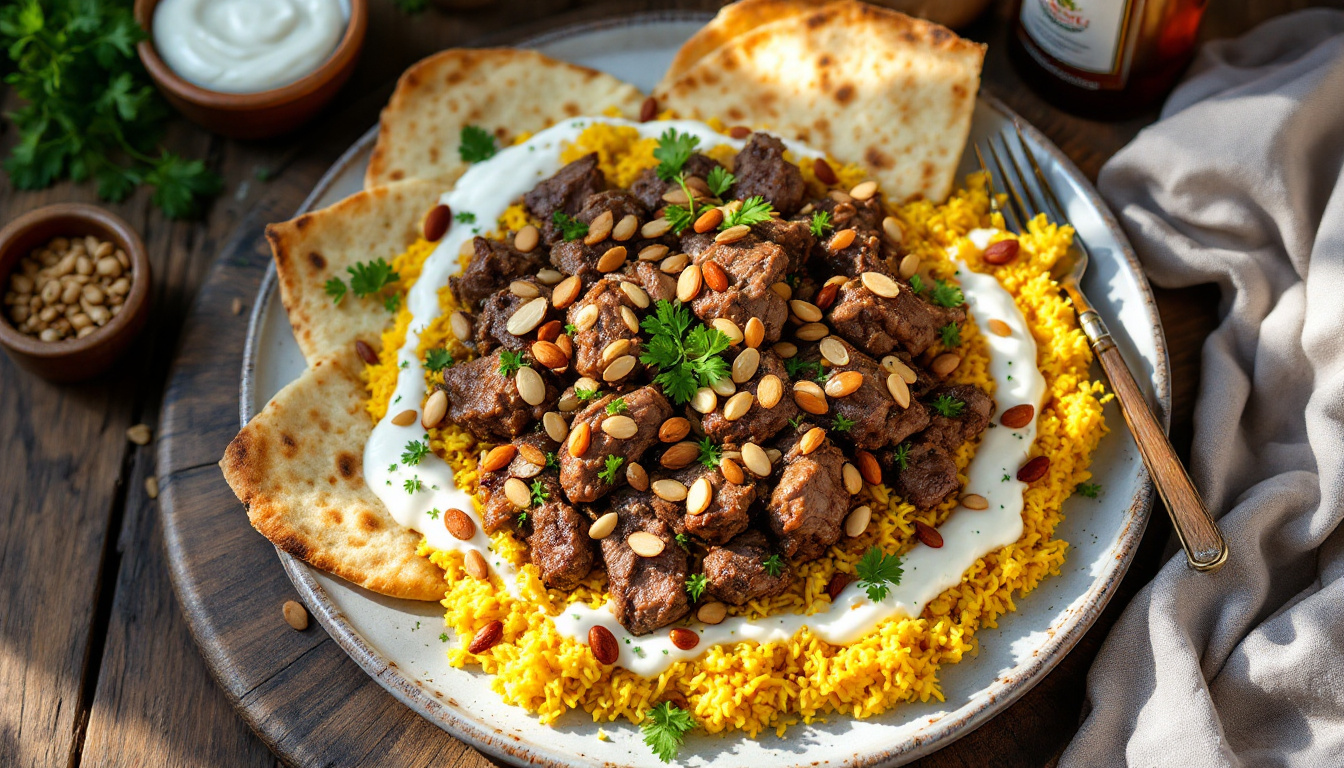
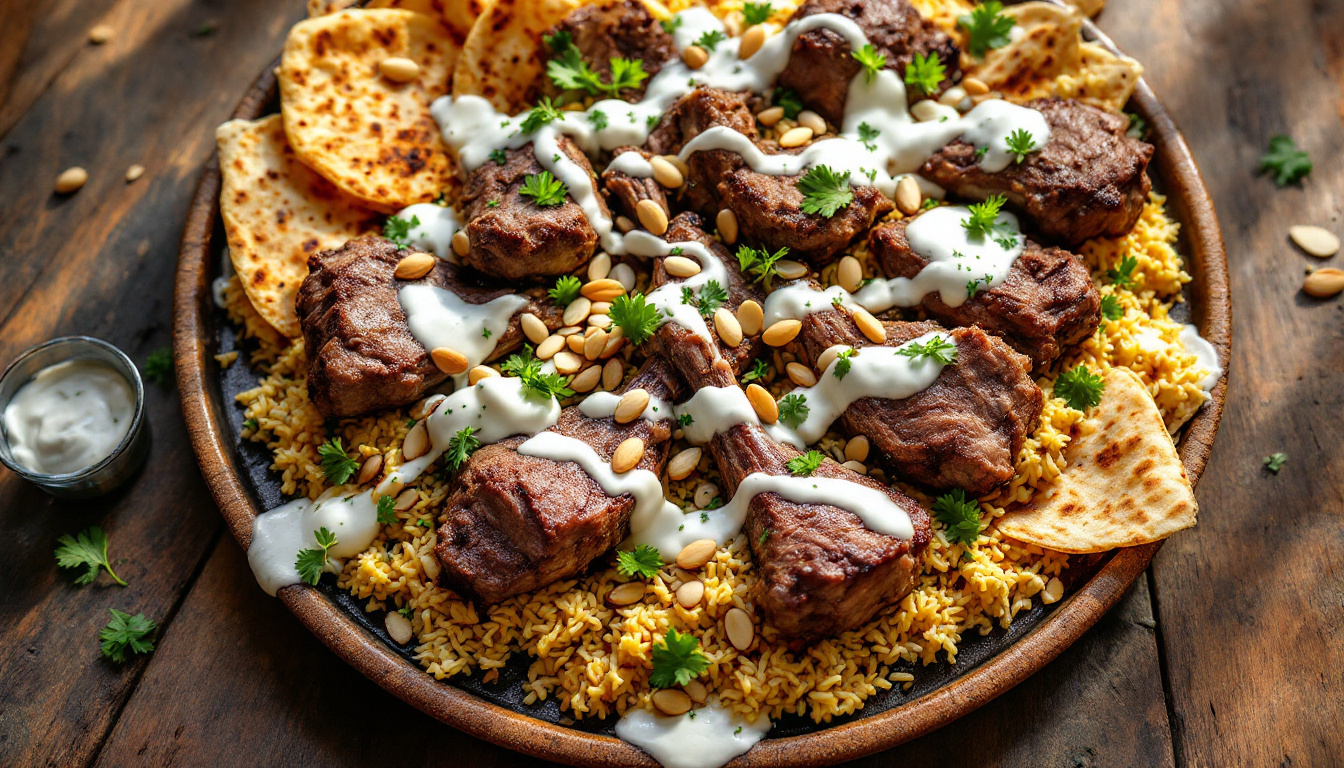
Mansaf is the national dish of Jordan, tender lamb cooked in a tangy sauce of jameed (fermented, dried yogurt) and served over rice and flat shrak bread, topped with toasted almonds and pine nuts. It’s far more than a meal. It’s the dish of weddings, funerals, and honoring guests, traditionally eaten standing around a communal platter using only the right hand. The jameed gives it a distinctive sour, savory depth. UNESCO recognized mansaf in 2022, and eating it properly is the single most important Jordanian food experience.
Maqluba
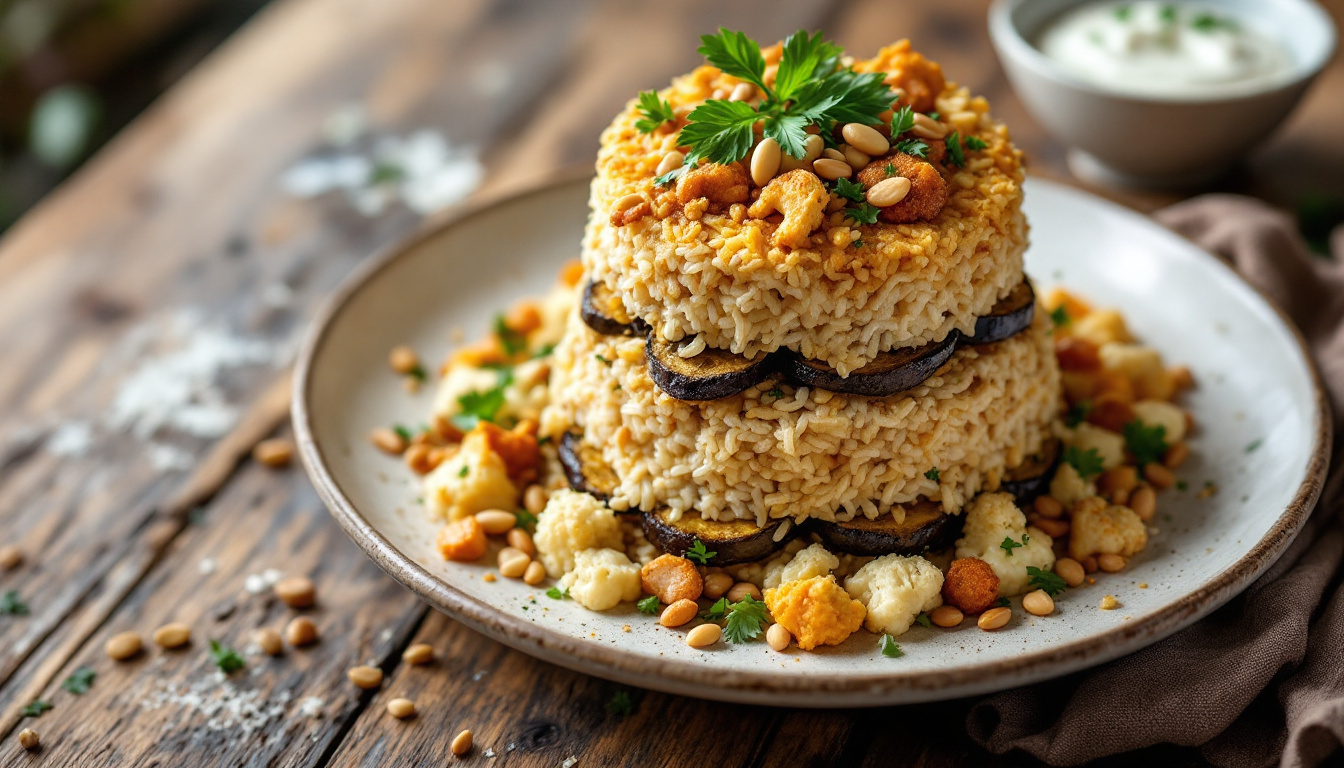
Maqluba means “upside-down,” and it lives up to the name: rice, meat, and fried vegetables (eggplant, cauliflower, potato) are layered in a pot, cooked together, then flipped dramatically onto a platter so it stands like a savory cake. The moment of the flip is a small piece of theater at the family table. Served with a cool yogurt or a chopped salad and sometimes a garlicky sauce, it’s comforting, fragrant with allspice and cinnamon, and a Levantine home-cooking classic across Jordan.
Musakhan
Musakhan is roast chicken smothered in sumac-spiced caramelized onions and pine nuts, served over taboon flatbread that soaks up the olive oil and juices. Originally Palestinian and beloved across Jordan, it’s a study in how a few ingredients (good olive oil, tangy sumac, sweet onions) can make something extraordinary. You eat it with the hands, tearing the bread and chicken together. Often called the Palestinian national dish, it’s one of the most satisfying things on any Jordanian table.
Zarb
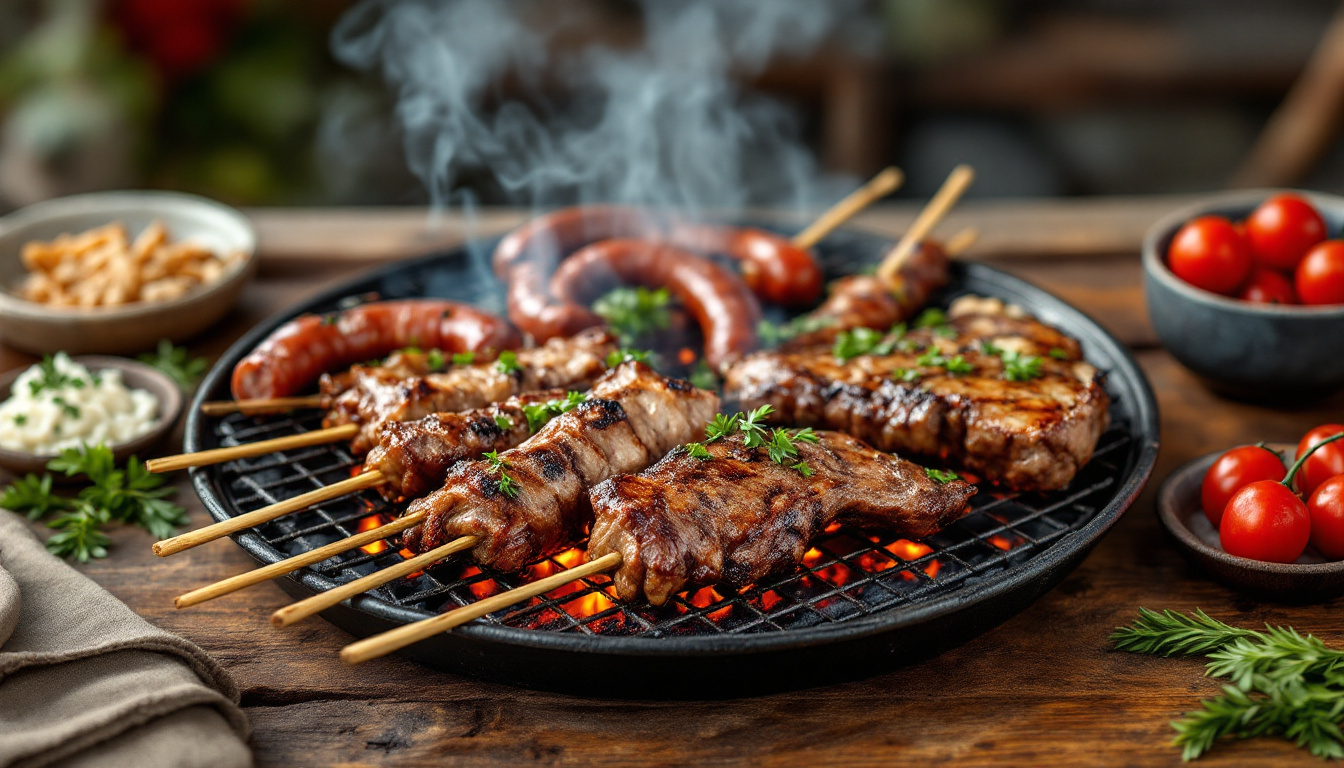
Zarb is the Bedouin barbecue, meat and vegetables slow-cooked in a metal oven buried in a sand pit and covered with coals, and eating it in the desert is unforgettable. After hours underground, the lamb and chicken come out smoky, tender, and falling off the bone, lifted from the sand with great ceremony. It’s the signature experience of a Wadi Rum camp, served under the stars with rice and flatbread. And the reveal, as the pit is uncovered, is half the magic.
Mezze
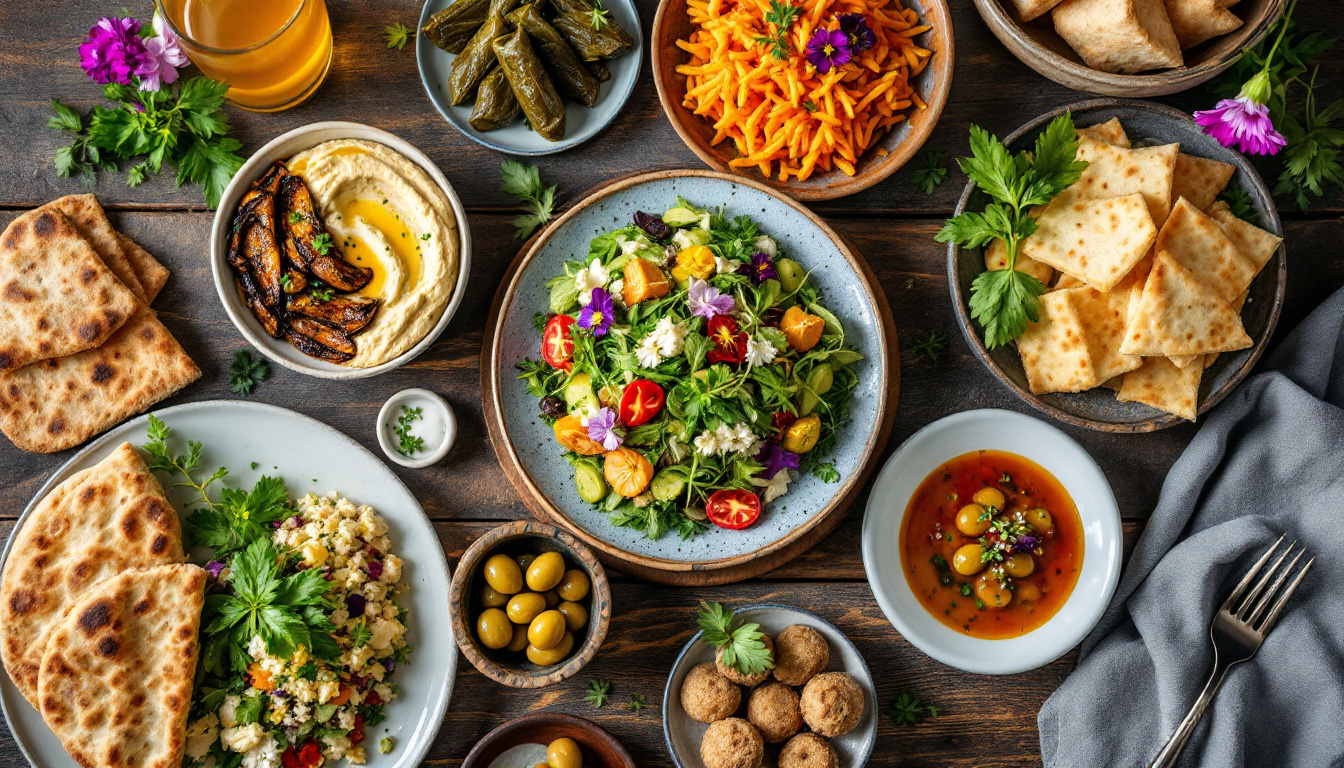
Mezze is the Levantine spread of small plates that opens most Jordanian meals, and much of it is vegan and superb. The lineup runs to hummus, mutabbal (smoky eggplant), tabbouleh, fattoush, labneh, warak dawali (stuffed vine leaves), and falafel, all scooped with warm bread. Shared and leisurely, it’s the best way to taste the breadth of the cuisine in one sitting. The mezze culture is one Jordan shares with Lebanon and the mezze tables of Beirut.
Falafel and foul medames
Falafel and foul medames are the everyday breakfast of Jordan. Cheap, filling, entirely plant-based. Falafel here are fried chickpea fritters eaten in bread with pickles and tahina, while foul is slow-cooked fava beans mashed with lemon, garlic, and olive oil. The legendary spot is Hashem in downtown Amman, an institution that has fed everyone from laborers to kings for decades, serving falafel, foul, and hummus at plastic tables in an alley. A few dinars buys a feast.
Shawarma
Shawarma is the everyday street food of Jordan, spit-roasted chicken or lamb shaved into bread with garlic sauce, pickles, and fries. The chicken version with toum (whipped garlic) is the local favorite, wrapped tight and pressed on a grill. It’s the quick, cheap meal everyone eats, sold from busy counters in every town. A good shawarma joint with a fast-turning spit and a queue is a reliable bet anywhere in the country.
Shorbat adas and ka’ak
Two cheap everyday classics no visitor should miss. Shorbat adas is the velvety red-lentil soup that starts countless Jordanian meals, blended smooth with cumin, turmeric, and onion and served with a wedge of lemon and crisp bread, and it is the dish that breaks the fast during Ramadan. Ka’ak is Amman’s great street snack: a long, soft, sesame-crusted bread ring sold warm from carts and bicycles, usually torn open and dipped in za’atar, or split and stuffed with falafel or eggs for breakfast on the move. Together they are the comforting, pocket-money side of Jordanian eating.
Galayet bandora
Galayet bandora is a simple, deeply comforting stew of tomatoes cooked down with garlic, olive oil, and chili, often with a little meat, and it’s everyday Jordanian home food. Mopped up with bread straight from the pan, it’s the kind of humble dish that shows the quality of local tomatoes and olive oil. The taste of a Jordanian home kitchen rather than a restaurant, and a great vegetarian option when made without meat.
Warak dawali
Warak dawali are grape leaves rolled tightly around rice, herbs, and often minced meat, then slow-cooked until tender, and they’re a labor-of-love dish of the Jordanian table. The meatless version, dressed with lemon and olive oil, is a mezze staple; the meat version is a fuller dish. Rolling them is a communal, generational task, and a platter of them signals care and occasion. Tangy, herby, satisfying. Levantine comfort food at its finest.
Kibbeh
Kibbeh is the Levantine staple of bulgur and minced lamb, most often shaped into a torpedo with a spiced meat-and-pine-nut filling and fried to a crisp shell. It also appears baked in a tray (kibbeh bil sanieh) and, for the adventurous, raw. A point of pride and skill across the region, good kibbeh has a thin, crunchy crust and a juicy, fragrant center. It’s a classic part of the mezze spread and a satisfying snack on its own.
Sayadieh and Aqaba seafood
Sayadieh is the fisherman’s dish of spiced rice and fish cooked with deeply caramelized onions and cumin, and it’s the highlight of Jordan’s short but vivid Red Sea coast at Aqaba. The rice takes on a rich brown color and savory depth from the onions, topped with fried or baked fish and a tahina-lemon sauce. In a largely landlocked country, Aqaba’s fresh fish and seafood are a special treat, eaten with a sea view at the southern tip of Jordan.
Knafeh
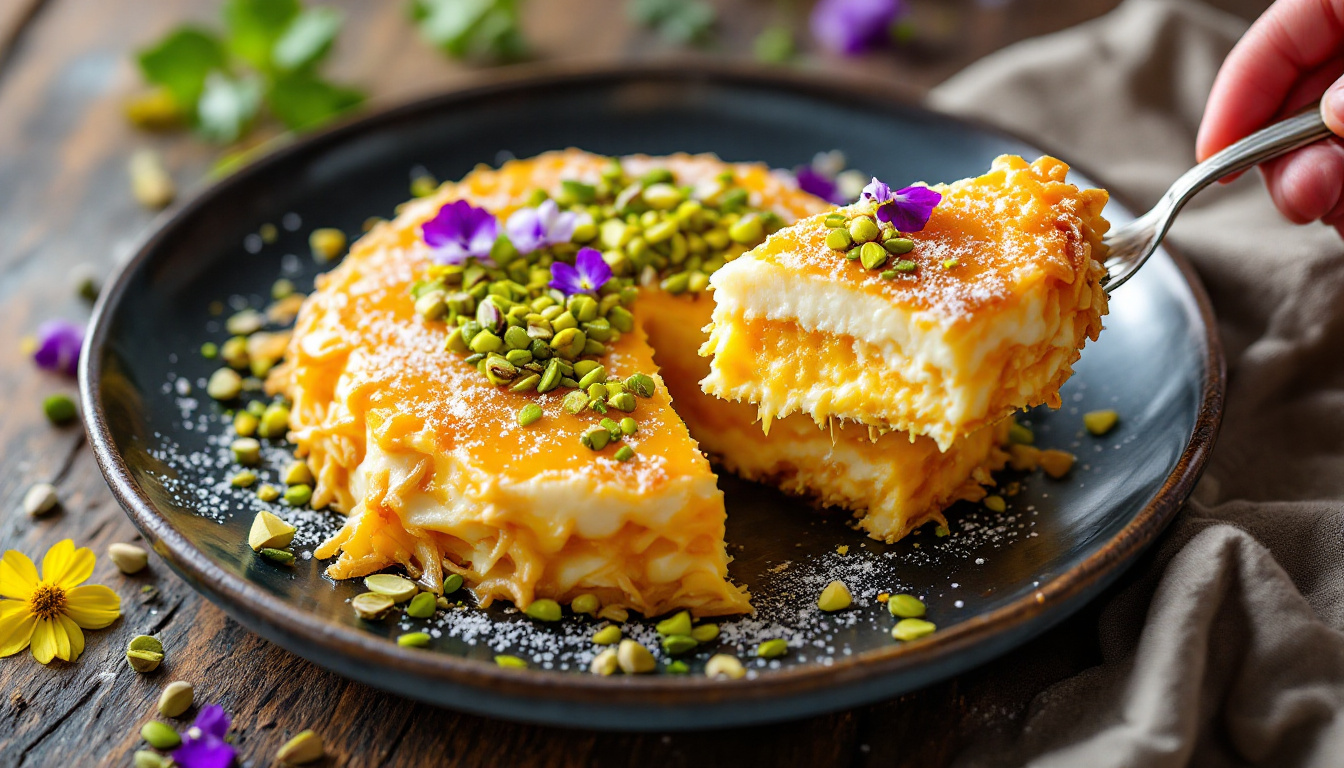
Knafeh is the queen of Jordanian desserts, a warm layer of soft white cheese under shredded or semolina pastry, baked, soaked in rose-scented syrup, and crowned with crushed pistachio. The Nabulsi style, from Nablus, is the gold standard, eaten hot so the cheese stretches into strings. In Amman, Habiba in the downtown is the famous spot, where a slice is cut from a giant tray for a queue of locals. Sweet, salty, molten. Unmissable.
Arabic sweets
Beyond knafeh, Jordan has a deep tradition of Arabic sweets built on filo, nuts, and syrup. Baklava (layered pastry with pistachio or walnut), basbousa (semolina cake), and harissa (a semolina sweet, not the porridge or the chili) fill the glass cases of sweet shops like Zalatimo and Habiba. During Ramadan, qatayef (stuffed folded pancakes) appear everywhere. Boxed by weight as gifts and eaten with cardamom coffee, these sweets sit at the center of hospitality and celebration.
How food changes across Jordan, region by region
Jordanian food shifts with its landscapes, from the capital to the desert to the Red Sea, and knowing where you are points you to the right dish. The country is small, but the Bedouin, Palestinian, and coastal traditions each have their stronghold. Here’s the map.
Amman, the capital, is where you eat the full Jordanian range, from downtown institutions like Hashem (falafel and foul) and Habiba (knafeh) to the mezze houses and a young cafe and bistro scene around Rainbow Street and Jabal Al-Weibdeh. This is the best base for tasting everything, mixing old-city street food with modern Levantine cooking. The downtown (al-Balad) is the heart of cheap, classic eating.
The desert south, above all Wadi Rum, is Bedouin food country, where mansaf and the underground zarb barbecue are the signature experiences. Eating at a Bedouin camp, with meat slow-cooked in a sand pit and sweet tea poured by the fire under the stars, is one of the great food experiences in the Middle East. The hospitality here is legendary. A guest is treated to the very best the hosts have.
Aqaba, Jordan’s only coastal city on the Red Sea, is the country’s seafood corner, where sayadieh (spiced fish and rice) and fresh grilled fish are the things to order. In an otherwise landlocked, meat-and-grain cuisine, the catch of the Red Sea is a welcome change. Eat it by the water at the southern tip of the country, often as part of a trip to dive or snorkel the reefs.
The north and Jordan’s large Palestinian community bring dishes like musakhan (sumac chicken on taboon) and the celebrated Nabulsi knafeh into the mainstream of Jordanian eating. The line between Jordanian and Palestinian food is blurry and shared, and many of the country’s most-loved dishes carry this heritage. Towns like Irbid and the family kitchens of Amman keep these traditions alive.
Where to eat: Amman, Bedouin camps and Aqaba
The best food in Jordan is found at downtown Amman institutions, Bedouin desert camps, and Aqaba’s seafood spots, plus the family table. Each has its role, and matching the setting to the dish is the key. Here’s where to go.
- Downtown Amman (al-Balad), for the classics: Hashem for falafel, foul, and hummus, and Habiba for knafeh, both legendary and cheap.
- Traditional restaurants, for a proper mansaf served the right way, ideally shared as part of a group.
- Bedouin camps in Wadi Rum, for zarb cooked underground and tea by the fire, the desert food experience.
- Aqaba seafood spots, for sayadieh and fresh Red Sea fish by the water.
- Sweet shops, like Habiba and Zalatimo, for knafeh, baklava, and trays of Arabic sweets sold by weight.
What to drink in Jordan
The drinks of Jordan are sweet tea and cardamom coffee, the twin pillars of its hospitality. Bedouin sage tea (shai bil maramiya), black tea heavily sweetened and scented with sage, is offered constantly and is impossible to refuse politely. Arabic coffee (qahwa), light and cardamom-rich, is poured from a dallah into tiny cups as a formal welcome. Beyond them, sahlab (a warm milky drink), jallab (a date-and-grape cooler with pine nuts), tamarind, and fresh lemon-mint are the non-alcoholic staples. Alcohol is available but limited. Arak (the anise spirit) and the local Carakale craft beer are the main options, mostly in restaurants and Amman bars.
- Mansaf and many dishes are eaten with the right hand from a shared platter; the host offers guests the best cuts.
- Hospitality is intense; expect to be urged to eat more, and a host will often insist on paying.
- Accept tea and Arabic coffee when offered; it is the core of social ritual.
- Vegetarians eat well from the mezze table (hummus, mutabbal, tabbouleh, falafel, warak dawali) and dishes like meatless maqluba and galayet bandora.
- Tipping around 10 percent is normal in restaurants; a service charge is sometimes already added.
Frequently asked questions
What is the national dish of Jordan?
Mansaf is the national dish of Jordan, lamb cooked in a tangy sauce of fermented dried yogurt (jameed) and served over rice and flatbread with toasted nuts. It is eaten communally from a shared platter using the right hand and is reserved for celebrations and honoring guests. UNESCO added mansaf to its Intangible Cultural Heritage list in 2022.
What is the most popular Jordanian food?
The most popular and most famous Jordanian food is mansaf, the national dish of lamb cooked in fermented jameed yogurt over rice and flatbread, eaten by hand from a shared platter. Other typical favorites are maqluba (the upside-down rice pot), musakhan, the Bedouin zarb, and a full mezze spread, plus everyday street food like falafel, shawarma, lentil shorbat adas, and ka’ak. For dessert, the most popular choice is knafeh, the syrup-soaked Nabulsi cheese pastry.
Is Jordanian food spicy?
Jordanian food is generally mild rather than spicy. It is seasoned with sumac, allspice, cinnamon, garlic, and olive oil, and the tang comes from fermented yogurt and lemon rather than chili. Heat is usually offered on the side as a chili paste or pickled peppers, so you can add as much or as little as you like. The flavors are warm and aromatic.
What is mansaf and jameed?
Mansaf is Jordan’s national dish of lamb served over rice and flatbread in a sauce made from jameed. Jameed is hard, dried fermented yogurt, traditionally rolled into balls and sun-dried, then reconstituted into a tangy, savory sauce that defines the dish. The combination of the sour jameed, the tender lamb, and the rice, eaten by hand, is the heart of Jordanian food culture.
Which city has the best food in Jordan?
Amman, the capital, has the best and widest food scene in Jordan, from downtown institutions like Hashem (falafel and foul) and Habiba (knafeh) to mezze houses and modern cafes around Rainbow Street and Jabal Al-Weibdeh. For specific experiences, head to Wadi Rum for Bedouin zarb and Aqaba for Red Sea seafood. Amman is the best base overall.
Where can vegetarians eat in Jordan?
Vegetarians eat very well in Jordan thanks to the mezze table, which is largely plant-based: hummus, mutabbal, tabbouleh, fattoush, falafel, foul, warak dawali (meatless version), and stuffed vegetables. Dishes like galayet bandora and maqluba can be made without meat. Confirm that vine leaves and some dishes are the meat-free version, but overall the cuisine is among the more vegetarian-friendly in the region.
What should I drink in Jordan?
Drink sweet Bedouin sage tea (shai bil maramiya) and cardamom-scented Arabic coffee (qahwa), the two pillars of Jordanian hospitality, offered everywhere. Other staples include sahlab, jallab, tamarind, and fresh lemon-mint juice. Alcohol is available but limited, with arak (anise spirit) and the local Carakale craft beer the main options, mostly in restaurants and Amman bars.
More food guides waiting for you
Browse our complete collection of food guides across Africa and the Middle East.