The best food in Georgia might be the most underrated cuisine in the world, and this is the country in the Caucasus, not the US state. Wedged between Europe and Asia, Georgia gave the world wine 8,000 years ago and built a food culture around the supra, a feast of toasts that can last for hours. Expect molten cheese bread, soup-filled dumplings, walnut sauces on everything, and a vegetarian tradition deep enough to shame most of Europe. One meal here and you’ll wonder why nobody told you sooner.
Why Georgian food is the world’s most underrated cuisine
Georgian food is built on three pillars: cheese, walnuts and wine. The country sits on the old Silk Road between Europe and Asia, and its cooking absorbed Persian, Turkish and Russian influences while keeping a fiercely distinct core. Walnuts go into sauces, dips and dressings; cheese fills bread and dumplings; and wine, made here for eight millennia, frames every meal.
It’s also a paradise for vegetarians, thanks to long Orthodox fasting traditions that produced an entire repertoire of meat-free dishes. Geographically it shares a table with its Caucasus neighbor, covered in our guide to the best food to eat in Armenia, and with the cooking of nearby Turkey, but Georgian flavor, sour, herby, nutty and savory, belongs to no one else.
The best food in Georgia, dish by dish
The best food in Georgia is centered on cheese bread, dumplings, walnut sauces and superb grilled meat. These are the thirteen dishes I’d order first, with rough prices as of 2026 and where each one belongs.
Adjaruli khachapuri აჭარული ხაჭაპური
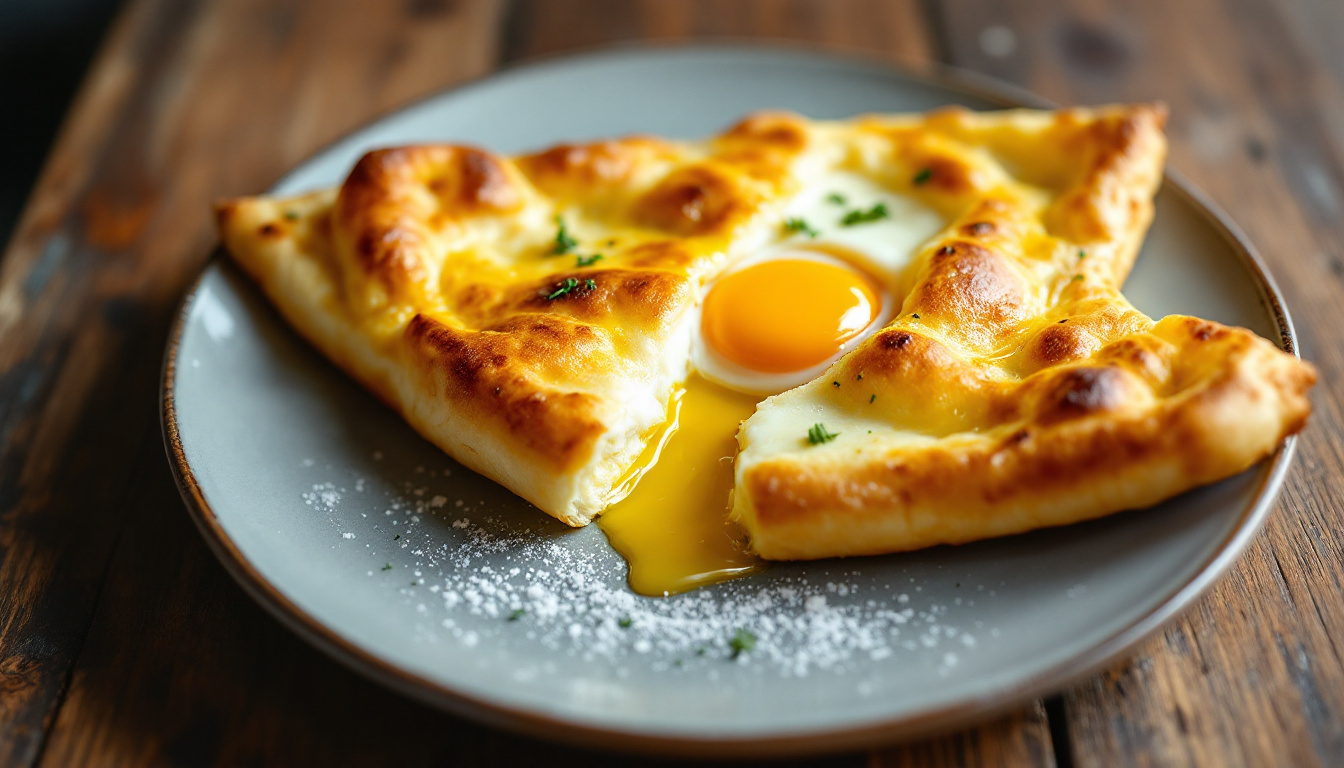
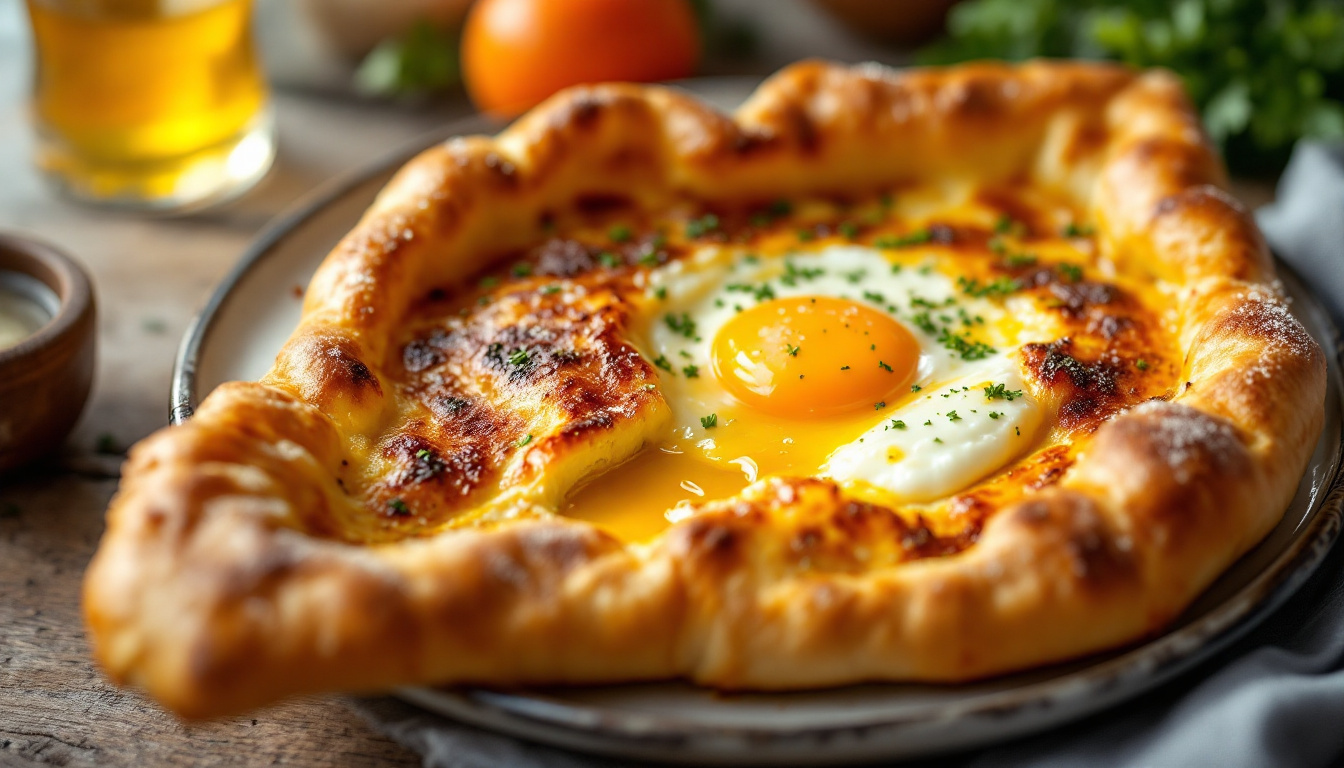
Adjaruli khachapuri is Georgia’s most photogenic dish and a national obsession. A boat of bread is filled with molten sulguni cheese, then crowned with a raw egg yolk and a knob of butter that you stir into the cheese at the table. You tear off the bread “oars” and dip them into the rich, gooey center. It comes from the coastal Adjara region around Batumi, but you’ll find it everywhere. It’s just one of three main types: the round, flat Imeruli (cheese sealed inside) is the everyday standard, the Megruli piles extra cheese on top, and the Adjaruli is the showpiece. Share one as a starter, because it is gloriously heavy.
Khinkali ხინკალი
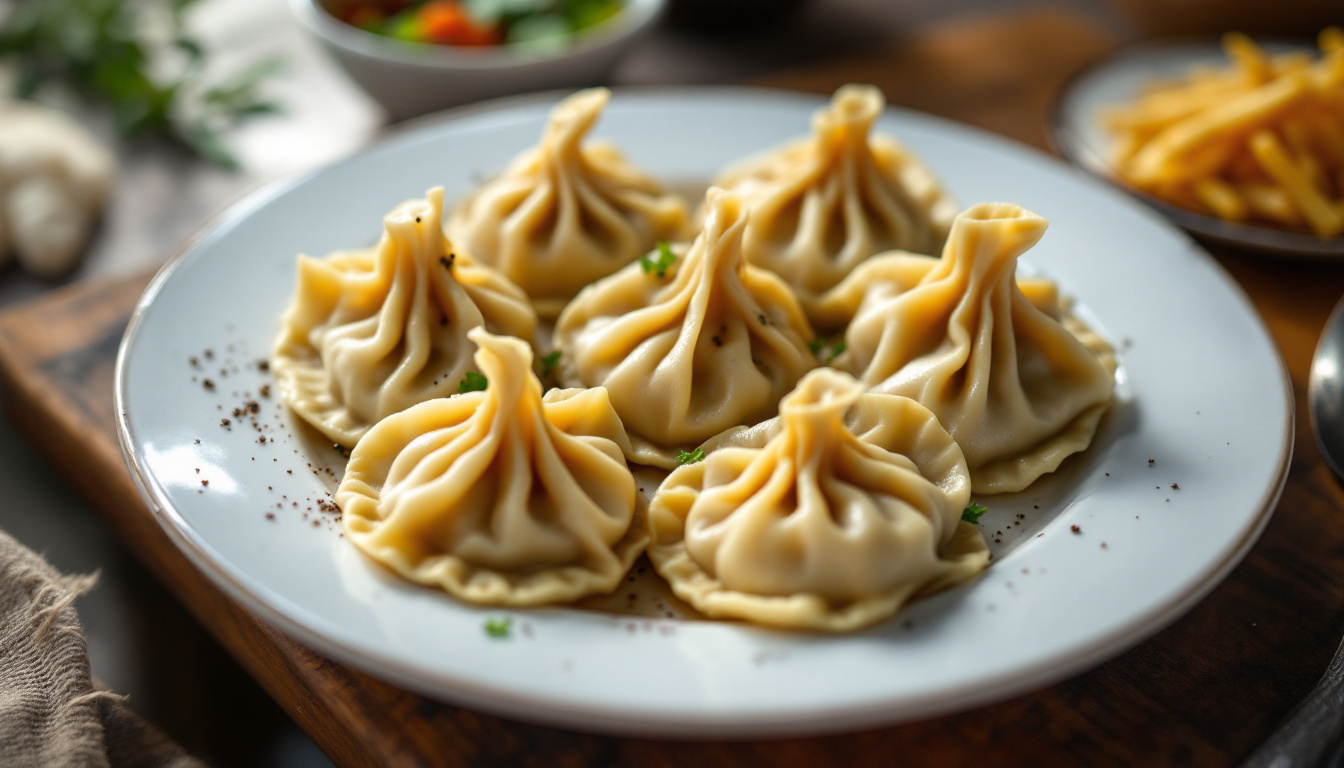
Khinkali are Georgia’s juicy soup dumplings and a dish with rules. A twisted knot of dough is filled with spiced minced meat (usually pork and beef) or, in the meat-free version, mushrooms or cheese, then boiled so the broth gathers inside. You eat them by hand: hold the top knot, bite a small hole, sip the broth, then eat the rest. The doughy top knob is left on the plate, and counting the knobs is how Georgians tally who ate the most.
Mtsvadi მწვადი
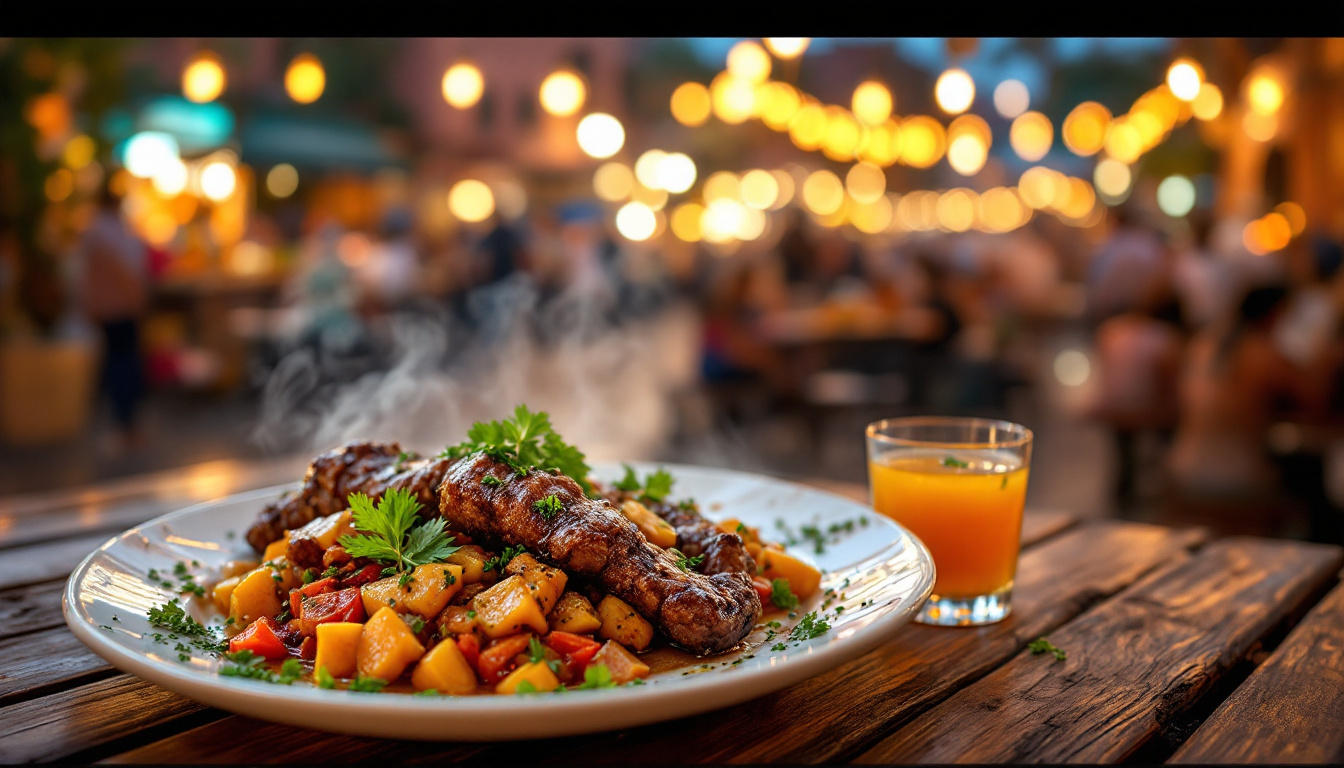
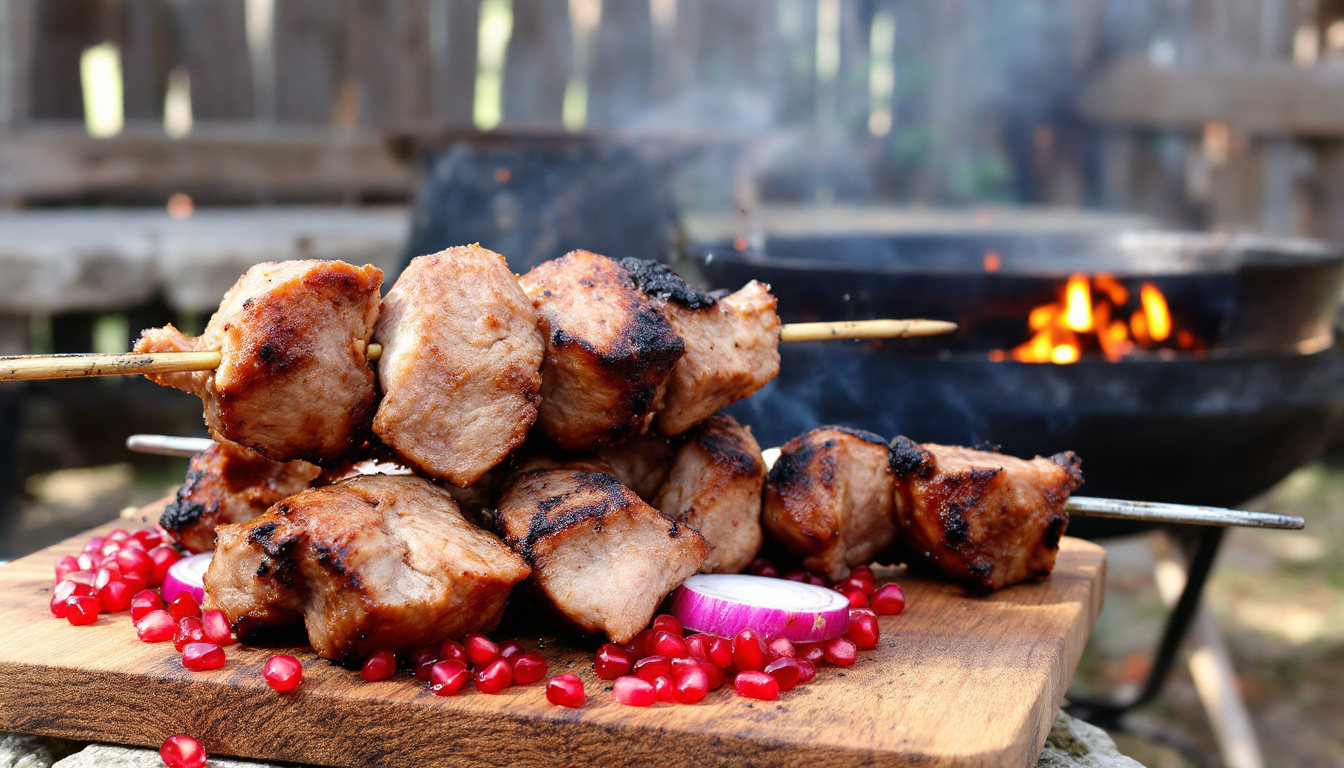
Mtsvadi is Georgian barbecue: chunks of pork or veal skewered and grilled over the embers of dried grapevine cuttings, which give a faint, sweet smoke. The meat is salted simply and finished with raw onion and a splash of tart pomegranate or sour plum sauce. It’s the centerpiece of any outdoor feast, especially in the wine region of Kakheti. Order it with fresh herbs and bread and you have the most primal, satisfying meal in the country.
Pkhali ფხალი
Pkhali are the little walnut-and-vegetable pâtés that open almost every Georgian meal. Cooked spinach, beetroot, or beans are blended with ground walnuts, garlic, vinegar and herbs into a paste, rolled into balls and studded with jewel-red pomegranate seeds. Each color is a different vegetable and a slightly different flavor, all tied together by the earthy walnut base. They’re cool, tangy and completely vegetarian, and they show off the Georgian genius with walnuts.
Badrijani nigvzit ბადრიჯანი ნიგვზით
Badrijani nigvzit are fried eggplant rolls wrapped around a garlicky walnut paste, and they’re impossible to stop eating. Thin strips of eggplant are fried until soft, spread with a spiced walnut-and-garlic filling, rolled up and topped with pomegranate seeds. The combination of silky eggplant, rich walnut and sharp pomegranate is the Georgian flavor profile in one bite. Like pkhali, it’s a vegetarian starter that meat-eaters fight over.
Lobio ლობიო
Lobio is the humble bean stew that fuels the country, usually served in a hot clay pot. Red kidney beans are stewed with onion, garlic, coriander and the spice blend khmeli suneli until thick and savory, sometimes brightened with walnut. It’s traditionally eaten with mchadi, a dense griddled cornbread, and pickles, or scooped up with lobiani, a flaky flatbread baked with the same spiced bean filling inside (a favourite on fasting days and at Barbaroba in December). Cheap, filling and naturally vegan, lobio is comfort food and a fasting-day staple in one pot.
Satsivi საცივი
Satsivi is poached chicken or turkey in a cold, velvety walnut sauce, and it’s the dish of the Georgian New Year. The sauce blends ground walnuts with garlic, coriander, marigold and a little vinegar into something rich and faintly sour, served at room temperature so the flavors deepen. It’s festive, generous and unlike any walnut dish in the West. If you visit around New Year, this is the taste of the holiday.
Kharcho ხარჩო
Kharcho is the thick, sour beef soup that shows off everything Georgian cooking does well at once. Beef is simmered with rice, ground walnuts, garlic and tart tkemali (sour-plum) sauce, then loaded with coriander and the spice blend khmeli suneli until it’s deep red, herby and a little fiery. The Megrelian version from the west is the spiciest. It eats like a meal rather than a starter, especially with a hunk of shoti bread, and it’s the soup locals reach for when they want comfort with a kick.
Chakapuli ჩაქაფული
Chakapuli is a bright, herby lamb or veal stew that tastes like Georgian spring. The meat is simmered with masses of fresh tarragon, spring onions, sour green plums (tkemali) and white wine until tangy and aromatic. There’s no tomato and almost no fat showing; it’s all herbs and sourness. It’s the dish that appears at Easter and on the first warm days, and the clearest proof that Georgian cooking loves sour as much as rich.
Shkmeruli შქმერული
Shkmeruli is fried chicken drowned in a garlic-and-milk sauce, and it has quietly become one of Georgia’s most craved dishes. A chicken is pan-fried until the skin crisps, then bathed in a sauce of crushed garlic, milk (or cream) and a little broth, served bubbling in the same clay dish. The garlic is unapologetic and the bread you mop the sauce with is half the point. It comes from the mountain village of Shkmeri in Racha, but every guesthouse and tavern now does its own version. Order it when you want comfort food that bites back.
Chakhokhbili ჩახოხბილი
Chakhokhbili is Georgia’s homestyle chicken stew, chicken braised slowly with a heap of tomatoes and onions and finished with a storm of fresh herbs (coriander, basil, parsley), garlic, and a splash of dry white wine. The name comes from khokhobi, the old word for pheasant, which is what the dish was originally made with. It arrives soupy and fragrant, meant to be mopped up with shoti bread. Nearly every family cooks it, so no two versions match, and it shows how Georgian food leans on herbs rather than heat.
Ajapsandali აჯაფსანდალი
Ajapsandali is Georgia’s great summer vegetable stew, a Caucasus cousin of ratatouille. Eggplant, peppers, tomatoes, onion and garlic are stewed together with coriander and basil until soft and fragrant, then served warm or cool. It’s naturally vegan, costs almost nothing and tastes of high summer. Scoop it up with bread as part of a spread, and it earns its place alongside the famous cheese and meat dishes.
Kubdari კუბდარი
Kubdari is the meat-filled bread of Svaneti, the remote high mountain region, and it’s the savory rival to khachapuri. Instead of cheese, the dough is stuffed with chunks of spiced meat (often pork or beef) seasoned with the Svan salt blend and plenty of coriander, then baked until the crust is crisp. It’s heartier and spicier than its cheesy cousin, built for cold mountain nights, and worth seeking out wherever Svan cooks are at work.
Churchkhela ჩურჩხელა
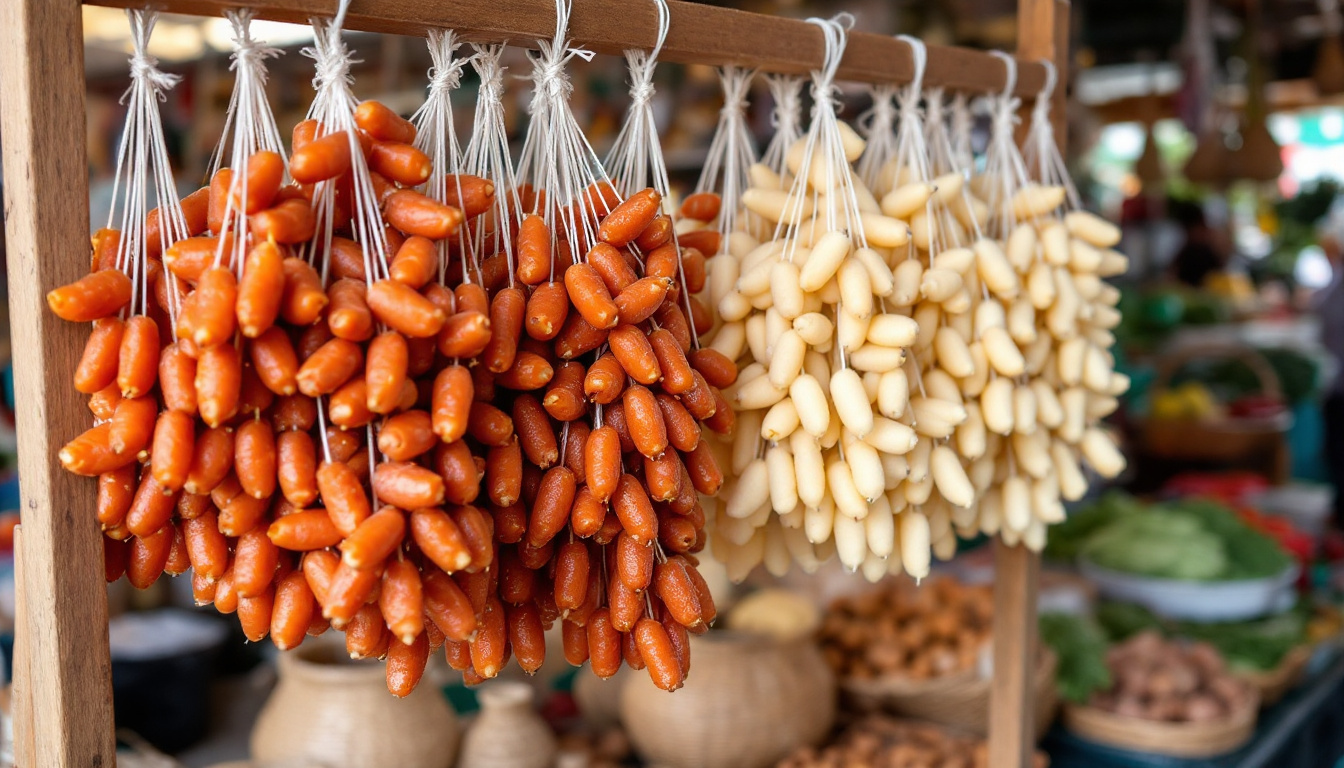
Churchkhela is the candle-shaped sweet you’ll see hanging in every Georgian market. Walnuts (or hazelnuts) are threaded onto a string, then dipped repeatedly into thickened grape must until they build up a chewy, fruity coating. Often called “Georgian Snickers”, it’s naturally vegan, keeps for months and was once carried by soldiers as trail food. Cut into slices, it’s the perfect chewy, nutty companion to a glass of Georgian wine.
How food changes across Georgia
Adjara, the subtropical coast around Batumi, gave the world the egg-topped Adjaruli khachapuri. The cooking here is richer and more buttery, with strong Black Sea seafood and Turkish influence just over the border. It’s the place to eat khachapuri at its molten best.
Samegrelo in the west is Georgia’s spice capital, where the food is hotter and more garlicky. It’s the home of elarji (a stretchy cornmeal-and-cheese dish), the cheese-topped Megruli khachapuri, and fiery ajika paste. If you like heat, this is your region.
Kakheti in the east is the heart of Georgian wine country and the home of the best mtsvadi, cooked over grapevine embers among the vineyards. High in the mountains, Svaneti is a world apart, with its spicy kubdari meat bread, Svan salt and hearty food built for altitude and cold.
Wine and the supra
Georgia is the birthplace of wine, with an 8,000-year tradition that UNESCO recognizes, and the best way to drink it is at a supra. Georgian wine is still made in qvevri, large clay vessels buried underground, which is how the country produces its distinctive amber (orange) wines from grapes like rkatsiteli and its deep reds from saperavi. At a supra, the traditional feast, a tamada (toastmaster) leads a long series of toasts, and you drink to each one. The harder stuff is chacha, a fiery grape-pomace brandy. Beer exists, but wine is what you toast with, and refusing a toast is close to rude.
- Eat khinkali by hand, sip the broth first, and leave the doughy top knot on the plate.
- At a supra, wait for the tamada’s toast before drinking, and toast with wine, not beer.
- Vegetarians eat extremely well here: pkhali, lobio, badrijani, ajapsandali and mushroom khinkali are all meat-free.
- “Georgia” here means the country in the Caucasus, not the US state; the cuisine has nothing to do with peaches and grits.
FAQ
What is the most famous food in Georgia?
Khachapuri, Georgia’s cheese-filled bread, is the most famous dish, especially the boat-shaped Adjaruli version topped with a runny egg and butter. Khinkali, the country’s juicy soup dumplings, run a close second. Both are national icons eaten everywhere.
Is Georgian food good for vegetarians?
Yes, Georgia is one of the best countries in the world for vegetarians. Centuries of Orthodox fasting created a huge meat-free repertoire: pkhali, badrijani nigvzit, lobio, ajapsandali, cheese khachapuri and mushroom khinkali are all vegetarian, and many are vegan.
How do you eat khinkali?
Eat khinkali with your hands. Hold the dumpling by its twisted top knot, bite a small hole in the side, sip out the hot broth, then eat the rest. Leave the doughy top knot on your plate; Georgians count the knots to see how many you ate.
What is a Georgian supra?
A supra is the traditional Georgian feast, a long table of many dishes led by a tamada, or toastmaster, who proposes a series of toasts that everyone drinks to with wine. It is the social heart of Georgian food culture and can last for hours.
How much does food cost in Georgia?
Georgia is very affordable. Khinkali cost under 1.50 GEL (~$0.6) each, a khachapuri 8 to 18 GEL (~$7), and vegetable starters like pkhali or lobio 6 to 12 GEL (~$4.5) as of 2026. A full spread with wine for two rarely breaks the bank, which is part of the appeal.
More food guides waiting for you
Browse our complete collection of Middle East and African food guides.