I have eaten dumplings with my hands off a Georgian table, with chopsticks over a bamboo steamer in Shanghai, and with a fork in a Krakow milk bar. The dumpling is the most universal good idea in food: wrap dough around something tasty, then boil, steam or fry it. This is my ranking of the best dumplings in the world, 20 of them, from soup-filled xiao long bao to garlicky pierogi, with what each one is and where to eat the real version.
How I ranked these dumplings
This ranking rates the dumpling, not the country, so China and Italy each show up more than once. I scored each one on three things: how good it is at its best, how central it is to its home cuisine, and how far I would travel to eat it again. Soup dumplings and the great thin-skinned wrappers rose to the top; bread dumplings and fried turnovers, still delicious, sit lower.
Fame mattered less than craft. A factory-frozen version of a famous dumpling lost to a hand-folded regional one nobody outside its valley has heard of. Treat the order as an argument, not a verdict. If your grandmother’s pierogi outrank everything on this list, she is probably right.
The 20 best dumplings in the world, ranked
1. Xiao Long Bao 小笼包
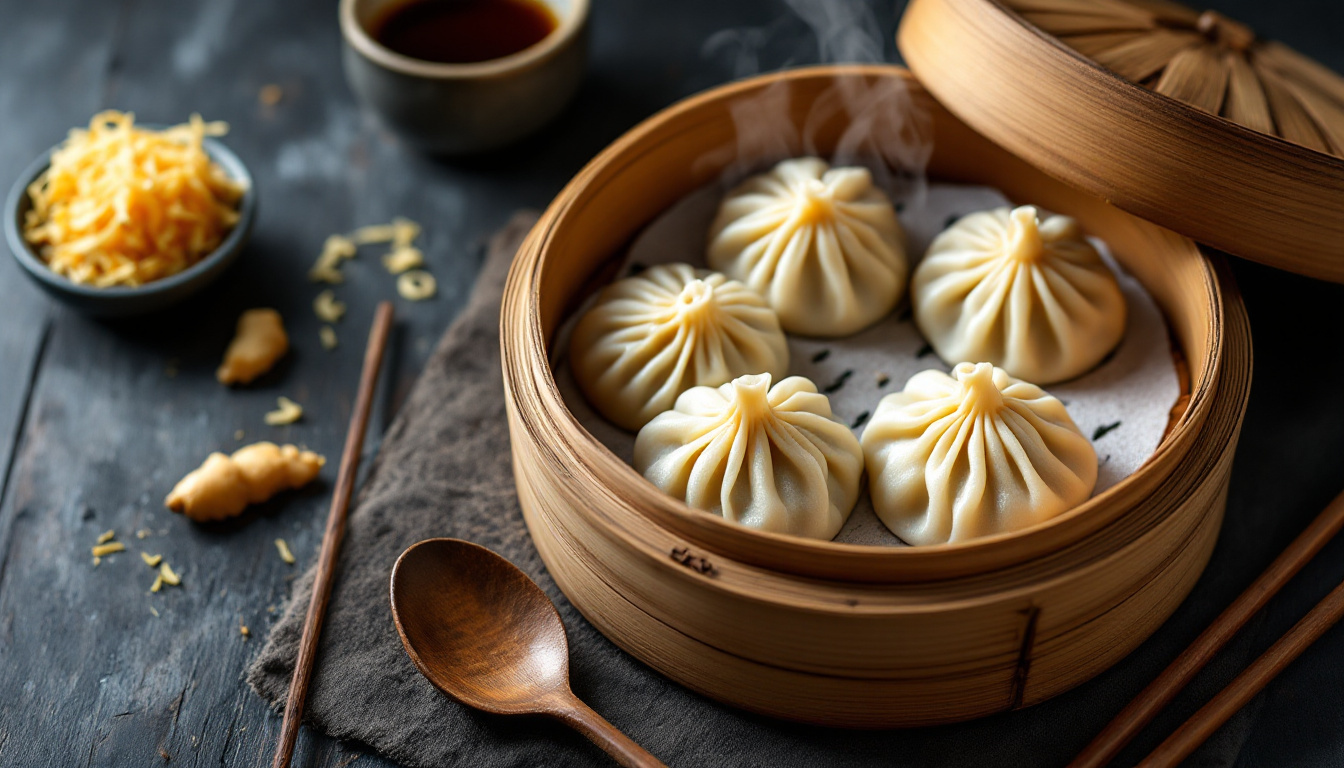
Xiao long bao are the best dumplings in the world, thin-skinned parcels that hide a mouthful of hot broth inside. The pork filling (sometimes with crab) is bound with a gelatin stock that melts into soup as they steam in their little bamboo basket. You lift one gently, nibble a hole, sip the broth, then eat the rest with black vinegar and shredded ginger. They come from the Nanxiang area near Shanghai, and a good one is a feat of folding, with a skin that holds without tearing. Eat them straight from the steamer. Reheated, the magic’s gone.
2. Khinkali ხინკალი
Khinkali are Georgia’s spectacular soup dumplings, fat twisted pouches you eat with your fingers. Spiced minced meat sits in broth inside a thick pleated dough topped with a knob, and you hold that knob, bite a small hole, slurp the juice, then eat the rest. The doughy top is left on the plate, and counting the leftover knobs is how you keep score. Black pepper is the only seasoning they need. Eat them in Georgia, where a plate of five is a light lunch and the meat versions beat the cheese ones.
3. Jiaozi 饺子
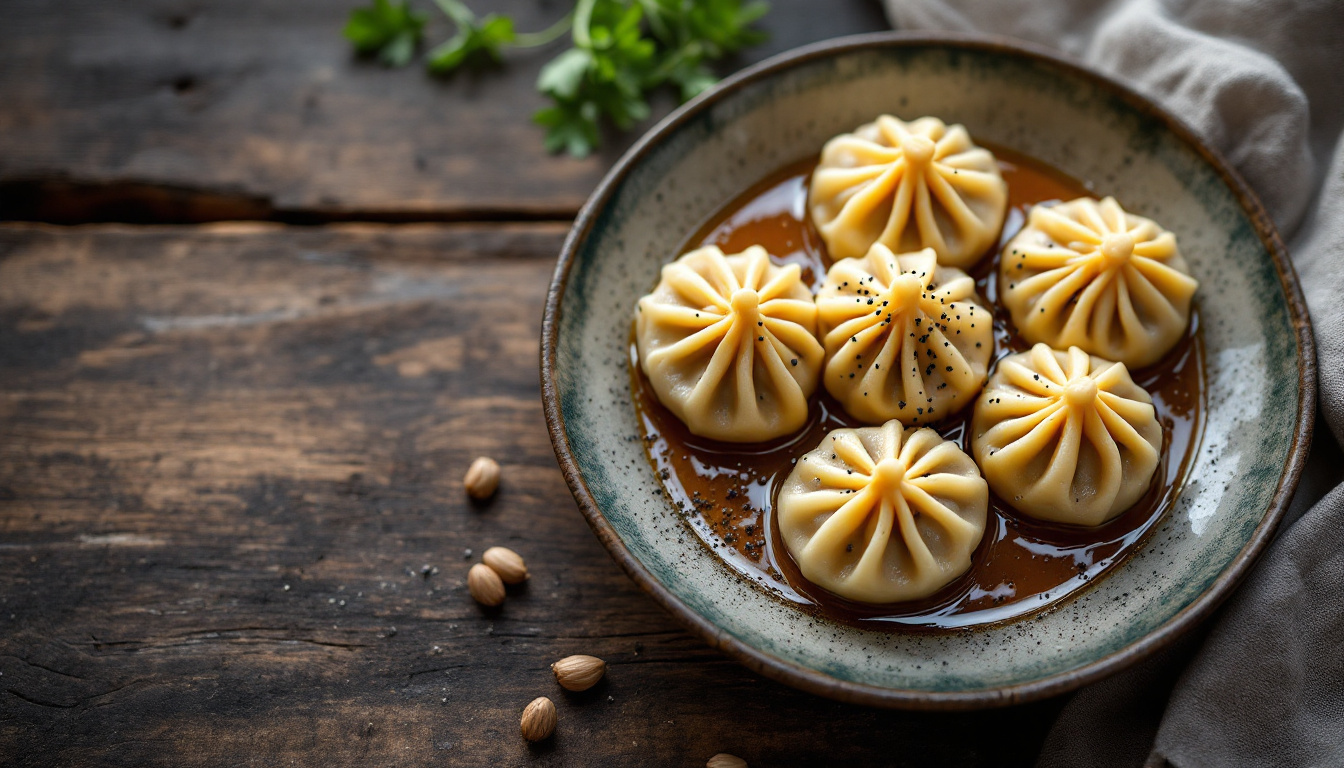
Jiaozi are the original Chinese dumpling and the benchmark every other one is measured against. A pork-and-cabbage or pork-and-chive filling goes into a round wheat wrapper, then they are boiled (shuijiao) or pan-fried into crisp-bottomed potstickers (guotie). Families fold them together for Lunar New Year, when their shape echoes old gold ingots and good fortune. Dip them in black vinegar with a little chili oil, never drowned in soy. They’re everywhere in China, from dumpling houses to home kitchens, and they never get old.
4. Gyoza 餃子
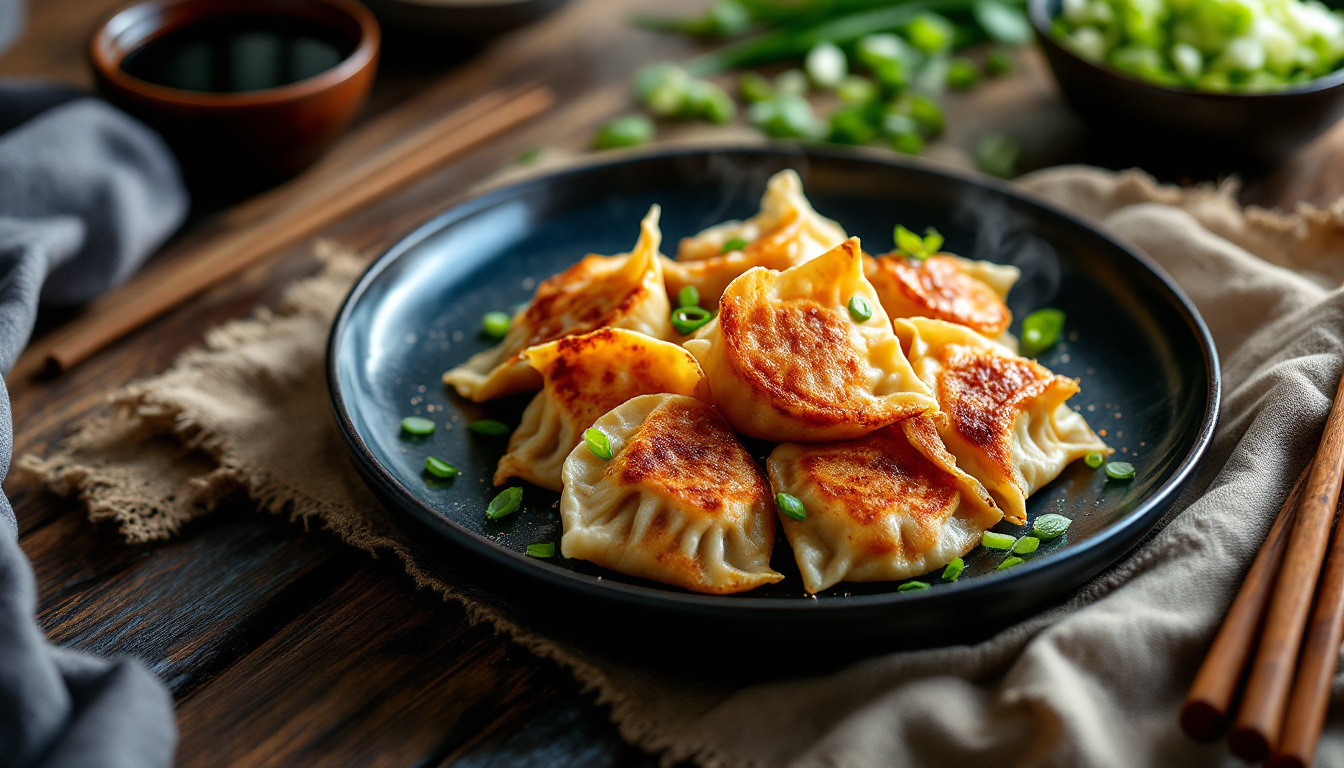
Gyoza are Japan’s crispy-bottomed answer to the Chinese potsticker, and plenty of people prefer them. The skin is thinner, the garlic-and-ginger pork filling is finer, and the cooking is the trick: fried until the base is lacquered and crisp, then steamed under a lid so the top stays tender. The cities of Utsunomiya and Hamamatsu both claim to be the gyoza capital and compete for the title every year. Dip them in soy, vinegar and a hit of rayu chili oil. They’re the best thing on any Japan izakaya table.
5. Pierogi
Pierogi are Europe’s dumpling champion, Poland’s boiled half-moons of soft dough and generous filling. The classic is ruskie (potato and twarog cheese), but they also come with meat, with sauerkraut and mushroom, or sweet with blueberries in summer. They arrive glossy with butter, fried onions and lardons, and the best are at a bar mleczny (milk bar) for the price of a coffee. I have eaten them by the dozen in Krakow and never tired of them. For the wider picture, see our guide to Polish food.
6. Mandu 만두
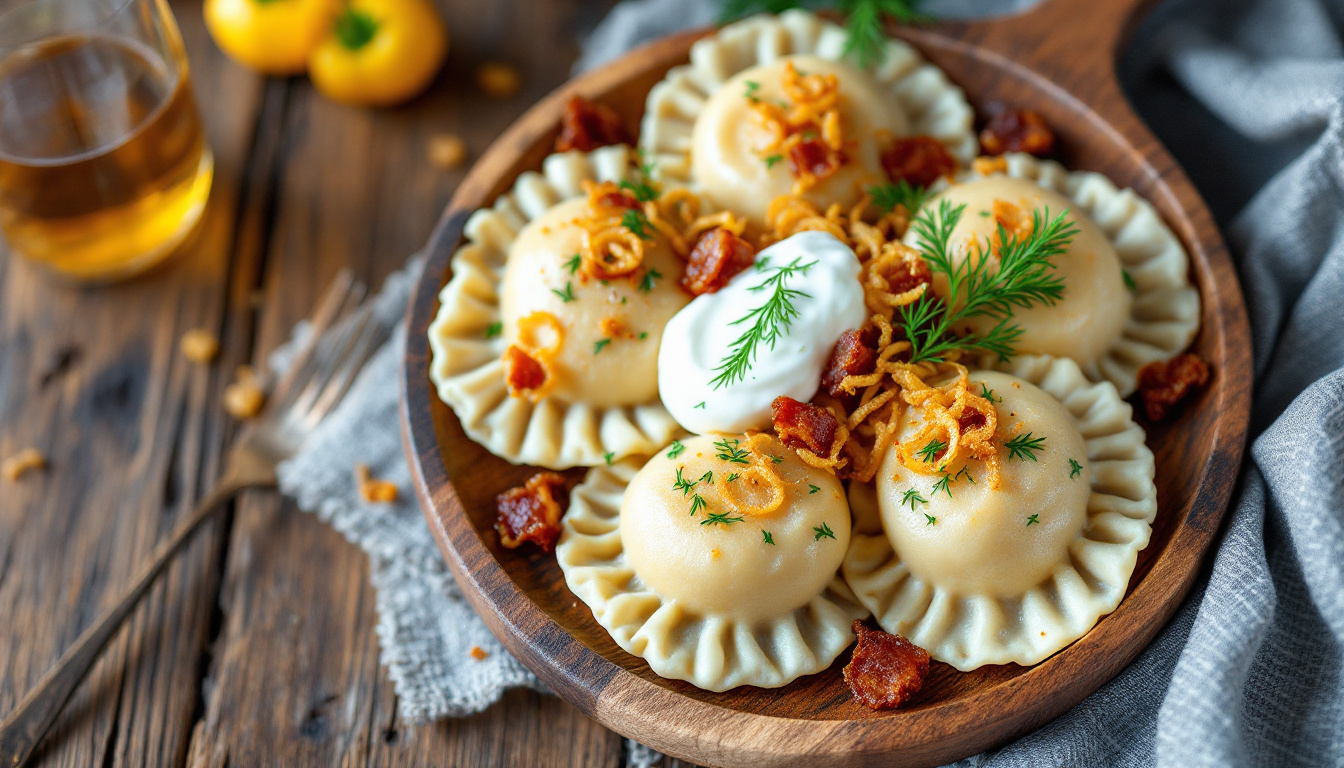
Mandu are Korea’s versatile dumplings, eaten steamed, pan-fried, or floating in soup. The filling leans on pork and tofu, glass noodles and plenty of garlic, and the kimchi version brings a sour, spicy kick. In winter they go into mandu-guk, a clear soup eaten for the Lunar New Year, while king-sized wangmandu are sold as a street snack. They’re a staple of any home and any market in Seoul. Steamed keeps them tender; fried gives you the crunch.
7. Momo
Momo are the Himalayan dumplings of Nepal and Tibet, steamed parcels served with a fiery tomato-and-chili dip called achar. The filling is usually water buffalo, chicken or spiced vegetables, folded into a pleated round or a half-moon. They’re the ultimate street food across Kathmandu, sold from carts and tiny shopfronts, and they have traveled the world with Himalayan communities. A plate of ten with extra achar is a perfect cheap meal. Fried kothey momo add crunch, but steamed is the original and the best.
8. Varenyky вареники
Varenyky are Ukraine’s dumplings, soft and stuffed with potato, curd cheese or, in summer, sour cherries. They’re boiled and served with smetana and fried onions, savory or sweet by filling, and the city of Cherkasy even has a monument to them. They are close kin to pierogi, and arguing over which is better is an old cross-border sport. You will find them on every home table and in every Ukrainian canteen. Taste their full context in our guide to Ukrainian food.
9. Wonton 雲吞
Wonton are Cantonese dumplings with a silky thin skin, most famous swimming in a clear soup. A nugget of shrimp and pork is wrapped loosely so the skin ruffles like a goldfish tail, then dropped into broth with springy egg noodles to make wonton mein. Fried wontons are the snack version, crisp and dipped in sweet-and-sour sauce. The best bowl is at a no-frills noodle shop in Hong Kong, slurped at a shared table. Look for skins that are barely there and shrimp that snaps. The dim sum cousin to know is har gow, a translucent crystal dumpling that wraps the same shrimp in a see-through skin.
10. Manti
Manti are the dumplings of Turkey and Central Asia, and the two versions could not look more different. Turkish manti are tiny, a dozen to a spoon, drowned in garlicky yogurt and drizzled with chili-and-mint butter. Central Asian manty are fist-sized, steamed in tiered trays and stuffed with lamb and onion or pumpkin, a steppe staple you can read about in our Kazakhstan guide. Both run on the same idea at wildly different scale. The yogurt-sauced Turkish ones are the showstopper.
11. Bánh Bột Lọc
Bánh bột lọc are Vietnam’s translucent dumplings, little chewy parcels you can almost see through. A tapioca-starch dough is wrapped around a whole shrimp and a bit of pork, then steamed or boiled until clear and bouncy, sometimes folded in a banana leaf. They come from the old imperial city of Hue and are served with a sharp dipping fish sauce. The texture is the whole point, slippery and springy at once. They are one of the great small bites in central Vietnam.
12. Ravioli
Ravioli are Italy’s filled pasta, squares of thin dough pressed around ricotta and spinach or meat. Dressed simply in sage butter or a light tomato sauce, they let the filling and the pasta talk, and the region sets the shape: tortellini in Bologna, agnolotti in Piedmont, casoncelli in Bergamo. The best are handmade, with dough you can almost see through. Italians would bristle at the word dumpling, but that’s exactly what they are. Find them freshly rolled across Italy.
13. Samosa
Samosas are South Asia’s iconic fried dumpling, crisp pastry triangles packed with spiced potato and peas. The pastry is folded into a cone, filled, sealed and deep-fried until blistered and golden, then served scalding with mint and tamarind chutney. They are the default street and teatime snack across India, sold from glass cases on every corner. Purists argue a fried turnover is not really a dumpling, but every dumpling list includes it for a reason. Eat them hot. A lukewarm samosa is a sad thing.
14. Siomai siu mai
Siomai are open-topped dumplings, a dim sum classic the Philippines turned into a street-food obsession. The Cantonese siu mai is a little cup of pork and shrimp topped with crab roe, steamed in its frilly wrapper. The Filipino version is bolder and everywhere, dunked in soy, calamansi and chili and eaten by the boxful. You will find both at carts and dim sum houses, but the street siomai of Manila is its own happy thing. A squeeze of calamansi makes it.
15. Pelmeni пельмени
Pelmeni are Siberia’s tiny meat dumplings, made by the hundred and frozen against the cold. A thin wrapper holds a small ball of minced pork, beef or lamb, and they are boiled fast and served with smetana, butter, vinegar or just black pepper. Traditionally families folded them together and stored them outside in the snow through the winter. They’re smaller and meatier than varenyky, and meant to be eaten by the bowlful. Simple, filling and built for a hard climate.
16. Maultaschen
Maultaschen are Germany’s big Swabian dumplings, pasta pockets stuffed with meat, spinach and breadcrumbs. Legend says monks invented them to hide meat from God during Lent, earning the nickname Herrgottsbscheißerle, little God-foolers. They’re served sliced in clear broth, or pan-fried with onions, and one portion is the whole meal. Bigger and breadier than ravioli, they are pure southern German comfort food. They headline the regional cooking in our Germany guide.
17. Knedlíky
Knedlíky are Czech dumplings, but not the stuffed kind: these are loaves of bread or potato dough, boiled and sliced. They exist to soak up sauce, the soft slices mopping the gravy from svíčková or the juices of a goulash. There are bread (houskové) and potato (bramborové) versions, plus a fruit-filled sweet one for dessert. To a Czech, a plate of svíčková without knedlíky is unthinkable. They anchor the beer-hall cooking in our Czech Republic guide.
18. Gnocchi
Gnocchi are Italy’s pillowy potato dumplings, soft little lumps ridged to catch the sauce. Made from potato, flour and egg, they are boiled until they float, then dressed with sage butter, tomato or a slow ragu; the semolina-based gnocchi alla romana is baked instead. In Rome, Thursday is traditionally gnocchi day, a rhythm the old trattorias still keep. Good ones are light, not gluey, which is harder than it sounds. Order them where they are made in-house.
19. Shish Barak
Shish barak are the Levant’s dumplings in yogurt, small meat parcels simmered in a warm garlicky sauce. The little dough pockets are stuffed with spiced minced lamb or beef, baked or fried, then cooked gently in laban (cooked yogurt) with garlic and dried mint so the sauce stays smooth. It’s a labor-of-love home dish, made for a family gathering rather than a quick lunch. Think of Turkish manti’s richer Arab cousin. You will meet them around a Lebanon table.
20. Empanadas
Empanadas are Latin America’s handheld dumplings, baked or fried pastries crimped around a savory filling. In Argentina the classic is spiced beef with a braided edge called repulgue, and every province has its own crimp and filling, from Salta’s juicy ones to ham and cheese. Across the border in Colombia they go corn-based and deep-fried, eaten with ají. They’re picnic and party food, eaten by hand and impossible to stop at one. The crimp tells you where it was made.
Where dumplings come from: a quick world map
Dumplings were invented many times over, but China is the homeland, where jiaozi go back roughly 1,800 years and branch out into wonton, siu mai, fluffy baozi buns and soup dumplings. From there the idea traveled the trade routes. Manti and manty spread across Central Asia and Anatolia, momo climbed into the Himalayas, and the filled-dough habit ran deep into Eastern Europe as pierogi, varenyky and pelmeni.
Italy arrived at ravioli and gnocchi on its own, the Levant at shish barak in yogurt, and Latin America at the empanada by way of Spanish and Arab baking. Almost every cuisine, it turns out, ended up wrapping dough around something good. That shared idea is why a dumpling crawl works on nearly any continent.
How to eat dumplings like a local
The golden rule with dumplings is to eat them hot and to respect the soup ones. Soup dumplings will scald you if you rush, so give them a minute and open them with care rather than a careless bite. Most other dumplings want a light dip, not a drowning, and they are best ordered in rounds to share so each batch lands fresh off the steamer or out of the pan.
- Dip jiaozi and gyoza in vinegar first, soy second, and go easy. Do not drown them.
- Eat soup dumplings in one or two bites once cooled, never stabbed open on the plate.
- Khinkali is finger food. The top knob is a handle, not a course.
- Order in rounds to share, so each batch arrives hot rather than sitting and going gummy.
FAQ
What is the most popular dumpling in the world?
Chinese jiaozi and Japanese gyoza are the most widely eaten dumplings in the world, with dim sum versions like siu mai and wonton close behind. Xiao long bao top this ranking for sheer craft, while pierogi are the best-known dumpling in the West.
Which country has the best dumplings?
China makes the strongest case for the best dumplings in the world as the homeland of jiaozi, wonton and soup dumplings, with Georgia close behind for its hand-held khinkali. Poland, Japan and Korea round out the top tier.
Are samosas and empanadas really dumplings?
Samosas and empanadas are dumplings in the broad sense, since both wrap dough around a filling. Purists reserve the word for boiled or steamed dumplings and call these turnovers, but nearly every global dumpling list includes the most iconic fried ones, which is why they are here.
What is a good vegetarian dumpling?
Vegetable momo, potato-and-cheese pierogi ruskie, and the spiced-potato samosa are all naturally vegetarian. Jiaozi, gyoza and mandu also have common meat-free versions, though you should check, since many fillings and dipping sauces use pork or fish.
How do you eat soup dumplings without burning yourself?
Let them cool for about a minute, then nibble a small hole and sip the broth before eating the rest. For xiao long bao, rest the dumpling on a spoon first; for khinkali, hold the knob, bite, and slurp the juice before it spills.
More food guides waiting for you
Browse our complete collection of food travel guides and tips from around the world.