The best food to eat in Canada is not one cuisine but a country-sized patchwork: Quebec’s poutine and meat pies, the Atlantic’s lobster and cod, the prairies’ bison and saskatoon berries, British Columbia’s salmon and sushi, and the bannock and game of the Indigenous north. Add French, British, and a hundred immigrant traditions, and “Canadian food” turns out to be far more than maple syrup.
The dish that converted me was a 2 AM poutine in Montreal. Hot fries, squeaky cheese curds that actually squeak, gravy poured over so the curds half-melt. Canadian food rewards eating regionally: a lobster roll on a Nova Scotia wharf, a Montreal bagel still warm from the wood oven, a butter tart in small-town Ontario, each one local and specific in a way the rest of the world rarely associates with Canada.
This guide travels region by region, with what to eat where and what makes each dish worth seeking out. It sits in our Americas collection alongside our guides to Mexican food and beyond.
Why Canadian regional food deserves your attention
Canadian food deserves attention because it’s genuinely regional, shaped by a vast geography and layers of French, British, Indigenous, and immigrant cooking. The Atlantic lives on cold-water seafood, Quebec on French-Canadian comfort food and maple, the prairies on grain, beef, bison, and berries, British Columbia on Pacific salmon and a huge Asian influence, the north on game, fish, and bannock. There’s no single “Canadian dish” beyond poutine, and that variety is the point.
The cities tell the immigrant story too: Montreal’s Jewish delis and bagel bakeries, Toronto’s astonishing diversity, Vancouver’s Cantonese and Japanese cooking. Eat by province and the maple-syrup cliche disappears fast.
Quebec and French Canada
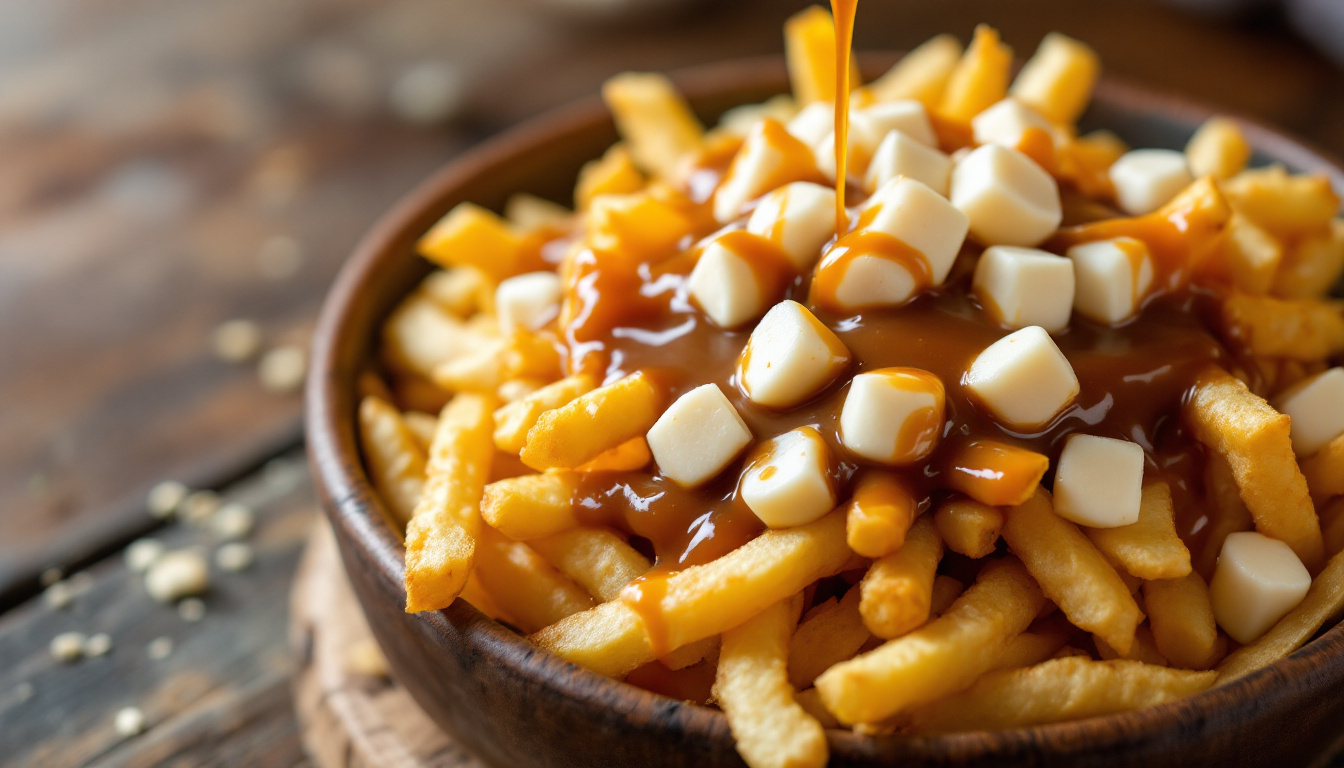
Poutine Poutine
Canada’s national dish: crisp fries topped with fresh cheese curds and a hot brown gravy poured over so the curds soften but still squeak. Born in rural Quebec snack bars (casse-croutes) in the late 1950s, it has spread everywhere and spawned endless variations: smoked meat, pulled pork, the Montreal Italian poutine. The curds must be fresh. If they don’t squeak, it isn’t right.
CAD 8 to 14. La Banquise in Montreal serves it around the clock in dozens of versions, but a roadside casse-croute does the classic best.
Tourtiere Tourtiere
A double-crusted meat pie of spiced ground pork (or a mix with beef, veal, or game), seasoned with cinnamon, clove, and allspice, traditionally eaten on Christmas Eve after midnight mass (the reveillon). The Saguenay-Lac-Saint-Jean version is a deep, layered meat-and-potato pie. Warm, savory, the taste of a Quebec winter.
CAD 12 to 20. Served with ketchup or a fruit relish, it’s comfort food at its most French-Canadian.
- Montreal smoked meat. Brisket cured for days, smoked, steamed, and hand-sliced onto rye with mustard, the deli icon of Schwartz’s since 1928, a cousin of pastrami but its own thing.
- Montreal bagel. Smaller, denser, and sweeter than a New York bagel, boiled in honey water and baked in a wood-fired oven; St-Viateur and Fairmount sell them hot 24 hours a day.
- Pouding chomeur and creton. “Unemployed person’s pudding,” a Depression-era cake in maple or caramel syrup, and creton, a spiced pork spread eaten on toast at breakfast.
- Pea soup and the sugar shack. Habitant yellow split-pea soup, and the cabane a sucre (sugar shack) feast in spring, where maple syrup is poured hot over snow to make maple taffy (tire sur la neige).
Atlantic Canada: lobster, cod and comfort by the ocean
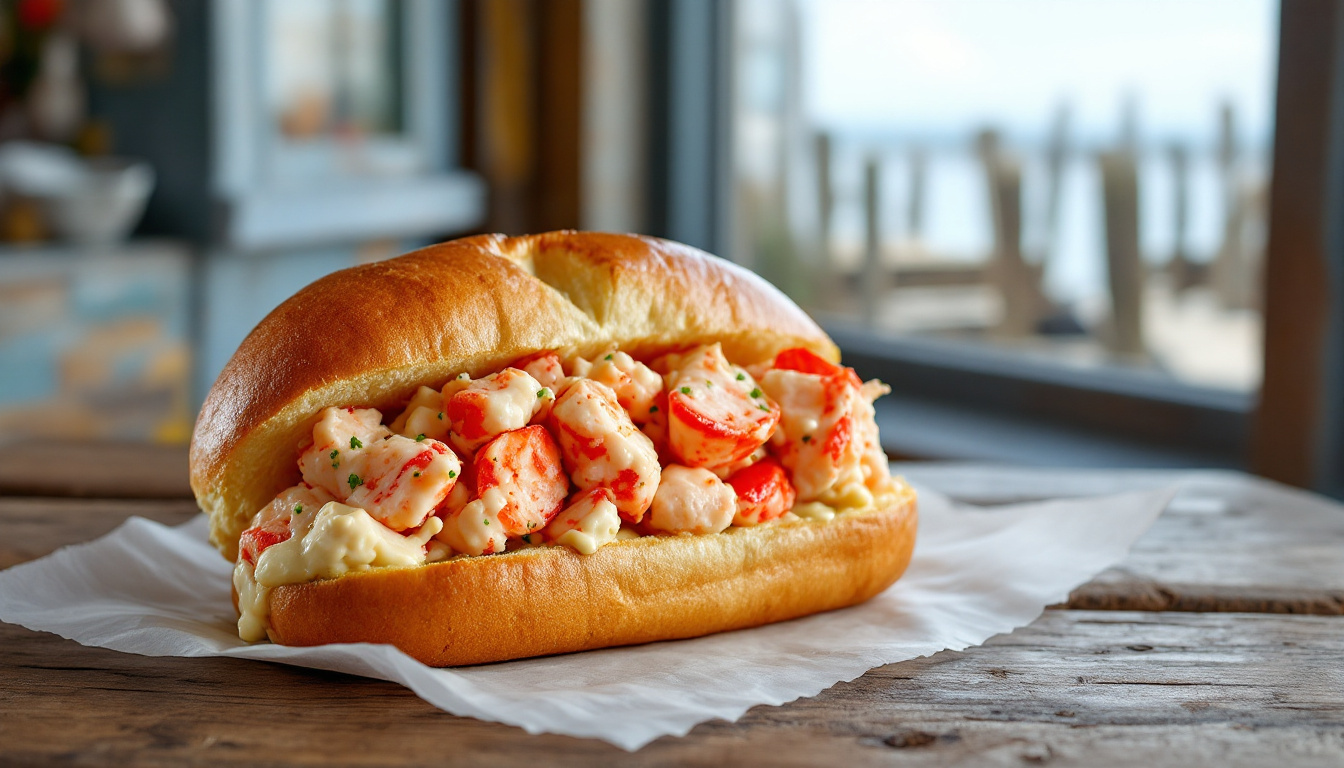
Lobster Roll Lobster roll / lobster supper
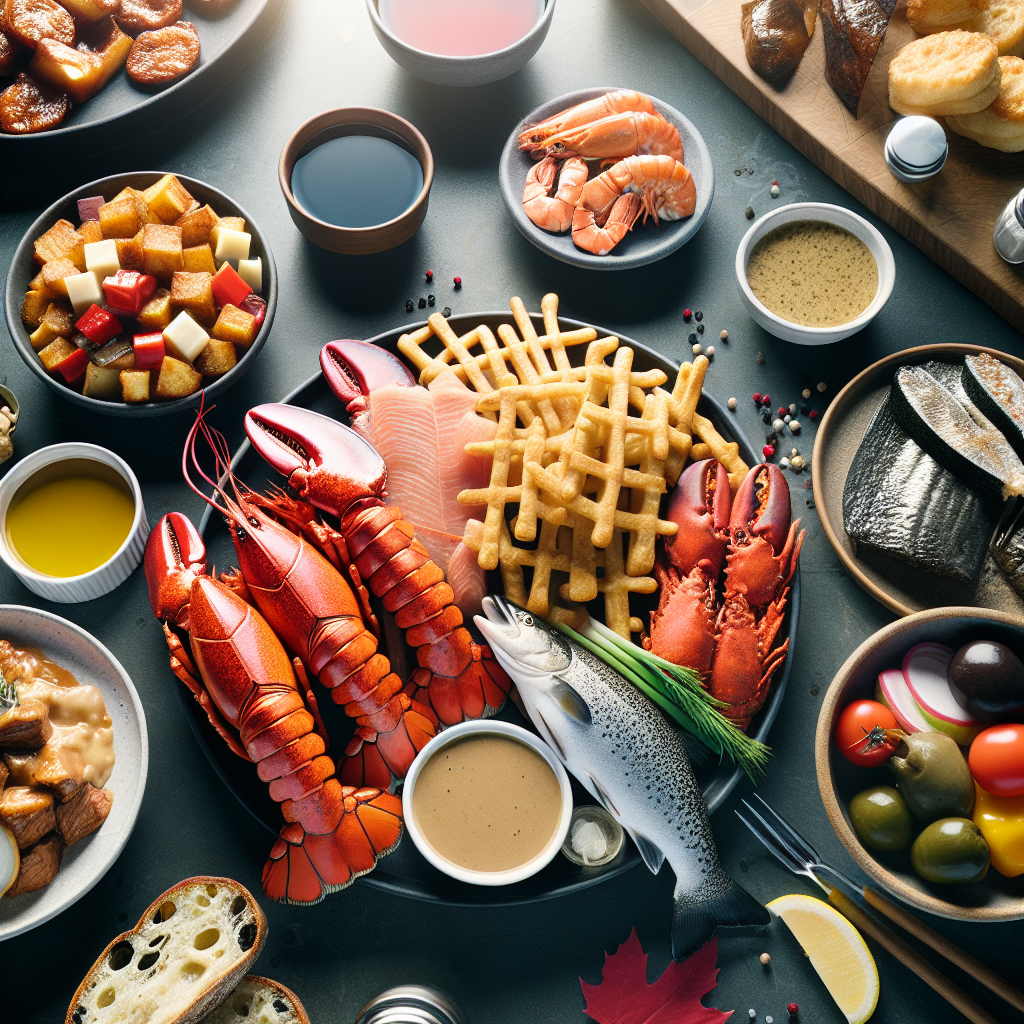
Sweet Atlantic lobster, lightly dressed (a touch of mayo or just warm butter), piled into a soft buttered and griddled bun. The Maritimes pull the best cold-water lobster in the world. A roll eaten at a harbor shack in summer, or a full PEI “lobster supper” with a whole steamed lobster and sides, is the regional highlight.
CAD 18 to 32 for a roll; more for a whole-lobster supper. Cheapest and best near the boats in Nova Scotia, PEI, and New Brunswick.
- Halifax donair. The official food of Halifax: spiced beef shaved off a spit into a pita with a sweet, garlicky condensed-milk sauce, a uniquely Maritime take on the doner.
- Newfoundland classics. Cod (fresh, as cod au gratin, or salt cod), fish and brewis (cod with hardtack), Jiggs dinner (a boiled salt-beef-and-vegetable Sunday dinner), and toutons (fried dough with molasses).
- Rappie pie and Acadian food. The Acadian rappie pie (rapure), a savory grated-potato-and-meat casserole, plus chowders and seafood stews along the coast.
- Dulse and Solomon Gundy. Dried purple seaweed eaten as a snack, and pickled herring, the salty edges of Maritime eating.
Central Canada and the Prairies
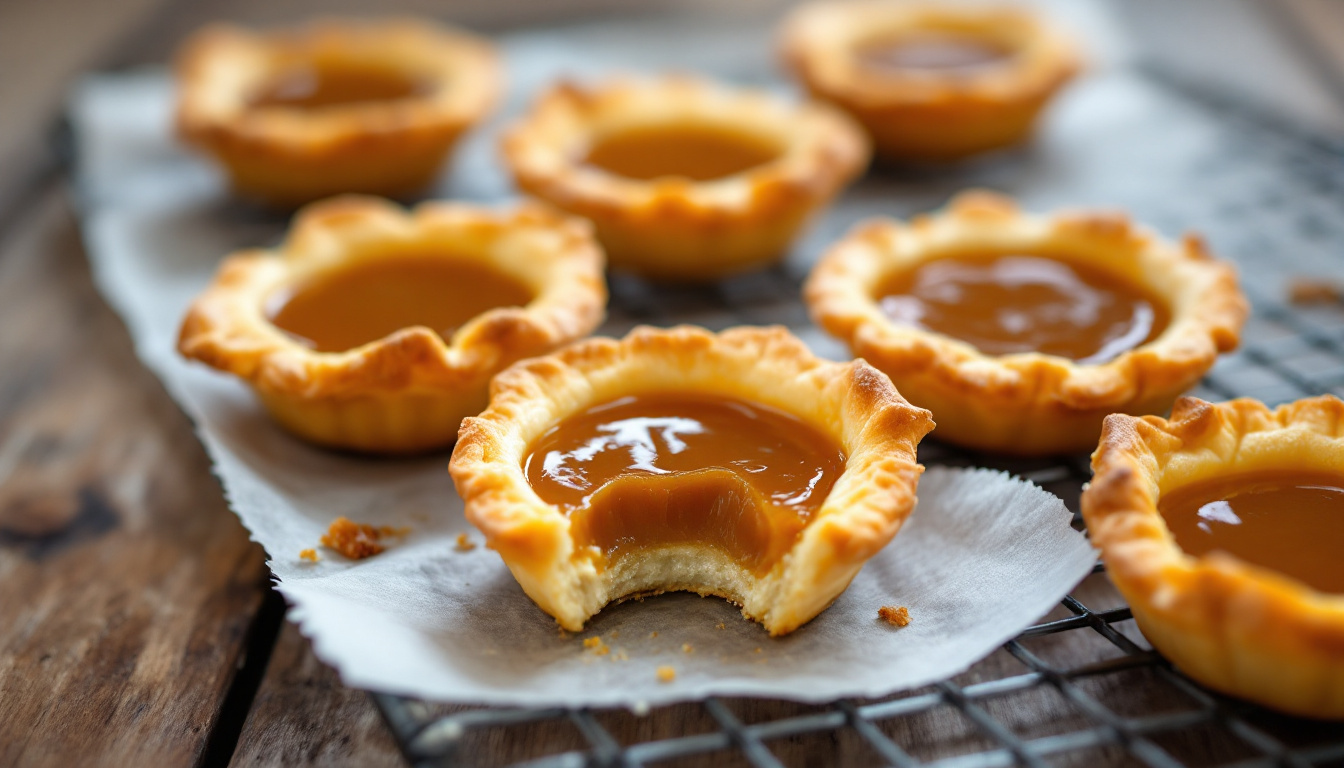
Butter Tarts Butter tarts
A small flaky pastry shell filled with a gooey butter, sugar, and egg filling, baked until the top crackles. One of Canada’s oldest and most beloved sweets, and the subject of a genuine national argument. Runny or firm? Raisins or no raisins? Pecans or plain? Ontario even has a butter tart trail you can drive.
CAD 2 to 5 each. The runny, raisin-free version has the most fervent defenders.
- Peameal bacon. Canada’s “back bacon,” lean cured pork loin rolled in cornmeal, sliced and griddled; the peameal bacon sandwich is a Toronto St. Lawrence Market institution.
- Bison and Alberta beef. Lean, rich bison burgers and steaks, and Alberta’s famous grain-fed beef, the prairie’s grilling pride.
- Saskatoon berry pie and flapper pie. A pie of the sweet, almondy prairie saskatoon berry, and flapper pie, a graham-crust custard pie with meringue beloved across the prairies since the 1920s.
- Ketchup chips and Nanaimo-style treats. The bright-red, tangy potato chip that is almost a national symbol, and the prairie-and-beyond love of date squares (matrimonial cake).
British Columbia and the West Coast
Wild Pacific Salmon BC salmon
Wild sockeye, spring, and coho salmon from the Pacific, at its best grilled on a cedar plank, smoked (often candied with maple), or, in the Indigenous tradition, cooked on stakes around an open fire. BC’s cold, clean waters also give spot prawns, Dungeness crab, and oysters. The foundation of a superb West Coast seafood scene.
Market price, and worth it in season. Pair with a glass of Okanagan wine.
- Nanaimo bar. The famous no-bake bar from Nanaimo, BC: a coconut-graham-nut base, custard buttercream middle, and chocolate ganache top. Sweet, rich, and unmistakable.
- Sushi and the Japadog. Vancouver’s huge Japanese influence gives it some of the best sushi outside Japan, the BC roll (salmon skin), and the Japadog, a Japanese-topped street hot dog.
- West Coast farm-to-table. Vancouver and the islands lead Canada’s farm-to-table and foraging movement: wild mushrooms, sea asparagus, and local everything.
Northern and Indigenous Canada
- Bannock. The pan-fried or baked quick bread central to many First Nations, Metis, and Inuit communities, eaten plain, with stew, or fried as a base for the “Indian taco.”
- Game meats. Moose, caribou, venison, and elk, hunted and slow-cooked into stews and roasts across the north and rural Canada.
- Arctic char and northern fish. A rich, salmon-like fish from cold northern waters, plus whitefish and pickerel from the lakes, often smoked or grilled.
- Foraged and traditional foods. Berries, fireweed, and country food traditions, increasingly celebrated in modern Indigenous-led restaurants.
Sweets, snacks and drinks
- BeaverTails. Fried, stretched whole-wheat dough shaped like a beaver’s tail, dusted with cinnamon sugar or topped with chocolate and banana, the great Canadian fairground and Rideau Canal skating snack.
- Maple everything. Canada makes most of the world’s maple syrup; try it as taffy on snow, in maple cookies, candy, and poured over a sugar-shack breakfast.
- The Caesar. Canada’s national cocktail, invented in Calgary in 1969: vodka, clamato (clam-tomato juice), hot sauce, and Worcestershire, with a celery stick and an ever-more-elaborate garnish.
- Ice wine, craft beer and the double-double. Niagara and Okanagan ice wine, a booming craft-beer scene, and the Tim Hortons “double-double” coffee that is a cultural institution in itself.
Best food cities in Canada
Canada’s food capital: poutine, smoked meat at Schwartz’s, wood-fired bagels at St-Viateur, the Jean-Talon market, a world-class restaurant scene (Joe Beef), and deep French-Canadian and Jewish-deli roots.
One of the most multicultural food cities on earth: peameal bacon at St. Lawrence Market, Kensington Market, and some of the best Chinese, South Asian, and Caribbean food in the country alongside the Canadian classics.
Vancouver for Pacific salmon, world-class sushi, and farm-to-table; Halifax for the donair, fresh lobster and scallops, and the seafood of the whole Atlantic coast.
Quebec City for tourtiere, sugar shacks, and old-French cooking; Calgary, Edmonton, and Saskatoon for Alberta beef, bison, saskatoon berries, and a surprising modern dining scene.
Best food to eat in Canada: the dish guide with regions and ratings
| Dish | Type | Region | Notes | Must-try |
|---|---|---|---|---|
| Poutine | Street food | Quebec / national | National dish | ★★★★★ |
| Tourtiere | Meat pie | Quebec | Christmas Eve | ★★★★★ |
| Montreal smoked meat | Deli | Montreal | On rye, mustard | ★★★★★ |
| Montreal bagel | Bread | Montreal | Wood-fired, honey-boiled | ★★★★★ |
| Lobster roll | Seafood | Atlantic | Eat on a wharf | ★★★★★ |
| Halifax donair | Street food | Nova Scotia | Sweet garlic sauce | ★★★★☆ |
| Butter tarts | Dessert | Ontario | Runny vs firm | ★★★★★ |
| Peameal bacon sandwich | Sandwich | Toronto | St. Lawrence Market | ★★★★☆ |
| Saskatoon berry pie | Dessert | Prairies | Prairie berry | ★★★★☆ |
| Nanaimo bar | Dessert | British Columbia | No-bake, 3 layers | ★★★★★ |
| Wild Pacific salmon | Seafood | British Columbia | Cedar-planked | ★★★★★ |
| Bannock | Bread | Indigenous / north | Fried or baked | ★★★★☆ |
| BeaverTails | Dessert | Nationwide | Fried dough, cinnamon | ★★★★☆ |
| Maple syrup / taffy | Sweet | Quebec | Sugar shack | ★★★★★ |
| Caesar (cocktail) | Drink | Nationwide | National cocktail | ★★★★☆ |
How to eat in Canada
- Eat regionally. Lobster in the Atlantic, poutine and smoked meat in Quebec, salmon and sushi in BC, bison and berries on the prairies; the dish is tied to the place.
- Tipping is expected. Standard is 15 to 20 percent at restaurants and bars; tip on the pre-tax total. Service is not included.
- Cheese curds must squeak. Fresh curds are the soul of poutine; if they do not squeak, the poutine is second-rate.
- Try the sugar shack in spring. The cabane a sucre season (late winter to early spring) is the time for maple taffy on snow and a full Quebec maple feast.
- Coffee is Tim Hortons code. A “double-double” is two creams and two sugars; ordering one fluently is a small Canadian rite of passage.
For dining customs across other countries, see our guide to food etiquette around the world.
How to eat well in Canada on any budget
Prices throughout this guide are 2026 figures in Canadian dollars. The loonie trades around CAD 1.40 to the US dollar, so a CAD 20 lobster roll is roughly $14 and a CAD 12 poutine about $8.50. Canada is not a cheap country to eat out in, but the iconic dishes sit at the casual end.
Budget: street and market
A poutine from a casse-croute, a Montreal bagel with cream cheese, a peameal bacon sandwich at the market, BeaverTails at a festival, a Tim Hortons coffee. Canada’s casual food is filling and affordable even when restaurants aren’t.
Mid-range: diners and delis
Smoked meat at Schwartz’s, a lobster roll on the coast, a butter tart and a craft beer, and a sit-down regional dinner. The deli-and-diner tier delivers the iconic dishes without splurging.
High-end: world-class dining
Montreal (Joe Beef), Toronto, and Vancouver hold their own internationally, with celebrated farm-to-table and Indigenous-led restaurants reinterpreting Canadian ingredients. Niagara and Okanagan wineries add destination dining with ice wine.
Frequently asked questions about Canadian food
What is the national dish of Canada?
Poutine, the dish of fries, fresh cheese curds, and hot gravy that began in 1950s rural Quebec, is widely considered Canada’s national dish. Maple syrup, the Atlantic lobster roll, butter tarts, and tourtiere are the other strongest national-food symbols.
What is poutine and where is it best?
Poutine is crisp fries topped with fresh cheese curds and a hot brown gravy poured over so the curds soften and squeak. It is best in Quebec, where it was invented; La Banquise in Montreal serves dozens of versions 24 hours a day, but a roadside casse-croute does the classic perfectly.
What is the difference between a Montreal bagel and a New York bagel?
A Montreal bagel is smaller, denser, sweeter, and has a bigger hole; it is boiled in honey-sweetened water and baked in a wood-fired oven, giving it a slightly crisp, sweet, smoky character. A New York bagel is larger, fluffier, saltier, and steam-baked. St-Viateur and Fairmount in Montreal are the icons.
Is Canadian food just poutine and maple syrup?
No. Canada is intensely regional: Atlantic lobster and cod, Quebec meat pies and smoked meat, prairie bison and saskatoon berries, BC salmon and sushi, and Indigenous bannock and game. Its big cities also offer some of the best immigrant cuisines in the world. Poutine and maple are just the start.
What is a Caesar cocktail?
The Caesar is Canada’s national cocktail, invented in Calgary in 1969: vodka, Clamato (a clam-and-tomato juice), hot sauce, and Worcestershire, served in a salt-rimmed glass with celery and increasingly elaborate garnishes. It is similar to a Bloody Mary but distinctly Canadian.
When is sugar shack (cabane a sucre) season?
Late winter into early spring, roughly March, when the sap runs. Quebec sugar shacks serve a hearty maple feast and pour hot syrup over snow to make maple taffy (tire sur la neige). It is one of the great seasonal food experiences in Canada.
More food guides waiting for you
Browse our complete collection of food guides from the Americas.