Texas brisket, New York pizza, New Orleans gumbo and Hawaiian poke: a region-by-region guide to what to eat across the United States, where to find it, and what it costs.
My best meal in the States was eaten off a paper tray at a Texas gas-station smokehouse at 8 a.m. Brisket with a black pepper bark, white bread and pickles, no plate, no fork. The best food to eat in the USA is regional, and that’s the one thing most visitors get wrong. America doesn’t have a national dish; it has a few dozen of them, each tied to a place, a people, and a wave of immigration. The fast food the country exported is the least interesting thing it cooks. Drive from a Texas smokehouse to a New Orleans gumbo pot to a Honolulu poke counter and you cross more culinary distance than most continents offer.
Why American food is bigger than burgers and fast food
American food is one of the world’s most regional cuisines, and writing it off as burgers and chains misses almost all of it. The country is the size of a continent, and its cooking was built in layers: the corn, beans, squash, and wild game of Native America; the rice, okra, and slow-cooked greens that enslaved West Africans turned into Southern and soul food; and the kitchens of every immigrant group that followed.
Italians built the pizza of New York and New Haven. Germans brought the hot dog and the hamburger. Chinese, Mexican, Vietnamese, and Korean cooks reshaped whole cities. The result is food with no single accent. Texas barbecue has nothing to do with a Maine lobster shack, and New Mexican green chile has nothing to do with a Chicago hot dog. They’re all American, and that contradiction is the point.
For a traveler, the move is to eat by region. This guide runs through the dishes that define the country, then breaks the USA into its food regions so you know what to order where. Each one rewards going local over going to a chain. The United States is also one stop on our wider guide to the best food in the Americas.
The best food to eat in the USA, dish by dish
These are the dishes I send every visitor after, with a rough 2026 price and the region each belongs to. Prices are in US dollars and reflect a sit-down or counter meal, not a fine-dining markup.
Cheeseburger
The cheeseburger is America’s gift to the world, and the best version isn’t at a chain but at a roadside griddle or a city tavern. A proper one is a thin, smashed patty with a crisp seared crust, American cheese, and a soft bun, or a thick pub burger cooked to order. Regional styles run deep: the Oklahoma onion burger, the California In-N-Out style, the New Mexico green chile cheeseburger. Order it with fries and a milkshake and you have the most American meal there is.
Barbecue
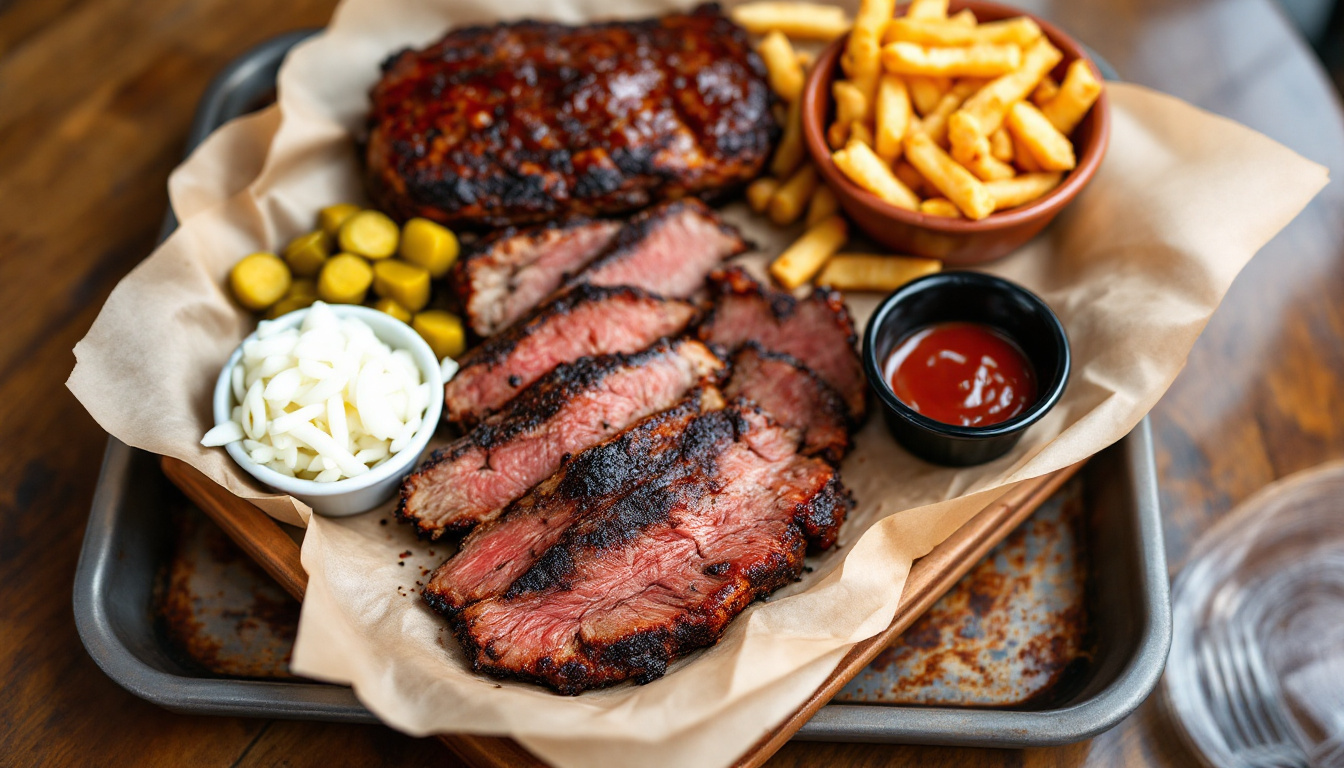
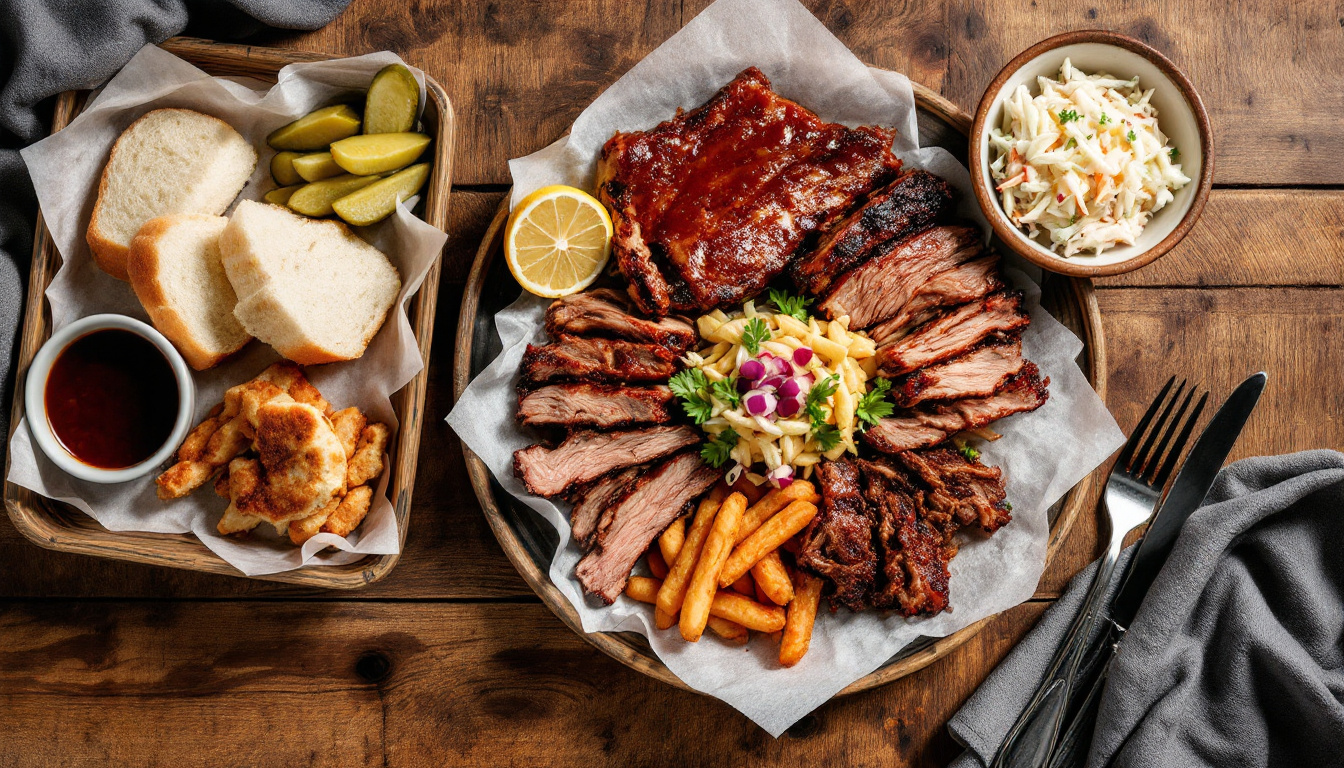
Barbecue is meat smoked low and slow over wood, and it changes completely from state to state. Texas is about beef brisket rubbed with salt and pepper and smoked for 12 to 16 hours. The Carolinas pull pork and dress it with a thin vinegar or mustard sauce. Memphis does dry-rubbed ribs, and Kansas City glazes everything in sweet, thick sauce. This isn’t a sauce on grilled meat. It’s an all-day craft. Find a smokehouse with a wood pile out back and a line by 11 in the morning.
Southern fried chicken
Southern fried chicken is buttermilk-soaked, seasoned, and fried to a shattering crust, and it’s the benchmark of American comfort food. The tradition is deeply tied to Black Southern cooking, served with collard greens, mac and cheese, and a biscuit. For heat, seek out Nashville hot chicken, fried then brushed with a fierce cayenne paste and laid on white bread with pickles. It started at Prince’s in Nashville and has since taken over the country.
New York pizza
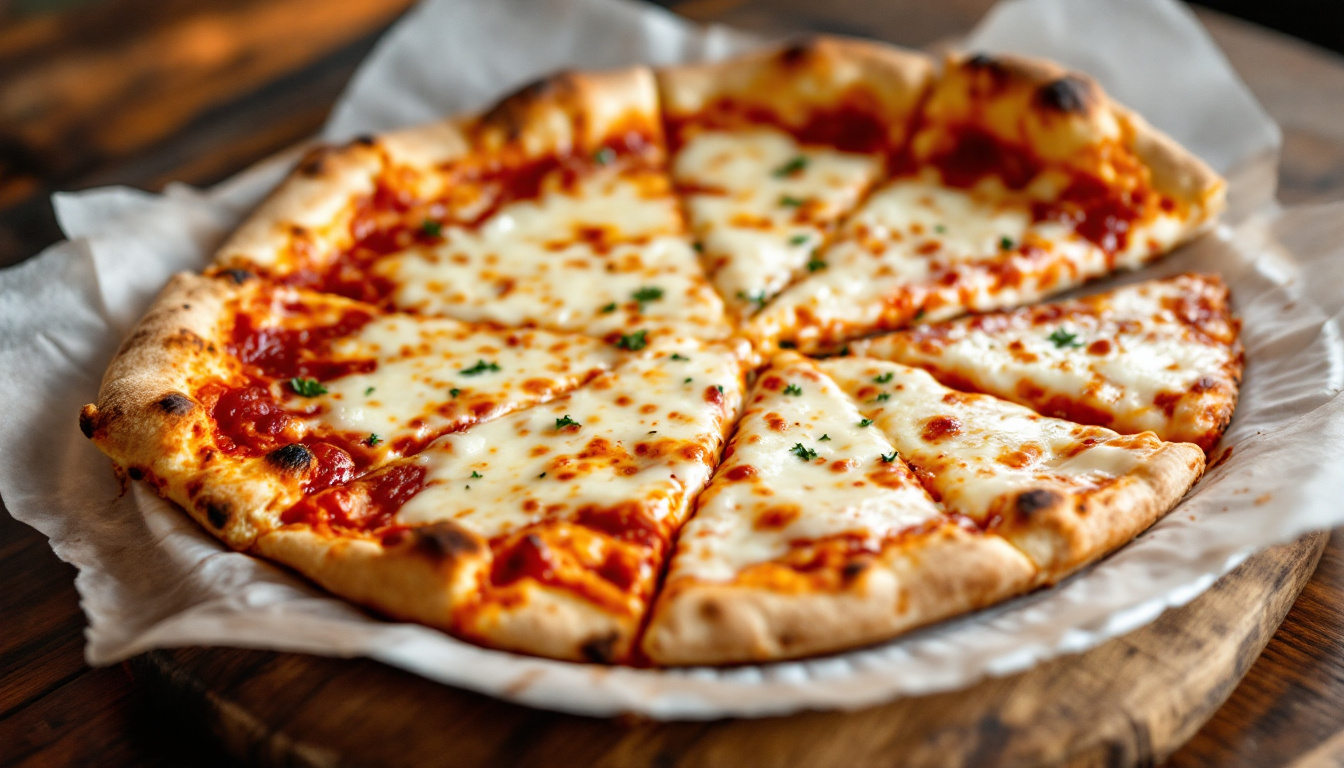
New York pizza is a wide, thin, foldable slice sold by the cut from a corner shop, and it’s the everyday genius of American-Italian cooking. The crust is crisp but pliable, the cheese and sauce balanced, and the move is to fold it lengthwise and eat it walking. Chicago does the opposite with deep-dish, a buttery, casserole-style pie layered with cheese and chunky tomato that you eat with a fork. New Haven, Connecticut quietly makes some of the best charred-crust pizza in the country. The slice is just the start of New York’s street-food story, so dig into our full guide to the best food in New York City, from bagels and pastrami to the bodega and the halal cart.
Chicago deep-dish and the Midwest
Chicago deep-dish is pizza turned into a casserole: a tall, buttery crust pressed into a pan, lined with mozzarella, loaded with sausage or vegetables, and topped (not bottomed) with chunky tomato sauce, baked until it needs a knife, a fork and a wait. Pizzeria Uno claims the 1943 original; locals argue Lou Malnati’s and stuffed-pizza joints do it better. The wider Midwest rewards a detour: Wisconsin squeaky fried cheese curds, beer brats simmered in lager and served with kraut and mustard, and the Chicago-style hot dog (yellow mustard, relish, onion, tomato, pickle, sport peppers, celery salt, never ketchup). Hearty, unfussy, and proudly its own thing.
Philly cheesesteak
A Philly cheesesteak is thinly sliced griddled beef piled into a long hoagie roll with melted cheese, and ordering it has its own grammar. You ask for it “wit” or “witout” onions, and the cheese is Provolone, American, or, divisively, Cheez Whiz. Messy, hot, and meant to be eaten fast. Philadelphia takes it seriously enough that the rivalry between its famous corner shops is a genuine local argument.
Hot dog
The hot dog is street food with strict regional rules nobody dares break. A Chicago dog is dragged through the garden: yellow mustard, neon-green relish, onion, tomato, a pickle spear, sport peppers, and celery salt on a poppyseed bun. And never, ever ketchup. New York keeps it simple with mustard and sauerkraut or onions from a cart. Detroit and the Carolinas pile on chili. Eat one at a ballgame and it tastes better than it has any right to.
Buffalo wings
Buffalo wings are deep-fried chicken wings tossed in a sauce of hot sauce and butter, served with celery and blue cheese dressing, and they were invented at the Anchor Bar in Buffalo in 1964. The classic is medium heat, but the scale runs from mild to genuinely punishing. They’re bar food at its best, built for a cold beer and a game on the screen. Skip the boneless version, which is just a chicken nugget in disguise.
Clam chowder and lobster roll
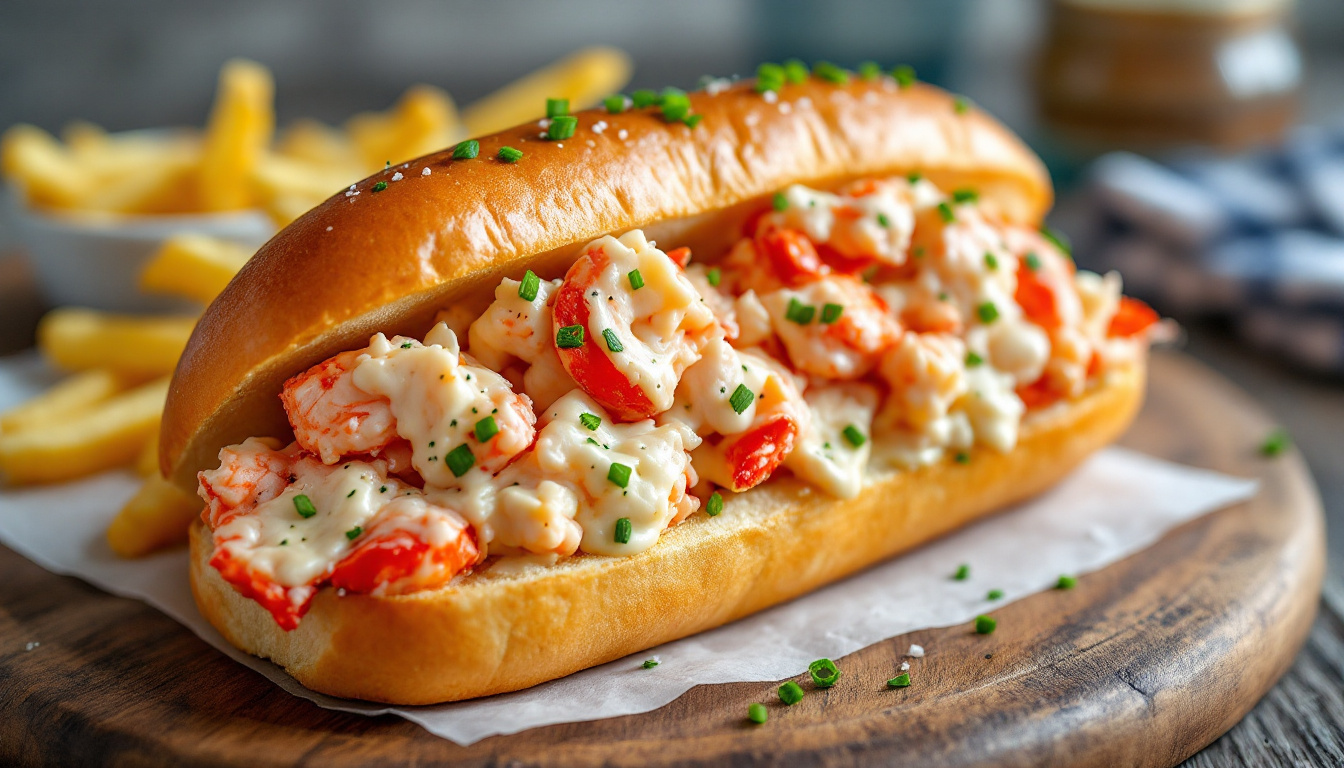
New England seafood peaks with clam chowder and the lobster roll, the twin tastes of the northeastern coast. Clam chowder here is creamy and white, thick with clams and potatoes, a Boston staple since the 1700s. The Maine lobster roll is almost nothing: fresh-picked lobster meat, a little mayo or warm butter, chives, and a toasted split-top bun. Eat it at a coastal shack in summer with the lobster landed that morning. Manhattan’s red, tomato-based chowder is a different and lesser thing.
Gumbo and jambalaya
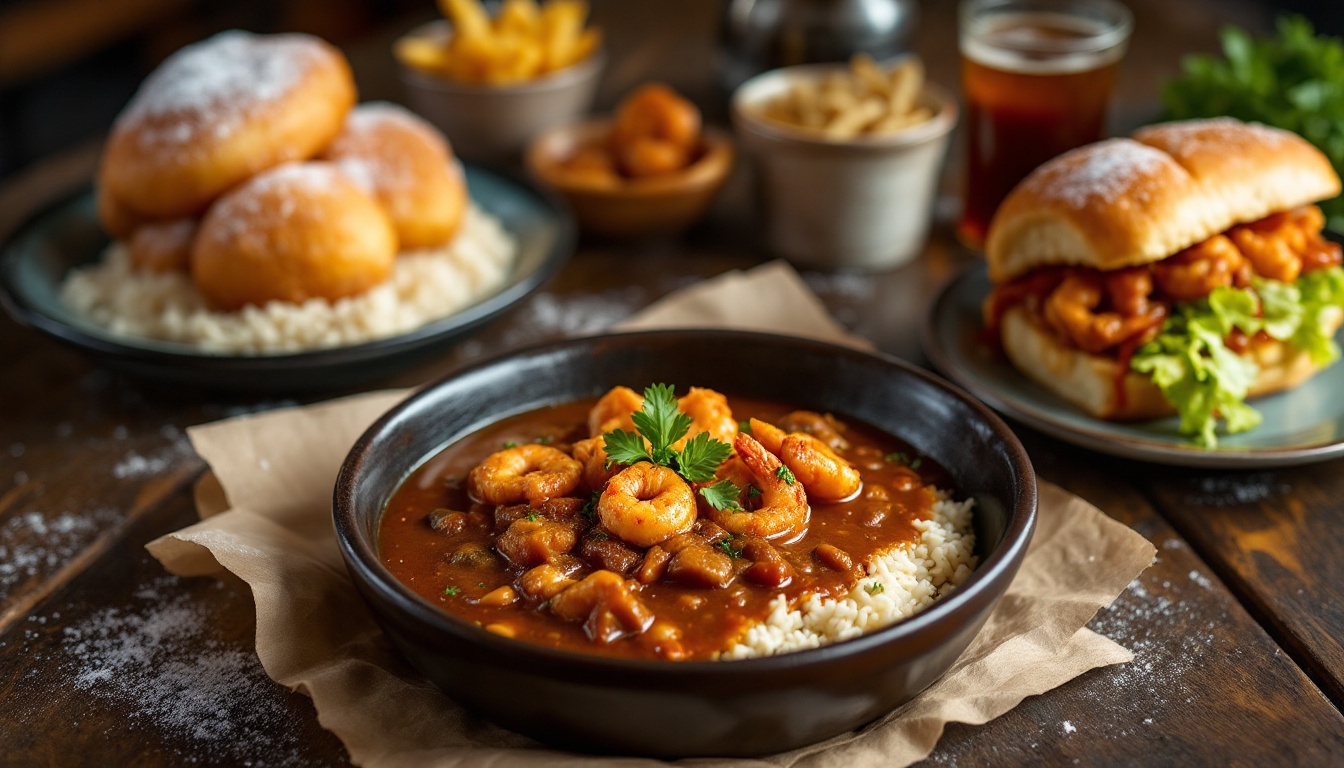
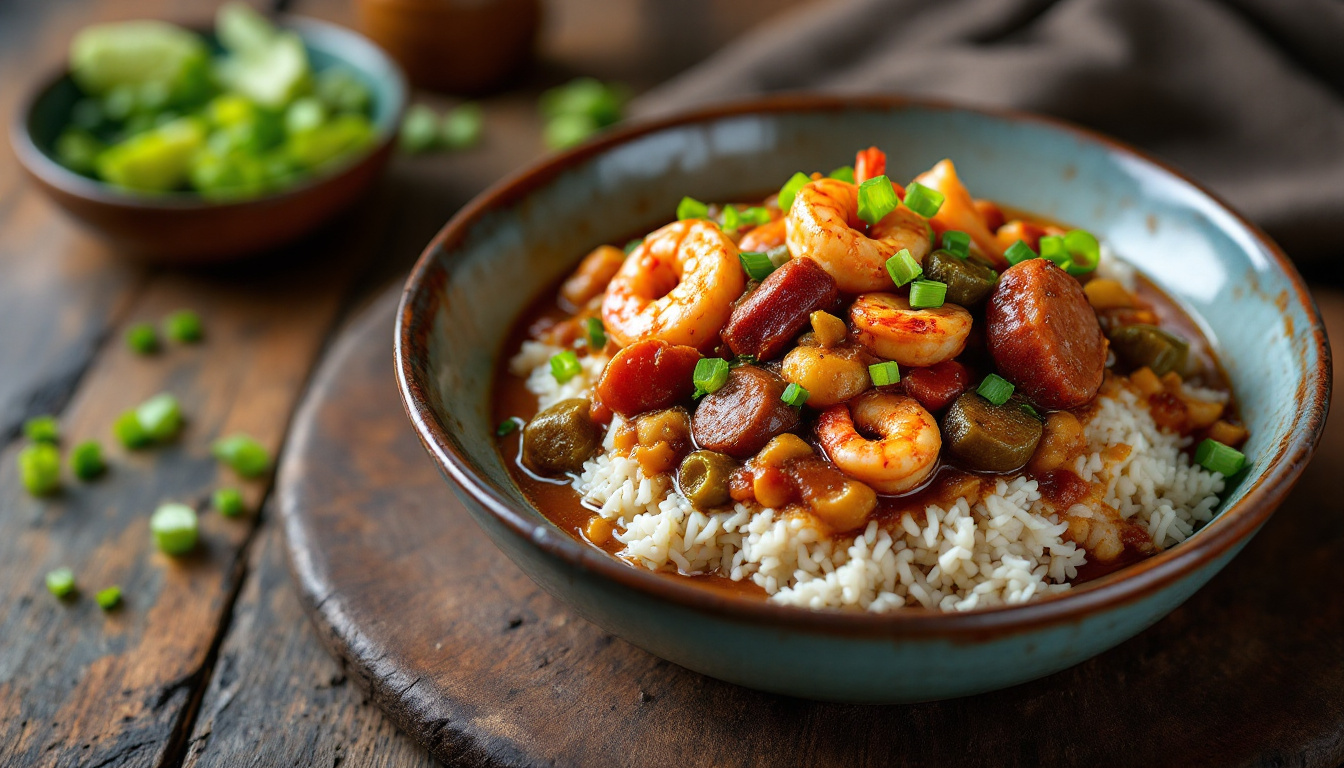
Gumbo is Louisiana’s deep, dark stew of seafood or sausage and chicken, thickened with a slow-cooked roux and served over rice, and it carries Indigenous, French, Spanish, and West African roots in one pot. Its cousin jambalaya cooks the rice right in with the meat and spice, closer to a Creole paella. Both start with the “holy trinity” of onion, celery, and bell pepper. New Orleans is the place to eat them, alongside a po’boy sandwich and beignets dusted in powdered sugar.
Tex-Mex and breakfast tacos
Tex-Mex is the Texan branch of Mexican cooking, built on melted cheese, cumin, and flour tortillas, and it stands on its own. Sizzling fajitas, enchiladas under chili gravy, nachos, a bowl of molten queso. In Austin and San Antonio, the morning move is the breakfast taco: egg, cheese, potato, and bacon or chorizo folded into a warm tortilla for a couple of dollars. New Mexico runs its own tradition on roasted green and red chile, the state’s defining flavor.
Soul food and mac and cheese
Soul food is the African American cooking of the South, and it’s some of the most important food in the country. A plate runs to collard greens simmered with smoked pork, baked mac and cheese, candied yams, cornbread, black-eyed peas, and fried catfish or smothered pork chops. It grew from making the most of poor ingredients and turned into a cuisine of pure comfort. Sunday supper in the South is built around it, and it shaped American cooking far beyond the region.
Hawaiian poke and plate lunch
Poke is cubed raw ahi tuna dressed with soy, sesame, and onion, and in Hawaii it’s everyday food sold by the pound at supermarkets and roadside stands, not a trend bowl. The islands’ other staple is the plate lunch: two scoops of rice, macaroni salad, and a protein like teriyaki chicken, kalua pork, or loco moco (a burger patty and egg over rice with gravy). This is the food of a Pacific crossroads, where Native Hawaiian, Japanese, Filipino, and Portuguese traditions meet on one plate. For the full island breakdown, see our guide to the best food in Hawaii.
Apple pie and American desserts
Apple pie is the dessert America claims as its own, best served warm with a scoop of vanilla ice cream “a la mode.” It anchors a deep bench of sweets: New York cheesecake, Southern pecan pie, Boston cream pie, key lime pie in Florida, and the campfire s’more of toasted marshmallow and chocolate. The diner is the natural home for most of them, where a slice and a bottomless cup of coffee close out the meal.
Cuban sandwich, pancakes and more American icons
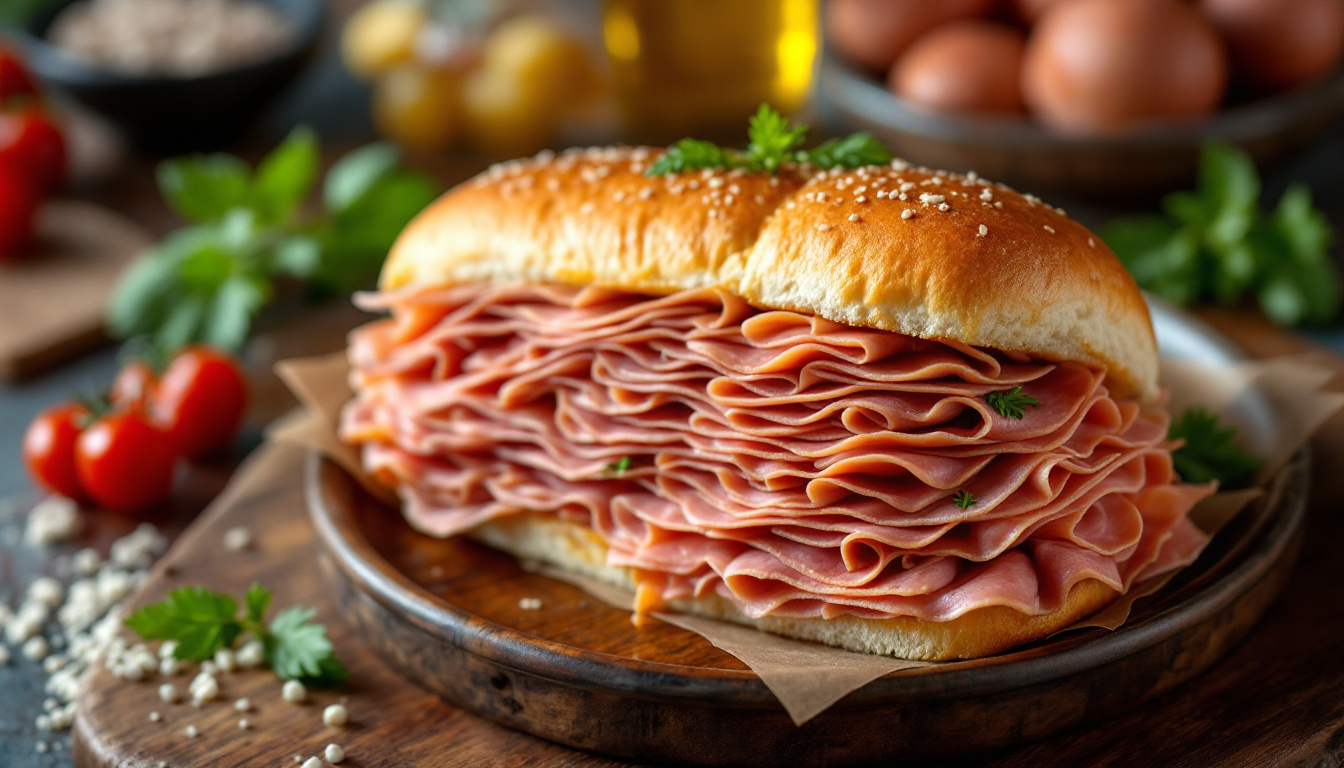
A few more dishes belong on any American list. The Cuban sandwich, born in the Cuban-immigrant communities of Tampa and Miami, presses ham, roast pork, Swiss, pickles and mustard into a flattened, griddled roll, Florida’s defining bite. Pancakes are the great American breakfast rite of passage: a tall stack drowned in maple syrup at any diner, alongside eggs, hash browns and bottomless coffee. And the deli Reuben (corned beef, sauerkraut, Swiss and Russian dressing on grilled rye) rounds out the country’s sandwich canon.
How food changes across America, region by region
American food breaks into a handful of distinct regions, and knowing which one you’re in tells you what to order. The South is the country’s deepest food culture. The coasts go for seafood, the Southwest leans Mexican, and the cities run on immigrant kitchens. Here’s the map.
The South is the heartland of American cooking, from barbecue and fried chicken to soul food, shrimp and grits, biscuits and gravy, and Lowcountry seafood in Charleston. This is where Black, Indigenous, and European traditions fused into something the rest of the country borrowed from. It runs from Virginia down to Georgia and west to Texas, and no region rewards eating local more.
The Northeast is pizza, delis, and seafood. New York alone covers pizza by the slice, bagels with lox, pastrami on rye, and every immigrant cuisine on Earth, while New England’s coast delivers lobster, clams, and creamy chowder. Philadelphia has its cheesesteak and roast pork sandwich. It’s the most urban, immigrant-shaped eating in the country.
Louisiana is the most distinct food region in America, where Cajun and Creole cooking produce gumbo, jambalaya, étouffée, crawfish boils, and po’boys. New Orleans eats unlike anywhere else in the country, with French, Spanish, African, and Caribbean threads in every dish. Plan a trip around it and eat from morning beignets to late-night red beans and rice.
The Southwest eats Mexican-rooted food found nowhere else: Tex-Mex fajitas and queso in Texas, green and red chile on everything in New Mexico, and Sonoran-style hot dogs and carne asada in Arizona. The border is a food culture, not a line. This is some of the most flavorful everyday eating in the country.
The Midwest does hearty, generous food: Chicago’s deep-dish pizza and loaded hot dogs, Wisconsin cheese and bratwurst, Kansas City barbecue, and the casseroles known as hotdish in Minnesota. It’s farm country, so the portions are big and the dairy is excellent. Chicago is the region’s great food city, deep enough to deserve its own trip.
The West Coast invented modern American restaurant cooking, from California’s farm-to-table movement and fish tacos to the Mission burritos of San Francisco and the salmon and coffee of the Pacific Northwest. Hawaii adds poke, plate lunch, and a Pacific fusion all its own. This is the freshest, most produce-driven eating in the country.
Where to eat: diners, smokehouses, food trucks, and delis
The best food in America is found in diners, smokehouses, food trucks, and delis, not in tourist-strip chains. Each kind of place specializes, and matching the food to the venue is how you eat well. Here’s where to point yourself.
- Diners, the all-day American institution for breakfast, burgers, pie, and bottomless coffee. Cheap, fast, and open early.
- Smokehouses and barbecue joints, often counter-service with a wood pile out back. The good ones sell out by mid-afternoon, so go early.
- Food trucks, where some of the best and most creative cooking happens, especially in Austin, Portland, and Los Angeles.
- Delis, the New York temple of pastrami, corned beef, and towering sandwiches. Order it on rye with mustard.
- Farmers markets and state fairs, for regional produce and gloriously over-the-top fair food, from funnel cake to anything on a stick.
What to drink in the USA
America’s signature drinks are craft beer and bourbon, and both are worth seeking out at the source. The country runs on a wide range of drinks, some great, some purely nostalgic.
- Craft beer, the US has thousands of breweries, and the West Coast IPA is its defining style. Most cities have a strong local scene.
- Bourbon, the native American whiskey, made mostly in Kentucky. Drink it neat or in an old-fashioned.
- Diner coffee and milkshakes, the bottomless cup is an American ritual, and a thick milkshake is the classic pairing with a burger.
- Root beer, a sweet, non-alcoholic soda with no real equivalent abroad, best in a root beer float with vanilla ice cream.
- Napa and Sonoma wine, California makes world-class wine, and the West Coast wine country is a destination in itself.
- Tip 18 to 20 percent at sit-down restaurants; 15 percent now signals you were unhappy.
- Menu prices exclude sales tax, which is added at the register and varies by state.
- Taking leftovers home in a box is normal and expected, not rude.
- Free refills on drip coffee and soda are standard at diners and casual spots.
- Vegetarians do well in big cities and on the West Coast; the rural South and barbecue country are harder, though sides like mac and cheese and greens help.
Frequently asked questions
What is the most popular and famous American food?
The most famous and most popular American foods are the cheeseburger, barbecue, fried chicken, pizza and the hot dog, followed by regional icons like the Philly cheesesteak, New Orleans gumbo, New England clam chowder and soul food. American cooking is built from indigenous ingredients, the food of enslaved Africans in the South, and a century of immigrant kitchens.
What is the best food to eat in the USA?
The best food to eat in the USA is its regional specialties: barbecue in Texas and the Carolinas, soul food and fried chicken in the South, pizza and deli sandwiches in New York, gumbo in New Orleans, Tex-Mex in the Southwest, and poke in Hawaii. The country has no single national dish, so the best strategy is to eat whatever the region you are in is famous for.
Is American food just fast food and burgers?
No, fast food is the least representative American cooking. The real food culture is deeply regional and immigrant-driven: all-day smoked barbecue, Black Southern soul food, Cajun and Creole cooking in Louisiana, New York’s Italian and Jewish delis, and the farm-to-table movement that started in California. Burgers and chains are a small, exported slice of a much larger picture.
Which US city has the best food?
New York and New Orleans are the two best food cities in the USA. New York offers every cuisine on Earth plus its own pizza, bagels, and deli tradition, while New Orleans has the country’s most distinct regional cooking in Cajun and Creole food. Chicago, San Francisco, Los Angeles, and Charleston round out the top tier.
How much should you tip in the USA?
Tip 18 to 20 percent at sit-down restaurants in the USA. Servers earn a tipped wage well below the standard minimum, so the tip is most of their pay, not a bonus. For counter service and takeout, a tip is optional but appreciated. Remember that menu prices do not include sales tax, which is added at the register.
What are the regional barbecue styles in America?
The four main US barbecue styles are Texas (beef brisket with a salt-and-pepper rub), the Carolinas (pulled pork with a vinegar or mustard sauce), Memphis (dry-rubbed ribs), and Kansas City (a mix of meats in sweet, thick tomato sauce). Each region considers its own style the only correct one, and the differences are real enough to start arguments.
Where can vegetarians eat well in the USA?
Vegetarians eat well in major US cities and on the West Coast, where plant-based menus are common and creative. California, in particular, is a stronghold of vegetarian and vegan cooking. The harder regions are barbecue and soul food country, though Southern sides like mac and cheese, collard greens (ask about the pork), cornbread, and fried okra offer plenty.
More food guides waiting for you
Browse our complete collection of food guides across the Americas.