Hummus eaten warm for breakfast, sabich packed into pita, shakshuka straight from the pan, and the Jerusalem mixed grill at the shuk: a guide to what to eat in Israel, where to find it, and what it costs.
I learned the rules of Israeli hummus the hard way: I asked for it as a side, and the man behind the counter at a Jaffa hummusiya looked at me like I’d ordered a side of oxygen, hummus here is the whole meal, eaten warm before noon with a pile of pita. The best food to eat in Israel is a collision of the whole Mediterranean and Middle East on one small strip of land. The cooking pulls together the Levantine table it shares with its neighbors, the dishes Jewish communities carried from Yemen, Iraq, Morocco, Poland, and Ethiopia, and a Tel Aviv restaurant scene that has become one of the most exciting on Earth. It is also the home of a near-religious devotion to hummus, eaten fresh and warm in a way that ruins the supermarket version forever.
Why Israeli food is a Mediterranean melting pot
Israeli food is one of the world’s great immigrant cuisines, drawing on the shared Levantine kitchen of the eastern Mediterranean and the cooking that Jewish immigrants brought from dozens of countries. Hummus, falafel, tabbouleh, and knafeh belong to a regional tradition shared across the Levant, including with Lebanon and the Palestinian table, while dishes like shakshuka (North African), sabich and amba (Iraqi), jachnun and malawach (Yemenite), and gefilte fish (Eastern European) arrived with specific communities.
What pulls it together is climate and habit: an abundance of vegetables, olive oil, chickpeas, eggplant, tahini, and citrus, eaten in small plates and stuffed into pita. The famous Israeli breakfast, a spread of eggs, salads, cheeses, and bread, grew out of kibbutz dining halls and is now a national institution.
For a traveler, the two poles are Tel Aviv and Jerusalem. Tel Aviv is modern, Mediterranean, and one of the most vegan-friendly cities in the world; Jerusalem is older, more traditional, and built around the Machane Yehuda market. This guide runs through the dishes that define the country, then the kitchens behind them. It sits alongside our wider guide to the best food in Africa and the Middle East.
The best food to eat in Israel, dish by dish
These are the 13 dishes I send every first-timer after, with a rough 2026 price and where each one belongs. Prices are in Israeli shekels (₪), with the dollar figure at roughly ₪3.7 to USD 1.
Hummus
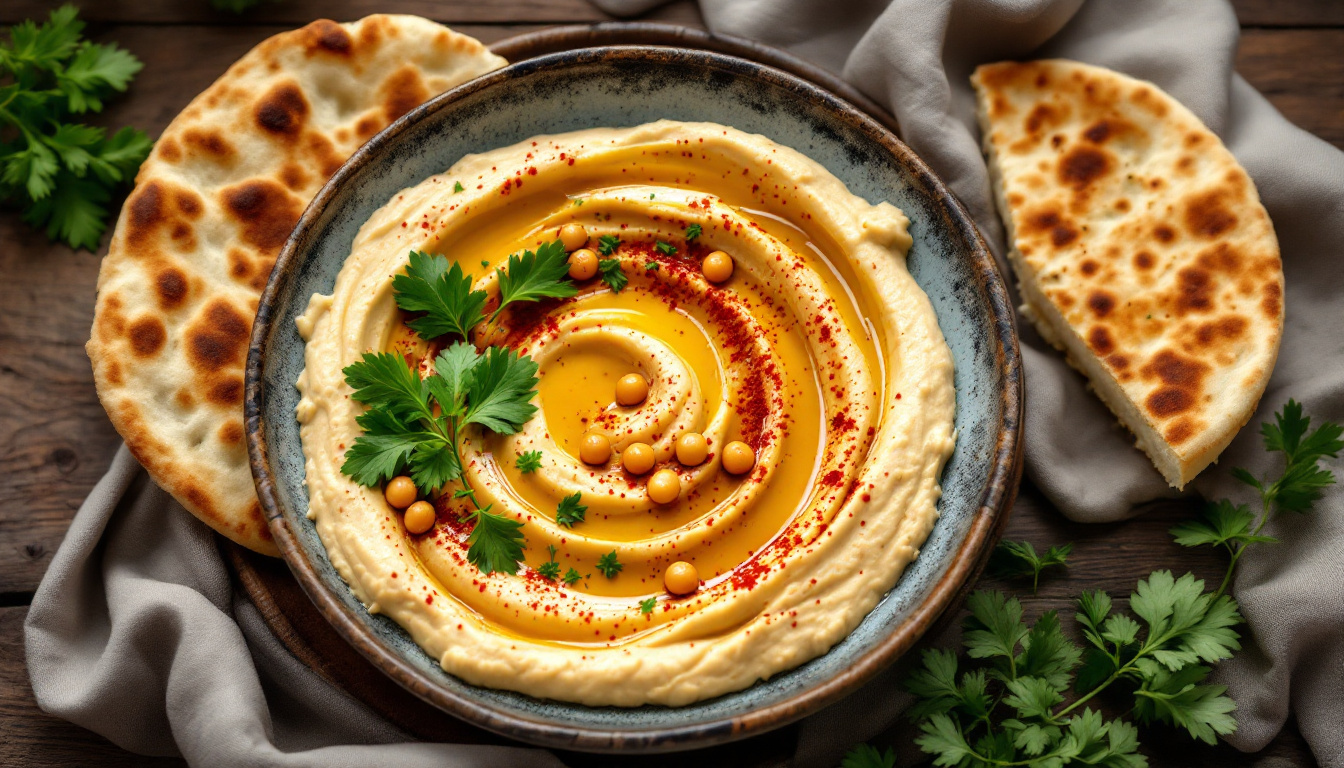
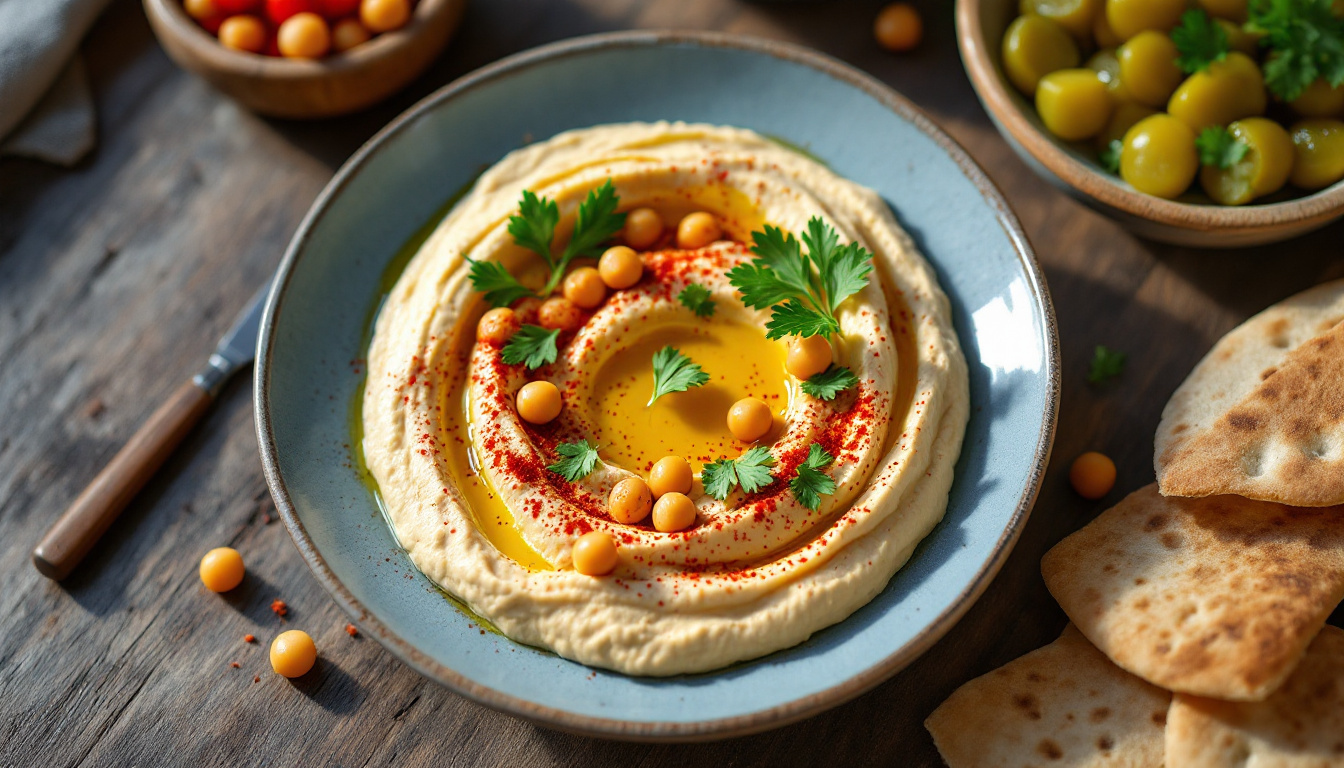
Hummus in Israel is a hot meal, not a supermarket dip, and eating it fresh at a dedicated hummusiya is the single best thing you can do. The chickpea-and-tahini puree is served warm in a wide bowl, dressed with olive oil, paprika, and whole chickpeas, and topped to order with ful (fava beans), masabacha (whole chickpeas), or a soft-boiled egg. You wipe it up with warm pita, never a fork. A hummus shared with raw onion, pickles, and amba is a complete meal. Go early; the best places sell out by early afternoon.
Falafel
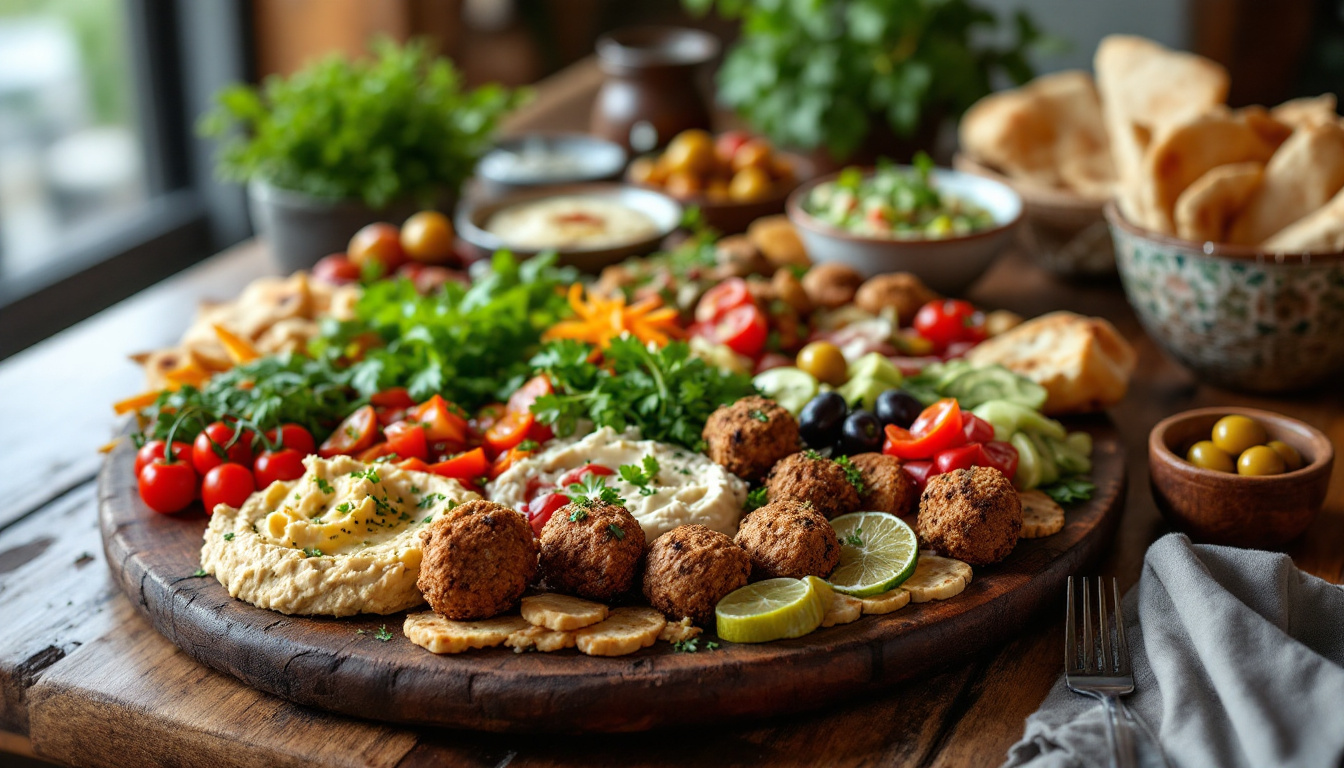
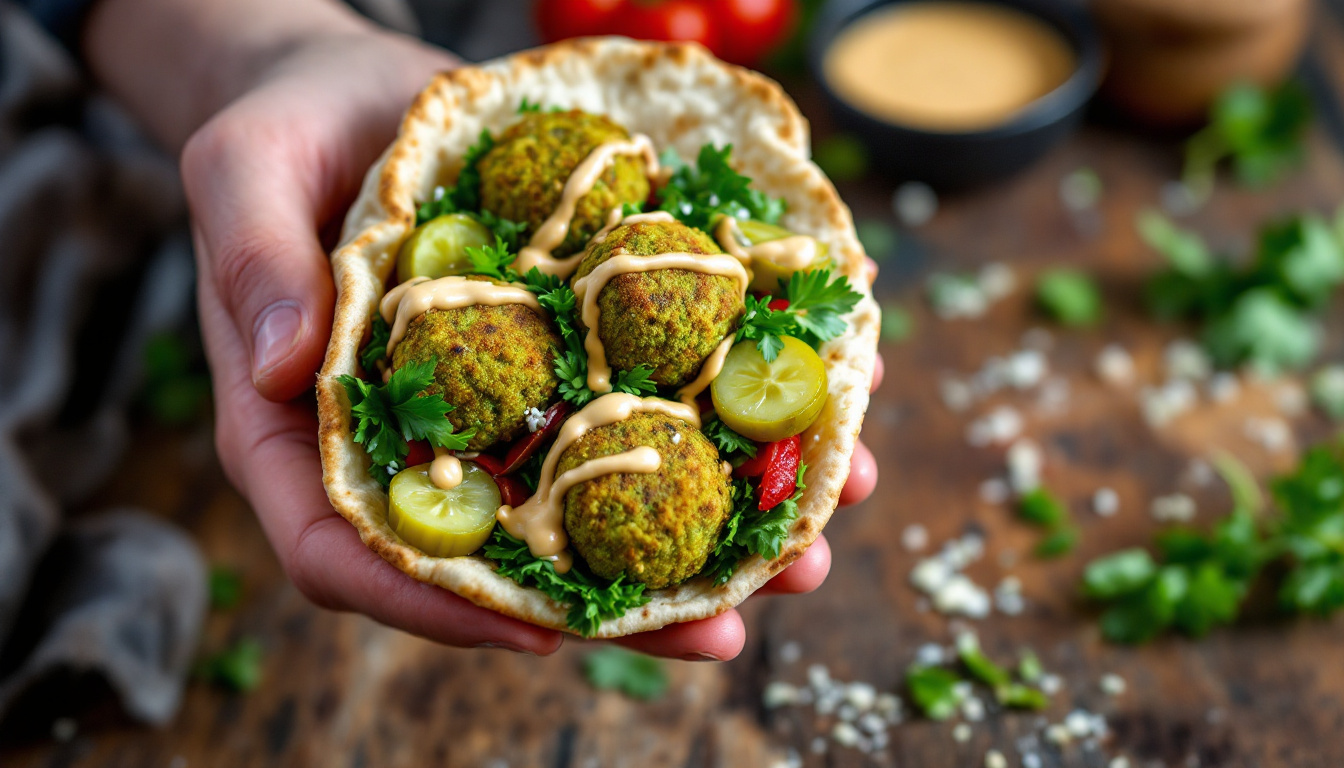
Falafel is deep-fried balls of ground chickpeas and herbs, stuffed into pita with salad, pickles, and tahini, and it is the great street food of Israel. The shell shatters, the inside is green and herby, and the build is yours: pile on Israeli salad, fried eggplant, hummus, amba, and the fiery green schug to taste. Tel Aviv’s HaKosem is the famous spot, where they hand out free falafel while you wait in line. Cheap, filling, and entirely vegan, it is the default fast meal.
Shakshuka
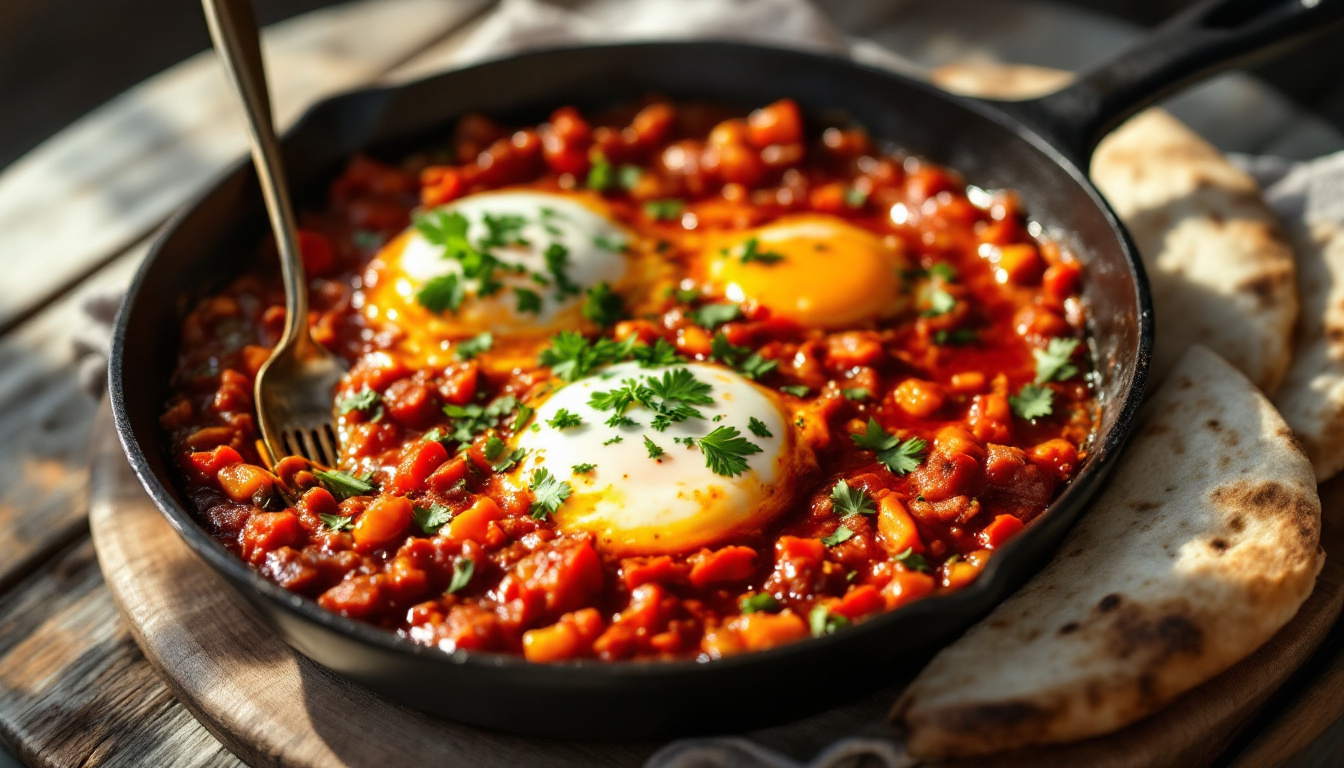
Shakshuka is eggs poached in a thick, spiced tomato and pepper sauce, served bubbling in the same cast-iron pan it was cooked in, and it is the brunch dish Israel gave the world. It came from the North African (Tunisian and Libyan) Jewish kitchen, seasoned with paprika, cumin, garlic, and sometimes harissa. You tear off pita and scoop straight from the pan. Variations add feta, green herbs, or eggplant, but the classic red version with runny yolks is the one to start with.
Sabich
Sabich is pita stuffed with fried eggplant, hard-boiled egg, Israeli salad, tahini, amba, and schug, and it is the sandwich that defines Tel Aviv fast food. It came from the Iraqi-Jewish community of Ramat Gan, based on a traditional Shabbat breakfast, and now rivals falafel as the national pita. The amba, a tangy fermented-mango sauce, is the flavor that makes it. Sabich Frishman in Tel Aviv is the gold standard; expect a fast-moving line.
Shawarma
Shawarma is seasoned meat (usually turkey, lamb, or a mix) stacked on a vertical spit, slow-roasted, and shaved into pita or laffa with salad, tahini, and pickles. A staple across the whole region, the Israeli version leans on turkey and a generous build of salads and sauces. Order it in a laffa (the larger flatbread) wrap to hold everything, add hummus and amba, and finish with the fries that often go right inside. It is the heartier cousin of falafel.
Meorav yerushalmi Jerusalem mixed grill
Meorav yerushalmi is a mix of chicken meat and offal (hearts, livers, and spleen) grilled on a flat plancha with onion, garlic, cumin, and turmeric, then stuffed into pita or lafa. It was invented in the 1960s at Jerusalem’s Machane Yehuda market and is the city’s signature dish. The flavor is deep, spiced, and a little funky in the best way. Hatzot, on the edge of the market, is the legendary spot to order it fresh off the grill with warm lafa.
Bourekas
Bourekas are flaky, golden pastries filled with cheese, potato, mushroom, or spinach, and they are the country’s favorite grab-and-go bite. Brought by Sephardi and Balkan Jewish communities, they are sold from bakeries and kiosks everywhere, often with a hard-boiled egg and a pickle as the traditional pairing. The shape tells you the filling, by bakery convention. Cheap, portable, and comforting, they are the snack that bridges the gaps between meals.
Jachnun, malawach and Yemenite breads
Jachnun and malawach are Yemenite-Jewish breads that have become Israeli weekend classics. Jachnun is a slow-baked rolled dough cooked overnight until dense and golden, traditionally eaten on Shabbat morning with grated tomato, a hard-boiled egg, and schug. Malawach is a flaky, fried flatbread, crisp and rich like a pancake-paratha hybrid. Both come from Yemenite cooking and show how deeply specific diaspora traditions shaped the national table. Eat them at a Yemenite spot or a Saturday market.
Israeli salad and mezze
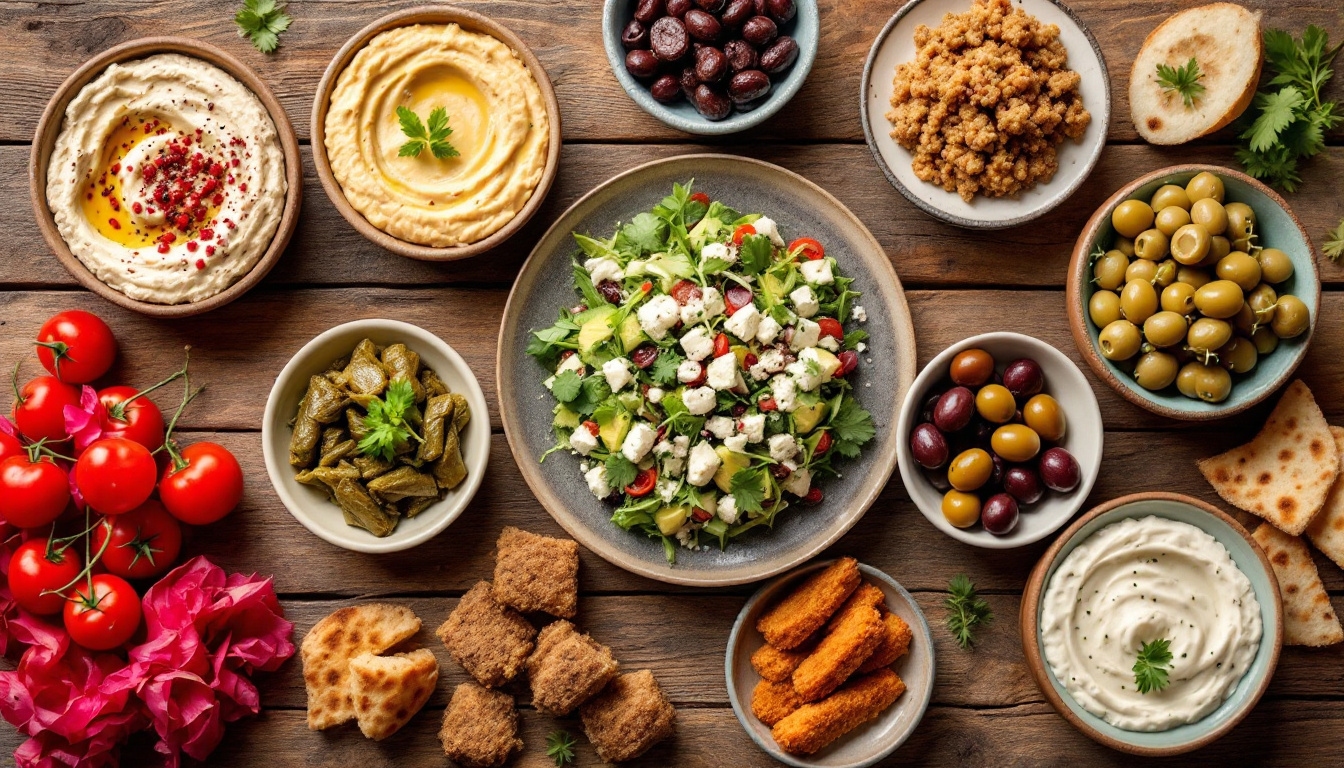
Israeli salad is finely diced cucumber and tomato with onion, parsley, lemon, and olive oil, and it anchors a wider table of small plates eaten at almost every meal. Around it come the mezze: baba ganoush (smoked eggplant), labneh (strained yogurt), tahini, matbucha (cooked tomato and pepper), and pickles. The salad turns up at breakfast, in pita, and beside grilled meat. It is proof that the freshness of the vegetables, more than any single dish, defines how the country eats. Two more staples round out the table: mujadara, the humble, deeply comforting Levantine plate of lentils and rice under a heap of dark caramelized onions, and hamin (the Sephardi name; Ashkenazim call it cholent), the Jewish Shabbat stew of meat, beans, potatoes and grains left to cook overnight on a low flame so it’s ready for Saturday lunch without breaking the rules of rest.
Chraime and Friday fish
Chraime is fish simmered in a fiery red sauce of tomato, garlic, chili, and cumin, and it is the North African (Libyan and Tunisian) Jewish dish traditionally eaten before Shabbat and holidays. The sauce is bright and hot, made for mopping up with challah or pita. Alongside it, Ashkenazi tradition brings gefilte fish, a poached fish patty served cold with horseradish. Friday is fish day in many homes, and chraime is the version most worth seeking out at a Mizrahi restaurant.
Knafeh
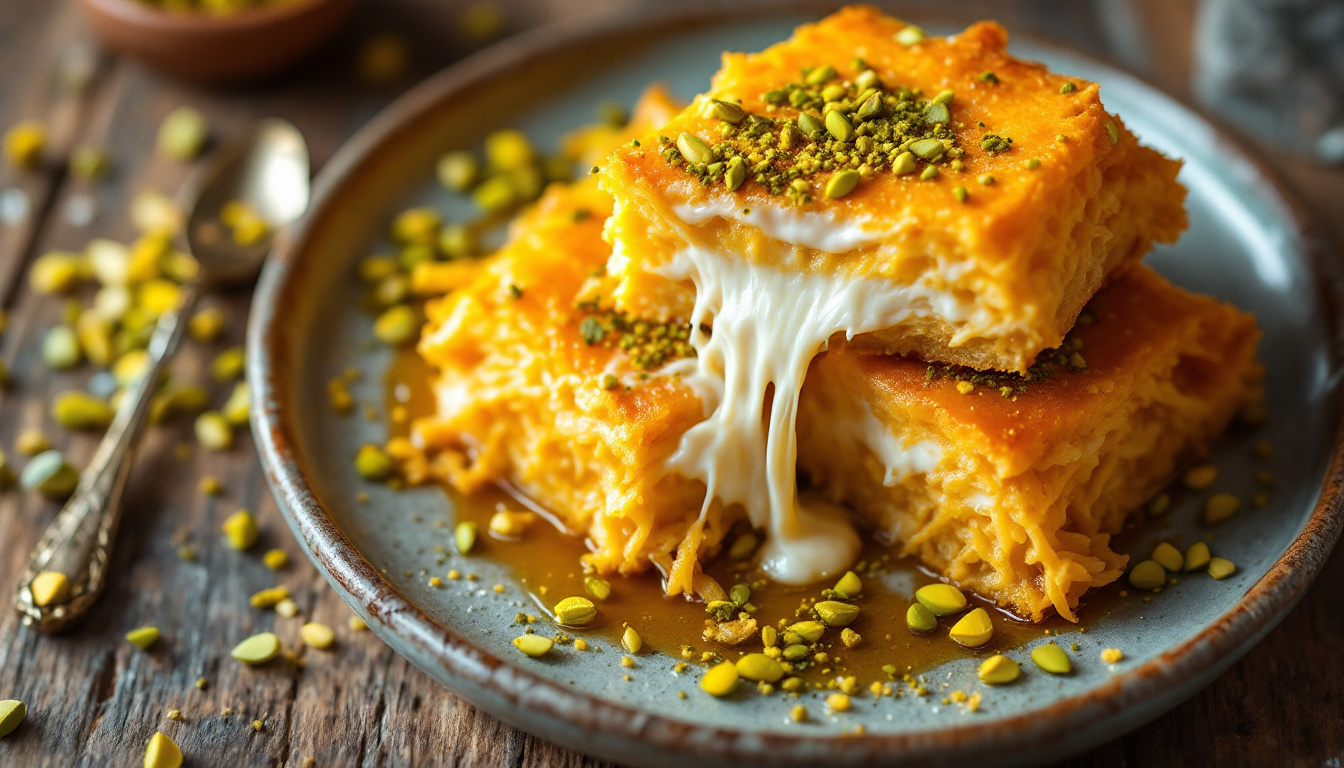
Knafeh is a warm dessert of soft white cheese under a layer of crisp shredded pastry, soaked in sweet syrup and crowned with pistachio, and it is the showstopper of the Levantine sweet table. Shared across the region, it is served hot so the cheese pulls into strings as you cut it. The contrast of salty melting cheese, crunchy pastry, and floral syrup is unlike any Western dessert. Eat it fresh from a specialist, where a huge tray is cut to order.
Israeli breakfast
The Israeli breakfast is a sprawling spread of eggs cooked to order, several salads, cheeses, bread, spreads, and usually a coffee and fresh juice, and it is a national institution rather than a single dish. It grew out of communal kibbutz dining halls, where the dairy and produce were laid out for everyone. Cafes across Tel Aviv build elaborate versions, easily enough for two. Order one shared breakfast, take your time, and you have covered half the cuisine in one sitting.
Malabi, halva and sweets
Malabi is a delicate milk pudding topped with rosewater syrup, crushed nuts, and coconut, and it leads a deep bench of Israeli and regional sweets. Halva, the dense sesame-tahini confection, is sold in huge slabs at every market in dozens of flavors. Beyond them sit rugelach (the chocolate-filled Jerusalem pastry), sufganiyot (jam doughnuts at Hanukkah), and baklava. The market halva stalls alone, where you taste your way through, are worth a visit.
The kitchens behind the food: Levantine, diaspora and Tel Aviv
Israeli food makes more sense once you see the three kitchens feeding it: the shared Levantine table, the traditions of the Jewish diaspora, and the modern Tel Aviv scene. Knowing which a dish comes from explains why the cuisine feels both ancient and brand new.
The Levantine base is the food of the eastern Mediterranean, shared across the region: hummus, falafel, tahini, baba ganoush, tabbouleh, pita, and knafeh. These dishes have deep roots in Arab and Palestinian cooking and across the wider Levant, including neighboring Lebanon, and they form the everyday foundation that everyone in the region eats. It is the layer that makes Israeli food unmistakably Middle Eastern.
The diaspora layer is what makes the cuisine singular: dishes carried by Jewish communities from around the world. Yemenite cooks brought jachnun, malawach, and schug; Iraqi immigrants brought sabich and amba; North African families brought shakshuka and chraime; Eastern European (Ashkenazi) tradition brought gefilte fish, rugelach, and matzo ball soup; and Ethiopian Israelis brought injera and spiced stews. They sit side by side on the same national table.
Tel Aviv is the modern food capital, a Mediterranean city of sabich stands, hummusiyot, Carmel Market, and a restaurant scene ranked among the world’s best, plus a vegan culture so strong that an estimated one in twenty residents is vegan. Jerusalem is the older, more traditional counterpart, built around the Machane Yehuda market and dishes like the meorav yerushalmi. Between them they cover the country’s full culinary range.
Where to eat: hummusiyot, the shuk and pita stands
The best food in Israel is found at dedicated hummus joints, the open-air markets, and pita stands, not in hotel dining rooms. Each has its rhythm, and timing matters more here than almost anywhere. Here is where to point yourself.
- Hummusiyot, the hummus specialists that serve it warm and fresh from morning and sell out by early afternoon. Go for an early lunch, never dinner.
- The shuk (markets), Carmel Market in Tel Aviv and Machane Yehuda in Jerusalem, for produce, halva, bourekas, fresh juice, and stalls that turn into bars at night.
- Falafel and sabich stands, the pita counters where you build your own; the busy ones with lines (HaKosem, Sabich Frishman) are busy for a reason.
- Mizrahi and Yemenite restaurants, for chraime, jachnun, and the diaspora home cooking you will not find on a street corner.
- Tel Aviv cafes, for the long, shared Israeli breakfast and the city’s serious coffee culture.
What to drink in Israel
Israel’s signature drinks are limonana and strong coffee, with a fast-improving wine scene behind them. The Mediterranean climate shapes the drinks as much as the food.
- Limonana, an intensely refreshing slushie of fresh lemon and mint, the drink of an Israeli summer.
- Coffee, from thick Turkish-style cafe shachor to the milky cafe hafuch (the local cappuccino), central to cafe culture.
- Israeli wine, a fast-rising scene, especially from the Galilee and Judean Hills, increasingly world-class.
- Arak, the anise spirit of the region, drunk with water and ice until cloudy, the classic accompaniment to mezze.
- Local beer and fresh juice, Goldstar lager and a craft scene, plus pomegranate and orange juice pressed at market stalls.
- Hummus is eaten by scooping with pita, not with a fork, and is a meal in itself.
- Many places close for Shabbat (Friday afternoon to Saturday night); Tel Aviv stays liveliest.
- Tip around 12 to 15 percent, preferably in cash, as it is a real part of staff pay.
- Vegetarians and vegans eat exceptionally well, especially in Tel Aviv; much of the street food is already vegan.
- Kosher restaurants keep meat and dairy separate, which shapes what you can order together.
Frequently asked questions
What is the most popular and famous Israeli food?
The most famous and most popular Israeli foods are hummus, falafel and shakshuka, followed by sabich, shawarma and the Jerusalem mixed grill. Bourekas and Yemenite breads (jachnun, malawach) are everyday favourites, and Israeli cuisine blends the shared Levantine kitchen with the traditions Jewish communities carried from around the world.
What is the national dish of Israel?
Hummus and falafel are the two dishes most associated with Israel, with sabich a strong modern contender as the national pita. None is exclusively Israeli: hummus and falafel belong to a Levantine tradition shared across the Middle East. Within Israel, they are eaten daily and treated with real devotion, especially fresh warm hummus from a dedicated hummusiya.
Is Israeli food spicy?
Israeli food is moderately spiced rather than fiery, but heat is always available on the side. The fierce green chili paste schug (zhug) and the tangy amba sauce let you add as much kick as you want to pita and hummus. Dishes like chraime fish can be genuinely hot, while most mezze and hummus are mild and herb-forward.
Is hummus Israeli or Arab?
Hummus is a Levantine dish with deep roots across the Middle East, claimed by and beloved in many cultures including Arab, Palestinian, Lebanese, and Israeli. It is part of a shared regional table rather than the invention of any single country. In Israel it is eaten daily and elevated to an art at dedicated hummus joints, but its origins are pan-Levantine.
Which city has the best food in Israel?
Tel Aviv is the best food city in Israel, a Mediterranean hub of hummusiyot, sabich stands, Carmel Market, an acclaimed restaurant scene, and one of the strongest vegan cultures in the world. Jerusalem is its essential counterpart, more traditional and built around the Machane Yehuda market and dishes like the meorav yerushalmi.
Is Israel good for vegetarians and vegans?
Israel is one of the best countries in the world for vegetarians and vegans. Much of the core street food, including falafel, sabich, hummus, and many mezze, is already plant-based, and Tel Aviv is among the most vegan-friendly cities anywhere, with an estimated one in twenty residents vegan. Even traditional restaurants offer abundant vegetable dishes.
What happens to restaurants on Shabbat?
From Friday afternoon to Saturday evening (Shabbat), many restaurants, shops, and public transport close, especially in Jerusalem. Tel Aviv stays much livelier, and Arab-owned and non-kosher places often remain open. Plan meals ahead for Friday night and Saturday, or base yourself in Tel Aviv where the weekend dining scene continues largely as normal.
What is the difference between sabich and falafel?
Both are pita sandwiches, but falafel is filled with fried chickpea balls while sabich is filled with fried eggplant and hard-boiled egg. Sabich comes from the Iraqi-Jewish community and is defined by its amba (fermented mango) sauce, while falafel is the older, pan-regional street food. Both come loaded with Israeli salad, tahini, pickles, and schug.
More food guides waiting for you
Browse our complete collection of food guides across Africa and the Middle East.