Everyone thinks Dubai food means gold-leaf steaks and brunches that cost a week’s wages, and that version exists. But the meal I think about is a one-dirham karak chai and a four-dirham shawarma eaten standing in a Deira backstreet, surrounded by the South Asian and Arab workers who actually run this city. Dubai is one of the most international eating cities on earth, where ninety percent of the population came from somewhere else and brought their kitchen with them. The best food in Dubai splits in two: the old-town cheap eats that feed the city, and a global fine-dining scene with the money to import anything.
Why Dubai is a surprising food city
Dubai is a great food city because almost everyone here is from somewhere else, and they all eat well. Roughly nine in ten residents are expats, the largest groups from India, Pakistan, the Philippines, Egypt and across the Arab world, so the everyday food is some of the best South Asian and Levantine cooking outside those countries. The Emirati food underneath it all is quieter but worth seeking out.
The mistake visitors make is eating only at the malls and hotels, where prices are high and the food is generic. The real eating is in the older districts, and the trick is the same as anywhere: leave the towers and eat where workers eat, which our guide to eating like a local spells out. For the Emirati dishes specifically, our UAE food guide goes deeper into the national table.
The dishes you have to eat in Dubai
Shawarma شاورما
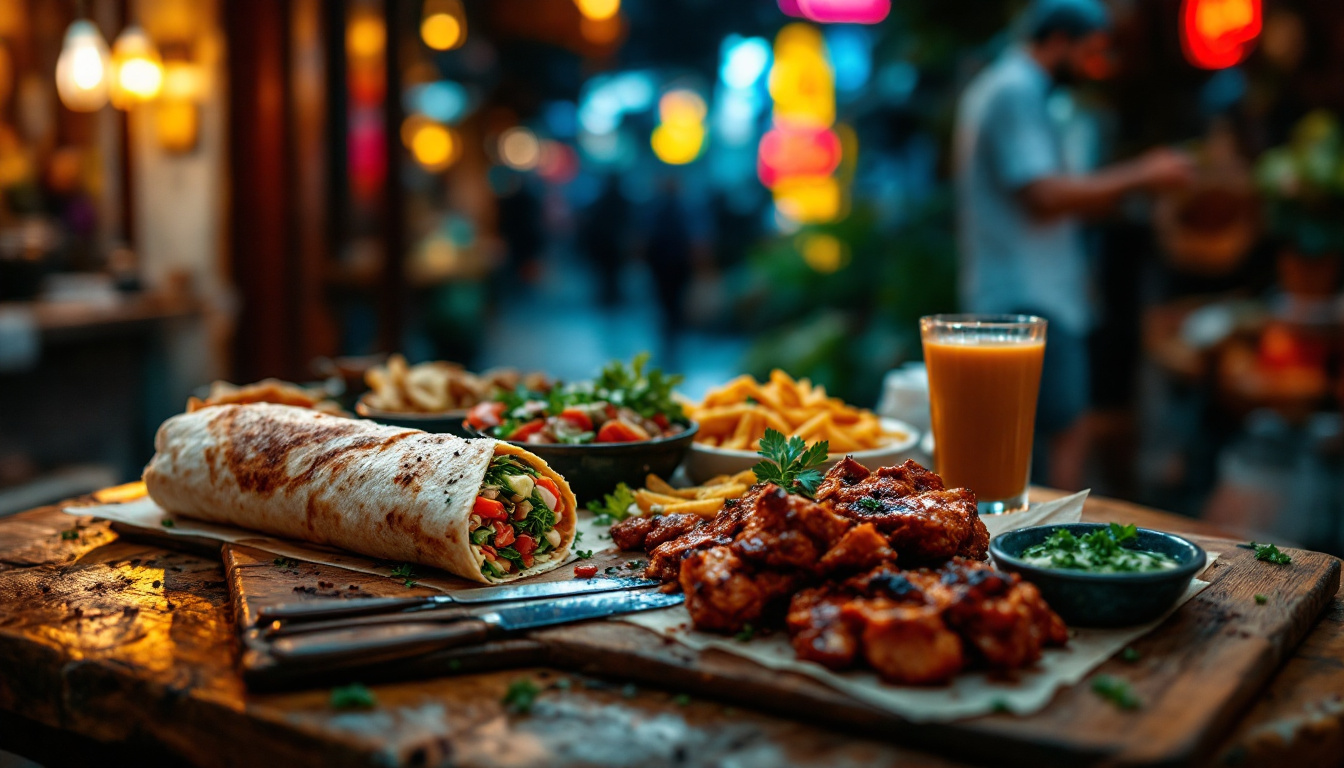
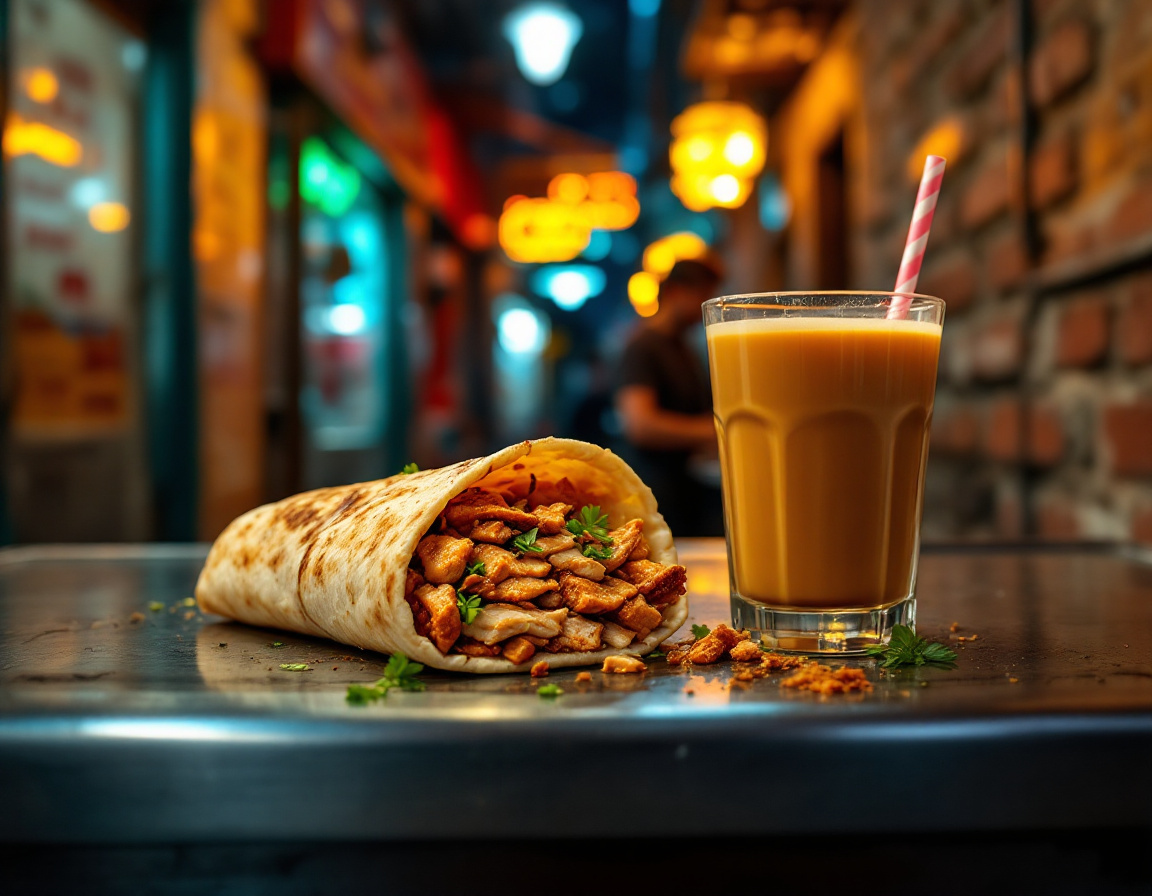
Shawarma is the true king of Dubai street food, and the best costs a few dirhams. Chicken or lamb is stacked on a vertical spit, shaved off as it crisps, then rolled in thin bread with garlic toum, pickles and fries tucked inside. The old Lebanese and Syrian joints in Satwa and Deira do the definitive versions, busy from afternoon to past midnight. Add a fresh mint lemonade and you’ve got the cheapest great meal in the city.
Karak Chai كرك
Karak chai is the drink that runs Dubai, a strong black tea boiled with milk, sugar and cardamom until it’s sweet and thick. It costs a dirham or two from the cafeteria windows where drivers pull up and honk for a cup without leaving the car. Brought over by South Asian workers and adopted by everyone, it’s the social glue of the city. Order it alongside a cheese or zaatar manakish in the morning.
Machboos مجبوس
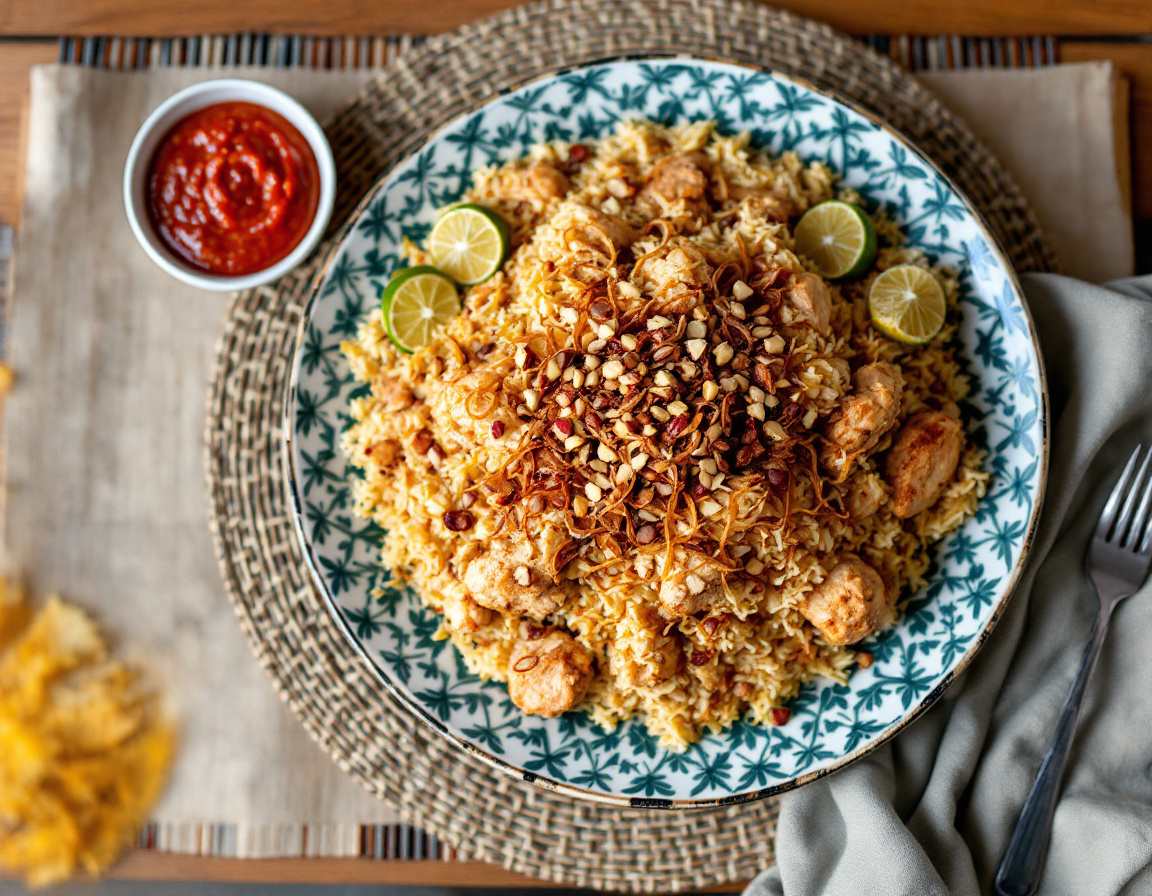
Machboos is the Emirati dish to order first, a fragrant spiced rice cooked with chicken, lamb or fish and a dried-lime and baharat spice blend. It’s a cousin of biryani and Gulf kabsa, slow-cooked so the rice takes on all the flavor of the meat. You will not find it on every street corner, so go to a dedicated Emirati restaurant, where it usually comes with a side of fiery daqoos chili sauce. This is the national table most visitors miss entirely.
Karama Curry and Biryani
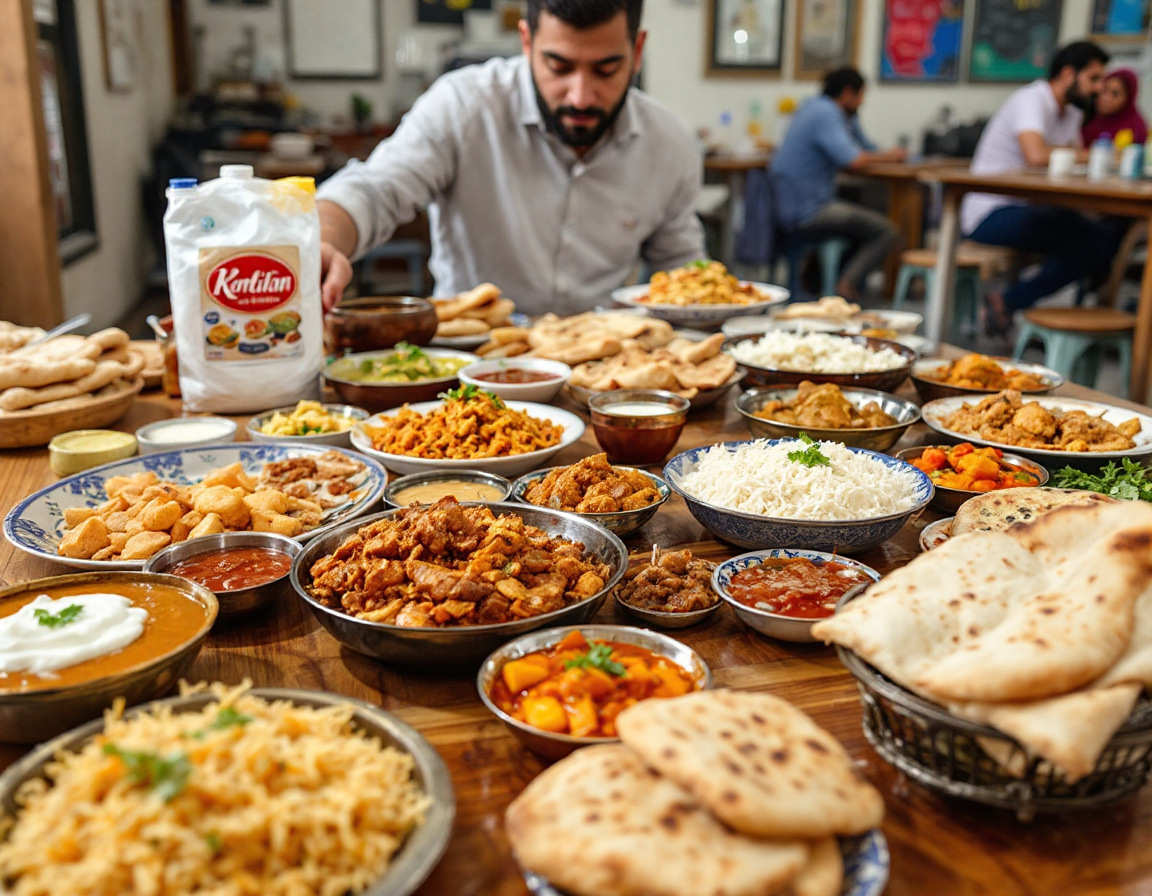
The best-value feast in Dubai is South Asian, and the heart of it is Karama. Pakistani and Indian canteens here turn out dum biryani, nihari, haleem, butter chicken and tandoor breads for a fraction of mall prices, feeding the workers who built the city. The legendary Pakistani spots near Bur Dubai are an institution for a reason. Come hungry, order family-style, and you eat like a king for the price of a coffee elsewhere in town.
Mandi مندي
Mandi is the Yemeni dish that has quietly conquered Dubai, and it’s one of the city’s great shared feasts. Lamb or chicken is cooked low in a pit-style oven until it falls off the bone, then laid over a mound of smoky, saffron-tinted rice and eaten communally off a big platter. The Yemeni restaurants around Deira and Al Rigga do enormous, generous portions for very little. Order it for a group and eat with your hands.
Harees هريس
Harees is one of the oldest Emirati dishes, a slow-cooked porridge of wheat and meat (usually chicken or lamb) beaten for hours until it turns smooth and creamy, seasoned simply with salt and a little ghee, sometimes cinnamon on top. The long stirring is why it shows up most at Ramadan iftars, weddings, and Eid. The texture is the whole point, somewhere between risotto and congee, plain and comforting in the best way. Arabian Tea House and the heritage restaurants around Al Fahidi serve dependable versions.
Balaleet بلاليط
Balaleet is the Emirati breakfast that surprises everyone: sweet vermicelli noodles cooked with sugar, cardamom, saffron, and rose water, then topped with a thin savory omelette. The sweet-and-salty combination is pure Gulf, and it works far better than it sounds. You will find it on the morning menu at Arabian Tea House and Local House in Al Fahidi, usually served alongside chebab and a cup of karak.
Chebab
Chebab are Emirati pancakes, thinner than an American stack and perfumed with saffron, cardamom, and a little date syrup in the batter. They arrive warm, folded or stacked, with date syrup, honey, or soft cheese to spread on top. They are a breakfast and afternoon-tea staple, and the heritage cafes of Al Fahidi make the versions worth crossing town for.
Grilled Hammour هامور
Hammour, a type of grouper, is the Gulf’s most prized fish and the one to order in Dubai. At its best it is simply grilled with Arabic spices or fried whole, served with rice, grilled tomato, and flatbread. Head to the seafood spots around the Deira fish market or Bur Dubai, where you can sometimes pick your fish and have it cooked to order. Wild hammour stocks are under pressure, so many kitchens now offer sustainable or farmed alternatives, worth asking about.
Luqaimat لقيمات
Luqaimat are the Emirati answer to a doughnut, and they are addictive. Small balls of yeasted dough are deep-fried until golden and crisp, then drenched in date syrup and sometimes a dusting of sesame. Crunchy outside, soft and steamy inside, they are everywhere during Ramadan and at heritage food stalls year-round. Eat them hot, the moment the syrup soaks in. They pair perfectly with a finishing cup of karak, and if you want something richer, the syrup-soaked cheese pastry knafeh is everywhere too.
Friday Brunch
The Friday brunch is a Dubai institution worth doing once for the spectacle. It isn’t a quiet brunch but a sprawling, hours-long buffet feast at a hotel, with carving stations, seafood towers, global cuisines and often free-flowing drinks, all for a set price. Expats build their weekends around it. It’s excessive and not cheap, but it captures the maximalist side of Dubai eating in one long, indulgent afternoon. Book ahead for the popular ones.
Where to eat: old town to new
The single best decision in Dubai is to spend a night eating in the old town, around Deira and Bur Dubai on either side of the Creek. This is where the cheap, brilliant food lives: Iranian bakeries, Lebanese shawarma counters, Pakistani canteens and the spice and gold souks, all walkable. Cross the Creek on a one-dirham abra water taxi between bites.
Karama and Satwa are the other essential districts, packed with curry houses, Filipino canteens and Arab grills aimed at residents, not tourists. The newer Dubai of Downtown, Jumeirah and the Marina is where the fine dining, beach clubs and Friday brunches cluster, with the prices to match. Eat cheap and local by day in the old town, then splurge on one big modern meal if you want both sides of the city.
Tips and what to know
A few practical notes make eating in Dubai smoother, especially around timing and customs.
- Cash for the old town. Cafeteria windows and small shawarma joints often want small cash; cards rule only in the malls and hotels.
- Ramadan changes everything. During the holy month, daytime eating in public is limited and many places open only after sunset, when the iftar feasts are spectacular.
- Eat with the right hand. For Emirati and Arab meals eaten by hand, use the right hand, as across the region.
- Brunch needs booking. The popular Friday brunches sell out; reserve, and pace yourself.
Dubai is also extremely easy for vegetarians thanks to its huge Indian population, and a hub for the wider region. To plan onward, our guide to the best food in the Middle East and Africa maps where to head next, from the Levant to North Africa.
FAQ
What food is Dubai famous for?
Dubai is famous for shawarma and karak chai as everyday street food, Emirati dishes like machboos and luqaimat, and its lavish Friday hotel brunches. Because most residents are expats, it is also one of the best places in the world to eat Indian, Pakistani and Lebanese food outside those countries.
Where do locals eat in Dubai?
Locals and longtime residents eat in the older districts, especially Karama, Satwa, Deira and Bur Dubai, where Pakistani, Indian, Filipino and Lebanese canteens serve excellent food for a fraction of mall prices. The malls and hotel restaurants are mostly aimed at tourists and are far more expensive.
What is the national dish of the UAE?
Machboos, a spiced rice cooked with meat or fish and dried lime, is the closest thing to a national dish of the UAE, alongside harees and the sweet luqaimat dumplings. These Emirati dishes are best found at dedicated Emirati restaurants rather than on the street.
Is it expensive to eat in Dubai?
It can be, but it does not have to be. A shawarma costs a few dirhams and a karak chai about one, and a full South Asian feast in Karama is cheap. The expense comes from malls, hotels and the famous brunches, so eating in the old town keeps costs very low.
What is karak chai?
Karak chai is a strong, sweet milk tea boiled with cardamom and sugar, brought to Dubai by South Asian workers and now drunk by everyone. It costs a dirham or two from drive-up cafeteria windows and is the unofficial national drink, perfect with a manakish in the morning or luqaimat at night.
More food guides waiting for you
City and country deep dives across the Middle East, Africa and every continent we have eaten our way through.