People love to joke that London has no food of its own, and they are wrong by about two hundred cuisines. I have eaten a salt beef beigel at 2am on Brick Lane, a Tamil dosa in Tooting, and a Sunday roast that ruined me for the rest of the day, all in one weekend and all unmistakably London. This is the great immigrant food city of Europe, where the whole world cooks within one transport map. The best food in London isn’t one dish. It’s the range: curry houses, century-old markets, Cantonese roast meats, and a modern British scene that finally stopped apologizing.
Why London is a great food city
London is one of the world’s great food cities because the whole planet cooks here, often better than at home. Waves of migration from South Asia, the Caribbean, West Africa, East Asia and the Middle East built a city where you can eat a different country’s cooking every night for a month and never repeat yourself. It’s why London places so high on resident-survey rankings of the best food cities in the world.
The catch is price. London is expensive, and the worst meals are the tourist traps clustered around Leicester Square and the big sights. The trick is the same one that works anywhere: walk away from the attractions and eat where Londoners actually eat, a skill we cover in our guide to eating like a local. Do that and the city opens up, from a three-pound beigel to a tasting menu.
The dishes you have to eat in London
Sunday Roast
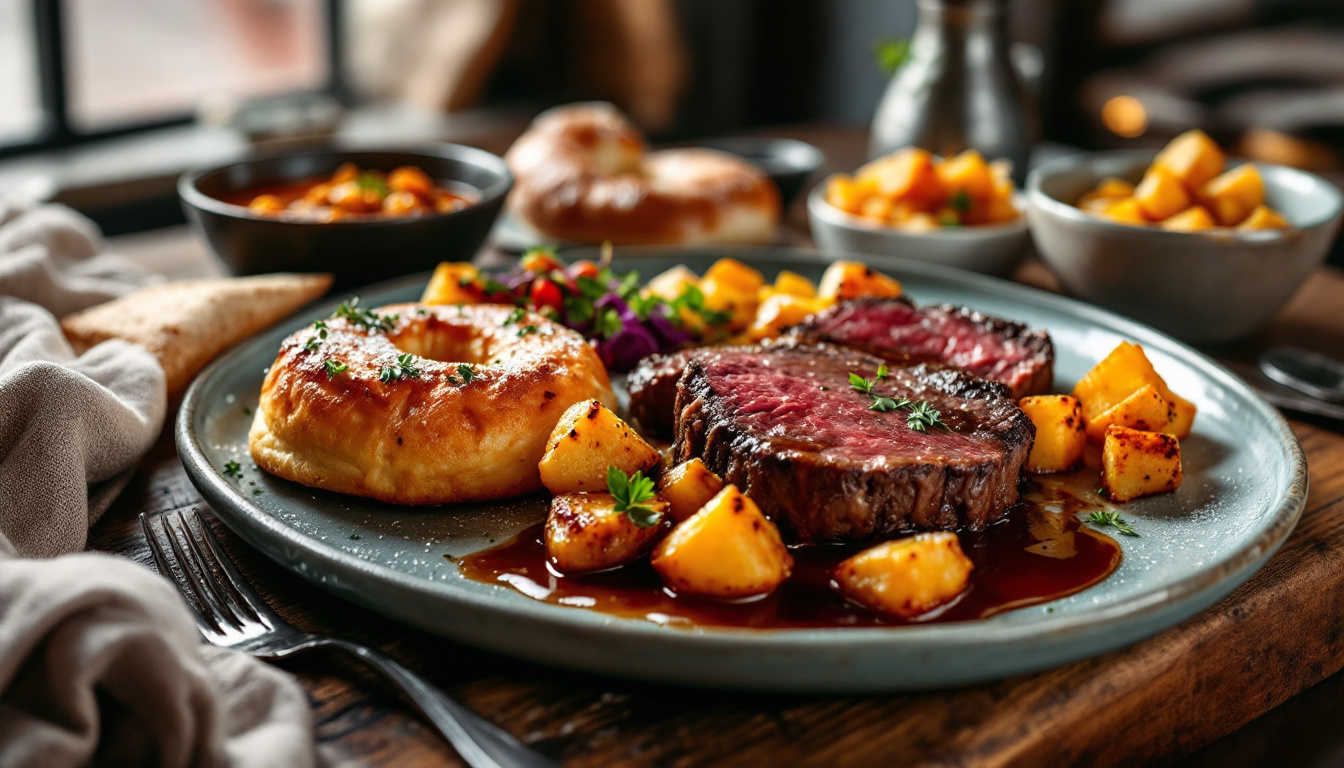
The Sunday roast is the meal to plan your week around, and London does it better than anywhere in the country. A proper one means roast beef or lamb, a Yorkshire pudding the size of a hubcap, roast potatoes crisped in fat, seasonal veg and a jug of gravy. Good gastropubs sell out, so book ahead and arrive hungry, ideally around 1pm. It’s the British roast at its peak, covered in full in our UK food guide.
Salt Beef Beigel
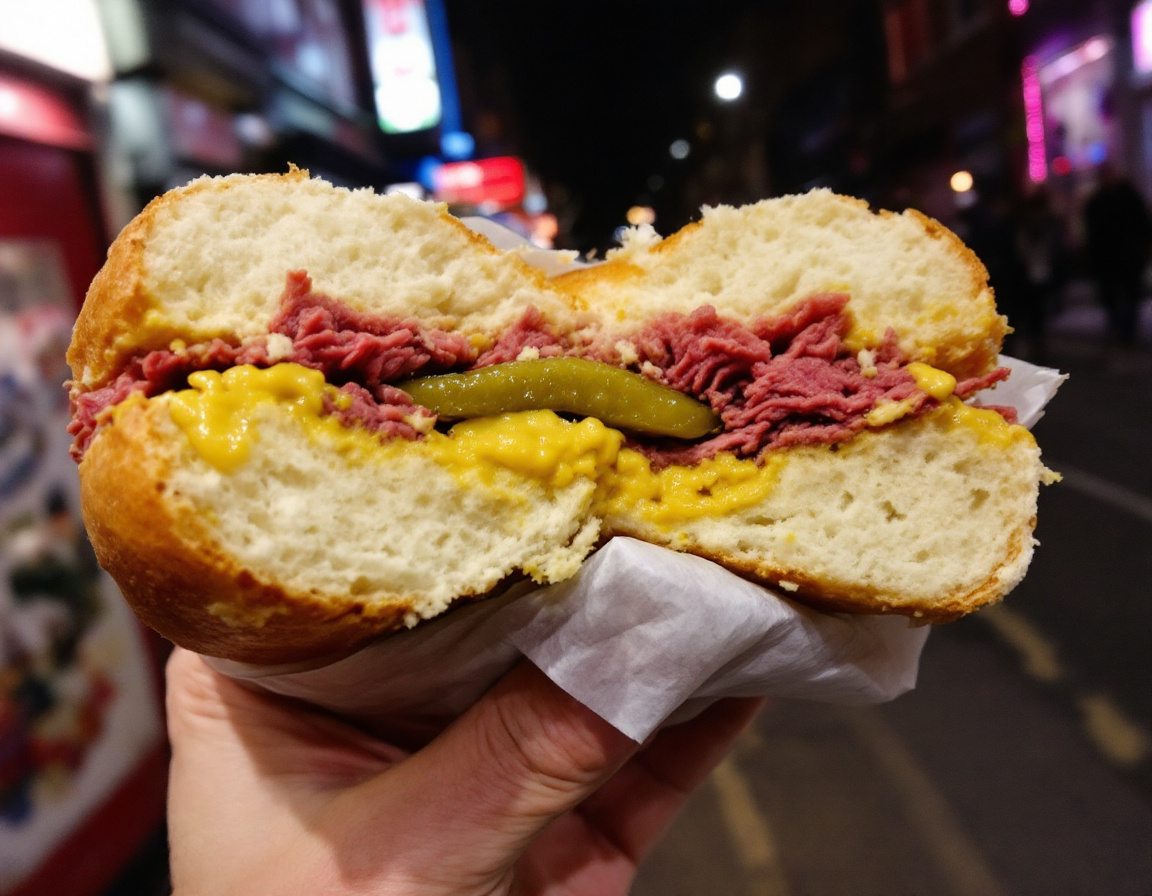
The salt beef beigel is London’s great late-night sandwich, a legacy of the East End’s Jewish community. A boiled-then-baked beigel is split and stuffed with hot salt beef, a swipe of English mustard and a pickled cucumber, and the bakeries that make it on Brick Lane never close: Beigel Bake at number 159 has been open around the clock since 1974. Eaten standing on the pavement at midnight after a night out, it’s one of the most London things you can do. Get extra mustard.
Curry
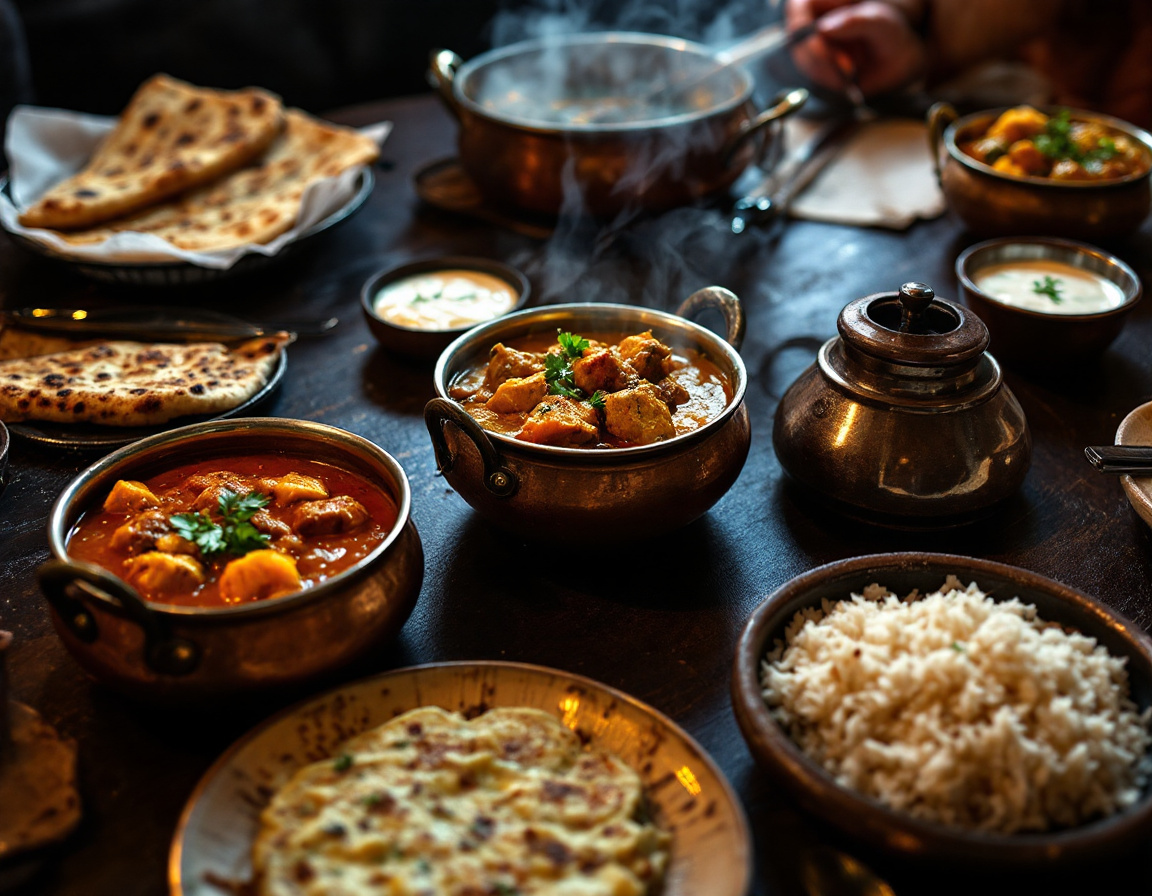
Curry is so woven into London that chicken tikka masala is half-jokingly called Britain’s national dish. Skip the tired tourist strip of Brick Lane itself and head to Tooting or Southall for the real thing: Punjabi, Tamil, Bangladeshi and Pakistani kitchens cooking for their own communities. Order a dosa in Tooting, a Lahore-style grill in Southall, or a Bengali fish curry, and you are eating one of the best versions of these cuisines outside South Asia.
Jerk Chicken and Patties
London’s Caribbean food centres on Brixton, and it comes with a date attached: the Windrush generation that began arriving in 1948, mostly from Jamaica and Trinidad, was first housed in the deep shelter at Clapham South and settled a short walk away. More than seventy years on, Brixton Market and Brixton Village smell of jerk: chicken marinated in scotch bonnet, allspice and thyme, grilled until blackened at the edges and served with rice and peas, fried plantain and coleslaw. The grab-and-go version is a flaky, turmeric-yellow Jamaican patty filled with spiced beef or saltfish; Healthy Eaters, one of the last Jamaican bakeries in the area, says it hand-makes around 9,000 of them a week.
Dim Sum
London’s Chinatown, tucked behind Leicester Square in Soho, serves some of the best Cantonese food in Europe. Go for dim sum at lunch: steamed har gow prawn dumplings, char siu bao, cheung fun rice rolls and egg tarts, ordered plate by plate with a pot of tea. The roast meat windows with their lacquered ducks and crisp pork belly are worth the queue too. It’s a different city behind those gates.
Fish and Chips
Fish and chips is the British classic everyone wants in London, and a good chippy delivers: a fat fillet of cod or haddock in crisp batter, thick-cut chips, mushy peas and a shake of malt vinegar. The best are old family-run shops, not the neon places by the stations. Eat it from the paper for the full effect. The pairing is younger than it looks: the first recorded fish and chip shop is usually credited to Joseph Malin, a Jewish immigrant who started selling fried fish with chips near Bow in the East End around 1860.
Pie and Mash
Pie and mash is the original London working-class meal, and the surviving old shops are living history. A minced-beef pie comes with a scoop of mash and a green parsley sauce called liquor, eaten in tiled Victorian shops that have barely changed in a century. The brave add jellied eels, once the cheap protein of the Thames. The oldest survivor is M. Manze on Tower Bridge Road, run by the Manze family since 1902, when Michele Manze from Ravello took over a pie shop that had opened there in 1892. It’s plain, cheap and deeply local, the opposite of a tasting menu.
Bangers and Mash
Bangers and mash is the pub plate London falls back on: two or three fat pork sausages on a mound of buttery mash, drowned in onion gravy, often with peas on the side. The nickname is a war story. During the First World War meat was short, sausages were padded out with water and fillers, and they had a habit of bursting in the pan with a bang; the word is on record from at least 1919. Order it with a pint in an old-fashioned pub rather than a polished gastropub, and it is usually the most honest meal on the menu. For more British classics, see our guide to the best food in the UK.
Scotch Egg
A Scotch egg is a boiled egg wrapped in seasoned sausage meat, rolled in breadcrumbs and deep-fried, and London has a claim on it: Fortnum & Mason on Piccadilly says it created the Scotch egg in 1738 as a portable meal for travellers heading west out of the city. A rival theory traces it to nargisi kofta, a Mughal dish of egg wrapped in spiced meat, brought back from India. The version worth hunting down today is the pub one, served still warm with a soft, jammy yolk and a spoon of mustard or piccalilli. The cold, dense supermarket kind has little to do with it.
The Full English Breakfast
The full English is the breakfast that fuels the city, best eaten in a no-frills cafe, what Londoners call a caff. Expect bacon, sausage, fried or scrambled eggs, baked beans, grilled tomato, mushrooms, toast and, if you are brave, black pudding, with a mug of strong builder’s tea on the side. Skip the hotel buffet version and find a proper greasy spoon. It’s a glorious, slightly excessive way to start the day.
Afternoon Tea
Afternoon tea is London’s most genteel meal, a Victorian institution worth doing once. A tiered stand arrives loaded with crustless finger sandwiches, warm scones with clotted cream and jam, and a parade of little cakes, all washed down with pots of tea. The grand hotels do the famous, pricey versions, but plenty of tea rooms serve it for far less. The one question that starts arguments: jam first or cream first on the scone.
Sticky Toffee Pudding
Sticky toffee pudding is the dessert London pubs do best: a dense, moist sponge made with chopped dates, soaked in hot toffee sauce and served with custard, cream or vanilla ice cream. It was made famous in the 1970s by Francis Coulson at the Sharrow Bay hotel on Ullswater in the Lake District, but the recipe has a stranger backstory. Coulson reportedly had it from Patricia Martin, a hotelier in Claughton, Lancashire, who said two Canadian air force officers lodging with her during the Second World War gave it to her. Order it after a Sunday roast and plan nothing for the evening.
Where to eat: markets and neighborhoods
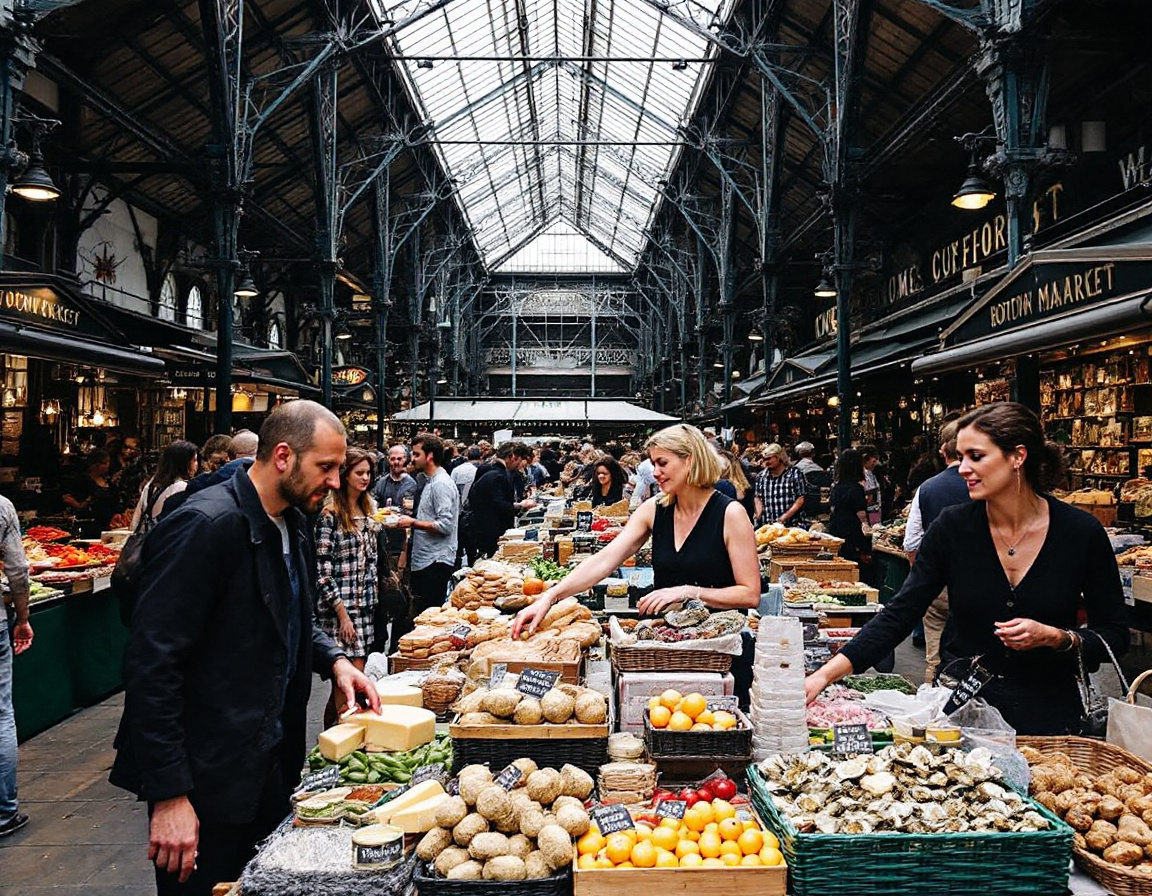
The fastest way to eat well in London is to pick a market or a neighborhood and graze. Borough Market, near London Bridge, is the city’s best food market, a covered maze of cheesemongers, bakers, oyster stalls and hot-food traders that is worth building a day around. Get there early to beat the crowds, the same logic that rules the world’s best food halls and markets.
Beyond Borough, each pocket of the city has its specialty. Brick Lane and Spitalfields in the East End mean beigels, curry and weekend street food. Soho and Chinatown deliver Cantonese roast meats and late-night eats. Tooting in the south and Southall in the west are the real curry heartlands. For modern British cooking, the Borough and Bermondsey area around Maltby Street has the gastropubs and nose-to-tail restaurants that rebuilt London’s reputation.
Tips and pub etiquette
A few local habits make eating and drinking in London smoother. The pub is the heart of it, and the rules are simple once you know them.
- Order at the bar. In most pubs there is no table service; order food and drinks at the bar and pay there, then they bring the food over.
- Round it up, do not over-tip. Tipping in pubs is not expected; in restaurants a service charge is often already added, so check the bill before adding more.
- Book the Sunday roast. Good gastropubs sell out their roasts; reserve, and do not expect them on other days.
- Mind the curry strip. The touts pulling you into Brick Lane curry houses are the tell of a tourist trap; the best curry is in Tooting and Southall.
London is also one of the easiest big cities in the world for vegetarians, vegans and every dietary need, thanks to its Indian, Middle Eastern and modern cafe scenes. If you are exploring the rest of the country afterwards, the regional classics are worth chasing down next.
FAQ
What food is London famous for?
London is famous for the Sunday roast, fish and chips, the full English breakfast, and pie and mash, but its real signature is diversity: world-class curry, Chinatown dim sum, salt beef beigels and food from almost every country on earth, all within one city.
Where do locals eat in London?
Londoners eat away from the tourist sights, in neighborhoods like Tooting and Southall for curry, Soho and Chinatown for Cantonese food, and markets like Borough and Maltby Street. Avoid the restaurants clustered around Leicester Square and Piccadilly, which are mostly overpriced tourist traps.
Is London expensive for food?
London can be expensive, but it does not have to be. Set lunch menus, market stalls, a three-pound salt beef beigel and the city’s curry houses all offer excellent value. Making lunch your main meal and eating in immigrant neighborhoods keeps costs down while improving the food.
What is the best food market in London?
Borough Market near London Bridge is the best-known and arguably the best food market in London, with cheese, oysters, bakeries and hot-food stalls. Maltby Street, Brick Lane and Mercato Metropolitano are excellent alternatives with more street food and smaller crowds.
Where can I get the best curry in London?
For the best curry in London, skip the tourist strip of Brick Lane and head to Tooting in the south for South Indian dosas and Sri Lankan food, or Southall in the west for Punjabi and Pakistani grills. These neighborhoods cook for their own communities, so the food is more authentic and better value.
More food guides waiting for you
City and country deep dives across Europe and every continent we have eaten our way through.