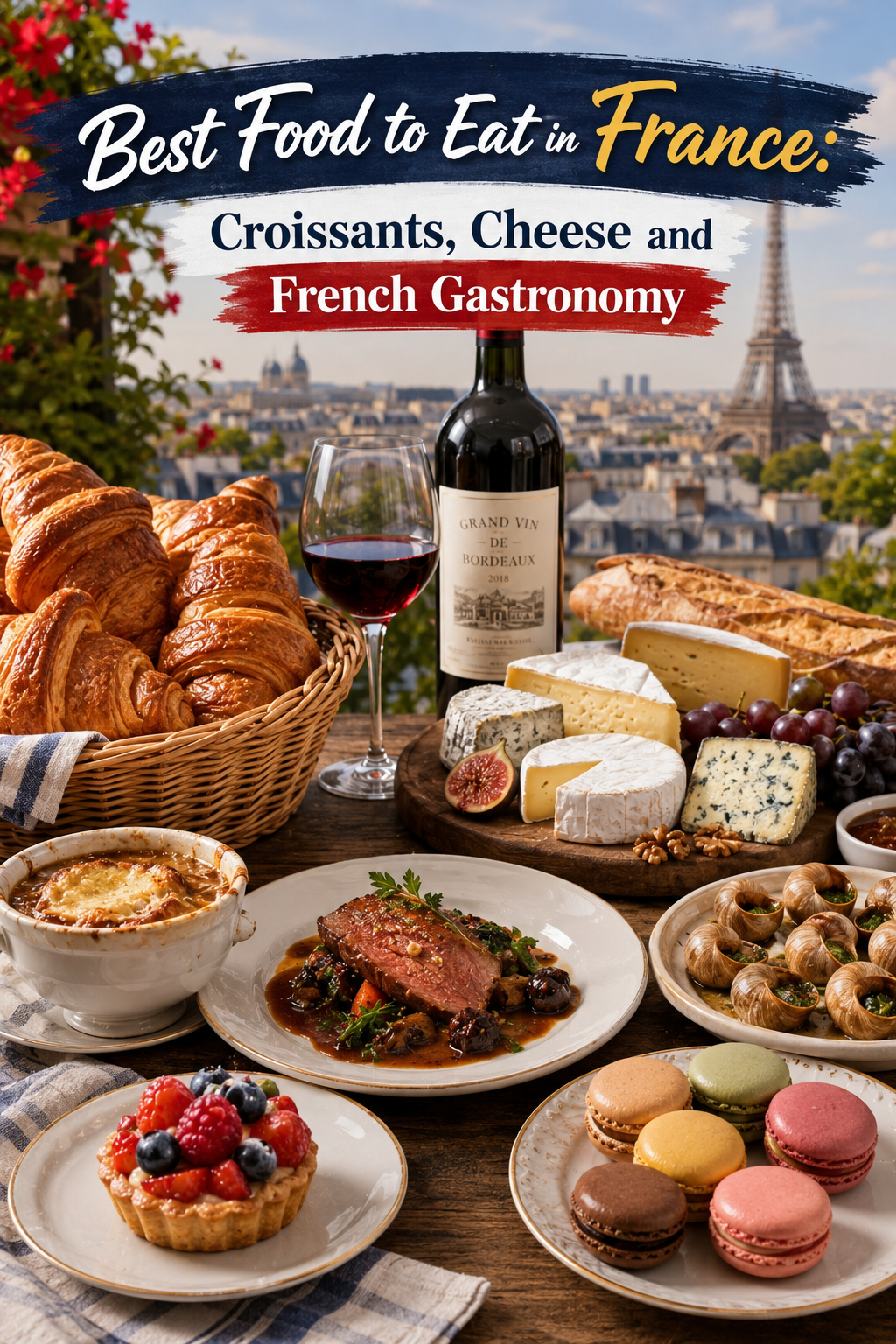
The best food to eat in France is a daily ritual, not a special occasion. France did not just give the world great food, it gave the world the idea that food is worth taking seriously. From the croissant you tear apart on the walk home from the boulangerie to the cheese course before dessert, eating in France is a daily ritual practiced by 67 million people who genuinely care. This is what to eat, region by region, and how to order it like a local.
The thing nobody warns you about France is how good the cheap food is. My favorite meal on my last trip was not a starred tasting menu, it was a plat du jour at a workers’ cafe in Lyon: a plate of coq au vin, a basket of bread, a small carafe of Beaujolais, twelve euros, eaten elbow to elbow with builders on their lunch break. The best food to eat in France is often the formula lunch at the place with the handwritten chalkboard, not the restaurant with the leather menu.
This guide covers the bakery, the bistro, and then France region by region, with what to order, what it costs, and the etiquette that actually matters. France is one of nine countries in our guide to the best food in Europe.
French pastry and bread: the foundation of everything
The French day begins and ends with bread. A boulangerie is the first shop to open in any French town and the last to close, and the morning ritual is universal: walk to the bakery, buy a baguette and a croissant, tear one end off the baguette on the walk home. This is not a cliche, it is genuinely how France starts the day. The bakery is the most important institution in every neighborhood.
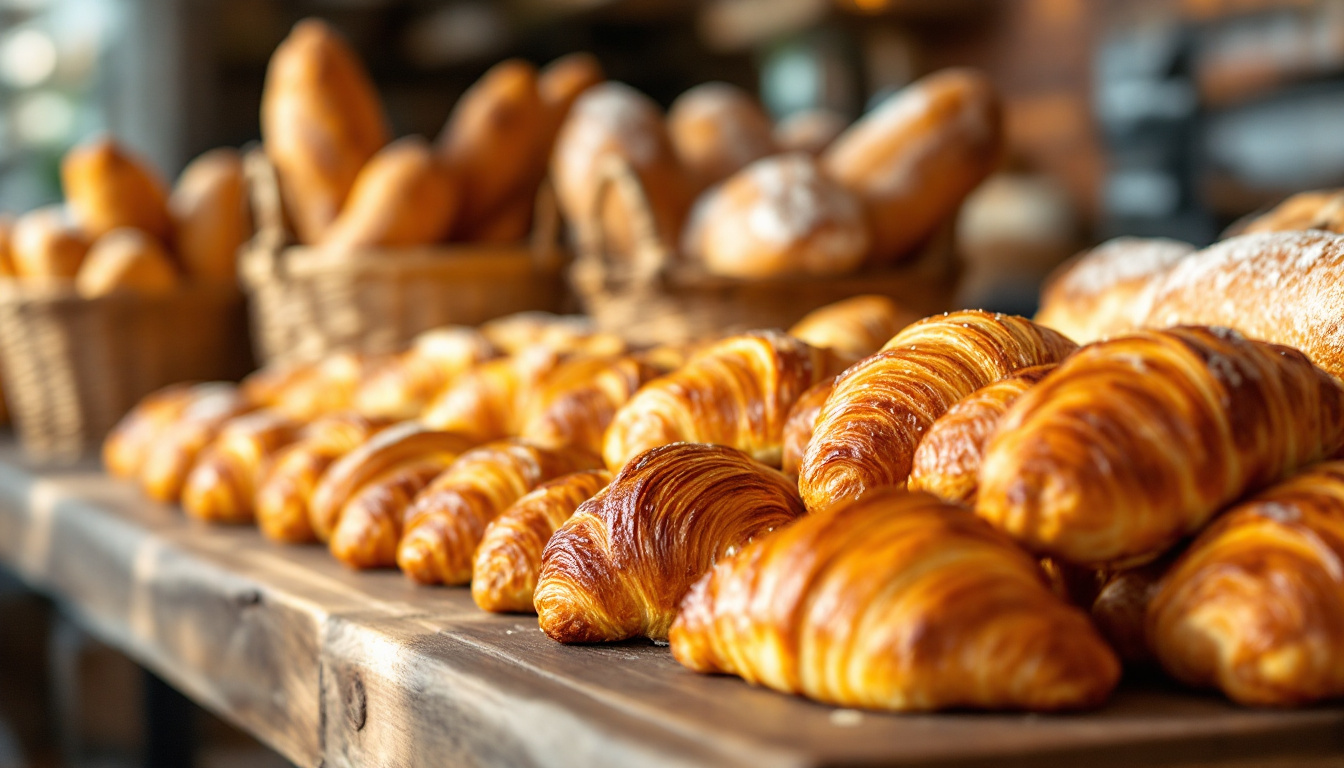
Croissant Croissant au beurre
A proper croissant is 81 layers of butter laminated into yeasted dough, baked until it shatters outside and pulls apart in honeycomb strands inside. The tell is the shape: a croissant made with margarine is straight, one made with real butter is curved. Always choose the curved croissant au beurre, and when you tear it the shards should flutter onto the plate.
Pain au chocolat (or chocolatine in the southwest, where the naming war is real) is the same dough around two batons of dark chocolate. In Paris, Du Pain et des Idees and Maison Landemaine set the standard. €1.20 to 2 for a croissant, a little more for pain au chocolat.
Baguette Baguette tradition
A real baguette tradition has a crackling crust that sings when you squeeze it, an irregular open crumb, and a nutty, yeasty flavor. It goes stale within hours, which is the entire point: you buy it fresh, eat it fresh, buy another tomorrow. UNESCO added the French baguette to its Intangible Cultural Heritage list in 2022.
Around €1.10 to 1.50. Paris runs an annual Best Baguette competition, and the winner supplies the Elysee Palace for a year. Ask for “une tradition,” not the cheaper industrial “baguette ordinaire.”
Classic French bistro dishes: the heart of everyday eating
The bistro is where most of France actually eats. Small, informal, a handwritten chalkboard menu, paper tablecloths, a short wine list led by the house red. Bistro food is not fancy, it is grandmotherly and seasonal, and the best bistros change the menu weekly based on the market.
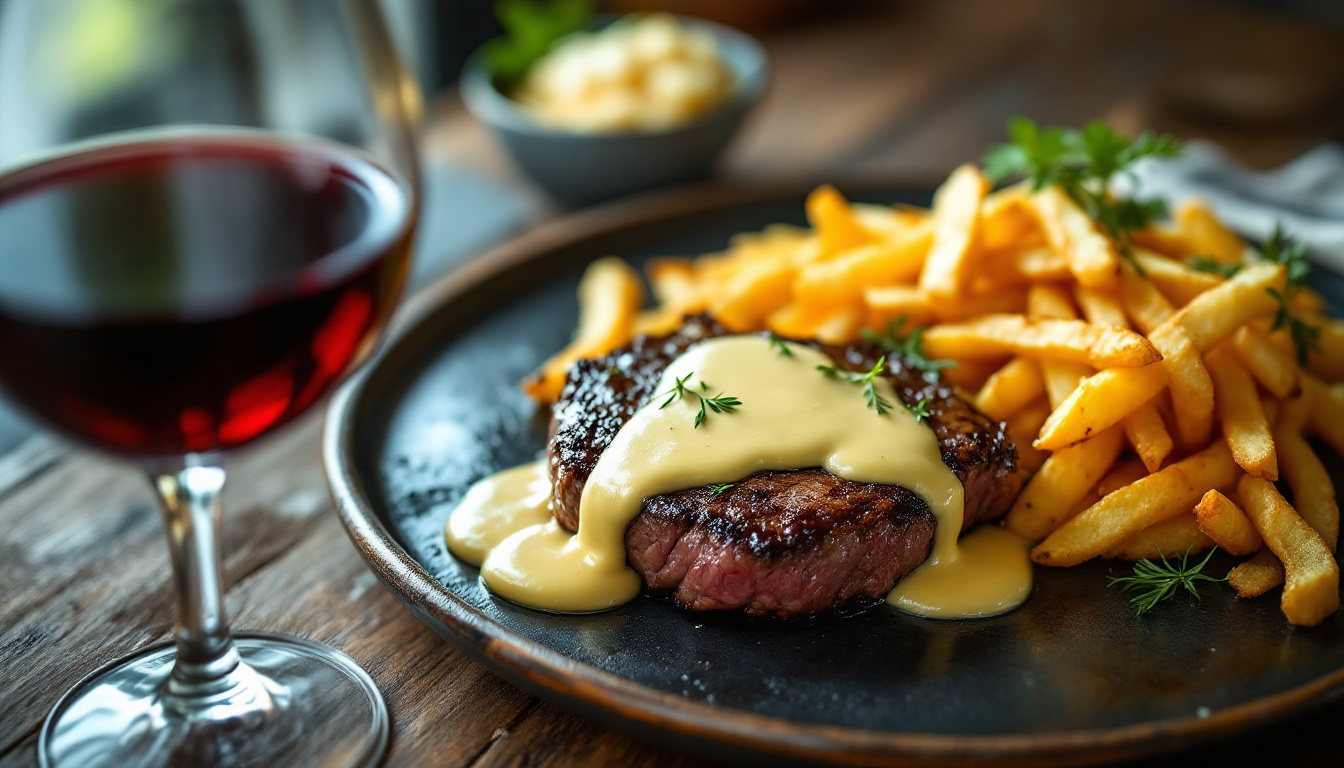
Steak Frites Steak frites
A thick entrecote or bavette seared in butter, served with hand-cut fries and bearnaise (emulsified butter with tarragon, shallot, and vinegar). The steak wants a hard caramelized crust and a rosy interior; the frites should be twice-fried, once low to cook through and once hot to crisp.
Around €16 to 24 at a good bistro. Le Relais de l’Entrecote in Paris serves nothing else, with a secret green sauce and unlimited frites refills. The queue starts at 6:45 PM.
Coq au Vin Coq au vin
Chicken braised in red wine, usually Burgundy, with mushrooms, lardons, pearl onions, and a bouquet garni. The wine turns the sauce deep purple and gives the bird a richness you cannot get any other way. It needs two to three hours of slow braising.
Around €16 to 22. The Burgundy version is the classic, but every wine region has its own: coq au Riesling in Alsace, coq au vin jaune in the Jura.
Boeuf Bourguignon Boeuf bourguignon
Beef chuck braised for hours in red Burgundy with carrots, onions, mushrooms, and lardons until the meat is fork-tender and the sauce glossy. Julia Child introduced it to America, but the dish is older than France itself. The rule: never cook with a wine you would not drink.
Around €16 to 24, and best in winter. A good version uses a wine good enough to pour alongside the meal.
Soupe a l’Oignon Gratinee French onion soup
Yellow onions caramelized over 45 to 60 minutes of patient stirring, deglazed with white wine or brandy, simmered in beef broth, then crowned with bread and a thick cap of Gruyere and broiled until golden. You crack through the cheese with your spoon into a dark, sweet, savory broth.
A Les Halles market tradition, famously eaten at 2 AM after a long night. Around €8 to 14.
More bistro essentials
- Confit de canard. Duck legs cooked slowly in their own fat until meltingly tender, the skin crisped to order, served with pommes sarladaises. A southwest staple. €16 to 22.
- Quiche Lorraine. A savory custard tart with lardons, eggs, cream, and Gruyere in buttery shortcrust. The real version is rich, wobbly, and barely set in the center. €4 to 8 a slice.
- Croque-monsieur. Ham and Gruyere baked with bechamel until bubbling; add a fried egg on top and it becomes a croque-madame. €8 to 14, the perfect fast-but-rich lunch.
- Escargots de Bourgogne. Snails baked in their shells with garlic-parsley butter, extracted with a tiny fork, the butter mopped up with bread. The flavor is all about the butter. Six for €8 to 14.
- Blanquette de veau. A creamy veal stew in a white sauce of cream and egg yolk with mushrooms and pearl onions, the meat gently poached and never browned. One of France’s great comfort dishes. €16 to 22.
Lyon: France’s true gastronomic capital
Lyon sits where Burgundy’s wine, the Rhone Valley’s orchards, the Alps’ dairy, and Bresse’s legendary poultry all meet, and that geographic luck made it the gastronomic heart of France long before Paris had Michelin stars. The signature institution is the bouchon, a small family-run bistro serving Lyonnaise classics in a room that has not changed since the 1920s: chequered tablecloths, a communal pot of cornichons, and a patron who takes offense if you do not finish.
- Quenelle de brochet. An airy oval dumpling of pike, flour, butter, and egg, poached then gratineed in a crayfish-cream Nantua sauce. Texture between a mousse and a souffle, and one of the most technical dishes in French cooking. €14 to 20.
- Salade lyonnaise. Frisee with lardons, a runny poached egg, and a warm vinaigrette made from the lardon fat. The yolk breaks into the dressing. €10 to 14.
- Andouillette. A coarse tripe sausage that smells frankly of intestine. Love-it-or-hate-it; most tourists hate it, most Lyonnais adore it. Order it once to find out. €14 to 18.
- Cervelle de canut and saucisson brioche. Herbed fresh cheese with shallots and chives, and a fat pork sausage baked inside brioche and sliced warm. Bouchon staples.
The best bouchons carry the “Authentique Bouchon Lyonnais” label: Daniel et Denise, Le Cafe Comptoir Abel (since 1928), Chez Paul. A full meal with a pot of Beaujolais runs €25 to 40.
Provence and the Mediterranean south: olive oil, herbs, sun
Provence and the Cote d’Azur cook with olive oil instead of butter and herbs instead of cream, letting the Mediterranean sun do the work. This is the lightest, most vegetable-forward French cuisine, and where French food comes closest to its Italian and Greek neighbors.
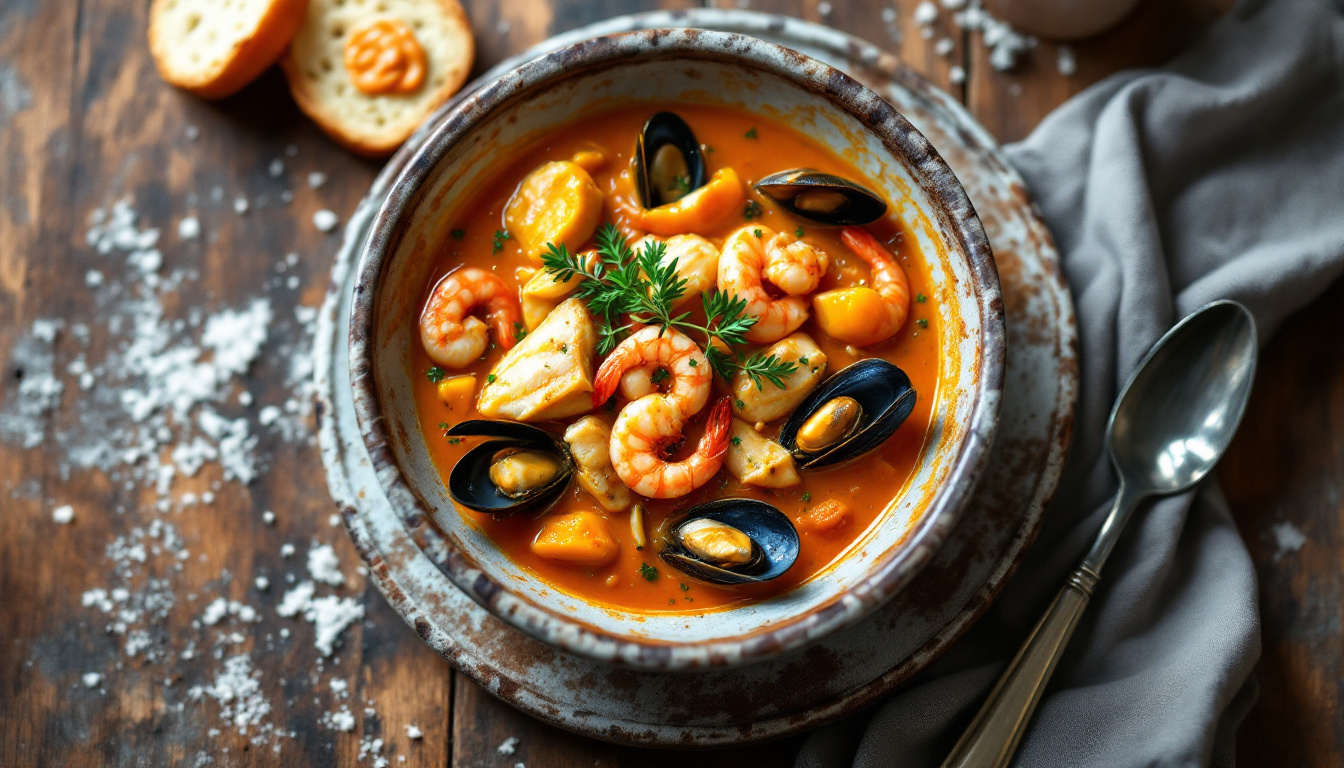
Bouillabaisse Bouillabaisse
A broth of rockfish (rascasse, Saint-Pierre, congre), saffron, fennel, and orange peel, served in two parts: the broth first with croutons, rouille, and grated Gruyere, then the fish on a separate platter. A proper version uses at least four Mediterranean fish and takes hours. It started as poor fishermen’s food made from the unsellable catch.
Now €45 to 70 per person at the Marseille classics like Chez Fonfon. Do not order bouillabaisse outside Marseille, and never in Paris.
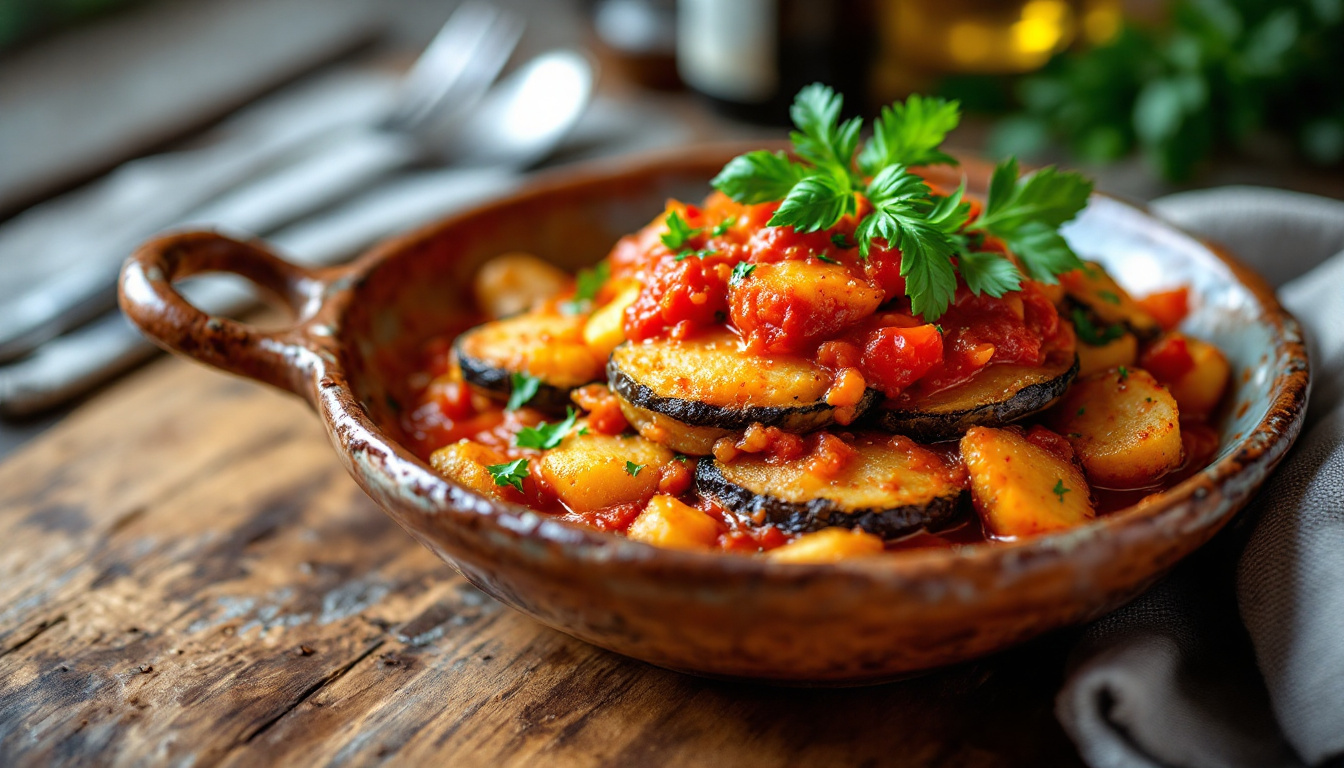
- Ratatouille. A Provencal stew of eggplant, zucchini, peppers, tomatoes, onions, and garlic in olive oil with thyme and basil. The rustic version tastes more like Provence than the fancy layered one. Best in July and August. €10 to 16.
- Salade nicoise. The real Nice version has raw vegetables, hard-boiled egg, anchovies, olives, and olive oil. No lettuce, no boiled potato, no cooked vegetables.
- Socca and pissaladiere. A crispy chickpea-flour pancake from a wood oven (€3 to 5), and a tart of slow-cooked onions, anchovies, and olives, Nice’s answer to pizza.
- Tapenade and aioli. Olive-caper-anchovy paste on bread, and garlic mayonnaise served with boiled vegetables and salt cod, traditionally on Fridays.
Rose is the drink of Provence: pale, dry, cold, drunk outdoors in the shade. Bandol and Cotes de Provence are the benchmark appellations.
The southwest: duck, cassoulet, foie gras and Armagnac
The southwest (Gascony, Perigord, Toulouse, the Basque Country) is the richest, most indulgent corner of French cuisine. This is duck country: confit, magret, foie gras, rillettes, gizzards. It is also truffle, walnut, and prune country. The cooking is generous, caloric, and unapologetic.
Cassoulet Cassoulet
A slow-baked casserole of white lingot beans, Toulouse sausage, duck confit, and sometimes lamb. Three cities claim the real one: Castelnaudary (pork and sausage), Carcassonne (adds lamb), Toulouse (adds duck and sausage). The bean crust on top is broken and folded back into the stew several times during cooking.
Around €16 to 24, and it weighs heavily on the stomach and the soul. Strictly a cold-weather dish.
Foie Gras Foie gras
Fattened duck or goose liver, served as a cold sliced terrine with toast and fig jam, as silky spreadable mi-cuit, or pan-seared (poele) until crisp outside and melting inside with a sweet Sauternes reduction. It is controversial for the gavage feeding process, and worth understanding the debate; in France it is legally classified as part of the gastronomic heritage.
A terrine portion runs €12 to 20, pan-seared €18 to 30. Perigord and Gers are the heartland.
- Piperade. Basque eggs scrambled with tomatoes, peppers, and Espelette chili.
- Gateau basque. A dense buttery cake filled with black cherry jam or pastry cream.
- Jambon de Bayonne and piment d’Espelette. Cured ham aged 9 to 12 months, and the mild smoky Basque chili that flavors everything. The French Basque cuisine continues across the border, where San Sebastian’s pintxos pick up the thread, in our Spain food guide.
Alsace and the northeast: where France meets Germany
Alsace has changed hands between France and Germany many times, and the food shows both. The wines are German-style (Riesling, Gewurztraminer), the portions are German-sized, the charcuterie is Germanic, but the technique stays French. Strasbourg’s Christmas market is one of the great European food experiences, bridging to the traditions in our Germany food guide.
- Choucroute garnie. Sauerkraut braised in Riesling, piled with smoked sausages, Strasbourg sausage, pork knuckle, and belly, with boiled potatoes and mustard. The most Germanic dish in France. €16 to 22.
- Tarte flambee (flammekueche). Paper-thin dough baked screaming-hot with creme fraiche, onions, and lardons. Alsace’s answer to pizza, torn by hand with a glass of Riesling. €8 to 14.
- Baeckeoffe. A one-pot stew of pork, beef, and lamb layered with potatoes, marinated in Riesling, sealed with dough, and baked for hours.
- Kougelhopf. A sweet brioche-like cake baked in a ring mould with almonds and kirsch-soaked raisins; a savory version with lardons is served as aperitif.
Brittany: crepes, cider, oysters and the Atlantic coast
Brittany is France’s Celtic coast: rugged, Atlantic-facing, obsessed with seafood, crepes, and cider. The food is simpler and more rustic than the south or Lyon, and the ingredients are extraordinary. Breton butter, salted and golden, is considered the best in France.
Galette and Crepe Galette / Crepe
A galette is the savory buckwheat crepe, folded around fillings: the classic complete is ham, egg, and Gruyere, but goat cheese with honey or scallops with cream are common. A crepe is the sweet wheat-flour version, filled with butter and sugar, salted caramel (caramel au beurre sale), or flambeed with Grand Marnier.
A full galette, sweet crepe, and a bowl of cider runs €12 to 18 at a creperie, and the quality floor across Brittany is remarkably high.
- Oysters from Cancale. Brittany’s oyster capital, considered France’s finest, eaten raw with lemon and a shallot mignonette. A dozen at a Cancale market stall: €8 to 15.
- Moules frites. Mussels steamed in white wine, shallots, and cream with fries; the Breton version often uses cider instead of wine. €12 to 16.
- Breton cider and kouign-amann. Dry to sweet cider served in ceramic bolees, and the most outrageously buttery, caramelized pastry in existence.
The French cheese course: a civilisation in wheels and wedges
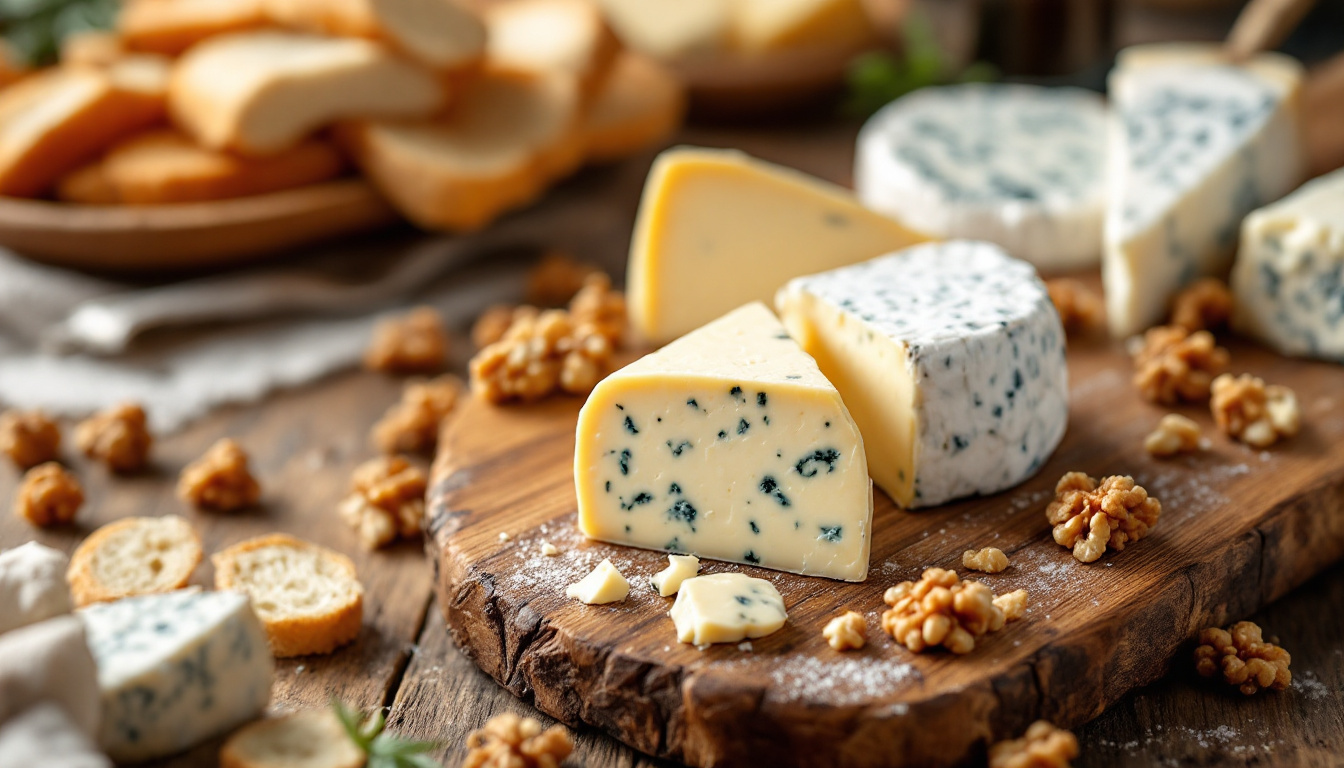
France produces over 400 cheeses, and the cheese course remains one of the most civilised traditions in European dining. At a proper restaurant a board arrives after the main and before dessert; you choose three to five, the waiter cuts them, and you eat them with bread, never crackers, from mildest to strongest, left to right.
- Comte. Jura, hard, nutty, caramel notes, aged 12 to 36 months.
- Brie de Meaux and Camembert de Normandie. Soft-ripened and oozing at room temperature; Camembert is smaller and more intense than Brie.
- Roquefort. Aveyron, sharp raw-sheep’s-milk blue aged in limestone caves.
- Epoisses. Burgundy, washed-rind, orange, legendarily pungent, effectively banned from French public transport.
- Reblochon, Beaufort, Chevre. The Savoie cheese behind tartiflette; the Alpine melting cheese behind fondue; and goat cheese from fresh logs to aged crumbly discs, with the Loire as its heartland.
French wine: a quick survival guide
French wine is the deepest rabbit hole in food culture, but a few essentials cover most meals. The single most useful tip: the house wine (vin de la maison) or the cheapest bottle on a bistro list is almost always a safe bet, because the French would not tolerate a bad house pour. A pichet (carafe) runs €4 to 8 for a quarter litre.
- Burgundy. Pinot Noir and Chardonnay, the most terroir-obsessed region on earth; village wines at €15 to 30 are excellent.
- Bordeaux. Cabernet and Merlot blends, structured and age-worthy, split into left bank (Medoc) and right bank (Saint-Emilion).
- Loire and Rhone. Sauvignon Blanc and Chenin in the Loire; Syrah in the northern Rhone, Grenache blends (Chateauneuf-du-Pape) in the south.
- Alsace, Champagne, Beaujolais. Aromatic whites; sparkling for celebrating; and light, fruity Gamay perfect with charcuterie and bouchon food.
French desserts: the world’s greatest pastry tradition
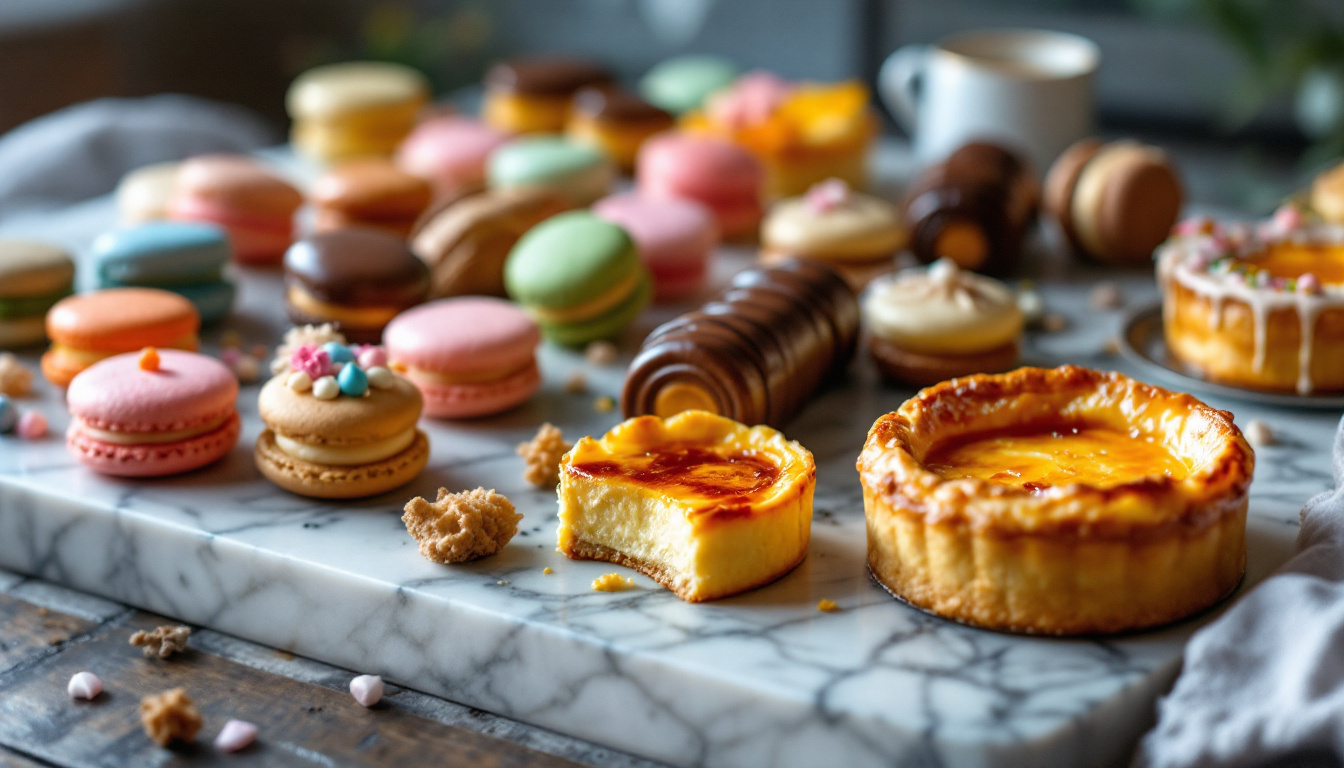
- Creme brulee. Vanilla custard under a torched sugar crust you crack with a spoon; the cold-and-warm contrast is the point. €7 to 10.
- Tarte Tatin. Upside-down apple tart, apples caramelized in butter and sugar before the pastry, flipped after baking. Invented by accident at the Hotel Tatin.
- Mille-feuille and Paris-Brest. Puff pastry layered with pastry cream; and a ring of choux filled with praline cream, created for the 1910 Paris-Brest bicycle race.
- Macaron. Two almond-meringue shells around ganache or buttercream; Laduree and Pierre Herme are the Paris institutions. €2 to 3 each.
- Canele and tarte au citron. A Bordeaux cake with a dark caramelized crust and custardy rum-vanilla center; and a sharp lemon-curd tart in buttery shortcrust.
- Eclair and mousse au chocolat. Choux pastry filled with cream and glazed on top, and the airy dark-chocolate mousse that closes almost every bistro meal.
For why the French drink espresso rather than drip, and where France sits in global coffee culture, see our best coffee around the world guide.
Best food cities in France
Wondering where to eat in France beyond Paris? These are the best places to eat your way across the country, each with a distinct regional identity and a few addresses worth planning a day around.
Bouchon culture, the best market in France (Les Halles de Lyon Paul Bocuse), and a city where chefs are celebrities. Must-eat: quenelle de brochet at Daniel et Denise, salade lyonnaise, saucisson brioche, cervelle de canut, and the bright-pink praline tart. Burgundy and Beaujolais flow freely.
Every regional French cuisine, every international one, the world’s best pastry shops, and the Michelin density to match. Must-eat: croissant at Du Pain et des Idees, steak frites at Le Relais de l’Entrecote, onion soup at Au Pied de Cochon, macarons at Pierre Herme. Our full Paris food guide goes deeper on where locals actually eat.
Bouillabaisse, North African-influenced cooking, and the most multicultural food scene in France, rougher and more exciting than the Cote d’Azur. Must-eat: bouillabaisse at Chez Fonfon, panisses (chickpea fries), navettes (orange-blossom cookies), couscous in Noailles, pastis as aperitif.
Bordeaux for wine and caneles at Baillardran plus Arcachon oysters. Brittany (Cancale, Saint-Malo) for galettes, oysters, kouign-amann, and the best butter in France. Strasbourg for Franco-German tarte flambee, choucroute, and the most atmospheric winstubs, especially during the Christmas market.
Best food to eat in France: the dish guide with prices
| Dish | Type | Region | Price (€ / USD) | Must-Try |
|---|---|---|---|---|
| Croissant | Pastry | Nationwide | €1.20–2 / $1.30–2.20 | ★★★★★ |
| Steak frites | Bistro | Nationwide | €16–24 / $17.60–26.40 | ★★★★★ |
| Coq au vin | Bistro | Burgundy | €16–22 / $17.60–24.20 | ★★★★★ |
| Boeuf bourguignon | Stew | Burgundy | €16–24 / $17.60–26.40 | ★★★★★ |
| Bouillabaisse | Seafood | Marseille | €45–70 / $49.50–77 | ★★★★★ |
| Cassoulet | Stew | Southwest | €16–24 / $17.60–26.40 | ★★★★★ |
| Duck confit | Bistro | Southwest | €16–22 / $17.60–24.20 | ★★★★★ |
| Quenelle de brochet | Fish | Lyon | €14–20 / $15.40–22 | ★★★★★ |
| Galette complete | Crepe | Brittany | €8–12 / $8.80–13.20 | ★★★★★ |
| Foie gras (terrine) | Starter | Southwest | €12–20 / $13.20–22 | ★★★★★ |
| Soupe a l’oignon | Soup | Paris / national | €8–14 / $8.80–15.40 | ★★★★☆ |
| Ratatouille | Vegetable | Provence | €10–16 / $11–17.60 | ★★★★☆ |
| Choucroute garnie | Meat | Alsace | €16–22 / $17.60–24.20 | ★★★★☆ |
| Escargots | Starter | Burgundy | €8–14 / $8.80–15.40 | ★★★★☆ |
| Macaron | Dessert | Paris | €2–3 each / $2.20–3.30 | ★★★★★ |
| Creme brulee | Dessert | Nationwide | €7–10 / $7.70–11 | ★★★★★ |
| Cheese course | Cheese | Nationwide | €8–14 / $8.80–15.40 | ★★★★★ |
French dining etiquette: the rules that matter
- Always say “bonjour” (or “bonsoir” after 6 PM) when entering any shop, cafe, or restaurant before saying anything else. This is the single most important social rule in France, and skipping it reads as genuinely rude.
- Eat on French hours. Lunch is roughly 12:00 to 14:00, dinner 19:30 to 22:00. Outside those windows only brasseries and cafes will feed you a full meal.
- Keep the meal order. Entree, plat, fromage, dessert, cafe. You can skip courses but never reorder them: cheese before dessert, always.
- Bread goes on the table, not a plate, at a bistro. Tear it by hand and use it to mop sauce.
- Service is included (service compris) by law. Round up or leave small change for good service; never tip 15 to 20 percent. Ask for “une carafe d’eau” for free tap water.
For dining customs across other countries, see our guide to food etiquette around the world.
How to eat well in France on any budget
Prices here are 2026, in euros, with rough dollar conversions at roughly €1 to $1.10. France runs cheaper than its reputation once you leave the tourist restaurants: Paris sits at the top of the range, and the rest of the country is noticeably kinder to a budget.
Budget: under €30 a day ($33)
Breakfast is a bakery croissant and a coffee taken standing at the bar (€3 to 4). Lunch is the formule or plat du jour at a bistro (€10 to 15 for a main and coffee). Dinner is market food, a crepe, or a croque-monsieur (€8 to 12). Tight but very doable outside Paris, where a workers’ cafe plat du jour at €10 to 12 includes bread and water.
Mid-range: €45 to 80 a day ($50 to 88)
Bakery breakfast, a full bistro formule with a glass of wine at lunch (€18 to 28), a pastry stop, and a sit-down dinner with a cheese course and wine (€25 to 40). This is the sweet spot, and it stretches further in Lyon than in Paris.
High-end: €100+ a day ($110+)
France has the world’s deepest fine-dining culture. L’Arpege in Paris, Paul Bocuse in Lyon, Mirazur in Menton. Tasting menus run €150 to 400+, but even one-star meals at €60 to 120 are extraordinary, because Michelin quality control is obsessive at every level.
Frequently asked questions about French food
What is the most popular and famous French food?
The most famous French foods are the croissant, baguette, cheese and wine, while the most popular everyday dishes are steak frites, coq au vin, boeuf bourguignon and the daily bistro plat du jour. There’s no single national dish, but if forced to pick one symbol of French cooking, most would name the baguette or a good roast chicken.
What is the national dish of France?
There is no single official dish, but pot-au-feu (beef and vegetable stew) is often cited. In practice the croissant, steak frites, and coq au vin are most associated with France. Each region has its own signature: bouillabaisse in Marseille, cassoulet in Toulouse, choucroute in Alsace, quenelles in Lyon.
How much does food cost in France per day?
Bakery breakfast 3 to 5 euro, bistro lunch formule 14 to 22, mid-range dinner 25 to 50 per person. Budget travelers can manage on 30 to 45 euro a day, while fine dining runs 80 to 400 and up. Paris is 20 to 30 percent more expensive than the provinces; Lyon and the southwest are the best value.
What is the best food city in France?
Lyon is the gastronomic capital, with bouchons, the best market in France, and Burgundy wines nearby. Paris is the pastry and fine-dining capital, Marseille is the place for bouillabaisse, Bordeaux for wine, Brittany for crepes and seafood, and Strasbourg for Franco-German Alsatian cooking.
Is France good for vegetarian travelers?
Historically challenging but improving fast. Paris and Lyon now have dedicated vegetarian restaurants, and cheese courses, ratatouille, creperies, and Provencal vegetable dishes are naturally meat-free. Vegans have a harder time because butter and cream are everywhere. See our vegetarian and vegan food travel guide.
How many types of cheese does France produce?
Over 400 distinct varieties, 46 of them with protected AOP status. The major families are soft-ripened (Brie, Camembert), washed-rind (Epoisses), blue (Roquefort), hard (Comte, Beaufort), and goat (Chevre). The cheese course before dessert is a cornerstone of French dining.
What is the difference between a bistro, brasserie and restaurant?
A bistro is small and informal with a short traditional menu. A brasserie is larger, serves all day, and is often Alsatian-influenced. A restaurant is the formal option with a longer menu and higher prices. A bouchon is Lyon-specific, serving Lyonnaise classics, and a creperie specializes in crepes and galettes.
Do I need to speak French to eat well?
A few phrases help enormously: “bonjour” when entering (never skip it), “l’addition, s’il vous plait” for the bill, and “je voudrais” for ordering. Paris has English menus, and in rural France pointing works. The single most important rule is greeting staff with bonjour before anything else.
Is tipping expected in French restaurants?
Service is included in every bill by law (service compris), so there is no obligation to tip beyond it. For good service, round up or leave 5 to 10 percent at a nice restaurant, or leave the small change at a cafe. Never tip 15 to 20 percent American-style.
More food guides waiting for you
Browse our complete collection of European food guides.