Braai smoke, Cape Malay curry, Durban bunny chow and township kotas: a region-by-region guide to what to eat in South Africa, where to find it, and what it costs.
My introduction to South African food was a paper-wrapped bunny chow in Durban, a hollowed half-loaf flooded with mutton curry, eaten with my hands on a kerb because there is no polite way to do it. The best food to eat in South Africa is five cuisines sharing one table, and most visitors only ever try one of them. Afrikaner farm cooking, Cape Malay spice, Durban’s Indian curries, Black African staples, and a Portuguese peri-peri streak all collide here, held together by the braai, the open-fire grill that doubles as the country’s main social event. Eat across all five and you understand the place better than any museum could explain it.
Why South African food is the Rainbow Nation on a plate
The best food to eat in South Africa is the product of five culinary traditions layered over three centuries, which is why no single dish defines it. The indigenous African base of maize, sorghum, and slow-cooked greens met Dutch and German farm cooking, which became Afrikaner staples like biltong and potjiekos. Then came the others.
Cape Malay cooking arrived with enslaved people brought from Indonesia and Malaysia to the Cape from the mid-1600s, adding the fragrant, sweet-savory curries behind bobotie and bredie. Indian indentured laborers, brought to Durban from the 1860s to work the sugar cane, made KwaZulu-Natal the curry capital of the country and invented the bunny chow. A Portuguese-Mozambican influence brought peri-peri chili. The result is layered, regional, and unmistakably South African.
The thread tying it together is the braai. More than a barbecue, it is a weekend institution so central that the country marks National Braai Day on Heritage Day every September 24. This guide runs through the dishes that define South Africa, then breaks the country into its food regions. South Africa is one stop on our wider guide to the best food in Africa and the Middle East.
The best food to eat in South Africa, dish by dish
These are the 14 dishes I steer every visitor toward, with a rough 2026 price and where each one belongs. Prices are in South African rand (R), with the dollar figure at roughly R18.5 to USD 1.
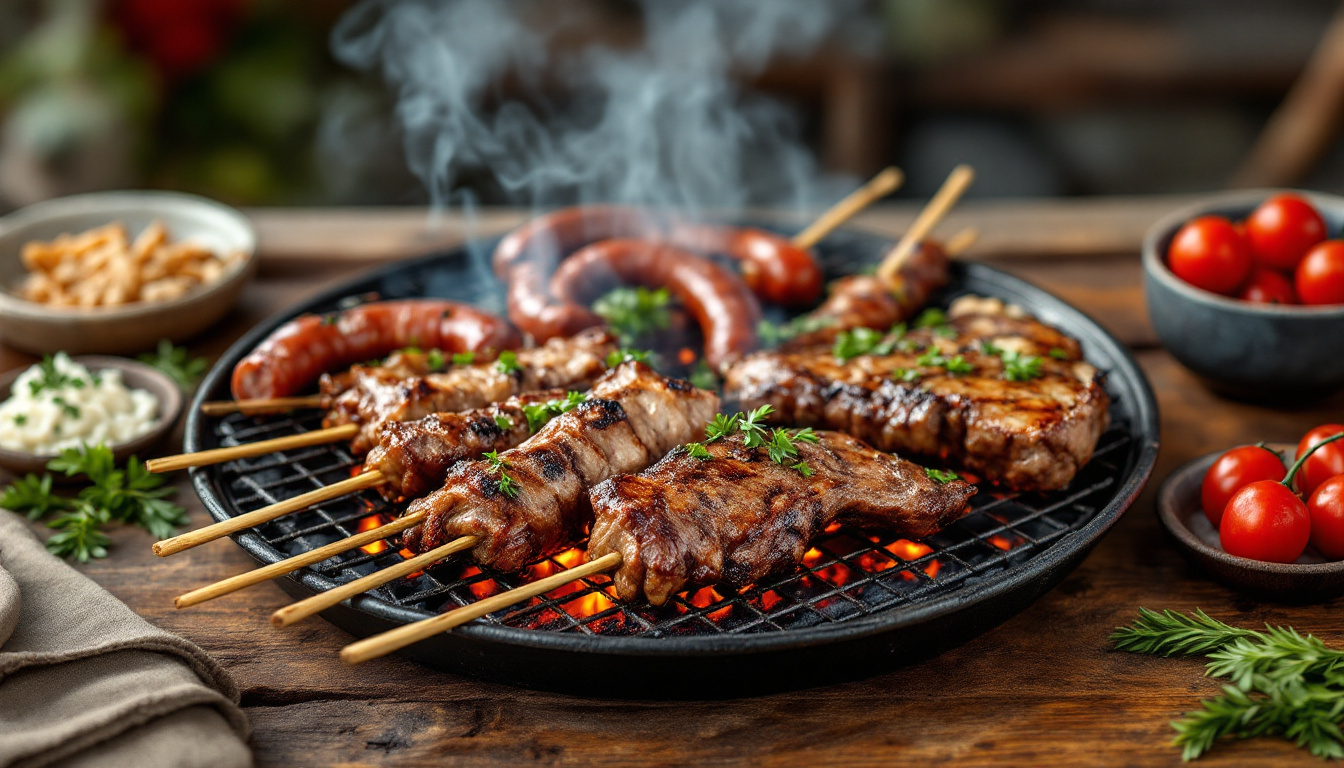
Braai boerewors and sosaties
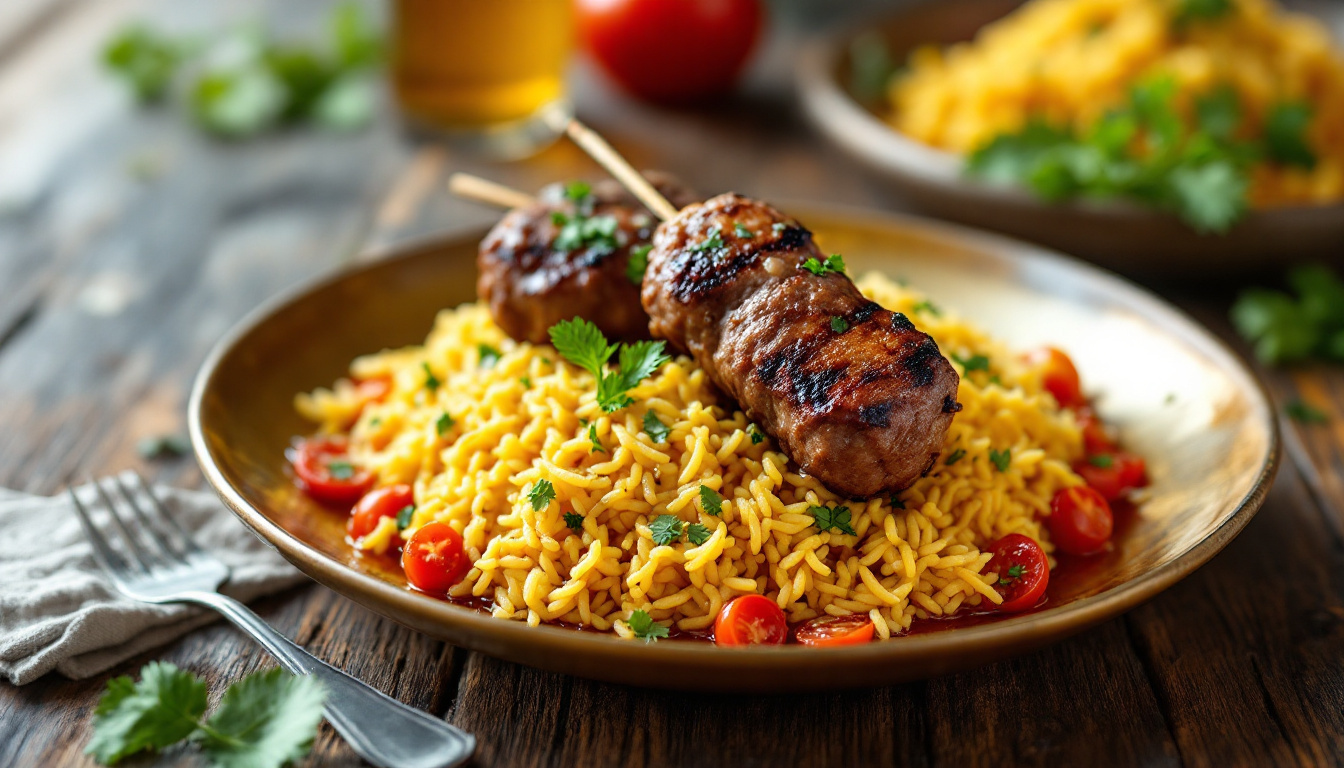
A braai is a wood or charcoal fire used to grill meat, and calling it a barbecue undersells what it means here. It is the default way South Africans gather, and the fire itself, not gas, is the point. The stars are boerewors, a coiled, coriander-spiced farmer’s sausage, and sosaties, marinated lamb skewers with a Cape Malay apricot tang. Lamb chops, steak, and chicken round it out, with pap and chakalaka on the side. Get invited to a home braai if you possibly can.
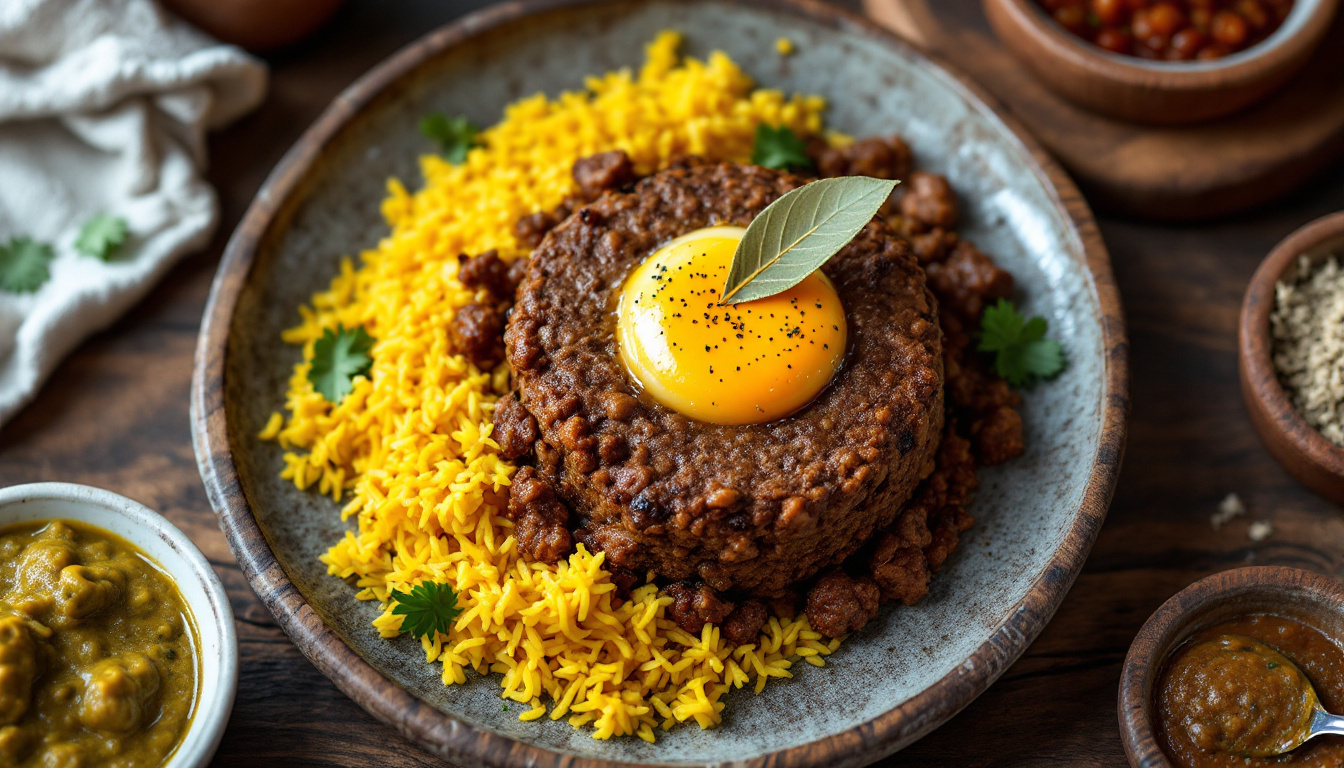
Bobotie
Bobotie is spiced minced beef or lamb baked under a golden egg custard, sweet with raisins and chutney and warm with curry, and many South Africans call it the national dish. The recipe traces back to the Cape Malay community and the Indonesian cooking that came with them in the colonial era. It is served with yellow turmeric rice, sambals, and a spoon of chutney. The balance of sweet, savory, and gently spiced is unlike any other curry dish in Africa.
Pap, shisa nyama and chakalaka
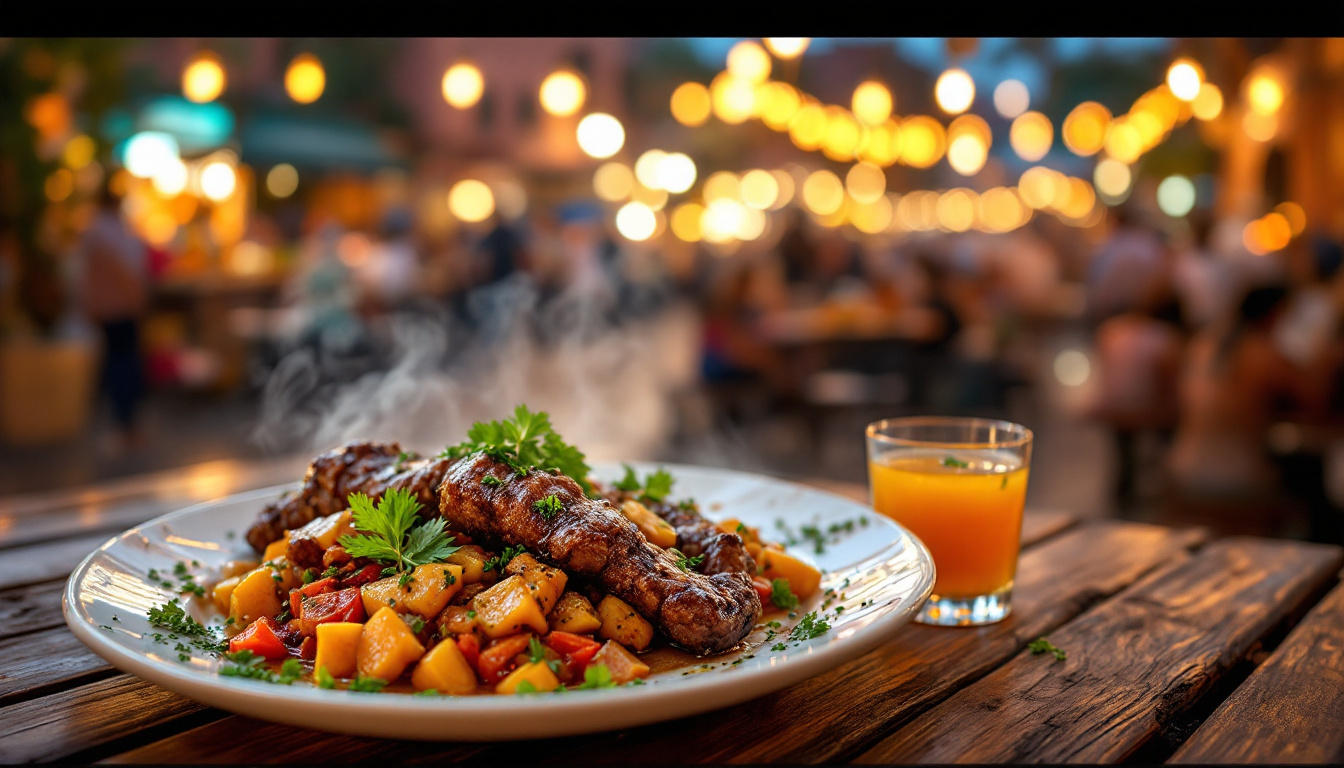
Pap is a stiff maize-meal porridge, shisa nyama is charcoal-grilled meat bought and cooked at a butchery, and chakalaka is the spicy vegetable relish that ties them together. This is the everyday eating of much of the country, and shisa nyama (the Zulu phrase means “burn the meat”) is the township weekend at its best: pick your meat at the counter, have it grilled, and eat it with pap and a tomato-chili chakalaka. Soweto does it as well as anywhere.
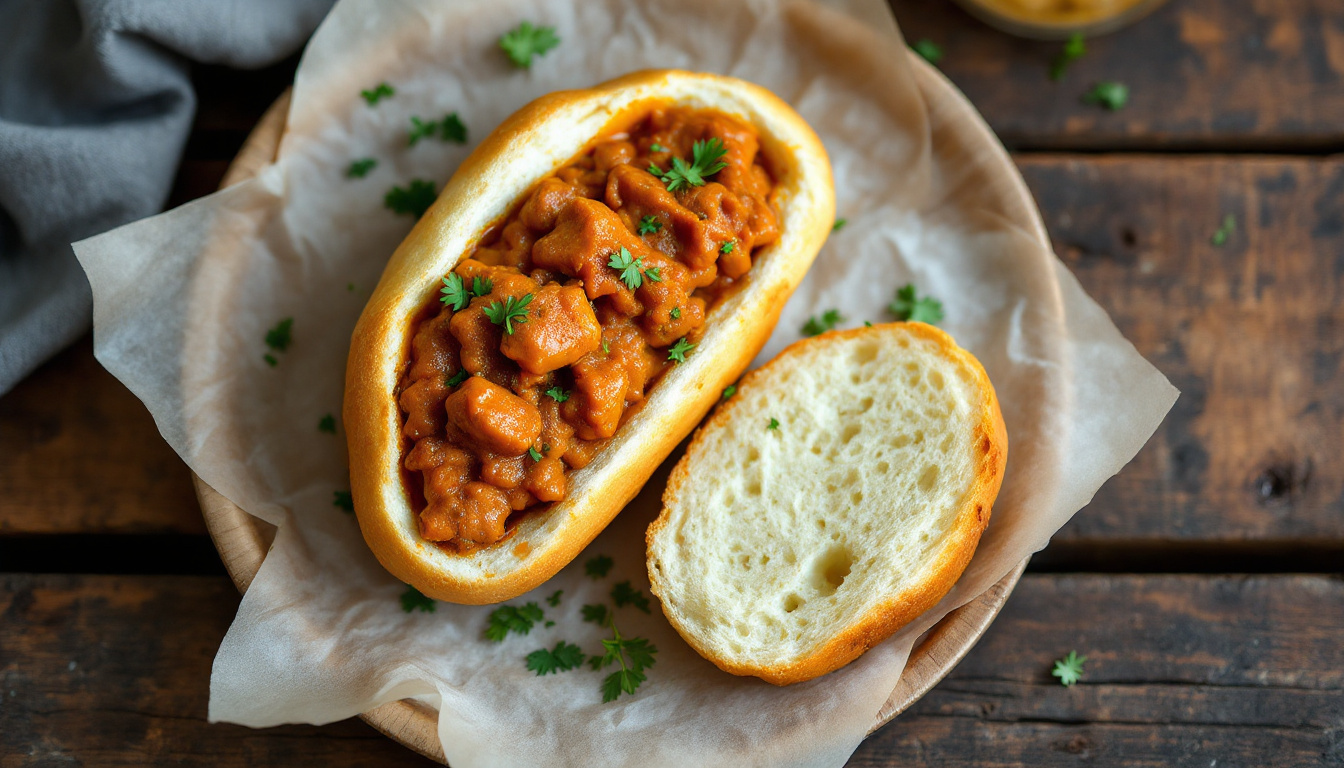
Bunny chow
A bunny chow is a hollowed-out half or quarter loaf of white bread filled with curry, and it is Durban’s gift to South African street food. It has nothing to do with rabbit; it was created by the city’s Indian community as a portable lunch. The curry is usually mutton, beans, or chicken, and the soft bread pulled from the middle becomes the spoon. Eat it with your hands, mop up the gravy, and expect a proper Durban-level chili kick.
Potjiekos
Potjiekos is a stew cooked slowly in a three-legged cast-iron pot over coals, layered and left alone rather than stirred. The name means “small pot food” in Afrikaans, and it is the braai’s patient cousin: meat, vegetables, and stock cooked low for hours until everything melts together. Like the braai, it is as much a social occasion as a recipe, with people gathered around the pot all afternoon. Lamb, oxtail, and venison versions are the classics.
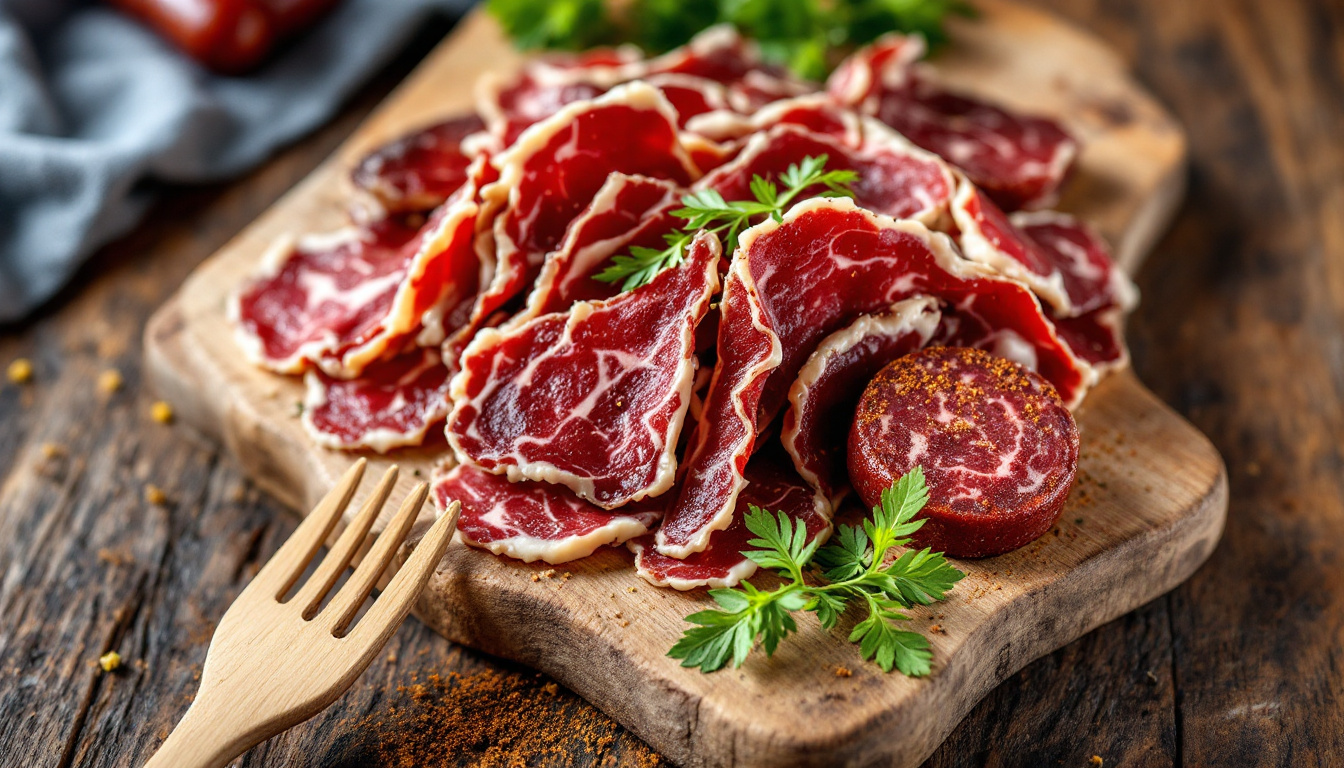
Biltong and droëwors
Biltong is air-dried, spiced meat, and South Africans will tell you it is nothing like American jerky. The cut is thicker, cured with vinegar, salt, and coriander, and dried rather than smoked, giving a deeper, less sweet flavor. Beef is standard, but game like kudu and springbok is prized. Its sausage cousin droëwors is dried boerewors. Buy it fresh-sliced from a biltong shop by weight, and pick it up as road-trip food the way locals do.
Cape Malay curry and bredie
Cape Malay curry is gentler and sweeter than its Indian cousin, fragrant with cinnamon, cardamom, and dried fruit rather than fierce heat. The classic is a denningvleis lamb curry or a tomato-based bredie, a slow stew often made with waterblommetjie flowers in season. This is the home cooking of the Bo-Kaap, Cape Town’s historic Cape Malay quarter, where the painted houses and the kitchens both deserve a visit. Order it with yellow rice and sambals.
Boerewors roll
A boerewors roll, or “boerie roll,” is a grilled coil of boerewors sausage in a soft roll topped with tomato-onion relish, and it is the hot dog of South Africa. You find it at markets, sports grounds, petrol-station forecourts, and every fundraiser in the country. Cheap, fast, and genuinely good, it is the easiest way to taste the national sausage without waiting for a full braai. Add chakalaka or a chili sauce if it is on offer.
Gatsby
A Gatsby is a foot-long submarine sandwich stuffed with fillings and a heap of hot chips, invented in Cape Town’s working-class neighborhoods and built to be shared. The classic filling is masala steak, polony, or peri-peri chicken, all crammed in with slap chips (thick, soft, vinegar-soaked fries) and sauce inside the loaf. One Gatsby feeds two to four people, and ordering “a quarter” gets you a manageable slice. It is Cape Town street food at its most generous and least refined.
Vetkoek
Vetkoek (“fat cake” in Afrikaans) is a deep-fried dough ball, crisp and golden outside, soft and fluffy inside, split and stuffed with savoury curried mince (then called a “vetkoek and mince”) or spread with syrup, jam or cheese for a sweet version. It is everyday roadside and school-tuckshop food across the country, the South African cousin of a doughnut crossed with a sandwich, and one of the cheapest filling bites you can buy.
Kota spatlo
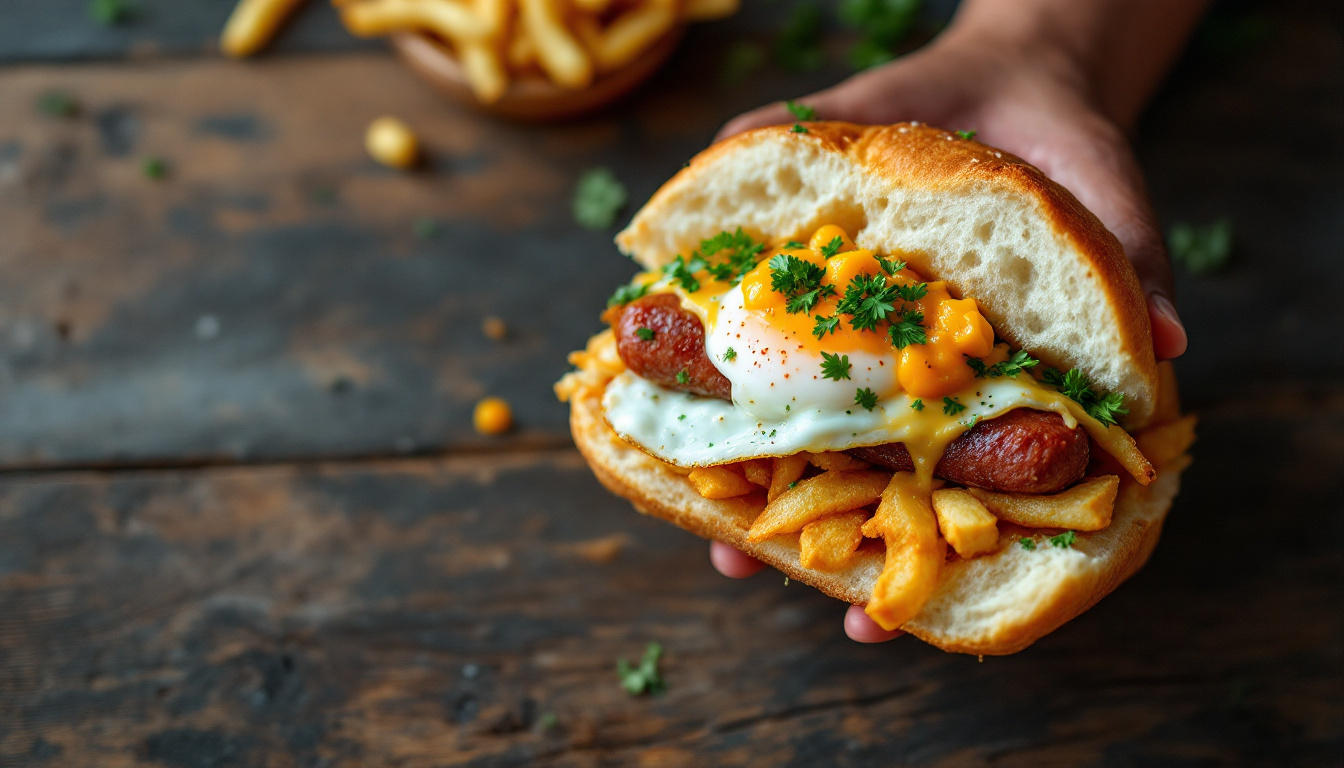
A kota is a quarter loaf of bread hollowed out and packed with chips, polony, russian sausage, cheese, egg, and atchar, and it is the street food of the townships around Johannesburg. The name comes from “quarter.” Each kota spot has its own build and loyal following, and the spicy mango atchar pickle is what makes it sing. It is cheap, filling, and a genuine taste of everyday Gauteng life rather than a tourist plate.
Snoek and Cape seafood
Snoek is a firm, oily local fish, traditionally braaied whole with an apricot-jam glaze, and it is the taste of the Cape coast. Smoked snoek goes into smoorsnoek, a savory hash with potato and onion, or a creamy paté. The cold Atlantic and Indian oceans meeting at the Cape also deliver crayfish (West Coast rock lobster), mussels, and line fish. Eat snoek at a harborside spot in winter when it runs, with a slab of buttered farm bread.
Peri-peri chicken
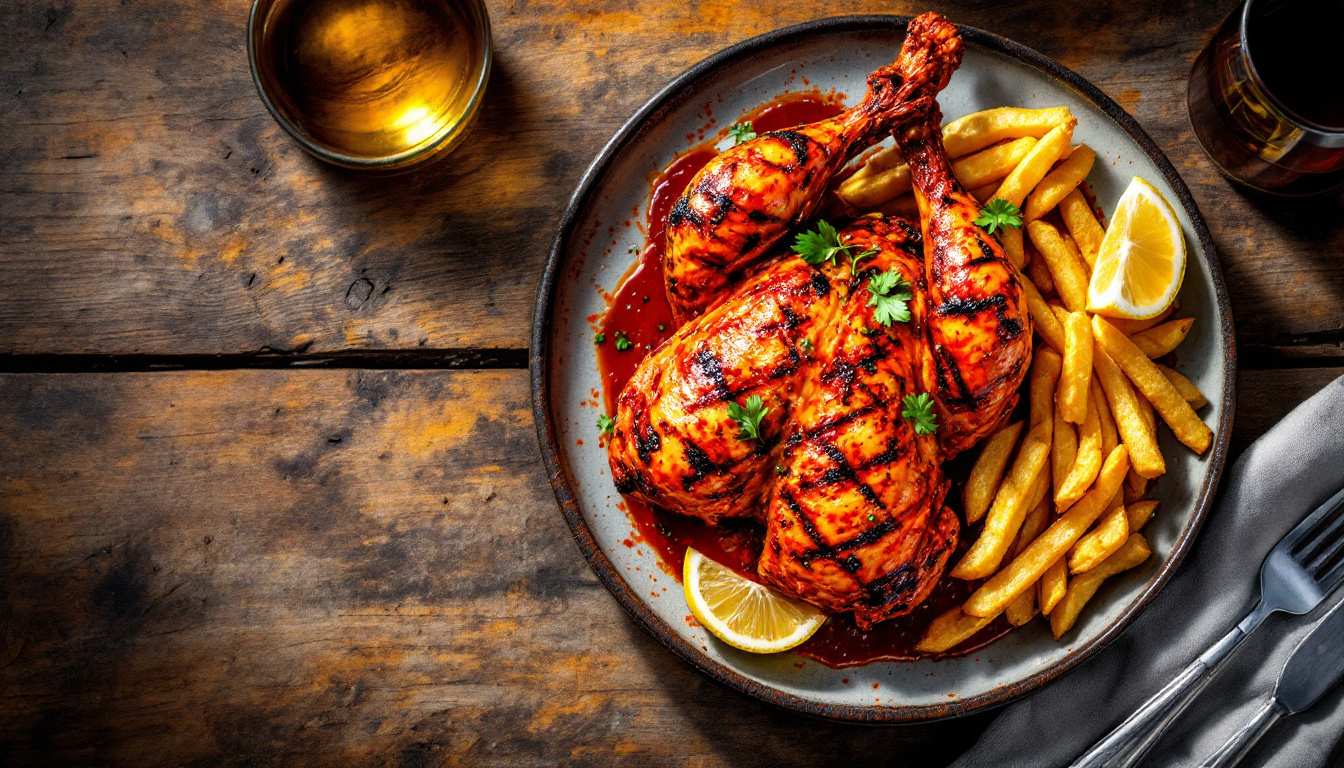
Peri-peri chicken is flame-grilled chicken basted in a fiery sauce of African bird’s-eye chili, garlic, and lemon, carried into South Africa from neighboring Mozambique’s Portuguese kitchens. It is the dish behind Nando’s, the South African chain that took peri-peri worldwide, but the best versions come from independent Portuguese-Mozambican grills. Order it by heat level, with extra sauce and chips, and have a cold drink ready.
Malva pudding and South African desserts
Malva pudding is a warm, spongy apricot-jam cake soaked in a hot cream sauce, and it is the dessert that ends a proper South African meal. It is of Cape Dutch origin and best served with custard or ice cream. Beyond it sits a strong dessert tradition: melktert, a cinnamon-dusted milk tart; koeksisters, plaited dough fried and soaked in syrup; and rusks, dense dried biscuits made for dunking in coffee. Save room.
How food changes across South Africa, region by region
South African food splits clearly by region, and knowing where you are tells you what to order. The Cape leans Malay and seafood, Durban is the curry capital, the interior is braai and township country, and the Karoo is lamb country. Here is the map.
The Western Cape is the heart of Cape Malay cooking and South African seafood. Cape Town's Bo-Kaap serves bobotie, denningvleis, and koeksisters, the coast delivers snoek and crayfish, and the surrounding Winelands around Stellenbosch and Franschhoek pair some of the world’s best-value wine with serious farm-to-table restaurants. This is the country’s most refined eating.
Durban is the curry capital of South Africa, home to the largest Indian community outside India and the birthplace of the bunny chow. The food here runs hot and complex, from mutton bunny chows to Durban masala and sugar-bean curries. The legacy of 1860s indentured laborers turned KwaZulu-Natal into a curry culture all its own, distinct from anything on the subcontinent.
Johannesburg and the Highveld are braai and township country, where shisa nyama, kota, pap, and chakalaka define everyday eating. Soweto’s shisa nyama joints grill meat to order at weekends, and the kota spots of Gauteng turn a quarter loaf into a full meal. This is the most energetic, social street food in the country, best eaten where the locals are.
The Karoo, the vast semi-desert interior, is lamb country, where sheep graze on aromatic scrub that flavors the meat (sold as Karoo lamb). The platteland, the rural Afrikaner heartland, is the home of biltong, potjiekos, farm-style roasts, and home baking. Eating here is hearty, meat-heavy, and tied to the farm, with padkos (road food) for the long drives between towns.
Where to eat: braais, shisa nyama, markets and curry houses
The best food in South Africa is found at braais, shisa nyama grills, markets, and Durban curry houses, not in hotel dining rooms. Each setting has its specialty, and matching the dish to the place is how locals eat. Here is where to go.
- Shisa nyama, township butchery-grills where you buy meat by weight and have it braaied on the spot, best at weekends in Soweto and beyond.
- Curry houses, the Indian restaurants and takeaways of Durban for bunny chow, mutton curry, and roti.
- Cape Malay kitchens, in and around Cape Town’s Bo-Kaap for bobotie, curries, and koeksisters.
- Food and farmers markets, like the Neighbourgoods Market in Cape Town and Johannesburg, for boerewors rolls, local produce, and craft everything.
- Biltong shops and farm stalls, for sliced-to-order biltong, droëwors, and padkos on a road trip.
What to drink in South Africa
South Africa’s signature drinks are Cape wine and rooibos tea, and both are worth seeking out at the source. The country has a deep and varied drinks culture, alcoholic and not.
- Cape wine, the Winelands around Stellenbosch and Franschhoek make world-class, well-priced wine; Chenin Blanc and Pinotage are the local signatures.
- Rooibos tea, a naturally caffeine-free red bush tea grown only in the Cape, drunk hot or iced across the country.
- Amarula, a creamy liqueur made from the fruit of the marula tree, often poured over ice after dinner.
- Local beer, lagers like Castle and a fast-growing craft scene; a cold beer is the standard braai drink.
- Umqombothi and mageu, traditional sorghum beer and a thick fermented maize drink, both rooted in African custom.
- The braai is social and slow; do not expect to eat the moment you arrive.
- Tip 10 to 15 percent in restaurants, and a few rand to the car guard who watches your car.
- Pap, bunny chow, and boerewors rolls are hand food; no cutlery needed.
- Vegetarians can eat chakalaka, pap, samp and beans (umngqusho), vegetable curries, and bredie, though braai culture is meat-first.
- “Just now” means later, and “now now” means soon; neither means immediately.
Frequently asked questions
What is the most popular and famous South African food?
The most famous and most popular South African foods are the braai (with boerewors), bobotie (the national dish), bunny chow, biltong, and pap with chakalaka. Street favourites like the gatsby, kota and vetkoek are everywhere, and malva pudding is the best-loved dessert. South African food blends Afrikaner, Cape Malay, Indian, African and Portuguese traditions.
What is South Africa’s national dish?
Bobotie is the dish most often called South Africa’s national dish, a spiced minced-meat bake topped with a savory egg custard and rooted in Cape Malay cooking. The braai, the wood-fire grill, is the national food ritual, celebrated on National Braai Day every September 24, and many South Africans would name it alongside bobotie as the true heart of the country’s food.
Is South African food spicy?
South African food ranges from mild to genuinely hot. Afrikaner braai food and Cape Malay curries are fragrant and gently spiced, often sweet with fruit, while Durban’s Indian curries and peri-peri chicken can be very hot. You can almost always ask for a milder heat level, and the table relish chakalaka adds spice on the side.
What is a braai?
A braai is a South African barbecue cooked over wood or charcoal, and it is far more than a cooking method. It is the country’s main social gathering, where friends and family spend an afternoon around the fire grilling boerewors, lamb, and chicken with pap and chakalaka on the side. The wood fire, not gas, is considered essential to a real braai.
Which city has the best food in South Africa?
Cape Town and Durban are the two best food cities in South Africa. Cape Town offers Cape Malay cooking, seafood, and the world-class Winelands nearby, while Durban is the curry capital and home of the bunny chow. Johannesburg has the most exciting township and shisa nyama scene. Cape Town edges it for variety and quality.
What is bunny chow?
Bunny chow is a hollowed-out half or quarter loaf of white bread filled with curry, created by the Indian community of Durban as a portable meal. Despite the name, it contains no rabbit. The curry is typically mutton, chicken, or beans, and the bread scooped from the center is used to mop up the gravy. It is eaten with the hands.
Where can vegetarians eat well in South Africa?
Vegetarians can eat well in South Africa despite the meat-heavy braai culture. Look for chakalaka, pap, samp and beans (umngqusho), vegetable bunny chows and curries, and bredie made with vegetables. Cape Town and the Winelands have strong vegetarian and vegan restaurant scenes, and Indian Durban offers plenty of meat-free curry options.
Is street food safe to eat in South Africa?
Street food in South Africa is safe when you choose busy stalls with high turnover, especially for shisa nyama and kotas. The best and safest way to eat in the townships is with a local guide or on a food tour, which also leads you to the better spots. Tap water is safe in the major cities; stick to bottled water in rural areas if your stomach is sensitive.
More food guides waiting for you
Browse our complete collection of food guides across Africa and the Middle East.