Pierogi at a milk bar, a melting zapiekanka on Plac Nowy, an obwarzanek from a street cart, and the legendary night sausage off a blue van: a neighborhood guide to eating in Krakow.
My favourite Krakow meal cost about four euros and was eaten standing up: a zapiekanka from the Okrąglak rotunda on Plac Nowy at midnight, followed by a kiełbasa off the blue Nysa van at Hala Targowa an hour later, because in Krakow the best food is the cheapest and it keeps the latest hours. The best food in Krakow is Central Europe’s great comfort-food bargain, eaten in milk bars, market halls, and one famous round building in the old Jewish quarter. This is a city where a plate of handmade pierogi costs less than a coffee in Paris, where the communist-era bar mleczny still serves home cooking for the price of a tram ticket, and where the must-eat street snack is a toasted half-baguette buried under mushrooms and cheese. Krakow doesn’t do fine dining theatrics. It does honest, hearty Polish food better and cheaper than almost anywhere.
Why Krakow is Poland’s best-value food city
Krakow is Poland’s best-value food city because it keeps its cheap, traditional institutions alive in the middle of a tourist magnet. The wider story of Polish cooking is in our complete Poland food guide, but Krakow concentrates it: milk bars still serving subsidized home cooking, street carts selling a bread ring found nowhere else, and a Jewish quarter that turned a derelict square into the country’s most famous street-food spot.
The food splits neatly by area. The Old Town and its edges hold the milk bars, the Hala Targowa market, and the traditional restaurants. Kazimierz, the old Jewish district, is the hip food hub built around the Plac Nowy zapiekanka rotunda. And around both, obwarzanek carts stand on every corner. This guide moves through each, and sits alongside our wider guide to the best food in Europe.
The Old Town: milk bars, market halls and the night sausage
The Old Town and its edges are where Krakow eats traditionally and cheaply, above all at the milk bars. A bar mleczny is a no-frills cafeteria, a survivor of the communist era, where you queue, order at a counter, and eat pierogi, soups, and cutlets for a handful of zloty. They’re not a gimmick. Locals still eat in them daily.
- Milk bars (bar mleczny), for pierogi, zurek, placki ziemniaczane (potato pancakes), and kotlet schabowy at 15-30 PLN a plate. Pod Temida and Polakowski are reliable.
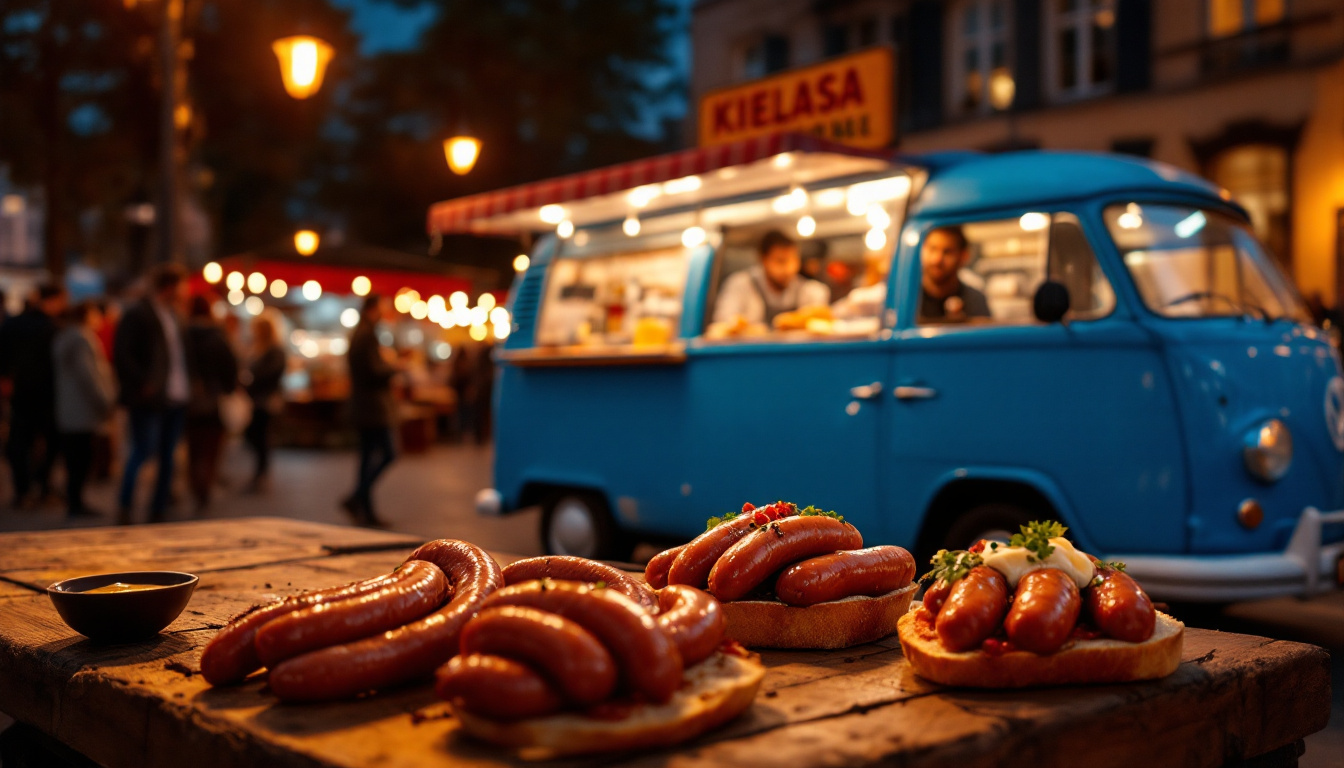
- Kiełbaski z Niebieskiej Nyski, the legendary sausage stand at Hala Targowa where, on weekend nights, kielbasa is grilled straight off a vintage blue Nysa van for the late-night crowd, served on a slice of bread with mustard. A genuine Krakow institution, busiest after midnight.
- Obwarzanek carts, the blue street carts all over the center selling the obwarzanek krakowski, a chewy braided bread ring, for 3-5 PLN.
- Maczanka krakowska, the Krakow sandwich of slow-braised pork in caraway gravy stuffed in a roll, found at food trucks and traditional spots.
- Traditional restaurants, around the Rynek (Main Square) for sit-down pierogi, bigos, and zurek, pricier than milk bars but still good value.
Kazimierz: zapiekanki, Jewish heritage and the food scene
Kazimierz, the historic Jewish quarter, is Krakow’s most exciting food district, centered on the Plac Nowy rotunda. The round building (the okraglak) in the middle of the square has windows selling zapiekanki around the clock, and it’s the single most famous street-food spot in the city. Around it, Kazimierz has become a dense hub of bars, cafes, and modern restaurants.
Zapiekanka Plac Nowy
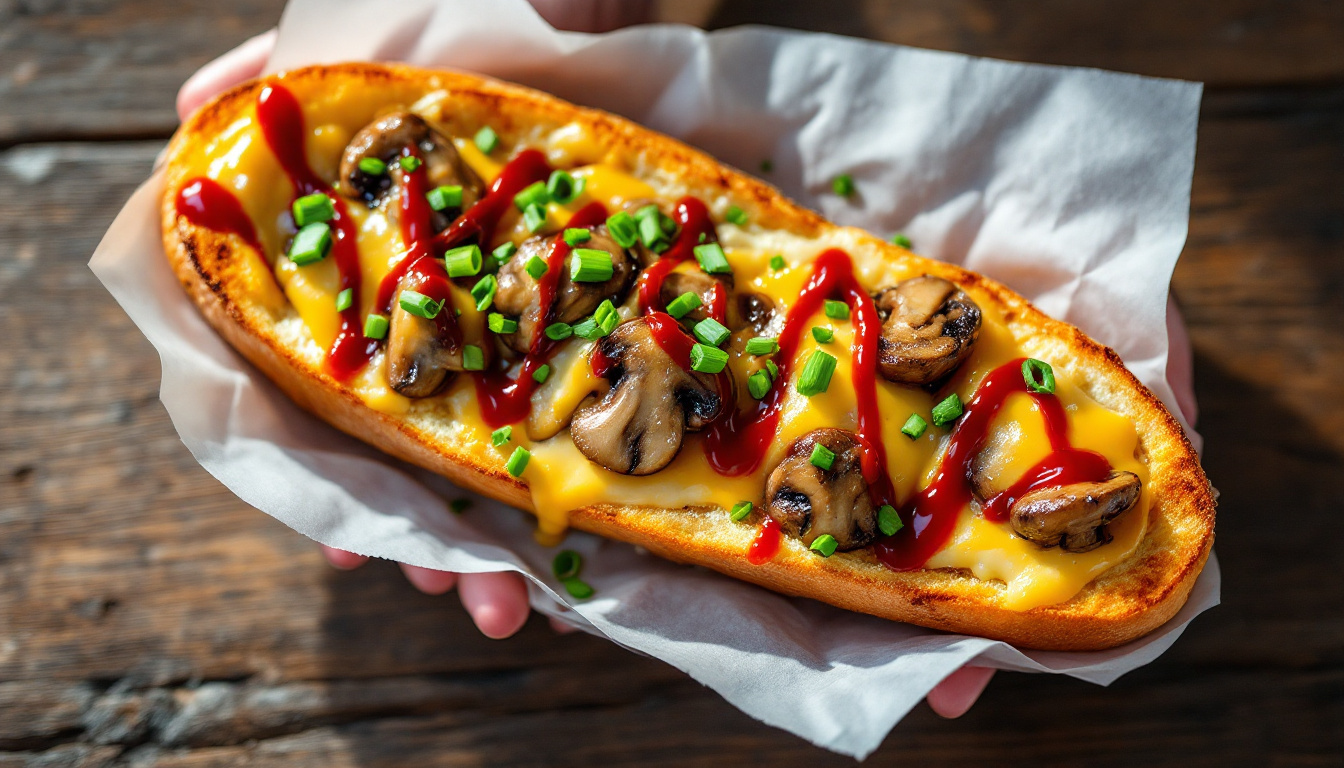
A zapiekanka is a halved baguette toasted with sauteed mushrooms and melted cheese, then loaded with toppings and a zig-zag of sauce, and the rotunda on Plac Nowy is its spiritual home. Born as cheap food in communist Poland, it’s become Krakow’s defining street snack, served until late from the windows of the okraglak (the round building) to a queue of students and night owls. The classic is mushroom and cheese with ketchup and chives; modern versions pile on everything from gyros meat to garlic sauce. Endzior is the famous stand.
Beyond the rotunda, Kazimierz holds the city’s Jewish culinary heritage, with spots serving dishes like chicken soup, gefilte fish, and cholent alongside a young, creative restaurant scene. It’s the best area in Krakow to wander, eat a snack, and eat again an hour later.
The dishes you have to try
The dish that defines Krakow eating is pierogi, but the city has a handful of specialties found nowhere else in Poland. Here are the essentials, the rough price, and what makes each worth ordering.
Pierogi
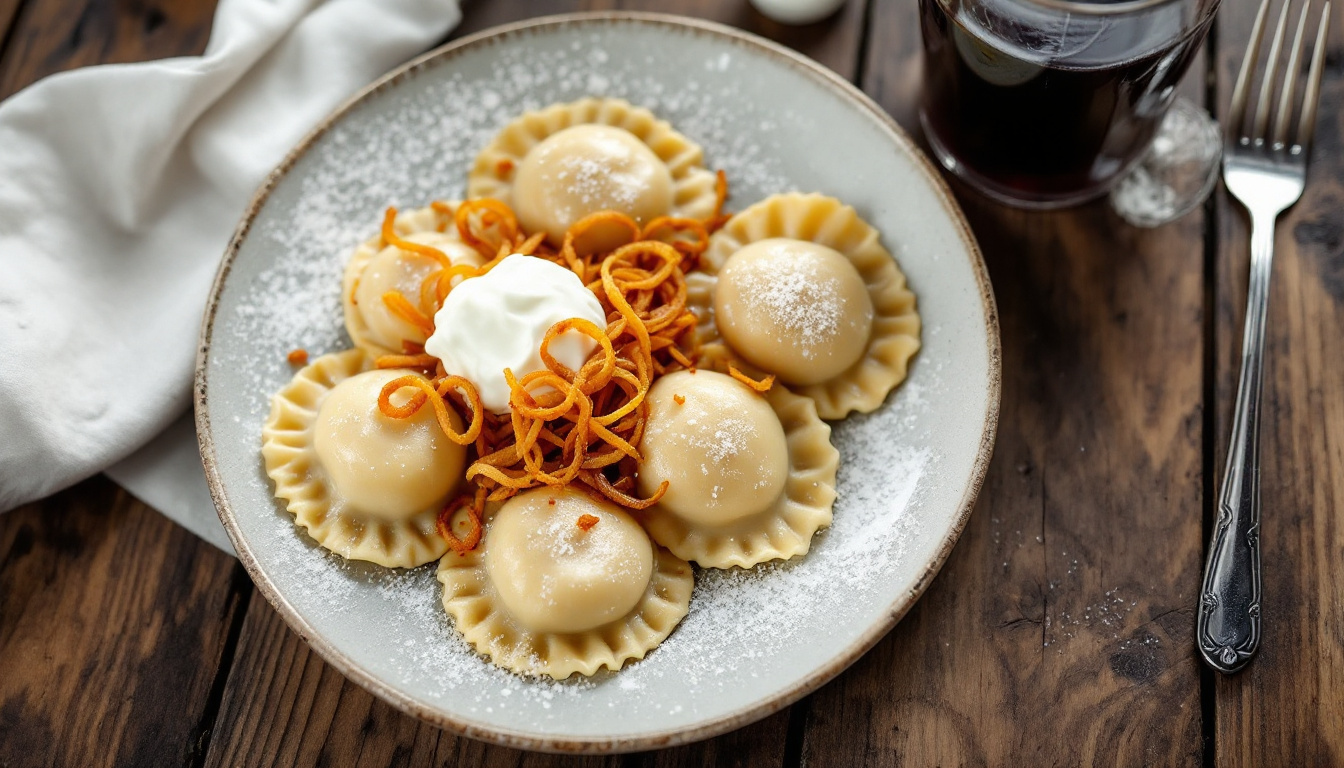
Pierogi are Poland’s filled dumplings, boiled or pan-fried, and they’re the thing to eat first in Krakow. The classics are pierogi ruskie (potato and twarog cheese, despite the name, a Polish staple), z miesem (minced meat), and z kapusta i grzybami (cabbage and wild mushroom). Sweet versions come with seasonal fruit. The best and cheapest are at milk bars and dedicated pierogarnie, served by the dozen with fried onion or sour cream. A plate is a full, deeply comforting meal.
Obwarzanek krakowski
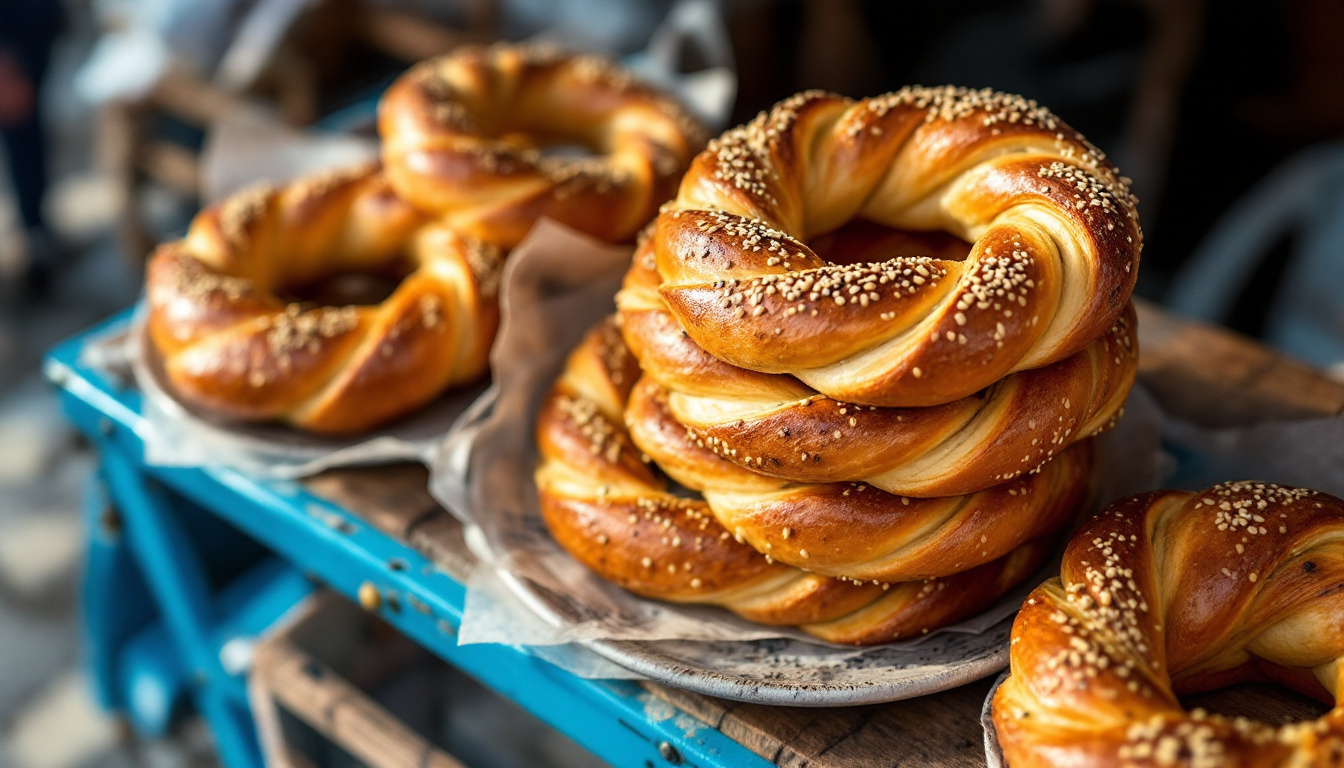
The obwarzanek krakowski is a braided ring of chewy bread, boiled then baked and topped with salt, poppy or sesame seeds, and it’s a protected regional product unique to Krakow. Sold from the blue street carts on nearly every corner of the center for a few zloty, it’s the city’s grab-and-go breakfast and snack. Eat it fresh in the morning, when it’s still soft; later in the day they go dense and chewy. A genuinely local bite that predates the tourists by centuries.
Maczanka krakowska
Maczanka krakowska is slow-braised pork neck in a thick, caraway-spiced gravy, served stuffed into a soft kajzer roll that soaks up the sauce. It’s a true Krakow specialty, the city’s answer to pulled pork, dating back over a century as a cabbies’ and market-workers’ meal. The roll is meant to get messy as the gravy soaks in. Find it at traditional spots and food trucks around the center. This is the local sandwich most visitors never hear about.
Gołąbki
Gołąbki are cabbage leaves wrapped around a filling of minced pork and rice, then braised and served under a tomato or wild-mushroom sauce. The name means “little pigeons,” and they’re pure Polish home cooking, the kind of dish a milk bar or a traditional Krakow restaurant does best. Filling, soft and gently savoury, usually eaten with bread or potatoes.
Bigos
Bigos is Poland’s hunter’s stew and, by most arguments, its national dish: sauerkraut and fresh cabbage simmered for hours with pork, kielbasa, smoked meat, dried mushrooms and often prunes, until the whole pot collapses into something dark, sour and smoky. Every family insists their version is the correct one. The rule everyone agrees on is that bigos gets better each time it is reheated, so a batch is eaten across several days. It is winter food above all, served at milk bars and the traditional restaurants around the Rynek, and it wants rye bread and a cold vodka beside it.
Kremówka
Kremówka is a vanilla custard slice between two sheets of flaky puff pastry, dusted with icing sugar, the great Polish cream cake. It’s famously tied to the region: Pope John Paul II reminisced about eating kremówki in nearby Wadowice, and Kraków’s old cafés and patisseries take the dessert seriously. Have one with a coffee on the Rynek.
| Dish | What it is | Price (2026) | Where |
|---|---|---|---|
| Pierogi | Filled dumplings (ruskie, meat, cabbage-mushroom) | 18-30 PLN | Milk bars, pierogarnie |
| Zapiekanka | Toasted baguette with mushrooms and cheese | 12-25 PLN | Plac Nowy rotunda, Kazimierz |
| Obwarzanek krakowski | Chewy braided bread ring (PGI-protected) | 3-5 PLN | Blue street carts |
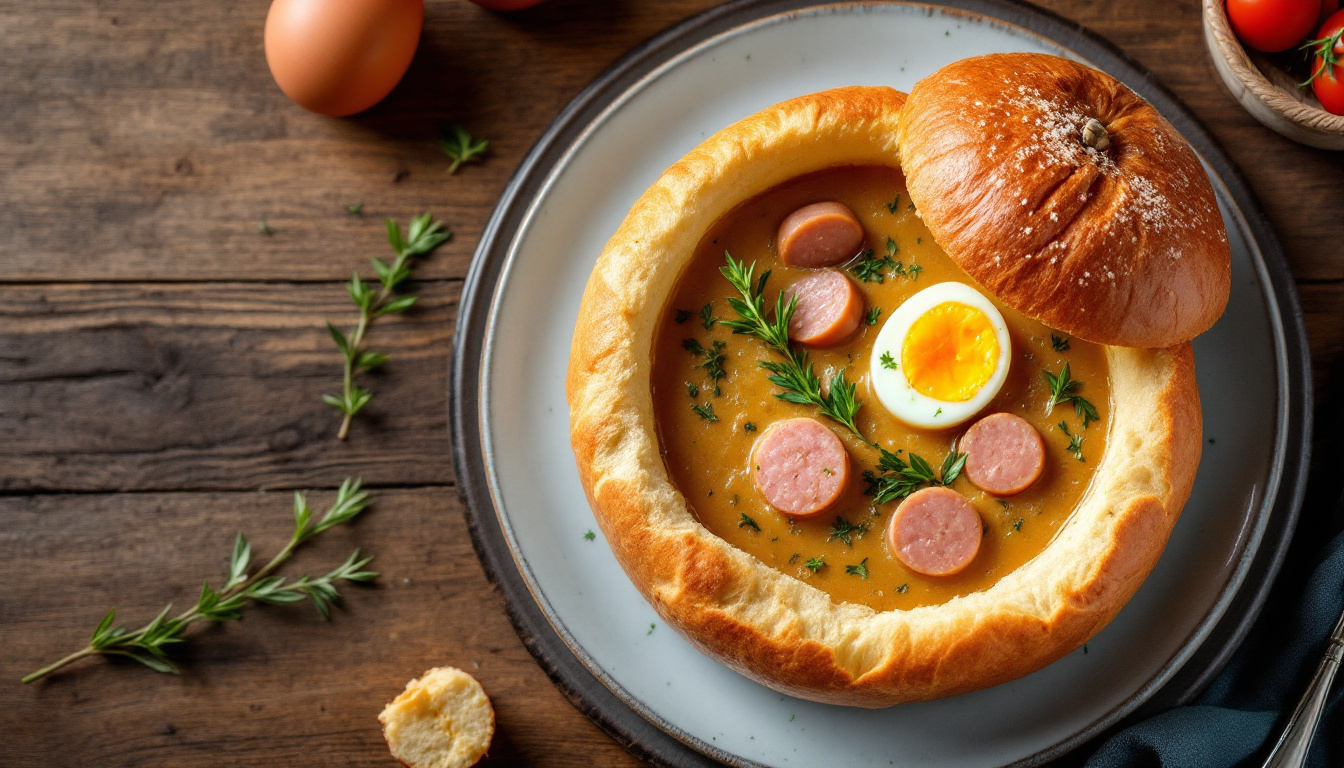
| Zurek | Sour rye soup with sausage and egg | 12-22 PLN | Milk bars, restaurants |
| Maczanka krakowska | Braised pork in gravy on a roll | 15-25 PLN | Food trucks, traditional spots |
| Kielbasa z Niebieskiej Nyski | Grilled sausage from the night “blue van” | 12-18 PLN | Hala Targowa, evenings |
| Oscypek | Grilled smoked sheep cheese with cranberry | 10-20 PLN | Markets, mountain stalls |
| Kotlet schabowy | Breaded pork cutlet with potatoes and cabbage | 25-40 PLN | Milk bars, restaurants |
| Bigos | Hunter’s stew of sauerkraut, pork, sausage and mushrooms | 20-35 PLN | Milk bars, restaurants |
What to drink and how to eat well
The drink that goes with Krakow food is vodka, but the city also has one of the best craft beer scenes in Central Europe. Polish vodka (wodka) is drunk cold and neat as a chaser to hearty food, from clear to flavored varieties. Alongside it, Krakow has dozens of craft beer bars and the traditional grzane piwo (mulled beer) and grzaniec (mulled wine) in winter. The non-alcoholic staple? Kompot, a homemade drink of stewed fruit, often served at milk bars.
- Milk bars are order-at-the-counter and cash-friendly; learn the names of a few dishes or point.
- Tip around 10 percent in restaurants; say the total you want, as “thank you” when paying can mean “keep the change.”
- Pierogi ruskie contain no meat (potato and cheese), making them a safe vegetarian default.
- Vegetarians do well with pierogi ruskie, placki ziemniaczane, mushroom zapiekanka, and many soups, though check that soups are not on meat stock.
- Lunch (obiad) is the main meal, eaten early afternoon; milk bars are busiest then.
Frequently asked questions
What is the most popular and typical food in Krakow?
The most popular and most typical Krakow foods are pierogi, the obwarzanek (the city’s braided street pretzel), zapiekanka from Plac Nowy, żurek (sour rye soup), kotlet schabowy and gołąbki, all classic Polish comfort food eaten cheaply in milk bars. The local specialties found nowhere else are maczanka krakowska and the late-night Kiełbaski z Niebieskiej Nyski at Hala Targowa.
What food is Krakow known for?
Krakow is known for pierogi (Polish dumplings), the zapiekanka (a toasted baguette with mushrooms and cheese, famously sold at the Plac Nowy rotunda in Kazimierz), and the obwarzanek krakowski, a protected braided bread ring unique to the city. Other local specialties include maczanka krakowska (braised pork in gravy on a roll) and the late-night Kiełbaski z Niebieskiej Nyski grilled off a blue Nysa van by Hala Targowa.
What is a milk bar (bar mleczny)?
A bar mleczny is a traditional Polish cafeteria dating from the communist era, still partly state-subsidized, serving cheap home-style food like pierogi, soups, and cutlets. You order and pay at a counter, then collect your food when called. Krakow has several good ones, and they are the cheapest and most authentic way to eat Polish comfort food, often for under 30 PLN a meal.
Where is the best zapiekanka in Krakow?
The most famous zapiekanki are sold from the round building (the okraglak) in the middle of Plac Nowy, in the Kazimierz district. The windows serve them until late, and stands like Endzior have a loyal following. It is a Krakow rite of passage, especially after a night out, with classic mushroom-and-cheese or loaded modern versions.
How much does food cost in Krakow?
Krakow is very affordable. An obwarzanek is 3-5 PLN, a zapiekanka 12-25 PLN, a milk-bar plate of pierogi or soup 15-30 PLN, and a sit-down restaurant main 30-60 PLN. A craft beer runs about 15-25 PLN. As of 2026, a dollar is roughly 4 zloty, making the city one of the best-value food destinations in Europe.
Can vegetarians eat well in Krakow?
Vegetarians eat well in Krakow. Pierogi ruskie (potato and cheese) are a meat-free staple, and placki ziemniaczane (potato pancakes), mushroom-and-cheese zapiekanka, and many vegetable and mushroom dishes are widely available. Kazimierz in particular has a strong vegetarian and vegan restaurant scene. Check that soups like zurek and barszcz are made without meat stock if you are strict.
What is the obwarzanek krakowski?
The obwarzanek krakowski is a braided ring of chewy bread, boiled then baked and topped with salt, sesame, or poppy seeds. It is a protected regional product (PGI) unique to Krakow, sold from blue street carts across the center for a few zloty. Best eaten fresh in the morning, it is the city’s traditional grab-and-go snack and predates the tourist crowds by centuries.
More food guides waiting for you
Browse our complete collection of European food guides.