Lebanese food is the cooking that conquered the world quietly. Hummus, tabbouleh, falafel, shawarma: dishes that now live on menus everywhere started here, on the Eastern Mediterranean, where a meal is built from a dozen small plates and nobody eats alone. The best food to eat in Lebanon is generous, herb-bright, and meant to be shared.
A proper Lebanese table is not a single dish, it is a landscape. Bowls of dip, plates of herbs and pickles, warm flatbread arriving in waves, then skewers of smoky grilled meat, and somewhere at the end a tray of syrup-soaked pastry and tiny cups of cardamom coffee. Eat the Lebanese way, slowly and with your hands, and you eat as well as anywhere in the Middle East.
Lebanon is one of the brightest stars in our wider Africa and Middle East food guide, sharing a mezze tradition with neighbors like Turkey. Use this as the country-level deep dive.
What food to eat in Lebanon
Lebanese cooking runs on fresh herbs, lemon, garlic, olive oil, and the smoke of charcoal. Order a spread of these and you’ve eaten the country.
Hummus
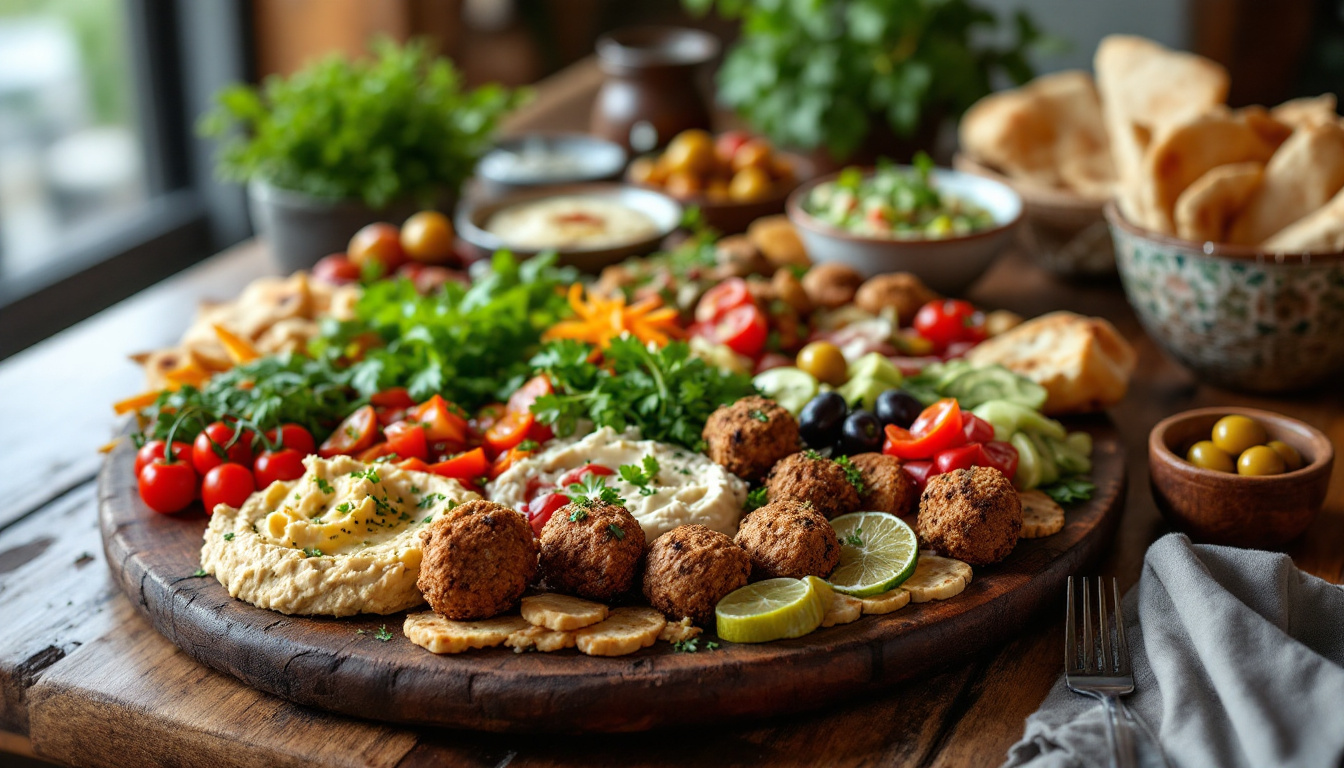
The dish Lebanon gave the world, and still does best. Chickpeas blended with tahini, lemon, and garlic until silky, pooled with olive oil and scooped with warm bread. A good hummus is smooth and tangy, never gritty. Order it topped with warm chickpeas or spiced lamb (hummus beiruti or hummus awarma) to see how far it can go.
Tabbouleh
Not a grain salad with a little parsley, but a parsley salad with a little grain. Mountains of finely chopped flat-leaf parsley and mint, tomato, a whisper of bulgur, all dressed in lemon and olive oil. Bright, green, the perfect foil to richer plates. It’s also a star of our vegetarian and vegan food guide.
Fattoush
The other great Lebanese salad: crisp vegetables, herbs, and shards of toasted or fried pita, sharpened with sumac and a tart pomegranate-molasses dressing. Crunchy, sour, and addictive.
Baba ganoush and moutabal
Eggplant roasted over flame until smoky and collapsing, then mashed with tahini, lemon, and garlic. Moutabal is the creamier, tahini-rich version. Either way, that charred-eggplant depth is one of the great flavors of the Levant.
Manakish
Lebanon’s breakfast, and its best cheap snack. A round of dough baked in a hot oven under a topping of za’atar and olive oil, or stretchy akkawi cheese, or spiced minced meat (lahm bi ajin). Folded warm from a corner bakery, it costs almost nothing and beats any pastry. It belongs on any list of great street food cities.
Kibbeh
The national dish, in dozens of forms. The classic is a torpedo of bulgur and minced meat shell stuffed with spiced lamb and pine nuts, then fried. There is also baked kibbeh in trays and, for the brave, kibbeh nayyeh, the raw version eaten with olive oil and mint, a Sunday-lunch delicacy.
Falafel
Croquettes of ground chickpeas and herbs, fried green-centered and crisp, stuffed into pita with pickles, tomato, and tarator (tahini sauce). Lebanon’s other gift to the world’s street corners, and a vegan staple done right.
Mujadara
The quiet hero of the Lebanese kitchen: lentils and rice cooked down together and crowned with a heap of dark, sweet caramelized onions. Humble, vegan, deeply savory. It’s the dish every Lebanese grandmother makes slightly differently, and the one that proves you don’t need meat to eat richly here.
Shawarma
Spit-roasted lamb or chicken shaved into a wrap with garlic toum (for chicken) or tarator (for meat), pickles, and fries tucked right inside. The benchmark fast meal of any Lebanese city, eaten standing, dripping, and happy.
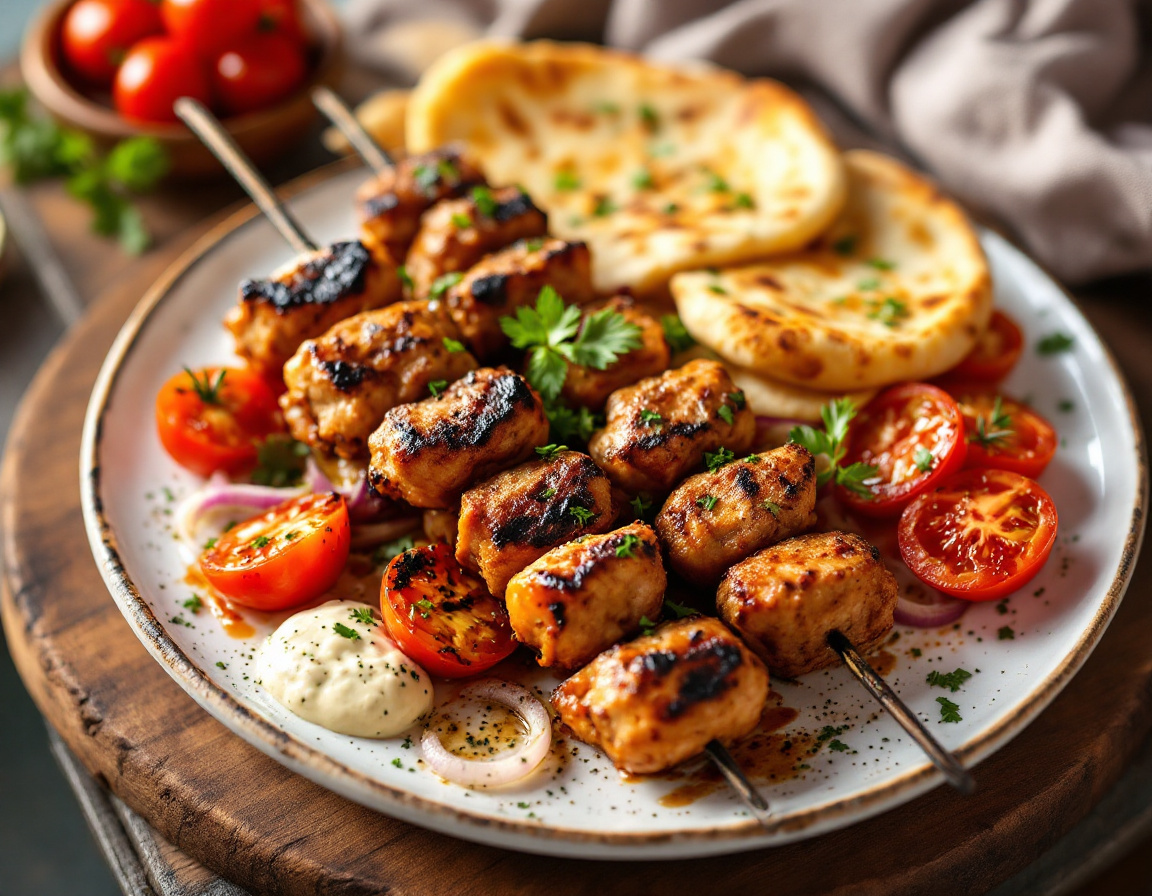
Mixed grill: shish taouk and kafta
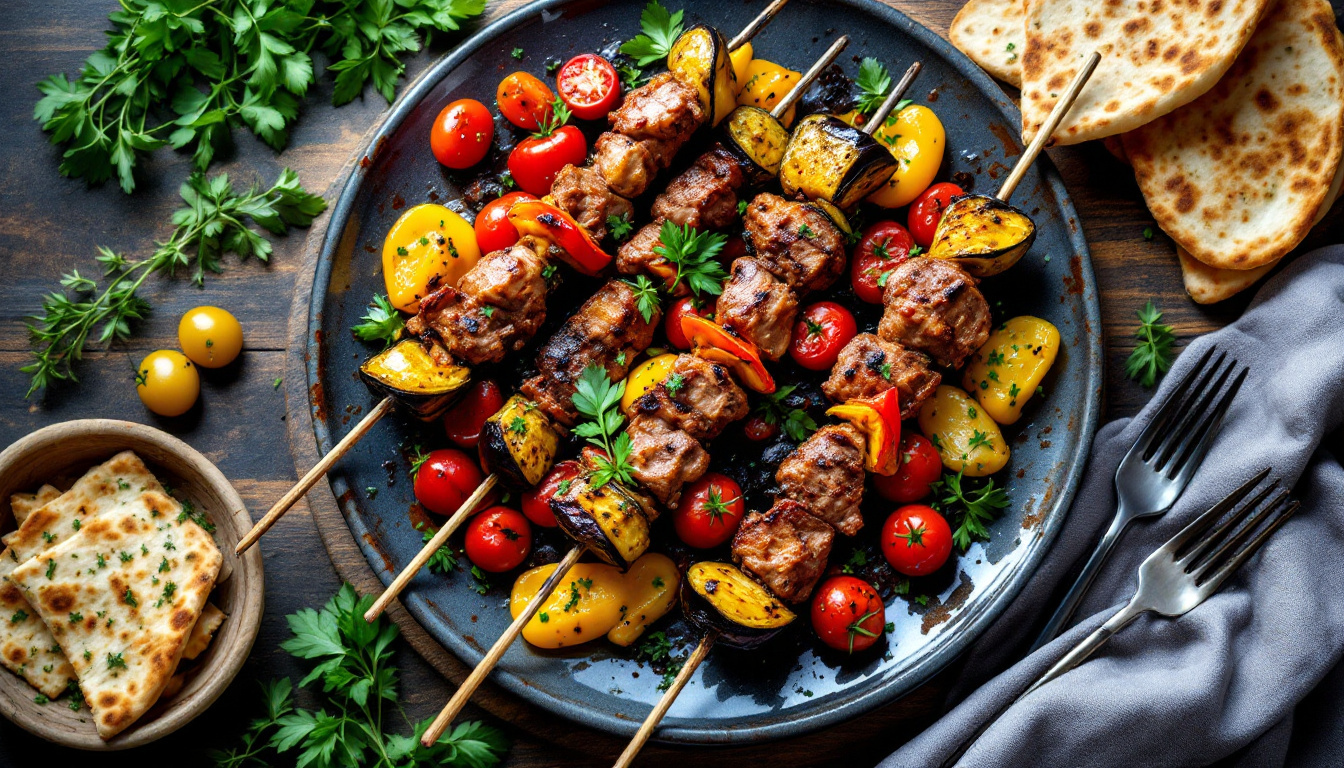
The heart of a Lebanese restaurant dinner. Shish taouk is marinated chicken skewers, smoky and tender, served with a fierce garlic toum. Kafta is minced lamb or beef with parsley and onion, pressed onto skewers and charred. Order both with grilled tomatoes, sumac onions, and bread to wrap them in.
Fatteh
Layers of crisp bread, chickpeas, and garlicky yogurt, crowned with toasted nuts and a drizzle of browned butter. A warm, comforting dish eaten at breakfast or as part of a spread, and proof of how clever Lebanese cooking is with humble ingredients.
Sambousek and batata harra
Two mezze plates you should always wave onto the table. Sambousek are little half-moon pastries fried or baked around spiced minced meat or melting cheese, the Lebanese cousin of the samosa. Batata harra is cubes of potato fried crisp and tossed with garlic, coriander, and chili until they fight for space on the fork, the plate everyone reaches for first.
Knafeh
The dessert worth crossing a city for. Soft, stretchy white cheese under a layer of semolina or shredded pastry, baked golden, soaked in rose or orange-blossom syrup, and eaten hot, often pushed into a sesame bread for breakfast. Sweet, salty, and unforgettable. Tripoli, in the north, is the city Lebanese people travel to for the best of it.
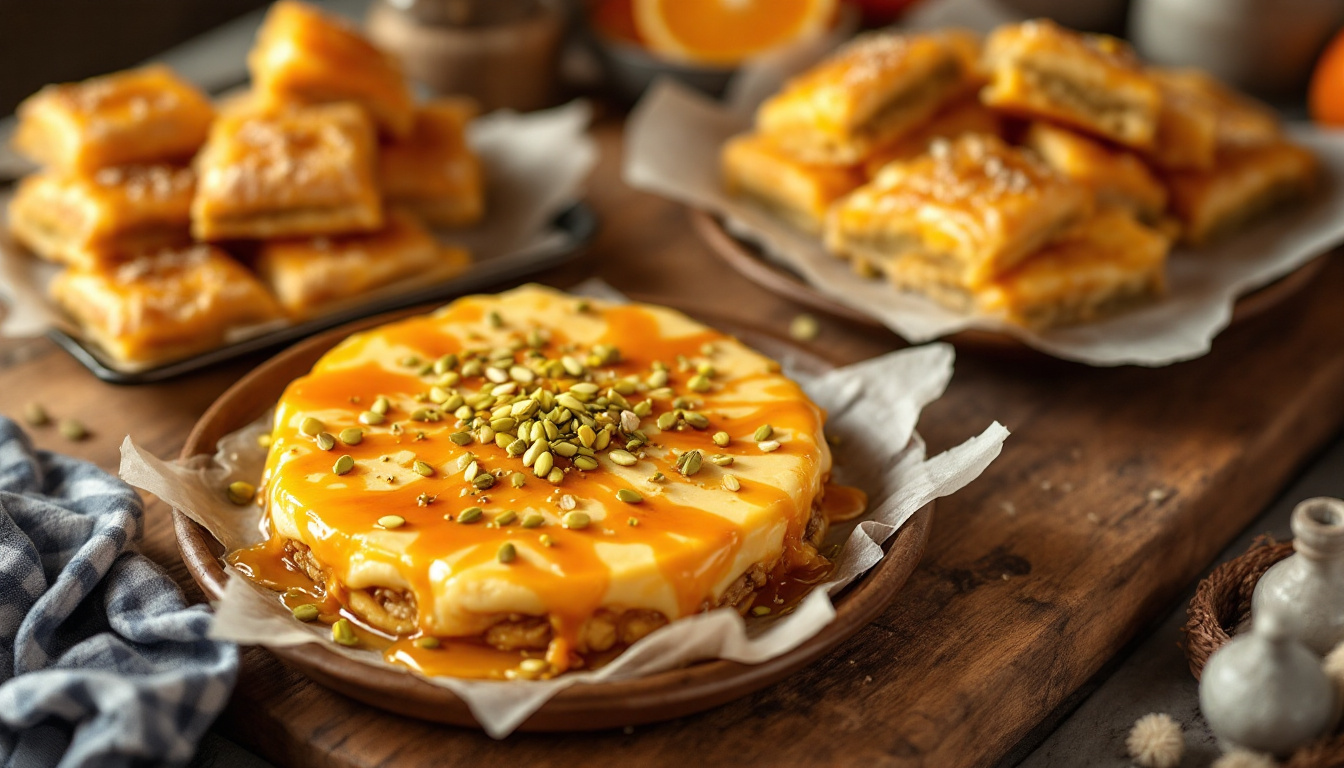
Baklava and maamoul
The pastry counter beyond knafeh. Baklava layers wafer-thin filo with pistachios or walnuts and drenches the whole thing in syrup, sold by weight in glittering trays and best with a bitter coffee to balance the sweetness. Maamoul are the buttery semolina cookies stuffed with dates, walnuts, or pistachios, baked for feasts and holidays and impossible to eat just one of.
Lebanese coffee and arak
Meals end with tiny cups of dark coffee scented with cardamom, sipped slowly. With food, the national drink is arak, an anise spirit clouded with water and ice that cuts through the richest grill. In summer, look for jallab, a deep, smoky-sweet drink of date and grape molasses topped with pine nuts and crushed ice, alongside fresh juices and salty ayran. For where this fits globally, see our coffee guide.
How a Lebanese mezze meal works
The mezze is the soul of Lebanese eating, and getting the rhythm right is half the pleasure. It isn’t a starter you rush through to reach the main. It’s the main event.
A meal opens with the cold mezze: hummus, moutabal, tabbouleh, fattoush, stuffed vine leaves, labneh, and pickles, all landing together with stacks of warm flatbread. Then come the hot mezze, things like kibbeh, fried cheese rolls, spiced sausages, and falafel. Only after all of that, if anyone still has room, do the charcoal grills arrive. Dessert and coffee close it out, unhurried.
You eat with bread, not cutlery, scooping and wrapping, and everything is shared from the center of the table. There’s no race, no single plate that’s yours. The longer the meal runs, the better it’s going.
Where to eat in Lebanon: Beirut, Tripoli and the Bekaa
Lebanon is small enough to eat across in a week, and each corner has its own specialty. Four places are worth building a trip around.
The capital does everything: late-night shawarma counters, all-day falafel and manakish, and grand mezze houses where the cold plates never stop coming. It’s the easiest place to eat the whole country in a couple of days.
The sweet capital of Lebanon. This northern city is where people come for the best knafeh, baklava, and old-style sweet shops, many run by the same families for generations. Go hungry. Skip breakfast.
Mezze in its natural habitat. Zahlé’s riverside restaurants serve marathon mezze spreads built for long lunches, and the surrounding Bekaa is Lebanon’s wine and arak country, with cellars like Ksara open to visitors.
For seafood the rest of the guide barely touches. Coastal towns grill the day’s catch and serve sayadieh, spiced fish over caramelized-onion rice, and samke harra, baked fish under a fiery tahini-chili-coriander sauce. Eat it looking at the water.
How much food costs in Lebanon
Lebanon can be some of the best-value eating in the region, especially the bakeries and street snacks. Prices shift with the country’s currency swings, so treat these as rough guides in US dollar terms:
| Item | Typical price | Where |
|---|---|---|
| Za’atar manakish | ~$1 to $2 | Bakery (furn) |
| Falafel wrap | ~$2 to $3 | Street stand |
| Shawarma wrap | ~$3 to $5 | Street stand |
| Knafeh | ~$3 to $5 | Sweet shop |
| Mezze plate | ~$3 to $6 | Restaurant |
| Mixed grill | ~$8 to $15 | Restaurant |
| Full mezze dinner for two | ~$25 to $45 | Restaurant |
The cheapest brilliant meal in Lebanon is a manakish from a neighborhood furn, eaten hot on the street for the price of a coffee. For more destinations like this, see our cheapest cities for food guide.
Lebanese food tips that matter
A few habits make a Lebanese food trip far better.
- Come hungry and order wide. Mezze is about variety. Order more small plates than you think you need and share everything from the center.
- Use bread, not a fork. Tear the flatbread and use it to scoop dips and wrap grilled meat. It is the correct and most satisfying way to eat.
- Eat manakish for breakfast. Find a local furn (bakery) in the morning and order za’atar straight from the oven. It is the real Lebanese breakfast.
- Pace yourself for the grill. The charcoal meats come last and they are filling. Do not fill up entirely on cold mezze before they arrive.
- Accept the hospitality. You will be offered more food, more coffee, more everything. Generosity is the point, and our food etiquette guide explains how to receive it gracefully.
Frequently asked questions
What food is Lebanon famous for?
Lebanon is famous for mezze, the spread of small shared plates that includes hummus, tabbouleh, fattoush, and baba ganoush, along with manakish flatbreads, kibbeh, falafel, shawarma, charcoal grills like shish taouk and kafta, and sweets like knafeh.
What is a Lebanese mezze?
Mezze is a meal built from many small dishes shared at the center of the table. It starts with cold plates like hummus and tabbouleh, moves to hot ones like kibbeh and falafel, and is followed by charcoal grills. Everything is eaten with flatbread and shared, slowly.
Is Lebanese food good for vegetarians?
Excellent. A large part of the mezze is naturally vegetarian or vegan, including hummus, tabbouleh, fattoush, baba ganoush, falafel, stuffed vine leaves, and za’atar manakish. You can eat a full, satisfying meal without any meat.
What is the most famous Lebanese dish?
Hummus and tabbouleh are the most globally recognized, but kibbeh is often called the national dish of Lebanon. For many travelers the most memorable single bite is hot knafeh or a fresh za’atar manakish from a bakery.
Is food cheap in Lebanon?
Street food and bakery items are very cheap, with a manakish or falafel wrap costing just a dollar or two. A full mezze dinner with grills at a restaurant costs more, but it is still good value compared with Europe, especially shared.
What do Lebanese people drink with food?
With a mezze and grill meal, the traditional drink is arak, an anise spirit served clouded with water and ice. Meals end with small cups of cardamom-scented Lebanese coffee. Fresh juices, salty ayran, and in summer jallab (a date-molasses drink with pine nuts) are also common.
Is Lebanese food the same as Turkish or Greek food?
They share a lot, mezze culture, grilled meats, stuffed vine leaves, and syrup-soaked pastries all cross these borders, because all three sat inside the Ottoman world. But Lebanese cooking leans harder on fresh herbs, lemon, and raw vegetables (think tabbouleh and fattoush), where Turkish food is meatier and more bread- and yogurt-driven and Greek food centers on olive oil, feta, and the sea. Same family, different accents.
Is Lebanese food healthy?
Among the healthiest in the world, by most measures. It is built on vegetables, legumes, herbs, whole grains, olive oil, and lean grilled meats, with very little processed food. A typical mezze is largely plant-based, and even the indulgent end of the menu (grills, knafeh) is balanced by all the fresh plates around it.
More food guides waiting for you
Country and city deep dives across every continent we have eaten our way through.