The first time I ate real borscht it was deep red, not pink, and it came with a plate of garlic rolls and a spoon of sour cream melting into the middle. Ukrainian food is generous, sour and built for cold winters and long tables. The best food to eat in Ukraine runs from that bowl of borscht to soft dumplings, crisp potato pancakes and cured pork fat eaten with raw garlic. It’s comfort food with deep roots, and a cuisine the country is fiercely proud of.
Why Ukrainian food is worth the trip
Ukrainian food is worth the trip because it is some of the most generous, soulful cooking in Europe, built on the richest farmland on the continent. The black-soil steppe grows the wheat, beets, potatoes and sunflowers that fill the table, and the cooking leans sour, hearty and unfussy. It is one of Europe’s great food traditions, and one of the most underrated.
This is also a cuisine the country defends as part of who it is. In 2022 UNESCO added the culture of Ukrainian borscht cooking to its heritage list, a recognition that Ukrainian food is distinct from its neighbors and worth safeguarding. Borscht, varenyky, salo and banosh are Ukrainian to the core. Expect sour cream on almost everything, dill in everything else, and portions sized for people who work outdoors.
The best food to eat in Ukraine, dish by dish
Borscht борщ
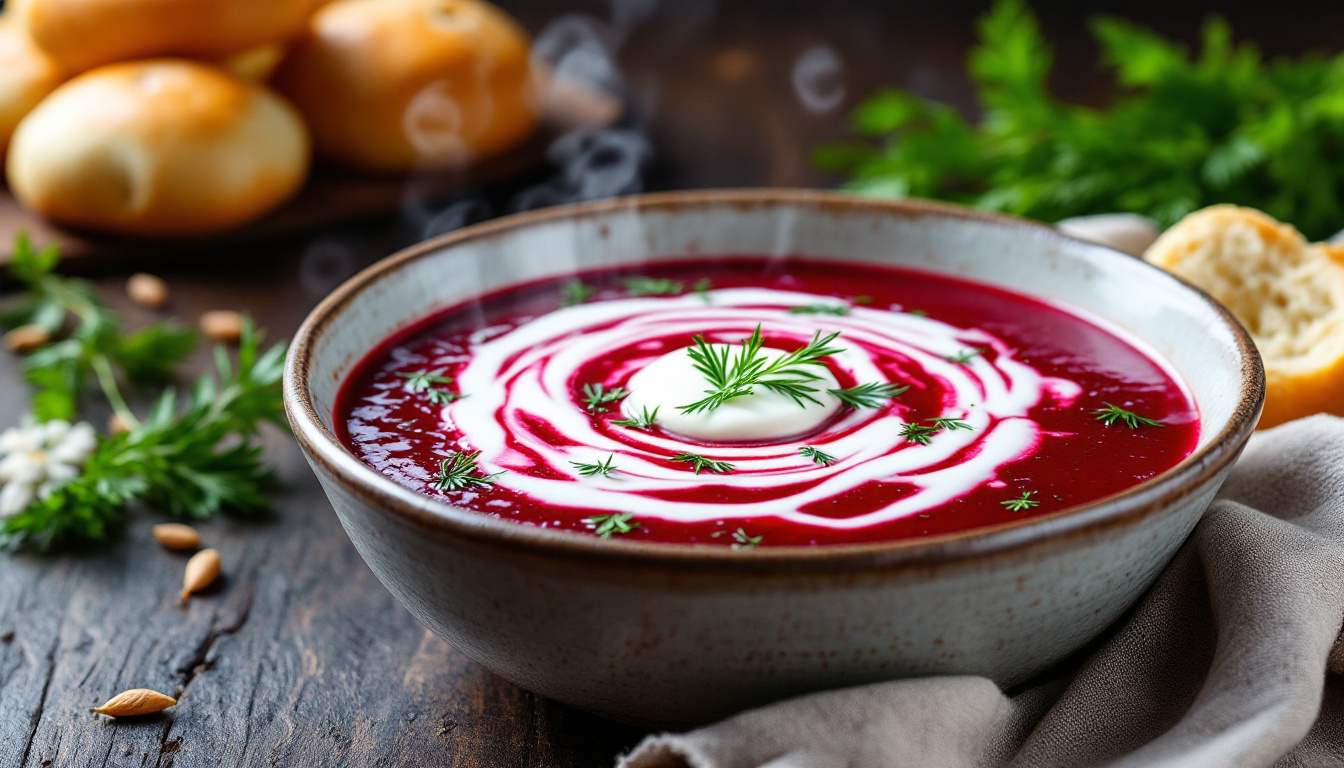
Borscht is Ukraine’s soul in a bowl, a beet soup so central to the culture that UNESCO listed the cooking of it as Ukrainian heritage in 2022. Beets give the deep ruby color and an earthy sweetness, balanced by cabbage, potato and usually beef or pork, with a sour edge and a deep stock. It arrives crowned with a dollop of smetana (sour cream) and a scatter of dill, almost always with garlic-soaked pampushky rolls on the side. It’s served hot in winter and, as a pink kefir-based kholodnyk, cold in summer. It earns a place near the top of our ranking of the best soups in the world.
Varenyky вареники
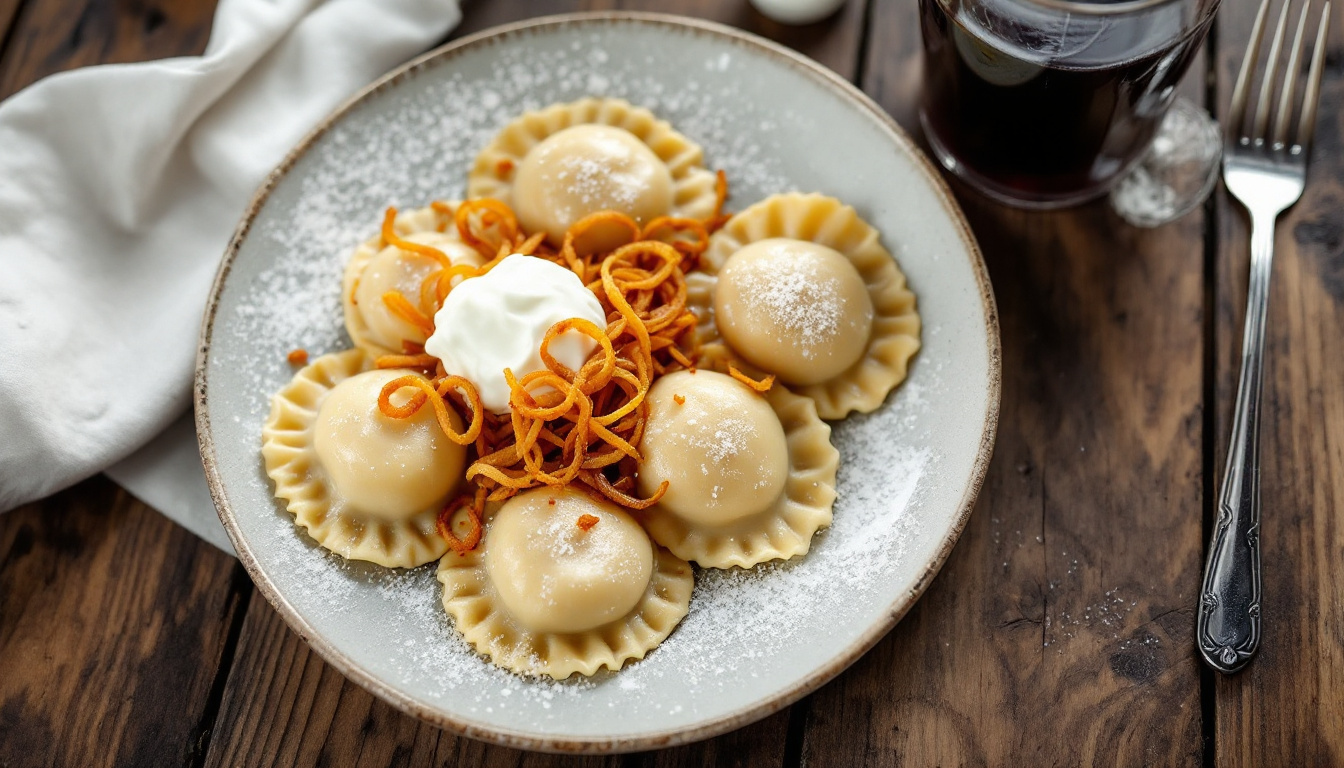
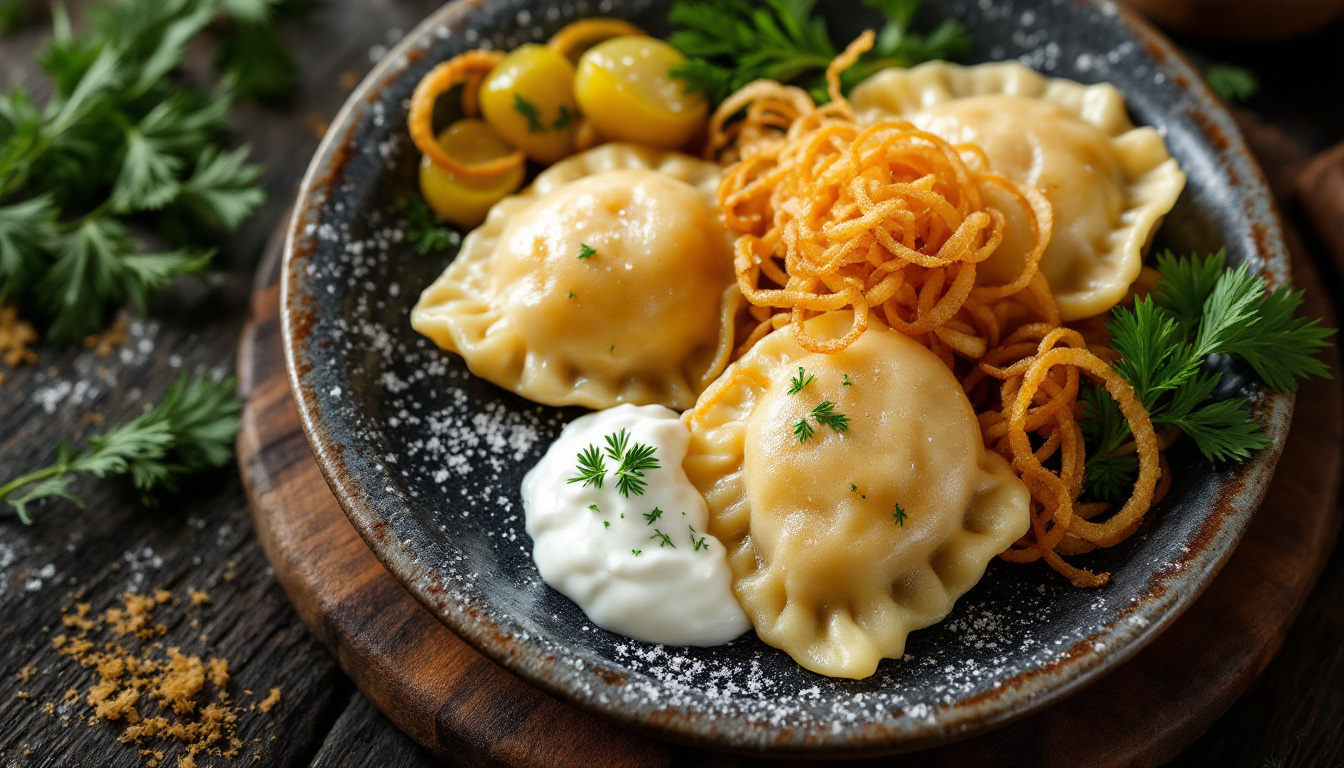
Varenyky are Ukraine’s dumplings, soft half-moons stuffed with whatever the season gives. The classic fillings are potato, tangy curd cheese (syr) or sauerkraut, and in summer sweet sour cherries that stain the dough pink. They’re boiled, then served with smetana and a shower of fried onions or pork cracklings (shkvarky). Poles know a close relative as pierogi, and the cross-border argument over whose are better never ends; you can taste the Polish side in our guide to Polish food. Savory or sweet, a plate of them is the most homey thing you can order.
Salo сало
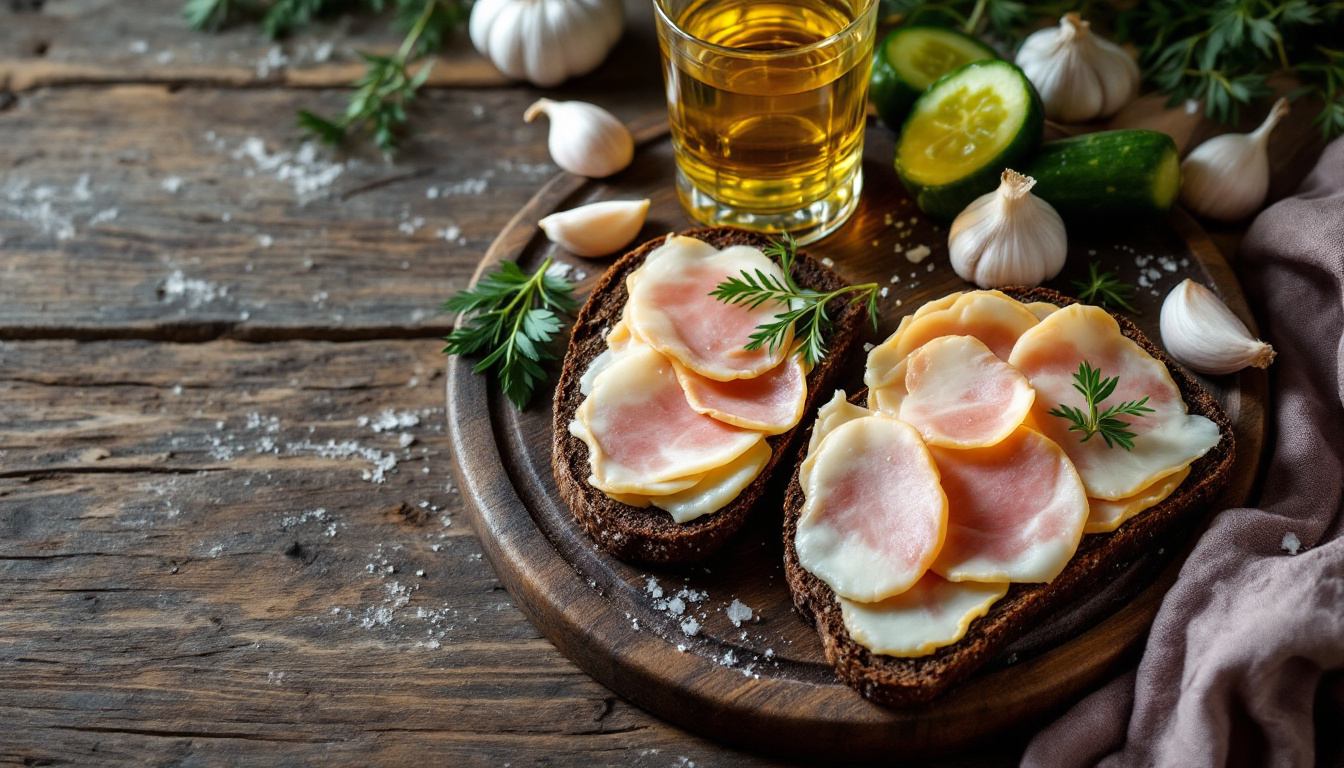
Salo is slabs of cured pork fat, and Ukrainians treat it as a delicacy rather than a guilty secret. It is salted, sometimes smoked or rubbed with garlic, then sliced thin and eaten cold on dark rye bread with a clove of raw garlic and a shot of horilka. Locals half-joke that it’s the national chocolate, and there really is a novelty version dipped in actual chocolate. It sounds extreme. It tastes surprisingly clean and savory, the kind of snack that clicks the moment you try it with bread and a strong drink.
Holubtsi голубці
Holubtsi are cabbage rolls, soft parcels of cabbage wrapped around rice and minced meat in a light tomato sauce. They’re simmered low and slow until the leaves go silky, then finished with smetana, and they turn up at every holiday and Sunday lunch. Carpathian cooks sometimes swap the rice for cornmeal. Romanians make a famous close cousin called sarmale, which you can read about in our Romania food guide. This is the dish grandmothers measure each other by.
Deruny деруни
Deruny are crisp-edged potato pancakes, fried golden and served with a cool spoon of smetana. The batter is just grated potato, onion, egg and a little flour, fried until lacy at the edges and tender in the middle. You will find them plain with sour cream, smothered in a mushroom sauce, or stuffed with meat (deruny z miasom) for a heavier meal. They’re a staple of the northern Polissia region, and a cheap, satisfying order anywhere. Eat them hot, straight off the pan, before they lose their crunch.
Chicken Kyiv котлета по-київськи
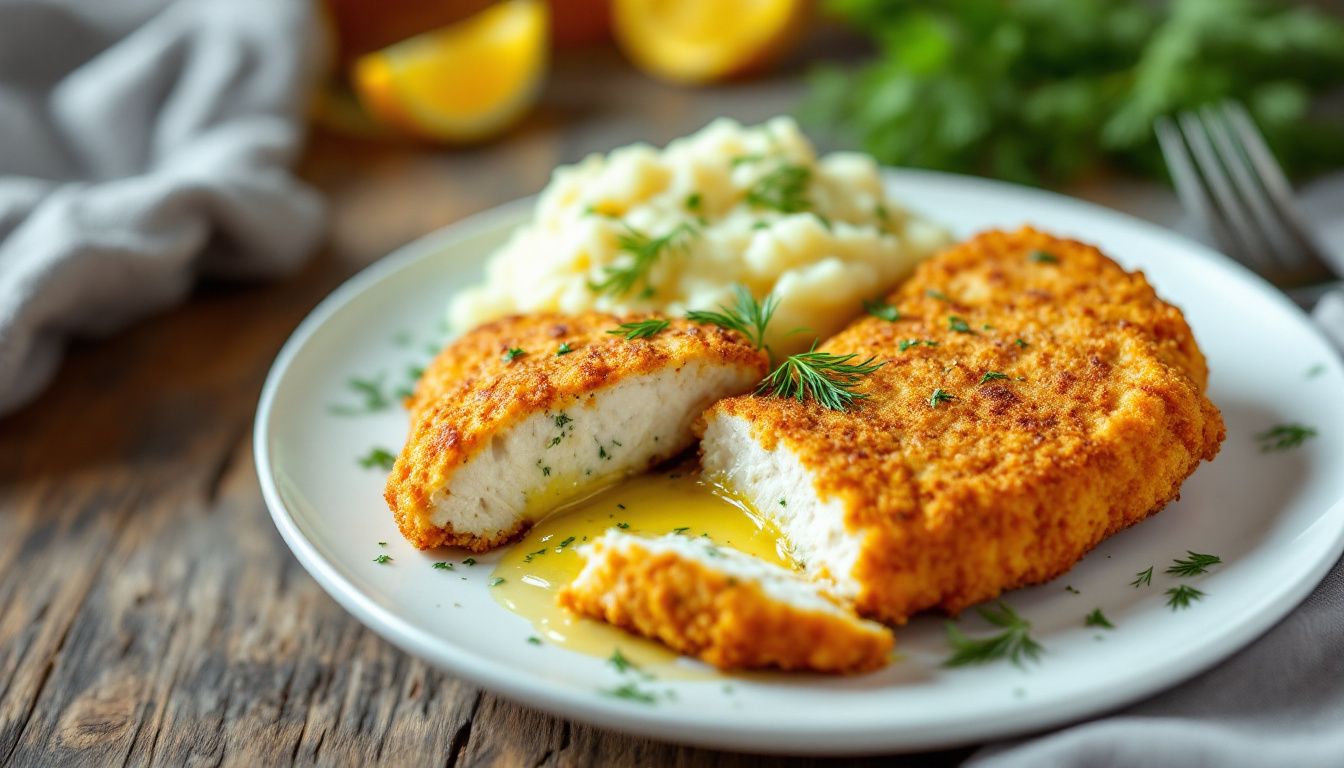
Chicken Kyiv, kotleta po-kyivsky, is a crumbed chicken cutlet hiding a core of herb-and-garlic butter that bursts the second you cut in. A pounded breast is wrapped around a piece of cold butter, breaded and fried or baked until crisp and deep golden. The trick is cutting it carefully, because the molten butter will spray across the plate if you stab it. It’s named for the capital and went global in restaurant menus and freezer aisles, but the version cooked fresh in Kyiv is a different, far better dish. Order it with deruny or a simple salad.
Holodets холодець
Holodets is meat set in a savory jelly, a cold aspic that lands on every winter holiday table. Pork or chicken is simmered for hours until the broth is rich enough to set on its own as it cools, with the meat suspended inside. It’s served cold, in slabs, with sharp horseradish (khrin) or mustard to cut the richness. This is the most divisive dish on the list, a true acquired taste, but it is a fixture of New Year and Christmas spreads and a point of pride for the cook who gets the set just right.
Olivier Salad салат олів’є
Olivier salad is the cold, creamy salad that appears on every Ukrainian New Year table. Diced boiled potato, carrot, peas, pickles, egg and usually bologna or chicken are bound in a heavy coat of mayonnaise and chilled. It’s the post-Soviet holiday salad, mixed in bowls big enough to last days of celebration. Ukrainians eat it with a fork between toasts, and no festive spread feels finished without it. Simple, rich and a little retro, it’s comfort food in salad form.
Banosh банош
Banosh is the Hutsul mountain dish, cornmeal cooked slowly in sour cream until it turns rich and almost creamy. It is finished with crumbled bryndza, a salty sheep’s cheese, and a scatter of pork cracklings, and sometimes wild mushrooms from the forest. Traditionally it is stirred in a cauldron over an open fire up in the Carpathian highlands, which is where it tastes best. It’s simple, fatty and warming, the food of shepherds and ski weekends. If you make it to western Ukraine, this is the regional dish to chase.
Syrnyky сирники
Syrnyky are fried curd-cheese pancakes, the Ukrainian breakfast worth waking up for. They’re made from tvorog (a fresh farmer’s cheese) bound with egg and a little flour, then pan-fried until golden outside and soft and tangy inside. They come dusted with sugar and served with smetana, jam, honey or fresh berries. Lighter than a stack of pancakes and richer than toast, they are the standard order in any morning canteen or cafe. Have them with a glass of uzvar or a strong coffee.
Nalysnyky налисники
Nalysnyky are thin Ukrainian crepes rolled around a filling, most often sweet curd cheese. The batter is poured thin like a French crepe, cooked, then wrapped around tvorog mixed with egg yolk, sugar and dill, and sometimes baked in cream to finish. Savory versions with meat or mushrooms exist too. Don’t confuse them with mlyntsi, the plain unfilled pancakes served with jam or sour cream. Nalysnyky are a homey breakfast or dessert, and a regular on any table cooked to impress guests.
Pampushky пампушки
Pampushky are soft pull-apart rolls, and the savory ones drenched in garlic oil are borscht’s required partner. The dough is a light yeast bun, baked in a cluster so you tear them apart, then brushed with crushed garlic, oil and dill. You dunk them straight into the soup. There is also a sweet version, filled with poppy seeds or plum jam and served as dessert. They’re rarely a menu headline, but a bowl of borscht without garlic pampushky feels unfinished. At Easter the bread to know is paska, a tall, sweet, icing-topped loaf blessed at church before the holiday meal.
Okroshka окрошка
Okroshka is a cold summer soup, a bowl of chopped vegetables, egg and meat flooded with chilled kvass or kefir. Diced cucumber, radish, boiled potato, hard egg and ham or sausage go in raw and cold, then the tangy liquid is poured over with a heavy hand of dill. It sounds odd and tastes like exactly what you want at 30°C, sour, crunchy and cooling. Ukrainians argue endlessly over kvass versus kefir as the base. Either way it only appears when the weather turns hot.
Medovik медовик
Medovik is Ukraine’s beloved honey cake, a tower of thin honey-baked layers soaked soft with sour-cream frosting. It’s built a day ahead so the layers melt together into something tender and mellow, not too sweet, with a faint caramel edge from the honey. The other cake to know is the Kyiv cake (Kyivskyi tort), a famous meringue-and-hazelnut creation from the capital. Between the two, Ukraine punches well above its weight on dessert. Order medovik with coffee or a glass of uzvar.
How food changes across Ukraine
Ukrainian food shifts from Austro-Hungarian pastry in the west to Black Sea fish in the south. The country is big, and its borders have moved a lot, so each region carries a different culinary accent.
Western Ukraine eats with an Austro-Hungarian accent. Lviv runs on coffee, chocolate and Galician baking, a legacy it shares with Krakow across the old Habsburg border. Up in the Carpathians, the Hutsuls cook banosh and forest mushrooms over open fire, and the food turns heartier and more mountain than steppe.
Central Ukraine is the borscht-and-varenyky heartland, the breadbasket built on black soil. Kyiv is where chicken Kyiv was christened, and where the art-nouveau Bessarabsky Market sells the country’s produce under one roof. This is the most classic, no-accent version of Ukrainian home cooking.
Southern Ukraine tastes of the Black Sea and a Jewish, Greek and Moldovan past. Odesa’s legendary Pryvoz market piles up Black Sea fish and produce, and local dishes like forshmak (chopped herring) and stuffed vegetables show the port city’s layered history. The cooking here is brighter and more Mediterranean than the rest of the country.
Where to eat: bazaars, canteens and home kitchens
The best Ukrainian food is home cooking, so eat where home cooking is sold cheap. Self-service canteens (yidalnya) ladle out borscht, cutlets and salads by the portion for a few dollars, and they’re where locals actually eat lunch. Markets like Bessarabsky in Kyiv and Pryvoz in Odesa sell produce, pickles, honey and snacks, with food stalls tucked among them. A full canteen meal runs roughly ₴150-300 (about $4-7) as of 2026. Lviv’s themed restaurants are fun for one visit, but the real varenyky and banosh are at the unglamorous places.
- Bread and salt is the traditional welcome; accepting it is a sign of respect.
- Toasts with horilka are taken seriously. It’s polite not to refuse the first one.
- Salo is shared, but never without dark bread and raw garlic alongside.
- Finish what is on your plate. Wasting food reads as rude to an older host.
What to drink in Ukraine
Ukraine drinks kvass, uzvar and horilka. Kvass (квас) is a lightly fermented rye-bread drink, mildly sour and barely alcoholic, sold from street barrels in summer and used as the base for cold okroshka. Uzvar (узвар) is a compote of dried fruits, gently sweet and traditional on the Christmas table. Horilka (горілка) is the local clear spirit, often infused at home into nastoyanky with honey (medovukha) or hot pepper (pertsivka). Add craft beer from Lviv and Kyiv and a sweet fruit kompot for kids, and you have the full drinks table.
FAQ
What is the national dish of Ukraine?
Borscht is the national dish of Ukraine, a deep-red beet soup that UNESCO recognized as Ukrainian cultural heritage in 2022. Varenyky dumplings and salo (cured pork fat) follow close behind as everyday icons.
Is Ukrainian food the same as Russian food?
No. Dishes like borscht, varenyky, salo and banosh are Ukrainian, with their own ingredients and traditions, and UNESCO listed borscht cooking specifically as Ukrainian heritage in 2022. There is regional overlap across Eastern Europe, but the cuisine stands on its own.
Is there good vegetarian food in Ukraine?
Yes. Varenyky with potato, cheese or cherry, deruny potato pancakes, syrnyky, meat-free holubtsi and a wide table of pickles and breads are all vegetarian. Ask about the stock, since borscht and many soups are usually made with meat.
Is borscht served hot or cold?
Borscht is usually served hot, deep red, with a spoon of sour cream and dill. In summer there is a cold version, kholodnyk, made pink and tangy with kefir or whey and eaten chilled.
What should I drink with Ukrainian food?
Drink kvass or fruit uzvar if you want something soft, and horilka, often honey or pepper infused, for toasts. Lviv and Kyiv also have a strong craft beer scene that pairs well with salo and grilled meat.
What is the most famous Ukrainian dessert?
Medovik, a layered honey cake set soft with sour-cream frosting, is the most famous Ukrainian dessert, alongside the meringue-and-hazelnut Kyiv cake. Lighter sweets like syrnyky and cheese-filled nalysnyky double as breakfast.
More food guides waiting for you
Browse our complete collection of European food guides and travel tips.