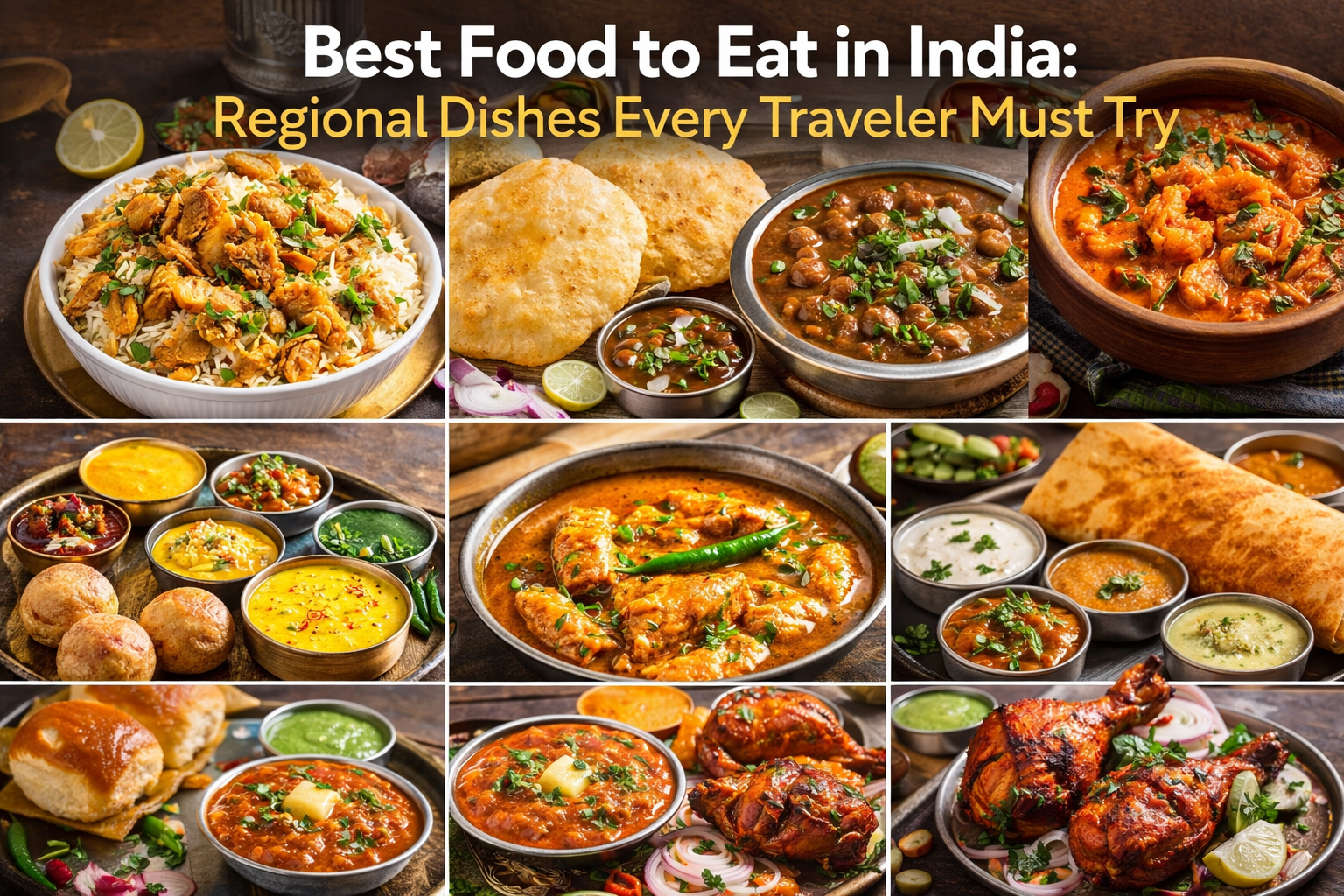
The best food to eat in India is the most overwhelming and rewarding food experience a traveler can have. India doesn’t have one cuisine, it has thirty. Every state, sometimes every neighborhood, has its own food identity built over centuries of trade, religion, climate, and migration. From the creamy butter chicken of Punjab to the fiery fish curries of Kerala to the chaat-stacked lanes of Old Delhi, eating here rewires what you think Indian food even is, there is no single typical Indian dish, only what to eat in the region you happen to be standing in.
Indian food is a pace, not a menu. Pani puri comes off a Mumbai cart faster than you can swallow the shells; a thali refills until you surrender. The best of it is rarely in a restaurant with white tablecloths. It’s at a dhaba truck stop with a blazing tandoor, a South Indian “mess” ladling unlimited sambar, or a sweet shop that has made the same gulab jamun since before your grandparents were born.
This guide covers the major regional cuisines, 20 must-try dishes, street food essentials, prices in rupees and US dollars (checked for 2026, when the rupee sat around ₹93 to the dollar), the vegetarian paradise, and the spice survival skills you actually need. India is one of nine countries in our guide to the best food in Asia.
Why Indian food is worth the trip
Indian food is worth a trip because no other country packs this many distinct cuisines into one passport. Describing “Indian food” as a single thing is like describing “European food” as a single thing. It erases the gulf between a Kashmiri rogan josh (slow-braised lamb in a yogurt-saffron gravy), a Hyderabadi dum biryani (layers of spiced rice and meat sealed and slow-cooked), a Goan vindaloo (fiery pork in a vinegar-chili sauce with Portuguese roots), and a Tamil idli-sambar (steamed rice cakes with lentil soup).
The common thread is spice, and not just chili heat. Indian cooking is built on elaborate blends of ten, fifteen, twenty ground spices combined in proportions that took generations to settle. The other constant is value: this is one of the cheapest countries on earth to eat extraordinarily well, where a two-dollar thali outclasses meals that cost ten times more elsewhere.
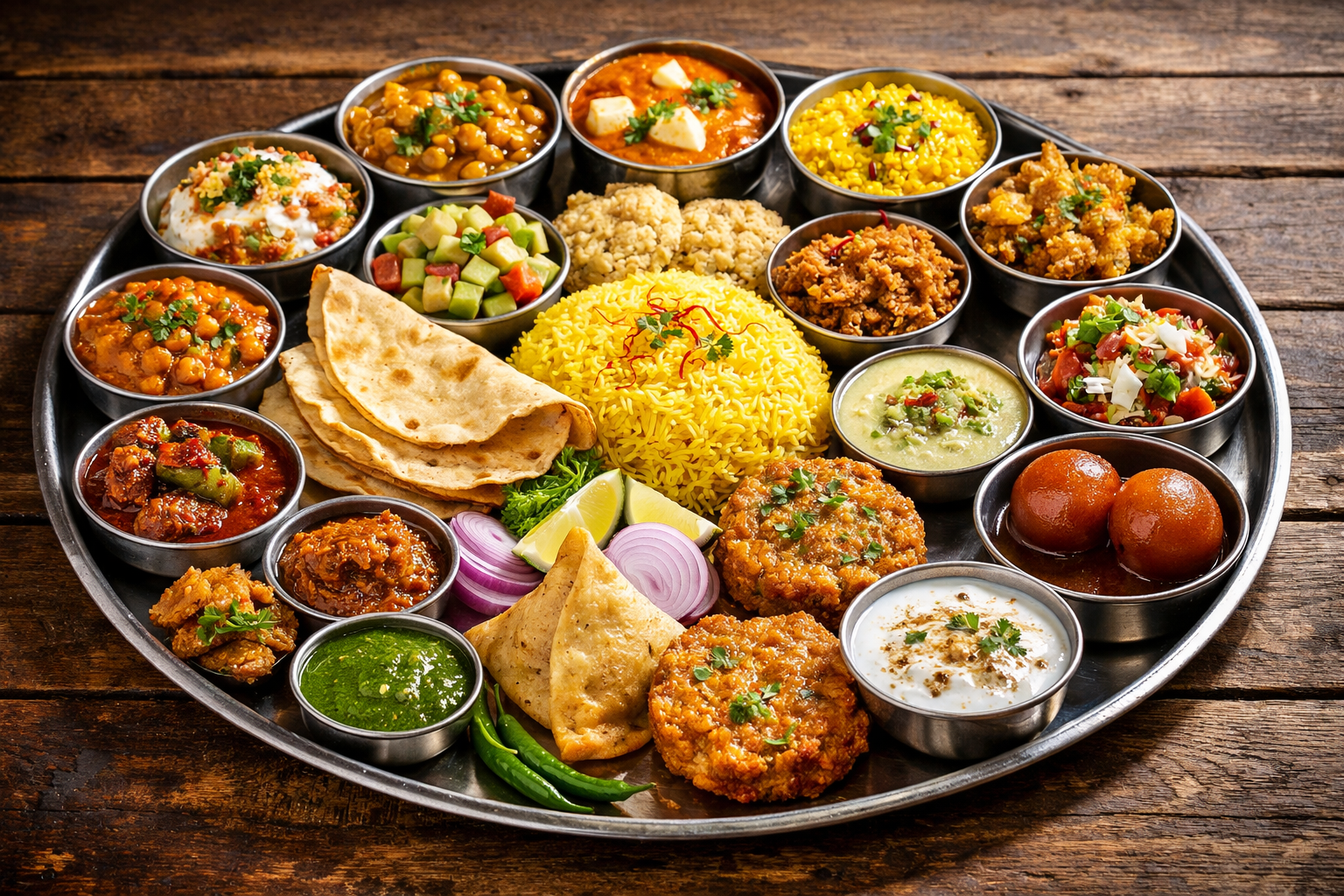
The regional cuisines of India at a glance
There is no such thing as “Indian food” any more than there is “European food.” The country cooks in at least five broad regional styles, each shaped by its climate, crops and history, and each split again into dozens of state and community traditions. The sections below go deep on the ones a traveler meets first; this table is the map to orient by.
| Region | Staple and character | Signature dishes |
|---|---|---|
| North (Punjab, Delhi, Kashmir, UP) | Wheat, dairy and the tandoor; rich Mughlai and Punjabi gravies | Butter chicken, rogan josh, chole bhature, kebabs |
| South (Tamil Nadu, Kerala, Karnataka, Andhra, Telangana) | Rice, lentils, coconut and tamarind; fermented batters, often the spiciest | Masala dosa, idli-sambar, Hyderabadi biryani, Chettinad chicken |
| East (Bengal, Odisha, Assam) | Rice, freshwater fish, mustard oil and panch phoron; the great milk sweets | Machher jhol fish curry, rasgulla, sandesh |
| West (Gujarat, Maharashtra, Rajasthan, Goa) | Sweet-savoury vegetarian inland, coastal seafood and Portuguese-tinged Goan | Dhokla, vada pav, dal baati churma, Goan vindaloo |
| Northeast (Assam, Nagaland, Manipur and the seven states) | Bamboo shoot, fermented and smoked foods, few spices, clean flavors | Smoked pork with axone, bamboo-shoot pickle, fermented fish |
Even this is a simplification: a single state like Tamil Nadu or Bengal holds several distinct cuisines. Treat the five regions as a starting point, then eat by city and community once you arrive.
North Indian food: Mughlai, Punjabi and the food most Westerners know
North Indian cuisine is what most people outside India picture when they think “Indian food,” specifically Punjabi and Mughlai cooking. This is the land of tandoor ovens, creamy gravies enriched with butter, cream, and cashew paste, and slow-cooked meats that fall off the bone. The Mughal Empire (16th to 19th century) left a culinary legacy that still dominates restaurant menus worldwide: biryani, kebabs, korma, and the entire genre of rich, aromatic meat dishes cooked in yogurt and spice.
Butter Chicken Murgh Makhani / मुर्ग़ मख्खनी
Invented in 1950s Delhi at Moti Mahal in Daryaganj, butter chicken is India’s most famous dish: tandoori chicken simmered in a velvety tomato sauce enriched with butter, cream, and kasuri methi (dried fenugreek leaves). It launched a thousand British curry houses, but nothing abroad comes close to the Delhi original.
The version at Moti Mahal is still worth visiting, though locals now argue for Gulati in Pandara Road Market or Rajinder da Dhaba in Safdarjung. Expect ₹250 to 500 ($3 to 6) at a good local restaurant. Order it mild, the way it was designed.
Chicken Tikka Masala Chicken Tikka Masala
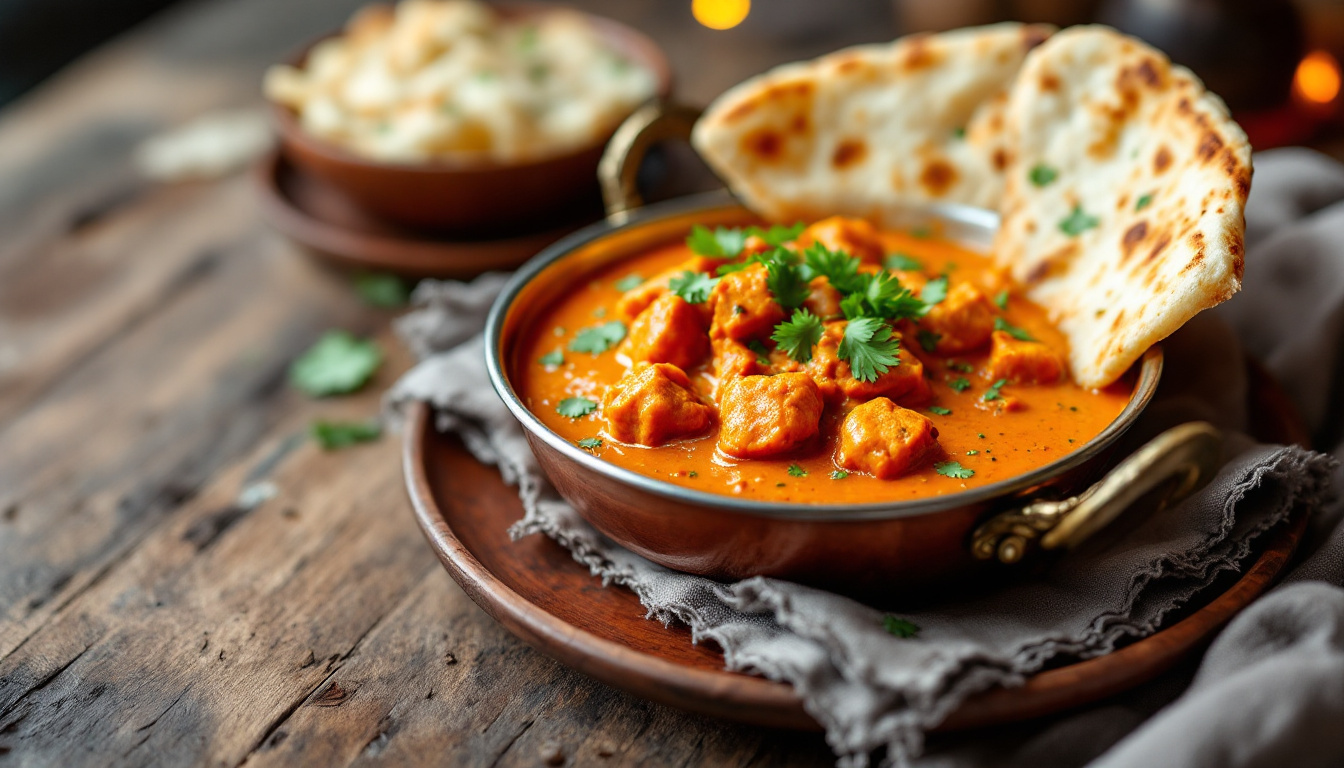
This is the dish the world Googles most when it searches “Indian food,” and the honest answer is that it probably was not born in India. Most food historians credit a Glasgow curry house in the 1970s, where a cook is said to have loosened dry chicken tikka with a tin of tomato soup and cream. The result is grilled marinated chicken in a mild, creamy, tomato-and-spice gravy. It is now so beloved in Britain that it is regularly called the country’s national dish, as our UK food guide explains.
It is close enough to butter chicken that Indians often treat them as cousins, but tikka masala uses charred tikka pieces and a slightly tangier, less buttery sauce. You will find it on almost every restaurant menu in India today, priced ₹250 to 450. Order both side by side once and decide which camp you belong to.
Tandoori Chicken Tandoori Murgh
Whole chicken marinated in yogurt, red chili powder, ginger-garlic paste, and garam masala, then cooked in a clay tandoor at 480°C (900°F). The extreme heat chars and smokes the exterior while keeping the inside juicy. The red color comes from Kashmiri chili powder, which is all about deep color and mild warmth, not fire.
Served with mint chutney, raw onion rings, and lemon wedges. A half chicken runs ₹200 to 400 ($2.40 to 4.80). It is the gateway dish that taught the world to love the tandoor.
Dal Makhani Dal Makhani / दाल मखनी
Black lentils (urad dal) and kidney beans (rajma) slow-cooked for 12 to 24 hours with tomatoes, butter, and cream until they reach a thick, velvety, almost meaty consistency. This is the dish that converts committed carnivores to vegetarian food. The best versions need overnight cooking, and the lentils break down into a silky puree that coats the back of a spoon.
Local restaurants charge ₹150 to 300 ($1.80 to 3.60). At ITC Maurya’s Bukhara in Delhi, the version (₹1,800 / $21.60) has been served to visiting heads of state for decades.
Rogan Josh Rogan Josh
A Kashmiri masterpiece: lamb simmered in a yogurt-based gravy colored deep red by Kashmiri chili and ratanjot (alkanet root), flavored with fennel, cardamom, and dry ginger. Despite the vivid color it is not particularly spicy, because the Kashmiri chili is about color and mild warmth, not fire.
It is one of India’s most aromatic dishes, and the lamb (usually goat, which Indians call “mutton”) cooks until it almost melts. Expect ₹300 to 600 ($3.60 to 7.20).
Chole Bhature Chole Bhature / छोले भटूरे
Spiced chickpea curry (chole) served with deep-fried puffy bread (bhature) that balloons into a golden dome. It is heavy, rich, and completely irresistible, eaten for breakfast or lunch across North India and especially beloved in Delhi and Punjab. The chickpeas slow-cook with black tea bags, which darken the gravy, and a complex spice mix including amchur (dried mango powder).
Sita Ram Diwan Chand in Paharganj, Delhi, has served the definitive version since 1955, at ₹60 to 120 ($0.72 to 1.44). Go hungry.
South Indian food: dosa, coconut and a completely different universe
South Indian food is as different from North Indian food as Japanese is from French. Where the north is wheat-based, cream-heavy, and Mughal-influenced, the south is rice-based, coconut-driven, and ancient, with traditions that predate the Mughal Empire by centuries. The staples are fermented batters for dosa and idli, lentils in every form, coconut milk and grated coconut, curry leaves, mustard seeds, and tamarind for sourness instead of tomatoes.
Masala Dosa Masala Dosa / मसाला डोसा
A paper-thin crepe made from a fermented batter of rice and urad dal, cooked on a flat griddle until golden and crackly, then filled with spiced potato and folded. Served with coconut chutney, sambar (spicy lentil-vegetable soup), and a tomato-onion chutney. The overnight fermentation is the key, giving the dosa a slight tang that a plain pancake never has.
Breakfast in Bangalore, Chennai, or Kerala means dosa, at ₹60 to 150 ($0.72 to 1.80). MTR (Mavalli Tiffin Rooms) in Bangalore, open since 1924, is the benchmark.
Idli and Sambar Idli / इड्ली
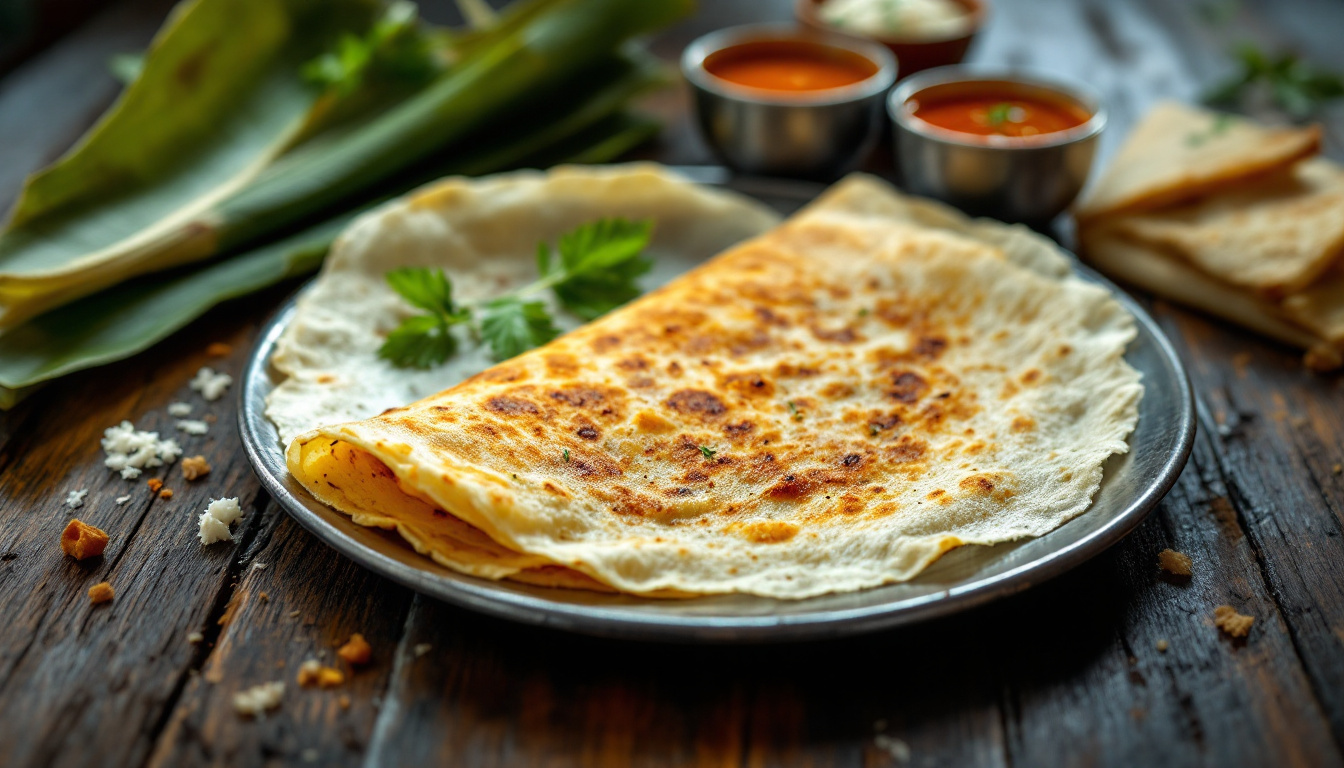
Soft, fluffy, slightly sour steamed rice cakes served with sambar and chutney. They look humble, white and round and unassuming, but a properly made idli is pillow-soft and spongy, and it absorbs sambar like a flavor sponge. This is the daily breakfast of more than 200 million South Indians.
A plate of three or four idli runs ₹30 to 80 ($0.36 to 0.96). It is also the gentlest possible introduction for a stomach still adjusting to India.
Appam and Stew Appam
A bowl-shaped, lace-edged rice pancake with a soft, spongy center and a crispy rim, made from fermented rice batter with coconut milk. Served with vegetable or chicken stew, a mild coconut-milk curry with potatoes, carrots, and whole spices.
The stew carries no fiery heat, and the contrast between the crisp appam edge and the creamy stew is one of the most harmonious combinations in Indian cooking. Expect ₹80 to 150 ($0.96 to 1.80).
South Indian Thali Meals / थाली
A stainless steel plate with a mound of rice ringed by 8 to 15 small bowls of sambar, rasam (thin peppery tomato-tamarind soup), kootu, poriyal (dry vegetable stir-fry), pickles, papadum, curd, and a sweet. Many restaurants offer unlimited refills, with servers circling to ladle more until you signal stop.
The Saravana Bhavan chain serves an excellent thali for ₹120 to 250 ($1.44 to 3). At a “mess” or at Murugan Idli Shop, unlimited refills make this a staggering amount of food for under two dollars.
Indian street food: the greatest on earth
Indian street food, known collectively as chaat in the north, is the most varied, flavorful, and addictive street food culture anywhere. Every city has its own specialties, its own legendary stalls, and its own fierce loyalty to local preparations. Delhi’s Chandni Chowk, Mumbai’s Chowpatty Beach, Kolkata’s Park Street, and Lucknow’s Chowk are all world-class. For how India stacks up globally, see our best cities for street food.
Samosa Samosa / समोसा
The single most famous Indian snack on earth: a crisp, triangular pastry shell stuffed with spiced potato, peas, and cumin, deep-fried to a flaky, blistered gold and served with mint and tamarind chutney. Every tea stall, railway platform, and street corner in the country has them stacked warm by mid-afternoon, and a good one shatters cleanly without a trace of grease.
Regional fillings range from the Punjabi potato classic to keema (minced meat) in the north and even chocolate or noodle versions in the cities. Its close cousin the kachori — a rounder, flakier pastry stuffed with spiced lentils — sits right beside it on most counters. At ₹15 to 40 ($0.18 to 0.48) it is the cheapest, most reliable bite in India and the first thing most travelers eat without fear.
Pani Puri Golgappa / Puchka / पानी पूरी
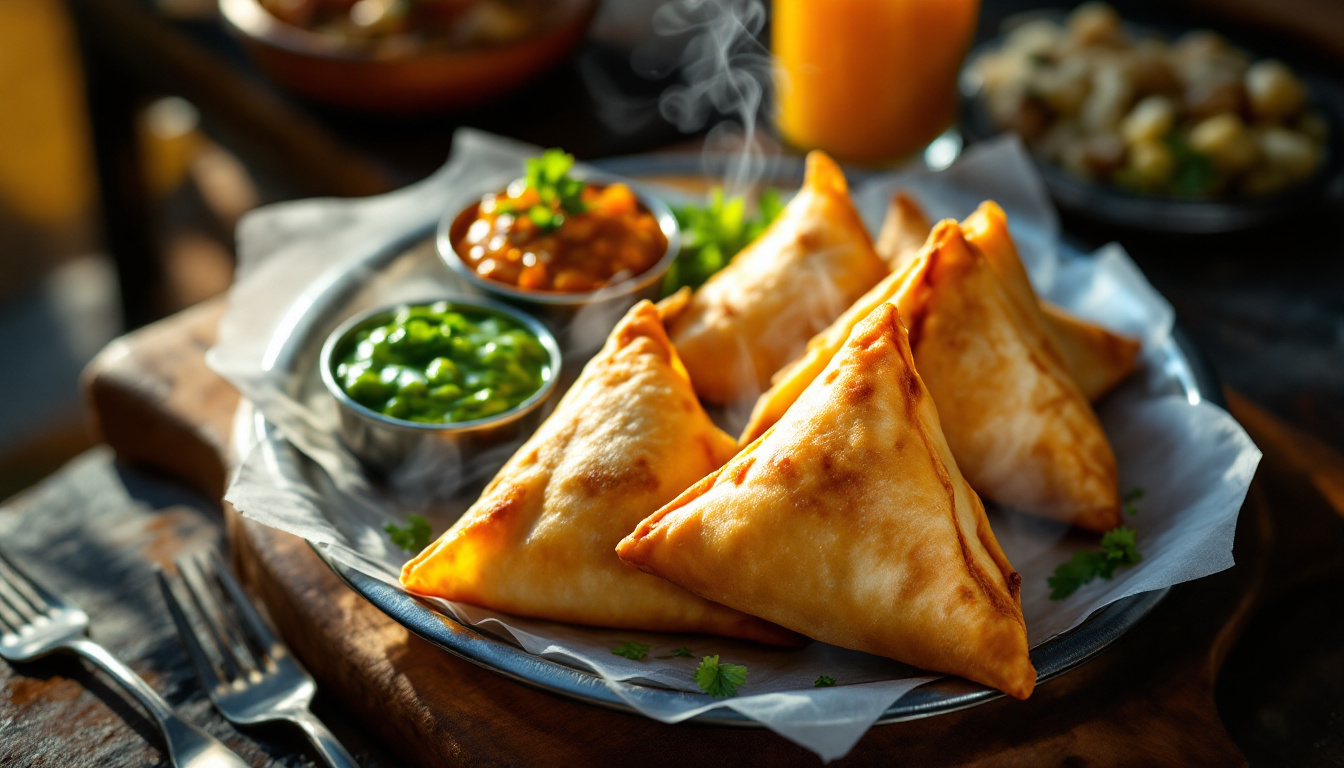
A hollow, crispy, golf-ball-sized semolina shell, cracked open, filled with spiced chickpeas and potato, then dunked in a tangy, minty green water (pani). You eat the whole thing in one bite. The shell shatters, the cold spiced water rushes in, and for about three seconds every flavor receptor fires at once.
The wallah makes them fresh in front of you: you eat one, he fills the next, repeat until you surrender. Around ₹20 to 40 ($0.24 to 0.48) for six. Called pani puri in Mumbai, golgappa in Delhi, and puchka in Kolkata.
Vada Pav Vada Pav / वडा पाव
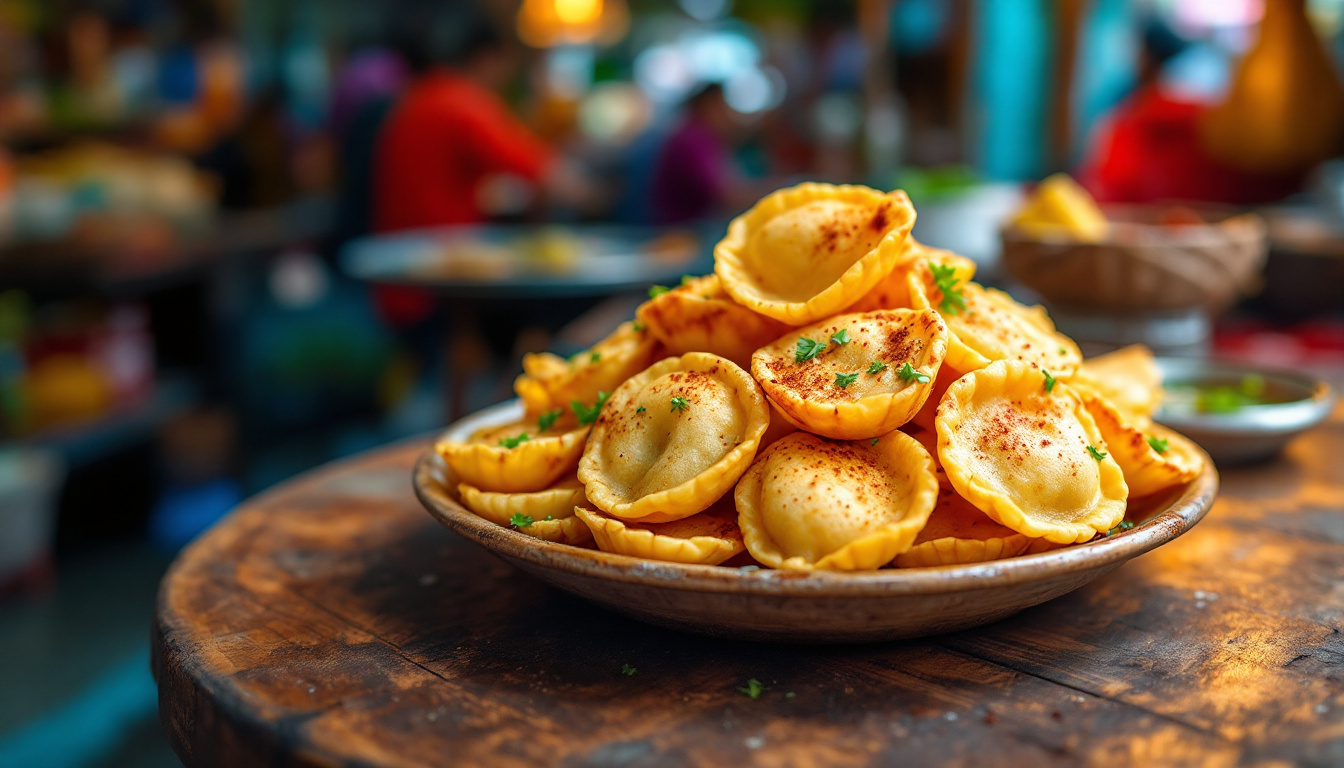
A spiced potato fritter (vada), mashed potato with green chili, garlic, mustard seeds, and turmeric, battered in chickpea flour and deep-fried, stuffed into a soft bread roll (pav) with garlic chutney and green chili chutney. It is Mumbai’s signature street food, eaten by every social class at every hour.
Ashok Vada Pav near Kirti College and the stall outside Mithibai College are legendary. At ₹15 to 30 ($0.18 to 0.36), it is the most satisfying thing you can eat for under fifty cents anywhere on earth.
Pav Bhaji Pav Bhaji / पाव भाजी
A thick, spiced vegetable mash of potatoes, peas, tomatoes, bell peppers, and onions cooked on a giant flat griddle with an obscene amount of butter, served with toasted, buttered bread rolls. The bhaji is tangy and deeply savory, topped with raw onion, a squeeze of lime, and cilantro.
Cannon Pav Bhaji at CST station and Sardar near Tardeo are the Mumbai benchmarks, at ₹60 to 120 ($0.72 to 1.44). It is spectacularly messy and utterly addictive.
Pakora Pakora / Bhaji / पकौड़ा
Vegetables (onion, potato, spinach, cauliflower, chili) dipped in spiced chickpea-flour batter and deep-fried into crunchy fritters. Onion bhaji is the version most travelers already know from abroad. In India it is the default monsoon snack, eaten hot with chai while the rain comes down, dipped in mint or tamarind chutney.
You will find pakora at tea stalls and roadside carts everywhere for ₹30 to 80 ($0.36 to 0.96) a plate. It is the cheapest, fastest way to understand why chickpea flour (besan) is the backbone of Indian frying.
Momos Momo / मोमो
Steamed or pan-fried dumplings of Tibetan and Nepali origin that have become the defining street snack of modern urban India, especially Delhi, the Northeast, and the Himalayan hill towns. Filled with spiced minced chicken, pork, or vegetables and cabbage, they are served by the plate with a fiery red chili-garlic chutney that is half the point.
Carts outside Delhi metro stations and the lanes of Majnu ka Tila sell them by the dozen for ₹50 to 120 ($0.60 to 1.44). Order the fried ones (kothey momos) if you want crunch, steamed if you want them clean and light.
Chaat: Delhi’s sour-spicy-sweet-crunchy art form
Chaat is less a dish than a whole genre of layered street snacks. The defining feature is texture and contrast stacked in one mouthful: crunchy, soft, sour, sweet, spicy, cooling. Natraj Dahi Bhalle Wala in Chandni Chowk has made the best in Delhi since the 1940s, at ₹30 to 80 a plate.
- Aloo tikki. Crispy potato patties topped with chickpea curry, yogurt, tamarind chutney, green chutney, and sev (crispy noodles).
- Dahi bhalla. Soft lentil fritters soaked in spiced yogurt with sweet and sour chutneys.
- Bhel puri. Puffed rice, sev, chopped onion, tomato, and chutneys tossed together, Mumbai’s beach snack.
- Papdi chaat. Crisp flour wafers topped with potato, chickpeas, yogurt, and chutneys.
Lucknow’s kebabs: slow-cooked perfection
Lucknow’s Awadhi kitchen treats minced meat as a fine art. Tunday Kababi in the Chowk has served legendary kebabs since 1905, at ₹80 to 200 a plate.
- Galouti kebab. Minced lamb ground with a famous blend of more than 100 spices until paste-smooth, pan-fried until it literally melts on the tongue. Invented for a toothless Nawab of Lucknow.
- Seekh kebab. Minced spiced meat molded onto skewers and grilled over charcoal.
- Kakori kebab. Even smoother than galouti, slow-cooked over a low flame, the most refined of the three.
The biryani question: Hyderabad vs Lucknow vs Kolkata
No food topic starts more arguments in India than biryani, and the question of whether Lucknow’s delicate Awadhi version even counts next to Hyderabad’s fiery dum biryani has been known to turn a friendly table tense. Every city claims the best version, and the regional styles are so different they are almost separate dishes. At its core biryani is layers of basmati rice and spiced meat slow-cooked together under a sealed lid (dum). A plate runs ₹150 to 400 depending on city and cut.
- Hyderabadi dum biryani. Raw marinated goat layered with par-cooked rice, sealed in a heavy pot with dough, cooked over the lowest flame for hours. Spicy and aromatic, with green chilies, mint, and saffron milk. The bottom layer forms a prized caramelized crust (khurchan). Try Paradise, Bawarchi, or Shah Ghouse.
- Lucknowi (Awadhi) biryani. The meat is pre-cooked in a rich yogurt gravy, then layered with fully cooked rice for a final dum. Milder, subtler, and more refined, with falling-apart meat and perfectly separate grains. Idris and Wahid in Lucknow are the names.
- Kolkata biryani. Brought by the exiled Nawab of Awadh in 1856, it hides a whole potato in every serving, added when reduced fortunes meant less meat. Lighter, slightly sweet, with a rose-water aroma. Arsalan and Aminia are the institutions.
Indian breads, from naan to dosa
Bread in India is not an afterthought, it is the vehicle for everything, and no curry is complete without something to scoop it up. The variety is staggering, and each type does a different job.
- Naan. Leavened bread baked on the inner wall of a tandoor, soft and slightly charred with air pockets. Garlic naan and butter naan are the popular variants. ₹30 to 60.
- Roti / chapati. Unleavened whole-wheat flatbread cooked on a flat griddle (tawa), the everyday bread of North India, lighter than naan. ₹10 to 20.
- Paratha. Layered, flaky flatbread, often stuffed with potato (aloo), cauliflower (gobi), or paneer. Breakfast in Punjab and Delhi. ₹30 to 80 with butter and pickle.
- Puri. Small rounds of wheat dough deep-fried until they puff into golden balloons, served with chole or aloo sabzi.
- Bhatura and kulcha. Bhatura is the bigger, softer cousin of puri. Kulcha is a thicker tandoor bread, often stuffed; the Amritsari kulcha with spiced potato is legendary.
- Dosa, uttapam, appam. The South Indian rice breads: the crisp crepe, the thick onion-and-tomato pancake, and the bowl-shaped Kerala rice pancake.
India: the world’s greatest vegetarian destination
Nowhere on earth comes close to India for vegetarian food. This is not a country where vegetarian means a sad salad. Here, vegetarian food is the cuisine, developed over thousands of years by Hindu, Jain, and Buddhist dietary traditions into some of the most complex and satisfying dishes you will eat anywhere. The everyday vegetarian plate to know:
- Paneer butter masala. Cubes of fresh Indian cottage cheese in the same creamy tomato gravy as butter chicken. Rich, mild, universally loved.
- Aloo gobi. Potato and cauliflower dry-roasted with turmeric, cumin, and green chili, simple and deeply homey.
- Palak paneer. Paneer cubes in a thick, creamy spinach sauce.
- Malai kofta. Deep-fried paneer-and-potato balls in a rich cashew-cream gravy.
- Chana masala. Chickpeas in a tangy, spiced tomato sauce, the everyday North Indian standard.
Beyond the daily plate, two regional vegetarian experiences are worth planning a meal around. Rajasthani dal baati churma pairs hard wheat balls baked over fire, crushed and drenched in ghee, with five kinds of dal and a sweet crumble; rich enough to fuel a desert warrior, at ₹150 to 300. The Gujarati thali is the most elaborate vegetarian meal in India, 15 to 20 items of dals, kadhi, vegetables, farsan, rotli, rice, pickles, and sweets. Agashiye in Ahmedabad serves it on a rooftop for ₹200 to 500.
Coastal India: fish curries of Goa, Kerala and Bengal
India’s 7,500 km coastline produces seafood traditions that rival any maritime cuisine in the world, yet they are far less known abroad than the butter-chicken-and-naan complex of the north. Three regional fish kitchens stand out.
- Kerala fish curry (meen curry). Kingfish or seer fish in a thin, fiery, tamarind-red curry with kokum and coconut milk, cooked in a clay pot that adds an earthy note. It improves overnight, and day-two fish curry is a prized thing in Kerala homes. ₹150 to 300.
- Goan fish curry rice (xitt kodi). Goa’s daily soul food, any fresh fish in a thin, sour, coconut curry with kokum and red Kashmiri chilies, eaten with white rice. The Portuguese influence also shows in vindaloo (pork in vinegar and chili, nothing like the British curry-house version) and bebinca (a layered coconut pudding). ₹150 to 350 at beach shacks.
- Bengali fish. Bengalis are obsessed with ilish (hilsa), the king of the cuisine, especially shorshe ilish cooked in mustard paste. Chingri malai curry (prawns in coconut and mustard) and macher jhol (everyday fish stew) round it out. Kolkata is the city for this; 6 Ballygunge Place is excellent. ₹200 to 500.
Indian sweets and desserts: the sugar rush of a lifetime
India’s sweet tradition (mithai) is ancient, elaborate, and intensely sweet, nothing like subtle European patisserie. Indian sweets are soaked in sugar syrup, enriched with ghee, scented with cardamom and saffron, and often finished with edible silver leaf. Every festival and milestone is marked with them.
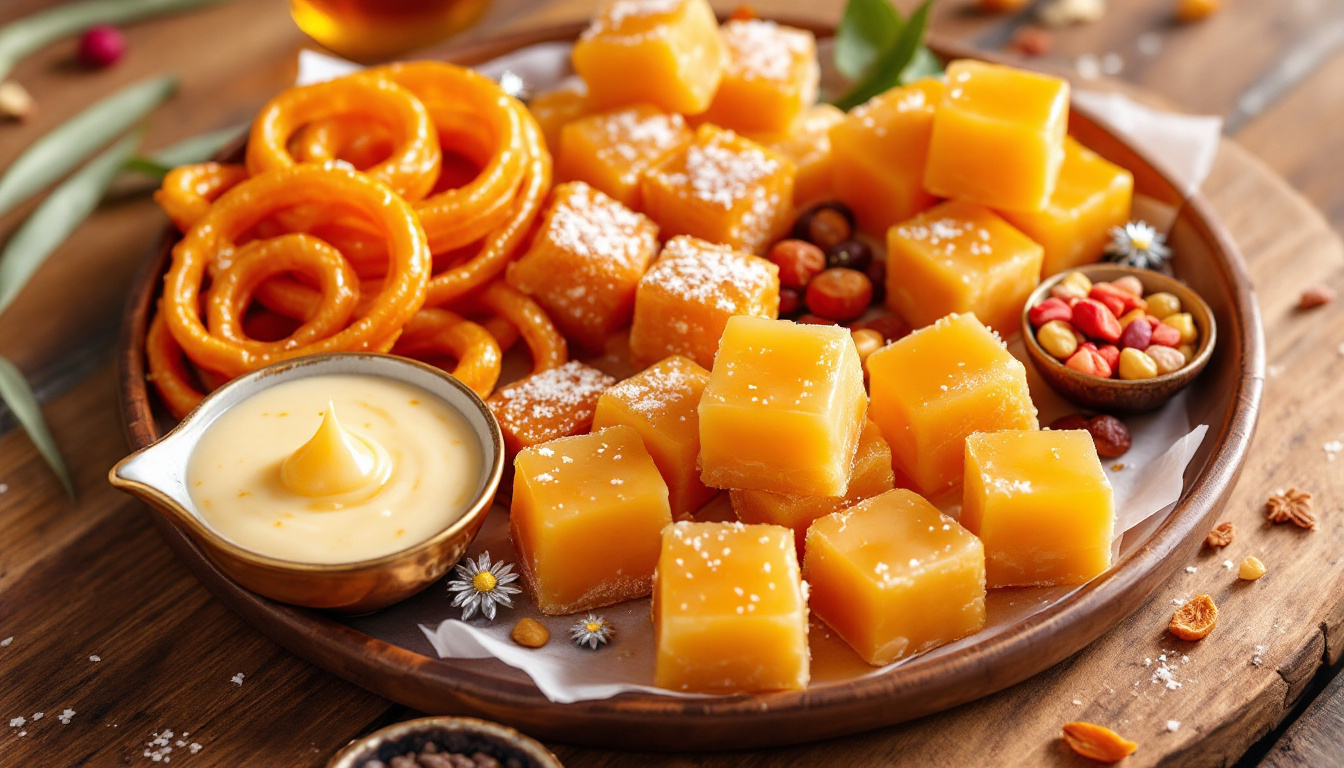
- Gulab jamun. Deep-fried balls of milk solids (khoya) soaked in rose-cardamom syrup until spongy and dripping. The king of Indian sweets. ₹20 to 50 a piece.
- Jalebi. Batter piped in spirals into hot oil, fried crisp, then soaked in saffron syrup. Eaten hot for breakfast with rabri (thickened milk). Old Famous Jalebi Wala in Chandni Chowk has made them since the 1880s.
- Rasgulla. Soft, spongy balls of fresh chenna in light sugar syrup, a Bengali specialty Odisha also claims.
- Barfi. Dense milk fudge set into diamonds, flavored with pistachio, cashew (kaju katli), coconut, or plain khoya, often topped with silver leaf. The default sweet-shop gift box across India.
- Kulfi. Dense Indian ice cream made by slowly reducing milk for hours, flavored with pistachio, saffron, or mango. Richer than Western ice cream because it is not churned.
- Ras malai, mysore pak, sandesh. Chenna discs in cardamom-saffron milk; a meltingly soft chickpea-flour-and-ghee sweet from the south; and delicate Bengali fresh-cheese sweets, the most refined of all.
- Kheer. India’s rice pudding, basmati or broken rice slow-simmered in milk with cardamom, saffron, and nuts until thick and creamy. The most common festival and temple sweet in the country, served warm or chilled. ₹40 to 80 a bowl.
- Gajar ka halwa. Grated carrots cooked down for hours in milk, ghee, and sugar with cardamom and nuts into a dense, glossy winter dessert. A North Indian cold-weather institution, best eaten warm. ₹60 to 150.
- Mishti doi. Bengali sweetened yogurt fermented in clay pots until thick and caramel-toned, the dessert that ends most Kolkata meals.
Chai, lassi and Indian drinks
India drinks as distinctively as it eats, and most of it costs pocket change. The lineup to know:
- Masala chai. Black tea simmered with milk, sugar, and spices (cardamom, ginger, cinnamon, cloves), served in tiny cups or clay kulhads at stalls on every corner. ₹10 to 20. Simpler, milkier, and better than any Western “chai latte.”
- Lassi. A yogurt drink, sweet (meethi) or salted (namkeen). Punjabi lassi is thick enough to stand a spoon in; mango lassi uses Alphonso pulp. The lassi shops of Varanasi serve it in flower-pot-sized clay cups. ₹30 to 80.
- Buttermilk (chaas). Thin, salted, spiced yogurt drink served cold, the best thing in Indian heat.
- Filter coffee. South India’s answer to chai: strong decocted coffee with boiled milk, poured between two steel tumblers to froth. ₹20 to 40. See our best coffee around the world guide for where it sits globally.
- Nimbu pani and sugarcane juice. Fresh lime water with salt and cumin, and cane juice pressed at street stalls with ginger and lime, the two most refreshing drinks in summer heat. ₹20 to 30.
Best food cities in India
Every Indian regional cuisine is represented, plus the world’s best Mughlai food and legendary street chaat. Old Delhi’s Chandni Chowk is one of the great food streets on earth. Must-eat: Paranthe Wali Gali, jalebi at Old Famous Jalebi Wala, butter chicken at Gulati, chole bhature at Sita Ram Diwan Chand, kebabs at Karim’s near Jama Masjid (since 1913).
India’s fastest food city. Vada pav on every corner, pav bhaji on Juhu Beach, and some of the best restaurants in Asia. Must-eat: vada pav at Ashok, pav bhaji at Cannon, bhel puri at Chowpatty, the Bohri Mohalla food walk, Parsi berry pulao at Britannia & Co (since 1923), Irani chai and bun maska at Kyani & Co.
The biryani capital, with a distinctive Deccani cuisine blending Mughlai and South Indian flavors. Must-eat: biryani at Paradise or Shah Ghouse, haleem (slow-cooked wheat-and-meat porridge, especially during Ramadan), double ka meetha (bread pudding), pathar ka gosht (meat cooked on a hot stone).
India’s sweet capital and the home of Bengali fish cuisine. Must-eat: biryani with potato at Arsalan, shorshe ilish at 6 Ballygunge Place, rasgulla and sandesh at KC Das, phuchka at street stalls, and the original kathi roll at Nizam’s (since 1932).
Dosa, idli, filter coffee, and the most underrated food scene in India. Must-eat: masala dosa at MTR Bangalore, filter coffee at Brahmin’s Coffee Bar, “meals” at any mess restaurant, Chettinad chicken in Chennai, and kothu parotta (chopped flatbread stir-fry).
The refined Nawabi cuisine of Awadh: slow-cooked, delicate, meat-obsessed. Must-eat: galouti kebab at Tunday Kababi, Lucknowi biryani at Wahid, nihari (slow-cooked stew), sheermal (saffron bread), and the basket chaat at Royal Cafe.
Best food to eat in India: the dish guide with prices
| Dish | Type | Region | Price (₹ / USD) | Veg? | Must-Try |
|---|---|---|---|---|---|
| Butter Chicken | Curry | Delhi / Punjab | ₹250–500 / $3–6 | No | ★★★★★ |
| Chicken Tikka Masala | Curry | UK / North India | ₹250–450 / $3–5.40 | No | ★★★★☆ |
| Hyderabadi Biryani | Rice | Hyderabad | ₹200–400 / $2.40–4.80 | No | ★★★★★ |
| Masala Dosa | Crepe | South India | ₹60–150 / $0.72–1.80 | Yes | ★★★★★ |
| Pani Puri | Street food | Nationwide | ₹20–40 / $0.24–0.48 | Yes | ★★★★★ |
| Chole Bhature | Breakfast | Delhi / Punjab | ₹60–120 / $0.72–1.44 | Yes | ★★★★★ |
| Dal Makhani | Lentils | Punjab | ₹150–300 / $1.80–3.60 | Yes | ★★★★★ |
| Rogan Josh | Curry | Kashmir | ₹300–600 / $3.60–7.20 | No | ★★★★★ |
| Vada Pav | Street food | Mumbai | ₹15–30 / $0.18–0.36 | Yes | ★★★★★ |
| Pakora | Street food | Nationwide | ₹30–80 / $0.36–0.96 | Yes | ★★★★☆ |
| Galouti Kebab | Kebab | Lucknow | ₹80–200 / $0.96–2.40 | No | ★★★★★ |
| South Indian Thali | Complete meal | South India | ₹80–250 / $0.96–3 | Yes | ★★★★★ |
| Pav Bhaji | Street food | Mumbai | ₹60–120 / $0.72–1.44 | Yes | ★★★★☆ |
| Kerala Fish Curry | Seafood | Kerala | ₹150–300 / $1.80–3.60 | No | ★★★★★ |
| Jalebi | Sweet | North India | ₹40–80 / $0.48–0.96 | Yes | ★★★★☆ |
| Gulab Jamun | Sweet | Nationwide | ₹20–50 / $0.24–0.60 | Yes | ★★★★☆ |
| Masala Chai | Drink | Nationwide | ₹10–20 / $0.12–0.24 | Yes | ★★★★★ |
Eating etiquette in India
- Eat with your right hand only. The left hand is considered unclean. Tear bread to scoop curry, or mix rice with dal using your fingertips. It feels awkward at the first meal and natural by the third.
- Sharing is the default. Thali and family-style dinners are designed to be shared from common plates. At home, refuse extra servings two or three times before a host stops insisting; this is warmth, not aggression.
- Finish your plate. Wasting food is frowned upon, so take small portions and go back for more.
- Wash your hands before and after. Restaurants have a sink or a water jug for exactly this, and it is expected.
- Shoes off sometimes. At traditional banana-leaf restaurants you may sit on the floor; remove your shoes before entering.
For dining customs across other countries, see our guide to food etiquette around the world.
How to eat well in India on any budget
India is one of the cheapest countries on earth to eat brilliantly, and it rewards every budget tier. For more value destinations like it, see our roundup of the cheapest cities for food.
Budget: under ₹400 a day ($4.80)
Breakfast of idli-sambar or aloo paratha at a stall (₹30 to 60). Lunch is a thali with unlimited refills (₹80 to 150). Dinner is street chaat or dal and rice at a dhaba (₹60 to 100), with chai through the day and a vada pav snack. Total ₹220 to 380. This is how hundreds of millions of Indians eat daily, and the food is outstanding.
Mid-range: ₹800 to 2,000 a day ($9.60 to 24)
Breakfast of chole bhature or dosa at a sit-down restaurant (₹100 to 200). Lunch of biryani or butter chicken with naan (₹300 to 500). A sharing dinner with several curries, breads, and drinks (₹300 to 800), plus kulfi or gulab jamun. This budget buys the best restaurants in most cities outside Mumbai and Delhi.
High-end: ₹3,000+ a day ($36+)
India’s fine dining is world-class and shockingly affordable. Indian Accent in Delhi, Masala Library in Mumbai, and Karavalli in Bangalore lead the field. A tasting menu at Indian Accent runs ₹5,000 to 8,000 ($54 to 86), comparable to a $200 meal in New York. Even at the top, India delivers extraordinary value.
Frequently asked questions about Indian food
What is the national dish of India?
India has no single national dish. Khichdi, a rice-and-lentil porridge eaten across all regions, comes closest as a unifying dish. Biryani, butter chicken, and dal with roti are strong contenders. Every state also has its own signature: biryani in Hyderabad, dosa in Tamil Nadu, rogan josh in Kashmir, vada pav in Mumbai.
What is the most famous Indian dish in the world?
Abroad, butter chicken and chicken tikka masala are the most recognized, though tikka masala was most likely created in Britain rather than India. Inside India, the dishes people are most passionate about are biryani, masala dosa, and pani puri. If you want the single dish that started India’s global fame, it is butter chicken, invented in 1950s Delhi.
How much does food cost in India per day?
India is one of the cheapest countries in the world for food. Street snacks cost ₹20 to 80 ($0.25 to 1). A thali runs ₹80 to 200 ($1 to 2.50). Mid-range restaurants charge ₹300 to 800 ($3.60 to 9.60) per person. Budget travelers can eat three full meals for under ₹500 ($6) a day.
Is India safe for food travelers?
Yes, with precautions. Drink only sealed bottled water, avoid raw salads at cheap restaurants, eat at busy stalls with high turnover, skip ice in street drinks, and peel your own fruit. Let your stomach adjust gradually over three to four days, starting with cooked dishes before raw chaats. Most travelers find the food becomes one of the great experiences on earth once their stomach adapts.
Is India good for vegetarian travelers?
India is the best country in the world for vegetarians, bar none. Roughly 30 to 40% of the population is vegetarian, so meatless food is the main event, not an afterthought. “Pure Veg” restaurants have entirely meat-free kitchens. South India, Rajasthan, and Gujarat are especially vegetarian-dominant.
How spicy is Indian food?
It ranges from extremely spicy to completely mild depending on region and dish. Andhra Pradesh and Rajasthan are among the spiciest, while Kashmiri and Bengali food tends to be milder. Many beloved dishes, including butter chicken, dal makhani, malai kofta, and korma, are creamy and mild by design. Say “kam mirchi” (less chili) to adjust.
What is the best food city in India?
Delhi is the best overall, with cuisine from every state, the world’s best Mughlai food, and legendary street food in Old Delhi. Mumbai is best for street food, Hyderabad for biryani, Kolkata for sweets and Bengali fish, Chennai and Bangalore for South Indian food, and Lucknow for Awadhi kebabs.
What is the difference between North and South Indian food?
North Indian food is wheat-based (naan, roti, paratha), heavier, and cream-and-butter-rich, shaped by Mughal cooking: butter chicken, biryani, kebabs. South Indian food is rice-based and lighter, built on coconut, fermented batters (dosa, idli), lentils, and tamarind. The north leans on garam masala and cumin, the south on mustard seeds, curry leaves, and dried red chilies.
Do I eat Indian food with my hands?
Traditionally yes, with your right hand only, especially with rice, bread, and thali meals. Tear roti to scoop curry, or mix rice with dal using your fingertips. Cutlery is available at most restaurants, but many Indians believe food tastes better eaten by hand, and most street food is eaten this way.
More food guides waiting for you
Browse our complete collection of Asian food guides.