I came late to this region. For years my food trips ran a tight Asia loop, ramen counters in Osaka, hawker stalls in Penang, the same banh mi stand in District 4 of Saigon. Then a friend dragged me to Marrakech, and three weeks later I was sitting on a plastic stool in a Cairo back-street eating koshary at 1 a.m. and trying to figure out how I had ignored an entire half of the world’s most exciting food map.
Why Africa and the Middle East deserve a serious place on your food map
This region has been trading spices, grain, citrus and people for five thousand years. That is what you taste in the food. North Africa carries Berber, Arab, Andalusian and French layers. The Levant runs on olive oil, sumac, lamb and bread. East Africa cooks with berbere, cardamom and a kind of communal eating that turns a meal into a conversation. West Africa builds whole national identities around one rice dish.
It is also a region that gets flattened in food media. “Middle Eastern food” is treated as one cuisine when Beirut and Tehran cook nothing alike. “African food” gets boiled down to a single mental image when there are at least four totally distinct food worlds across the continent. This guide is the map I wish I’d had: a region-by-region tour with the dishes worth flying for, the cities worth eating in, and the country pillars to read next when something catches your eye.
If you’ve already read our Asia food guide or our Europe food guide, this is the third leg of the table. The whole picture only starts to make sense once you have all three.
North Africa: tagines, semolina and mint tea you can taste a mile away
The North African coast, from Morocco through Algeria and Tunisia to Egypt and Libya, runs on slow cooking, sweet-savoury combinations and bread you tear with your hands. Olive oil, preserved lemon, harissa, cumin and saffron do the heavy lifting. The food rewards patience: a real tagine needs three hours, real couscous needs hand-rolling, a real harira soup needs Ramadan.
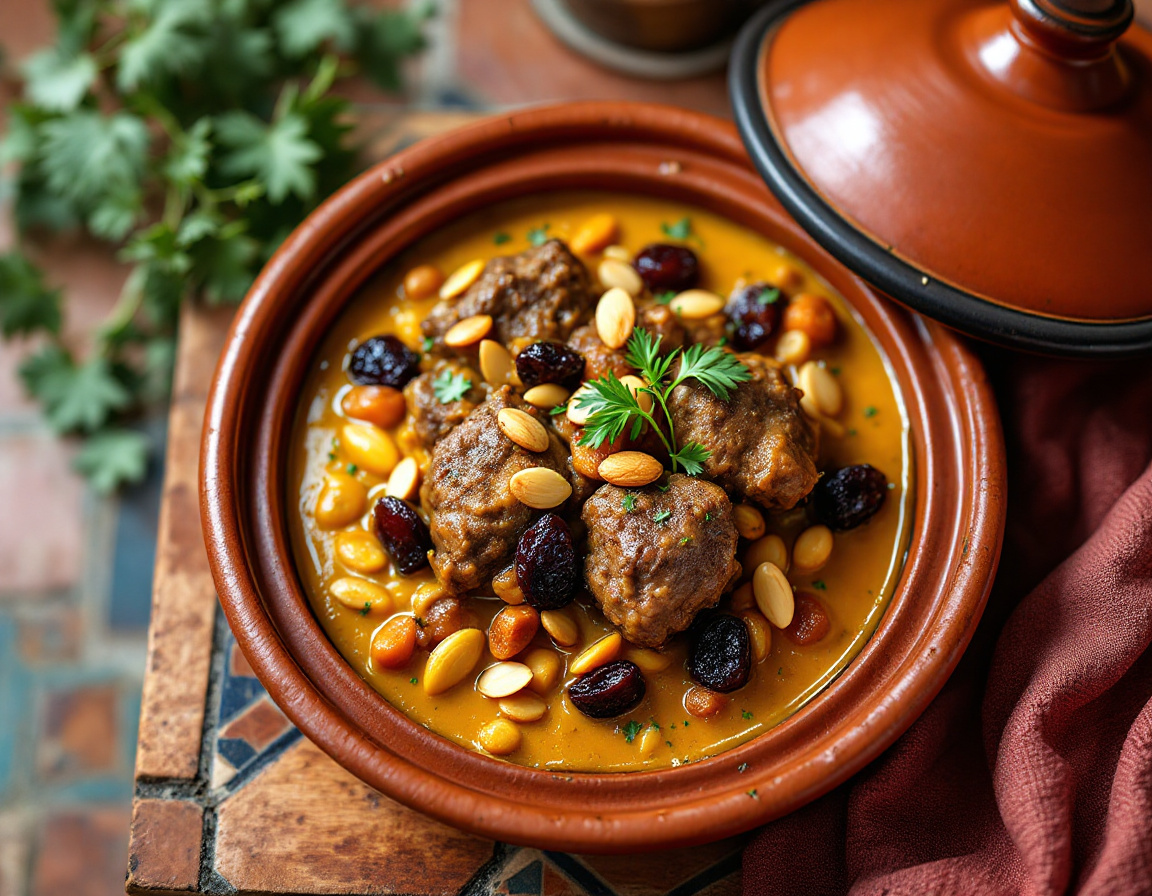
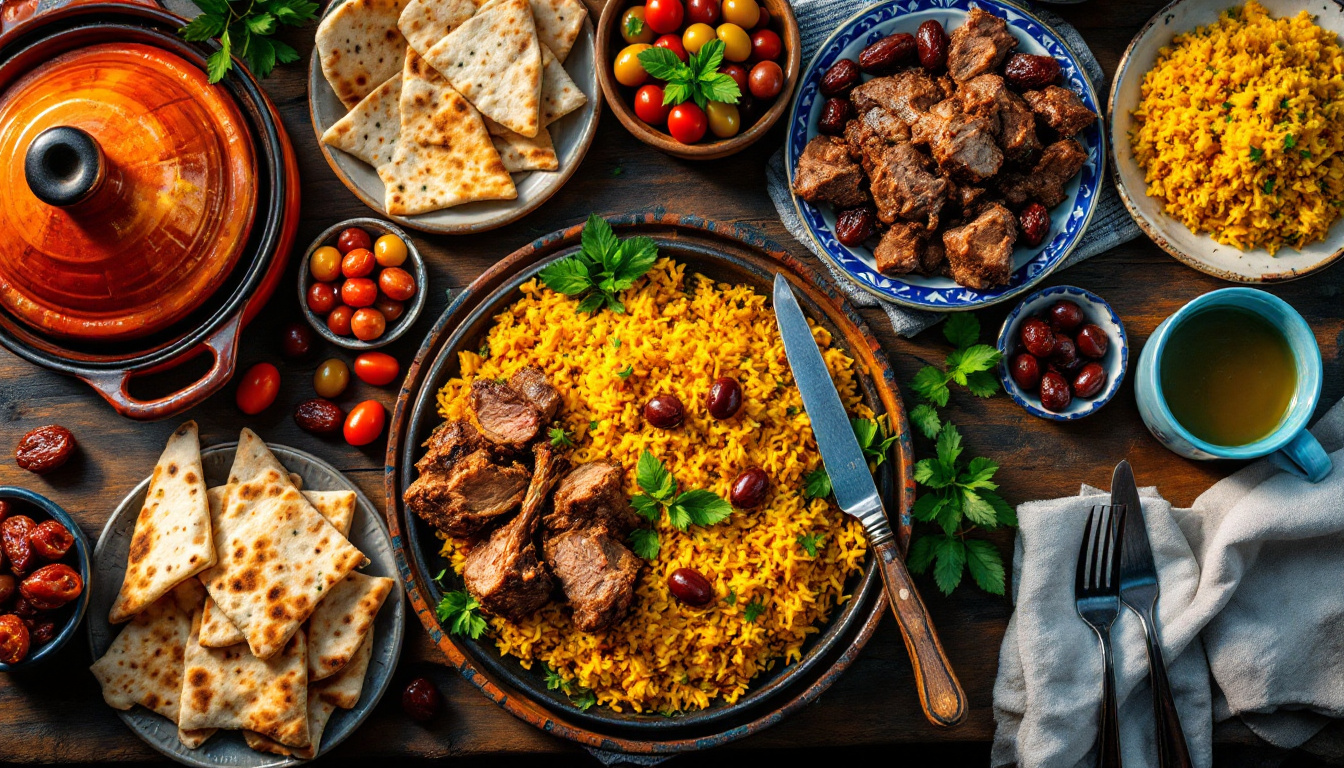
The country most travelers meet first, and a good place to start. Tagines built around lamb, prunes and almonds, or chicken with preserved lemon and olives. Pastilla, the savoury-sweet pigeon pie dusted with cinnamon and powdered sugar that confuses everyone the first time. Mechoui slow-roasted in pits. Harira soup at sunset. Mint tea so sweet it’s basically a dessert.
The full breakdown lives in our Morocco food guide, including what to skip in Marrakech’s main square and where the locals actually eat.
Egypt’s food culture sits between the Levant and Africa, and it shows. Koshary is the national obsession: lentils, rice, macaroni, chickpeas, fried onions and a vinegar-tomato sauce, sold in a paper bowl at street counters for the price of a coffee. Ful medames for breakfast, slow-cooked fava beans with cumin, lemon and oil, usually with a side of ta’meya, Egypt’s fava-bean take on falafel, greener and fluffier than the chickpea version. Molokhia, the jute-leaf soup that splits opinion harder than any dish I’ve eaten. Hawawshi flatbread stuffed with spiced meat.
Full picks in our Egypt food guide. Cairo’s late-night koshary scene alone is worth the trip.
The two countries most travelers never think to plan a food trip around. Tunisia leans spicier than Morocco, harissa is on every table, brik is the crispy fried pastry with a runny egg inside that locals eat as a starter, and lablabi chickpea soup is the unofficial national hangover cure. Algeria is closer to Morocco in style but with stronger French bakery influence, especially in Algiers. Both worth the detour.
The Levant and Middle East: mezze, bread and the world’s most underrated rice
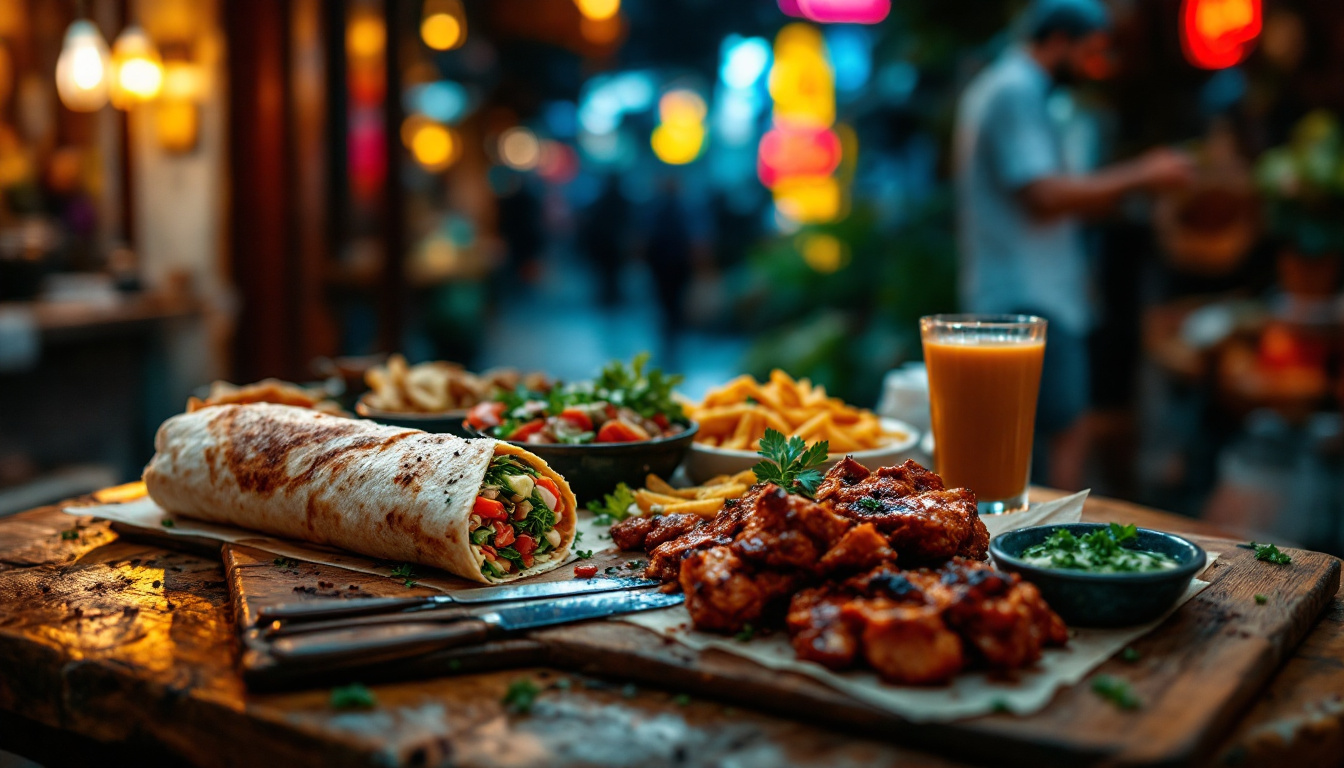
If you only get to one part of this region, the Levant is the easy recommendation. Lebanon, Israel, Jordan, Syria and Palestine share a culinary spine built on olive oil, lamb, sumac, za’atar, parsley and a small plates culture, mezze, that the rest of the world has been trying (and mostly failing) to copy for decades. The region’s most famous export is shawarma, spit-roasted lamb or chicken shaved into warm bread with garlic sauce and pickles, now eaten worldwide but never better than off a busy late-night counter in Beirut or Amman. Then Turkey to the north and Iran to the east each take a hard left into their own thing.
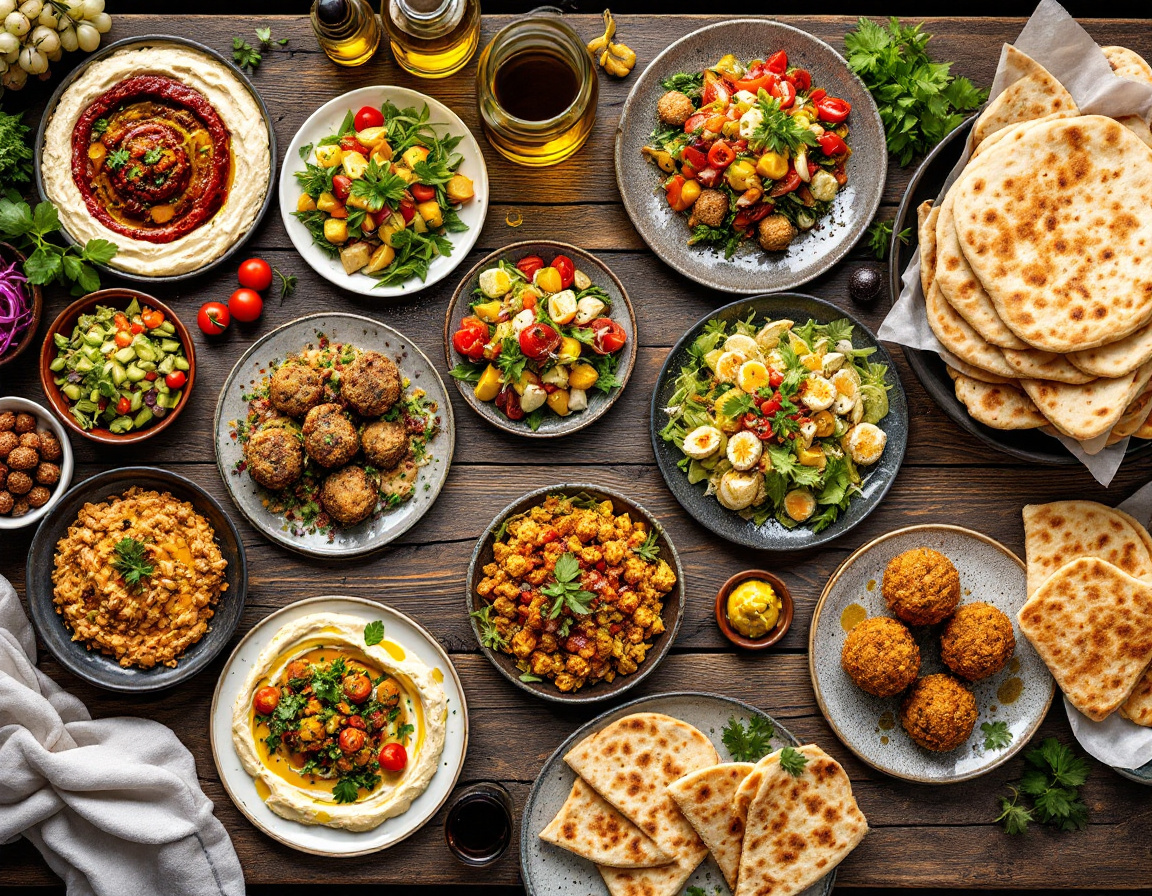
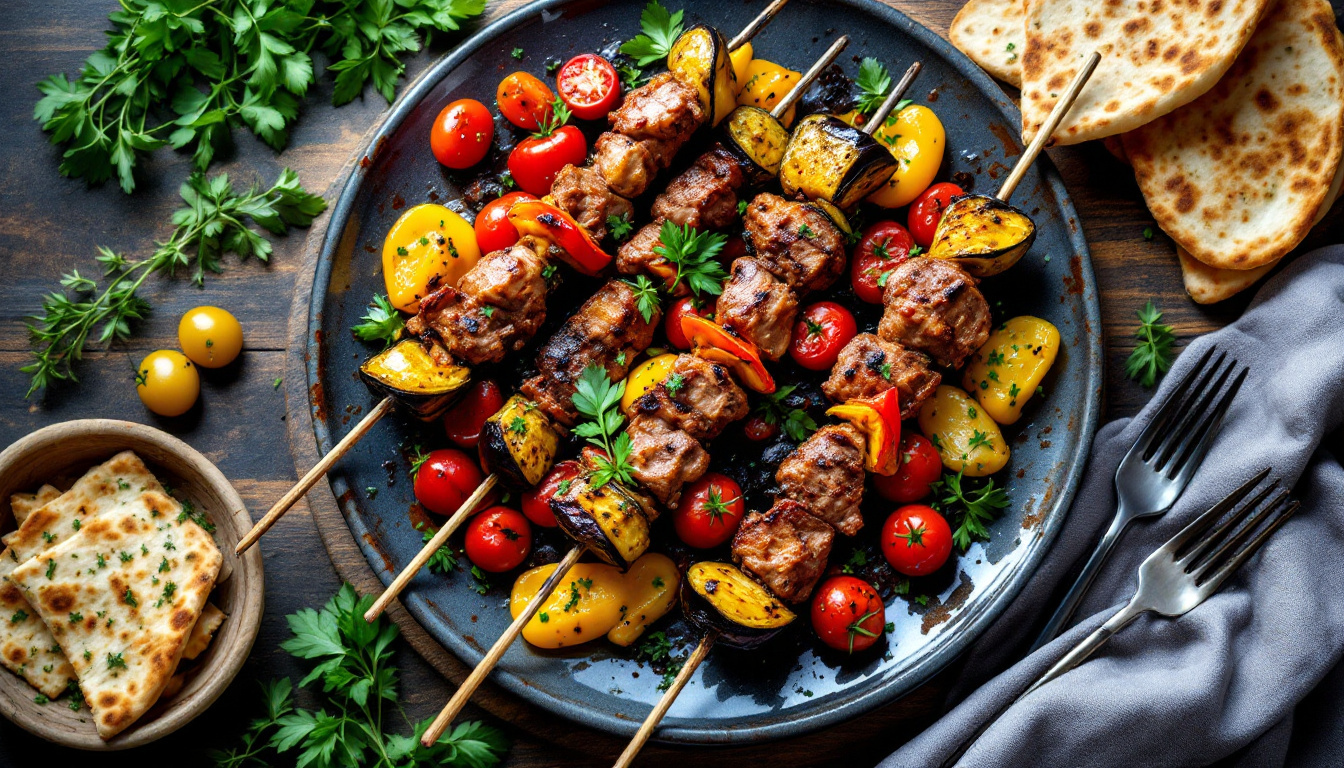
The bridge between Europe, the Middle East and Central Asia, and you can taste all three at the same table. Real kebab is nothing like the post-pub version: Adana kebab is hand-minced lamb with red pepper, Iskender is doner sliced over yogurt and tomato sauce, lahmacun is the thin “Turkish pizza” you fold and eat in three bites. Mezze culture is strong: hummus, haydari, ezme, çiğ köfte. Then the bread alone, simit on every street corner, pide stuffed with cheese and egg, gözleme on a hot griddle.
The full Turkey breakdown is in our Turkey food guide, including the Black Sea dishes most Istanbul tourists never hear about.
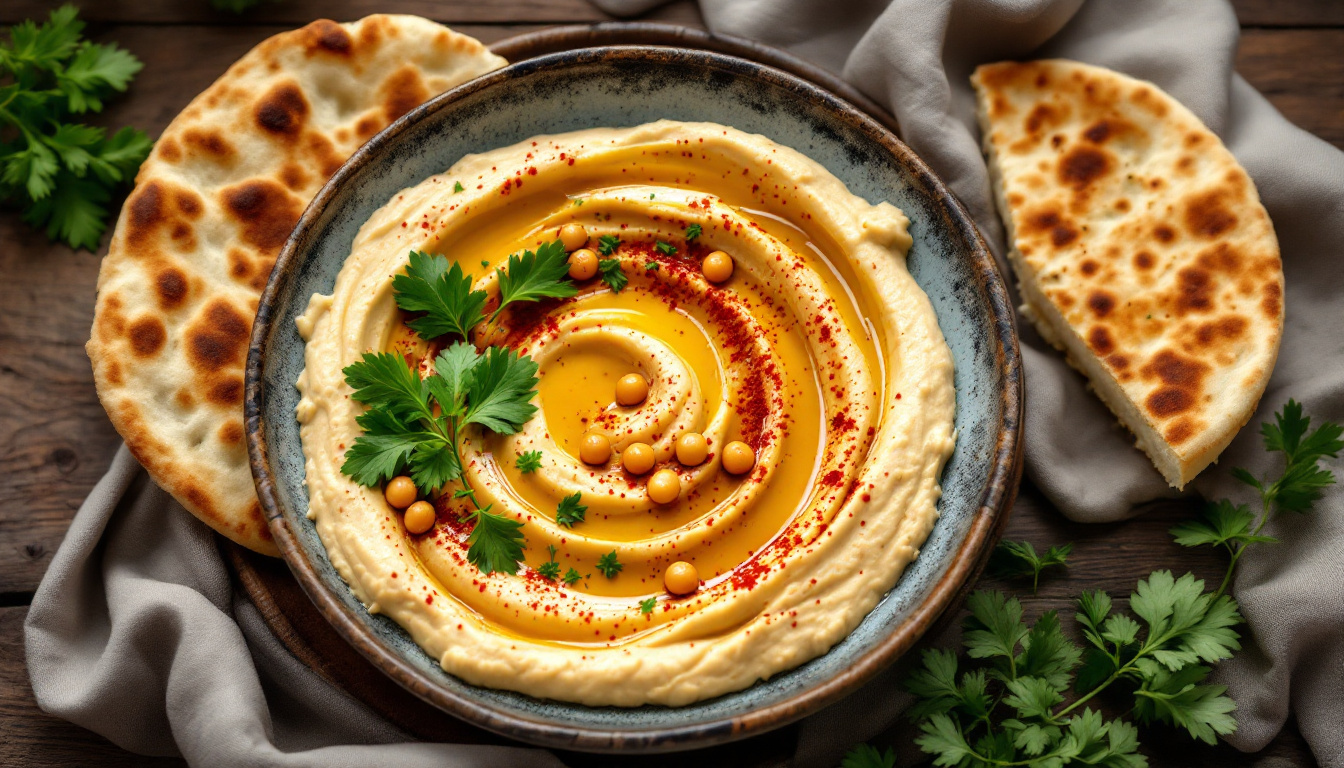
The country that exported “Middle Eastern food” to the world without getting nearly enough credit for it. A proper Lebanese mezze runs to twenty small plates: hummus that makes you reassess the chickpea, baba ghanoush smoked over fire, muhammara (a rust-red dip of roasted pepper, walnut and pomegranate molasses), kibbeh nayyeh (raw lamb tartare with cracked wheat), tabbouleh that’s actually parsley salad with bulgur not the other way around, fattoush brightened with sumac and shards of fried bread, and warm bread that never stops arriving. Manakish za’atar and a bowl of labneh for breakfast. Makloubeh, the “upside-down” pot of rice, meat and fried vegetables flipped onto a platter at the table, or mujadara, the humble lentils-and-rice that every Levantine grandmother makes differently, for something heartier. Knafeh for dessert. If you have one trip to plan around food in this region, plan it around Beirut. The full breakdown is in our Lebanon food guide.
Tel Aviv has quietly turned into one of the most exciting food cities in the world. Falafel and hummus are everywhere, sure, but go further: sabich (stuffed pita with fried eggplant, eggs and amba), shakshuka in a dozen variations, malabi for dessert, and a whole new wave of chefs working with ingredients from across the diaspora.
Jordan is mansaf country: lamb cooked in fermented yogurt sauce over rice and flatbread, eaten communally (our guide to the best food to eat in Jordan covers mansaf, zarb, maqluba and the full mezze table). Saudi Arabia runs on kabsa, the spiced rice-and-meat platter that anchors every family gathering, alongside margoog stew, dates, and endless rounds of cardamom-spiked qahwa. The UAE is the region’s melting pot, every cuisine on earth competing in Dubai’s food courts, with Emirati specialties like machboos and luqaimat hiding in the corners; our guide to the best food to eat in the UAE untangles the heritage dishes from the expat food scene. Iran is the region’s rice culture, tahdig (the crispy golden layer at the bottom of the pot), fesenjan (chicken in pomegranate-walnut sauce), kebab koobideh, and a tea ritual that organises the day. Just north, the Caucasus adds one of the world’s oldest food cultures: our guide to the best food to eat in Armenia covers smoky khorovats, UNESCO-listed lavash, dolma, and the ancient wines of Areni.
East Africa: the most underrated food region in the world
If you want to eat something that doesn’t taste like anything else on the planet, fly to East Africa. The food here was barely touched by colonial cooking traditions, which means it tastes like itself. Berbere, mitmita, niter kibbeh (spiced clarified butter), teff flour, fermented sourdough flatbread. It’s a vocabulary most foreign eaters have never heard.
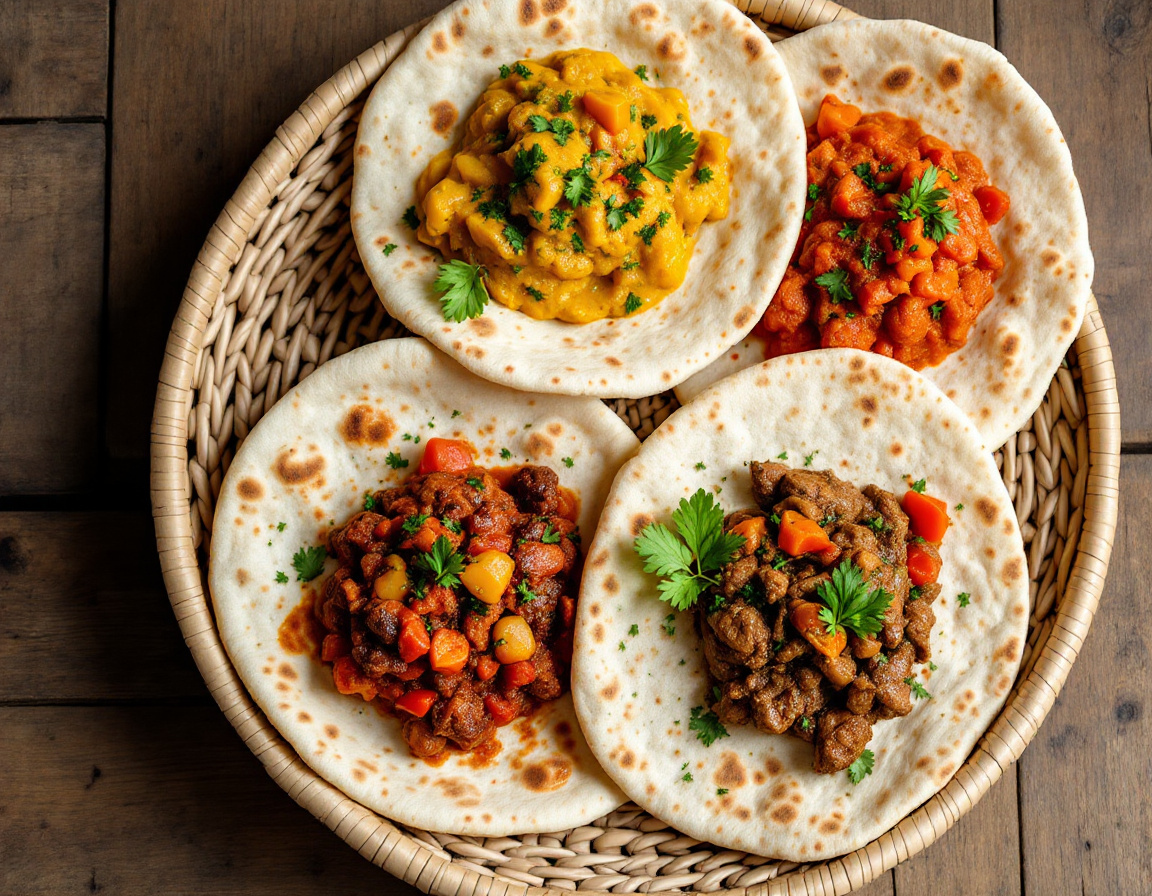
The headliner of African cuisine for anyone serious about food. Meals are served on injera, a sour, spongy flatbread the size of a small table that doubles as your edible plate and utensil. Doro wat (slow-cooked chicken with berbere spice and clarified butter), tibs (sautéed beef or lamb), kitfo (lamb tartare with spiced butter and ayib cheese), shiro (chickpea-flour stew). Eat with your right hand, tear injera, scoop, repeat. You will leave Addis Ababa wondering why this cuisine isn’t on every restaurant menu in your city.
Different food world than the Horn. Kenya runs on nyama choma (charcoal-grilled meat, usually goat), ugali (the cornmeal staple that holds everything together), sukuma wiki (sautéed collard greens), irio (mashed peas, potatoes and corn), and kachumbari, the sharp tomato-onion salad that cuts through all that grilled meat. Tanzania, especially Zanzibar, layers in centuries of Arabic and Indian influence: pilau spiced rice, biryani, mishkaki skewers, flaky chapati, sweet mandazi doughnuts, fresh seafood, and the Stone Town night market.
The other end of the continent and a completely different food culture, shaped by Dutch, Malay, British, Indian and indigenous traditions colliding in one country. Braai (the national grilling religion), boerewors, bobotie (spiced minced meat baked with a savoury custard topping), Cape Malay curry (the fragrant, lightly sweet curries the Cape’s Malay community made their own), bunny chow (a hollowed-out bread loaf filled with curry), potjiekos (the slow stew cooked for hours in a three-legged cast-iron pot), biltong, and one of the best wine regions in the world around Stellenbosch.
West Africa: jollof, suya, and the rice war that won’t end
West African food rarely gets a serious look from food travel media, which is a missed opportunity. The region runs hot, smoky and rice-heavy. Palm oil, peanut sauce, smoked fish, scotch bonnet pepper. Communal eating around big shared dishes is standard. The “jollof wars” between Ghana, Nigeria and Senegal, three countries arguing publicly about whose version of the spiced one-pot rice dish is correct, are a real thing and an excellent reason to eat your way through all three.
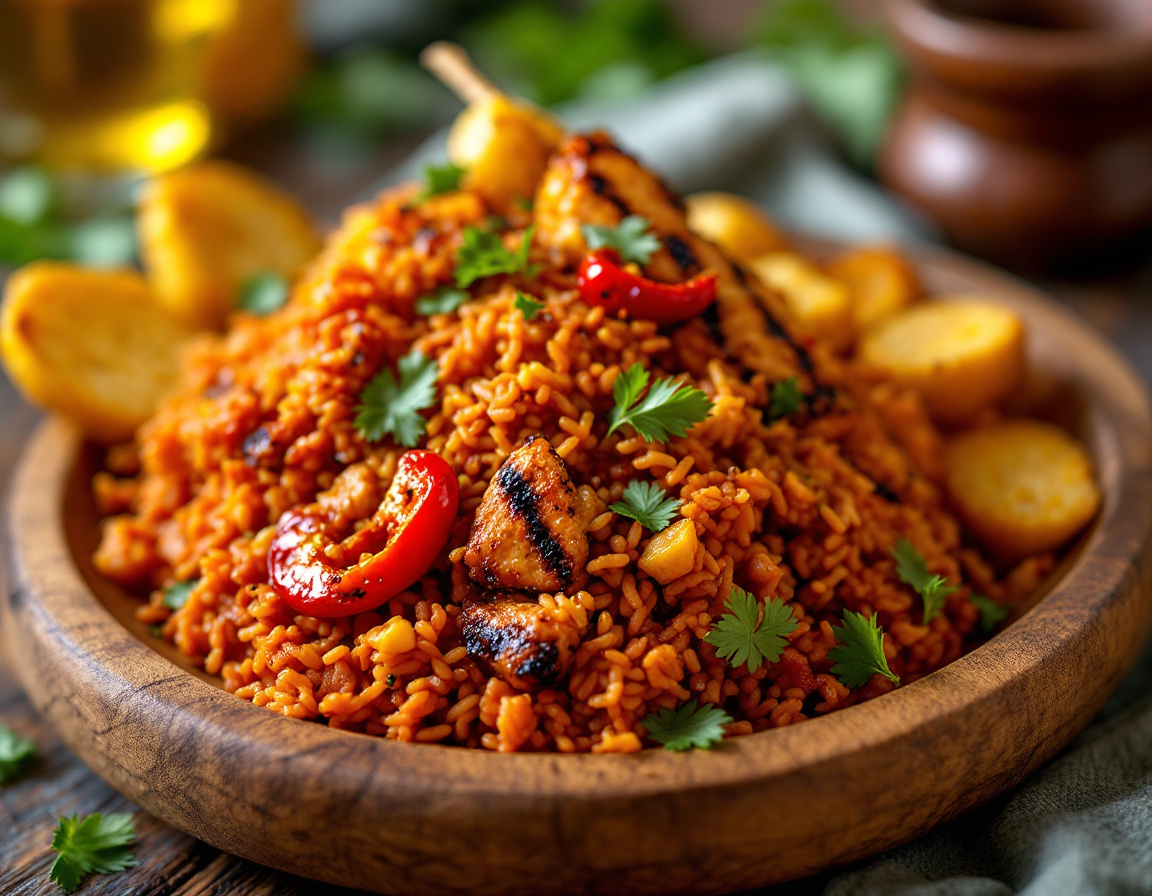
Often considered the most refined of the West African food traditions. Thieboudienne is the national dish, fish stewed with vegetables and broken rice in a tomato-onion base, hand-pulled apart at the table. Yassa is chicken or fish marinated in lemon and onion. Mafé is the peanut stew that proves peanut sauce belongs on more than just satay.
Ghana’s jollof rice is the smoky, slightly chewy version; Nigerian jollof is the bolder, redder one. Suya is the spiced grilled meat (usually beef or chicken) coated in yaji, a peanut-and-pepper rub that you’ll want to put on everything for the next month. Egusi soup (melon-seed stew with leafy greens), fufu and pounded yam for scooping, and akara, deep-fried black-eyed-pea fritters sold hot on the street for breakfast. Plantains in eighteen forms.
Cross-cutting themes: the things that connect the whole region
Mezze and small plates culture
From Morocco’s olive-and-bread starters to Beirut’s twenty-plate spreads to Tehran’s appetizer rituals, this region is built around shared small plates eaten slowly. If you sit down hungry and order a “main course” right away, you’re already doing it wrong. Order four or five mezze, a basket of bread, a glass of arak or mint tea, and let the meal find its own pace.
Bread you eat WITH, not as a side
Bread isn’t a side dish here, it’s a utensil and half the meal. Pita and lavash in the Levant. Khobz and msemen in Morocco. Injera in Ethiopia. Aish baladi in Egypt. Simit and pide in Turkey. Naan-e barbari in Iran. Learn the bread first and the rest of the cuisine starts to make sense.
Spice routes you can taste
Cardamom, saffron, sumac, berbere, ras el hanout, baharat, za’atar. These are not interchangeable. Each carries a regional identity. Berbere belongs to Ethiopia. Za’atar to the Levant. Ras el hanout to Morocco. Sumac everywhere from Turkey east, but rarely west of Tunis. The fastest way to fake your way through this region’s food: learn one signature spice blend per country and order the dish that features it.
Sweet finishes that aren’t dessert
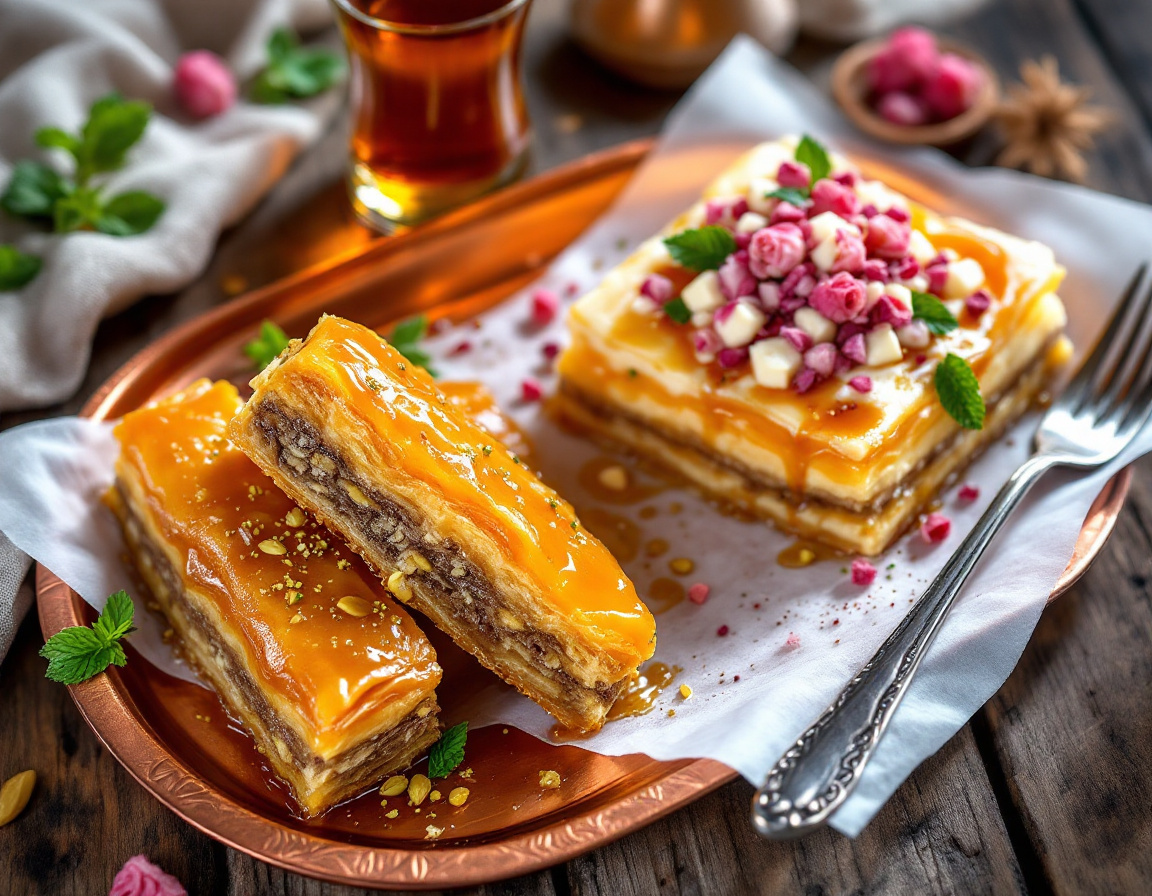
Baklava is the headline, but it’s the entry point. Knafeh (cheese pastry soaked in sweet syrup) in Lebanon and Palestine. Basbousa (semolina cake with rose water) in Egypt. Sellou and ghriba cookies in Morocco. Sutlaç rice pudding in Turkey. Halva from Ethiopia to Iran. The region’s sweets are mostly soaked, honeyed, nutty and built to eat with strong coffee or cardamom tea, not after a heavy main.
- Right hand only in countries where eating with hands is standard (Ethiopia, parts of the Gulf, North Africa). Left hand is considered unclean.
- Bread is sacred, never throw it away in front of locals; never put it on the floor.
- Coffee and tea rituals matter. Accept the offer even if you don’t drink it. Saying yes is the social transaction.
- Tip 10-15% in restaurants in most of the region. Small bills for street vendors are appreciated but not always expected.
- During Ramadan, daytime eating is restricted in many countries. Plan around it; sunset iftar meals are often spectacular and welcoming.
- Alcohol availability varies hugely. Some countries (Iran, Saudi Arabia, Libya) are dry; others (Lebanon, Israel, Turkey, Morocco in licensed venues) are not. Check before assuming.
Where to eat: the cities worth planning a trip around
Region-by-region is how you learn the food; cities are how you actually eat it. These are the eight I’d build a trip around, each one a deep dive of its own (full city guides are rolling out).
The easiest first bite of the region. Tagines and harira in the souks, mechoui from a pit stall, and mint tea on every rooftop, just walk well past the Jemaa el-Fnaa tourist tables before you sit down.
The best late-night street food in the region. Koshary counters, ful and ta’meya carts at dawn, and the chaos of Khan el-Khalili. A full meal here costs less than a coffee back home.
Where Europe, the Levant and Central Asia eat at the same table. Simit and balık ekmek by the water, kebab and meze in Beyoğlu, and breakfast spreads that run to twenty plates.
If you only plan one food trip in this region, plan it here. Mezze culture at its absolute peak, plus shawarma, manakish and knafeh done better than anywhere they’ve been copied.
The most distinctive food city on the continent. Injera, doro wat and beyaynetu veggie platters everywhere, eaten by hand, tasting like nothing else on earth.
The region’s most cosmopolitan plate. Cape Malay curry, braai and bunny chow, fresh seafood on the waterfront, and the Cape Winelands an hour out of town.
The refined heart of West African cooking. Thieboudienne pulled apart at the table, yassa, mafé, and a Atlantic-fresh seafood scene most travelers never think to visit.
Not traditional, but the region’s great culinary crossroads: every cuisine on earth in one city, plus Emirati machboos and luqaimat if you know where to look.
FAQ
What is the most popular African food?
West Africa’s jollof rice is the continent’s most famous and most fought-over dish (Nigeria and Ghana both claim it), while Ethiopia’s injera with spicy wat stews and Morocco’s tagine and couscous are the most internationally recognized. Across the continent, the most popular everyday foods are rice and stew, grilled meats like suya, and flatbreads.
Where should I start if I’ve never traveled in this region for food?
Morocco for first-timers (easy logistics, familiar enough flavors), Lebanon for serious food travelers (the depth of the cuisine is hard to overstate), or Ethiopia if you want something that doesn’t taste like anything else.
What is the most famous dish in the Middle East?
If you forced me to pick one, shawarma, the spit-roasted meat shaved into bread that’s now eaten worldwide. Hummus and a full mezze spread are the close runners-up. None of them are a single “national” dish; they belong to the whole Levant and have been adopted across Turkey, Egypt and the Gulf.
What is the difference between Middle Eastern and Mediterranean food?
They overlap heavily, hummus, falafel, olive oil and grilled meats appear in both, which is why the labels get blurred. The rough rule: “Mediterranean” leans on the coastal trio of olive oil, tomatoes and seafood across southern Europe and the Levant, while “Middle Eastern” reaches further inland and east into the spice-and-rice cooking of the Gulf and Iran (saffron, sumac, cardamom, slow-cooked rice) that has no Mediterranean coastline at all.
Is the food safe to eat at street stalls?
In most major cities, yes, with the standard street food rules: busy stalls with high turnover are safer than empty ones; freshly cooked is safer than sitting under a heat lamp; bottled water for drinking. Cairo, Marrakech, Istanbul, Addis Ababa and Dakar all have thriving safe street food scenes.
What’s the best country for vegetarians?
Ethiopia, by a wide margin. Orthodox fasting traditions mean every restaurant offers extensive vegetarian platters (beyaynetu) that are some of the best vegetarian meals you’ll eat anywhere. Lebanon and Turkey are also strong; Morocco less so unless you’re prepared to flag your needs clearly.
How much does food cost compared to Europe or North America?
Roughly 30-60% less in most of the region, sometimes more. A street-food meal in Cairo runs $1-3, a sit-down meal in Marrakech $8-15, a multi-course Levantine spread in Beirut $20-30. UAE and Israel are the exceptions, comparable to Western prices.
Is the spice level overwhelming?
Less than you’d expect. Most of the region is more about aromatic spice (cumin, cardamom, cinnamon, saffron) than chili heat. The exceptions: Tunisian harissa, Ethiopian berbere, some West African pepper sauces, and certain Iranian and Yemeni dishes. Ask before ordering if you’re sensitive.
What’s the biggest mistake travelers make?
Sticking to the touristy main squares and rating a country’s food based on what they ate there. Walk ten minutes away. Find the place full of local families. That’s the actual food culture.
Plan your next food trip
Browse our full collection of African and Middle Eastern food guides, plus city-level deep dives coming soon.